

Bill Burr, Wunmi Mosaku, Jeremy Allen White, Mikey Madison, Jeremy Strong, Betty Gilpin and Aaron Sorkin
Sean Zanni/Getty Images for Sony Pictures Entertainment


Sunny Hostin received pushback from her co-hosts on The View as she defended the use of AI in Hollywood.
Hostin, who recently licensed her name and likeness to AI company Fountain 0, argued that generative AI should be considered a “new art form,” noting that it can help the entertainment industry show more Black and Brown representation.
“I partnered with this company because I’ve written a trilogy, and for six years I’ve tried to get my films or my stories made into series and films, and the gatekeeping in Hollywood around Black and Brown creative content is insane,” the former prosecutor said. “I cannot get New York Times best-selling books onto the screen to tell diverse stories to diverse communities.”
She continued, “With AI, that cuts out the gatekeeping. You get to make your film. You get to have a director … It’s a way to go to a streamer and say, ‘Here’s the product. Will you license it? Will you show it?’ It’s a way, I think, to get Black and Brown stories told.”
Joy Behar noted that with AI, “real people are not working,” and Hostin added, “The real people are not getting jobs in Hollywood. Black and Brown actors are not getting the jobs.”
Alyssa Farah Griffin jumped on Behar’s point and said, “I worry you’re closing the doors to those roles being played by Black and Brown actors and being replaced by AI.”
“That would be great if the studios would not gatekeep and allow the stories to be told,” Hostin replied.
Griffin also said generative AI is “pulling from intellectual property of all the existing actors out there,” and they aren’t getting residuals for it.
One thing that’s for sure is that the AI “train has left the station,” as Hostin said, who added, “This is something that’s here. It’s not going away, and I think that there are going to be enormous benefits.”
Ana Navarro asked Hostin whether she felt any ethical issues with working with an AI company, and Hostin said she “thought about it a lot” before signing away her likeness.
“I think that diverse stories need to be told,” Hostin said before Behar interjected to say, “We’ve said that already. I’m saying that those same people that you’re worried about are now out of work.”
Hostin defended that point, saying, “I’m not the person putting them out of work because the studios just won’t make these projects.”
Behar then said, “Force them to do it rather than have a robot replace Black people in movies.”
Hostin closed out the topic, saying, “I don’t think it’s ever going to take away the arts. I think it’s a different art form.”
Watch the full exchange from The View in the video below.
>

EXCLUSIVE: Production is pausing on the Warner Bros and DC Studios pic The Batman Part II due to director Matt Reeves stepping away for personal reasons.
The studio on Monday released a statement on the matter. “Production on The Batman Part II has been temporarily paused while Matt Reeves focuses on a family matter,” it said. “Matt has the full support of DC Studios and we look forward to continuing the journey soon.”
Prior to the pause, filming had been underway in London. The film is set to bow on February 18, 2028. Sources say it is too early to say whether the stoppage will have an effect on the release date.
The cast has Robert Pattinson, Andy Serkis and Colin Farrell returning respectively as Batman, Alfred and Penguin, with new additions Scarlett Johansson, Sebastian Stan, Brian Tyree Henry, Jayme Lawson, Charles Dance, Gil Perez-Abraham and Sebastian Koch.
>
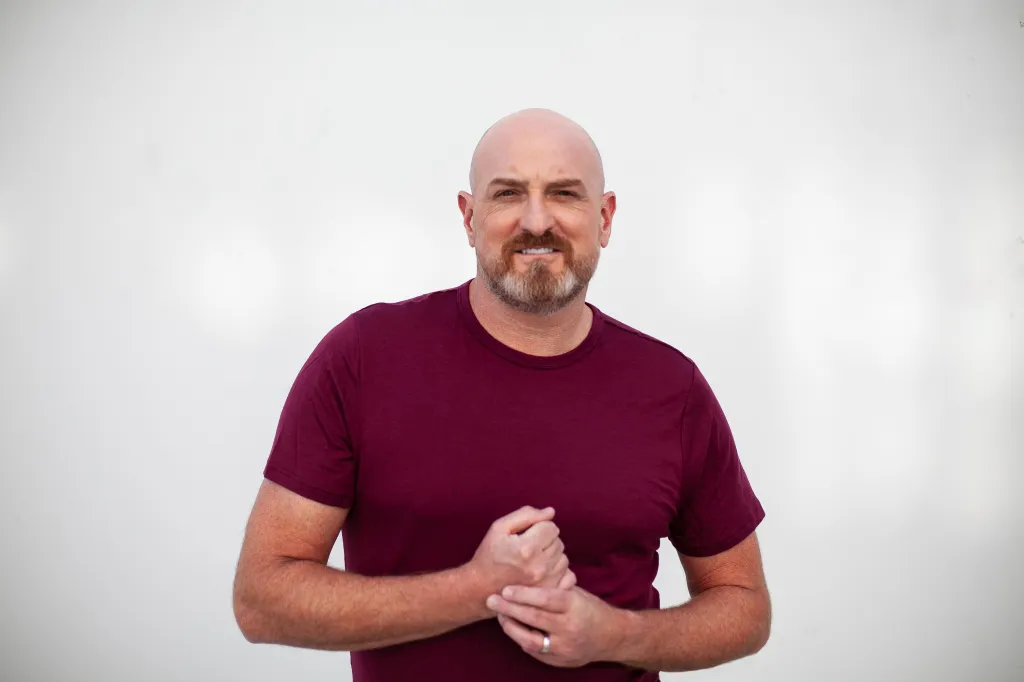
EXCLUSIVE: Amazon MGM Studios is developing A Murder to Remember, a feature adaptation of Brynn Kelly‘s Audible Original from Grey Gardens helmer Michael Sucsy.
A Murder is described as a razor-sharp romantic thriller that follows a Jane Austen-obsessed American art expert and a broke but charming British lord who awaken after a blackout-drunk night at a crumbling English abbey convinced they witnessed a murder. With no evidence of a crime and no one willing to believe them, the unlikely pair must uncover the truth before the killer silences them for good.
Kelly’s audiobook, described to Deadline as Knives Out meets Jane Austen, released in February 2024. Sucsy developed the project with Jackie Levine at Audible and Moritz Polter at Windlight Pictures before the package was set up at Amazon MGM. He’s directing from his own script and exec producing via his HungryDuck Productions, alongside Audible’s Rachel Ghiazza and Kelly. Audible’s Levine and Marshall Lewy are producing alongside Windlight Pictures’ Polter and Cosima Degler.
Sucsy is best known for originating, co-writing, producing and directing Grey Gardens, an HBO drama starring Drew Barrymore and Jessica Lange that received 17 Emmy nominations and won six, including Outstanding Made for Television Movie. The TV movie also picked up a Golden Globe, with Lange winning an Emmy, and Barrymore winning both a Globe and a SAG Award for her performance.
Following Grey Gardens, Sucsy went on to direct Sony’s romantic drama The Vow, starring Rachel McAdams and Channing Tatum, which grossed $196 million worldwide against a $30 million budget, followed by MGM’s Every Day, based on David Levithan’s bestselling novel. He also directed on Netflix’s 13 Reasons Why and is repped by Paradigm, Anonymous Content, and Goodman, Genow, Schenkman.
>
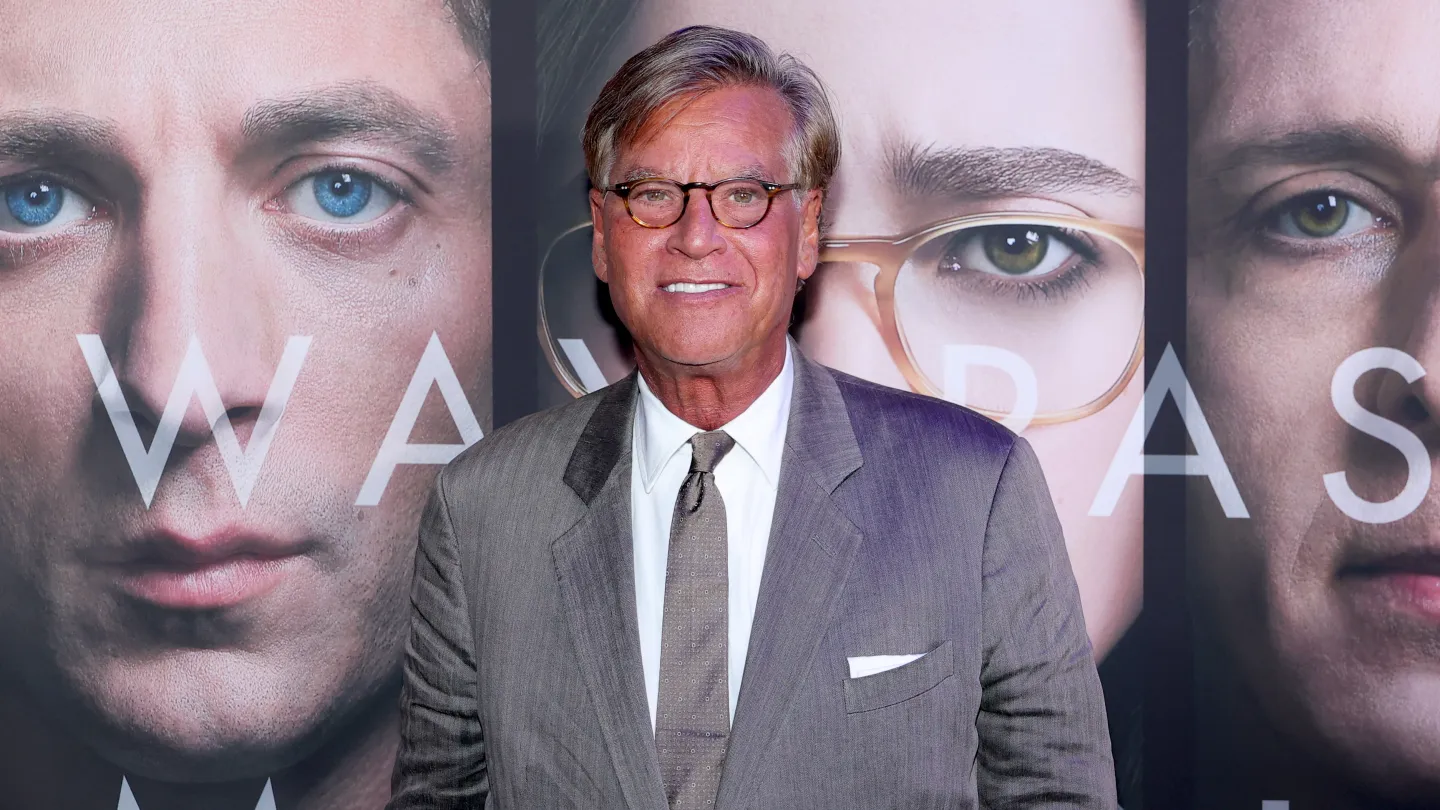
Aaron Sorkin knows the way he wrote Mark Zuckerberg in The Social Network may not have always landed exactly as he intended.
“We were surprised after The Social Network came out that there were two reactions to Mark, split along generational lines,” Sorkin told The Hollywood Reporter Sunday night at the New York premiere of his new film The Social Reckoning. “If you were a little bit older, you saw it as a cautionary tale, which is what it was intended to be. If you were a little bit younger, surprisingly, you saw it as an inspirational story. ‘Oh wow, I can drop out of school and have an idea and be a billionaire.’”
“There’s a thing when somebody becomes a billionaire that everybody gets enamored with them, and you’ve got to be like, ‘All right, well, how did you make that money?’” said comedian and actor Bill Burr, who portrays Zuckerberg’s legal counsel in the upcoming film. “I look at [Zuckerberg] as that’s what corporations do. They poison our food supply. They’ve made synthetic heroin. You know those Waymo cars? They’ve killed like 90 people, and they just get a fine. How many people can you kill in a car? They operate with impunity. So as much as this is about social media, it’s about this nerd robber baron era that we’re living in.”
In The Social Reckoning, a film Sorkin has described not as a sequel but “as a new movie I wrote pretending I had never written The Social Network,” who is at the story’s center is noticeably different. This time, the dramatization follows the 2021 Facebook leak, led by former Facebook employee and whistleblower Frances Haugen (played by Mikey Madison) and reported by former Wall Street Journal and current Reuters reporter Jeff Horwitz (Jeremy Allen White). For the writer, producer and director, the decision to not do a continuation wasn’t “because I was worried about backlash, and I really didn’t think of it as re-centering or changing anything.”
With The Social Reckoning, Haugen and Horwitz become the lens through which this Facebook story is told, while Zuckerberg, portrayed by frequent Sorkin collaborator Jeremy Strong, is a supporting character — the result of what the new film demanded, the filmmaker explained. “It’s not just that he’s older now or that he’s made $120 billion; the company’s worth a trillion dollars and has three billion users. It’s no longer a social media company. It’s no longer about keeping in touch with your friends from school. Now they’ve added a newsfeed, and that newsfeed is run by an algorithm. So you’re getting different news than I’m getting, than he’s getting, than they’re getting. We’re all living in our own world,” Sorkin said.
“It gets really hard when we’re looking at our phones, when we’re looking at X and Facebook and Instagram. It’s confusing. I don’t blame people. I blame these companies. It is hard to differentiate. It’s tough, but they know exactly what they’re doing,” emphasized White. “That was the realization I had. I think I gave these companies the benefit of the doubt before I approached this work and started to do the film. I was like, ‘Well, maybe it’s just the genie’s out of the bottle, the monster’s out of the cage. It’s wreaking havoc, and they’ve lost control.’ The truth is, of course they understand exactly what’s going on. It is purposeful. There is intent. They want all of our attention. They want all of our eyes.”
For Burr, corporations like Meta that have publicly attributed certain policy choices to free speech protections have come to exemplify how “free speech is a sliding scale and certain people have more free speech than other people.” It’s a narrative around Facebook that has grown and shifted in the decade and a half between The Social Network and The Social Reckoning.
Bill Burr, Wunmi Mosaku, Jeremy Allen White, Mikey Madison, Jeremy Strong, Betty Gilpin and Aaron Sorkin
Sean Zanni/Getty Images for Sony Pictures Entertainment
But despite what the leaks revealed about Facebook’s algorithms, what Zuckerberg and the company’s leadership knew about their impacts and even the fact that “Meta’s lawyers, when they found out about this movie, sent Sony a strongly worded letter,” according to Sorkin, both the filmmaker and Sony boss Tom Rothman don’t see the tech mogul necessarily as a bad guy or villain.
“I wouldn’t, and I don’t think Aaron would use that characterization. I think what has happened in the many years since that first film — that was the dawn of social media — is that anyone would have or could have foreseen that there would be as many ills as good. So now the world is wrestling with the ills of social media, and it’s storytellers’ jobs to confront the problems in our world,” Rothman told THR ahead of the premiere. “I’m a free speech absolutist too, but I know you can’t yell ‘fire!’ in a crowded theater. I know that there is a difference between free speech and falsehood.”
“He’s making bad decisions that are hurting us,” added Sorkin. “But in dramatist terms, he’s not a villain. He’s an antihero. A villain has bad intentions. They want the money, they want revenge, that kind of thing. An antihero, the intentions are good: ‘I want to connect everybody in the world.’ But the way an antihero goes about doing it, the decisions they ultimately make are bad.”
How Sorkin wanted to portray Zuckerberg is present in Strong’s performance and aligns with the actor’s general approach to playing characters audiences have seen as both antiheroes and villains. “Aaron is always examining the fault lines in our society, and I’ve been interrogating those things, but he’s a writer like Mozart is a composer. He’s that good,” the actor told THR on the carpet. “All I can do is try to be as accurate and truthful as I can and take responsibility for that in what I’m rendering, in the person that I’m rendering, and certainly not set out to vilify him. I’m not interested in making judgments.”
In terms of how he worked to inhabit Zuckerberg — a role The Social Network star Jesse Eisenberg turned down after no longer wanting to be associated with the character and person — Strong noted that Sorkin’s writing played a pivotal role in how he was able to “take a piece of material and internalize it.” But he also had “to do an immense amount of work preparing to walk onto that set and to be inside a life, to be totally dialed into it, so that it’s a second skin and that I believe in what I’m doing.”
“And it’s absurd. What we do is absurd. I’m not Mark Zuckerberg, right? But my job for the time I make this movie is to believe that I am with authority. And that requires a great deal of concentration — which I think people project all kinds of nonsense onto — and a lot of trust between Aaron and I,” he continued. “And Aaron extends me an immense amount of trust, so I think my job is to meet that trust with as much courage as I can muster and be willing to go way the fuck out on a limb and maybe go up in flames. That’s the risk I have to take. When he asked me to do this one, Sarah Polley wrote a book recently called Run Towards the Danger, and that’s what I have to do: run towards the danger.”
With the potential of lawsuits from Facebook and Zuckerberg, the whole film may be doing that alongside Strong. According to Sorkin, “We’ve all been concerned, but the lawyers are there to act as a shield.”
“What Hollywood has done occasionally, not in the beginning, but certainly since the ’50s and the ’60s, is played its part in speaking truth to power,” added Rothman. “That’s what this film does, and that’s why we’re proud of it.”
The Social Reckoning hits theaters on Friday.
>


Search For Canadian TV Actor Stewart McLean Now Homicide Investigation


These ’90s fashion trends are making a comeback in 2017
According to Dior Couture, this taboo fashion accessory is back
Model Jocelyn Chew’s Instagram is the best vacation you’ve ever had
Emily Ratajkowski channels back-to-school style
9 Celebrities who have spoken out about being photoshopped


Rurouni Kenshin: Hokkaido Arc Manga Takes 1-Issue Break – News


HIDIVE to Stream English Dubs for The World Is Dancing, The Forsaken Saintess and Her Foodie Roadtrip in Another World, The Dangers in My Heart: The Movie Anime – News