
Tech
This is what some the world’s largest banks of malware look like stacked as hard drives


Malware research group vx-underground, which says it has the largest collection of malware source code, said in a post on X that its archive of data amounts to about 30 terabytes.
A reply by Bernardo Quintero, founder of VirusTotal, an online service that scans files for malware across multiple antivirus engines at once, said his service has about 31 petabytes of malware samples that users have contributed to date. (A petabyte is ~1,000-times larger than a terabyte.)
In both cases, that’s a lot of data. For context, cybersecurity companies, AI researchers, and threat intelligence firms treat repositories like these as critical for training detection models and understanding how attacks evolve. But this had us wondering: What would these enormous datasets actually look like stacked as hard drives one on top of the other and side-by-side? And how would they compare to, say, the Eiffel Tower?
Someone in our newsroom asked an AI chatbot this question, and it got it incredibly wrong.
Instead, we did some rough back-of-a-napkin math to figure out how tall these data banks would be. Since vx-underground and VirusTotal both have “about” that much data each, “about” is good enough for us in this case.
Let’s say we’re using 1 terabyte capacity internal hard drives, since these are generally designed to be the same physical size to fit inside any computer. These standardized 3.5-inch internal hard drives are 1 inch in height, which for the sake of stacking one on top of the other is really what we want to know here.
We’re also assuming that the hard drives we’re using in this example are exactly 1 terabyte, because in reality the total usable file capacity of a hard drive is generally somewhat less.
Using this online conversion tool, it looks like vx-underground’s 30 terabytes of malware data could fill 30 hard drives stacked on top of one another, reaching 30 inches, or about 2.5 feet tall.
For reference, this reporter is 6 feet tall. (See visual below, and yes, terrible opsec, I know.)
With that same logic, VirusTotal’s 31 petabytes of submitted data would fill 31,744 hard drives, which stacked on top of another would reach about 2,645 feet.
The world’s tallest building, the Burj Khalifa in Dubai, is slightly taller at 2,722 feet.
The Eiffel Tower is 1,083 feet tall. By that logic, VirusTotal has about two-and-a-half Eiffel Towers’ worth of data.

When you purchase through links in our articles, we may earn a small commission. This doesn’t affect our editorial independence.
>
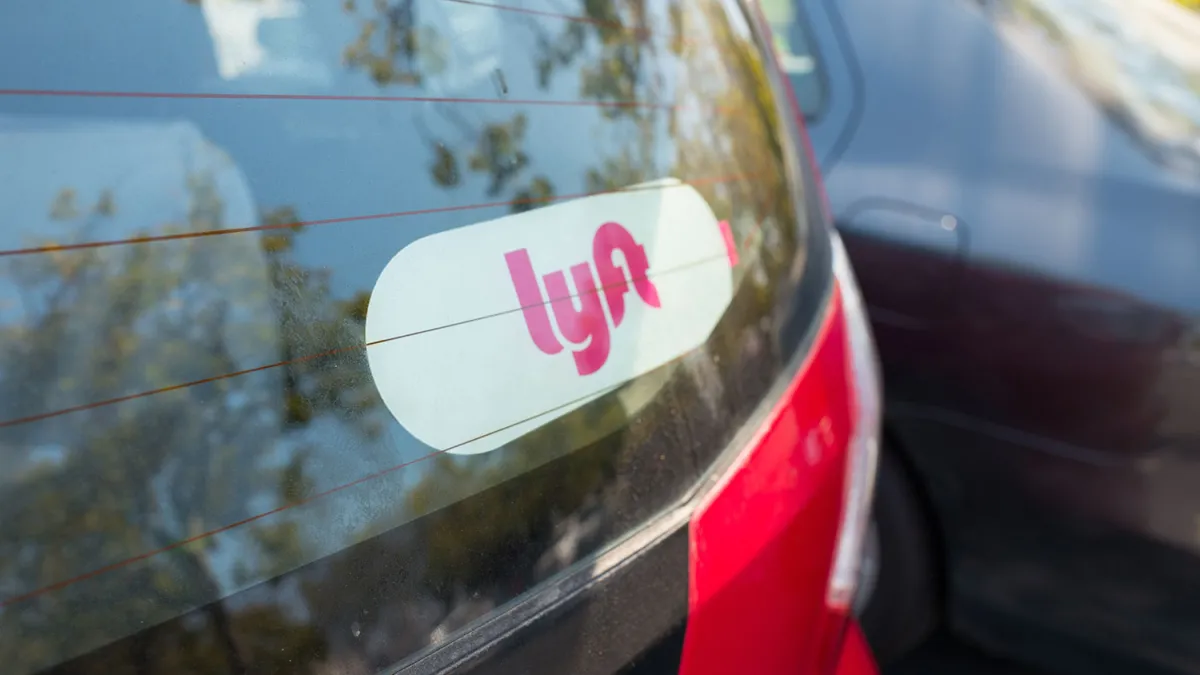
Lyft has agreed to pay $272.5 million to settle a lawsuit accusing the ride-hailing company of violating California law by misclassifying drivers as independent contractors, instead of employees.
The company said in a regulatory filing that it believes the settlement will allow it to avoid the “costs and distraction of protracted litigation and enable management to maintain its focus on executing its business objectives.”
Lyft could not be reached for comment.
The settlement stems from a lawsuit filed by the California Labor Commissioner’s Office in August 2020 that accused Lyft of treating drivers as independent contractors rather than as employees, as required under state law at the time.
The lawsuit alleged that drivers were denied minimum wage and overtime as well as other benefits and protections provided to employees, including paid sick leave and timely wage payments.
“This settlement is about the workers who came forward and spoke up. Their voices made this outcome possible,” California Labor Commissioner Lilia García-Brower said in a statement, adding that the LCO will forgo its share of the settlement and direct those funds to drivers who filed wage claims.
The settlement, which still must be approved by a judge, covers alleged violations from April 6, 2016 to December 15, 2020 — a period California was grappling with whether workers in the booming gig economy were independent contractors or an employees.
Today, drivers for app-based transportation services like Lyft and Uber are classified as contractors after voters passed ballot measure Proposition 22 in 2020. The ballot measure provided a carve-out from Assembly Bill 5, a state law passed in 2019 that required companies like DoorDash, Lyft, and Uber to classify gig workers as employees, entitling them to minimum wage, workers’ compensation, and other benefits.
Even after AB 5 took effect, Lyft, Uber, and other companies that relied on gig workers continued to classify their drivers as contractors. That eventually led to legal action from the LCO, California Attorney General and the City Attorneys of Los Angeles, San Diego and San Francisco, as well as private actions filed under California’s Private Attorneys General Act. The cases were coordinated in San Francisco Superior Court in September 2021.
The settlement closes this legal chapter, at least for Lyft. Uber still faces an LCO lawsuit that makes similar allegations.
When you purchase through links in our articles, we may earn a small commission. This doesn’t affect our editorial independence.
>

Kevin Mandia, best known as the founder of cybersecurity startup Mandiant that sold it to Google for $5.4 billion in 2022, has raised $255.5 million for his latest startup, Armadin, at a valuation of more than $2.5 billion, the company announced on Thursday.
The Series B round was led by Andreessen Horowitz and Accel, with Bain Capital Ventures, Redpoint, 8VC, Ballistic Ventures, Google Ventures, In-Q-Tel, Kleiner Perkins, and Menlo Ventures joining in.
The new round comes just six months after Armadin raised a $190 million Series A in March. It has now raised more than $445 million.
Armadin is offering enterprises a new kind of always-on security by reimagining defense testing for the AI era. Instead of traditional penetration tests, where hired guns attempt to break in and report on the weaknesses they find, Armadin runs always-on agentic swarms, who chain together vulnerabilities to hack in. The idea is to help organizations find and seal holes before any bad guys (or even AI labs with rogue agents), can use use agentic tech against them.
>

In December 2025, about a month before the U.S. invaded Venezuela and captured its president, Nicolás Maduro, President Trump had a secret meeting with Elon Musk, Time magazine reports. This was roughly seven months after Musk left his role in the Trump administration at the Department of Government Efficiency (DOGE).
During this meeting, Trump “spent hours” talking to Musk’s Grok chatbot, including asking how Venezuelans would respond to the capture of their president, a source told Time. Just a few months earlier, in September, Trump began ordering U.S. military strikes against Venezuelan boats that Trump alleged were involved in drug trafficking.
People had apparently been turning to Grok asking about the boat strikes and political climate in Venezuela, as the Atlantic reported at the time. So Grok told Trump that Maduro was a “deeply unpopular dictator and that many Venezuelans would likely celebrate his downfall,” Time reported.
When such celebrations indeed happened after the U.S. invaded on January 3, Trump apparently “came away thinking Grok was ingenious,” that source told Time.
So perhaps it should come as no surprise that in June of this year, the Pentagon’s head of AI said that the military used Gov Grok to deploy and strike targets during the Iran War.
While Grok isn’t the only AI model serving the DoD (OpenAI also has an agreement and Anthropic has been in a back-and-forth over how its models can be used for military intelligence and in modern warfare), Grok may become an even bigger favorite under this administration. Earlier this week, the Pentagon announced that Musk and Anduril’s Palmer Luckey have been tapped to co-lead a study about how advanced technology is, and can be, used in battlefields.
>
Fantasy football film room: Metrics signal fantasy points are ahead for Malik Willis

Shenzhen Open: Judd Trump beats Si Jiahui to set up Mark Selby tie
Ducks, defenseman Tristan Luneau agree to 6-year contract extension with $7.2M AAV
-

 movies4 months ago
Search For Canadian TV Actor Stewart McLean Now Homicide Investigation
-

 Fashion9 years ago
These ’90s fashion trends are making a comeback in 2017
-
Fashion9 years ago
According to Dior Couture, this taboo fashion accessory is back
-
Fashion9 years ago
Model Jocelyn Chew’s Instagram is the best vacation you’ve ever had
-
Fashion9 years ago
Emily Ratajkowski channels back-to-school style
-
Fashion9 years ago
9 Celebrities who have spoken out about being photoshopped
-

 Anime4 months ago
Rurouni Kenshin: Hokkaido Arc Manga Takes 1-Issue Break – News
-

 Anime3 months ago
HIDIVE to Stream English Dubs for The World Is Dancing, The Forsaken Saintess and Her Foodie Roadtrip in Another World, The Dangers in My Heart: The Movie Anime – News