
Anime
Tariff Woes and A New Splatoon – This Week in Games


Welcome back, folks! I got blindsided by Speed Racer‘s 4K remaster being released in theaters this week. I’m long overdue for a rewatch of that movie; it’s wild and a billion miles a minute, but a phenomenal example of a live-action cartoon and a visual masterpiece otherwise. It makes me happy to live in a time where people have come around on Speed Racer, and I hope to live in an era where IMAGI Studios’ Astro Boy gets similarly re-evaluated (its depiction of Dr. Tenma has only been surpassed by the Pluto anime, in my opinion).
This is…

Shūhei Yoshida Says He Was “Fired,” Implicates Jim Ryan
Shūhei Yoshida‘s name is a big deal within Sony, considering he has been with the company since they started the PlayStation project back in 1993. His name is in the credits as Producer or Executive Producer for many of the PlayStation‘s biggest and earliest hits like Spyro the Dragon, Gran Turismo, Crash Bandicoot, and Legend of Dragoon. And he abruptly left the company as of 2025. We’ve discussed Yoshida’s relationship with Sony in the past; he had previously said that his transition to Sony‘s Indies section was a matter of “had no choice,” and that it was either “do [the indie job] or leave the company.” But it looks like it came to that anyway, in the end; at the recent Australian game festival ALT:GAMES, he confirmed he was fired from Sony by then-president Jim Ryan.

Said Yoshida, “Jim Ryan wanted to remove me from first-party because I didn’t listen to him. He asked to do some ridiculous things, and I said ‘No.'” Ryan didn’t specify what those ridiculous things were, but the wake of Ryan’s term as CEO of Sony Entertainment Interactive paints a… well, I can’t call it a “pretty” picture, but it paints a picture. Ryan’s term as CEO was one where Sony didn’t put out a lot of games; while there were a handful of major tentpole releases, like the God of War duology, the Spider-Man games, and the two Horizon games, there were also a slew of live-service games (no fewer than twelve) being worked on. And many of them never even made it to market. And Yoshida has commented before on his resistance to Sony’s push for live-service games. Most damning of all was the runaway success of Astro Bot on the PlayStation 5; outside of a DLC pack, the game hasn’t seen a follow-up in any meaningful capacity, leaving people with a mostly abandoned PlayStation 5. And folks weighing the purchase are only finding the prospect even harder, what with the PlayStation 5 getting a price hike.
What hurts about this is how much of a slap to the face it feels like, not just towards someone who’s been vouching for your work and your company literally since Day 1, but for people invested in your output and in the stuff you make. I hate the console wars (as much as I sound like I cheerlead for Nintendo, I have my issues with some of their decisions, and I absolutely loathe glazing them blindly). With that said, I understand the sentiment that leads people to be so emotionally attached to these consoles and their parent companies, and I don’t think it’s entirely a result of having spent money on consoles. It’s because their games matter to people, man. I can joke about the Xbox being the Halo machine all day; some people grew up playing Halo with their close buddies. I look at people like James Caddick (alias Caddicarus) and how they grew up with the Crash Bandicoot games or with European exclusives like Nightmare Creatures, and I get it. And part of loving these games is loving the folks behind them; Oddworld is Lorne Lanning’s baby. Soul Reaver and Uncharted are nothing without Amy Hennig’s writing. So when you’ve got a guy like Yoshida, and you learn that they got the boot not just for taking a moral stance but for taking a stance in the name of pride in what they do, it’s plain heartbreaking.
I can’t doom-and-gloom over Sony; their gaming wing is just a small part of a much larger multinational corporation. And interesting projects are coming in through the pipes, many of them from Hideo Kojima. But I hope that ship gets righted. I can’t help but feel that someone like Yoshida at the helm could’ve helped. Hopefully, Sony can find someone like that in their ranks.
Toei Establishes Gaming Studio
Toei has been a major name in Japanese entertainment for a very, very long time. They handle many major anime licenses that you have heard of (Dragon Ball, One Piece, Pretty Cure, to name a few), in addition to live-action stuff like Kamen Rider. So the news that they’re finally breaking into games might be surprising, but it’s also been a long time coming. If anyone had the resources to do so, it’s them.

© Toei Games
Their press release is fairly standard, detailing Toei‘s long history of storytelling and their desire to push storytelling into other media. Toei Games will start small, releasing new IP on Steam and eventually moving onto consoles. There’s also a great deal of pride put into the logo—but then again, it’s Toei. Their traditional logo is as embedded in Japanese culture as the Warner Bros. shield or the 20th Century Fox fanfare is in the United States. (Or, if we wanted to be cool, Bandai EMOTION’s logo.) At the time of writing, Toei Games hasn’t announced its first project; that will come this April 24th, so we’ll have news of that by the time this column goes live.
There’s a bit of trepidation over this, since all of the many IP Toei licenses are ripe for game adaptations—and mostly get games produced by Bandai Namco, the other massive juggernaut in Japanese entertainment. So far, there’s nothing to report on that front; Toei Games insists that they’ll be focusing on “new IP” for the time being. While I can definitely see Toei handling their own games without Bandai in the future, that’s contingent on Toei getting the developers, personnel, supply chains, and public support that could rival Bandai. Granted, there’s a ton of talent in Japan that is currently unemployed, courtesy of Tencent and NetEase cutting off so many of their Japanese studios. But in the meantime, I don’t expect, say, a new Kamen Rider game or a new Pretty Cure game to come out for a bit. (More’s the pity…)
Hopefully, they remember to actually release this stuff outside of Japan. That they have their press release translated into so many languages inspires hope (nothing in French or Spanish, though). More to follow.
Nintendo Finally Unveils Splatoon Raiders
It’s been a bit since Nintendo last made their announcement of Splatoon Raiders, their upcoming Splatoon spin-off. Then again, it’s been a while since Nintendo has said much of anything—in a Nintendo Direct, that is. A lot of people were sure we’d get a Direct in January, then February, then March… and they’re still waiting, because while Nintendo has held a Partners Showcase, a Pokémon Presents, and a short Direct for the final Super Mario Bros. Galaxy Movie, they haven’t had a “proper” Nintendo Direct since September of last year. Much of their news has simply been released piecemeal on their Nintendo Today app on Tuesday mornings, to the absolute surprise of everyone. This suits me just fine. Nintendo Directs used to be fun, but between people on the Internet doing everything they could to leak info early to the absolutely pants-on-head way people acted about Directs, the whole thing became a pain in the butt. People don’t want a Direct because they want announcements; they want a Direct because “Nintendo always hosts a Direct on [insert month here].” They’re not watching for the myriad games being announced, be they ports of cult-classics like Legend of Mana or Panzer Dragoon or new titles like Triangle Strategy or Farmagia, they’re fast-forwarding to the ending to see if the “one last surprise” is a new Mario, Metroid, or Zelda game being announced—and then complaining when it’s not because “nothing got announced.” The “surprise” inherent to the format went completely to pot when people would throw tantrums at Nintendo because an Animal Crossing Direct wouldn’t reveal a new Smash Bros. character, or a Zelda Direct wouldn’t reveal any info on Metroid Prime 4: Beyond, leading to every announcement of a Direct needing to be punctuated with the disclaimer of what wouldn’t be discussed. Nintendo Directs stopped being about what they actually announced; they became lightning rods for complaints on what wasn’t announced. That, and Nintendo‘s few livestreams getting inundated with angry chatters spamming “DROP THE PRICE” at them from people who thought every Nintendo Switch 2 title going forward was going to cost US$90, likely left them wanting to insulate themselves as much as possible. I miss Nintendo Directs, but I don’t blame Nintendo for not returning to the format. It was fun until it wasn’t, and the plainly weird reactions Nintendo elicits in so many vocal gamers online (dubbed “Nintendo Derangement Syndrome“) didn’t help, especially with how bad it got once the Switch 2 was announced and released. Maybe we’ll get a Zelda Direct this Summer, maybe it’ll rain this weekend.
So, yeah, Splatoon Raiders.
We already knew Splatoon Raiders would be a single-player game, and that’s been doubly confirmed; while later announcements revealed it would have both online and local co-op, the bulk of the experience is single-player. You’ll play as an Inkling of your own design, using typical Splatoon-style ink-based weapons (squirt guns, giant paint rollers, and so on) as you explore a chain of islands overrun by the Salmonids. You’ll hunt for treasure, as well as components that can be used to craft a variety of weapons; the trailer shows us an ink-powered axe that can be charged up for massive vertical or horizontal slashes, as well as a set of ink-powered tops that spin around you to deal damage-over-time to enemies. You also earn skills that you can equip to modify the properties of your attacks. This being Splatoon, your ink is still a major mechanic; as you mow down Salmonids, your ink colors the surrounding surfaces, which denote places you can sink into for easy traversal in your Squid form—or places where you can quickly recharge your ink.
A new twist revealed in the trailer is that the members of Deep Cut are also around to accompany you on your travels; Shiver, Frye, and Big Man will hop into a legged submersible to lend you back-up on your adventure. As fans have pointed out, the game appears to be a cross of the Splatoon modes Side Order and Salmon Run expanded into a full game, which is a neat idea—especially if you’re someone who’s been interested in Splatoon for a long time but turned away by the game’s inherent multiplayer format.
We also have a release date announced for the game: July 23. Splatoon Raiders will also launch exclusively on the Switch 2, though I have to wonder if its co-op mode will allow for the Game Share function with a Switch 1, like Donkey Kong Bananza. According to the eShop page, Splatoon Raiders also has variable pricing: the physical version of the game will retail for US$60, while digital copies will retail for US$50. This is a new pricing scheme that Nintendo is trying out. We know that Yoshi and the Mysterious Book will also try it out. I know some folks see the pricing scheme as incentivizing digital copies over physical copies. I’ve always believed that digital copies should be cheaper in principle, given the lack of manufacturing. So this suits me just fine. We’ll also get Amiibo of the Deep Cut crew; no word yet on what they unlock, but folks who love the Splatoon singers will likely want them to go alongside the Squid Sisters and Off The Hook.
Nintendo Sued for Tariff Refund
A few weeks ago, we reported on how Nintendo is suing the United States government (along with many other companies). Specifically, due to the United States Supreme Court finding President Trump’s tariffs to be illegal, Nintendo (and other companies) are suing to be repaid what they have paid to satisfy the tariffs. News on that front is so far slow, as it would be; such cases don’t resolve quickly. But they’ve now gotten a strange pseudosequel: now Nintendo is getting sued by two people from Washington, demanding that Nintendo return its earnings from the tariffs to its clientele.
The case being made by joint plaintiffs Gregory Hoffert and Parshant Sharan, as compiled by Nicole Carpenter writing for Aftermath, is that Nintendo‘s response to the tariffs was to increase the prices of its goods, which were then paid by people who bought Nintendo‘s products. With Nintendo suing the government, the plaintiffs argue that Nintendo stands to profit twice. As they argue in their suit, “The economic reality […] is that importers like Nintendo did not ultimately bear all the costs of the tariffs. Instead, importers passed the elevated costs on to consumers in the form of higher retail prices.” With Nintendo not making any motion to refund the public, the plaintiffs move to initiate a class-action suit to rectify that.
To be clear, I think this lawsuit is fair. Hoffert and Sharan are dead-on about the money; it’d be a nice show of goodwill on Nintendo‘s behalf to offer a rebate to its consumers who, say, bought Switch 2s during the tariffs. And I think that every company that had to struggle under the tariffs should also do that… which is where I frown because this feels like another weird case where Nintendo is getting singled out for something that Sony and Microsoft also did, to no criticism. Heck, if we want to get really pedantic, you can point to Nintendo doing everything they could to not raise prices on their flagship Switch 2, including raising the prices on Switch 2 accessories or raising prices on the Switch 1 variants. The case from Hoffert and Sharan argues that Nintendo in no way suffered from the tariffs… but considering Nintendo President Shuntaro Furukawa also underlined the global tariffs had impacted the first half of their fiscal years’ earnings, plus the global RAM shortage being a potential issue, I don’t think it’s quite so cut-and-dry. I mean, sure, the multinational billion-dollar company ought to be nicer to the people buying its goods; people who have to pay US$340 for a Switch deserve something for their trouble. But I’d like to know what makes Nintendo so unique in this situation as opposed to Sony and Microsoft, who’ve also hiked the prices of their gaming consoles and gaming services (in addition to all of their other consumer goods not related to gaming).
Because Nintendo is getting singled out for this lawsuit, it feels like the ultimate extension of the aforementioned “DROP THE PRICE” madness that went on when the Switch 2’s prices were revealed. And make no mistake: I hate Mario Kart World being worth US$80 as much as the next person. But also, note how Mario Kart World is the only Switch 2 game with that price. The hyperbole surrounding the Switch 2’s price also made a lot of folks act like US$450 for the console was an outrage when the ballpark of US$400 had been floated for a theoretical Switch Pro for the preceding decade, and a not insignificant number of people were expecting, if not demanding, a 3DS-style price drop for the console upon release. Any of this could’ve been cheaper. I’m not a mark; I don’t take pride in paying more money for stuff. But between Nintendo relocating much of its supply chain to Vietnam and Cambodia or Nintendo holding back the Switch 2 from release for a few months, you could make a solid argument that Nintendo acted in good faith to avoid raising its prices for a good chunk.
This feels like one of those weird bits where I genuinely worry if my wires are crossed because, at the heart of the matter, I think Hoffert and Sharan are on the money and in the right, but I also think every other major publisher should be held to task the same way, but aren’t—especially since Sony and Microsoft hold sway over so many other markets. It’s like how the topic of studios patenting game mechanics being a cardinal sin only ever gets brought up when it’s revealed that Nintendo patented a mechanic, and not for the myriad times Bandai Namco, CAPCOM, Konami, or Sony, or Sega patent some specific mechanic. But I’m interested in seeing where the case goes.
Let’s wrap up with some quick tidbits:
That’ll do it for this week, I think. Projecting this now, so I can remember to do this next week (and you folks can hold me to it): I’ll be discussing the Steam Deck! I got mine a few months back and have incorporated it into my gaming rotation, duties permitting. I’ll report back with my findings… though to be honest, it took me entirely too long to figure out how to take screenshots on the blasted thing. Also, I’m feeling the itch in my palms, so expect some musings on the passage of fate in the near future—it won’t take me nearly as long as my other trials have! Be good to each other. I’ll see you in seven.
This Week In Games! is written from idyllic Portland by Jean-Karlo Lemus. When not collaborating with Anime News Network, Jean-Karlo can be found playing Japanese RPGs, eating popcorn, watching VTuber content, and watching tokusatsu. You can keep up with him at @ventcard.bsky.social.
The views and opinions expressed in this article are solely those of the author(s) and do not necessarily represent the views of Anime News Network, its employees, owners, or sponsors.
>

© 理不尽な孫の手/MFブックス/「無職転生Ⅲ」製作委員会
At the end of last season, it truly felt like we had reached the end of the beginning. Rudeus had done all he set out to do—reunited his family, healed his emotional wounds, and found true love. But with this episode, after a cour of tying up loose ends, it feels like we’ve finally hit the beginning of the end.
After 62 episodes and an OVA, we finally understand what’s going on. The Man-God can see the future and knows that Rudeus’ descendants will eventually team up with Orsted and kill him. Numerous times, he’s tried to kill Rudeus and Roxy (and I assume Sylphie and Eris as well).
However, he’s faced two issues. One is that Rudeus is a wild card (probably due to his isekai nature) and can’t be controlled directly. The other is that those with strong fates important to the world are resistant to the Man-God’s meddling. So while he still tried to kill Rudeus and those who would become his family, it was always unlikely to succeed. But there is a loophole to this. When a woman is pregnant—when both her life and the life within her are connected—fate’s strength is greatly diminished.
This leads us into the unspoken threat of this episode. For the next 9 months (assuming that’s how long it takes for Demons), Roxy can be killed. And while he failed with the rat ploy, there’s nothing to stop the Man-God from using any of his agents to attack Rudeus again and again in different ways. The Man-God only needs to succeed once, and he’s won.
However, if the Man-God were to go all out and lose, it would almost certainly cause Rudeus to be his lifelong enemy—ensuring that those fated to kill him would be very much on board with that idea. This is why the Man-God suggests another possibility: have Rudeus kill Orsted. If Orsted is dead, then the threat to the Man-God is ended just as if Roxy or her child were dead. Moreover, no matter how the fight turns out, the Man-God wins. Either Orsted dies or Rudeus does.
Rudeus, of course, agrees to this. He doesn’t particularly like Orsted and would instantly choose the life of his family over the swordsman’s. But beyond that, agreeing to the Man-God’s plan grants Rudeus what he needs most: time. Every day he’s working on hunting down Orsted is another day that Roxy is safe—another day that they can all use to prepare in case things go pear-shaped. Rudeus is basically running out the clock even as he prepares for a likely suicide mission—which brings us to Eris.
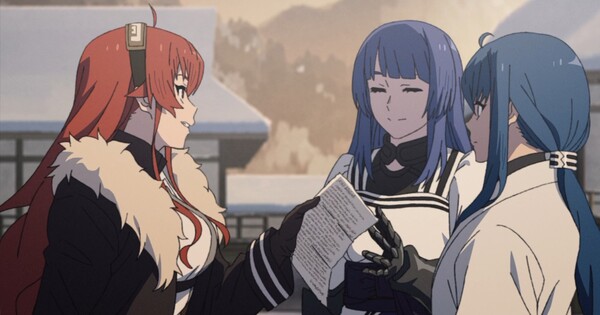
While Rudeus had planned on reaching out to Eris regardless—had even written the first page of his letter—he adds the second page to hedge his bets. Rudeus wants as much protection at home as possible—wants everyone possible to be there in case the Man-God tries at Roxy. However, he needs help in his fight against Orsted, and so he cajoles Eris into coming to help him—trusting in his future self’s interpretation of Eris and her desires.
And this scene is actually the best part of the episode. Through both the letter and her friend’s reactions to it, Eris can see three things: 1) that she messed up by leaving as she did; 2) that, while not the ideal she had hoped for, there is still a place for her in his life and in his heart; and 3) that he needs her.
This final part truly motivates her. He recognizes her hard work—that all the time she has spent training has been worth it. She has succeeded in what she set out to do—to be strong enough to stand by Rudeus’ side. And despite the friends and lovers Rudeus has gained in her absence, the person he has chosen to head into danger with is her. The fact that Orsted, the target of her martial obsession, is the man they’re going to fight is just the cherry on top of the whole sundae.
And with that, we end this first half of Mushoku Tensei III with Rudeus and Eris’ rematch with Orsted looming on the horizon. Of course, before we get there, we’ll no doubt have conversations with a loyalty-torn Nanahoshi, Eris meeting the other wives, and numerous unforeseen issues. But to be frank, this is the most excited I’ve ever been for Mushoku Tensei—and the next cour can’t come soon enough.
Rating:
Mushoku Tensei: Jobless Reincarnation III is currently streaming on
Crunchyroll.
The views and opinions expressed in this article are solely those of the author(s) and do not necessarily represent the views of Anime News Network, its employees, owners, or sponsors.
>


©CLAMP, ST/KODANSHA, TMS, TV-Asahi
Over 30 years since the original anime premiered in Japan, Magic Knight Rayearth is returning with an all-new adaptation to entice fans new and old this October. The new series, animated at Sung Hoo Park‘s E&H production and in collaboration with the original anime’s producer TMS Entertainment, is directed by Yui Miura, who hopes to tap into the charm that can only be found in classic anime series.
In this interview, we discuss the current trend of adapting older series featuring the isekai plot device (before the term was widely coined) and how older series focus on growth over wish fulfillment.
Magic Knight Rayearth is a beloved series in Japan, the United States, and abroad. What first attracted you to working on this project?
Yui Miura: As we were optimizing our production structure, the timing and all the necessary circumstances aligned almost miraculously. I was fortunate to be approached about this project at exactly the right moment, and we’re truly grateful for the opportunity to be part of it.
While “isekai” stories have become increasingly popular in the last decade, even in the ’90s, there were many stories where female protagonists get transported to a magical world. What do you think makes Magic Knight Rayearth different from modern isekai? What makes these female-led stories interesting for modern audiences?

MIURA: The biggest difference is that Magic Knight Rayearth is a story about growth and the sacrifices that come with it, rather than one about cheat abilities.
In many modern isekai series, protagonists either begin with—or quickly obtain— cheat abilities that allow them to effortlessly overwhelm their opponents. Much of the appeal lies in the wish-fulfillment of watching an unstoppable hero dominate every battle.
By contrast, Hikaru, Umi, and Fū are simply three ordinary junior high school girls who are suddenly summoned to the isekai (fantasy) world of Cefiro. They take up swords, suffer injuries, shed tears, and gradually awaken both their magical powers and inner strength as they overcome their fears and insecurities. This journey of personal growth is one of the defining charms of 1990s isekai fantasy.
Even today, many stories aimed at female audiences center on romance. In the first arc of Magic Knight Rayearth, however, what drives Hikaru, Umi, and Fū is not romantic feelings for boys, but the powerful bond they share and their promise to make it back to Tokyo together. Their genuine sisterhood—built on mutual respect and supporting one another through their weaknesses—is something I believe modern audiences who appreciate independent relationships can deeply relate to.
In the latter half of the story, they don’t simply carry out the mission they’ve been given. They begin questioning what principles should govern this world and ultimately make the choice that will determine its fate. Rather than waiting for someone else to save them, they take control of their own destiny. I believe this image of strong women choosing their own path embodies exactly the kind of empowerment that resonates with today’s anime fans.
Do you have any history with the original Magic Knight Rayearth anime or manga? Are there any CLAMP stories that are your favorite?
MIURA: It’s embarrassing to admit, but until I was approached about this project, I had never read any of CLAMP‘s works. Magic Knight Rayearth was my first introduction to their work.
When it came time to revisit the character designs with Satomi Watabe-san, what was the approach? Did you want to maintain a retro, shojo-feel, or update certain elements for this new version?
MIURA: Keeping faithful to the original manga as our top priority, I asked her to create strong visuals that would still resonate with modern audiences.
Is there a moment from the manga that you were most looking forward to adapting for the anime series?
MIURA: The ending of the first arc. I hope you’ll look forward to it!
When it came time to cast Hikaru, Umi, and Fuu, what kind of voice were you looking for in each character, and what made Sakura-san, Takahashi-san, and Okubo-san the right fit for their roles?
MIURA: When casting, we were careful to be as faithful as possible to the characters as they were portrayed in the original manga. Interestingly, the entire staff naturally found themselves saying, “This is the one!” for each role.
Can fans of the series expect the new anime to follow the previous anime’s story, the manga’s story, or something entirely different?
MIURA: We based the story on the original manga while incorporating additional episodes that further enrich the audience’s understanding of the original work.
Were you able to use any new technology techniques for this new series’ special effects animation (such as magic spells) and the Legendary Rune Gods?
MIURA: We’re using VFX techniques that simply weren’t possible back in the 1990s. At the same time, we’ve been careful to preserve the atmosphere of the original work.
What’s one message or feeling you hope viewers take away from this version of Magic Knight Rayearth?
MIURA: Many modern isekai stories are set in worlds that closely resemble RPGs, where game-like systems—such as status screens and guilds—provide the framework that keeps the story moving.
At first glance, Magic Knight Rayearth also seems to follow the classic RPG formula, with Clef telling the protagonists to become Magic Knights and save the world. However, at the heart of the story—particularly in the conclusion of the first arc—the audience is confronted with a profoundly bitter truth: the cruelty of fighting to preserve the very system that governs the world. I hope viewers will experience and appreciate the depth of this almost mythic drama.
>
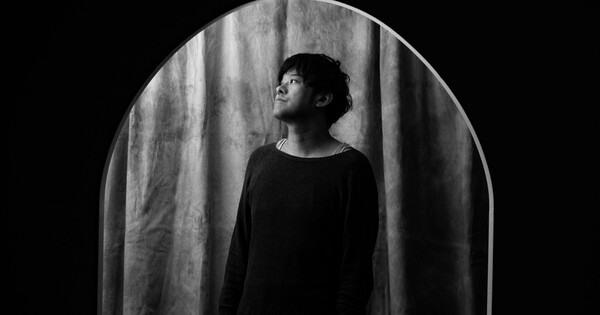
“Kazuso Oda & His NY Club Band” will perform at The Jazz Gallery in NY

Photo © Kazusou Oda / spiral-motion
Japanese musician Coda will perform as “Kazuso Oda & His NY Club Band” in New York City on November 8 at The Jazz Gallery, 1158 Broadway, 5th Floor, New York, NY 10001. Early bird tickets for the show are now on sale and general admission tickets will go on sale October 1.
The band includes Michael Massiah on guitar, Hiroyuki Sakaba on bass, and Shinya Miyamoto on drums. The concert will be the first time Coda is performing with a full band outside of Japan.
Coda, whose real name is Kazusou Oda, performed “Bloody Stream,” the opening theme song for the “Battle Tendency” arc of the JoJo’s Bizarre Adventure anime. He also performed the opening theme song for the JoJo’s Bizarre Adventure: Stardust Crusaders Egypt Arc anime as a member of the three-man group JO☆STARS. Coda performed the opening theme song “Fighting Gold” of the JoJo’s Bizarre Adventure: Golden Wind anime, and the theme song of the Thus Spoke Kishibe Rohan (Kishibe Rohan wa Ugokanai) original video anime (OVA) titled “FINDING THE TRUTH.”
Coda also was the vocalist and guitarist of the rock band No Regret Life, which performed the ninth ending theme song for the Naruto television anime.
The musician performed at Anime Boston 2026 for the event’s concert on April 4.
Source: Press release
>
In good times and bad, Mike Krukow and Duane Kuiper were the soul of Giants baseball

ElevenLabs’ new v4 speech model supports more expression control and 90 languages

England Women’s Rugby League World Cup squad: Jasmin Strange earns first call-up
-

 movies4 months ago
Search For Canadian TV Actor Stewart McLean Now Homicide Investigation
-

 Fashion9 years ago
These ’90s fashion trends are making a comeback in 2017
-
Fashion9 years ago
According to Dior Couture, this taboo fashion accessory is back
-
Fashion9 years ago
Model Jocelyn Chew’s Instagram is the best vacation you’ve ever had
-
Fashion9 years ago
Emily Ratajkowski channels back-to-school style
-
Fashion9 years ago
9 Celebrities who have spoken out about being photoshopped
-

 Anime4 months ago
Rurouni Kenshin: Hokkaido Arc Manga Takes 1-Issue Break – News
-

 Anime3 months ago
HIDIVE to Stream English Dubs for The World Is Dancing, The Forsaken Saintess and Her Foodie Roadtrip in Another World, The Dangers in My Heart: The Movie Anime – News