
Tech
Meta’s Muse Charm looks like a Tamagotchi, but it’s tapping into a much newer trend


Is Meta’s just-announced Muse Charm a playful device that will make AI more approachable to everyday consumers, or will it be yet another flop in a long list of AI hardware gadgets that didn’t take off, like the AI Pin, Rabbit, or Friend pendant? Reactions, so far, have been mixed. What the Charm is, however, is on-trend.
Like it or not, the form factor could potentially appeal to Gen Z consumers who, in this post-Labubu era, have already been into various dangling items from keychains and bags. It’s all part of a broader kitschy, retro-inspired shift in their approach to fashion and technology.
Already, Gen Z has created a market for things that dangle, with everything from lip glosses to hand sanitizers to sunblocks to fragrances and more turned into bag charms, primarily targeted at women.
Hailey Bieber’s viral Rhode lip case, which stuck the lip gloss onto a phone case, had a big influence on this idea that beauty products could also be fashion accessories, as did its other beauty-focused bag charms. (The brand saw $212 million in annual net sales from a lineup of roughly 10 products, Vogue noted last year, as the company announced its billion-dollar exit to Elf Beauty.)
Then there was the Labubu craze, which saw sales of the so-ugly-it’s-cute fuzzy monster bag charm explode, growing Pop Mart (the Chinese retailer behind the product)’s revenue to $1.8 billion in 2024, a 7x jump from 2019. While demand for the Labubu itself has since faded, the concept of the decorative bag charm has not. One analyst firm estimates the global bag charm market will grow to over $1 billion by 2030.

Today, bag charms can be characters, bedazzled beauty products, or other whimsical designs or objects, like Coach’s coveted cherry charms, a Gen Z favorite. They’ve proven popular because they’re a means of expressing your personality, just as humans have done for ages through their fashion choices, makeup, and jewelry.
Similarly, Meta’s Muse is a customizable character; you design your own avatar, which makes the AI agent a reflection of you, too.
And, as many have pointed out, Muse Charm’s form factor recalls a Tamagotchi, the pocket-sized digital virtual pet that became a major toy fad in the late 90s and again in the mid-2000s.
However, the Tamagotchi is not the most current reference. It seems the Muse Charm is actually a twist on what some young people are already doing with their Apple Watch. Often meant as a way to repurpose an older device, the concept of the Apple Watch keychain or charm has been growing in popularity, fueled by TikTok videos showing different ways to use the watch when not on your wrist.
On retailers like Amazon and Walmart, and marketplaces like eBay and Etsy, there are thousands of Apple Watch keychains, straps, pendants, lanyards, clips, and bag charm cases now available in nearly every style you can think of. As you might expect, these keychain watches are often being adopted by younger women as a fashion accessory first, rather than a piece of technology.
This all then intersects with the broader retro-tech trend, which has seen older tech like digital cameras, flip phones, iPods, CDs, cassette tapes, home phones, and wired earbuds making a quiet comeback.
This vibe shift in tech comes as young people describe the addictive, algorithm-driven feeds and “soulness” nature of technology as making them feel more disconnected, which has also fed into this trend of wanting tech they can touch and feel. (One startup, Clicks, is even bringing back the physical phone keyboard in a BlackBerry-inspired device, for instance.)
For Gen Z, these physical objects help them feel more connected with the technology they’re using and offer a sense of control over a world where technology has become so deeply integrated into our lives that it no longer feels like a choice to use it.
Young women, again, have been at the forefront of this trend, with some even crafting their own portable, mini computers, “cyberdecks,” which they fit inside clamshell purses or custom cases, and bedazzle with jewels, flowers, stickers, pearls, and other items to make them feel more personal.

That brings us back to the Muse Charm. While it’s clearly designed with the tech-as-fashion-accessory trend in mind, that doesn’t mean it will be a hit.
Meta has abused consumer trust over the years to such an extent that it may never fully recover.

To name just a few examples: the tech giant had to settle with the FTC over charges that it deceived consumers by making users’ private information public without their consent, and has been penalized by the FTC for numerous privacy-related violations. In 2023, the FTC charged Meta with violating a privacy order that was filed after the 2019 settlement. It’s also been repeatedly hauled before Congress over its harms to minors, has lost or settled multiple lawsuits over the same topics, and has seen various whistleblowers outing its abuses.
These careless privacy practices could ultimately see Meta lose the battle to be the consumer AI of choice…unless, of course, consumers decide that the “devil you know” is better than the one you don’t. (Especially when the latter are those warning AI will could put an end to the human race).
Meta’s end game, after all, is highly-targeted, highly-personalized ads. If that’s the privacy tradeoff in gaining access to free AI — Meta said it will monetize Muse by taking a small fee from transactions — consumers could be willing to take the risk.
When you purchase through links in our articles, we may earn a small commission. This doesn’t affect our editorial independence.
>
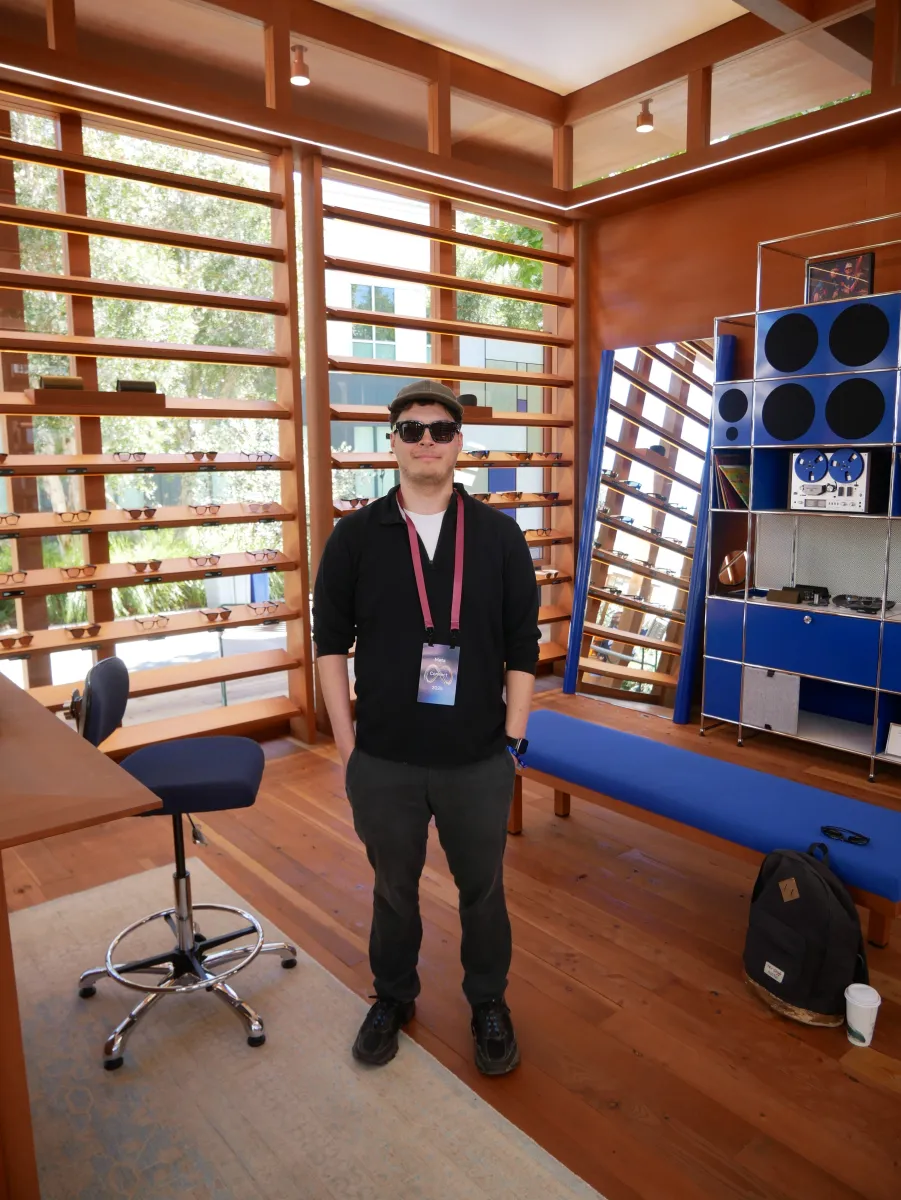
If there was one thing that was obvious this from Meta Connect this year, it’s that the social media giant is all-in on its burgeoning line of smart glasses.
Indeed, the glasses were pretty much everywhere at the annual event, where Meta shows off its newest hardware and AI products. Both Meta staff and the flocks of influencers who frequent the event seemed to arrive with the glasses glued to their faces. Most of the demos the company offered this week also involved the glasses.
I swiftly joined the bespectacled masses and found myself trying on pair after pair of Meta’s high-tech specs.
One of the more notable products I had an opportunity to demo were Meta’s new, still-unreleased, audio-only smart glasses. News of these glasses emerged not long after the company weathered accusations that it was selling “pervert glasses,” with critics alleging that its camera-equipped specs could be used for nefarious surveillance purposes.
The new glasses come equipped with six microphones, but no camera, and they have no native way to record your surroundings, which should go a long way toward easing privacy concerns. They are significantly lighter than any of the other smart glasses I’ve worn, and they were quite comfortable.
The Meta staffer I talked to emphasized the glasses’ entertainment and communication options: you can listen to music easily (they’re more comfortable than earbuds) and take phone calls without reaching for your phone.
The glasses will also integrate with Muse, Meta’s personal agentic system, which can carry out tasks on the user’s behalf. The new integration, which isn’t yet available to the public, lets wearers speak to Muse and give it commands verbally. Meta also plans to personalize the agent, letting users pick from an assortment of cute digital avatars that can represent the agent when it communicates with them.
I was given an opportunity to try this out, which was fun but also somewhat comical. You have to be very direct with the agent, and you can’t talk to anyone else at the same time or it will get confused. Problematically, I kept chatting intermittently with the Meta staffer who’d given me the glasses, and the agent kept thinking I was speaking to it, so it would talk over her.
Still, in the right context, it’s easy to see how this new integration could be incredibly useful. If you don’t mind being seen in public talking to your own sunglasses, you’ll be able to ask Muse to take care of various digital tasks for you, like sending emails or reciting to-do lists, and it will handle them while you’re out grocery shopping or having a beer. You can also ask the glasses anything, and like a mobile version of ChatGPT, they’ll spit out an answer. (I asked the glasses a question about World War II, and they gave me a succinct and historically accurate response.)
Finally, I also got to test-drive a second audio-only pair: Meta’s new glasses for the hearing impaired. Given that hearing loss affects many families (some 50 million Americans are said to have some level of hearing loss), this device, unlike a lot of other modern tech gadgets, serves a clear and practical purpose.

I spoke briefly with a member of Meta’s research team who said the glasses had been in development for some five years, and he pointed out a price difference that could make them appealing: whereas a lot of hearing aids can run as high as $1,600, the glasses will sell for $150.
The experience of wearing these glasses was interesting. Meta had me put earplugs in before trying them on to simulate the hearing loss that the glasses are meant to help users overcome. Once the glasses were on, they seemed to amplify the voice of the person I was talking to. Users can switch the amplification from focused, which zeroes in on the person in front of them, to omnidirectional, which picks up sound from all around them, depending on how they want to experience their surroundings.
Mark Zuckerberg has made it clear that he believes smart glasses are the future, and it’s evident that his company is doing its best to fulfill that mandate. But smart glasses remain a niche that has yet to truly find its footing. What was most obvious at Connect is that Meta has — in an attempt to succeed where others have failed — cast a very wide net, trying to make its glasses stylish, functional, and, most of all, useful.
Is this the future? Unsurprisingly, everyone at Connect seemed to think so. I suppose we’ll have to see if the rest of the world follows suit.
When you purchase through links in our articles, we may earn a small commission. This doesn’t affect our editorial independence.
>

Crusoe, a Denver-based AI data center startup that recently raised $3.9 billion, has ended plans to use a new line of stationary power plants developed by fellow Denver company Boom Supersonic.
Founded in 2018 as a bitcoin miner that ran on excess natural gas from oil fields, Crusoe has since become one of the biggest builders of AI data centers, including a massive campus in Abilene, Texas, that supplies computing power to OpenAI.
Boom Supersonic, which is developing a supersonic passenger jet called Overture, launched a new business last year to sell a version of the engine it’s developing for that jet as natural gas-fired stationary power plants. Its Superpower turbine shares about 80% of the same parts with that airborne engine, called Symphony.
Crusoe had signed on to be the first customer for this business, agreeing to spend $1.25 billion on 29 of Boom’s 42-megawatt Superpower turbines. The first deliveries were supposed to begin in 2027. But that deal has since fallen apart, according to Boom Supersonic CEO Blake Scholl.
Friday, in a post on X, after congratulating Crusoe founders Cully Cavness and Chase Lochmiller on the company’s recent raise, Scholl said the companies are no longer moving forward with the turbine launch partnership. Although he did note that other customers were in its pipeline.

“The TL/DR is that turbines are no longer part of Crusoe’s near term primary power mix at Abilene/etc., so a launch partnership just didn’t make sense,” he wrote in the post. “Boom will be delivering about 250MW of Superpowers next year to other sites, and we’re targeting 1GW in 2028. We’re grateful for the help Crusoe gave us in shaping Superpower and continue cheering for their successes. The future is long, and we look forward to potentially teaming up if/when turbines become part of their primary power mix.”
Crusoe confirmed to TechCrunch that it is no longer doing business with Boom.
“We build AI factories from the power up, and we’re bringing new campuses online across the country, powered by innovative energy sources,” spokesperson Andrew Schmitt said in an email. “As our portfolio grows, we stay flexible, choosing the energy solutions that are right for each site as its needs evolve – including turbines, along with wind, solar, batteries and the grid. While Boom has been a great partner, the partnership isn’t the right fit today. We wish them well.”
Losing its launch customer is seemingly a setback for Boom, which raised $300 million last year, largely to commercialize the new business. The idea, Scholl told TechCrunch at the time, was to use profits from the stationary power plant business to fund the development of Overture.
Scholl could not be reached for comment before publication; TechCrunch will update this article if he responds.
When you purchase through links in our articles, we may earn a small commission. This doesn’t affect our editorial independence.
>

Automattic CEO Matt Mullenweg has rebuilt the company’s board just weeks after its previous directors tried, and failed, to oust him. The board, which was announced to staff Friday, is an eclectic group that includes a best-selling science fiction author and two co-founders of the now-defunct social app IRL, TechCrunch has learned.
The new board is the latest twist in a internal governance fight at Automattic, the parent company of WordPress.com, Tumblr, WooCommerce, and others. Earlier this month, the previous board voted to place Mullenweg on leave in an attempt to remove him from the board, only to have the CEO retake control just 33 hours later and remove or accept the resignations of the directors who were involved.
This week, Mullenweg posted about a board meeting, but didn’t share who he was meeting with. Now, he’s finally informing Automattic employees of the board changes via the company’s announcements channel in Slack.
Sources told TechCrunch the new Automattic board includes:
- American writer Hugh Howey, author of the “Silo” book series;
- “Breakup Bootcamp” author Amy Chan (who recently reposted Mullenweg’s tweet about the company’s AI site builder, Spacefast).
- IRL co-founder Henry Khatachryan, who Mullenweg described as “a founder and builder,” a longtime collaborator with the late technology writer Om Malik and the website builder of journalist Nick Bilton.
- And Krutal Desai, who co-founded the social app IRL with Khatachryan.
We should note that IRL shut down after investigations revealed that nearly all of its user base was made up of bots. The co-founders, who also included CEO Abraham Shafi, later sued SoftBank and other investors after SoftBank had sued for securities fraud.)
A slew of new advisers have also joined, including Curio Studio co-founder Jaime Waydo, June co-founder Matt Van Horn, and KISSmetrics co-founder Hiten Shah.
In the announcement to staff, Mullenweg reportedly wrote that, “for purposes of Delaware law, I am the CEO, President, Treasurer, and Secretary,” adding that the attempted firing had also brought in “many amazing supporters.”
“We had the most interesting board meeting in a decade (since the Woo acquisition),” he said.
Reached for comment, Automattic said it hoped to have a comment for TechCrunch soon.

Automattic’s original board had voted to put Mullenweg on paid leave, but he took back control of the company, letting go of those involved in what he described on X as a “coup attempt.”
To replace the board, Mullenweg leveraged his voting shares — he controls 84% of the vote, he said at TechCrunch Disrupt 2024. The period between his departure and return lasted exactly “33 hours and 20 minutes,” Automattic told TechCrunch previously.
Following the failed board vote, member Toni Schneider, a founding CEO of Automattic and now CEO of Bluesky, resigned from his board position. Mullenweg himself removed Gen. Ann Dunwoody from the board, and board member Sue Decker also resigned. In addition, Mullenweg let go of Automattic CFO Mark Davies, who was slated to become interim CEO, and Chief Legal Officer Andy Missan, TechCrunch confirmed with sources.
The board never publicly shared its reasons for trying to oust Mullenweg.
Of note, Mullenweg also replaced Automattic’s legal counsel after his return, a move that raises questions about whether the boardroom fight is tied to the company’s ongoing lawsuit with hosting provider WP Engine over trademark disputes and claims over WP Engine’s lack of contribution to the WordPress open source project. (WP Engine’s legal team had also accused Mullenweg this July of destroying evidence, court filings show.)
In an internal message shared after the ousting and return, Mullenweg had acknowledged the chaos it caused, saying:
Last week, several board members formed a special committee and voted to place me on a leave of absence. They did this without advance warning and without giving me a meaningful opportunity to understand or respond to their concerns before they acted. I was denied even a brief extension to consult with independent legal counsel.
I took the steps necessary to reverse that action. I am back and fully in charge of the company. I am again working alongside you to make our company a success.
I also want to share that we have retained Susman Godfrey LLP as our new litigation counsel. Susman Godfrey is one of the top trial firms in the country, and they will be protecting our company’s interests and defending us in our ongoing litigation.
I know this past week has been unsettling. I appreciate your patience and your continued focus on the work that matters. I will have more to share soon, but for now, know that Automattic’s mission and priorities remain unchanged.
When you purchase through links in our articles, we may earn a small commission. This doesn’t affect our editorial independence.
>

At Meta Connect, the company’s smart glasses were everywhere
After his USMNT breakout, Alex Freeman gets a full-circle return to Orlando
How to watch Rockies vs. White Sox: TV channel and streaming options for September 25
-

 movies4 months ago
Search For Canadian TV Actor Stewart McLean Now Homicide Investigation
-

 Fashion9 years ago
These ’90s fashion trends are making a comeback in 2017
-
Fashion9 years ago
According to Dior Couture, this taboo fashion accessory is back
-
Fashion9 years ago
Model Jocelyn Chew’s Instagram is the best vacation you’ve ever had
-
Fashion9 years ago
Emily Ratajkowski channels back-to-school style
-
Fashion9 years ago
9 Celebrities who have spoken out about being photoshopped
-

 Anime4 months ago
Rurouni Kenshin: Hokkaido Arc Manga Takes 1-Issue Break – News
-

 Anime3 months ago
HIDIVE to Stream English Dubs for The World Is Dancing, The Forsaken Saintess and Her Foodie Roadtrip in Another World, The Dangers in My Heart: The Movie Anime – News