
Merritt Wever and Robert Pattinson in ‘Primetime’
A24


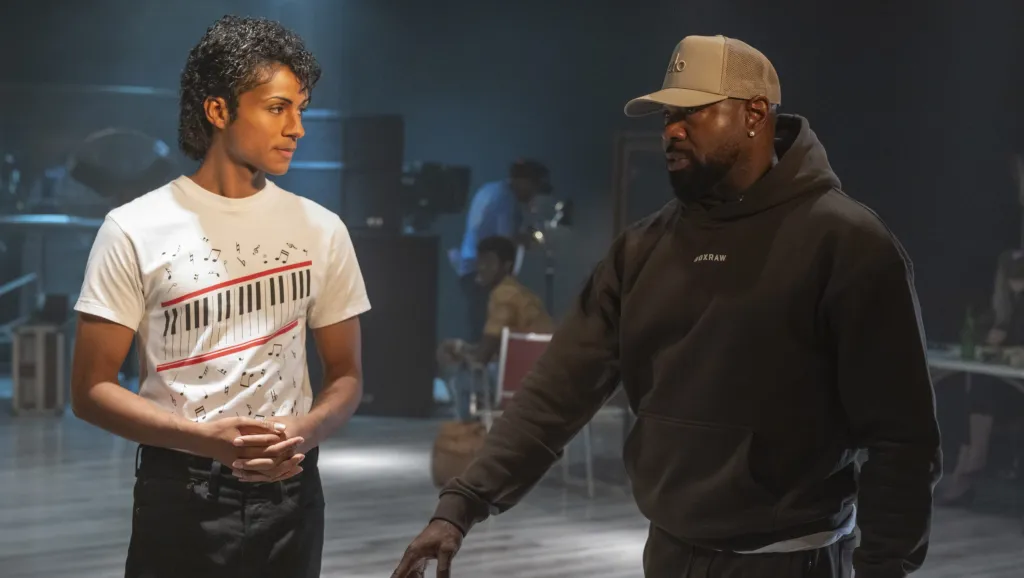
Antoine Fuqua notched the best opening of his career at the box office this weekend as his Michael Jackson biopic Michael, from Lionsgate and Universal, debuted to $97 million in the U.S. and $217.4M worldwide. The sweat truly paid off for the director, who cut his teeth doing music videos for Toni Braxton, Stevie Wonder, Prince as well as Coolio’s “Gangsta’s Paradise.”
Quite often, the movies that last for ages — i.e., The Godfather, Chinatown, Titanic — are those that have the most daunting behind-the-scenes moments. Fuqua was thrown a curveball after finishing production on Michael: the movie’s finale originally featured Jackson accuser Jordan Chandler, whose settlement with the singer’s estate guaranteed they would never be dramatized. The estate said mea culpa and took on the extra cost of $50M in reshoots, taking the pic’s net production cost to $200M. Fuqua had to pass on other jobs as additional shooting on Michael lasted 20 days.
We caught up with the filmmaker Sunday morning on his way to Italy, where he’s shooting the Netflix Denzel Washington feature Hannibal, to talk about making Michael a reality.
DEADLINE: Did you ever meet Michael Jackson?
ANTOINE FUQUA: No, just a phone call when I was being considered as a director for “Remember the Time.” I was in Italy, so I couldn’t be part of the bidding on that one. He was a quiet, sweet guy. It wasn’t so much an audition or anything like that, it was more him saying hello and how much he liked my work. It was like he was touching base with me. It wasn’t a long phone call.
DEADLINE: When the opportunity arose to direct Michael, did you have to pitch yourself or was it as simple as Graham King saying, ‘You’re the guy’?
FUQUA: Bob Richardson, the DP, we were working on Equalizer 3 together, and he showed me a photo of Michael Jackson and him on the set. And I said ‘Bob, how do you look exactly the same with long grey hair with Michael? He said, ‘That isn’t Michael, it’s Jaafar, his nephew, they did a test.’ And it blew me away. He told me that Graham King really wanted me to do this Michael film and I hadn’t read the script yet. After that, Graham flew to the Amalfi Coast and we sat down, talked about Michael, and that’s when it started. He talked to me about any concerns I might have, and I read the script, and I was in.
DEADLINE: Lionsgate tells me you had a very strong take on what Michael should be. Can you share that with us?
FUQUA: I wanted to humanize Michael. I wanted people to get to know him: How eccentric he was, how he was as a young man. I always felt that younger generations didn’t know Michael or his story. In order to tell anything about Michael, you had to remind people about the magic of him, the power of the music, and the fun that he brought into the world and his own insecurities. He’s one of the most complex characters to tell a story about. My approach was to ground him as much as we can, so that he’s relatable to anyone outside of being on that stage.
DEADLINE: The way that the movie is paced is nuanced, and yet suspenseful given the dynamic between his father Joe Jackson and himself. You never know when Joe is going to snap.
FUQUA: It’s delicate. You can’t escape that situation when you live with your parent. So, he’s always in that trapped position. It has to do with how Michael responded to animals, like Bubbles [the chimp]. That says a lot about Michael rescuing other people who felt that they were being abused, mistreated. He would do whatever he could to help others. So, animals were easy for him because he’s always been that way since he was a kid. He rescued [them], and that was part of his nature.
DEADLINE: In terms of everything that happened where you initially shot the film, and then the whole upending between the dramatized accuser and the estate… Has there ever been a challenging film such as this in your career?
FUQUA: All movies have different challenges, but this one was really unique. It was an extra punch in the gut for me at that moment, because I was in the exact same situation with Emancipation. I was literally handing in the director’s cut when Will [Smith] slapped Chris [Rock]. I was floored and devastated and knew what that meant overall and that the movie would be written off. This was a similar situation, because I was handing in the director’s cut and I get this call. That was a tough day.
DEADLINE: It’s clear the groundwork you’ve laid in Michael in regards to telling the story in a sequel about the accusations brought against him. The fact that it wasn’t addressed in Part 1, did that weigh heavy on your mind and the studio’s?
FUQUA: It definitely did for a while, because we had to rethink everything. That was a tough period. Graham, [screenwriter] John Logan and I banged our heads around. We had a lot of meetings. But we clicked into it at the same time: The movie is called Michael so you have to focus on Michael. Unless you can truly take your time, let’s go back to the beginning and really show people who he was on the stage. He’s a superhero on the stage. Just like a human being, movies have the power of empathy to just say this is a human being. No one is perfect. It was important to take the audience through a process of how do you get to wherever it’s going to go in a second movie; for people to get a bigger idea of his personality and what shaped him.
What we realized, if you start there, some people who don’t know Michael, it’s out of context. His arc was so extreme. It was important for us to go back, and give them a journey to go on with Michael. There was also a certain amount of abuse he was always dealing with emotionally and physically in that household with his father. If you don’t do that, you won’t understand him and where the story goes. We planted the seeds: He starts talking to John Branca about the pills, ‘These pills are making me sleepy and the doctor is saying you gotta take these pills’; that’s what killed him. So, it was set up along the way that these are the things that led to wherever it’s going to go which we all know. That’s part of the tension you feel, because you know it didn’t end well, unfortunately.
DEADLINE: How long did it take John Logan to write the additional scenes?
FUQUA: I can’t remember the exact amount. We were writing while we were shooting. As we were shooting, we were discovering things. We had the structure down. Once we had that, Graham and I would go through that, then we’d sit with John. It was a lot of digging and going back at scenes we had before.
DEADLINE: You have a third of footage that can go into the potential sequel?
FUQUA: Absolutely.
DEADLINE: Did you shoot through the end of his life? Or did you shoot up until “Remember the Time”?
FUQUA: We went pretty far. We went through the Jordan allegations we couldn’t use. We went farther than that. Maybe a year or two after that (1995) when things turned against Michael.
DEADLINE: How did Jaafar Jackson come to win the role? Were there others up for it?
FUQUA: When I saw the photo I was blown away, but that’s a photo. When I came back from Italy we set up a whole make-up and camera test. There were others as well in the mix. But when I came back, Graham met Jaafar before him. When I got back, I had breakfast with Jaafar and I could see how gentle and elegant he was, just a kind of person, you could see the DNA of Michael. I wasn’t sure if he was auditioning. Then I spent time with him, and he wasn’t sure he wanted to be an actor. But I know this was something, if he was going to do it, he was going to go all in. Graham had him take some acting lessons. When I got involved on the set, and he was dancing, I threw a question at Jaafar that he didn’t know was coming. I was rolling and I asked him a question like he was Michael. The room stopped, it was almost spiritual: He answered my question as if he was Michael. [Director of photography] Dion Bebe who was helping out with the test, he had tears in his eyes, and half of the crew did. It was so powerful. I thought he could do it. Because he didn’t know I was going to ask him that question and he didn’t know that I was rolling. I wanted to see if he could stay in the moment and be Michael.
Then there’s the whole idea can he do it in front of a whole cast and crew. I went over to Havenhurst where he was living, rehearsing and practicing. The walls were covered in Michael but with detailed graphs, it was like A Beautiful Mind. So, he’s in it, but can he do it the day of? We started with Bad with a big show on the Sony lot with a 1,000 extras and lights, a big show. Here ya go, kid, throw you into the fire. And he blew my mind. I watched him do it over and over again with the dance moves, until his feet were bleeding, but also the acting routine.
DEADLINE: If there’s a sequel, is it certain you will direct?
FUQUA: I would like to, it’s just about scheduling. It would kill me if somebody else did it.
DEADLINE: As far as a Janet Jackson movie… I know that she opted not be involved in Michael and the rumor is that she wants to do her own feature. Have you had any conversations with her about that?
FUQUA: I have not. I’m a fan of Janet, for sure.
>
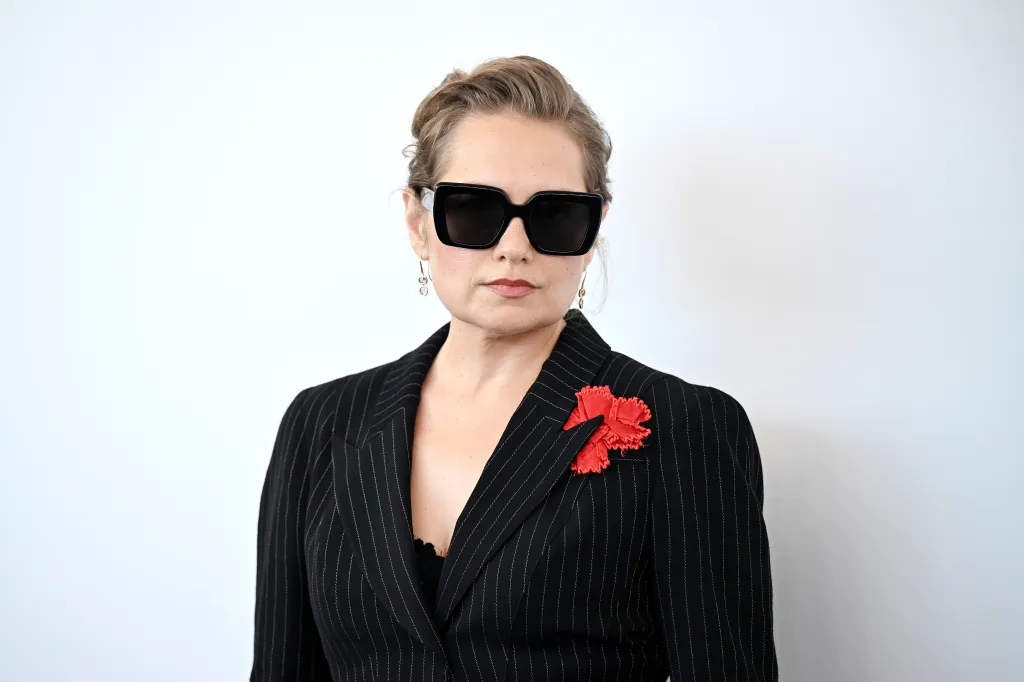
From Alex Gibney’s mammoth study of the rise of X proprietor Elon Musk to Danny Boyle’s dramatization of the birth of British tabloid newspaper The Sun, this year’s Venice Film festival featured a lot of movies speculating on the past, present and future of the media. None did it quite as disturbingly, however, as Lance Oppenheim’s Primetime, starring Robert Pattinson as Chris Hansen, one of the earliest stars of the early-21st-century reality-TV revolution.
Called To Catch a Predator, Hansen’s show was intended to show the vulnerability of young boys and girls online; instead, it proved the gullibility of perverted adult men, who showed up in surprisingly large numbers at Hansen’s “bait house” fully expecting to have sex with a minor. Despite the dubious legality of each sting operation, and the full-on prurience of seeing these men humiliated on national television, To Catch a Predator lasted several years before this powder keg of controversy finally, and perhaps inevitably, exploded.
If Oppenheim’s film were simply about Hansen’s hubris, that alone would be enough for a movie. But Primetime also features a superb supporting performance from Merritt Wever as Hansen’s producer, Andie Bender. Though Wever stresses that her character is fictional — and modestly posits that her co-star Skyler Gisondo, who plays the show’s underage-looking catfish “Decoy Dan”, is the film’s real human heart — Andie represents the many layers of enablers that allowed Hansen’s dangerous ambitions to flourish unchecked.
Here, Wever reflects on the themes of the theme, which released in the US on Friday, with possible spoilers…
DEADLINE: Did you know about To Catch a Predator before you got this role?
MERRITT WEVER: I did. I mean, I’m old enough that I remember it being on television. I remember, I did actually watch it myself, but I’ve often wondered [how others will react to it]… The film played in Venice, for instance, and I wondered about the differences that would arise between audiences that already knew about the show, because it’s part of our cultural backdrop, and ones that did not. Although I think there’s probably plenty of younger people from the U.S. who didn’t know that it existed or didn’t watch it when it was originally on. So, I’ve been curious what they’ll think of not just the movie, but of the show itself.
DEADLINE: Why did you want to do it?
WEVER: I wanted to do it because I liked the original whiff, or hit, that I got off of the character. The script went through a lot of iterations. I think it was constantly in flux and they were constantly working with it and on it and figuring out how this kind of carousel of characters were going to interact and what shape they were going to take. But Andie always had this kind of rottenness to her that I think she is wrestling with, coming to terms with, and having to make choices around whether she’s going to commit to the rottenness or try to move in another direction. I think Lance and I talked a lot, and [screenwriter] Ajon [Singh] talked a lot about that fable of the two wolves. Do you know it? An elder tells a child that inside everyone are two wolves, a light one and a dark one. And the youngster says, “Which one wins?” And the elder says, “Whichever one you feed.” So, I think Lance and I talked about trying to find a structure for a character who is trying to choose between two wolves inside her.
DEADLINE: It’s interesting, because at the beginning of the film, we want to believe that you’re going to be the conscience of the movie.
WEVER: That’s what I hoped would come through, and I didn’t know if it would or not — that she’s the character that you think is going to make a different choice. And she’s the one that does not.
DEADLINE: Is she based on a real character? Is there any one person, or is she a composite of people?
WEVER: I wouldn’t even call her a composite. She really is a from-scratch character. Chris’s character is a dramatization, and I would call Skyler’s character an amalgamation, but Andie always kind of was drawn from thin air. There were producers on his show, but I think she’s in some ways the most from-scratch character. And I think that’s probably also why there was so much room.
Merritt Wever and Robert Pattinson in ‘Primetime’
A24
DEADLINE: It seems you’ve been around television a lot in your life — not the same kind of television, obviously — but how did you prepare for the role, and what kind of research can you do for a piece like this?
WEVER: I researched a lot about her job. I read a lot of memoirs. I watched a lot of documentaries. I like to do a lot of research, although I’ve learned that I have to be careful with research because sometimes it can send me into a direction that gets me interested or excited, but that doesn’t actually belong in the world of the film I’m doing. I’ve actually found that sometimes when I’m playing people who are based on real-life figures, I start to get attached to the figures in their honest iterations and then use that as my lighthouse instead of the script. And at the end of the day, it’s what’s on the page that you’re actually doing. But the thing I found most helpful when it came to pure research was talking to two long-time television producers about what their job entailed 20 years ago too, before we had phones and the internet in our pocket, and, specifically, what it’s like to work with a host when you are a producer on a show and how you are responsible for not just finagling a production, but finagling a human being.
DEADLINE: That certainly comes across.
WEVER: Yeah. I think that’s the hardest part of her job. And also, I think for the purposes of the film, the most interesting part of her job.
DEADLINE: How closely did you work with Robert Pattinson? Did you know him prior to filming?
WEVER: No, I didn’t know him. I think first I Zoomed with Lance, and then the next step was to Zoom with Lance and Rob, but we didn’t know each other. I think he was coming off of a busy shooting schedule, and I think we just kind of hit the ground running.
DEADLINE: Did you have any time to rehearse with him? You obviously have a close relationship in the film.
WEVER: No. And also, rehearsal is not really where Lance’s interest lies. Perhaps because he comes from a documentary background, he wants to shoot everything as is. But I think because Lance and I had spent so much time talking, it didn’t feel necessary to talk more once we got to set with Rob. And I also don’t really like talking too much about the work, the acting, if it’s divorced from the actual doing of it, like when you’re doing a play and you’re in a rehearsal process. I don’t like to decide ahead of time what something’s going to be, but different people work differently?
DEADLINE: It’s interesting that you mentioned his documentary background. Because it does start off quite naturalistic, and then it ends up very differently. It becomes kind of a tabloid movie, and I mean that as a compliment.
WEVER: Yeah, that’s the style. I mean, Lance is someone who was a very specific and strong visual language, and he’s been working with his collaborators — his DP and his editor — for a long time. So, they have a language and they have a style that they live within. I remember when the job came my way, I read the script, which was very specific and unique, and they told me that it would be directed by a documentarian. And I remember thinking, “Well, geez, how is that going to work?”
Before I had seen any of his films, I just remember thinking — assuming — that there would be a lot of fly-on-the-wall shots, where it’s just two people sitting and talking to the camera in a very static image. And then, I think, within the first few minutes of his first documentary that I started to watch, I was like, “Oh, he knows how to film this story. He knows how to shoot this story, and this is actually quite a good match between material and filmmaker.” I don’t know if you saw Ren Faire, the limited series he did. It centers around a mad king, and that’s always how I saw Chris in this, someone calling the shots, creating chaos while his subject scurried around in his wake.
DEADLINE: What are your thoughts on Chris Hansen as a host?
WEVER: Again, because of his background, Lance interested in the meta. He’s interested in where fact and fiction intertwine, feed each other, talk to each other. But there were so many shifts and changes in the material that I had to focus on my own paper at the end of the day. That was the only thing. I wouldn’t say I was in control of it, but that became my job. I wasn’t going to be able to wrangle any part other than that one.
Merritt Wever as Andie in ‘Primetime’
A24
DEADLINE: It’s definitely a film that asks the audience to go with it, and it’s almost over by the time you’ve had the chance to wrestle with the…
WEVER: Yes, it’s a ride. And it goes quickly. And I’ve seen it twice with audiences, different audiences. [Laughs.] Yeah, maybe I should have let you finish asking your question! Sometimes I interrupt people because I’m trying to run out the clock with things I can’t think about, and then I don’t give them an opportunity to ask me the things that I worry I don’t have an answer for.
DEADLINE: No, you were starting to. It was an observation really rather than a question. It’s about how, a bit like your character, one finds oneself, as a viewer, swept along with it, even though you know where it’s heading. How else could that show have ended, the way people were being entrapped, and, certainly, with the dubious legality of it all? I think that your performance particularly shows the way people were seduced by the ratings.
WEVER: The only response I have is yes, correct. I feel like it’s a film that exists within a tradition of films that come along every five to ten years to tell a similar story against a dubious — to use your word — media landscape. And the container of the story is always different, but the moral remains the same and it’s always an ugly one, but it doesn’t really matter. We don’t seem to learn.
DEADLINE: I did notice that early on in your career you did Series 7: The Contenders (2001), about a reality show in which regular people are forced by a national lottery to kill each other…
WEVER: It’s not my way to be self-referential, but I also think that’s the one movie that Lance hasn’t seen. He seems to have a secret link to everything, anything you ask for. I may text him soon actually to see if he has some links for me. But I know what you mean. I really did think of that movie too once it was all done. It’s also very heightened and elevated, except that one is a show that didn’t exist, and this one is a show that did, but both of them are shocking and surprising.
DEADLINE: I’m not suggesting that you knew 25 years ago that this would happen, but it is interesting that something you did as sci-fi, or speculative fiction, soon became something that was actually quite real.
WEVER: I know, I know. I remember when we were making that film, I remember us talking about this new show called Survivor. I think we shot it in maybe ’99 or 2000. Yeah, those two films are certainly in conversation with each other.
DEADLINE: You mentioned the screenplay. The film does kind of change. I wouldn’t say it radically changes, but it certainly changes from a lighter tone to a much darker tone, and it almost becomes Zero Dark Thirty at the end. Was that on the page?
WEVER: I wouldn’t say that the visuals were on the page, but it’s true that it lives tonally in more than one place. And I think the challenge, or one of the tasks I had, was how do I make sure that two characters who almost feel like they live in different worlds but are in the same scene together, how do I make sure that you buy that they’re actually talking to each other? But, in some ways, I think that was a task for Lance and his editor. I think that there were many cuts of this film, and I remember when I walked away, I thought, “I’m not really sure which film we just made. And I’m not sure which film they’ll choose at the end of the day to have made. And I also don’t know which version of Andie they’ll choose.”
I think we tried having her live in a lot of different places, and, again, maybe that speaks to Lance’s background as a documentarian. I found it almost disorienting to work that way, but sometimes the container and the content feed each other, and the story, as you pointed out, becomes increasingly madcap and disorienting, so maybe it makes sense that, by the time I walked away, I wasn’t sure exactly who I was or what I had done and what I was going to be a part of — I was going to have to wait until the edit was done and see this film, and in a weird way, meet the film, and meet Andie, for the first time. So, in doing press, people keep asking me for the answers, and in an odd way, I’ve never felt like I had less answers for people. I’m still learning who Andie is and what we made, and I’m needing to hear from the audience what it is that we made and what they saw in her.
DEADLINE: She seems almost like an accidental Lady Macbeth.
WEVER: She makes her choice. She chooses her fighter. Yeah. And to bring Skyler into this, I think that you see his character as the final victim of the show. He’s Decoy Dan. I think he does an exceptional job, and I think that without his performance and his character, the film wouldn’t mean anything. We did work together, but I think that Andie — weirdly — exists a bit off to the side, even in the film. Dan and Chris interact with each other and spend time with each other in a way that Andie doesn’t. So, we worked together briefly, and he was wonderful. But when I think of Andie, I think about her over to the side, alone.
DEADLINE: How did you feel doing those scenes? Were you there when they filmed the scenes with the pedophiles, basically, as they come into the kitchen? Was that just the magic of cinema or were you actually there, watching those setups on the monitors?
WEVER: I was there, but we didn’t always have the footage that was taking place. We were pretending to be watching, but I was there, and I was there enough that I could see some of the stuff as it played out. I understood what she was going to be watching.
DEADLINE: I just wonder how it affected you emotionally in terms of watching. I mean, we can’t feel too much sympathy for these people, but yet there is an element of…
WEVER: Compassion? I think if there wasn’t compassion in the film, we would certainly be missing a piece of the story. I think that’s part of the tragedy of it. I mean, Rob’s character repeats the line, “What would’ve happened if I hadn’t been here?” But I will say, this was the second in a string of parts I played where the core of the character was kind of nasty, and there was not a scene of real catharsis or change. And I did, by the end of this shoot, feel pretty rotten myself, and for the first time was like, “All right, how do you get something out of your body? Do you need to intentionally do that?” It wasn’t a pleasant space to find yourself living in, day in and day out. And I remember we did three weeks of night shoots at the end of the film, literally the final days, and I was ready for it to be over, and I was ready to not be her anymore.
DEADLINE: How did you get rid of her? What did you do?
WEVER: I was very quickly on a plane to another part. Sometimes that’s good, sometimes that’s helpful, but, in retrospect, I wonder if, moving forward, I’ll be a little more intentional when I play certain parts that I’d like to say goodbye to as fast as possible. It was also like coming off of a year, or a year-and-a-half, of a lot of work after the strike trying to kind of make up for lost time, make up for lost income. So, I was working at a pace that I think caught up with me — particularly physically, as you get older. But that’s just another thing that you only learn the hard way, that, as you age, you need to kind of take care of yourself a little more. These are long days.
DEADLINE: It’s funny, there’s a lot of films at the moment — like Danny Boyle’s new film, Ink — where it seems to me that we’re trying to look back and figure out where everything went so wrong in the world, this now post-truth world. Did the script speak to you in terms of what’s happening today?
WEVER: It’s based on an article, and I remember I liked that, it was how I could trust that the moral center of the film would be in the right place. It’s based on that, and the fact that Lance said early on, “Just so you know, this is not a hit piece in any direction. That’s not the gaze I’m taking.” But in the original article, there’s a lot of compassion, and it does seem to be like a tale of what happens when media, news, and law enforcement come together and get very mixed up, and the wrong entity starts to call the shots. I mean, listen, our current president was on a reality show for years and years and seasons and seasons, so I think looking back is likely fruitful, a worthwhile endeavor.
DEADLINE: So, what’s next for you?
WEVER: I’m thinking of the things I can’t say. What’s next for me is… Yeah, I’m thinking of the things I can’t say, which sounds like I’m thoroughly more employed than I am, I promise. [Laughs.] This girl is highly tech avail, highly tech avail.
>
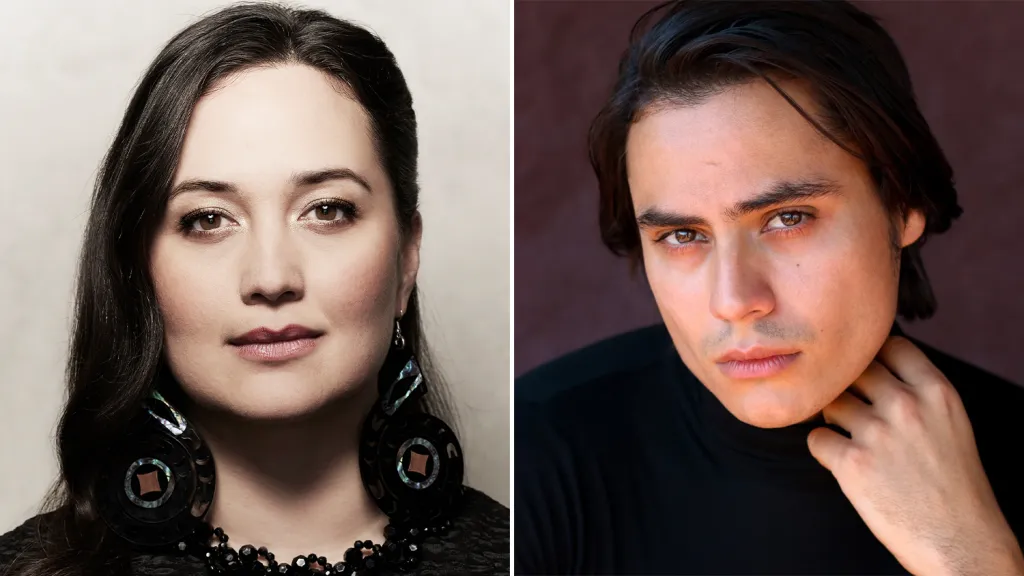
EXCLUSIVE: Oscar nominee Lily Gladstone (Killers Of The Flower Moon) and Twilight and Dark Winds actor Kiowa Gordon are attached to star in The Curse of Silver, a supernatural horror-western reuniting the pair with Quantum Cowboys director Geoff Marslett, who co-directs alongside Gordon.
Set on the “lawless Texas-Mexico border in the aftermath of the Civil War, the film follows two Union deserters who drag a cursed chest of Confederate silver into a besieged town, unwittingly unleashing supernatural violence.”
The Curse of Silver is among the 80 projects selected for the 2026 Gotham Week Project Market, running September 27–October 3 in Brooklyn.
Liz Cardenas (A Ghost Story) and Ram Getz (Sunny) are producing; Cardenas is a former Gotham Cannes Producers Network Fellow and Juror. Gladstone, Gordon, and Michael Mortensen serve as executive producers. The screenplay was written by Geoff Marslett and Rafael A. Ruiz. A start date has yet to be set.
Marslett previously directed Annecy and FilmFest Munchen title Quantum Cowboys. His earlier features include Mars, starring Mark Duplass (SXSW, London Film Festival) and SXSW winner Loves Her Gun.
Gordon recently wrapped season 5 of AMC’s Dark Winds, executive-produced by George R.R. Martin. Gladstone next stars opposite Michael B. Jordan in Amazon MGM’s The Thomas Crown Affair, due out March 2027.
Gladstone is represented by IAG and Authentic Talent. Gordon is represented by GM Management and Greenburg Glusker.
>
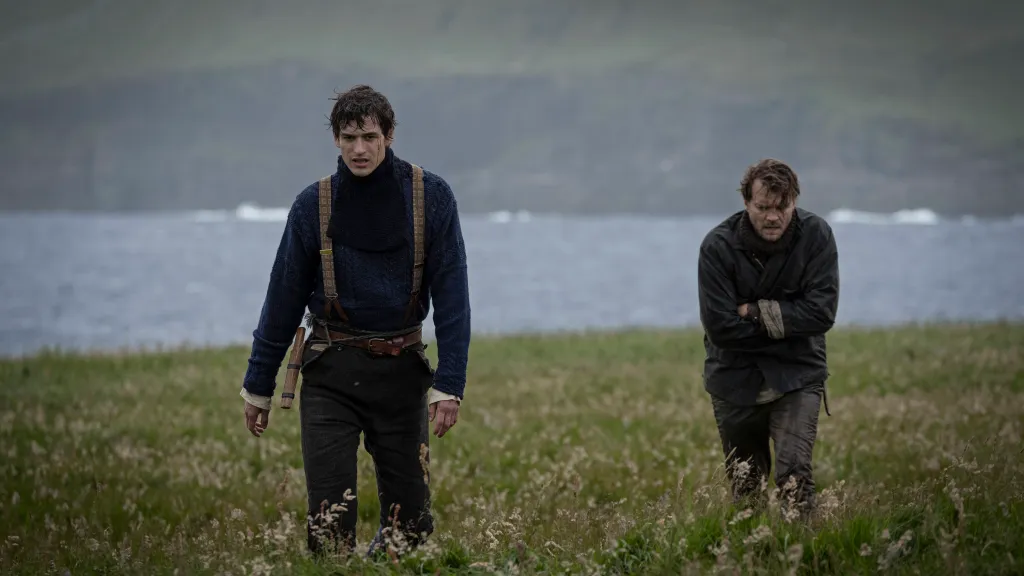
EXCLUSIVE: Altered Innocence has acquired all North American rights to Kasper Kalle’s queer gothic romance No Rest For The Wicked.
The film, which world-premiered in Competition at the 2026 Fantasia International Film Festival won the Cheval Noir Award for Best Director and the Cheval Noir Award for Best Actor (Pilou Asbæk). It will continue its festival run ahead of a theatrical release in 2027.
Set against the windswept landscapes of the Faroe Islands in 1862, the movie follows Baldur (Egor Venned), “a young fisherman whose isolated life is transformed by the arrival of Helge (Pilou Asbæk), a rugged Danish whaler. As a forbidden attraction grows between the two men, tragedy unleashes supernatural forces upon their deeply religious community. Baldur and Helge’s passion gives rise to a haunting tale of love that refuses to die”
The movie is inspired by Karl Heinrich Ulrichs’ 1885 short story Manor, an early work of queer Gothic literature published more than a decade before Bram Stoker’s Dracula.
The deal was negotiated between Frank Jaffe from Altered Innocence and Hélène Espeisse from Charades.
Written by Rasmus Birch and directed by Kasper Kalle, the movie stars Pilou Asbæk (Game of Thrones), Egor Venned, Sofia Nolsøe Mikkelsen, Jóhannes Haukur Jóhannesson and Kjartan Hansen. Pic film was produced by Lars Bredo Rahbek for SF Studios, with Faroese Outlier Projects (Faroe Islands) and Truenorth (Iceland) co-producing; with support from the Danish Film Institute and the Faroese Film Institute.
“I’ve always had a huge love for queer horror, so it’s especially exciting to get to release one that operates at this level,” said Altered Innocence founder Frank Jaffe. “No Rest For The Wicked is a stunning, sexy and deeply romantic gothic tale that I can’t wait for fans to sink their teeth into!”
>


Search For Canadian TV Actor Stewart McLean Now Homicide Investigation


These ’90s fashion trends are making a comeback in 2017
According to Dior Couture, this taboo fashion accessory is back
Model Jocelyn Chew’s Instagram is the best vacation you’ve ever had
Emily Ratajkowski channels back-to-school style
9 Celebrities who have spoken out about being photoshopped


Rurouni Kenshin: Hokkaido Arc Manga Takes 1-Issue Break – News


HIDIVE to Stream English Dubs for The World Is Dancing, The Forsaken Saintess and Her Foodie Roadtrip in Another World, The Dangers in My Heart: The Movie Anime – News