
Tech
After a deepfake voice fooled her grandfather, this founder sprang into action

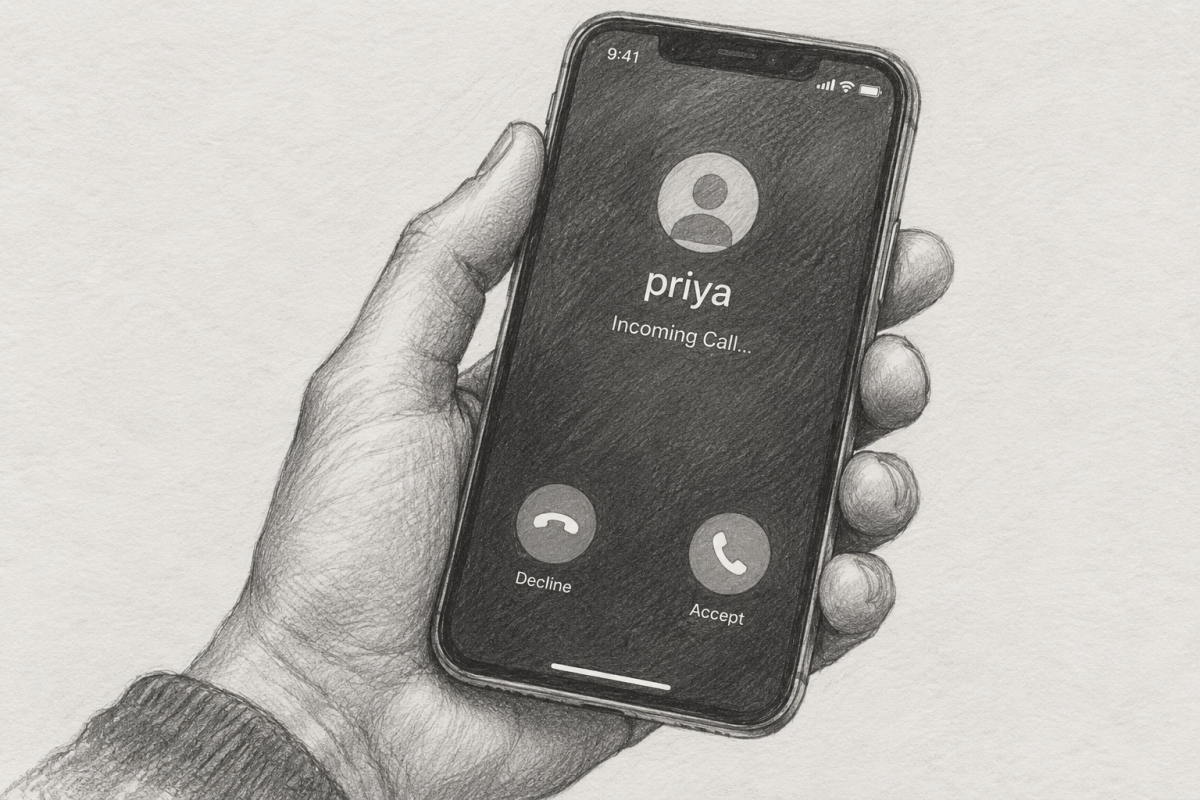
When the call came, Tarini Padmanabhuni’s grandfather believed he was talking to his brother. The voice on the other end of the line said his brother had been kidnapped and that the only way to get him back was to pay a ransom. Her grandfather paid, only to learn later that his brother had been somewhere else entirely, with no clue any of it was happening. The voice, it turned out, was a deepfake: an AI-generated imitation of his brother’s.
“What stayed with me wasn’t the money,” Padmanabhuni says of the incident. “It was that he had no way of telling.”
That was about two years ago. Today, she says, DetectifAI, the San Francisco-based company she founded, aims to ensure that others can’t be hoodwinked the same way.
It’s a big and growing problem, and a market to match. According to the FBI, Americans lost close to $900 million to AI-driven scams last year, up 24% from 2024. People 60 and older lost twice as much as those aged 50 to 59.
There’s no shortage of competition in deepfake voice detection, from companies such as Reality Defender, Pindrop, Resemble AI, Microsoft Azure AI Content Safety, and Nuance (which Microsoft also owns). But today’s detection products, Padmanabhuni argues, run in the cloud on remote servers, so phone makers can’t build them directly into their devices, leaving the person being targeted with little in the way of defense.
Rather than shrinking large cloud models to fit on a phone, as some companies do, DetectifAI says it designs compact AI models from the start that are small enough to run inside a smartphone’s operating system. The aim is to deliver an instant verdict on whether a voice is AI-generated during calls, in voice messages, and in other audio, without the audio ever leaving the device.
DetectifAI is selling first to phone manufacturers, licensing its software tools so that detection can ship as a built-in feature of the phone’s operating system. Her analogy is AT&T’s role in the original iPhone launch, when the carrier’s exclusive deal set it apart from its rivals: the first phone maker to ship DetectifAI will gain an edge over competitors, she argues, and deepfake detection will become a standard spec, like camera resolution.
The core of the product is DetectifAI’s software development kit (SDK), a package of code other companies can build into their products and can be licensed through existing channels. Padmanabhuni says a secondary revenue stream will come from licensing the technology to businesses and fraud-prevention firms.
In the meantime, the startup already has early revenue, according to Padmanabhuni, and handles more than 100,000 calls a month for financial institutions in India. Those calls are placed by AI voice agents that handle debt collections and follow up on loan documents, with deepfake detection and speaker verification (confirming that callers are who they claim to be) on every call. She declined to name customers, citing confidentiality agreements.
Padmanabhuni says she began working in machine learning at age 12 and later studied cyber-physical systems (technology that links software with physical machinery) at Manipal Institute of Technology in India, where she says she became the youngest team lead of what she describes as India’s first driverless racecar division in Formula Student, an international student engineering competition.
Asked about the most rewarding moment for the startup so far, she points to a small WhatsApp beta test in which users forward suspicious voice notes and get back an assessment of whether they’re real. One tester, whose own relatives had been scammed, called to say they would pay for it without hesitation. “My grandfather didn’t have that,” she says.
DetectifAI has so far raised a small seed amount from investors Josh Constine (formerly an editor at TechCrunch) and Manohar Kamath, a principal at the consulting services firm KM Growth. The outfit is one of the startups vetted by TechCrunch’s editorial team to compete in its prestigious Startup Battlefield competition, taking place at TechCrunch Disrupt October 13 to 15 in downtown San Francisco.
When you purchase through links in our articles, we may earn a small commission. This doesn’t affect our editorial independence.
>
Six courses cover ChatGPT, Gemini, Copilot, Perplexity, DeepSeek, and Tabnine AI, all for one $15.99 payment.
The post Learn Six AI Assistants For $15.99 With This 25-Hour Course Bundle appeared first on TechRepublic.
>
Anthropic declined an Australian Senate AI hearing as officials investigate an OpenAI agent breach and consider mandatory AI incident reporting.
The post Anthropic Declines Australian AI Hearing as OpenAI Agent Breach Faces Scrutiny appeared first on TechRepublic.
>

SiMa.ai, a startup developing chips and software that allow robots, drones, cameras, and other devices to run AI directly on the device, has raised a $150 million Series C at a $1.45 billion valuation. The round was co-led by Fidelity Management & Research Company and Amplify, with participation from Alter Venture Partners, Dell Technologies Capital, and StepStone Group.
Founded in 2018 by Krishna Rangasayee, who was previously the COO of chipmaker Groq, the company provides energy-efficient chips that eliminate the need to send data back and forth to the cloud. SiMa.ai hopes that its low-latency performance and more affordable chips, compared to Nvidia’s GPUs, will help it capture the growing market for physical AI devices, including humanoid robots.
The new round brings SiMa.ai’s total capital raised to over $500 million. The startup was previously valued at $960 million after raising an $85 million Series B in July 2025, according to PitchBook.
>

‘They Follow’ Cast Adds ‘Landman’ Star James Jordan (EXCLUSIVE)
Heisman Trophy odds: Jeremiah Smith becomes the favorite after four-touchdown showing
Learn Six AI Assistants For $15.99 With This 25-Hour Course Bundle
-

 movies4 months ago
Search For Canadian TV Actor Stewart McLean Now Homicide Investigation
-

 Fashion9 years ago
These ’90s fashion trends are making a comeback in 2017
-
Fashion9 years ago
According to Dior Couture, this taboo fashion accessory is back
-
Fashion9 years ago
Model Jocelyn Chew’s Instagram is the best vacation you’ve ever had
-
Fashion9 years ago
Emily Ratajkowski channels back-to-school style
-
Fashion9 years ago
9 Celebrities who have spoken out about being photoshopped
-

 Anime4 months ago
Rurouni Kenshin: Hokkaido Arc Manga Takes 1-Issue Break – News
-

 Anime3 months ago
HIDIVE to Stream English Dubs for The World Is Dancing, The Forsaken Saintess and Her Foodie Roadtrip in Another World, The Dangers in My Heart: The Movie Anime – News