
Tech
Astra and Opus just passed Turing’s other test

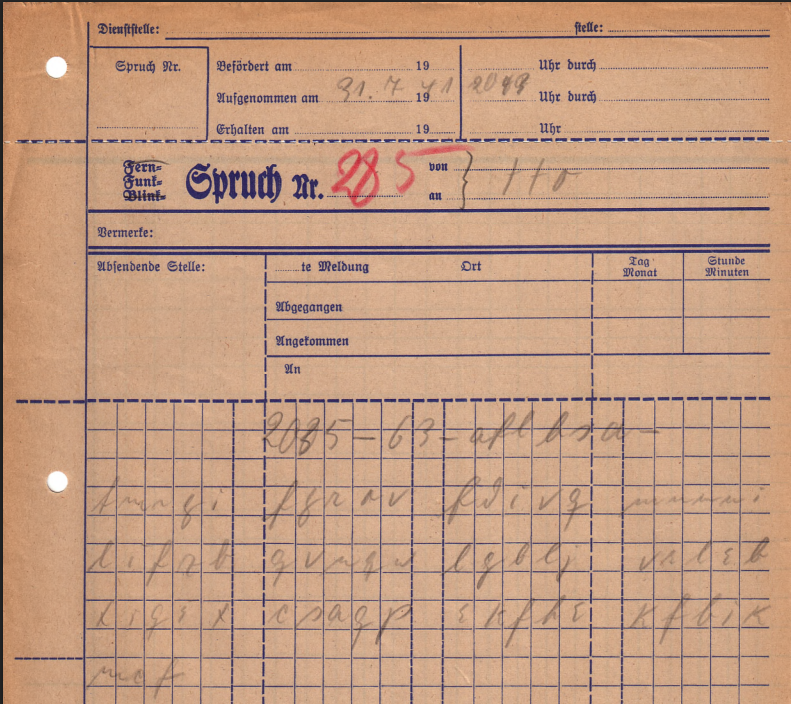
Computer pioneer Alan Turing is best known for his eponymous experiment to test whether artificial and human intelligence can be distinguished. However, the more important test he faced during his lifetime was cracking the Enigma code used by Nazi Germany during World War II.
Now, a pair of cryptanalysts say they’ve cracked two long-unsolved messages encoded by Enigma machines using LLMs built by OpenAI and Anthropic.
While Turing and his team of cryptanalysts built an early computer, dubbed the Bombe, that allowed the United Kingdom to translate Enigma messages during the war, a handful of archival messages remain unbroken – usually due to mistranscription or errors by the original encoders.
Carter Leffen, a developer, simply told OpenAI’s newest model, Astra, to search a database of Enigma messages for an unbroken message and decode it. The model was able to do just that, after doing its own archival research, finding context clues, building a simulator of the Enigma machine, and ultimately recovering the plaintext of a message that had baffled researchers since 2005.
Frode Weirerud, a retired electrical engineer with a lifelong interest in cryptology, maintains the website Crypto Cellar, which includes a variety of resources and records, and a database of messages. Last week, Weirerud validated Leffen’s solution, which he said left him in “awe.”
Notably, given the lengths that AI agents will go to answer the questions in front of them, the Astra model’s logs include discussion of archived messages in a “private collection” that aren’t hosted by Weirerud. He still isn’t sure if the model accessed them or not, but speculates they may have been shared by a different researcher somewhere online, or that the model was able to access the German government’s public archives.
“GPT–6 Astra is behaving like a very professional cryptanalyst and archive researcher,” he wrote. “What it has achieved in two days would take a human researcher weeks or even months. Personally, I spent several weeks researching the Bundesarchiv files GPT–6 Astra refers to.”
On September 21, another cryptanalyst, Jack Willis, reached out to Weirerud, saying he had used Anthropic’s Claude Opus 5 model to break a different unsolved message. Willis provided significantly more guidance to Claude, which was ultimately able to use the known signature of a particular officer’s name to break the message.
Weirerud notes that there are just seven unbroken Enigma messages remaining, along with one message where the plaintext is known but the code is still unbroken.
Perhaps not for long.
When you purchase through links in our articles, we may earn a small commission. This doesn’t affect our editorial independence.
>

Vishal Sankhala led product at a digital life insurance distributor Ethos before it went public earlier this year. In late 2023, the seasoned engineering executive, who had previously worked at Facebook and Uber, left Ethos and launched Outmarket, a startup that uses AI to help insurance agencies and brokers automate all their tedious paperwork.
“Ninety-five percent of insurance in the U.S. and worldwide is still sold through [human] agents, and when you look at sort of like how the process is today, it’s very manual,” Sankhala told TechCrunch. “This is a huge opportunity given how massive this industry is.”
Outmarket focuses on commercial insurance because these policies involve deep nuances and custom tailoring for every business. Companies must navigate a complex mix of coverage options, ranging from general liability and workers’ compensation to directors and officers (D&O) liability.
“There are over 250 different types of coverages that are out there, depending on what business you are and what risk you have and what you want to cover,” Sankhala said. “For each of those, the process is very different. The application forms you need to fill out, the documents you need to read.”
Outmarket’s AI automates those time-consuming administrative tasks, helping brokers (namely, organizations like Marsh and Aon that sell insurance) quickly evaluate and recommend the best policies, so they can focus on work that requires a human touch, such as responding to customers during emergencies.
That value has attracted over 300 insurance agencies, including 25% among the top 100, as Outcast’s customers since launching a new product 14 months ago. “For insurance, which is typically not a fast-moving industry, it’s quite fast growth,” Sankhala said.
Investors have been impressed with the company, too.
Outcast is set to announce that it raised a $34.5 million Series B led by SignalFire, with participation from Fika Ventures, Permanent Capital Ventures, TTV Capital and Dash Fund. The new round, which comes four months after the startup’s $17 million Series A, valued the company at $355 million, according to a person familiar with the investment.
The startup is not alone in building an AI operating layer for insurance brokerages. Other startups trying to help insurance brokers include Fulcrum AI and Further AI.
But with the U.S. property and casualty insurance market alone over a trillion dollars in annual premiums, Sankhala believes that Outmarket has plenty of room to grow by helping agencies work faster and smarter.
When you purchase through links in our articles, we may earn a small commission. This doesn’t affect our editorial independence.
>
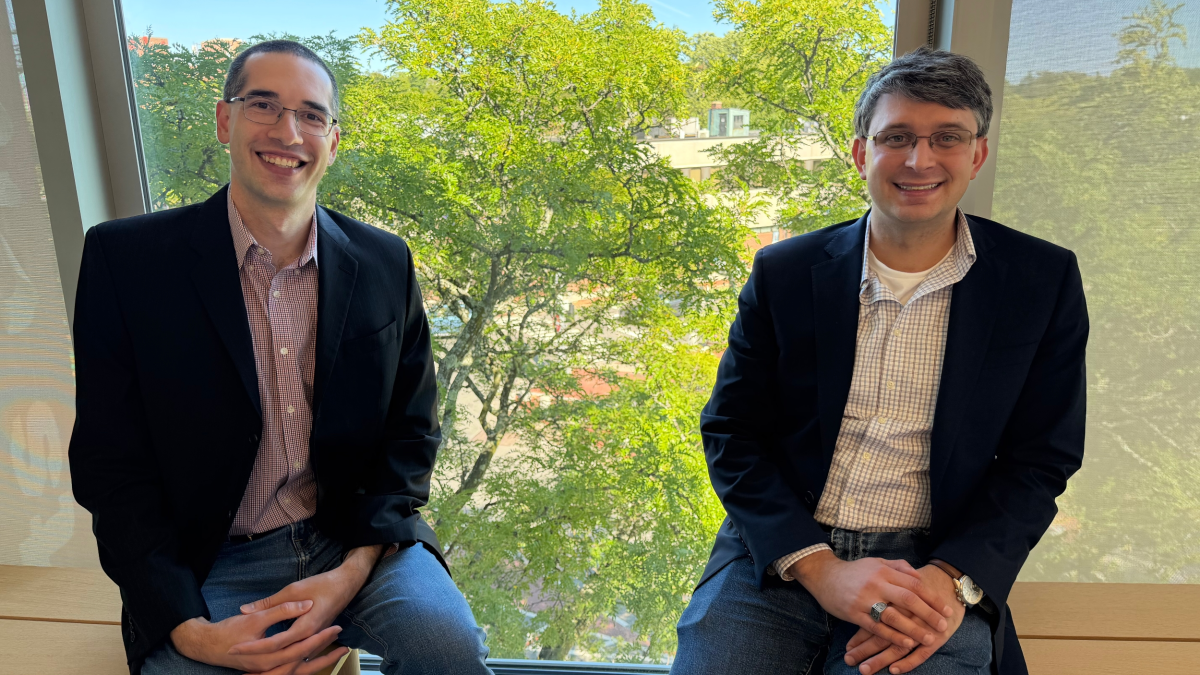
Boston-based voice intelligence startup Modulate has raised $25 in new funding for its platform that uses an array of small models to offer enterprises transcription, emotional analysis, deepfake and AI music detection, and policy enforcement for voice agents in regulated industries.
The funding follows a popular trend among investors in the growing voice AI industry: backing companies that are trying to make AI voices sound more human.
It also rivals other companies trying to detect the intent behind human conversation by analyzing it, and those trying to protect people and companies from deepfake calls, as it is now easy to clone voices.
Modulate’s new funding was led by Future Ventures with participation from Hyperplane and Lakestar. Data from PitchBook indicated that the startup had raised $41 million in funding at a $170 million valuation prior to this round.
The startup was founded in 2017 by Mike Pappas and Carter Huffman, who met as MIT physics undergrads. In its early days, the company focused on providing voice modulation for gaming. But later, it started to concentrate on a voice-based moderation tool.
With the onset of voice AI models, the company is now concentrating on detecting different sorts of AI audio generation and analyzing intent behind a person’s words.
“Our insight into the voice AI space is that a lot of folks are doing transcription, but there’s not really any capability out there that gets the full nuance and full understanding of a conversation, which is so important when you’re talking to another human being,” Huffman said on a call with TechCrunch.

The company today runs more than 100 models that are largely categorized into two sections: Signal extraction models to understand vocal emotion, tone, language, and synthetic voice determination; and Analysis/detection models that look at intent, like what the customer is trying to say, whether the caller is violating rules, or whether they are trying to scam the receiver.
Huffman said that because it runs smaller models, the company doesn’t need specialized hardware and a ton of compute, which could be crucial when token bills go up. Plus, it’s easier for the company to train models with newer capacities, add them to the lot, and have an orchestrator call them when needed.
Modulate has a varied customer base, but it specializes in deepfake detection and alerting organizations like call centers to a possible scam. It also monitors how AI agents respond to customers to assess the quality of calls, along with making sure that AI follows compliance rules in regulatory areas. Because of these products, Module often sits beside the voice stack being used by a company just to analyze calls.
As more enterprises adopt AI-powered customer service, it is becoming important for them to know why a customer call was a success or a failure. In that case, gauging customers’ intent and response becomes critical beyond basic analysis. Huffman said Modulate can give granular data to enterprises around that.
“I think when companies think of emotion analysis, they think if the customer was neutral or positive, the call was a success, and if the customer was negative, the call was a failure. But actually, many times people will be polite even to, like, AI agents or bots. Right. And they won’t come across as angry, but they’ll be very dissatisfied,” he said.
The company said that its tech is also being used to monitor cyberattacks through voice calls.
The startup currently has 40-45 employees and aims to add 10 more people in the coming months to bolster model building. Modulate is currently working on increasing its on-premises and on-device deployment capabilities for increased privacy.
When you purchase through links in our articles, we may earn a small commission. This doesn’t affect our editorial independence.
>

ElevenLabs launched two new speech models on Monday, called ElevenLabs v4 and v4 Turbo, offering more expression control, lower latency for voice agents, and support for more than 90 languages.
The company released its v3 model last year, and teased the model at an event in Warsaw earlier this year. For the v4 generation of models, ElevenLabs is adopting a new architecture that allows for better control and faster cloning. The company said that with v4, users will be able to clone a voice with just 10 seconds of audio.
On the creative side, the model handles voice identity better over longer chunks of text. It also keeps the context of the text in mind while reading it aloud to change expressions. ElevenLabs introduced inline tags to define expression with v3, and is expanding those tags in v4, letting users stack multiple tags and having the model follow the sequence.
The previous version supported 70 languages, and ElevenLabs has worked to get that number up to 90 languages with the new version. The startup said that it observed the biggest quality jump in Japanese, Brazilian Portuguese, Mandarin and Cantonese.
ElevenLabs has scaled its enterprise calling business rapidly over the last year, with more than 55% of its business coming from large companies. The company said that the new model is suited for voice agents, as the new version has lower latency to allow for more fluid conversation. Plus, the v4 can start generating audio as soon as the LLM behind it starts generating answers. What’s more, the model can also handle confrontations, escalations, and holds differently for better issue resolution.
Competition in speech models has ramped up as startups like Cartesia, Deepgram, Fish Audio, Boson, and WellSaid Labs have created expressive speech models. Big companies like Google and OpenAI have also improved their voice models.
ElevenLabs raised $500 million earlier this year from Sequoia earlier this year, in a round led by Sequoia that valued the company at $11 billion. There are already rumors of a followup fundraising round that would value the company at $22 billion. ElevenLabs annualized revenue run rate has climbed from roughly $330 million at the start of the year to over $600 million. The company has aggressively hired personnel in different markets such as India, Europe, and Brazil, as its headcount has reached over 800.
In a recent interview with TechCrunch, the company’s co-founder and CEO Mati Staniszewski said that the company is aiming for an IPO “in the next years,” but didn’t commit to a timeline.
When you purchase through links in our articles, we may earn a small commission. This doesn’t affect our editorial independence.
>
'Hockey Night in Canada' returns, will broadcast PWHL games

Insuretech Outmarket raises $34.5M just months after prior round

‘Icebreaker’ Netflix Series Casts Daisy Jelley & Connor Simos As Leads
-

 movies4 months ago
Search For Canadian TV Actor Stewart McLean Now Homicide Investigation
-

 Fashion9 years ago
These ’90s fashion trends are making a comeback in 2017
-
Fashion9 years ago
According to Dior Couture, this taboo fashion accessory is back
-
Fashion9 years ago
Model Jocelyn Chew’s Instagram is the best vacation you’ve ever had
-
Fashion9 years ago
Emily Ratajkowski channels back-to-school style
-
Fashion9 years ago
9 Celebrities who have spoken out about being photoshopped
-

 Anime4 months ago
Rurouni Kenshin: Hokkaido Arc Manga Takes 1-Issue Break – News
-

 Anime3 months ago
HIDIVE to Stream English Dubs for The World Is Dancing, The Forsaken Saintess and Her Foodie Roadtrip in Another World, The Dangers in My Heart: The Movie Anime – News