
L-R: Lance Oppenheim, Nathan Fielder and the New York Film Festival’s Dennis Lim
Jill Goldsmith/Deadline


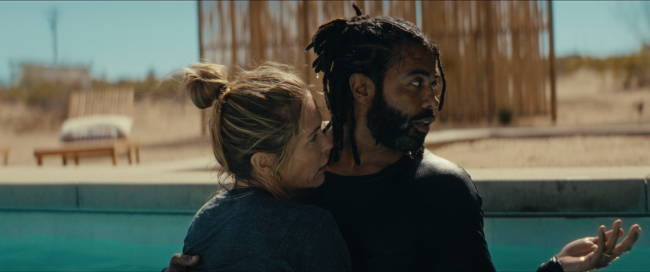
Editor’s note: This review was originally published during the 2025 SXSW Film & Festival. Greenwich Entertainment will release the film in theaters beginning Friday, May 15.
Oh, to be a fly on the wall during the writing process that sparked Katie Aselton‘s fourth directorial effort, “Magic Hour.” Written alongside her real-life husband (and fellow filmmaker) Mark Duplass, Aselton has made it clear in press materials that the film, about a loving if troubled married couple (played by Aselton and Daveed Diggs) isn’t explicitly about her actual marriage. But it’s also not not about her and Duplass’ long-running relationship. Still, once you see where Aselton and Duplass’ script takes their characters, the differentiation becomes easier to swallow, if not all the more intriguing.


No spoilers here, but suffice it to say, it’s thrilling to wonder at what point in their chatting Aselton and Duplass landed on the spine of the story, one that also serves as a very big twist and an ambitious swing. And, yes, this twist does come early in the film, a smart choice by its writers that allows Aselton to move forward, and quickly, into other dimensions. Eagle-eyed audiences will likely spot it just before Aselton reveals her little magic trick, but that doesn’t dilute its power. Oh, it’s that kind of film, viewers might think. Well, let’s see where it goes.
Where it goes? Somewhat bumpy, but refreshingly honest and very much a return to the kind of filmmaking that kickstarted Aselton’s own directing career, back in 2010 with “The Freebie,” another movie about the intricacies and intimacies of marriage, this one starring Aselton and a never-better Dax Shepard. In the intervening years, Aselton has tried her hand at other genres: 2012’s “Black Rock” is a thriller set on a remote island, while 2022’s “Mack & Rita” is a body-swap comedy starring the iconic Diane Keaton.
Aselton’s intent to return to more personal filmmaking is also noted in those same press materials, and “Magic Hour,” mostly set in a single location in Joshua Tree, California and primarily focused on Aselton and Diggs’ characters, fits that bill, if broadly. But, in other ways, it’s the biggest swing she’s taken yet, and while that often means (seemingly) shrill interactions and (knowingly) broad emotions, there’s also a deep satisfaction to be found in the core of honesty that inspired such risk-taking.
We first meet Aselton’s Erin and Diggs’ Charlie by way of old home video: Erin is trying to cajole Charlie, forever terrified of heights, to ride a ferris wheel. Their interactions are sweet, lived-in, flirty, and warm. In short: they’re a nice couple. In the present, the duo have decamped to a friend’s (Brad Garrett) chic desert retreat, ostensibly to recover from some nebulous tragedy. Other old videos let us into a fertility struggle, and Erin sure seems mad at Charlie for whatever happened. Aselton doesn’t hold out on us for too long, and by the end of the film’s first act, she’s let loose, both as a performer (Erin is all big emotions) and a filmmaker.
Early on in their trip, Erin muses that she and Charlie could just stay in the desert, “get weird,” do something new, and “Magic Hour” as a whole occasionally takes that idea and runs with it, getting trippy in doses, going broad with somewhat startling regularity, and essentially letting itself be as messy as grief itself. Not every swing lands (Erin gets a massage that turns into something else entirely, and questions of consent swirl, seemingly unnoticed), but its unpredictability (like a tender interaction with a group of local drag queens, led by Shangela) feels much more feature than bug. Anything can happen with a broken heart, after all.
It also looks just gorgeous, thanks to cinematography from Sarah Whelden, which never skimps on the dusk from which it takes its title, but also finds warmth in mornings, late nights, and cozy interiors. Mostly, it feels safe and welcoming, the exact sort of space in which someone would want to work out their biggest problems and face down their worst tragedies. We could all stand for more of that.
“Magic Hour” premiered at the 2025 SXSW Festival.
Want to stay up to date on IndieWire’s film reviews and critical thoughts? Subscribe here to our newly launched newsletter, In Review by David Ehrlich, in which our Chief Film Critic and Head Reviews Editor rounds up the best new reviews and streaming picks along with some exclusive musings — all only available to subscribers.
>
>
“I guess we should just start at the beginning, and tell us how this happened,” New York Film Festival artistic director Dennis Lim asked filmmakers Nathan Fielder and Lance Oppenheim at a Q&A after a screening of You Can See Everything on Wednesday night.
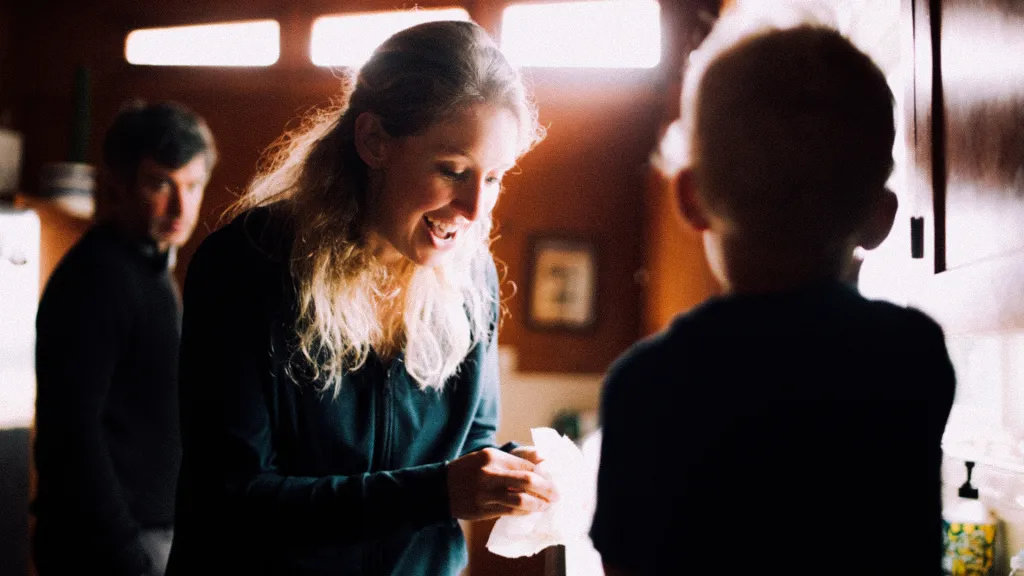
It was the second public showing of the documentary, which was filmed in and over years and blew the roof off the Telluride Film Festival (see Deadline review). It’s a hard-to-describe flow of verité filmmaking unspooling in real time at the San Diego home of disgraced biotech entrepreneur Elizabeth Holmes in the days before she reported to Bryan federal prison in Texas. The Stanford dropout and Theranos founder is still serving a 10-year sentence for defrauding investors in the high-profile case.
Fielder and Oppenheim said the project, oddly, was launched during a magic show the two friends attended in L.A. in 2023, at the height of Holmes’ notoriety. “A magician there asked for a celebrity’s name, and someone called out ‘Elizabeth Holmes’,” Oppenhiem said. “I was like, so interesting. Elizabeth Holmes.” He said he “had just heard that she was looking for someone to document her life and that she had reached out to A24.”
Fielder was also curious. “I knew that she hadn’t… spoken to anyone in, I think, seven years. Total silence.” He didn’t necessarily see a documentary brewing “because it felt like the story was very told. But I was really curious to meet her, just as a personal thing.”
Holmes’ epic rise and fall was the subject of an HBO documentary and a Hulu miniseries starring Amanda Seyfried.
Fielder called A24, and went to meet Holmes. “I remember having this weird experience… where I’m like, “She seems so genuine at times. But then I’m like, no… I know she’s a liar… It was a weird mental thing.” Homes has always insisted she did nothing wrong.
She agreed to let the cameras into the home she shares with with her partner Billy Evans and their two young children.
Fielder made no promises to A24. “We don’t know what the story is. But we want to see what happens,” he said. The studio said, “‘OK, that’s fine. And if you want to pull the plug anytime, you can.’ Which was amazing.”
L-R: Lance Oppenheim, Nathan Fielder and the New York Film Festival’s Dennis Lim
Jill Goldsmith/Deadline
They started filming. “And after, Lance and I would talk about what we thought happened there, and we’d completely disagree on… what we thought was happening. And we were like, ‘Oh, this is really interesting, if we can’t agree on what’s happening, there’s something here.’ And our curiosity sort of just like drove us from there.”
The filmmakers ultimately moved from one camera to three, shooting 16 hours a day with two small crews of which no more than four individuals were in the house at any one time. “We had a wide lens that would cover the whole house so if something happened, we wouldn’t miss it. And then the other two … lenses could be wide but then also zoom, so we could basically capture everything,” said Oppenheim.
“We were trying… essentially, to just take all the pressure away from any moment, so they wouldn’t really know what we were interested in necessarily.”
“Actually, we didn’t always either,” Fielder added.
“One thing we realized with the [initial] one camera that’s panning, which you see in some of the earlier scenes, is that the moment you say something to someone you want to see their face the moment they hear it. Especially in a movie like this, where you’re trying to evaluate if someone’s being honest or not. And when you have to swing, you’re missing a few seconds. And you realize this is maybe a problem in this kind of thing,” Fielder said.
He himself went from solely behind the camera to very much on, registering reactions to Holmes, including to her circular responses to questions like did she know her claims about Theranos’ blood-testing kit were false.
Fielder said he has no idea why she and Evans granted them the access they did.
“It’s so hard to understand… Maybe there was a sense that inviting someone who was a friend of theirs, no one would take that seriously. So I don’t know. It’s so hard to speculate as to why.”
You Can See Everything opens in theaters October 16.
“I cannot tell you how weird it was that we were there,” Fielder said. “Why I’m excited for the movie to come out is I’m really curious to hear what everyone else thinks and what they make of certain things. I think it will actually help me understand… So I’ve been looking forward to this release for a while.”
>
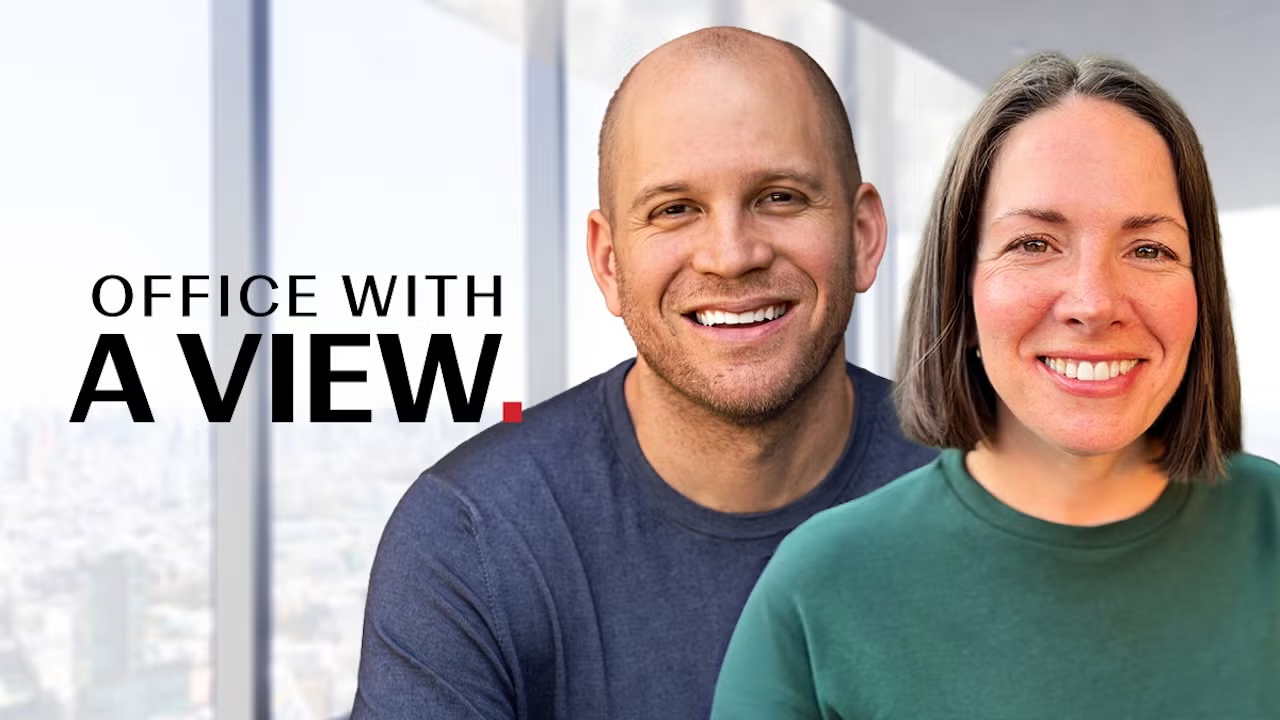
Like every job in Hollywood, managers have grappled with plenty of change in their work in the last decade. Luckily for Range Media Partners’ Cora Olson and Michael Diamond, they have each other.
The duo has worked as a unit for 10 years, since being brought together at Mgmt Entertainment and eventually grew to run the lit division. They joined Range as partners in 2024 with a desire to evolve alongside the modern talent management firm, founded during the pandemic by a collective of former CAA, UTA and WME agents hoping to shake things up in the entertainment marketplace. The management company operates its talent representation business alongside an in-house production studio, allowing the operation to finance, develop and build equity in intellectual property.
All those contributing factors can help when putting together the right package to get a film or TV project off the ground in today’s precarious Hollywood model — one with fewer greenlit projects and a reliance on safer bets from major distributors. But Olson and Diamond, who represent Hollywood big shots like “Schitt’s Creek” Emmy winner Dan Levy, actress-producer-director Kyra Sedgwick and “Pig” filmmaker Michael Sarnoski, counter the assumption that original ideas are a tougher sell.
It just takes more work to get there.
“You’re not just marrying this actor with this part, or this writer with this assignment. It’s not as much mix-and-match as it used to be, because there isn’t that same amount of volume,” Olson told Office With a View. “If you look at the shows and movies that are breaking through right now, it’s those really fresh points of view that seem to resonate with audiences.”
“There’s going to be more obstacles now than ever. There’s great opportunity and growth in that,” Diamond said. “We’re all on this adventure together.”
Below, the managers discuss the new rules for Hollywood representation in the age of streaming, finding opportunities beyond film and television, selling a comedy to platforms begging for drama and more. This conversation has been edited for length and clarity.

TheWrap: You celebrated two years since jumping to Range as partners. What are some moments that you’re particularly proud of from your time in the company so far?
Cora Olson: I can’t believe it’s been two years. It’s kind of shocking. It was such a big, big thing for us to move over, and we’re so excited to be here. I can mention a project called “Family Movie,” which was something that came together pretty early on after coming over to Range. I work with Kyra Sedgwick and this was a really important project for her that she was working on with her family. It was something that within a couple months of moving over to Range, I handed it to our colleagues that run our 100 Zeros program, our partnership with Google, and they read it quickly, they fell in love with it, and very soon after that, expressed a desire to commit to it and get it off the ground. That team identified the partners to put it together and get it into production. From handing it to them in November 2024, the movie was then shooting in June of 2025. It premiered this year at South by Southwest and it’ll be released in theaters. It’s going to go on 1,000 screens through AMC and Variance Films in April of next year. Really exciting to see that.
That’s something we had been working on at our previous company, and it was great to see it come to life so quickly via that partnership. It’s just one of many examples of the tools that we have to work with at Range, and how quickly momentum can come when you find the right partners on a project.
Michael Diamond: For me, as a kind of bridge into Range early on, a couple films were released that clients worked on and wrote, like the “Lilo and Stitch” live action reboot. Our client Chris Kekaniokalani Bright, Cora and I represent together. [Jeff Kaplan and Ian Springer] wrote the latest “Fantastic Four.” Our client Dan Levy, his series “Big Mistakes” launched, which we were across quite intimately, and also made a new first-look deal for him at Netflix and we’re now in production on Season 2.
“A Quiet Place: Day One” was also released as I was coming to Range, and I put a lot of energy into getting “The Death of Robin Hood” [starring Hugh Jackman] off the ground for Michael Sarnoski, and he’s got a lot in front of him in film and television. And a number of other projects are coming into fruition.

What was it about Range that appealed to you when you decided to leave Mgmt Entertainment to become partners there?
Olson: For everyone working in this ecosystem, the business has changed so much in the last 10 years. It’s just a remarkable amount of shifting and growth. We’re at a time where technology is affecting the way we make things, the way we market things, the way we watch things as consumers, the way we monetize what we’re making. That’s something that has been a theme.
Most recently, there’s so much focus on AI and if that’s changing everything. But in the earlier days, it was about digital and what’s the slow strain put on theatrical; and the evolution of broadcast into streaming — all these pieces have affected the business. We found ourselves in just wave after wave of change. The strikes are a really easy thing to point to that affected everybody in this business.
When the opportunity arose to make the move, we were really drawn to the expertise in the building — the way that all of the founders have operated at a very high level — and they have a collective curiosity and ambition and vision for the future. We were really excited and drawn to that. Michael and I have been working together for years, and looking at how unrecognizable things seem since we started working together, and knowing how much change is likely ahead, we wanted to be at the forward edge of what comes next.
Diamond: We were both drawn to the managing partners’ entrepreneurial spirit, vision and leadership, and just the multiple verticals that they’re investing in, so our clients and ourselves have the opportunity to participate when appropriate. Our interests are not just limited to film and television. We love what we do, but our clients are multifaceted and have ambitions that extend well beyond. So we can speak to some of those vertical departments. Some of them I didn’t even know existed candidly and maybe they didn’t exist. So to Cora’s point, the forward look at what awaits us and trying to anticipate and diversify is something that differentiates Range. That’s something we were looking for.

You’ve been working together for 10 years across jobs and eras of Hollywood. How did you first join forces and what has kept the collaboration going all these years?
Diamond: Our former colleagues [at Mgmt] brought Cora into the company, and they identified early on that we were going to be a great fit and get along well, which we do. Cora was such a breath of fresh air and is so uniquely well-rounded. Her expertise, both as an indie producer in a different life, and then running a TV pod at Warner Brothers, and transitioning to management. It’s been so helpful, because she understands the scope of everything across film and television, which is just an amazing resource for myself and clients alike.
We’re both relatively measured and are in it for the right reasons, that’s helpful as we are on this journey together.
Olson: We have a lot of fun together, since the earliest days of getting to know each other. I did come into representation from a totally different angle. I was making independent films, and I was running a pod at Warner, as Michael said. So when I came into Mgmt with my first couple of clients, Michael and I locked arms really quickly. He has such incredible taste. The things that he was working on I was so excited about, and [he had] a real tenacity for how to put projects together. Watching him do that was very inspiring.
We started signing together really early on, which gave us a reason to be talking all the time. The clients that we’re drawn to are generators. They’re people that want to put projects together, whether it’s movies or shows. So it gives us an opportunity to get our hands dirty and put together a strategy. We have different styles and wouldn’t necessarily approach every situation in the same way. But it’s good to have complementary points of view and complementary skillsets because it creates a well-rounded experience for clients.
This isn’t one of your questions, but we bonded really early on with our mutual love of food. We used to joke that we spend a good amount of our time talking about clients, and a good amount of our time talking about what we’re going to be eating. But it makes the work more joyful, more fun. We giggle a lot. We take our work very seriously, but we try to have fun while we’re doing it.

You both have individual clients, but you primarily operate as a managing unit. What are the benefits to establishing a partnership like this as you navigate everything you have to, working in Hollywood?
Cora: It’s nice to have a shorthand. We work very closely on Dan and Chris Bright. We have a number of shared clients, and that gives us a strong foundation. But we’re pretty up to speed on what all of our clients are doing, whether they’re just Michael’s or just mine, because of that shorthand. We’re on the phone all day, every day. We’re in meetings, and we’re keeping each other in the loop.
Michael would be my first call if in a tricky situation, or if I need to bounce something off of someone. He’s going to be that call, and I’m going to get the perspective that I need and know that he’s discreet and that he already knows all the context of the client. I don’t need to catch him up on every detail to figure out how to work through a specific situation. And that goes both ways. Sometimes we say it’s like peanut butter and jelly. We go together, but we’re very different as people. It becomes easy to bounce things off of each other.
Diamond: There may have been a couple colleagues of ours in other departments at the time who thought that we were a married couple, just because of the way in which everyone talks about us as a unit. And we both have two kids and we’re all close as families. My daughter knows Cora’s voice so well. Like, this runs deep.
Cora you spent more than a decade as an independent film producer, and you Michael started as an assistant at UTA before moving to literary management. What appealed to you about being a manager then?
Diamond: I started as an assistant at UTA. I had a great time. I was really drawn to representation, but I wanted to be a little bit closer to the creative process and be an extension of the client, and I also wanted to be across both TV and film. And for the most part as an agent, you’re limited to these departments. I wanted to travel with my clients across whatever their ambitions may be. That was something that unlocked early on for me while at UTA. And then I worked at a series of boutique management companies on the journey, working with some great people and learning quite a bit.
Olson: For me, it was a bit of a left turn — not something I really expected to find myself in. But what I have loved is the opportunity to build a strategy for clients, to really understand what their goals are, and be very disciplined about where they’re trying to go in the short, medium and long term. We talk a lot about that with our clients, and really focus on putting our energy where it’s going to make a difference.
I love building things. I have since I was a producer, and I feel like here we really have the tools to do that. Whether it’s an independent movie, whether it’s a huge movie, anything in between. We’re building a lot in television with Range Studios right now, which we’re really excited about and it’s great to see those things materialize from an idea to stepping on set and making something that’s actually getting made. Giving things liftoff is very rewarding.

How has the job changed as Hollywood has evolved in the last decade and even since the pandemic?
Diamond: You have to be really nimble and entrepreneurial, and realize that there’s going to be more obstacles now than ever. There’s great opportunity and growth in that, and we’re all on this adventure together.
We’ve seen the sea changes and we’ve had to adapt along the way, and most of us are better for it. Ultimately, people who are in it for the right reasons prioritize making great work. We’re going to continue to find a path forward.
Olson: I think there’s a move towards, maybe, less of a transactional business. You have to really be strategic about what you’re building because it’s not like there’s tons and tons of production. You’re not just marrying this actor with this part, or this writer with this assignment. It;s not as much mix-and-match as it used to be, because there isn’t that same amount of volume. So I think the people who really have something to say and a point of view that’s fresh, and that we need to hear from, that’s what we see breaks through. Even if you look at the shows that are breaking through right now and movies, it’s those really fresh points of view that seem to resonate with audiences. We think about that a lot, and we look at “What does this client have to say?” And “How do we help lift this voice?” and make it really visible.
It’s harder to get projects made today. What is your key piece of advice for clients as you’re talking through how to get their vision through the finish line?
Olson: Finding the right partners is where it all begins. Finding the right producers, making sure that the vision is aligned, and being present as a thought partner to make sure the strategy is there. It’s not as easy as, “Oh, I like this. Let me bring it out to the buyers.” Positioning matters a lot and strategy matters a lot, and I think that’s something we take really seriously here.
In terms of how we do things, Michael and I have always taken that seriously. We’re happy to be at a place that puts equal emphasis on that. I don’t mean to speak in too vague of terms, but whether you’re packaging it with a writer client or someone behind the camera; or packaging it with some on-camera talent, or putting a cool music partner in, pulling from different spaces. We have clients from other arenas and are creative and open minded about how to mix the right ingredients together. It’s a really big part of what we’re doing now.
Diamond: It’s just less transactional. You have to be really deliberate and purposeful and thoughtful. I don’t really chase trends. I’m just drawn to story and that’s what I prioritize. If we see a real challenge, we educate clients on the landscape while still supporting their vision. You find that balance. We’re very honest to a fault on that front, but ultimately we’re an extension of the client, and when these artists have ideas they want to bring to life, we will do our absolute best to realize it.

Cora, you represent creator Delaney Rowe. What have you learned as you add creators into your roster and the ways they can grow their business in Hollywood?
Olson: It’s so interesting and it’s so different, but I also think it comes down to what Michael was saying. You have to be drawn to the artist. For someone like Delaney, who’s creating these small stories with this huge platform, she has such a sharp voice. She’s so skilled and frankly, watching her on her brand business side, watching what she’s able to create for brands and do it in her own voice with a lot of authenticity and a lot of sharpness and skill, it’s an incredible talent that she has to be able to pull that off and do it so well.
It’s not really that surprising when she sits down to write a book and the writing is so crisp. She’s such a generational voice. When you look at what she was able to build on TikTok, and look at what she’s doing on the page. It’s not that big of a leap, because the skill, the talent, the voice, the perspective is all there.
There’s such a big spotlight on the creator economy and all the ways that it’s changing Hollywood, and trying to adapt to what’s happening over on that side. For you guys on the management side, are creators the next frontier?
Diamond: It’s definitely the next frontier as far as where to identify talent. The barrier for entry has kind of opened up. With technology, people are able to make great work and realize a vision with way fewer resources, and usually it’s a representation of their voice.
It’s a different form and it’s exciting to be here in this moment, and I think there’s enough business to go around. We’re especially seeing our younger colleagues have their finger to the pulse quite a bit as it relates to that. When I was a young manager, my first two clients came in as unsolicited screenplays via email. I’m doing less of that now, but at that stage of time that was a place to discover talent. Now it’s a lot of digital talent that’s emerging. It’s where the talent is living, and you have to find them where they are. With them comes often an audience and a subculture.

Diamond: It all has its different set of exciting challenges. It’s so project- and client-dependent. There’s so many variables and there are trends. Some people are saying the film business is coming back, and I think it is. Television is still a healthy ecosystem, so it really depends on the idea. It depends on the client and where they are at. I wouldn’t necessarily say one is more difficult than the other. I think projects, big and small, are challenging. We put projects together, under $1 million dollar movies are a challenge, and big films are equally challenging and exciting and rewarding.
Olson: But it scratches a different itch to work on TV versus features. I know I brought up “Family Movie,” but Kyra Sedgwick is also producing a series at Amazon that she’s doing through her company Big Swing, and they’re partnered with Amblin. It’s called “The Challenger” and Kristen Stewart is playing Sally Ride. It’s this class of astronauts in 1978, the first real diverse class of astronauts, told through the prism of the Challenger explosion. They started shooting on Friday. It’s such an incredible moment after many, many, many years trying to make a TV show to finally start shooting. Whereas something like “Family Movie,” it was also years in the making but we got it done a little bit faster.
There’s different challenges in distribution, too. There’s not as much independent television, hardly any that gets made. So you’re almost invariably working with a big media company that’s going to put money into a show they’re putting out. Whereas with features, it’s very different. It could be a giant movie with tons and tons of marketing, or it could be a small movie that has to really be the little engine that could, and it’s all satisfying. Small films are where often the new voices come from and where we see real innovation, and have a little glimpse of what’s to come. We saw that this year with Curry Barker’s movie and Kim Parsons’ movie. There’s so much excitement that happens in that space. So I don’t know, I love it all.
Diamond: Our client, filmmaker Laure de Clermont-Tonnerre, is really drawn to scope and period pieces. Those films can be challenging to build for all the obvious reasons. We put a lot of energy into realizing them. She just directed three episodes of “East of Eden” for Netflix and Florence Pugh. Television is a wonderful way to flex those muscles. In that case, it’s tethered to significant IP. But that’s something for filmmakers and writers alike, there are projects that they want to bring to life or participate in that would be more challenging as films, and vice versa. Luckily our clients develop both film and television and our interests live across both. We’re able to explore all avenues.
Laure had directed television previously with “The Act” and just directed the pilot for “Presumed Innocent” Season 2 (with Rachel Brosnahan). Michael Sarnoski — who has been the architect on every film that he’s brought to life as a writer-filmmaker — is developing something in television, but his bridge into television is Damon Lindelof’s new series “The Chain” for HBO. To be working alongside the maestro and Mr. Lindelof is such a privilege for him to be introduced to that format. He’s a great consumer of television as we all are, but it has a different cadence and rhythm, and that’s been an incredible experience as he’s prepping that right now to shoot top of the year.
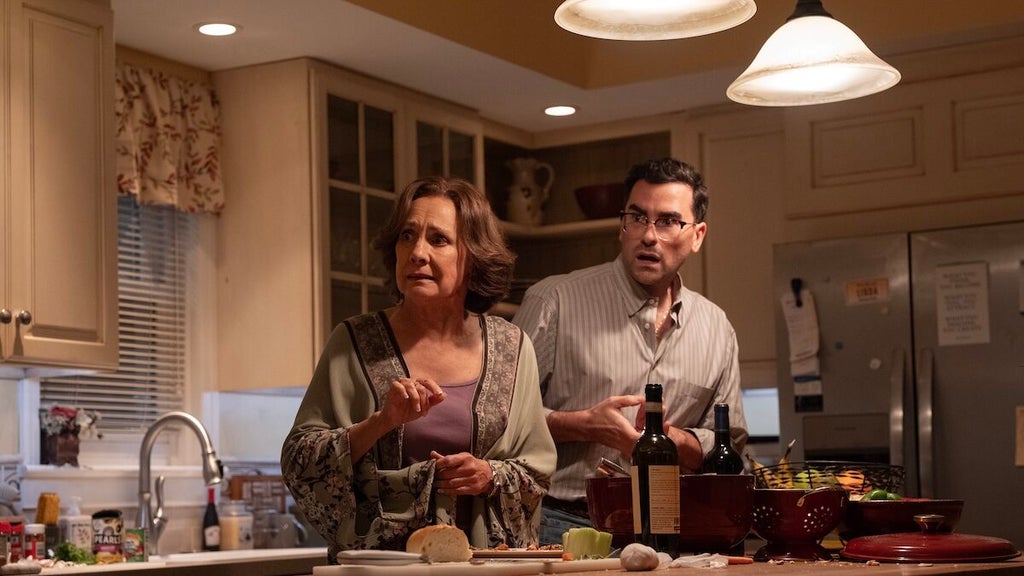
You both represent Dan Levy, who premiered “Big Mistakes” on Netflix this year and is already in production for Season 2 — a rare achievement for streaming television. How was it working with Dan through landing that show and his first-look deal at the streamer?
Olson: It’s incredible to work alongside such an incredible talent. Dan has a totally singular voice. When we first started talking about the idea for the show, we could see his vision instantly. And it’s like any project, a journey to get it realized.
We were just with him last week for the Emmys and he’s having the time of his life on Season 2. Artists don’t want to make the same thing over and over again. I think we all agree “Big Mistakes” feels like a tonal departure and something very different for him; it’s celebrating another side of his delightful point of view. Netflix has been a really good partner. It is a remarkable achievement in this market to have something be embraced and be really invested in. We’ve read all the scripts for Season 2 and we’re really excited.
The show comes as streamers grow more hesitant to pursue comedy projects, aiming instead for big IP shows that can grab big audiences. What’s the advice you give to your clients about what ideas or stories to pursue in this time of Hollywood volatility?
Diamond: People are really drawn to original ideas if they’re compelling. IP is important, and there’s certainly some fatigue alongside it. It requires the right voice for IP to unlock something different and make it their own. I think people have been successful doing that. But we’re drawn to original ideas. Our clients sometimes are totally left of center. That’s the stuff that I’m often drawn to.
Olson: We try to empower our clients with an understanding of what is out there in the market. We are always communicating the feedback we’re getting from buyers to our clients, so that they are empowered with that information to make decisions.
It’s true, the appetite for comedy has shifted, and we’re at a place where the tendency has been for shows with big noisy hooks and engines that keep people coming back, that are bingeable. But I do think there are trends and then there’s shifts that happen. As a trend matures, we’re on to the next thing, so we try to not be led around entirely by market trends. We have to embrace and work on the things we believe in, and we have to have thoughtful timing. I think about myself as a consumer first. What am I watching? What’s getting me to turn on the TV or go to the theater? What’s motivating me? How are things being marketed to me? I draw upon that in how I work with clients. Sometimes we forget that.

What conversations are you having with your clients about AI, rather it be about how they can protect themselves or what they need to be doing to stay ahead of the curve?
Diamond: For me, it’s about the comfort of the clients specifically. For some clients, it hasn’t quite yet been as relevant in their day-to-day travels. But for others, it can be a tool as they develop an idea. There are clients who have utilized those tools and they’re cautiously moving forward as we all are as we learn and adapt and protect. We’re moving forward cautiously, educating ourselves and listening to our clients, to our colleagues and others who know the ecosystem better than I do.
Olson: All of us are aware that we’re in this moment where things will yet again look unrecognizable probably fairly soon as it’s more and more integrated. But from a client perspective, I’m mostly seeing them engage with it to be able to articulate their vision a little more clearly, whether it’s using tech or using it to analyze what worked about a campaign or whatever. They’re using it in very targeted ways to communicate their goals more effectively.
I had lunch with a producer maybe a month ago who has had this movie that he calls “unpitchable.” It’s a very auteur, out of the box concept. A very unique piece of material that he feels like, maybe there’s a way of using AI to help make this movie producible at a responsible budget for the first time. So there’s some use cases that I think we’ll see create a space for more innovation. Something that otherwise might have had to sit in a drawer can actually come to life using it. I found that kind of encouraging. We’re not in those conversations for how the technology is exactly going to be harnessed, but I’m encouraged in certain, limited contexts about it.
The Paramount and Warner Bros. merger will be closed in weeks, shifting Hollywood even further into contraction. What do you tell your clients, and yourselves, about how to keep doing what you love as the business changes?
Diamond: There’s always been contraction. There’s always and often consolidation, new regimes, new ownership. That is the story of Hollywood. What we prioritize are the storytellers. Buyers come and go, but I think what remains is compelling storytelling that has a point of view. Whatever format and form, those people who have something to say are in pole position.
Olson: The focus needs to be on great stories and the ideas and the projects that we’re willing to fight for collectively.

>


Search For Canadian TV Actor Stewart McLean Now Homicide Investigation


These ’90s fashion trends are making a comeback in 2017
According to Dior Couture, this taboo fashion accessory is back
Model Jocelyn Chew’s Instagram is the best vacation you’ve ever had
Emily Ratajkowski channels back-to-school style
9 Celebrities who have spoken out about being photoshopped


Rurouni Kenshin: Hokkaido Arc Manga Takes 1-Issue Break – News


HIDIVE to Stream English Dubs for The World Is Dancing, The Forsaken Saintess and Her Foodie Roadtrip in Another World, The Dangers in My Heart: The Movie Anime – News