
Tech
Ray-Ban Meta vs Nuance Audio Plus: Which Smart Glasses Are Better for Hearing?

Compare Ray-Ban Meta Gen 3 and Nuance Audio Plus on hearing support, microphones, battery, price, and smart features to see which fits your needs.
The post Ray-Ban Meta vs Nuance Audio Plus: Which Smart Glasses Are Better for Hearing? appeared first on TechRepublic.
>
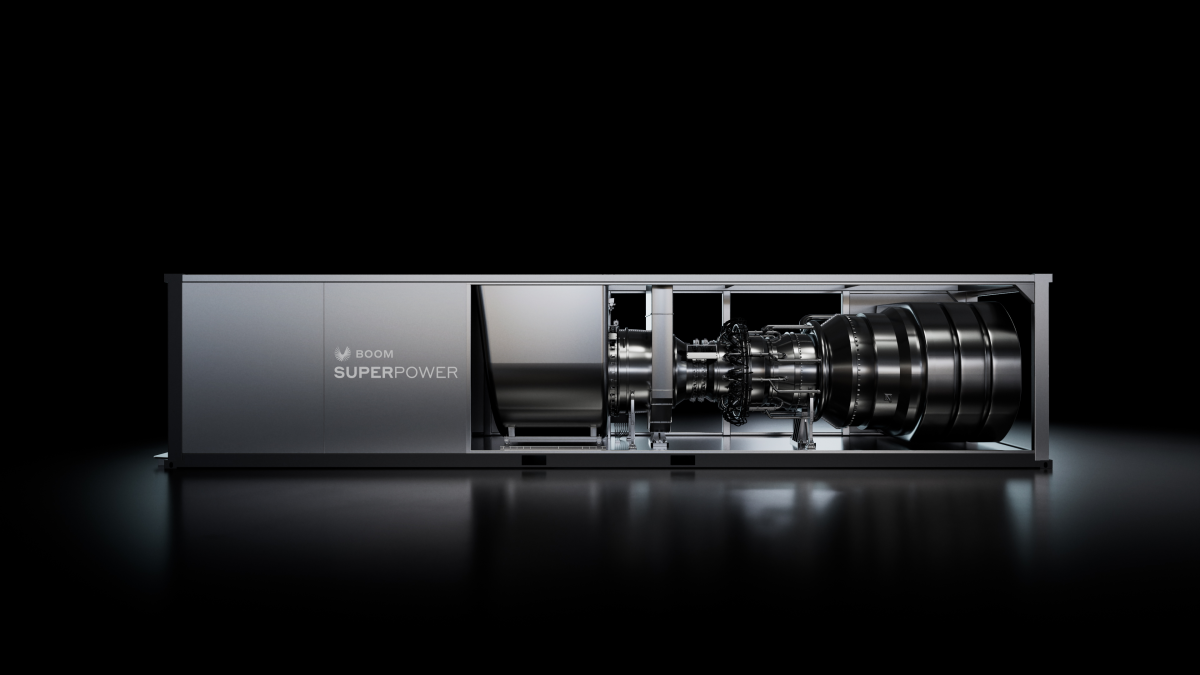
Crusoe, a Denver-based AI data center startup that recently raised $3.9 billion, has ended plans to use a new line of stationary power plants developed by fellow Denver company Boom Supersonic.
Founded in 2018 as a bitcoin miner that ran on excess natural gas from oil fields, Crusoe has since become one of the biggest builders of AI data centers, including a massive campus in Abilene, Texas, that supplies computing power to OpenAI.
Boom Supersonic, which is developing a supersonic passenger jet called Overture, launched a new business last year to sell a version of the engine it’s developing for that jet as natural gas-fired stationary power plants. Its Superpower turbine shares about 80% of the same parts with that airborne engine, called Symphony.
Crusoe had signed on to be the first customer for this business, agreeing to spend $1.25 billion on 29 of Boom’s 42-megawatt Superpower turbines. The first deliveries were supposed to begin in 2027. But that deal has since fallen apart, according to Boom Supersonic CEO Blake Scholl.
Friday, in a post on X, after congratulating Crusoe founders Cully Cavness and Chase Lochmiller on the company’s recent raise, Scholl said the companies are no longer moving forward with the turbine launch partnership. Although he did note that other customers were in its pipeline.

“The TL/DR is that turbines are no longer part of Crusoe’s near term primary power mix at Abilene/etc., so a launch partnership just didn’t make sense,” he wrote in the post. “Boom will be delivering about 250MW of Superpowers next year to other sites, and we’re targeting 1GW in 2028. We’re grateful for the help Crusoe gave us in shaping Superpower and continue cheering for their successes. The future is long, and we look forward to potentially teaming up if/when turbines become part of their primary power mix.”
Crusoe confirmed to TechCrunch that it is no longer doing business with Boom.
“We build AI factories from the power up, and we’re bringing new campuses online across the country, powered by innovative energy sources,” spokesperson Andrew Schmitt said in an email. “As our portfolio grows, we stay flexible, choosing the energy solutions that are right for each site as its needs evolve – including turbines, along with wind, solar, batteries and the grid. While Boom has been a great partner, the partnership isn’t the right fit today. We wish them well.”
Losing its launch customer is seemingly a setback for Boom, which raised $300 million last year, largely to commercialize the new business. The idea, Scholl told TechCrunch at the time, was to use profits from the stationary power plant business to fund the development of Overture.
Scholl could not be reached for comment before publication; TechCrunch will update this article if he responds.
When you purchase through links in our articles, we may earn a small commission. This doesn’t affect our editorial independence.
>

Automattic CEO Matt Mullenweg has rebuilt the company’s board just weeks after its previous directors tried, and failed, to oust him. The board, which was announced to staff Friday, is an eclectic group that includes a best-selling science fiction author and two co-founders of the now-defunct social app IRL, TechCrunch has learned.
The new board is the latest twist in a internal governance fight at Automattic, the parent company of WordPress.com, Tumblr, WooCommerce, and others. Earlier this month, the previous board voted to place Mullenweg on leave in an attempt to remove him from the board, only to have the CEO retake control just 33 hours later and remove or accept the resignations of the directors who were involved.
This week, Mullenweg posted about a board meeting, but didn’t share who he was meeting with. Now, he’s finally informing Automattic employees of the board changes via the company’s announcements channel in Slack.
Sources told TechCrunch the new Automattic board includes:
- American writer Hugh Howey, author of the “Silo” book series;
- “Breakup Bootcamp” author Amy Chan (who recently reposted Mullenweg’s tweet about the company’s AI site builder, Spacefast).
- IRL co-founder Henry Khatachryan, who Mullenweg described as “a founder and builder,” a longtime collaborator with the late technology writer Om Malik and the website builder of journalist Nick Bilton.
- And Krutal Desai, who co-founded the social app IRL with Khatachryan.
We should note that IRL shut down after investigations revealed that nearly all of its user base was made up of bots. The co-founders, who also included CEO Abraham Shafi, later sued SoftBank and other investors after SoftBank had sued for securities fraud.)
A slew of new advisers have also joined, including Curio Studio co-founder Jaime Waydo, June co-founder Matt Van Horn, and KISSmetrics co-founder Hiten Shah.
In the announcement to staff, Mullenweg reportedly wrote that, “for purposes of Delaware law, I am the CEO, President, Treasurer, and Secretary,” adding that the attempted firing had also brought in “many amazing supporters.”
“We had the most interesting board meeting in a decade (since the Woo acquisition),” he said.
Reached for comment, Automattic said it hoped to have a comment for TechCrunch soon.

Automattic’s original board had voted to put Mullenweg on paid leave, but he took back control of the company, letting go of those involved in what he described on X as a “coup attempt.”
To replace the board, Mullenweg leveraged his voting shares — he controls 84% of the vote, he said at TechCrunch Disrupt 2024. The period between his departure and return lasted exactly “33 hours and 20 minutes,” Automattic told TechCrunch previously.
Following the failed board vote, member Toni Schneider, a founding CEO of Automattic and now CEO of Bluesky, resigned from his board position. Mullenweg himself removed Gen. Ann Dunwoody from the board, and board member Sue Decker also resigned. In addition, Mullenweg let go of Automattic CFO Mark Davies, who was slated to become interim CEO, and Chief Legal Officer Andy Missan, TechCrunch confirmed with sources.
The board never publicly shared its reasons for trying to oust Mullenweg.
Of note, Mullenweg also replaced Automattic’s legal counsel after his return, a move that raises questions about whether the boardroom fight is tied to the company’s ongoing lawsuit with hosting provider WP Engine over trademark disputes and claims over WP Engine’s lack of contribution to the WordPress open source project. (WP Engine’s legal team had also accused Mullenweg this July of destroying evidence, court filings show.)
In an internal message shared after the ousting and return, Mullenweg had acknowledged the chaos it caused, saying:
Last week, several board members formed a special committee and voted to place me on a leave of absence. They did this without advance warning and without giving me a meaningful opportunity to understand or respond to their concerns before they acted. I was denied even a brief extension to consult with independent legal counsel.
I took the steps necessary to reverse that action. I am back and fully in charge of the company. I am again working alongside you to make our company a success.
I also want to share that we have retained Susman Godfrey LLP as our new litigation counsel. Susman Godfrey is one of the top trial firms in the country, and they will be protecting our company’s interests and defending us in our ongoing litigation.
I know this past week has been unsettling. I appreciate your patience and your continued focus on the work that matters. I will have more to share soon, but for now, know that Automattic’s mission and priorities remain unchanged.
When you purchase through links in our articles, we may earn a small commission. This doesn’t affect our editorial independence.
>

After images that users uploaded to OpenAI models were included in training data, AI agents operating in the company’s research environment posted them on public image hosting sites.
Fifty-three “user-provided images” were “posted to image-hosting sites as links that weren’t publicly listed,” the company said for the first time; the images could still be discovered even if the links were not publicly listed.
“This is not an appropriate use of this data,” the company said, stating the obvious. While the company’s privacy policy lists many uses of personal data collected from users, this kind of activity isn’t one of them.
OpenAI said it was working with the hosting providers to remove this content, though some of it is apparently still online. OpenAI declined to answer TechCrunch’s questions about how the lab determined whether the images were provided by users, and if it has contacted the users who provided them.
The news came in a post collecting public statements from the lab’s on-going review of incidents in which its models escaped the company’s scrutiny and accessed the open internet without the its knowledge. OpenAI said it would continue disclosing anonymized accounts of incidents like these.
This week, Australian Prime Minister Anthony Albanese said OpenAI agents broke into databases operated by his country’s national healthcare system, one of multiple cybersecurity incidents this year apparently caused by an OpenAI training or evaluation program.
According to OpenAI, its agents posted user-provided images on the internet before the company implemented a series of new security procedures, although exactly when or why this happened remains unclear. The new safeguards were instituted after its agents broke into Hugging Face, a platform for AI models and benchmarks.
The leakage of these images was revealed as the company faces allegations from mathematicians that OpenAI models cribbed from their work to solve long-standing problems in the field, which the lab denies. Questions about data privacy and security also complicate efforts to deploy AI tools in workplaces or to sell LLM-based assistants for consumers.
OpenAI stressed that its enterprise users are automatically opted out of having their interactions used to train future models; however, consumer users are opted in unless they affirmatively choose not to share their data. Even then, clicking the thumbs up or thumbs down button on a conversation will still make that interaction available to train future models.
When you purchase through links in our articles, we may earn a small commission. This doesn’t affect our editorial independence.
>

Late drama as Northern Ireland beat Georgia

Presidents Cup: International team fight back from 3-2 down to take 7-3 lead over USA

Crusoe abandons $1.25B plan to use Boom turbines at AI data centers
-

 movies4 months ago
Search For Canadian TV Actor Stewart McLean Now Homicide Investigation
-

 Fashion9 years ago
These ’90s fashion trends are making a comeback in 2017
-
Fashion9 years ago
According to Dior Couture, this taboo fashion accessory is back
-
Fashion9 years ago
Model Jocelyn Chew’s Instagram is the best vacation you’ve ever had
-
Fashion9 years ago
Emily Ratajkowski channels back-to-school style
-
Fashion9 years ago
9 Celebrities who have spoken out about being photoshopped
-

 Anime4 months ago
Rurouni Kenshin: Hokkaido Arc Manga Takes 1-Issue Break – News
-

 Anime3 months ago
HIDIVE to Stream English Dubs for The World Is Dancing, The Forsaken Saintess and Her Foodie Roadtrip in Another World, The Dangers in My Heart: The Movie Anime – News