
Tech
Ham Radio Brings Teletext Back to Life


Once upon a time in Europe, television remote controls had a magic teletext button. Years before the internet stole into homes, pressing that button brought up teletext digital information services with hundreds of constantly updated pages. Living in Ireland in the 1980s and ’90s, my family accessed the national teletext service—Aertel—multiple times a day for weather and news bulletins, as well as things like TV program guides and updates on airport flight arrivals.
It was an elegant system: fast, low bandwidth, unaffected by user load, and delivering readable text even on analog television screens. So when I recently saw it was the 40th anniversary of Aertel’s test transmissions, it reactivated a thought that had been rolling around in my head for years. Could I make a ham-radio version of teletext?
What is Teletext?
First developed in the United Kingdom and rolled out to the public by the BBC under the name Ceefax, teletext exploited a quirk of analog television signals. These signals transmitted video frames as lines of luminosity and color, plus some additional blank lines that weren’t displayed. Teletext piggybacked a digital signal onto these spares, transmitting a carousel of pages over time. Using their remotes, viewers typed in the three-digit code of the page they wanted. Generally within a few seconds, the carousel would cycle around and display the desired page.
 Teletext created unusually legible text in the 8-bit era by enlarging alphanumeric characters and interpolating new pixels by looking for existing pixels touching diagonally, and adding whitespace between characters. Graphic characters were not interpolated, and featured blocky chunks known as sixels for their 2-by-3 arrangement. My modern recreation uses the open-source font Bedstead, which replicates the look of teletext, including the graphics characters. James Provost
Teletext is composed of characters that can be one of eight colors. Control codes in the character stream select colors and can also produce effects like flashing text and double-height characters. The text’s legibility was better than most computers could manage at the time, thanks to the SAA5050 character-generator chip at the heart of teletext. Although characters are internally stored on this chip in 6-by-10-pixel cells—fewer pixels than the typical 8-by-8-pixel cell used in 1980s home computers—the SAA5050 interpolates additional pixels for alphanumeric characters on the fly, making the effective resolution 10 by 18 pixels. The trade-off is very low-resolution graphics, comprising characters that use a 2-by-3 set of blocky pixels.
Teletext screens use a 40-by-24-character grid. This means that a kilobyte of memory can store a full page of multicolor text, half the memory required for a similar amount of text on, for example, the Commodore 64. The BBC Microcomputer took advantage of this by putting an SAA5050 on its motherboard, which could be accessed in one of the computer’s graphics modes. Despite the crude graphics, some educational games used this mode, most notably Granny’s Garden, which filled the same cultural niche among British schoolchildren that The Oregon Trail did for their U.S. counterparts.
By the 2010s, most teletext services had ceased broadcasting. But teletext is still remembered fondly by many, and enthusiasts are keeping it alive, recovering and archiving old content, running internet-based services with current newsfeeds, and developing systems that make it possible to create and display teletext with modern TVs.
Putting Teletext Back on the Air
I wanted to do something a little different. Inspired by how the BBC Micro co-opted teletext for its own purposes, I thought it might make a great radio protocol. In particular I thought it could be a digital counterpart to slow-scan television (SSTV).
SSTV is an analog method of transmitting pictures, typically including banners with ham-radio call signs and other messages. SSTV is fun, but, true to its name, it’s slow—the most popular protocols take a little under 2 minutes to send an image—and it can be tricky to get a complete picture with legible text. For that reason, SSTV images are often broadcast multiple times.
Teletext is still remembered fondly by many.
I decided to send the teletext using the AX.25 protocol, which encodes ones and zeros as audible tones. For VHF and UHF transmissions at a rate of 1,200 baud, it would take 11 seconds to send one teletext screen. Over HF bands, AX.25 data is normally sent at 300 baud, which would result in a still-acceptable 44 seconds per screen. When a teletext page is sent repeatedly, any missed or corrupted rows are filled in with new ones. So in a little over 2 minutes, I could send a screen three times over HF, and the receiver would automatically combine the data. I also wanted to build the system in Python for portability, with an editor for creating pages, an AX.25 encoder and decoder, and a monitor for displaying received images.
The reason why I hadn’t done this before was because it requires digesting the details of the AX.25 standard and teletext’s official spec, and then translating them into a suite of software, which I never seemed to have the time to do. So I tried an experiment within an experiment, and turned to vibe coding.
Despite the popularity of vibe coding with developers, I have reservations. Even if concerns about AI slop, the environment, and memory hoarding were not on the table, I would still worry about the reliance on centralized systems that vibe coding brings. The whole point of a DIY project is to, well, do it yourself. A DIY project lets you craft things for your own purposes, not just operate within someone else’s profit margins and policies.
Still, criticizing a technology from afar isn’t ideal, so I directed Anthropic’s Claude toward the AX.25 and teletext specs and told it what I wanted. After about 250,000 to 300,000 tokens and several nights of back and forth about bugs and features, I had the complete system running without writing a single line of code. Being honest with myself, I doubt this system—which I’m calling Spectel—would ever have come about without vibe coding.
But I didn’t learn anything new about how teletext works, and only a little bit more about AX.25. Updates are contingent on my paying Anthropic’s fees. So I remain deeply ambivalent about vibe coding. And one final test remains in any case: trying Spectel out on HF bands. Of course, that means I’ll need willing partners out in the ether. So if you’re a ham who’d like to help out, let me know in the comments below!
From Your Site Articles
Related Articles Around the Web
>
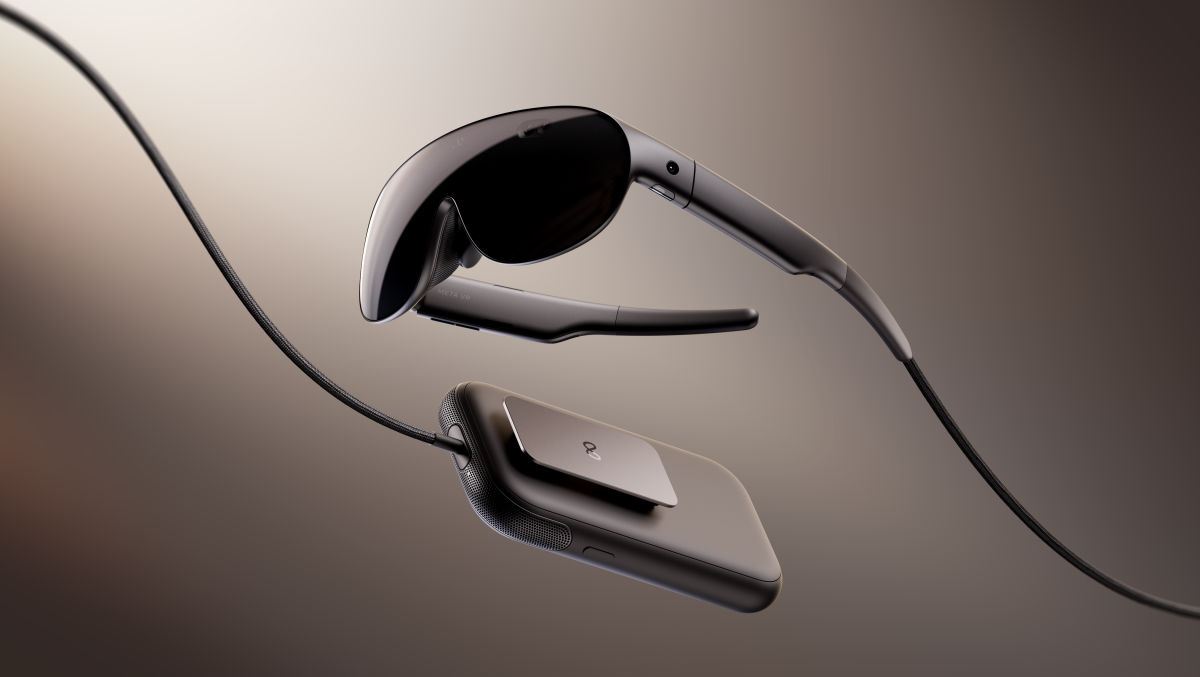
Meta is renewing its quest to make virtual reality a thing. At Connect on Wednesday, the company announced Meta VR Glasses, its newest entry into the VR market. These glasses actually seem quite promising given their substantially lighter form factor and a host of new entertainment integrations — including (allegedly) IMAX compatibility.
The company says that the glasses are five times lighter than the Meta Quest 3 — and they look much more like normal glasses than the bulky headsets that Meta previously released. Made of magnesium alloy, the glasses are powered by Qualcomm’s Snapdragon Reality Elite processor. They are powered by a computing puck, which also acts as their battery. Presumably, a user can just slip the puck into their pocket, which allows the glasses to be used on the go.
The glasses are largely entertainment-focused and come with micro-OLED panels built into the lenses, which provide a 5K Infinite Display with 37 pixels per degree, as well as Dolby Vision and support for Dolby Atmos audio. Users will be able to download and watch movies.
Perhaps one of the more unique features of the glasses, however, is that Meta is pitching them as a great way to enjoy IMAX-captured films.
Indeed, the company calls the glasses the “first IMAX Enhanced certified VR device ever.” What does that mean? Meta maintains that their glasses will be one of the only ways to experience the expanded aspect ratio that defines the distinct high-resolution viewing experience.
The glasses are also compatible with 3D experiences — and even movies that integrate a user’s physical space is integrated into their viewing experience. Meta says that it has teamed up with Disney and that, in November, Disney+ users will be able to stream specific movies — including certain Marvel movies — in 3D.
Meta says that users will be able to watch specific movies and have their surroundings “transformed with immersive environments, dynamic effects, stunning 3D visuals, and spatial audio” — essentially converting the movie into a VR gaming-type experience.
The glasses will also come with Meta AI — its automated virtual assistant — built in, which means that users will be able to talk to the glasses and automate various tasks via voice command. For instance, Meta says you’ll be able to start a movie just by asking your glasses to do so. Other ways to issue commands include hand gestures.
Meta says the glasses will be available next spring with a starting price of $1299.99.
When you purchase through links in our articles, we may earn a small commission. This doesn’t affect our editorial independence.
>
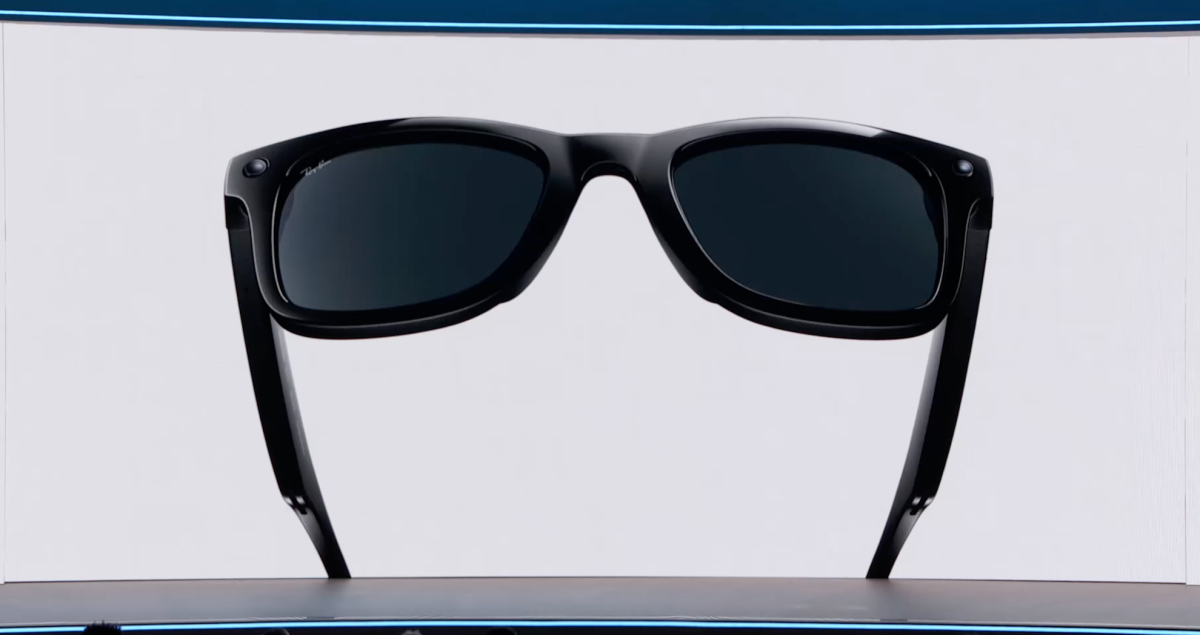
Confirming earlier reports, Meta announced its first pair of camera-free AI glasses, the clunkily named Ray-Ban Meta Audio, at its Connect 2026 conference on Wednesday. Designed to combat criticism around the more malicious use cases for AI glasses, which saw them nicknamed “pervert glasses” by some, the new devices will be audio-only, offering the ability to listen to music and podcasts, take calls, translate speech, and communicate with Meta’s AI assistant, Muse.
The glasses are designed by Meta’s partner in its AI hardware efforts, EssilorLuxottica, and will start at $349.
While Meta today offers a range of AI glasses in a variety of styles, colors, and capabilities, the audio-only glasses could help the brand recover from some of the reputational damage after critics pointed out how people, often men, were using AI glasses to record videos without subjects’ consent. Meta attempted to mitigate this issue with an update that would disable the camera if the LED light that indicated the glasses were recording was ever tampered with. However, the creepiness factor remained.
This latest device could prove to be more popular for that reason, while also providing an answer to something like Apple’s Siri-powered AirPods.
“Once you get used to high quality audio, it’s just a thing that you want all the time, right?” Meta CEO Mark Zuckerberg said during a keynote Wednesday, adding that the company after working on the idea realized it could design a whole new category of glasses around audio glasses.

Because they don’t have to house cameras, the glasses are slimmer than Meta’s other models and weigh only 43 grams. They also have adjustable temple tips, swappable nose pads, overextension hinges, and battery life of up to 12 hours on a single charge, Meta claims. With the included charging case, that battery life extends to up to 48 hours.
They’ll also come in a variety of colors and options — 23 color and lens combinations in total — and in two new styles, a retro-inspired “Clubmaster” Ray-Ban style and “Burbank,” described as more of a “classic, timeless, rectangle shape.” Like other Meta glasses, you can order them with your optical prescription as well, if needed.
The glasses will be available for preorder on October 13, the company noted.
Alongside the glasses, Meta announced its next-generation AI glasses (the ones with cameras), the Ray-Ban Meta (Gen 3). In addition to the Ray-Ban Meta Wayfarer, there will also be two new styles, the Aviator and Zena — the latter offering more of a cat-eye frame shape. These will have a 12 MP camera that supports 3K Ultra HD video, a six-mic array, and up to nine hours of battery life.
The glasses Meta launched with EssilorLuxottica will also see an expanded lineup of styles and colors as well as a new partnership with singer Lisa, which follows the company’s earlier brand partnership with Kylie Jenner. The glasses will also be roll out to more countries globally, Meta said.
All of Meta’s AI glasses will, of course, feature access to its newer personal AI assistant, Muse.
The company also teased other coming updates, including support for Dolby Atmos Capture, a feature that picks the best photo from multiple frames, an option to choose landscape or portrait modes, hearing enhancements for those with hearing loss, more detailed responses, different audio modes, customizable controls, and something called “private processing” that Meta claims will prevent the company from seeing your data.
When you purchase through links in our articles, we may earn a small commission. This doesn’t affect our editorial independence.
>
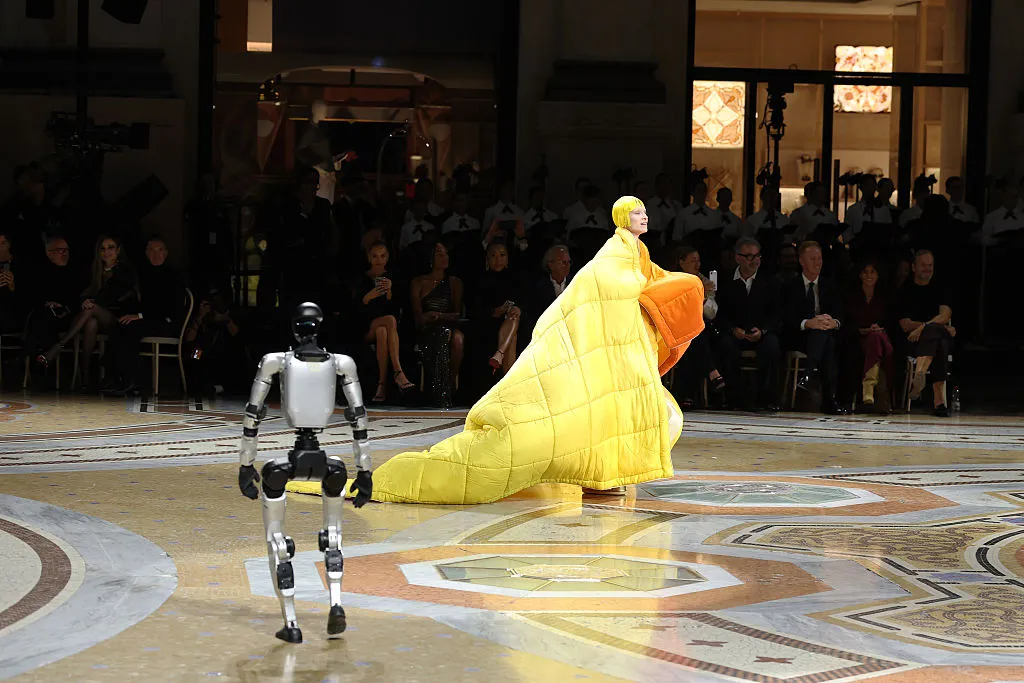
Vogue World closed its Milan edition this week with a troupe of robots — perhaps a preview of what’s coming when the event descends on San Francisco next year.
Vogue World is the magazine’s annual traveling spectacle, now in its fifth year: part runway show, part celebrity showcase, part variety hour, part ad-sales opportunity, staged in a different city each time. It has run through New York, London, Paris, and Hollywood. This year’s Milan edition was marketed as a tribute to Italian craftsmanship and “the human touch” in an age of technology, which makes what happened next a little strange.
During the act titled The Age of Intelligence, humanoid robots made by the Chinese firm Unitree walked into the Galleria to Gigi D’Agostino’s “L’Amour Toujours.” They waved their arms in the arm, imploring onlookers to clap. One did a lasso. They were not wearing clothes. The pained expression of Alessandro Michele, the creative director of Valentino, quickly went viral.
I haven’t seen a single thing about the actual fashion that was presented at Vogue World Milan. Instead, everyone is talking about the robots. (These same robots have been making headlines worldwide for their dance moves, and for falling and breaking.) Similar robots turned up on the runway at London Fashion Week, which is happening now.
Vogue turned heads earlier this year when it announced that the next edition will be in San Francisco, arguably one of the least stylish cities in the United States. The timing isn’t coincidental. Anna Wintour has aligned herself ever more closely with the tech barons of our time, and Vogue World Milan was itself sponsored in part by Meta Glasses, with additional support from OpenAI.
It was one of those moments that reveals how thoroughly tech exists in a bubble, and that not everyone is happy with the rapid adoption of new technology, or by Vogue cozying up to the symbols of the insanely rich — and only getting richer — tech titans during a cost of living crisis. That’s before you get to AI, mass surveillance, the displacement of labor, and the energy crisis, all of them overseen by the same titans. For some, a robot on a runway is further proof of what is going wrong in the world right now.
“I’m annoyed by the celebrities cheering the whole thing,” one tech founder wrote me on Instagram. “It’s sick and gloom. People are literally losing jobs and livelihoods because of these things. They need to stop encouraging it. What’s it even modeling? Headphones?”
One fashion reporter friend simply said “No,” when I asked for thoughts on the robots and Vogue World San Francisco. Jason Johnson, founder of Culture Impact Agency, noted that Vogue has been trying to build a relationship with Silicon Valley for at least the past decade, highlighting when Jony Ive co-hosted the Met Gala back in 2015. The dancing robots at Vogue World Milan were inevitable, then, as is Vogue World San Francisco and as was Jeff Bezos and his wife, Lauren Sanchez, getting the splashy Vogue wedding cover and co-hosting the 2026 Met Gala.
“Publications are figuring out new ways to make money and tech has money,” he told me. “Vogue has the cultural influence and access that those tech people want.” Both sides win in the end, he said.
Still, something about the way Vogue is going about this feels unnatural.

Muna Ikedionwu, founder of MKEDI, a strategy firm for early-stage startups, said what she found most interesting about the robots is that they don’t fully represent the innovation and progress that’s actually happening in the creative technologist space. “I’ve seen such incredible examples of engineering and AI being used to influence fashion, being used to influence design and art,” she told me, adding that robots walking down the runway doesn’t even scratch the surface of what is happening right now at the intersection of fashion and tech.
She points to the artist duo AA Murakami, who created Olympian Eileen Gu’s dress of bubbles at this year’s Met Gala. They are fashion designers but also engineers, Ikedionwu said, noting a presentation she saw them give recently about how to create an “everlasting bubble.” They are helping to pioneer “emphemeral technology,” she said, “this idea of technology and innovation that speaks to the ephemeral nature or the temporariness of art and humanity and the soul.”
Sure, I guess when you compare it to this, the robots did seem quite boring. Whenever I think about the intersection of fashion and technology, I think about that Spring 2024 Schiaparelli collection, which unveiled a robot baby crafted with Swarovski crystals and a dress made with vintage tech like PC microchips. (I once threatened to wear that dress to Disrupt; see image above.)
Ikedionwu wonders whether this robot performance was a way to make the general public more comfortable with technology and fashion overlapping, a merger that has been underway behind the scenes for years. If so, it didn’t work. But maybe Vogue World is saving all the good stuff for San Francisco.
When you purchase through links in our articles, we may earn a small commission. This doesn’t affect our editorial independence.
>

Henry Pollock: Northampton chief expects more players to work with promoters like Eddie Hearn as he lifts lid on negotiations | Rugby Union News

Drag Race’s Alyssa Edwards Claps Back at Ken Paxton for James Talarico Campaign

Chelsea Women 1 – 0 Austria Wien Women
-

 movies4 months ago
Search For Canadian TV Actor Stewart McLean Now Homicide Investigation
-

 Fashion9 years ago
These ’90s fashion trends are making a comeback in 2017
-
Fashion9 years ago
According to Dior Couture, this taboo fashion accessory is back
-
Fashion9 years ago
Model Jocelyn Chew’s Instagram is the best vacation you’ve ever had
-
Fashion9 years ago
Emily Ratajkowski channels back-to-school style
-
Fashion9 years ago
9 Celebrities who have spoken out about being photoshopped
-

 Anime4 months ago
Rurouni Kenshin: Hokkaido Arc Manga Takes 1-Issue Break – News
-

 Anime3 months ago
HIDIVE to Stream English Dubs for The World Is Dancing, The Forsaken Saintess and Her Foodie Roadtrip in Another World, The Dangers in My Heart: The Movie Anime – News