
Anime
Saga of Tanya the Evil Anime Gets Film Concert for 10th Anniversary – News


Kadokawa announced on Thursday the TV anime of author Carlo Zen and illustrator Shinobu Shinotsuki‘s Saga of Tanya the Evil (Yōjo Senki) novel series will get its first film concert at the Ota Civic Hall Aprico in Tokyo on March 20 with two performances.

© カルロ・ゼン・KADOKAWA刊/幼女戦記2製作委員会
The Anime 10th Anniversary Saga of Tanya the Evil Film Concert commemorates the 10th anniversary of the anime adaptation. It looks back on pivotal moments from the anime’s two seasons and the film with a live orchestra playing the series’ soundtrack.
Tanya’s voice actress Aoi Yūki, Weiss’ voice actor Daiki Hamano, Mary Sue’s voice actress Haruka Tomatsu, and Grantz’s voice actor Yūsuke Kobayashi will also provide live voice acting during the film concert.
The band MYTH & ROID, who performed theme songs for the television anime and film, are listed as guests for the show.

©カルロ・ゼン・KADOKAWA刊/幼女戦記2製作委員会
Saga of Tanya the Evil II (Yōjo Senki II), the anime’s second season, debuted on the AT-X channel on July 8 and also runs on Tokyo MX, Sun TV, KBS Kyoto, BS11, and TV Aichi. Crunchyroll is streaming an English dub for the season.
Like the first season, the second season inspired a “Yōjo Shenki 2” (The Shaga [sic] of Tanya the Evil 2) mini-anime. Each mini anime episode runs immediately after each Saga of Tanya the Evil II episode on AT-X, and then streams on the Kadokawa Anime Channel on YouTube starting that Thursday at midnight JST for two weeks. The new mini anime also features the new members of the Salamander Kampfgruppe.
The second season was announced in June 2021.
The television anime adaptation of the novels premiered in January 2017. Crunchyroll streamed the series as it aired, and Funimation streamed an English dub.
The anime also had a film that opened in Japan in February 2019, with a returning staff and cast. Crunchyroll screened the film in the United States in May 2019, and began streaming it in September 2019.
Yen Press licensed both the original Saga of Tanya the Evil light novel series and Chika Tōjō‘s manga adaptation, and it describes the story:
High above the blood- and mud-soaked trenches, a young girl pits herself against army mages in high stakes aerial duels with bullets, spells, and bayonets. Her name is Tanya Degurechaff and she is the Devil of the Rhine, one of the greatest soldiers the Empire has ever seen! But inside her mind lives a ruthless, calculating ex-salaryman who enjoyed a peaceful life in Japan until he woke up in a war-torn world. Reborn as a destitute orphaned girl with nothing to her name but memories of a previous life, Tanya will do whatever it takes to survive, even if she can find it only behind the barrel of a gun!
Carlo Zen and Shinobu Shinotsuki launched the novel series in 2013, and Kadokawa published the 14th volume in September 2023. Tōjo launched the manga in Monthly Comp Ace in 2016, Kadokawa published the 35th compiled book volume on August 25.
Sources: Email correspondence, Comic Natalie
Disclosure: Kadokawa World Entertainment (KWE), a wholly owned subsidiary of Kadokawa Corporation, is the majority owner of Anime News Network, LLC. One or more of the companies mentioned in this article are part of the Kadokawa Group of Companies.
>
Anime
Zombie Police: Midsummer Unhappy New Year Game Launches for PC via Steam on November 22 – News
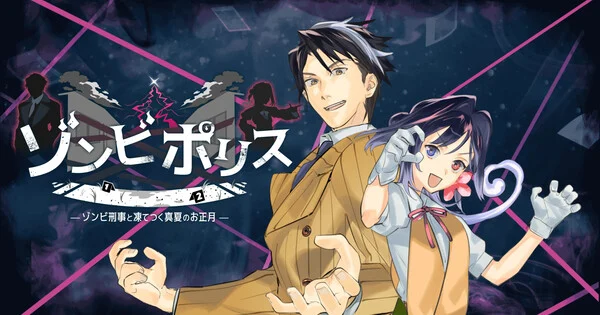
Game gets Switch release at later date

© Lobstudio Inc.
Japanese developer Lobstudio announced on Wednesday that its upcoming Zombie Police: Midsummer Unhappy New Year comedy-mystery adventure game will launch for the PC via Steam on November 22. The game will launch for the Nintendo Switch at a later date.
The company describes the game:
Step into the undead shoes of zombie detective Akemi Kabane, a crime-solving sleuth with an uncanny ability to see the truth, along with her partner, the fearless Detective Zomby, and super serious partner Yasu Tamura as they investigate a VTuber involved in a horrific incident and a supernatural danger that threatens to place a village and its residents into a permanent cold freeze.
Use Akemi’s Zombie Dive ability to uncover sinister secrets and concealed clues that haunt Shimofuri Village. Dive into both suspects and objects to uncover new information hidden from the real world and expose the truth of the village and its not-so-innocent past.
The company’s other games include Sunset Game Shop Shayou, and ODEN.
Sources: Press release, Zombie Police’s Steam store page via Gematsu
>
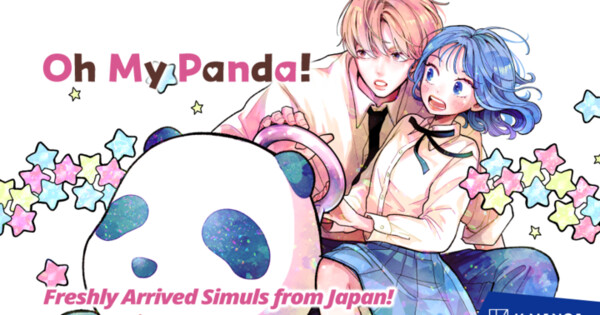
Kodansha‘s K MANGA platform announced on Wednesday that it has added Chihiro Kanisawa‘s Oh My Panda! (Horeta Hareta Panda) manga as a simulpub title.

© KODANSHA LTD. , KPS Products Corp./YKS Services LLC
The company describes the story:
Hanna, an ordinary high school student blessed with endless stamina, finds herself taking on a not-so-ordinary part-time job as a character performer for the beloved mascot and local hero Panboo. Donning a hefty panda costume, she does her best to embody the part, protecting the town as only Panboo can—even when the kiddies get too rough. But just as she starts to get the hang of things, she bumps into Ubukata-kun, a boy from the class next door, who comes dangerously close to uncovering the girl behind the panda. Will he figure out her little secret? How long can she keep bamboo-zling him? Only time will tell in this bear-ly believable love story!
Kanisawa launched the series in Kodansha‘s Dessert magazine in November 2025. Kodansha shipped the second compiled book volume on September 11.
>

While I’ll forever lament the scarcity of original anime productions due to the economic conditions of this industry, I love that I’m able to compare and contrast so many anime to their source material! Doing comparative readings of different interpretations of the same story is a terrific way to gain a more nuanced appreciation for a work, and better understand the affordances of different mediums of storytelling. I was first exposed to this method of literary analysis in my freshman year of college where I took an English class that had us read different translations of Beowulf — and then later J. R. R. Tolkin’s The Hobbit as his translation of Beowulf was the one we compared to Seamus Heaney’s now standardized translation — and the practice has been nothing but beneficial to my writing and personal enjoyment of media ever since.
Even though there’s plenty to take in from reading the manga, light novel, or webcomic that your favorite anime is based on, and it’s a lot of fun to continue to experience a story once said anime is between seasons; this list is going in a slightly different direction. All of the titles below are either looser adaptations of the story they’re adaptation, or had to fundamentally change due to inherent qualities of the original work. In experiencing these stories and comparing them to the anime they inspired, I hope that everyone reading this gains a greater understanding of both art forms and comes to learn that a “good” adaptation is not necessarily a direct one.

© Keiichi ARAWI 2017
1) CITY
For my money, CITY The Animation was the best anime to release last summer, if not last year! Consistently comedic and carrying an air of joy and whimsy that the world could desperately use more of, this Kyoto Animation project met their usual high standard of visual quality. Utilizing emotionally affecting color and lighting techniques, delivering on impressive action sequences for a series that’s more stylized for comedy, and even adding a mixed media element through the use of real-world scale models, CITY The Animation is just about everything I want out of an anime. However, as Kyoto Animation is wont to do, the studio took some artistic liberties in the narrative and episode-to-episode adventures present in the original manga, meaning Keiichi Arawi‘s CITY is tonally identical but an otherwise fresh experience for those hungry for more of this series!
The biggest difference between CITY the manga and CITY The Animation is how the former has a more traditional narrative onramp compared to the latter, which just throws the audience into the middle of this dense and vibrant world. In the manga, Nagumo, Niikura, and Wako Izumi are all established more clearly as main characters before antics involving the Makabe family, the Adatara family, and other zany factions in this community start to take hold. Similarly, while dynamics between characters are implied in the anime, like Nagumo and her landlady’s (who she owes money) relationship, in the manga these relationships and specific supporting characters, like the antique shop owner, are established early and more clearly.
With CITY The Animation lifting some storylines but not others from CITY the manga’s fifteen volumes, fans of the anime should start from volume one and experience this uplifting odyssey and adorable oddballs all over again.
● Read CITY on BookWalker

© Rikito Nakamura, Yukiko Nozawa, Shueisha, Seven Seas Entertainment
2) The 100 Girlfriends Who Really, Really, Really, Really, Really Love You
While every version of The 100 Girlfriends Who Really, Really, Really, Really, Really Love You is really fun and irreverent, the temporal differences and the anime coming out well after the manga found success make the two very interesting to experience simultaneously. The 100 GFs anime loves to play around with the order of events of the manga to include new girlfriends introduced too late to get in on specific gags or better reintroduce audiences to this world and these characters after a break between seasons. We saw the former kind of change utilized at the end of season two when the anime finally adapted this iconic panel from the manga, and the latter change in the opening of season three bumped up an interview gag from the manga that highlighted past girlfriends and ones set to be introduced this season. Furthermore, the 100 GFs anime loves making cultural references not present in the original manga due to referenced events or media not occurring at the time a chapter was written, such as a recent gag from season three that referenced both the song Iris by the Goo Goo Dolls and Iris Out, the theme to the recently released Chainsaw Man movie.
The 100 GFs manga, however, uses its more expedited production timeline compared to the anime to a different temporal effect. Due to it releasing at a quicker pace than the anime, the manga is able to be extremely topical and reference developments related to the series more immediately, such as turning a chapter into a function (and fun) promotion for the recently released 100 GFs mobile game. While these very fun differences mean that you should probably start reading the 100 GFs manga if you’re a fan of the anime, season three is set to end roughly at the end of volume ten of the manga, so you can pick it up with volume eleven if you just want to see what the Rentaro family gets up to next.
● Read The 100 Girlfriends Who Really, Really, Really, Really, Really Love You on BookWalker

© 2004 by LUCKY LAND COMMUNICATIONS/SHUEISHA Inc.
3) JoJo’s Bizarre Adventure: Steel Ball Run
The secret sauce of the JoJo’s Bizarre Adventure franchise for a while now has been just how well author Hirohiko Araki, his team on the manga, and the folks behind the JJBA anime at david production have been able to edit and iterate upon this long-running franchise. As an extemporaneous writer, each part of JJBA is filled with wild plot twists and surprising developments that never fail to excite and entertain. However, this knack for improvisation can lead to continuity errors and plot holes in the manga that never feel distracting in the moment, but do inspire scrutiny over time. Some examples of this include the Stone Ocean character Narciso Anasui originally appearing with a much more feminine design, or the character Sandman in Steel Ball Run being implied to have a different power set than his actual abilities.
While every part of the anime has provided a round of editing to Araki’s story, Steel Ball Run especially benefits from Araki beginning to refine his own work and past storytelling conventions. Steel Ball Run is a continuity reset for the JJBA franchise, and is littered with characters and powers that are a punched-up version of past people and abilities. Experiencing both the anime and manga simultaneously makes clear how a transfer from one medium to another can improve a work when those working on it aren’t afraid to identify and address the original’s flaws.
Technically, you can start reading volume two of the manga if you want to begin where the stellar special premiere of the Steel Ball Run anime left off, but you should really take this manga from the top. Longtime JoJo’s fans waited about two decades for an official release of the Steel Ball Run manga, and the only way Viz will print localized versions of parts eight and nine faster is if they start selling more copies of what’s already available.
● Read JoJo’s Bizarre Adventure: Steel Ball Run on BookWalker

© Q Hayashida, Shogakukan, Viz Media
4) Dorohedoro‘
Despite some rough edges, the anime adaptation of Q Hayashida‘s Dorohedoro is really good! Despite some clunkiness with the CG animation early on, the anime quickly learns how to marry the lovable characters and brutal carnage that makes this franchise such a delight. While the story can be taken in effectively in either art form, and I originally came to the series through the anime, you need to read the manga to get the full Dorohedoro experience.
Q Hayashida has what I would describe as a lovably messy art style, where sketch lines are often retained to convey wild energy and smudged backgrounds, and character designs are used to make everything feel just a little dirty and dangerous. While it’s nothing short of a man-made miracle that the Dorohedoro anime looks as good as it does, these characters and their stories carry so much more weight to them in their original designs that don’t have to be simplified for the sake of animation.
If you only care about unraveling the various mysteries driving Dorohedoro‘s narrative, volume fourteen picks up around where season two of the anime left off, but you’ll get way more out of the manga if you pick it up from the top.
● Read Dorohedoro on BookWalker

© Ryohgo Narita. Katsumi Enami
5) Baccano!‘
Okay, I give up! I’m releasing the hope that we’ll ever see more of Ryohgo Narita‘s masterclass in ensemble storytelling in Baccano! adapted into an anime!! I’m never gonna see these weird little freaks running around on Alcatraz, and have to accept that I’ll have to keep going back to the light novels for my supernatural mobster fix!!!
Which actually isn’t all that bad, as the Baccano! light novels are, unsurprisingly, really good! With the main draw of Baccano! being its colorful characters and how their distinct personalities and motivations intermesh with each other, the light novels make this charm point shine even brighter thanks to the literary format giving us more time and details about every piece on this centuries-spanning board.
Considering that the differences in form are bigger here than any other entry on this list and that it’s been (checks notes and turns to dust) nineteen years since the Baccano! anime premiered, you’re best off starting with the first volume. Also, be sure to take your time while reading Baccano!! The series is still ongoing and, with no word on when volume twenty-three will release after volume twenty-two premiered three years ago, it’s better to savor this story rather than hurry up and wait for more…assuming more eventually comes.
● Read Baccano! on BookWalker
>
NASCAR legend Darrell Waltrip to step away from public life due to cognitive illness

Brad Caleb Kane On ‘Crystal Lake’ Fan Theories, “Certain Explanations”
Karl-Anthony Towns contract extension talks could linger into regular season: Sources
-

 movies4 months ago
Search For Canadian TV Actor Stewart McLean Now Homicide Investigation
-

 Fashion9 years ago
These ’90s fashion trends are making a comeback in 2017
-
Fashion9 years ago
According to Dior Couture, this taboo fashion accessory is back
-
Fashion9 years ago
Model Jocelyn Chew’s Instagram is the best vacation you’ve ever had
-
Fashion9 years ago
Emily Ratajkowski channels back-to-school style
-
Fashion9 years ago
9 Celebrities who have spoken out about being photoshopped
-

 Anime4 months ago
Rurouni Kenshin: Hokkaido Arc Manga Takes 1-Issue Break – News
-

 Anime3 months ago
HIDIVE to Stream English Dubs for The World Is Dancing, The Forsaken Saintess and Her Foodie Roadtrip in Another World, The Dangers in My Heart: The Movie Anime – News