
Tech
Best Whoop Alternatives in 2026: Oura, Garmin, Fitbit, and More

Compare the best Whoop alternatives in 2026, including Garmin, Oura, Fitbit, Amazfit, and Polar for sleep, recovery, fitness, and value.
The post Best Whoop Alternatives in 2026: Oura, Garmin, Fitbit, and More appeared first on TechRepublic.
>
The iPhone 18 Pro starts at $1,199 with the A20 Pro chip, variable-aperture camera, Siri AI, faster charging, and up to 2TB of storage.
The post iPhone 18 Pro Cheat Sheet: Price, Specs, Features and More appeared first on TechRepublic.
>
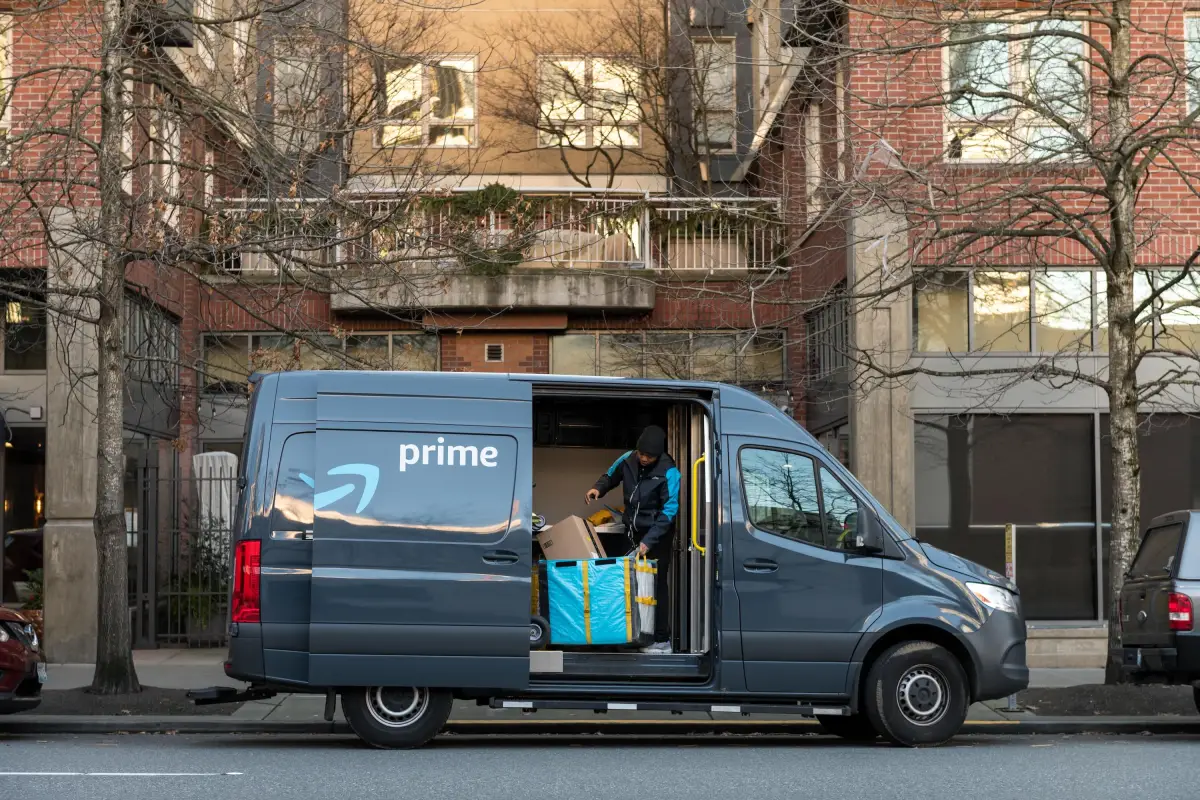
Amazon’s chief sustainability officer said Tuesday the company doesn’t know how it will achieve its goal of net zero carbon emissions by 2040.
“We are still striving towards that target,” Kara Hurst said at an Axios event, adding later that she is “not going to sit here and say, ‘We know all the ways that we’re going to do this.’”
The admission was both frank and realistic. It’s also a bit disappointing. If Amazon doesn’t have a plan to decarbonize, then who does?
Amazon is one of the largest companies in the world, with last year’s revenue up 12% to $717 billion — about the size of Ireland’s economy. Its rise is illustrative of how, as UN Secretary General Antonio Guterres has pointed out, power has shifted from governments to a few corporations.
As power moves, responsibility follows. The question is, how much responsibility does Amazon bear?
“This isn’t a question of companies versus governments,” Hurst told TechCrunch in a written reply to questions after the event. “Tackling climate change at the scale it demands takes both, and it takes them working together.” She added, “Where we can lead, we do.”
It’s true that Amazon has not been sitting still. In her talk yesterday, Hurst pointed out that the company is “one of the largest purchasers of clean energy in the world for the last several years running” with 42 gigawatts in its portfolio. She also said that Amazon has reduced its carbon intensity, or how much pollution it generates per dollar of revenue, though that claim depends on the timeframe. Last year, carbon intensity rose compared with 2024, even though it stayed below where it was in 2022.
Amazon is a sprawling business, and as a result, its carbon emissions are spread across nearly every sector of the economy, from aviation and AI to agriculture and construction. The company needs suppliers in every sector to achieve its goal. “This is not something we can do alone,” Hurst said at the Axios event.
The company acknowledges that its commitments are its own. “We hold ourselves accountable to The Climate Pledge goal of net-zero carbon by 2040. That commitment hasn’t changed,” Hurst told TechCrunch.
But Amazon has also made choices that undermine its leadership on the issue. Earlier this year, an investigation revealed the company’s plans to build a 7.65 gigawatt natural gas power plant to power an AI data center campus. The project’s 35 turbines could release up to 33 million tons of carbon dioxide annually, making it the largest single source of that pollution in the U.S.
With few exceptions, companies prioritize revenue growth over climate commitments. For a company like Amazon, which operates the largest cloud service in the world, AI is apparently a revenue driver that’s impossible to pass up.
The climate tech world has been hoping that, as clean power gets cheaper, the market would work its magic to lower carbon emissions. There have been a few success stories, but as the AI rush has shown, that approach has its limits. Even Amazon, one of the leaders in the space, bet big on natural gas. In the process, it essentially said that climate change is something for future generations of executives to deal with. Sound familiar?
When you purchase through links in our articles, we may earn a small commission. This doesn’t affect our editorial independence.
>

Bessemer Venture Partners announced on Wednesday that it has raised $5.75 billion across two new funds to accelerate its investment across all parts of the AI stack. The firm, which has backed companies such as Anthropic, Cognition, Legora, Perplexity, Ramp, Shopify and Waymo, dedicated $1.75 billion for seed and early-stage investing and the remaining $4 billion for growth startups.
Bessemer has been well-known as a leading VC in the SaaS era, with a particular knack for picking enterprise winners, like Box, DocuSign, and Gainsight. Since 2022, it has invested in more than 260 AI-native companies. So far, the firm has invested $3 billion into AI-related startups, it says, including those focused on compute, infrastructure, foundation models, dev tools, app-layer startups, and agentic tech.
Now, Bessemer positions all things AI as the opportunity of a lifetime — a common sentiment, until the next big trendy tech revolution comes around, of course.
“AI-native companies are scaling faster than any category of technology we’ve backed before,” Bessemer Partner Byron Deeter said in the company’s funding announcement. VC firms also need to keep increasing their war chests, Deeter told Bloomberg, because companies staying private longer has become “a permanent structural shift.”
>
UK PM Andy Burnham open to trialling end to alcohol ban at football stadiums

‘NAZA’ Claims About IDF Action in Gaza Deserve a Closer Look
Could Yankees’ Giancarlo Stanton return for Wild Card Series? He took a meaningful step
-

 movies4 months ago
Search For Canadian TV Actor Stewart McLean Now Homicide Investigation
-

 Fashion9 years ago
These ’90s fashion trends are making a comeback in 2017
-
Fashion9 years ago
According to Dior Couture, this taboo fashion accessory is back
-
Fashion9 years ago
Model Jocelyn Chew’s Instagram is the best vacation you’ve ever had
-
Fashion9 years ago
Emily Ratajkowski channels back-to-school style
-
Fashion9 years ago
9 Celebrities who have spoken out about being photoshopped
-

 Anime4 months ago
Rurouni Kenshin: Hokkaido Arc Manga Takes 1-Issue Break – News
-

 Anime3 months ago
HIDIVE to Stream English Dubs for The World Is Dancing, The Forsaken Saintess and Her Foodie Roadtrip in Another World, The Dangers in My Heart: The Movie Anime – News