
Katseye on ‘Saturday Night Live’


When White House Correspondents’ Association President Weijia Jiang announced Saturday night that the dinner would not resume following a shooting at the Washington Hilton, she pointed out how “when there is an emergency,” journalists “run to the crisis, not away from it.”
“I saw all of you reporting — and that’s what we do,” she said.
About an hour later, Jiang, who serves as CBS News’ senior White House correspondent, was seated in the front row of the White House briefing room — still wearing an evening gown — and questioning President Donald Trump about the incident.

The White House Correspondents’ Dinner is a fun and festive Washington tradition — though not always the best look for the press. The dinner has come under scrutiny in recent years for the appearance of chumminess between journalists and the powerful people they cover. This year, many criticized the WHCA for inviting Trump to the First Amendment celebration given his assault on the press, and hundreds of journalists called on the group to confront him.
What will be remembered this year isn’t journalists clinking glasses, but swiftly moving into action during a crisis. It was jarring to watch events unfold on CNN as the lighthearted vibe before a commercial break shifted dramatically to breaking news, cutting back to the ballroom with images of armed Secret Service members on stage and the president no longer present.

“To be fully transparent with everyone, we do not know what is happening in there,” said anchor John Berman. “All we know is there were loud sounds.” Berman turned to Brian Stelter, who used his phone to broadcast from inside, relaying scenes from the chaotic situation. “I heard a loud sound,” said Stelter, thinking it may have been plates crashing. “You are our eyes and ears,” Berman told him.
Next, Kaitlan Collins, speaking live on her cell from the ballroom, was told by a Secret Service agent that there was a shooter in the lobby and that the suspect was dead, not apprehended — highlighting the uncertainty of initial reports as details emerged in real-time.
Wolf Blitzer provided a harrowing account of gunfire while making his way to the bathroom and being protected by an officer who brought him down to the ground. “It was just a very, very frightening moment for me personally and for everyone who was nearby.”
“We are lucky that we have a reporter like you who happened to bear witness to what happened,” Berman told Blitzer. “You have given us the most details we have had to date as an eyewitness to this event.”
While Collins and others headed to the White House for Trump’s briefing, journalists, including TheWrap’s Corbin Bolies, offered perspective on social media. Bolies attended several pre-parties at the Hilton before heading to Substack’s party, which was being held nearby during the dinner. Reporters began hammering out stories.
“If you want to know what journalists do in an emergency — even one that threatens their immediate safety — they hunker down and bring you the news,” Politico’s Steven Overly wrote alongside photos of his colleagues typing away on the floor.
C-SPAN chief Sam Feist later told Bolies that cameraman Mohaimen Aljasheme never stopped filming.
“He realized that there had not been a gunshot in the room, and he just continued to do his job,” Feist said. “So much of what we saw in the immediate aftermath was from that camera, that C-SPAN photographer, because he kept showing what was happening.”
Still, there will be intense scrutiny now on what led up to the shooting, and the security apparatus at the dinner.

I’ve covered the WHCD at the Hilton many times, from the media pre-parties scattered throughout the hotel’s salons to the dinner itself. The Washington Hilton is a massive complex, with more than 1,000 rooms and guests who may have nothing to do with the event.
In my experience, anyone can enter the hotel, and people often linger in the lobby to gawk at celebrities or familiar faces from TV news. You need an invitation to access the salons, where pre-parties are held, and must then pass through a magnetometer to enter the ballroom downstairs.
The show will go on. Trump has said he wants the dinner rescheduled within the next month. But the sprawling, free-flowing atmosphere that has long defined Washington media’s biggest night is likely to be curtailed.

Everyone attending Saturday’s White House Correspondents’ Dinner expected President Donald Trump’s first appearance as president to make for an unprecedented night. No one could’ve predicted how it would turn out.
The shooting upstairs at the Washington Hilton led the Secret Service to whisk the president off the ballroom stage and sent the dinner’s hundreds of guests ducking under tables. Many journalists — including CBS News’ Jiang — got back to work reporting, changing the night’s celebratory dynamic to one consumed by professionalism.
The chaotic scene unsurprisingly drove the conversation at after-parties that continued despite the dinner ending abruptly and raised questions about the security apparatus at the hotel, which has traditionally been the site of the annual dinner — as well as the location where Ronald Reagan was shot in 1981.
Read Bolies’ full dispatch: What I Witnessed on a Chaotic Night at the White House Correspondents’ Dinner

President Donald Trump called the suspected shooter at Saturday night’s White House Correspondents’ Dinner a “sick person” and praised law enforcement for apprehending him.
Trump spoke to reporters in the White House briefing room just hours after the annual dinner was shut down following a shooting at the Washington Hilton that caused chaos inside the ballroom. The president and other guests on stage were immediately removed from the scene, as journalists inside scrambled for information.
“This was an event dedicated to freedom of speech that was supposed to bring together members of both parties with members of the press,” said Trump, who noted that “in a certain way it did” as people in the room were “totally unified.”
The suspect — later identified as 31-year-old Cole Tomas Allen of California— was said to have been armed with a shotgun, handgun and multiple knives.

During an hourlong staff meeting last month, McClatchy’s vice president of local news Eric Nelson pitched what he called “a powerful addition to our toolbox.”
Nelson was promoting the company’s new “content scaling agent,” an AI summarization tool powered by Anthropic’s Claude, which he said can help reporters find “new audiences, angles and entry points.”
“Journalists who embrace and experiment with this tool are going to win,” Nelson told the group, according to multiple people familiar with the meeting. “Journalists who are defiant will fall behind.Bottom line: We need more stories and we need more inventory.”
Since reporting earlier this month how McClatchy’s new AI tool has angered staffers across several of its Pulitzer Prize-winning newsrooms, TheWrap has obtained new details about how the tool works from the March 17 company meeting, including screenshots of the tool, and insight into how management is pitching it to employees and responding to reporters’ concerns about adding their bylines to AI-assisted articles.
Read Corbin Bolies’ full piece here: ‘More Stories, More Inventory’: Inside the Backlash to McClatchy’s AI News Tool | Exclusive

It’s been a dizzying week on the Kash Patel media beat. The FBI director sued The Atlantic for $250 million over Sarah Fitzpatrick’s report on his alleged extensive drinking and concerns inside the government about his performance on the job.
“We stand by our reporting on Kash Patel, and we will vigorously defend The Atlantic and our journalists against this meritless lawsuit,” the magazine said in response.
That defamation suit was filed as a federal judge dismissed Patel’s earlier suit against former FBI official Frank Figliuzzi, who said on MS NOW’s “Morning Joe” that Patel frequented nightclubs more than the FBI’s headquarters — comments the judge deemed “rhetorical hyperbole.”
Meanwhile, the New York Times reported that the FBI began investigating its reporter, Elizabeth Williamson, after she wrote about Patel allegedly using bureau resources for personal use, leading Patel to blast the “baseless” Times on Sean Hannity’s Fox News show.
I spoke with Molly Jong-Fast on “Fast Politics” about Patel’s suit — and other political media topics — and the challenge of proving actual malice in defamation suits.
But I also recommend Hanna Rosin’s interview with Fitzpatrick on “Radio Atlantic,” as the latter details her reporting process on the Patel story.
“I stand by every single word of this report,” Fitzpatrick said. “We were very diligent. We were very careful. It went through multiple levels of editing, review, care.”

Someone joked to Dasha Burns recently that she was “the Marco Rubio of Politico,” a reference to the Secretary of State’s many jobs across the federal government — and the countless memes it’s spawned.
“I wonder when the memes will start coming out,” Burns, 34, told TheWrap.
Starting next month, Burns will become Politico’s first global anchor, on top of serving as White House bureau chief, Playbook’s chief correspondent and host of a weekly talk series, “The Conversation.”
Burns has morphed into Politico’s first true attempt at molding a journalist into a creator-like figure, one that comes as the nearly 20-year-old outlet tries to step up its video and audio output.
Check out Bolies’ piece: Dasha Burns Brings a Creator Mindset to Politico: ‘On Your TV, In Your Ear, In Your Inbox’

CBS News’ loss is MS NOW’s gain: the cable network first hired Shawna Thomas, the highly regarded former executive producer of “CBS Mornings,” as its new political editor, and then landed Kabir Khanna as director of elections and analytics.
As the midterms loom, Brian Carovillano, MS NOW’s senior vice president of news standards and partnerships, said the pair will work together “to ensure our show teams and reporting bureaus have access to the highest-quality election data and projections.”
Plus: Why Leland Vittert Reupped at NewsNation — and Rebuffed Bari Weiss’ CBS News | Exclusive
Warner Bros. Shareholders Sign Off on $110 Billion Paramount Deal. Now the Fight Begins | Analysis
FCC Launches Review Into TV Parental Guidelines, Concerns Over Depicting ‘Gender Identity Issues’
Dan Eggen, Longtime Washington Post Editor Who Helped Shape Politics Coverage, Dies at 60
“If I Tried to Escape, I Would Be Killed” (Shelly Kittleson, The Atlantic)
“Tony Dokoupil Is the Face of the Bari Weiss Revolution at CBS News. Will He Survive It?” (Aidan McLaughlin, Vanity Fair)
“The Billionaire Trying to Build the ‘Next Great Washington Newsroom’” (Alexandra Bruell, The Wall Street Journal)
“ChatGPT and Claude Will Be a Force in Elections. Nobody Knows What to Do About It.” (Alex Roarty, NOTUS)
“It Was Just a Podcast. Now, It’s Kelce Land.”(Jessica Testa, The New York Times)

>
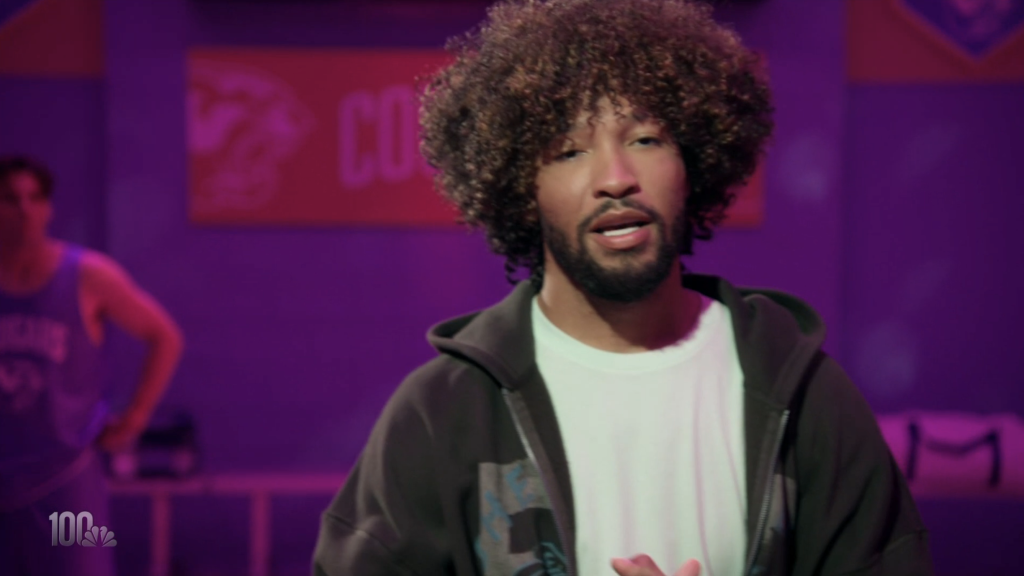
Following the Knicks’ big win at Madison Square Garden, Jalen Brunson took the stage at 30 Rockefeller Center for his Saturday Night Live hosting debut.
On Saturday’s Season 52 premiere, the NBA Finals 2026 MVP showed off some comedic chops in an otherwise business-as-usual episode of the NBC sketch comedy show, which featured Katseye as its musical guest.
Introducing new cast members Grace Reiter and Saidah Belo-Osagie, Katseye returned to a parody season of The Debut: Dream Academy to crown a new girl group. The quartet also performed in a mini music video with the awkward group of ladies, also featuring Jane Wickline and Veronika Slowikowska.
The next sketch was a support group featuring Brunson as one of several men whose spouses were grinded on at Usher and Chris Brown’s The R&B Tour.
“When I spent $1,200 on that meet-and-greet, I never expected her to actually greet his meat,” said Brunson as the other group members comforted him.
Katseye on ‘Saturday Night Live’
Jeremy Culhane and Jalen Brunson in ‘Saturday Night Live’
Jalen Brunson, Jeremy Culhane and Ben Marshall on ‘Saturday Night Live’
Brunson also starred in the parody sketch High School Musical: The New Generation as an athletically gifted new student who hilariously keeps dunking on the new Troy Bolton stand-in (Jeremy Culhane) and steals his girlfriend (Slowikowska).
As Shark Tank judge Daymond John, Brunson asked if the invention Respectacles, a pair of glasses that sounds an alarm when the wearer looks at breasts, “works for ass.” The inventors’ (Culhane and Ben Marshall) presentation keeps getting interrupted as they check out Lori Greiner.
Saturday Night Live kicked off its 52nd season this weekend on NBC with host Brunson and musical guest Katseye. The season continues with guest hosts Dakota Johnson, Shane Gillis and Inde Navarrette, along with musical guests Turnstile, Rosalía and Gracie Abrams.
>
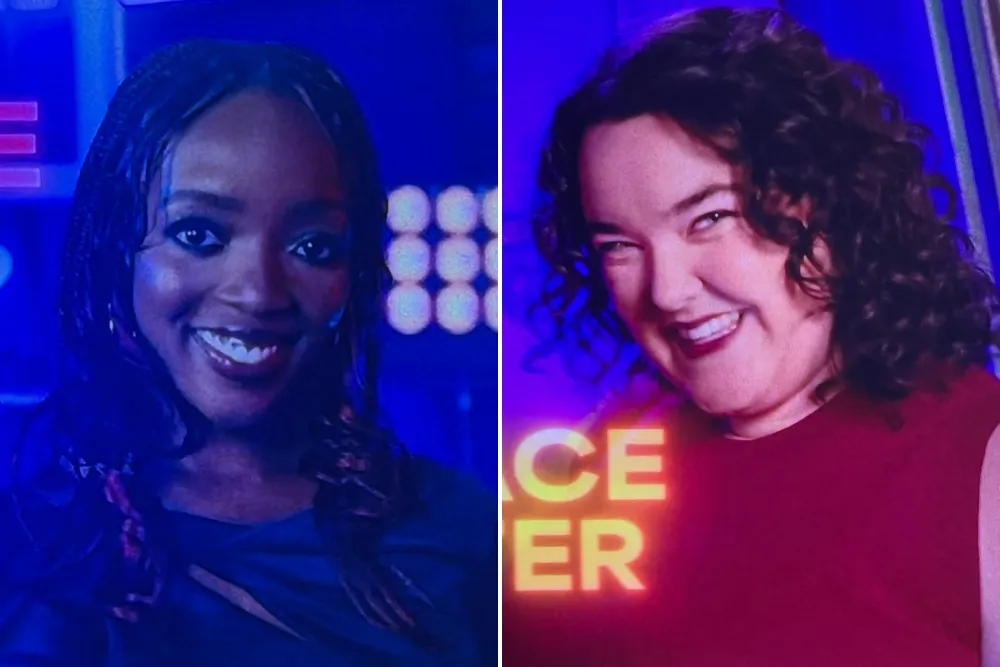
For those wondering how SNL‘s new cast members factored into tonight’s season premiere, the answer is: not much.
The two new featured players, Saidah Belo-Osagie and Grace Reiter, were introduced together, as part of an early sketch on the search for reality competition The Debut: Dream Academy‘s next breakout girl group.
Belo-Osagie played Neelsa Boyce, a 17-year-old entrant who sought to become a pop star after playing Young Nala in The Lion King on Broadway when she was a kid.
Reiter got more screen time as Margle, who “only wear [s] flip flops because I keep passing out when I try to tie my shoes.”
After she’s first introduced onscreen, Margle shows up fully nude to a dance choreography session. We later learn that she and another eccentric contestant on the series named Duff (Jane Wickline) were only invited to participate after witnessing an executive behind the show, played by Ashley Padilla, committing a hit and run.
Margle is surprised to learn what Dream Academy is actually about, as a show: She says she thought it was a “show where you learned to control dreams.”
Subsequently, she pitches “Moose Knuckle” as a band name and the line “Newton’s Cradle, come and get it” during a songwriting exercise.
The sketch culminates with a performance by the final girl group, featuring Margle, who performs the hot new single “Newton’s Cradle” alongside The Debut Season 1’s KATSEYE (who happened to be the SNL season premiere’s musical guest).
Reiter made one other appearance tonight in the night’s final sketch, which opens on host Jalen Brunson (of the recent NBA Finals-winning New York Knicks) in the locker room. He won’t be meeting with reporters after tonight’s game, he says — though he’s visited regardless by a grey-haired Kenan Thompson, who reveals himself to be the NBA star’s third-grade coach — you know, the one who had a “really bad drinking problem”?
Coach Dennis has come around seeking a “small loan” and in hopes of getting Brunson to read his porno screenplay. Thompson introduces Reiter as Tonya, an immigrant who came to the U.S. eight years ago with a dream, who he hopes to rope into his porn. Kam Patterson also features in the sketch, which culminates in his, Reiter and Thompson’s characters stealing jerseys from the empty locker room and running away.
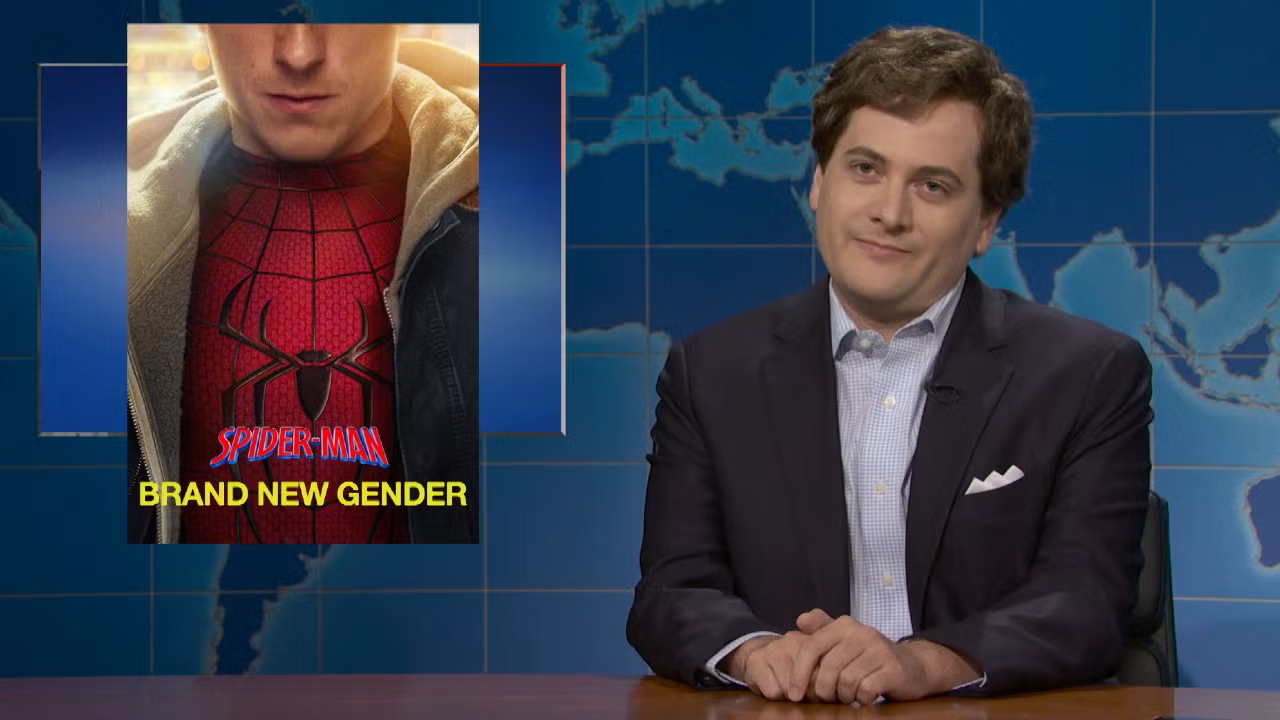
That was all the night had in the cards for Belo-Osagie and Reiter. Often, SNL will use its Weekend Update segment to help break in its new talent, though special segments of tonight’s presentation were instead devoted to special panelists Dario Amodei (played by Wickline) and Tucker Carlson (played by Jeremy Culhane).
Before returning for the new season, SNL said goodbye to Chloe Fineman and writer-performer Martin Herlihy, who was first introduced on the show as part of the trio Please Don’t Destroy. Other returning cast includes Kenan Thompson, Michael Che, Colin Jost, Mikey Day, Sarah Sherman, Marcello Hernández, James Austin Johnson, Andrew Dismukes, Ben Marshall, Tommy Brennan, Kam Patterson and Veronika Slowikowska.
Jalen Brunson, point guard for the 2026 NBA Finals-winning New York Knicks, hosted the kickoff episode for Season 52. Upcoming episodes will pair Dakota Johnson & Turnstile (October 3), Shane Gillis & Rosalía (October 10) and Inde Navarette & Gracie Abrams (October 31).
>
>


Search For Canadian TV Actor Stewart McLean Now Homicide Investigation


These ’90s fashion trends are making a comeback in 2017
According to Dior Couture, this taboo fashion accessory is back
Model Jocelyn Chew’s Instagram is the best vacation you’ve ever had
Emily Ratajkowski channels back-to-school style
9 Celebrities who have spoken out about being photoshopped


Rurouni Kenshin: Hokkaido Arc Manga Takes 1-Issue Break – News


HIDIVE to Stream English Dubs for The World Is Dancing, The Forsaken Saintess and Her Foodie Roadtrip in Another World, The Dangers in My Heart: The Movie Anime – News