
Anime
Episode 7 – Rooster Fighter


© SS/KH,V
I have a confession to make. And I’m ashamed it’s taken me seven episodes to admit this. Do you all remember Polar Bear Café? That cute show where animals sit around and run a café and do animal stuff? The more I watch Rooster Fighter, the more I think maybe I just want Rooster Café. It’s neat seeing all the different types of demons every week, and as someone who was basically raised by Scooby Doo and the X-Files, it’s in my blood to love monster-of-the-week. Even so, my serotonin is at its all-time high every week when this show is just killing time on silly bird antics.
Genuinely, there is almost no reason why Rooster Fighter would need to devote half its run-time to a compilation of Bird Things—Keiji pecking around in the dirt and taking a dust bath, Elizabeth fishing out and using an aerosol sprayer of bug spray for an unnecessarily long time, Elizabeth cooking and seasoning carp, if not to just whittle away time. There’s an entire sub-story where they meet two pigeons who convince them to go on a group date with them so they can impress some lady pigeons. Group dates are apparently very popular in the pigeon world, which I guess makes sense. Although if you’ve ever thought to yourself, “I wonder what I would do if I were a rooster trying to neg some pigeons?” then this is your blueprint. And yet, this was probably my favorite part of the entire episode. I’ve said before that I admire how well Rooster Fighter manages to save money at every turn, and this episode is a prime example. There is almost no animation in this entire bit. You can’t convince me that the entire pigeon scene cost more than a few bucks and a bartered bag of apples.
This episode felt like it went by really fast. Maybe it’s because I was so deeply entertained by this PBS special of random bird facts and watching Keiji get his feathers ruffled by these dismissive birds (is this a pun that finally works?). There’s also a lot of throwaway gags that work well for minimal effort—and minimal budget—like Keiji’s kabuki bit or the baseball reference. Before you realize it, half the episode has gone by, and nothing has been accomplished.
We do get some good juice for the other half of the episode that pushes the story forward, though. For starters, in an early flashback with Sarah, we finally see the outcome of her run-in with the neighbor’s dog. It turns out that she’s the one who first develops powers, not Keiji, lending additional weight to the phoenix imagery that we saw in a previous episode. We also get some demon lore, namely that non-humans can also transform into monsters. This is revealed for the first time when Piyoko runs off to play hero for a bullied lizard, only to have one of the aggressors Hulk out and turn into a giant snake-tongued mega-monster.
There really are no rules for the demons. You’re telling me that even lizards can turn into demons? Just because they were embarrassed by a baby chicken? If this is the case, why isn’t the entire world overrun by demons from every phylum in the animal kingdom? If even petty squabbles can activate monster mode, then we’ve reached a saturation point in which nothing means anything anymore. Every prey animal would be exacting revenge on their tormentors, not to mention every animal in captivity. Maybe this is the next evolution in demon creation, although if that’s the case, we have next to no context for this change.
At the very least, if we are to reach an inflection point of demon creation, we have a new hero(?) to look forward to. Enter… the half-brother of Keiji, a white silkie named Keisuke that’s been teased in the opening animation all season. He has his own share of trauma to unpack and his own literal demons to battle, but after facing a devastating emotional loss, he sets out to find Keiji. The two finally meet by the end of the episode, but not before our chickens cross paths with the long-haired mystery woman from the last episode.
Rooster Fighter is a lot of things—action dramedy, slice-of-life-by-way-of-time-wasting, superhero show—but it’s at least never boring. Sometimes it feels like this series is just flying by the seat of its pants and tossing story points at a wall, but the formula works. It knows well enough to always end things on a mild cliff-hanger, and even though it feels like a cheap trick at times, it does nudge the story forward at a consistent clip. Even for episodes like this, in which half the time is frittered away on cheap comedy, things are still rolling along. I wouldn’t say Rooster Fighter is a must-watch week to week, but it doesn’t feel like you’re wasting your time. This is basically lunch-break anime. Plus, I am very excited to finally have Keisuke on board. More chickens? The answer is always yes.
Rating:
Rooster Fighter is currently airing on Toonami and streaming on
Disney+/Hulu.
The views and opinions expressed in this article are solely those of the author(s) and do not necessarily represent the views of Anime News Network, its employees, owners, or sponsors.
>
Series ended on June 5

©Yuki Ikeda, Kodansha
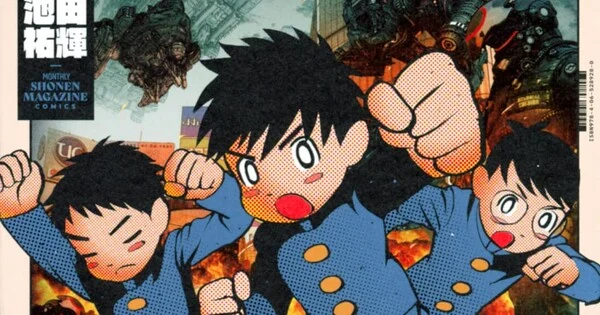
Manga creator Hiroya Oku (Gantz, Inuyashiki, GIGANT) confirmed on social media on Thursday that he created the Thunder 3 manga under the pen name Yuki Ikeda. He said that he wrote the series under a pen name in order to maintain a story surprise in the first chapter for first-time readers, a surprise that would have been lessened if readers saw the Hiroya Oku name.
Kodansha USA publishes the series in English and describes the story:
Three ordinary schoolboys come into possession of a DVD that supposedly opens a gateway to a parallel universe, but when their backs are turned Pyontaro’s little sister Futaba passes through and gets kidnapped by the aliens that have overrun that version of Earth! Discovering that their cartoonish bodies make them supermen in the hyper-realistic parallel universe, the boys set out to rescue Futaba.
Ikeda launched the series in Kodansha‘s Monthly Shonen Magazine in May 2022. The series entered its climax in January 2025, then went on hiatus in March that same year due to Ikeda’s health. The manga returned from its hiatus in February. The manga ended on June 5. Kodansha published the manga’s 10th volume on August 17. Kodansha USA shipped the eighth volume on February 10.
The anime premiered on the +Ultra programming block on Fuji TV and other channels on July 8 at 24:45 JST (effectively July 9 at 12:45 a.m. JST). The anime is exclusively streaming worldwide on Netflix starting on July 8.
Oku announced in an interview with Courrier Japon in August that he plans to retire after he finishes his latest manga Kanrekihime (The Sweet Sixty Princess).
Oku launched the Kanrekihime (The Sweet Sixty Princess) manga in Shogakukan‘s Big Comic Superior magazine in December 2025. Shogakukan published the manga’s first compiled book volume on May 29.
Oku’s Gantz manga ran from 2000 to 2013. The manga inspired a television anime, a CG anime film, two Japanese live-action films, and two spinoff manga. Dark Horse Comics released the manga in North America. Oku launched the GANTZ:E historical spinoff manga with artist Jin Kagetsu in January 2020. Shueisha‘s Jump TOON vertical-scrolling manga service launched a new vertical-scrolling full-color edition of the manga titled GANTZ: T in July 2025. The Deadline website reported a Hollywood live-action of the manga in November 2021.
Sources: Hiroya Oku‘s X/Twitter account, Thunder 3‘s X/Twitter account
>

 Toshio Masuda, the director behind Uchuu Senkan Yamato (Space Battleship Yamato) movies, died on August 26 due to natural causes. He was 98.
The Directors Guild of Japan announced the news on Thursday, stating that Masuda died at a hospital in Tokyo. A private funeral service has been held by his close relatives.
Born in Kobe in 1927, Masuda was expelled from a technical training school in July 1945 due to a mismatch with its military indoctrination. He later attended the Osaka University of Foreign Studies (now Osaka University), where he studied Russian literature. His interest shifted toward filmmaking after becoming enamored with French cinema, alongside a desire to avoid a career as a salaryman. Following his graduation in 1949, he moved to Tokyo to study screenwriting at the Shintoho Studio’s Scenario Academy.
In 1950, Studio film Shintoho hired Masuda as a screenwriter and assistant director under Umetsugu Inoue, Nobuo Nakagawa, and Mikio Naruse. He served as the second assistant director on Naruse’s Ginza Cosmetics (1951) and Mother (1952). Inoue became a mentor to Masuda, leading to script collaborations and Masuda writing rough drafts for several of Inoue’s projects.
Masuda made his directorial debut at Nikkatsu studio in 1958 and directed numerous live-action movies throughout the 1960s. In 1970, he co-directed the Japanese segments of the Hollywood World War II film Tora! Tora! Tora! alongside Kinji Fukasaku.
Masuda entered the animation industry in 1974, handling the supervision and original planning for the television anime Uchuu Senkan Yamato and its 1978 sequel Uchuu Senkan Yamato 2. He made his anime directorial debut with the 1977 compilation movie Uchuu Senkan Yamato.
Within this franchise, he directed and wrote the scripts for Saraba Uchuu Senkan Yamato: Ai no Senshi-tachi and Yamato yo Towa ni, and handled the script and chief supervision for Uchuu Senkan Yamato: Kanketsu-hen. He also supervised Uchuu Senkan Yamato: Aratanaru Tabidachi, Yamato 2520, and Uchuu Senkan Yamato: Fukkatsu-hen.
Outside of the Yamato franchise, Masuda directed Toei Animation‘s Future War 198X-nen and co-directed and wrote the script for Odin: Koushi Hansen Starlight. His other anime credits include handling supervision for the compilation movie of Umi no Triton and the Sangokushi trilogy between 1992 and 1994.
Masuda was awarded the Medal with Purple Ribbon in 1993 and the Order of the Rising Sun, Gold Rays with Rosette in 1999 for his contributions to Japanese cinema.
Source: The Mainichi
>

©TEMPAL Animation Partners
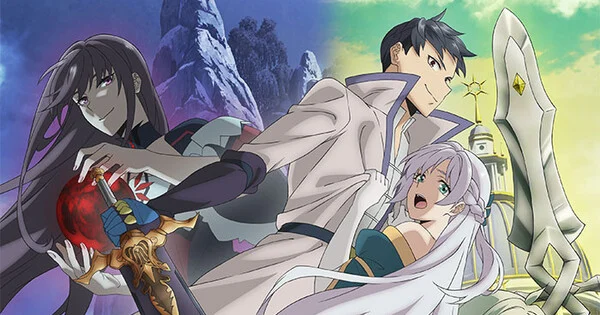
Crunchyroll announced on Friday that it will stream a same-day English dub for Tempal: Item no Chikara (Tempal ~The Power of Items~), the television anime of South Korean webtoon studio REDICE STUDIO‘s Overgeared webtoo n.
The company announced the English dub cast:
Adam Michael Rowe, Blake McNamara, Chris Ryan, Dayan Rodriguez, Nic Hamill, Rick Robertson, T.J. Anthony, and Tom Henry provide additional voices.
The English dub crew includes:
Yen Press publishes the webtoon in English under its Ize Press label. Yen Press describes the story:
Youngwoo Shin is a deadbeat in real life, working odd jobs to barely pay off his loans. Even his family has written him off as a hopeless video game addict. But when he logs in to the massively popular VR game Satisfy, Youngwoo becomes Grid the Warrior…who is also painfully mediocre. Everything changes when he stumbles across a tome containing the lost knowledge of a legendary blacksmith. The catch is, using it resets all his levels! In order to survive after being forced back to square one, Grid will need to hone his skills and gather reliable allies…or not! Who needs all that when you’re decked out in god-tier items?!
Ayako Kōno (Sword Art Online the Movie -Progressive- Aria of a Starless Night, Sword Art Online The Movie – Progressive: Scherzo of Deep Night) is directing the film at J.C. Staff, with EGG FIRM producing the anime. Kenta Ihara (Saga of Tanya the Evil, Uncle From Another World, Blue Miburo) is in charge of the series scripts, and Kenta Ihara (Demon Lord 2099, I Want to End This Love Game) is designing the characters. Yoshikazu Iwanami is the sound director, and Yoshiaki Fujisawa is composing the music. Pony Canyon is credited for music production.
Rock band Re:name‘s performs opening theme song “SATISFY” and virtual singer TAO performs the ending theme song “Ray of Emotion.”
Other staff members include:
The anime will premiere on the Tokyo MX and BS11 channels on October 2 at 11:30 p.m. (10:30 a.m. EDT). Crunchyroll will stream the anime. Crunchyroll also screened the anime as part of its “Crunchyroll Anime Nights” program dedicated to screening anime across the U.S. on September 21. Overgeared and other titles will screen with Japanese audio and English subtitles in theaters in the U.S. and Canada.
The webtoon is based on a web novel by Sae Nal Park. Dong Wook Lee is writing the webtoon, and Team Argo is drawing the art.
Yen Press released the 11th volume of the webtoon on August 18. The webtoon is also available digitally on Tapas. Both Tapas and WuxiaWorld are releasing the original web novel series in English.
Source: Crunchyroll (Liam Dempsey)
Disclosure: Kadokawa World Entertainment (KWE), a wholly owned subsidiary of Kadokawa Corporation, is the majority owner of Anime News Network, LLC. Yen Press, BookWalker Global, and J-Novel Club are subsidiaries of KWE.
>

Today on Sky Sports Racing: Flat action from Ffos Las | Racing News

Presidents Cup: Brandt Snedeker reveals captaincy criticisms ahead of singles as Team USA look to avoid Medinah upset | Golf News

Flex your football brain with our daily quizzes
-

 movies4 months ago
Search For Canadian TV Actor Stewart McLean Now Homicide Investigation
-

 Fashion9 years ago
These ’90s fashion trends are making a comeback in 2017
-
Fashion9 years ago
According to Dior Couture, this taboo fashion accessory is back
-
Fashion9 years ago
Model Jocelyn Chew’s Instagram is the best vacation you’ve ever had
-
Fashion9 years ago
Emily Ratajkowski channels back-to-school style
-
Fashion9 years ago
9 Celebrities who have spoken out about being photoshopped
-

 Anime4 months ago
Rurouni Kenshin: Hokkaido Arc Manga Takes 1-Issue Break – News
-

 Anime3 months ago
HIDIVE to Stream English Dubs for The World Is Dancing, The Forsaken Saintess and Her Foodie Roadtrip in Another World, The Dangers in My Heart: The Movie Anime – News