
Tech
Paragon is not collaborating with Italian authorities probing spyware attacks, report says


Last year, WhatsApp and Apple notified several people in Italy, including journalists and activists, that they had been targeted with government spyware. In particular, WhatsApp pointed the finger at the Israeli-American surveillance tech maker Paragon Solutions as the company that provided the technology for a hacking campaign that targeted around 90 people around the world with its “Graphite” spyware.
The notifications prompted a scandal in Italy that is still unfolding. After being notified of the attacks, a number of victims filed criminal complaints with Italian authorities, and prosecutors then opened an investigation.
Now, it appears that Paragon, despite its previous promises to help Italian authorities investigate the scandal, is said to be uncollaborative.
According to Wired Italy, Italian prosecutors sent a formal request for information to Paragon, via the Israeli government, but a year after the investigations were opened, the company has yet to respond.
Following the eruption of the spyware scandal in Italy, Paragon publicly called out the Italian government, claiming it refused the company’s offer to investigate whether a journalist was hacked and spied on with its Graphite spyware. The company went so far as to cancel its contract with Italy’s two spy agencies, AISE and AISI, in part because the Italian government turned down the company’s offer to help.
It’s unclear why Paragon has not responded to the prosecutor’s request. It’s possible that the Israeli government intervened. In 2024, The Guardian reported that the Israeli government seized documents from NSO’s office to prevent the company from complying with demands in the lawsuit against WhatsApp.
Israeli human rights lawyer Itay Mack told Wired Italy that the Israeli government could force local companies to cooperate with foreign judicial requests for information, “but this has never happened.”
Techcrunch event
San Francisco, CA
|
October 13-15, 2026
Spain’s High Court closed its investigation earlier this year into the use of NSO’s spyware to target Spanish politicians, claiming Israeli authorities did not cooperate with its probe.
Contact Us
Do you have more information about Paragon Solutions, and the spyware scandal in Italy? From a non-work device, you can contact Lorenzo Franceschi-Bicchierai securely on Signal at +1 917 257 1382, or via Telegram and Keybase @lorenzofb, or email.
Paragon, the Israeli embassy in Washington D.C., and the prosecutors’ offices in Rome and Naples, which are jointly investigating the case, did not respond to TechCrunch’s request for comment.
In the history of government spyware, it’s extremely rare for a company to get into a public fight with one of its former customers. Paragon’s move was likely motivated by its longstanding attempts to appear as an ostensibly more righteous alternative to other spyware makers, such as NSO Group or Intellexa, which have been ensnared in countless scandals around the world.
Instead, Paragon’s official website, which no longer loads, said the company provides customers “with ethically based tools, teams, and insights.”
So far, this is Paragon’s first public scandal, but the company now has an active contract with the U.S. Immigration and Customs Enforcement, which for a year has been arresting and deporting tens of thousands of immigrants all over the country. ICE told lawmakers that its law-enforcement arm Homeland Security Investigations (HSI) is using Paragon’s spyware to counter terrorism and drug trafficking.
Italy’s government under Prime Minister Giorgia Meloni has always denied hacking two of the journalists, Francesco Cancellato and Ciro Pellegrino, who work at the online news website Fanpage and whose phones were targeted by Paragon’s Graphite. The Citizen Lab, a research organization that has investigated spyware abuses for more than a decade, confirmed both journalists were hacked with Graphite.
The other victims in the country include activists who work for Mediterranea Saving Humans, an Italian nonprofit with the mission of rescuing migrants who try to cross the Mediterranean Sea.
Last June, the Italian parliamentary committee that oversees the country’s spy agencies investigated the scandal, and concluded that the targeting of the activists was lawful. But also said it could not find evidence that Cancellato was targeted, and the committee did not investigate Pellegrino’s case at all.
Then, in March, the same prosecutors who have requested information from Paragon said in a press release that a forensic investigation into Cancellato’s device confirmed that his phone had indeed been hacked, while it could not conclude the same after analyzing Pellegrino’s phone.
The prosecutors’ investigation is still ongoing.
When you purchase through links in our articles, we may earn a small commission. This doesn’t affect our editorial independence.
>
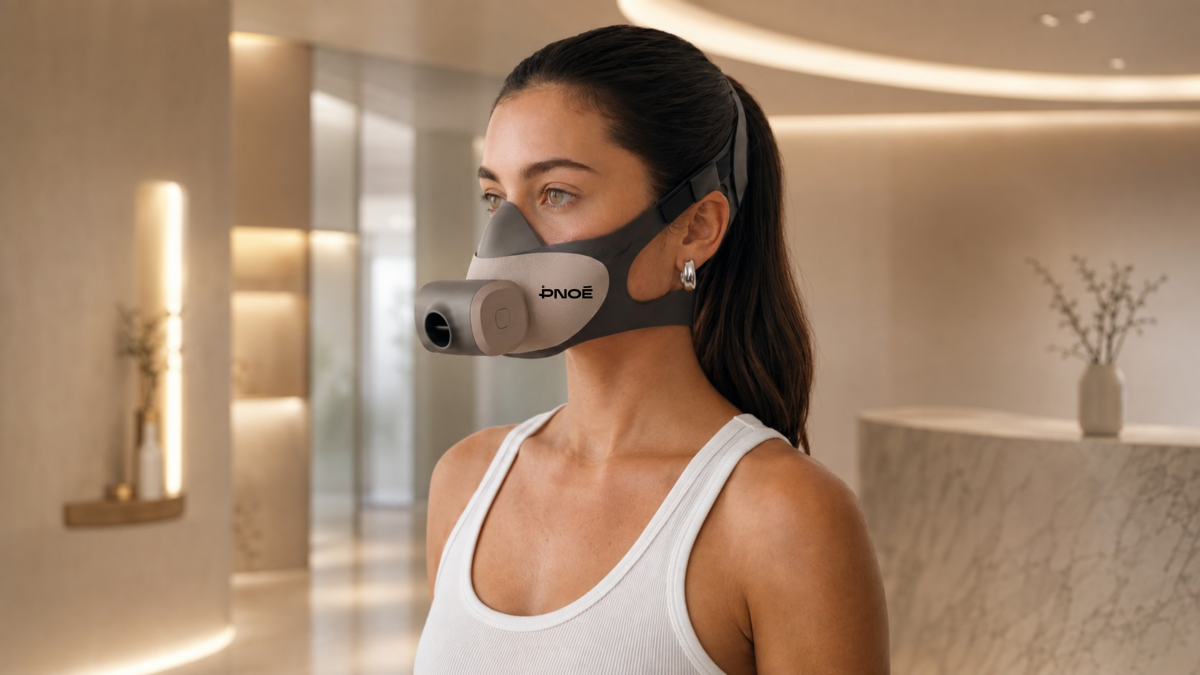
At first glance, the newest device from PNOĒ looks like something a comic-book villain might wear. The mask, which covers the nose and mouth and straps around the back of the head, bears more than a passing resemblance to the one worn by Bane, Batman’s hulking nemesis. But its purpose is far more benign; it measures how much oxygen you consume and how much carbon dioxide you exhale, then turns that data into advice about how to eat, train, and, the company hopes, live longer.
PNOĒ, which is based in Malden, Massachusetts, and has operations in Athens, Greece, is preparing to launch the PNOĒ 2.0 on October 1. The big change from its current device is that users can administer the test themselves. According to co-founder and CEO Apostolos Atsalakis, someone can walk into a gym, “just wear the mask, push the button, sit down,” and breathe for eight minutes. “That’s it. It’s that easy,” he said recently, talking with this editor over a Zoom call from the company’s Athens location.
That matters because PNOĒ’s current device requires a trained operator, which limits where it can be used. A self-serve version could open the door to fitness centers without dedicated staff and potentially even pharmacies, Atsalakis said.
The science behind PNOĒ isn’t new. Metabolic testing, which analyzes the gases in a person’s breath to gauge how their body produces energy, has been around for more than a century. For decades, it has been the gold standard for measuring VO₂ max, the maximum amount of oxygen the body can use during exercise and a widely used measure of cardiorespiratory fitness. But the tests have traditionally required bulky, expensive equipment found mainly in sports labs and hospitals, which is why they’ve largely been the province of elite athletes and executive wellness programs.
What 10-year-old PNOĒ promises is the same accuracy in a portable package, paired with software that translates the results into recommendations. “We made it accessible to everyone,” Atsalakis said.
The company says its test captures 23 biomarkers, including (beyond measuring VO₂ max) one’s resting metabolic rate (how many calories the body burns at rest), and metabolic flexibility (how well the body switches between burning fat and carbohydrates). Atsalakis argues that these metrics answer questions that blood tests can’t, such as how many calories a person needs or how they should train.
The timing is good for PNOĒ. VO₂ max has become a buzzword among longevity enthusiasts, thanks in part to research linking higher cardiorespiratory fitness to lower mortality. Atsalakis calls VO₂ max the strongest predictor of human longevity, and he sees his company’s data as a kind of scorecard for the booming wellness industry.
The new device is smaller and more compact than its predecessor, with fewer parts, which Atsalakis said makes it more reliable. It was designed with Milan-based Design Group Italia over what Atsalakis described as “a lot, a lot, a lot of iterations,” since a self-administered metabolic testing device hadn’t been done before.
It also addresses a question that post-pandemic users are likely to ask: who wore it last? The answer: it doesn’t matter, as the electronics detach from the silicone mask and straps, so multiple people can share the costly hardware while each user keeps their own mask.
For all its clinical ambitions, PNOĒ is careful about what it claims. The device isn’t cleared by the U.S. Food and Drug Administration, and Atsalakis said that “we do not provide medical recommendations.” Instead, PNOĒ considers itself a wellness device. “It’s like a body composition device, like a scale,” he said. “A doctor cannot prescribe medication based on our results.”
That could change down the road. Researchers have long explored whether compounds in human breath can signal diseases such as cancer, and Atsalakis believes the company’s growing trove of data could eventually help it flag health issues. But he acknowledged that full diagnoses are “definitely a couple of years away,” with regulatory hurdles likely stretching that timeline further. “We’re not there yet,” he said.
PNOĒ traces its roots to Atsalakis’s PhD work in sensing technologies at the University of Cambridge, when wearables were taking off and he became fascinated by what the breath could reveal about the body. He co-founded the company with Panos Papadiamantis, a childhood friend who is now the company’s chief product officer.
The startup went through Y Combinator’s Winter 2019 batch, back when “longevity” was not yet the industry it is today. It has since raised about $22 million, including a recently closed $11 million round, from investors including 50 Years and Google Maps co-founder Lars Rasmussen, who is himself now based in Athens.
PNOĒ sells only to businesses, which then offer the test to their customers. Its clients include Equinox, where it’s available at almost all clubs, said Atsalakis, as well as Four Seasons hotels, Red Bull, the NBA, the Mount Sinai Health System, and the med spa chain Restore Hyper Wellness.
About 85% of its business comes from the U.S., which Atsalakis described as “by far the most advanced market globally” for longevity. The company is now expanding in Europe and, through partners, in Latin America and Asia.
Businesses pay a subscription ranging from $400 a month to more than $1,000, which covers the hardware, software, training, and marketing materials, a package Atsalakis calls a “business in a box.” PNOĒ also links its results to the services a business sells, so a gym or spa can recommend specific offerings based on a customer’s test. Many clients use the test during onboarding, Atsalakis said, positioning it somewhere between a full clinical workup and the estimates people get from their smartwatches.
That middle ground is increasingly crowded. Apple, Garmin, and Whoop all estimate VO₂ max from heart-rate data, while consumer devices like Lumen analyze breath to gauge fat and carb burning. At the high end, traditional metabolic carts remain the standard in labs and hospitals.
PNOĒ, which employs 110 people, says it recently turned profitable, while growing more than 100% a year. Atsalakis said the company plans to raise a Series B within the next six to 12 months as it tries to put its mask — Bane comparisons and all — in front of more faces.
When you purchase through links in our articles, we may earn a small commission. This doesn’t affect our editorial independence.
>

Google has started testing a way for shoppers in India to buy products from Walmart-owned Flipkart directly through Gemini and AI Mode, as the search giant looks to expand its AI services from product discovery into transactions.
Users in the test see a “Buy” button on select Flipkart product listings appearing in Gemini and Google’s AI Mode, which takes them directly to a Flipkart checkout flow without leaving the AI interface, according to people familiar with the matter and an experience seen by TechCrunch.
The early test is limited to some users and a small selection of products, including smartphones, electronics, and mobile accessories, the people told TechCrunch. Other users continue to see regular product listings from Flipkart in Gemini and AI Mode without the option to buy them directly from the AI interface.
Google plans to roll out the experience more broadly later in October, ahead of India’s festive shopping season, one of the people said.
The test comes as Google and rivals including OpenAI are adding commerce capabilities to their AI offerings, striving to move beyond answering shopping queries and recommending products to playing a more direct role in online purchases.
Asked about the Flipkart test, a Google spokesperson told TechCrunch the company is “always testing new features and experiences to help people discover and connect with businesses more easily.” The company regularly runs experiments and has no further details to share, the spokesperson added.
Google has separately been building technology aimed at making purchases possible through its AI services. Earlier this year, it introduced the Universal Commerce Protocol (UCP) as an open standard designed to let AI agents interact with retailers across the shopping journey, including checkout. Google said at the time that the technology would allow shoppers to buy eligible products through Gemini and AI Mode using a Google-hosted checkout experience. The company has since expanded UCP with other capabilities, including allowing shoppers to transfer items to a retailer’s site to complete a purchase.
The Flipkart test seen by TechCrunch appears different from the Google-hosted checkout experience the Gemini maker demonstrated earlier. It brings up a Flipkart-branded checkout flow when a user taps the Buy button. It is not clear what technology powers the test.
Earlier this month, Google said Flipkart was among the merchants partnering with it to bring what it calls “agentic” shopping experiences to consumers in India, but it had not disclosed details of the test or its rollout timeline.
Notably, Google has a financial relationship with Flipkart — alongside its technology partnership with the e-commerce company. It invested about $350 million in the e-commerce company in 2024 as part of a funding round led by the U.S. retailer, taking a minority stake.
India, the world’s second-largest internet market with more than a billion internet subscribers, sees Flipkart and Amazon compete fiercely for online shoppers. That competition intensifies further during the country’s festive season, when e-commerce companies roll out some of their biggest sales and promotions of the year.
For now, the Buy option is not appearing across all retailers surfaced by Google’s AI services. In the experience seen by TechCrunch, listings from rivals including Amazon appeared alongside Flipkart products but did not offer the option to purchase directly through the AI interface.
Flipkart did not immediately respond to an email requesting for comment.
When you purchase through links in our articles, we may earn a small commission. This doesn’t affect our editorial independence.
>

Hospitals’ use of artificial intelligence tools as they submit insurance claims led to an additional $942 million in healthcare spending over a two-year period, according to an analysis by the Blue Cross Blue Shield Association.
The BCBSA analysis found “a sharp increase in patients being documented as having complex conditions,” but argued there is a “clear disconnect between [medical] coding and treatment,” as there’s “no evidence of corresponding change in care delivered.”
The New York Times pointed the analysis as just the latest sign that AI is contributing to an increase in healthcare costs. While battles between hospitals and insurers over treatments and payments are nothing new, the NYT said the use of AI on both sides seems to be making it worse.
Dr. Shiv Rao, founder of AI startup Abridge, acknowledged that the use of AI could lead to “a horrible dystopic future nobody wants to live in,” with “bots fighting bots, agents fighting agents.” But Rao said it might also reduce tensions and cut costs.
And the BCBSA’s senior vice president Luke Chalker resisted characterizing the situation as a battle, claiming, “It’s not a war. It’s a completely one-sided blood bath,” with insurers on the losing side.
>
Every college football Top 25 score and result from Week 4's games

Space Battleship Yamato Film Director Toshio Masuda Dies at 98 – News

Tony Pulis column: ‘I feel cheated – when do Stoke City get our FA Cup?’
-

 movies4 months ago
Search For Canadian TV Actor Stewart McLean Now Homicide Investigation
-

 Fashion9 years ago
These ’90s fashion trends are making a comeback in 2017
-
Fashion9 years ago
According to Dior Couture, this taboo fashion accessory is back
-
Fashion9 years ago
Model Jocelyn Chew’s Instagram is the best vacation you’ve ever had
-
Fashion9 years ago
Emily Ratajkowski channels back-to-school style
-
Fashion9 years ago
9 Celebrities who have spoken out about being photoshopped
-

 Anime4 months ago
Rurouni Kenshin: Hokkaido Arc Manga Takes 1-Issue Break – News
-

 Anime3 months ago
HIDIVE to Stream English Dubs for The World Is Dancing, The Forsaken Saintess and Her Foodie Roadtrip in Another World, The Dangers in My Heart: The Movie Anime – News