
Sports
How Kane and Doue’s positioning helped propel PSG-Bayern into a Champions League classic


It would have been easy to write an article focussing on any of the six forwards that started in Paris Saint-Germain’s classic 5-4 victory against Bayern Munich on Tuesday night — that’s how good they were.
Harry Kane? Desire Doue? Michael Olise? Ousmane Dembele? Luis Diaz? Khvicha Kvaratskhelia? Take your pick.
In an enthralling semi-final encounter, PSG and Bayern’s attackers performed at the highest individual and collective level possible to bring us a Champions League classic that will live long in the memory.
“The reason why the game is the way it is is because every player we have on the pitch gives every chance to the forward line to be dangerous,” Bayern head coach Vincent Kompany told CBS Sports after the match. “Michael Olise needs the runs from the full-backs to create those chances, just like Doue needs the runs from (Achraf) Hakimi.
“It’s easy to say: ‘Okay, hold your full-backs back and you control the counter a little bit better’ but how much do you lose as well? We scored four. We felt we could have scored more and in the end, the game is still about scoring one more.”
Luis Enrique and Kompany didn’t hold their sides back, with man-to-man pressing, fluidity in possession and full-throttle transitions characterising the match.
“The way the two teams play, we knew the game was going to be open,” Kane told beIN Sports after the match. “There was going to be a lot of one-v-one battles across the pitch. When you look at both team’s attacks, it’s dangerous, it’s electric, it’s intense.”
In this type of game, the margins are minimal, but Kane and Doue in particular helped their team-mates, and especially their partners in the front line, to exploit them.
On paper, Doue was PSG’s right-sided winger but limiting Luis Enrique’s forwards to specific positions is a disservice to their flexibility on the ball.
As customary, Doue switched positions with Dembele throughout the match but he also roamed inside to overload the central areas and the left wing in an attempt to disrupt Bayern’s man-marking.
Here, Doue starts in a central position, with Alphonso Davies tracking his movement, but the France forward drops deeper and Bayern’s left-back is hesitant about following him.

This allows Doue to overload the central area,before roaming to the left wing to become a free passing option.
With Dayot Upamecano marking Kvaratskhelia and Josip Stanisic pressing Joao Neves, Nuno Mendes finds Doue in the space between them.

The impact of Doue’s roams and smart positioning was significant. It led to PSG’s first goal: the corner kick from which Neves scored the second and Kvaratskhelia’s strike which made it 4-2.
In the build-up to Kvaratskhelia’s first goal, Doue moves infield before switching positions with Dembele.

In the resultant two-v-two scenario down the near side, Doue fakes a run behind the defence before dropping to collect the ball from Mendes, which gives him a couple of yards’ advantage on Upamecano.
Kvaratskhelia then follows that with another double movement to trick Stanisic and Doue finds his run behind the defence.

In an isolated situation against a full-back, Kvaratskhelia needs no introduction.
He dribbles past Stanisic before curling the ball into the far corner.

Doue’s off-ball movement was vital on Kvaratskhelia’s other goal as well.
Here, with Vitinha in possession of the ball, he is in the right half-space and drops, dragging Konrad Laimer up the pitch and creating space for Hakimi to attack.
The timing of Hakimi’s run is in sync with Doue’s movement, leaving his supposed marker, Diaz, in no man’s land. Vitinha then finds the right-back’s run..

… and Hakimi plays the ball across goal for Kvaratskhelia to score, helped by Dembele’s dummy.


On the other hand, Kane empowered Bayern’s threat on the transitions with his deep positioning when his side were defending the ball.
It meant that when Bayern regained possession, they could quickly link with Kane to find Olise and Diaz’s runs.

In this example, Jamal Musiala wins the ball in midfield and Joshua Kimmich finds Kane on the transition.
Meanwhile, Olise dashes forward to attack the space, with PSG’s centre-backs unsure whether to move up and defend the England striker, or maintain their positions.
Willian Pacho tries to block the passing lane into Olise but Kane has enough time on the ball to find his right winger’s run. However, Olise’s shot is saved by the PSG goalkeeper Matvey Safonov.

Kane’s deeper position during Bayern’s transitions played a role in the penalty which led to the opener and Diaz’s strike in the second half.
Here, on the counter-attack which led to Diaz being fouled in the 18-yard box, Kane is by the edge of Bayern’s penalty area when the Colombian is dribbling forward with the ball.

Diaz then passes the ball to Olise, with Kane’s deeper positioning putting him in space as PSG’s defensive line is retreating to defend the rest of Bayern’s forwards.
Olise then finds Kane, who plays the ball to Kimmich, forcing Marquinhos to maintain his high position.
Simultaneously, Olise and Diaz attack the central space before Bayern combine to find the latter, who is fouled by Pacho.

On the other goal, Kane drops to offer himself as a passing option once Upamecano dispossesses Kvaratskhelia.
Kimmich then finds Kane in space, with Neves not in a position to counter-press the centre-forward, who picks Diaz’s run behind the defence.
The Bayern man exquisitely controls the ball, throws a dummy to wrong-foot Marquinhos…

… and finishes the move by curling a shot into the back of the net.

How this iteration of PSG and Bayern play puts individual talent in the right framework to showcase its ability. In turn, it has resulted in one of the greatest matches in Champions League history.
The question, though, is what can we expect next week when the sides meet for the second leg at the Allianz Arena?
Luis Enrique and Kompany were clear in their answers: more of the same.
>
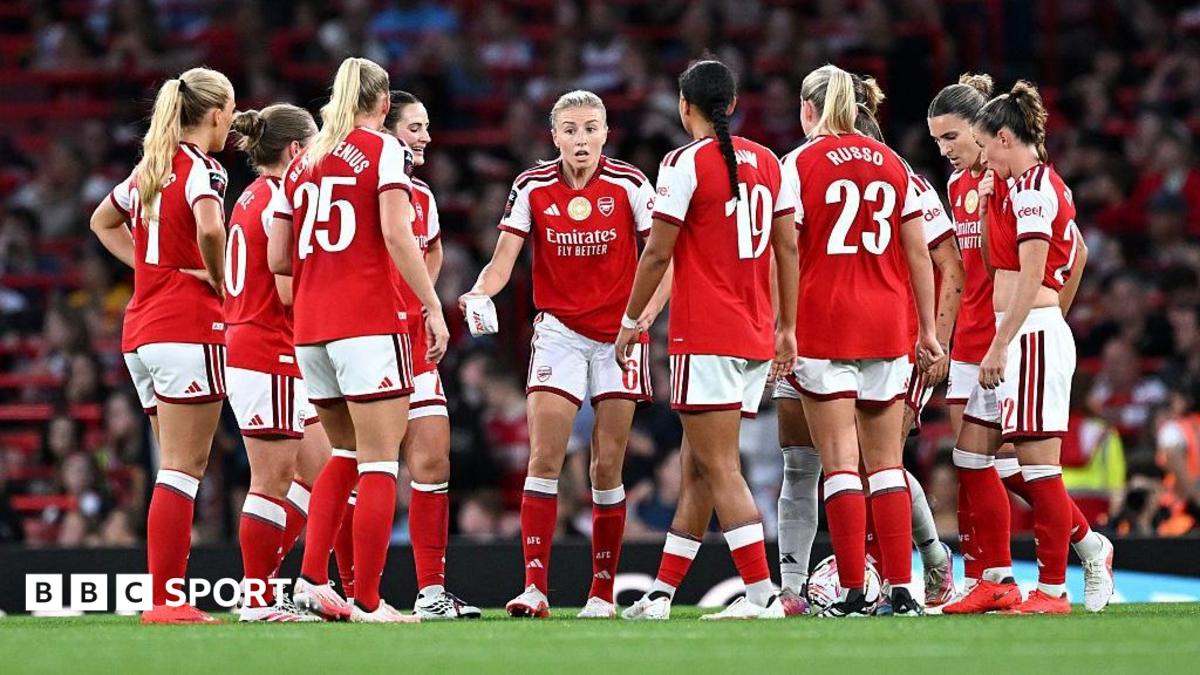
Arsenal go into their Women’s Super League game at Stamford Bridge knowing defeat by rivals Chelsea would be a damaging result just four weeks into the season.
It feels like an extreme assessment but the Gunners know all too well that if they fall behind early on, it is hard to catch up in the WSL title race.
Renee Slegers’ side are already seven points behind leaders Manchester City, albeit with a game in hand, and it would be foolish to give them further breathing space.
Successive draws against Crystal Palace and Manchester United have dented Arsenal’s start to the campaign.
Their slow starts have proven to be their undoing in previous campaigns as their search for another WSL title has gone on for seven years.
In that time, they have lifted the Women’s Champions League and Women’s Champions Cup, proving they have a squad capable of winning major trophies.
But it is the same story so far in 2026-27 as Arsenal’s shooting boots have been missing and their lack of ruthlessness in front of goal has proven costly.
They face serial winners Chelsea on Sunday (16:30 BST) knowing they need to get over the line this time.
“If I look at the last two games, not turning that dominance into goals and wins, is something we have to look at,” said Slegers.
“We believe in the quality of the squad and their ideas. We can create in a variety of ways. When that starts clicking, it will be really good.
“It really is about the details in the final third.”
>
Sports
Renee Slegers: Put pressure on me, not Arsenal players, after poor start to season, says Gunners boss | Football News
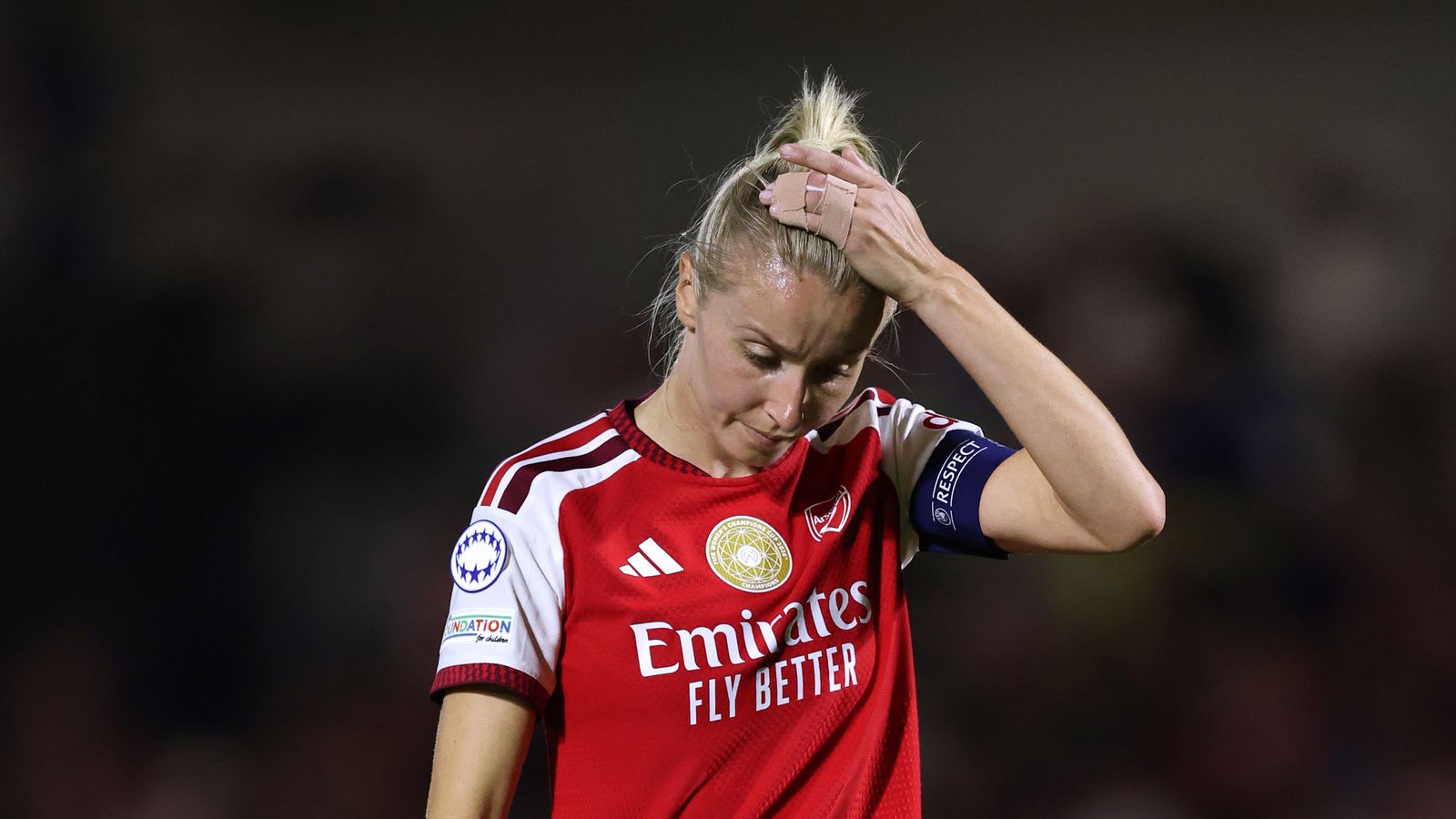
Renee Slegers is calmer than she might be about Arsenal’s start to the season.
Not only have the Gunners already been off the pace after just three games into the Women’s Super League season, an old kryptonite has begun to rear its head again at the Emirates Stadium.
After a bright opening, victory at Brighton where two dropped points had guaranteed Manchester City the title last season, back-to-back draws against newly-promoted Crystal Palace and a Man Utd side who had lost their first two matches has already ramped up the pressure on this weekend’s trip to Chelsea, live on Sky Sports.
Sunday 27th September 4:15pm
Kick off 4:30pm


Those two opposing low blocks, which the Gunners had briefly looked like they had got to grips with last season, have left Arsenal with the worst xG underperformance in the WSL at this early stage despite the wealth of attacking talent at Slegers’ disposal.
Others will have their own views, but the head coach believes the Gunners’ problems are more psychological than tactical.
And with that in mind, she is desperate to draw any pressure away from her players and onto herself to help them find solutions. That means remaining the calmest person at the club.
“It’s frustrating that we’ve dropped four points,” she does admit, before adding, “We can’t change that now. It’s about focusing on the positives and the things we can do better, looking forward.
“I’m happy to take the pressure away from the players where it’s necessary. If someone is going to carry the pressure, it should be me. I want the players to be free on the pitch, to play with clear heads, clear minds and use their intuition.
“We had got away from finding low blocks difficult to play against, we had found the tools and solutions. But there are other things we can try to capitalise on like set pieces.
“As a coach you can go one of two ways – you can go into more and more detail, and make things more complicated, or strip things back, go back to basics.
“Ultimately actions speak louder than words, and there’s been a lot of talking. We just want to show things now and look forward.”
It was almost another case of déjà vu when Arsenal began their Champions League campaign at home to Koge on Tuesday.
After an early Chloe Kelly goal was chalked off by VAR, the Gunners visibly struggled to regain their momentum and needed a 93rd-minute Mariona Caldentay penalty to see off the Danish minnows who had previously lost all six of their Champions League games in their one prior appearance.
Had Kelly’s strike stood, it would have naturally eased the subconscious sense of ‘here we go again’ among Slegers’ players instead of, as played out, coming within seconds of playing out.
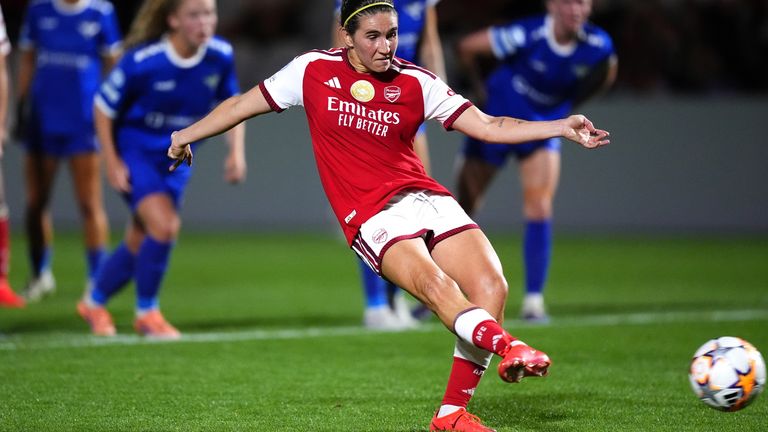
Mariona Caldentey spared Arsenal’s blushes on Tuesday with a 93rd-minute penalty to beat Danish minnows Koge in the Champions League
If there is one thing Slegers is still keen to remind her players of, it is that importance of fast starts to beat that mental battle.
“It’s something we are really hungry for and it’s something we need,” she says. “We are continuing to drive it and go after it in games and look after everything that is in our control.
“Tuesday showed mental resilience. The endurance of the belief that we could get the win. We said before the game, we didn’t know if the goal would come, or if it would be early or late and had we scored early I think it would have been a very different game.
“Low blocks are hard to break down for anyone, there’s only a select few who are really good at it, but we know it’s something we have to be able to do better.”
Some respite will come from the space with Chelsea, who barring a surprise change in tack, are unlikely to sit behind the ball for long periods at Stamford Bridge on Sunday.
Of course, the Blues will also present more danger themselves but it will still present an opportunity for Arsenal’s attacking talent to shine in a way they have not so far this season.
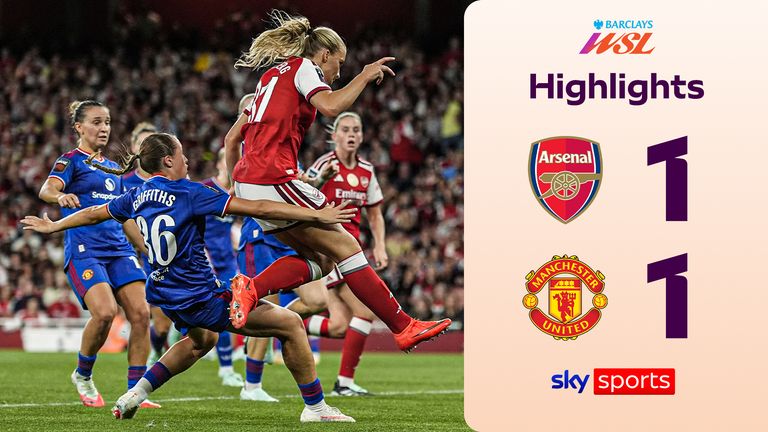
Watch Arsenal strike late to snatch a late draw with Man Utd in the WSL last weekend
That likely gives young Lisa Baum, the 19-year-old winger recruited from RB Leipzig over the summer, as much of a chance to show her talents as she has had in the three out of three games she has started in the WSL since her arrival.
“She’s earned the right to play,” says Slegers. “I have trust in her already, the way she’s been training, behaving and performing, she deserves it.
“She’s making herself an important player in the squad. She’s only young, but credit to her.”
Four games into any season, the word must-win naturally feels excessive. Even must-not-lose at this point, especially in an expanded WSL.
But the potential to drop seven points off the top by the end of September would have been a nightmare scenario in pre-season planning – which could be about to turn into a reality.
“Playing Chelsea away is always the same game,” says Slegers. “It’s always charged, it’s a London derby. That’s already there, and we’re prepared for it.
“As with everything else, if there’s any pressure, I want to be the one taking that.”
Watch Chelsea vs Arsenal on Sky Sports Premier League from 4.15pm on Sunday, kick-off 4.30pm
>
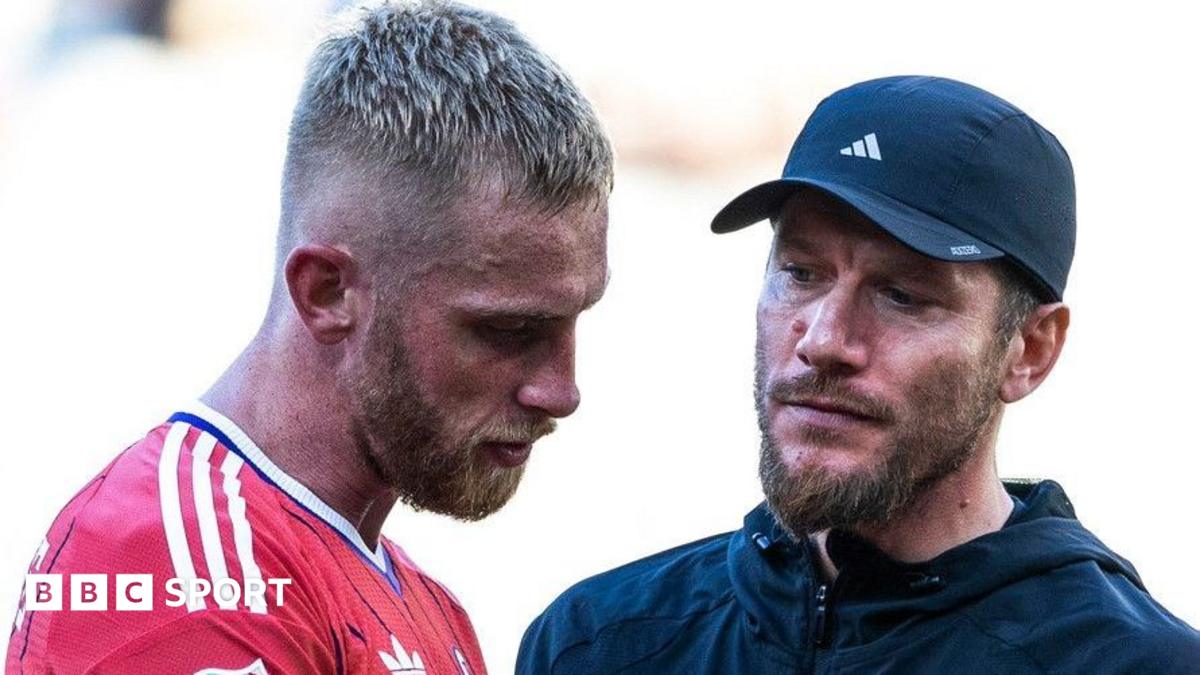
From being impotent, they became thrusting. That second half was as big a 0-0 rout as you’re likely to see. Frustrating, but encouraging at the same time.
It will be agonising for Oli McBurnie that he’s still without an international goal – he said he wouldn’t sleep after failing to convert a one-on-one with Jan Oblak – but his second-half performance was full of good things; efforts on goal, link-up play, presence and danger.
Robbie Ure hit a post, Kieron Bowie had a terrific chance, but missed. The three strikers drew a blank, but as far as 0-0s go, it offered hope that more productive days may lay ahead with these guys.
There are two ways of looking at the draw. All 10 starting outfield players had a shot on goal, the first time that’s happened since June 2022, against Armenia.
Scotland had 17 shots, their most attempts in a competitive game in more than 14 years. The flipside is that they have now failed to score in three tournament games in a row for the first time in almost 22 years.
After the break, Pocognoli dropped McBurnie a little deeper, in a pocket just behind Robbie Ure and then Bowie when he came on. He got Billy Gilmour to sit lower in midfield, where he had time to dictate, which he absolutely did. Gilmour tied it all together in the second half.
Pocognoli called it “two games in one game” and he was right. The subtle shift in McBurnie’s and Gilmour’s positioning brought Scotland alive.
It was an impressive watch; ambition, relentlessness, belief. No cherry on top but enough there to leave most folk happy about day one and motivated ahead of day two, against Switzerland on Tuesday night at Hampden.
>

Women’s Super League: Why are Arsenal struggling to score goals?

Renee Slegers: Put pressure on me, not Arsenal players, after poor start to season, says Gunners boss | Football News

Scotland: From turgid to thrusting – mixed start for new Scotland
-

 movies4 months ago
Search For Canadian TV Actor Stewart McLean Now Homicide Investigation
-

 Fashion9 years ago
These ’90s fashion trends are making a comeback in 2017
-
Fashion9 years ago
According to Dior Couture, this taboo fashion accessory is back
-
Fashion9 years ago
Model Jocelyn Chew’s Instagram is the best vacation you’ve ever had
-
Fashion9 years ago
Emily Ratajkowski channels back-to-school style
-
Fashion9 years ago
9 Celebrities who have spoken out about being photoshopped
-

 Anime4 months ago
Rurouni Kenshin: Hokkaido Arc Manga Takes 1-Issue Break – News
-

 Anime3 months ago
HIDIVE to Stream English Dubs for The World Is Dancing, The Forsaken Saintess and Her Foodie Roadtrip in Another World, The Dangers in My Heart: The Movie Anime – News