Anime
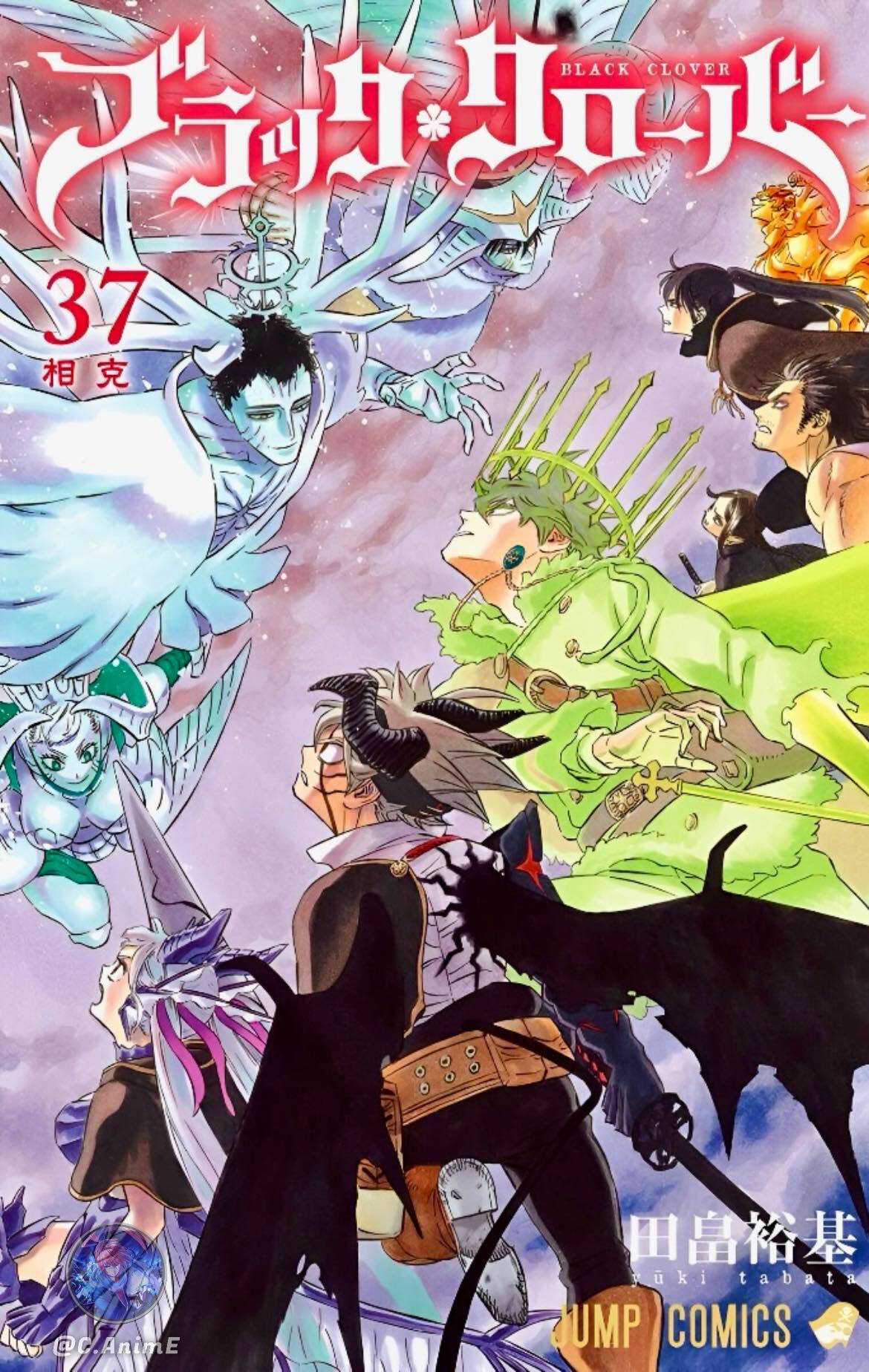
Manga ‘Black Clover’ Concludes Serialization
The Spring issue of Jump GIGA magazine published the 392nd and final chapter of Yuuki Tabata‘s Black Clover manga on Friday, concluding its eleven-year serialization.
Tabata began serializing the manga in Weekly Shounen Jump in February 2015, after publishing a one-shot in Shounen Jump NEXT! in May 2014. The manga transferred to Jump GIGA magazine in December 2023. Shueisha published the 37th volume in September 2025, with the 38th and final volume scheduled to be released on August 4.
Produced by Pierrot, the first anime season premiered in Fall 2017, airing a total of 170 episodes. Crunchyroll streamed the anime with subtitles and later with an English dub. The second season is scheduled to premiere in 2026.
The Black Clover: Mahou Tei no Ken (Black Clover: Sword of the Wizard King) anime movie opened in Japan in June 2023.
VIZ Media licensed the manga in English in June 2016 and released the 36th volume in January 2025.
Synopsis
In a world full of magic, Asta—an orphan who is overly loud and energetic—possesses none whatsoever. Despite this, he dreams of becoming the Wizard King, a title bestowed upon the strongest mage in the Clover Kingdom. Possessing the same aspiration, Asta’s childhood friend and rival, Yuno, has been blessed with the ability to control powerful wind magic. Even with this overwhelming gap between them, hoping to somehow awaken his magical abilities and catch up to Yuno, Asta trains his body relentlessly every day.
In the Clover Kingdom, once a person turns 15 years old, it is time for them to receive their Grimoire, an item allowing its wielder to use their magic to its full capacity. At the ceremony, Yuno obtains a Grimoire with a legendary four-leaf clover, indicating the exceptional strength of its wielder, while Asta pointlessly waits for his. Feeling dejected, yet unwilling to give up, Asta sees Yuno caught by a mage who is trying to steal Yuno’s special Grimoire. Despite being completely overpowered by Yuno’s captor, Asta’s will to keep fighting rewards him with his very own Grimoire—one with an unheard-of black five-leaf clover. [Written by MAL Rewrite]
Official manga site: https://www.shonenjump.com/j/rensai/bclover.html
Official manga X (Twitter): @blackclover_off
Source: Official X
>

Anime
‘Buchigire Reijou wa Houfuku wo Chikaimashita.’ Announces Additional Cast, Theme Songs
The official website for the Buchigire Reijou wa Houfuku wo Chikaimashita. Madousho no Chikara de Sokoku wo Tatakitsubushimasu (A Livid Lady’s Guide to Getting Even: How I Crushed My Homeland with My Mighty Grimoires) television anime revealed additional cast, theme songs, and a key visual (pictured) on Friday. The anime series adapting Metabo Hagure‘s fantasy drama light novel will begin airing in July 2026 on TV Tokyo, BS11, AT-X, and other channels.
Cast
Misha Tail: Ayumi Uehara
Lunoa Carlton: Yui Ogura (Arifureta Shokugyou de Sekai Saikyou)
Mireille Kataria: Ikumi Hasegawa (Sousou no Frieren)
Voice actress Yui Ogura is performing the opening theme “Q.E.D.” and Aguri Onishi (Seirei Gensouki) performs the ending theme “Goodbye Lullaby.”
Naoyuki Kuzuya (Izure Saikyou no Renkinjutsushi?) is directing the anime at Studio Comet. Mitsutaka Hirota (Gimai Seikatsu) is handling the series composition and Sayaka Anezaki (Touhai: Ura Rate Mahjong Touhairoku) is designing the characters. Satoshi Houno (Isekai Yakkyoku) and Kaori Nakano (Fuguushoku “Kanteishi” ga Jitsu wa Saikyou Datta) are composing the music.
Hagure began penning the novel on the Shousetsuka ni Narou website in October 2020. Hobby Japan began publishing the novel in May 2022, featuring illustrations by Masami (Kanpekisugite Kawaige ga Nai to Konyaku Haki sareta Seijo wa Ringoku ni Urareru). The seventh volume went on sale in August 2025.
Oonoimo began drawing a manga adaptation in Comic Fire in May 2022. Hobby Japan published the tenth volume on March 2.
J-Novel Club licensed the manga and light novel for digital release in English in November 2023 and January 2024, respectively. The sixth novel volume was released in May 2025, and the seventh volume will go on sale on May 13. The seventh manga volume was published on March 25.
Source: Comic Natalie
>
Anime
Final Fantasy Readers Digest – This Week in Games
Welcome back, folks! I had a spectacular weekend where I was able to enjoy seeing The Labyrinth on the big screen. Having originally seen it on the Disney Channel decades ago, I missed a lot of the visual flourishes. I especially liked a set of stones arranged just so to make an optical illusion of David Bowie’s face. It’s a wildly imaginative movie that deserves its place among the classics of fantasy, David Bowie is the only person who could ever incarnate Yoshitaka Amano‘s character designs, and I realize that I really should watch Mirrormask at some point…
This is…

Before We Begin…
Last week, we discussed a lawsuit against Nintendo regarding its refunded tariffs. While discussing the matter, I had observed that neither Microsoft nor Sony was the target of similar lawsuits; as many of my readers pointed out in the comments, Sony and Microsoft have also neglected to demand the tariff refund that Nintendo has entered negotiations for. As was pointed out to me, I myself had also made the same observation a few weeks earlier. Just goes to show, even I can’t remember everything I’ve written! Anyway, moving on…
Sony Makes Splash over New DRM Rules
Years and years ago, when Microsoft first unveiled the Xbox One, they ate a ton of crow over the initial reveal that the console would be an always-online affair: owners would have to maintain a constant Internet connection to access their gaming library. It also meant that sharing your games with friends was a complicated process that effectively required you to visit a participating brick-and-mortar location. At the time, the notion was plainly outrageous to the gaming audience, and for good reason. Never mind that a decent internet connection isn’t something you can take for granted; even now, the impression was that the constant need to stay connected to the Internet to maintain access to your games meant you effectively couldn’t play your own games when and how you wanted. It was one of many decisions that made the Xbox One such a whipping boy in its time. Sony was very quick to capitalize on the whole deal by mocking Microsoft for making things so complicated.
Anyway, nothing like time to make fools of us all! Recent PlayStation users noticed a funky issue with their newly downloaded games this past week: they couldn’t access their digital copies in their library. Sony made no major announcement, and their tech support wasn’t of much help: between the live tech support and the AI chatbots in support chat, conflicting accounts were shared. Instead, users from ResetEra and DoesItPlay had to hash things out as best they could. I’m still trying to wrap my head around the whole matter, because it’s so awkwardly byzantine—and emotions are running high, since so many people in the audience are either insisting the whole thing is fake or blown out of proportion and have basically turned it into an extension of the console war.
As Nib explained on Twitter, Sony‘s digitally purchased titles have always included an offline play license once you buy them. What has changed is that you are now issued a temporary 30-day license for the title upon purchase. Once you’ve logged in past the 15th day of the temporary license, you’re granted an official, limitless license for the title. What Nib notes (as supported earlier by users on ResetEra) is that this exceeds Sony‘s 14-day refund period for their digital titles (which can only be refunded if you haven’t yet downloaded the game in question). Nib and others theorize that this is an attempt by Sony to curb pirates who purchase digital copies on jailbroken consoles, refund the game, and somehow keep the license, effectively allowing them to keep the game for free. This way, you can’t keep the game if you refund it. If you don’t connect your console to the Internet after the 15th day of the trial period, you lose access to the title in question until you do. Some people have insisted that this is only for games offered through the PS+ service—this has been proven otherwise.
I’ve heard a variety of explanations for why this might have been implemented. For one thing, this prevents cheaters from using disconnected consoles to abuse exploits that have been patched out. This also helps the piracy problem mentioned above. But make no mistake, this sucks. Sony eventually issued a response to GameSpot on April 29 (after five days of speculation), confirming that you’d need “a one-time check-in to access and play your purchased games as usual.” Was it rolled out too soon? Who cares? It’s still a major loss for players and a major knock against buying any game digitally. And I wish it were as simple as not buying digital games, but a quick look at my PlayStation 5 library reveals games like Valkyrie Profile and Dark Cloud—titles that have not had physical releases since before many members of the gaming audience were even born. In the grand scheme of anti-consumer decisions, this is one of them, and it sucks. Sony‘s lack of communication sucks, the practice sucks, it just sucks all the way down. I don’t really care about the whole “if purchasing isn’t ownership, piracy isn’t theft” angle; I care about being able to access the stuff I bought. I spent a huge chunk of my life unable to buy or play games with online requirements. That was over a decade ago; the fact that the situation hasn’t meaningfully improved means I absolutely do not trust any need to connect to the Internet to validate anything.
Square Enix Presents Updates for Final Fantasy XIV
Final Fantasy XIV Fan Fest 2026 was this past weekend, and Yoshi P and company had some choice words for fans and employers. While FF14 definitely took a hit with the recent Dawntrail expansion, fans are nevertheless looking forward to new FF14 projects. And FF14‘s fanbase is as passionate as any fanbase could be, from cosplay to lore. On an unrelated note, the Fanfest was held in Anaheim, at the same time as a major corporate conference; more than a few of my friends reported anecdotes of corporate women crowding and fawning over Emet-Selch cosplayers. Anyway, the fanfest sure had tons of surprises for folks!
One major surprise was the VTuber IronMouse appearing at the fanfest and performing a cover of “Give it All.” I don’t watch Mouse all that often, but apparently, she’s a huge fan of FF14, and I had no idea! I knew she played it a ton back when she was in Silvervale’s old FF14 guild; I had always understood Silver to be the MMO gremlin. Still, it’s awesome that Square reached out to such a major member of the fanbase. Mouse’s performance was great, and it set the tone for the announcements that were to come!
First and foremost, Final Fantasy XIV‘s free trial will now include the beloved Shadowbringers expansion (update the copypasta meme accordingly). Shadowbringers, featuring America’s sweetheart Emet-Selch, was widely beloved as an expansion and a phenomenal send-off to almost a decade of in-story fiction for the game. Square is basically giving players a ton of game for free. But of course, this is being done because a new expansion has been announced: Final Fantasy XIV: Evercold. We were given a teaser trailer (though can it really be called a “teaser” if it’s five minutes long…?). The expansion doesn’t come out until January 2027, so details are still scarce; while frozen wastelands will factor heavily into the game, we’ve been promised more varied regions than just “ice and snow.”
What will the expansion bring? Well, first off are two new classes—which have not been revealed yet. We know that the new classes will be a new tank class and a new ranged DPS class, but even Yoshi-P’s shirt isn’t very illustrative this time around; he was wearing a shirt featuring Rhitahtyn sas Arvina from A Realm Reborn. So maybe the class will have cannon shields? What we do know is that the two classes are effectively “new”; rather than being based on existing Final Fantasy jobs like the Pictomancer or the Blue Mage, they are original to Final Fantasy XIV. Speaking of classes, Evercold and update 8.0 will introduce new play styles for old classes; players will be able to choose between “Reborn” versions of their characters and “Evolved” versions, which feature new abilities and mechanics. All jobs that come to the game after 8.0 will only feature “Evolved” versions, however. Yoshi-P offered a rather interesting inspiration behind the decision to include the new toggle for classes: Star Wars Galaxies, which featured a similar change in character abilities in an update from 2005 that wound up turning away much of the fanbase. Yoshi-P’s goal is to help combat the sense of homogenization that FF14’s classes have been feeling for a while, without completely throwing out the baby with the bathwater.
Beyond that, Evercold is concerned with bringing back numerous quality-of-life options. Instead of dailies that players will have to keep up with, players will have Weekly events and missions. Yoshi-P mentioned a desire to make more interesting FATEs (on-map events that happen every so often), which I appreciate because some FATEs can be really dull. Players will be able to reflect their highest item level in one Job across all of their jobs, so if you’re a WHM main, you don’t have to suffer to ensure your RDM duds are similarly blinged out. Speaking of, the FF14 team is offering tons of options for character customization—the real endgame of FF14.

© Square Enix
This includes color pickers for skin and eye color, the ability to layer face paint details, and the ability to toggle details like scarves or belts on your character’s outfit. You’ll also be able to completely customize your character’s pose in your customization screen; with FF14 already being a glorified dollhouse that serves as a retirement home for fighting game players that also includes a sizeable RPG as a bonus, this feature is not only going to be wildly embraced by the fanbase but will also reveal artistry previously only dreamed of by the likes of Van Gogh or Donatello.
Also, have I mentioned the Jollibee collab? Because there was a Jollibee collab.

For folks not in the know: Jollibee is a fast food chain from the Philippines, known for its amazing fried chicken and spaghetti. It has a handful of stores across America (sparse enough that several of my FF14-playing friends had to face the possibility of a 10-hour drive to reach their nearest one). And they boasted a collab with FF14, wherein people who bought meals could get a code for an “/eatchicken” emote. It’s not the first time a collab with fast food has earned folks a unique emote, and it likely won’t be the last. But the choice to go with Jollibee is… unique, if nothing else, and I feel for the Jollibee employees who’ve dealt with more Emet-Selch cosplayers in the past week than they’ve ever seen in their lives. Apologies to the workers; such congestion was not our intention. There were also Jollibee-themed goods at the Fanfest, including a cosplay of—wait for it—Jolli B. Lovely, a Jollibee-themed take on the FF14 Dawntrail boss Honey B. Lovely. Brilliant, no notes.
And then there’s the Neon Genesis Evangelion collab.
As part of Evangelion‘s 30th anniversary, FF14 will be featuring an Eva-themed alliance raid, as part of the Evercold expansion. This isn’t the first time we’ve had a major collab as part of a raid in Final Fantasy XIV; famously, there’s a NieR:Automata-themed raid as well, which is canon to NieR:Automata. It also gave us the unisex 2B outfit; I can only imagine that come Evercold, Limsa Lominsa will be an ocean of cat-people and rabbit-people in plugsuits. Also, can you imagine Evangelion music as arranged by Sokken? The mind reels.
As a final detail, Final Fantasy XIV is actually coming to the Switch 2! Producer Yoshi-P promises the game will aim for 30 fps in towns, with other areas running at a smoother rate. While folks might be understandably concerned about playing FF14 on the Switch 2, the game does feature a rather robust controller-friendly control scheme. Adapting it shouldn’t be an issue. What will disappoint folks is that the Switch 2 version will require its own bespoke subscription. Unlike what has been claimed, you don’t need to pay for a Nintendo Online subscription to play FF14, but the Switch 2 version has an FF14 subscription all its own. The most you’ll get is half off if you already have an existing subscription. I can’t imagine why it works that way, and I absolutely hate it. FF14 will launch for the Switch 2 sometime this August.
More information regarding Evercold is expected at the FF14 Fanfest in Berlin this July; we’ll have to hold fast until then. In the meantime, you’d best catch up on your Tomestones… Special thanks to my friend/This Week in Anime alum, and Final Fantasy XIV superfan Nicky Thomas for the pictures from the event and for clarifying some of the details from the Fanfest.
First Impressions of the Steam Deck
Valve’s Steam Deck kicked off a major wave of portable computer consoles that take design cues from the Nintendo Switch: an ostensibly portable miniature computer that can log into a profile of some sort and access your library of games. I say “portable” instead of “handheld” because, as people wiser than I am have pointed out, even the Nintendo Switch isn’t a particularly “handheld” console: the screen (and all necessary internal components) make the console far too large to put into your pocket the way you would a Game Boy or even a Nintendo 3DS. So too is the Steam Deck hampered by size, in addition to being a bit heftier. But I’m getting ahead of myself; portable computers have become a popular model in the wake of the Nintendo Switch proving the viability of hybrid consoles. Of course, the biggest issue with a Switch is its processor. With the Switch being a glorified smart device, there are many compromises that need to be made when developing software for the hardware. People interested in playing higher-end games (and who likely don’t want to buy a new SKU on a different console) have a lot of appeal in something Switch-shaped that can log in to, say, their existing Steam library. And while I’m not particularly concerned with a game’s graphics, I won’t lie: a portable alternative to a computer sounds interesting.
A few months back, I saw someone on Bluesky point out that there was a sale on Steam Decks, with certain models discounted. Unfortunately, these weaker models (with non-OLED screens and smaller internal storage) were refurbished, making them highly sought after, since an OLED Steam Deck with 1 TB of internal storage retails for US$650, which is fairly prohibitive. I mean, it’s not US$450, that would be outrageous, but US$650 is still a lot of money for your average person to invest into entertainment. A refurbished LCD Steam Deck with 256 GB storage was very appealing, especially since the model is no longer being produced, and the current shortage of computer components meant that any remaining models might likely go up in price in the future. I was unable to procure the LCD model, so I spent the US$650 on a 1 TB OLED model. “In for a penny,” I suppose…!

Something that stood out for me: immediately investing in a Steam Deck got my Steam account a ton of Steam Points, which I later redeemed on several wallpapers and intro videos for the Steam Deck. See, while the Steam Deck doesn’t have “themes,” it does allow some customization, be it your console’s overlaid keyboard, your avatar, or the video that plays when the console boots up. Also, amusingly, these include cutscenes from Остров Сокровищ, a.k.a. “that Russian animated adaptation of Treasure Island,” which was a meme for fifteen minutes a few years back. I still yearn for actual themes on my consoles, and while the Steam Deck doesn’t really have “themes”, I appreciate the customization options. I was practically more excited to see the intro videos on my Steam Deck than I was to play Steam games once the console arrived.
The Steam Deck arrived within a week or two, and I had a fine evening booting it up for the first time. This isn’t sarcasm on my behalf, though the process of actually booting the console up did take me the better part of the entire evening. Once you activate your Steam Deck, you have to go through a rather complicated process that involves initializing your existing Steam account on the device and installing other OS updates. These are lengthy and slow enough that I was worried my console was freezing up during. As it turns out, recent updates have made this a known issue. While my console didn’t freeze, it just took a long time, so I’ll chalk this up to mileage varying. Buyer beware. But once it was all booted up, it was off to the races: I had a Steam Deck with access to all (checks notes) 374 games in my collection!
I struggled with a major issue here, though. Not every game on Steam is optimized for the Steam Deck. There are several factors at play, but controls and screen resolution are the biggest bugbears. Unfortunately, with so many games on Steam, ensuring every last one is compatible with the Steam Deck isn’t feasible. It’s up to the devs to ensure their game is compatible with the Steam Deck. That’s no problem if you’re talking bigger AAA games; those are incentivized to work on the console (graphics permitting). It’s a problem if you’ve got older or more obscure games, unfortunately, because not a lot of people are concerned with making sure the likes of Xanadu: Next or Just Cause 3 are compatible with the Steam Deck. Your library on the Steam Deck will have a tab specifically for games that are fully compatible with the Steam Deck (“Great On Deck”), but in my case, that’s still only about 112 games out of a library of 374—roughly 30% of my library. I reiterate that, with so many of these games languishing in obscurity due to their age or lack of a major fanbase, a lot of your library is at risk.
I unfortunately suffered for that with one of the first games I tried installing on my Steam Deck: Beyond Citadel, an impressive-looking anime-inspired retro-FPS with a cyberpunk aesthetic. The game ran perfectly fine, but I hit a snag during the opening tutorial: I couldn’t find a single button or input that let me crouch. And this was with me directly going into the game’s menu and fiddling with the commands. Apparently, Beyond Citadel is too married to its retro keyboard-and-mouse control scheme to easily map to the Steam Deck’s touchscreen, two touchpads, and numerous back buttons. So I tried again with something slightly less esoteric: CAPCOM‘s Okami HD port on Steam.

© Capcom, Clover
Not only does the game run perfectly well on Steam Deck, but it also looks even better on this modern handheld than it did back when I played the original on PS2. (Provided, this is the high-definition remaster, so you’d expect it to.) The resolution is… weird, as shown in the screenshot. I fiddled with the options a bit, but couldn’t get the game to fill the whole screen. I can’t make any hard judgment about how it affects the Steam Deck’s battery life, since more graphically intense games suck that battery dry in a hurry. But it ran well enough to leave me impressed. And so I decided, “If I can get the game looking good, can I get the game modded?”
This is easier than I thought it would be. As a side note, I have very little experience and know-how with modding games; changing the App Locale settings on my laptop to get Artificial Academy and Lunar Legend Tsukihime working was about the extent of my ability. All Steam Decks offer a “Desktop Mode” option, which opens the door to all kinds of customization. Even installing Firefox was a snap, to say nothing of pulling up the source files for any installed Steam game for modification. A lot of my friends with Steam Decks use Desktop Mode for other kinds of customization, but it behooves me not to really comment on that here.
Longtime Okami fans know that all subsequent ports of the game no longer feature the song “Reset” during the credits, as the rights have expired. This is an unfortunate loss for the game, since the song ties closely to Okami‘s themes (and it’s a really good song). The good news is, there’s a fan-made patch for that—and there is a way to get it to work on a Steam Deck. The bad news is, I completely beefed it; the patch requires a bit of video editing. But another major obstacle to overcome is operating system compatibility. The Steam Deck runs on Linux; if your main home computer doesn’t run Linux, that’s a problem. I figured, at first, that you could just connect your Steam Deck to your PC with a USB cable and transfer the file that way. Turns out, you can’t do that. But luckily, there are solutions for that. I used Winpinator on my PC and Warpinator on my Steam Deck instead, both of which were easy to install and use. But I still needed a test subject for modding… so I went with Shiravune’s Kuroinu Redux.

© Liquid, Shiravune
Shiravune’s games are actually a really good test subject; Shiravune’s way of dodging potential payment processor issues on Steam (or even refusal due to being “anime porn”) is to sell the game on Steam with absolutely all the erotic content removed. Yes, this means that the game is basically 20 minutes long, but there’s no anime porn. The open secret is that patches for restoring the adult content are available off-site, just a Google search away. It’s just a matter of looking up the patch, downloading it, and dragging it into the corresponding game’s source file. Minus Winpinator/Warpinator shenanigans, that’s about all it took to get Kuroinu Redux properly restored on my Steam Deck. Of course, there were some minor issues with the game’s resolution, but those are easily rectified via Steam options. And the result is… well, Kuroinu on your Steam Deck. Between the touch screen and the two trackpads, honestly, the Steam Deck is a phenomenal console for playing visual novels (adult or otherwise). And I get it: most people who sink that much money into a console likely aren’t doing it to play Cupid Parasite or Kara no Shōjo. Even for someone who’s a hardcore visual novel fan, spending US$650 for a way to play them freed from the tether of your PC is probably not the best. But with some headphones, a Steam Deck is perfect for curling up on the couch.

© Hello Games
For some last comparisons, I tried No Man’s Sky on the Steam Deck. Again, it probably wasn’t ideal; running No Man’s Sky at the highest quality on my Steam Deck meant the console’s battery life dropped to less than an hour. But it worked, and while I had to still wrap my head around No Man’s Sky‘s controls (just a matter of the shortcuts being weird to me), it was still fun. And you have all the basic Steam functionality, like your save files being saved to your profile’s cloud. I even had a chance to experiment with streaming the game from my PC to my Steam Deck. Again, the service isn’t ideal; there’s a slight delay. But it’s a nice option, and definitely helpful if you’re dealing with a space shortage on your Steam Deck. That shouldn’t be an issue; one terabyte is a lot of space, and someone playing on a handheld probably should be rotating games on their console regularly. Just in case, the Steam Deck supports Micro SD cards.
So, verdict time, is the Steam Deck worth it after all? Well, any answer will have a ton of asterisks attached to it. The Steam Deck’s OLED model is great… but there’s no looking past the US$650 price tag. By my reckoning, that’s beyond what most people looking to play games would want; that’s tech enthusiast money. It’s worth it, but that’s still a hefty price tag. You could ameliorate some of that by just getting a model with smaller storage… but those still start at a still-hefty US$550. And at the time of writing, all Steam Deck models are out of stock; I have no clue when they’ll restock, given the RAM shortages. There are also rumblings of an updated Steam Deck 2 in development, with no release window yet. I’d hazard that the global RAM shortages are also affecting that. But also, if and when that console drops, it’ll probably cost a lot more than even a Steam Deck OLED’s maximum asking price of $650.
Considering what the Lenovo Legion Go or the ROG Xbox Ally go for (anywhere from US$600 to US$1600), the Steam Deck is the better value, especially since most people who’d be interested in a Steam Deck have Steam accounts loaded for bear with titles they can run fairly reliably on the Deck. You also get a ton of value out of your Steam Deck in the way that people used to with their PSPs (hint, hint); while I can’t speak clearly on the matter, it’s definitely a plus for a lot of people and definitely something worth looking into, especially if you have the money lying around. I absolutely don’t think the Steam Deck is a better value than a Switch or even a Switch 2—I joke about the US$450 price tag, but if you’re not looking to do other stuff with your handheld, you can play Stardew Valley just as easily on a Switch so long as you’re willing to forego your mods.
And remember: Steam Decks don’t come with their own docks for playing on a screen. There are accessories you can buy that can do that for you… provided, if you have the money to get a Steam Deck and the tools to hook it up to a screen, you probably already have a PC you’d rather use. If you can stomach the price and you know what a Steam Deck is, you probably already know if you want one or not, as waffly as that sounds. If you do want one, I recommend you get one at the soonest convenience, Steam Deck 2 be damned; better a console in the hand than two in the bush that promise better battery life or frame rates (especially if the asking price is only going to be that much bigger). I’ve seen some folks report that Steam Decks completely change their gaming habits, letting them enjoy their libraries while not cooped up in their rooms. I can echo that. While I still don’t exactly play all my stuff on a Steam Deck, what with many of my games being on my Switch, it’s nice to have an option, and it’s nice to know that I don’t have to be stuck at my PC to play No Man’s Sky. If I don’t recommend the Steam Deck wholeheartedly, it’s because the price is a lot to ask for—but also, I’m not about to tell you how to spend your disposable money.
Let’s wrap up with some quick tidbits:
That’ll do it for this week. For folks wondering about my progress in .hack//GU: a recent project has taken up my time, look forward to a review in the near future. Also, be sure to check out the Spring Manga Preview Guide my peers have put up! I missed my chance to participate this season, but I’m blocking time to participate in next season’s guide. Be good to each other, I’ll see you in seven!
This Week In Games! is written from idyllic Portland by Jean-Karlo Lemus. When not collaborating with Anime News Network, Jean-Karlo can be found playing Japanese RPGs, eating popcorn, watching VTuber content, and watching tokusatsu. You can keep up with him at @ventcard.bsky.social.
The views and opinions expressed in this article are solely those of the author(s) and do not necessarily represent the views of Anime News Network, its employees, owners, or sponsors.
>
Anime
Interview: Creator Masamune Shirow Trusts Science SARU Team with The Ghost in the Shell Anime
First announced nearly two years ago, Masamune Shirow‘s iconic Ghost in the Shell manga series is getting a new television anime adaptation from the team at Science SARU in July. Headed by animator and storyboard artist Mokochan, The Ghost in the Shell marks the ninth time Shirow’s seminal work has been put to screen. While each iteration has had to establish itself in the shadow of Mamoru Oshii‘s equally influential 1995 film, fans have embraced Ghost in the Shell: Stand Alone Complex while rejecting the maligned live-action film by Rupert Sanders.
Jumping into a franchise with a long-established fanbase is tricky business, but The Ghost in the Shell television series producer Kōhei Sakita is confident. And he should be; Science SARU‘s productions hit a high with The Heike Story and haven’t come down. The studio has curried favor with mainstream and niche hits, but more so than that, they’ve gained the trust of Ghost in the Shell creator Masamune Shirow.
Thank you so much for meeting with me, Kōhei Sakita-san. I’m really happy to meet with you here and talk about the brand new The Ghost in the Shell television series. As a producer, what makes you most excited to work on The Ghost in the Shell anime series?
Kōhei Sakita: So I myself am a big fan of the original The Ghost in the Shell manga. In fact, everyone working at Science SARU is well acquainted with this franchise. My starting point was the 1995 animated film directed by Mamoru Oshii. Then I went back to read the manga. That was how I got into this franchise. The entire Science SARU team was involved with prior Ghost in the Shell entries. But it’s really exciting to now build something from scratch with Director Mokochan.
How closely is Masamune Shirow working with Science SARU on the new anime, and how closely will it follow the new manga?
SAKITA: We shared the script and storyboard with Shirow-sensei. He checks up on us but also trusts us with the creative process and acting. Considering the franchise, Shirow-sensei has prior experience with his manga getting adapted. We make sure to stay in good communication with him. If we have questions on how to proceed, all we need to do is ask. I think we have a very trusting relationship with Shirow-sensei.

© 2026 Shirow Masamune/KODANSHA/THE GHOST IN THE SHELL COMMITTEE
So when it came time to assemble the staff for this new TV series, what were you looking for as far as a director? How did you get in touch with Toh Enjoe-san, and what led the animator Mokochan to direct the series?
SAKITA: Director, Mokochan (Tōma Kimura), works in-house at Science SARU. This will be his directorial debut. He’s an animator, so he draws his own cuts. He trained under director Masaaki Yuasa. He also has experience working under directors Naoko Yamada, Shingo Natsume, and Abel Góngora. He mainly did storyboards, but he was also an assistant director on DAN DA DAN. As a big fan of Ghost in the Shell, he was very passionate about taking on this project.
Enjoe Toh is a well-established writer over in Japan, winning many awards, including the Akutagawa Award for Literature. He was also the scriptwriter for the anime Godzilla Singular Point. That had me really curious whether heâ d be interested in our project. When I found out that he wrote for the Ghost in the Shell Anthology Novel, I thought he would be perfect for writing the script for this series.
What do you think keeps The Ghost in the Shell series relevant almost 40 years after the manga was published?
SAKITA: When the studio received this offer, we sat down and decided to re-read the manga to have a better understanding of the story. Shirow Masamune seems to have deep insight into philosophy. We all agree that the manga offers more than just entertainment as a science fiction story; it also serves as a human drama, with each character involved in Public Security [Section 9]. The manga also tackles political agendas and existential questions. “What defines your life?” You just look at the story, it’s so deep, and that’s what makes the manga very attractive. And then look at the main character, Motoko. We can see how she grows as a human, and that’s really interesting. It’s an ever-present theme in its human drama.
The title artist who designed the title…Hajime Sorayama. I’m a little familiar with him because he designed a robot for the rock band Aerosmith. What does Sorayama’s style bring to the series?
SAKITA: Well, you gotta admit, this logo is really cool. It was beyond anything we could’ve imagined. When he came in with this logo design, we were all kind of speechless. It really speaks to the essence of the series so well. I wouldn’t be surprised if eventually it becomes a very iconic font. There are certain series that have a certain feel, like if you think of Lord of the Rings, Harry Potter, you know the font when you see it. And it’s iconic in that way.
Do you have a message to share with longtime Ghost in the Shell fans? And what about new fans who haven’t experienced Ghost in the Shell before?
SAKITA: As a legendary manga, many great creators have been a part of this franchise. We don’t want to lose the essence of what those prior creations brought. We can’t say too much about our new animated series. But as time goes by, we will reveal more little by little. So please look forward to this exciting new anime.
The Ghost in the Shell anime’s first two episodes will have their global premiere as a screening event at this year’s Annecy International Animation Film Festival in France. The television series will then premiere in July.
>
-
Fashion9 years ago
These ’90s fashion trends are making a comeback in 2017
-
Fashion9 years ago
According to Dior Couture, this taboo fashion accessory is back
-
Fashion9 years ago
Your comprehensive guide to this fall’s biggest trends
-
Fashion9 years ago
Model Jocelyn Chew’s Instagram is the best vacation you’ve ever had
-
Fashion9 years ago
A photo diary of the nightlife scene from LA To Ibiza
-
Fashion9 years ago
The tremendous importance of owning a perfect piece of clothing
-
Fashion9 years ago
Emily Ratajkowski channels back-to-school style
-
Fashion9 years ago
9 Celebrities who have spoken out about being photoshopped