Connect with us

Sports

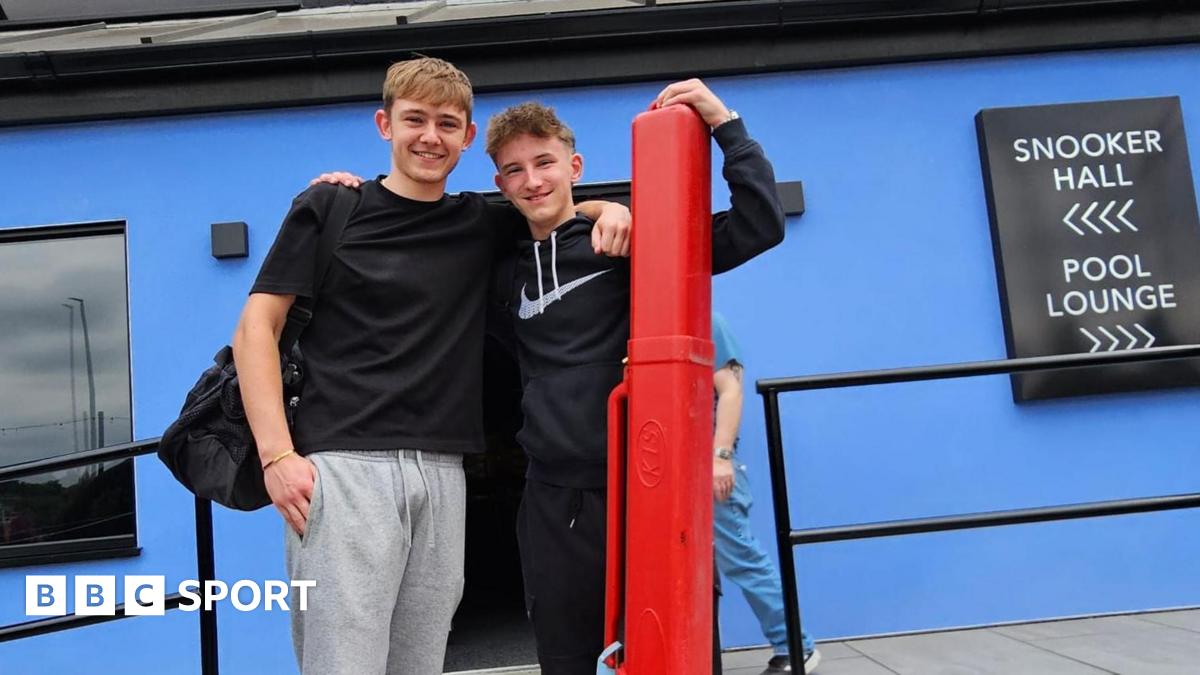
Snooker: Are UK clubs starting to thrive as elite game enters golden period?

Published

on

The Rileys chain, once also synonymous with providing equipment for the highest level of the sport, was perhaps the most recognisable face of snooker clubs across the UK at one time.

However it now operates just 15 clubs, an alarming drop-off from the 165 during its peak years.

Yet that downturn has been far from unusual across the UK’s major cities and towns.

Simply trying to organise a few frames with friends has become challenging for those that play recreationally, while searching phrases like ‘snooker club closed down’ online highlights the depth of club closures impacting communities.

Famed establishments like the Willie Thorne Snooker Centre in Leicester, who took in and helped develop the skills of a young Mark Selby, are among those to have fallen by the wayside in the past 15 years.

High rent and operating costs, reduced junior engagement, the coronavirus pandemic and the long-term impact of things like the smoking ban – and government legislation on the size of jackpots from gambling machines – all took their toll.

That was backed up by Sport England figures that showed the number of over-16s playing at least once a week dropped from 112,600 to just 47,700 between 2005 and 2014.

Speaking to BBC Sport Jason Ferguson, chairman of the World Professional Billiards and Snooker Association (WPBSA), said: “If you turn the clock back to the 1980s, it was boom time in snooker in the UK and there was a club on every street corner.

“But actually it reached a huge saturation point where it had to contract. There was no question of it. You need large buildings, you need huge amounts of space to get around tables and there’s a limited amount of money you can charge for use of a snooker table.

“So we’re getting pushed out of the towns and city centre prime locations and we’re pushed into industrial units and that type of thing. We’ve also lost clubs to planning applications. The thing for snooker clubs is, if you’ve got a city centre location and it’s prime, what happens?

“Well, a planning application goes in for flats, apartments, whatever else, and the snooker clubs’ leases get terminated, those clubs don’t get replaced and that is a real challenge.”

>
Continue Reading

Sports

The Knicks may need these 3 young players sooner than expected

Published

on

The Knicks are fine for now, but eventually internal development will need to kick in for the franchise to continue on its winning trajectory.

With big money tied to its core veteran players, the best way for New York to keep rolling is with the help of young players beginning to show regular flashes of NBA potential. After the Knicks went deep into June during their championship run last year, they may need to lean on youngsters earlier in the season to, at the very least, learn what they have at home.

New York has three players on the roster who have less than three years of NBA experience — Tyler Kolek (25), Pacôme Dadiet (21) and Mohamed Diawara (21). The Knicks also added two second-round players in this year’s NBA draft, though their futures with the franchise for this season are more unstable. New York draft pick Jack Kayil, a guard from Germany, is going back to Europe, per a recent overseas report. Tyler Nickel, a swingman from Vanderbilt, is part of the 2022 class that a federal court determined can return to school for a fifth year of eligibility. August 5 was the deadline for teams to issue a required tender for unsigned second-round rookies. The Knicks did that for both Kayil and Nickel, meaning they own their NBA rights, even as the former returns overseas and the latter, per league sources, weighs the option to return to college. If Nickel elects to return to college, it is expected that his NIL money would exceed the two-way contract salary with New York.

Why the road to this Knicks title was long and painful

Mike Vorkunov

In short: It’s very possible the Knicks don’t add a new draftee to its roster this season.

So, for this exercise, we’re going to rank the three youthful Knicks on standard contracts from most likely to contribute to least likely to contribute next season — barring injuries to those players ahead of them in the depth chart.

1. Mohamed Diawara

This one is a no-brainer.

Despite a few poor summer league performances and a finger injury, Diawara showed flashes last season as a rookie when playing alongside legitimate NBA talent. Head coach Mike Brown made the former second-round pick a regular rotation fixture for nearly two months during his rookie season.

Diawara, a 6-foot-9 wing, impressed with his ability to knock down open 3s, make good reads with the ball in his hands and showed moments as a solid on-ball defender. The runway for big minutes won’t be there because he’s behind OG Anunoby, Josh Hart and Mikal Bridges on the depth chart, but Brown can find minutes for a wing of Diawara’s size and skill semi-regularly.

Summer league didn’t go well for Diawara, but he won’t be expected to be the primary initiator or focus when he’s playing with the big-boy club. As long as he continues to take advantage of the opportunities on both ends that come with being part of such a talented roster, it wouldn’t surprise me if he’s a staple in the rotation as soon as halfway through next season.

2. Tyler Kolek

Kolek is an interesting case study because he has NBA skills — primarily as an offensive table setter and passer — but the Knicks haven’t fully trusted him with a significant role since his arrival.

The team added backup point guard Jose Alvarado at last year’s trade deadline, signaling that it didn’t feel Kolek was ready to contribute to a championship push. With that said, Kolek has some fans around the NBA. Representatives from a few teams have asked me why Kolek doesn’t play more. His 3-point shooting and defense improved in his second season. However, Kolek has built-in limitations on that end of the floor because he’s barely above 6-foot and isn’t the most athletic.

Alvarado, who signed a new contract to return last month, will continue to get first crack at backing up Jalen Brunson. And the team still has Miles McBride, who it uses at times in that role. Kolek, though, could get opportunities throughout the season if Alvarado is having a rough patch and/or the offense shows some of the stagnancy that was present for stretches during the regular season.

I’d keep an eye on Kolek as a trade candidate, too, if the Knicks feel the need to upgrade the roster. I can’t see them moving any of the big-money players. I also can’t see them moving Diawara soon, and I don’t know any team knocking on New York’s door for Dadiet without New York attaching meaningful draft capital. A package of McBride, who is playing on the final year of his deal at $3.9 million, and Kolek would allow the Knicks to get a player who makes slightly more than $6 million.

Kolek, though, has NBA skills and it would be worth it for New York to explore that a little bit more than it has in the past.

3. Pacôme Dadiet

Behind the scenes, there are some in the Knicks organization who believe Dadiet, a 6-foot-7 wing, will turn a corner. Development doesn’t just happen in one game. Teams have other ways of evaluating if a player is progressing in a way that they believe is par for the course. Apparently, to some, Dadiet is showing signs of promise when the lights are off.

Yet, Dadiet will eventually have to show something when the lights are on.

Dadiet hasn’t shot the 3 well in the NBA, G League or even summer league. His shot isn’t broken, but it just hasn’t translated to game success. He’s not currently someone who makes plays with the ball in his hands, either. However, Dadiet showed some progress as an off-ball mover, particularly as a cutter, this past summer league. It was a promising development for a young player who is behind two excellent cutters in Anunoby and Bridges on the depth chart. Dadiet said that watching those two has shown him how he can make an impact in Brown’s system.

Other than in garbage time, I’m not sure where the minutes are for Dadiet this season unless the Knicks prioritize finding out if he’s worth keeping around in the future, which they very well could.

Building off of the cutting from summer league and hustle plays, which Dadiet does well, appears to be his best path to minutes right now.

>

Continue Reading

Sports

Why won’t the Cowboys ever retire No. 88? It’s more than just a number

Published

on

FRISCO, Texas — On the threshold of his seventh season, the latest No. 88 for the Dallas Cowboys soon will be competing with George Pickens for passes and with Quinyon Mitchell and Deonte Banks for space.

And then CeeDee Lamb will be competing with three long shadows for his place in Cowboys lore.

The Cowboys’ 88 tradition is like no other, as the number has passed from Drew Pearson to Michael Irvin to Dez Bryant to Lamb, and between them, the 88s have 10 All-Pros, 16 Pro Bowls, four Super Bowl rings and two bronze busts.

Lamb is responsible for three of those All-Pros and five of those Pro Bowls but is coming off a season he was not pleased with, his least productive since his rookie year. So more than ever, he is determined to represent the number with dignity. He believes he will, partly because wisdom has been passed down along with his number.

“I feel smarter,” he says. “It’s just so close, and all it takes is a little more locking in.”

Lamb’s ambition is to be the best of the 88s. It is not an unreasonable aspiration.

“The 88 we got now is the most talented of us all,” Irvin says. “Drew was all about big plays. Small body, but he could get across that middle. I was just going to bully you. You know, not fast, none of that. Dez was a beast playing basketball outside. But CeeDee Lamb has all of it. He has all of it.”

The significance of No. 88 and the Dallas Cowboys

Dan Pompei

Before the catch and after, Lamb combines finesse and power better than any of the 88s — or almost anyone else, for that matter. He creates separation like a good divorce lawyer, and his catch radius seems to range from the Fort Worth Stockyards to the Dallas Museum of Art.

Lamb probably would need a ring on one, two or three of his fingers to be crowned king of the 88s, but statistically, he is in their company. He needs just 44 yards to pass Bryant on the Cowboys’ all-time receiving list and 407 to pass Pearson. He trails Irvin by 4,488 yards, but if Lamb goes over 1,000 receiving yards this year for the sixth straight time, he will break a tie with Irvin for most consecutive 1,000-yard seasons.

Lamb says every time he opens his locker and sees 88, he thinks about the expectations — yours, his, theirs.

“When I have a big game, everybody celebrates,” he says. “When I have a bad game, there’s a lot of scrutiny, right? It’s a different magnitude when you’re in Dallas. And then it’s heightened when you wear 88.”


To understand why Irvin believes the number is “spiritual,” “divine” and “prophetic,” why it’s “the perfect looking number” and why, to him, it means “everything,” go back 53 years. As some NFL scouts wound their way from the University of Oklahoma to Oklahoma State, they stopped in Tulsa for a coffee or maybe something colder. While there, they checked out a defensive back and a defensive tackle but weren’t very interested in a wide receiver who had converted from quarterback as a junior. Pearson didn’t have the numbers, having caught 55 passes over two seasons and weighing 165 pounds. He ran for them anyway, registering a 4.6 in the 40-yard dash while wearing sweatpants so they couldn’t see his stork legs.

In January of 1973, 442 players were selected in the draft. Pearson was not among them. But he reported to the Cowboys that year with 82 other undrafted players and 17 draft picks. On a team that made it to the NFC Championship Game the year before and won the Super Bowl the year before that, Pearson wasn’t a long shot as much as a no-shot.

Between two-a-day practices in training camp that year, he worked a job with Merchant’s Van Lines for $10 an hour, loading trucks with refrigerators, televisions, furniture and caskets in heat that would make a mess of a chocolate bar.

For his first exhibition game against the Los Angeles Rams at the Los Angeles Coliseum, the jersey he found in his locker was No. 13, which nobody who was supposed to stick around would be wearing. But his feel between the line of scrimmage and the goal post was special, and he practiced with such gusto that he earned the favor of quarterback Roger Staubach. Somehow, Pearson made the team.

Wide receivers had to wear numbers in the 80s in those days, and the only available numbers were 85 and 88.

“Eighty-five didn’t sound right,” Pearson said. “What really sounded right was 88.”

Pearson was so thin that the first time he put his jersey on, the two eights overlapped, and it looked like his number was 8. He had to learn to tuck it in so both 8s showed. But he wore it well, starting six games as a rookie and becoming an All-Pro in his second season. With an abundance of instinct and a deficit of self-preservation, Pearson lasted 11 years and made so many game-changing catches that he became known as “Mr. Clutch.”

And that’s why No. 88 was Walter Irvin’s favorite player.


Michael Irvin, above, checked with Drew Pearson before agreeing to wear No. 88 and then surpassed Pearson’s achievements with the Cowboys. (Paul Buck / AFP via Getty Images)

A Baptist preacher known as “Rev,” Walter was the father of 17 children, the 15th of whom was Michael. While Walter’s wife, Pearl, managed the kids, Walter fixed roofs with a pry bar and hammer during the week, then raised them with his sermons on the Lord’s Day.

Afterward, he always made time to watch America’s Team play America’s game. So devoted to the Cowboys was Rev that he wore his Tom Landry-style fedora to cheer for them in his living room. Young Michael had a seat next to Rev on their couch when Pearson caught the original “Hail Mary” from Staubach.

“He would always jump up when Drew scored a touchdown,” Michael says.

Predestiny? Michael’s sister Janet Carter is 10 years older than Michael. They always said she and Michael were Rev’s favorites. When Michael was 12, long before anyone else envisioned him as “The Playmaker,” Janet had a dream — she was walking through Texas Stadium with her little brother, who was a Dallas Cowboy.

As a senior at St. Thomas Aquinas High, Irvin played wide receiver for the first time and wore No. 80 because his favorite player was tight end Kellen Winslow, No. 80 for the San Diego Chargers. Winslow played with the same relentlessness as Irvin.

At the University of Miami, Irvin didn’t have a choice. They told Irvin he would wear 47. He protested to coach Jimmy Johnson, saying 47 was not a cool number.

“You know what I see when I see you wearing 47?” Johnson told him. “I see a 747 coming down the runway, ready to land for a touchdown.”

“Really, Coach?” the young Irvin said. “OK, I’ll take 47.”

The player and coach won a national championship at Miami and two Super Bowls together with the Cowboys, and then one day, Johnson, after a Heineken or three, told Irvin, “I can’t believe you bought that story about 47.”

Rev never saw any of it. He died before Michael’s senior year of high school. But Rev and Janet were in agreement about where Michael was headed.

Janet was so certain Michael would be a Cowboy that on draft day in ’88 — there’s that number again — she went shopping during the early selections, knowing she had time before the Cowboys picked 11th.

Michael, the final first-round pick of Landry’s career, was blown away when he was given his number, Pearson’s number.

“That was my dad,” Michael says. “You see what I’m saying? That was my dad.”

When Pearson heard the news, he was initially disappointed. No one had worn 88 since he retired, and he thought the number would be set aside like Staubach’s No. 12 had been. But then he thought about it.

What if he were a vessel?

What if Irvin and others could enhance the standard of excellence he established?

What if 88 became a legacy — his legacy?

When Irvin arrived in Dallas as a Cowboy for the first time, it was Pearson who greeted him at the airport. It was emotional, and they embraced. Ostensibly, Pearson was there to interview him for a local television station for which he was working. But really, he was there to pass the baton.

Irvin: “They want me to wear No. 88. Is that OK?”

Pearson: “I’m good with it. But only if you don’t do what I did. You have to do more than I did.”

Irvin did what Pearson asked, playing one more season than Pearson did and becoming one of the most forceful players ever seen, a linebacker disguised as a wide receiver and the vanguard of a dynasty. With a vicious push-off and a slick swim, Irvin was a monster on the slant route. And once he had the ball, he was as tough to take down as an old oak tree.

Whenever Irvin looked at his number before a game, he told himself he would not let Pearson down that day. And when he found himself in the end zone with the football, Irvin felt the same jolt of excitement he had felt from Rev whenever Pearson scored.

Eleven years later came the next great 88.


Bryant, who grew up about 170 miles southeast of AT&T Stadium in Lufkin, Texas, fell in the 2010 draft, so Cowboys owner Jerry Jones moved up three spots to take him with the 24th pick of the first round. Bryant wore No. 1 at Oklahoma State. When he was told about the plan to make him the new 88, he expressed unease. But while his signing bonus may have been negotiable, his jersey number was not. Jones, you see, was selling Bryant 88 jerseys before Bryant ever wore one.

Pearson and Irvin met with Bryant shortly and tried to make him understand. They were convincing, and Bryant embraced the number and all that came with it, catching 73 touchdown passes for the Cowboys, more than anyone in team history, and celebrating them with his signature “X” gesture.

A fireball is what he was, sometimes to his credit and then to his detriment. So after eight seasons, with Bryant’s receiving numbers dipping and his salary rising, the Cowboys took back the 29-year-old’s iPad and thanked him for the memories. In brief stints with the Saints and Ravens, he was still 88.

The Cowboys’ 88 Club, featuring CeeDee Lamb, from left, Drew Pearson, Dez Bryant and Michael Irvin, was featured in a 2022 Chipotle commercial. (Courtesy of Chipotle Mexican Grill)

Like Bryant, Lamb had mixed feelings about wearing 88 when the Cowboys chose him 17th in 2020. At Oklahoma, he was No. 2 and felt attached to the number, but at the time, wide receivers couldn’t wear single-digit numbers in the NFL.

Cowboys equipment director Mike McCord presented Lamb with his options. He explained about 88, thinking Lamb would be eager to become the next link in the chain. But Lamb let McCord know he intended to start his own tradition. He picked 10.

Jones, not surprisingly, had something to say about it. He told Lamb about someone he played with at Arkansas, a two-time all-conference wide receiver and a captain on the 1964 national championship team. More brother than teammate, he served as a groomsman in Jones’ wedding, attended most Cowboys games and became one of Jones’ most trusted football consiglieres.

His name was Lamb — Jerry Lamb.

He had worn No. 88.

And he died months before the Cowboys drafted CeeDee.

“That was very much a part of my motivation to have CeeDee wear 88,” Jones says.

CeeDee had a change of heart about 88 and called Irvin to make sure he was good with it.

In the 2005 motion picture “The Longest Yard,” Irvin played Deacon Moss, the Mean Machine’s star wide receiver. For Irvin, playing Moss didn’t require much acting.

The movie debuted when Lamb was 6. He loved it and was drawn to Moss, who also wore 88. As reality blended with fiction on the screen, Lamb admired Irvin/Moss’ energy, strength of character and urgency.

“He was the receiver that you wanted to be,” Lamb says.

Irvin told Lamb not to take the number if he thought the expectations would be too much for him, but he made it clear he thought Lamb could uphold the tradition. The challenge stirred Lamb.

“I knew,” Lamb says, “that it was something that was so meant for me.”

In the coming days, Lamb’s 88, in navy blue, became the highest-selling non-quarterback jersey in the NFL.

For all that Lamb has accomplished since, 2026 feels like it could be his year. The Cowboys gave him $100 million guaranteed nearly two years ago. Jones, who knows something about investments, expects Lamb to justify this one soon.

“As I look at this year and beyond, with the offensive philosophy we have, Pickens on the other side and the supporting cast we have, you couldn’t have drawn it up better to put the spotlight on 88,” Jones says. “CeeDee is going to have opportunities.”

Lamb missed three games early last season with a high ankle sprain. Looking back, he can see that when he returned, he wasn’t the same mentally.

“It was trying to not get hurt again, which is a terrible thing to do when you’re going out there and playing a very physical game,” he says. “So now I just got to go attack, and we’ll see how it looks again.”

Those routes that Cowboys legend Troy Aikman has decried as lazy? Lamb’s been working on them during the offseason, he says, trying to improve by paying closer attention to depth, playing through contact, varying speeds effectively and improving change of direction.

Now, when Irvin greets Lamb, it’s with a kiss on the cheek. Lamb laughs about those kisses.

“He’s crazy, but Mike is Mike,” he says. “That’s what I love most about him. And I’ve learned so much from him.”

The quartet filmed a commercial for Chipotle in 2022 and bonded for a few hours after. They also spent time together at a gala benefiting Dak Prescott’s Faith Fight Finish Foundation. And Pearson, Irvin and Bryant were at AT&T Stadium in December 2023 to witness Lamb break Irvin’s team records for catches and yards in a season.

In some ways, they don’t have much in common, with 75-year-old Pearson being a Boomer, Irvin, 60, a member of Generation X, 37-year-old Bryant being a Millennial, and Lamb, 27, being Gen Z. Still, they understand one another in ways no one else could.

“Obviously, we’re in different phases of our lives, but they’ve all been where I am right now,” Lamb says. “So it’s them passing the knowledge to me, telling me about the experiences they’ve been through.”

They share quite a bit on a group text. Lamb says the conversation is often “big bro-little bro” in nature. Pearson is the encourager — he commends Lamb like a grandfather would, partly because he sees so much good in him and partly because he understands the value of encouragement. Irvin doesn’t shy from hard truths.

During and after games on that text chain, there is analysis — unfiltered analysis.

“There’s a lot of stuff that shouldn’t be said that’s being said in there,” Lamb says.

It is between the four of them and one other whom Lamb calls their “plus-one.”

Superstar singer Post Malone spent much of his childhood in Grapevine, Texas, after his father, Rich Malone, became the manager of concessions for the Cowboys. When Rich worked overnight shifts, his son, then known as Austin, slept on a cot at Texas Stadium. There is no more dedicated Cowboys fan.

Irvin met Malone at a Super Bowl party. Malone wore a Cowboys jersey — No. 88.

And then Malone popped up in their group chat, surprising three of the 88s.

“I wanted to bring him in,” Irvin says.

Pearson gave his approval, and now they call Malone the “honorary 88.”

Other Cowboys who wore the number without performing up to its standards are not in the 88 club. That includes Antonio Bryant, best known not for a catch but a toss. He was the most productive rookie of all the 88s but was sent on his way after throwing his No. 88 jersey in the face of his coach, Bill Parcells.

In Terminal E, near Gate 5 at Dallas/Fort Worth International Airport, a restaurant has been selling “Mr. Clutch” BBQ meat sandwiches and End Zone Margaritas for years. It’s called “Drew Pearson’s Sports 88.” Not long ago, Pearson, Irvin, Bryant and Lamb began discussions about a restaurant bearing all their names. They found the perfect location in the Tostitos Plaza, adjacent to the Cowboys’ headquarters, and held several meetings about it. Pearson says it was close to becoming reality.

“You know what killed the deal?” Pearson says. “Egos. We couldn’t settle on who gets what. Michael’s saying, ‘I should get more.’ Dez says, ‘I need that.’ I’m saying, ‘I should get more.’ But that’s what the 88 club is all about. We want to be looked upon as the best and receive our accolades.”

Pearson considers other branding opportunities for the 88 club, but he says it’s difficult to get four yeses on any possibility. There are football helmets signed by all four. And a set of football cards — Lamb has the four cards on display in his home office.

If it were up to Lamb, four cards would be all he would ever need, and he would be the last of the 88s. He won’t be, however.

The Cowboys have never officially retired a number, but no player has worn 74 since Bob Lilly, Mr. Cowboy, walked away. The same goes for Staubach’s 12, Aikman’s 8 and Emmitt Smith’s 22. It was more challenging to keep 88 in mothballs after Pearson because, until 2004, wide receivers were required to wear numbers in the 80s.

To Jones, what’s happened with the 88s is an argument to keep every number in circulation.

“When you don’t retire the number, the player of today becomes reflective of the accomplishments of the other players who wore it,” Jones says.

The 88 club, like all traditions, is about yesterdays. But it’s about tomorrows, too.

So if anyone suggests to Irvin that the number belongs in the rafters, they will be silenced. And then he will share what Rev told him back when Pearson was starting this.

“In the Bible, 8s stand for something,” he will say. “They symbolize new beginnings.”

A retired number, after all, is like a gravestone.

Eighty-eight is a heartbeat.

>

Continue Reading

Sports

Let’s talk about some Freaks. Plus: A cursed round of golf

Published

on

The Pulse Newsletter 📣 | This is The Athletic’s daily sports newsletter. Sign up here to receive The Pulse directly in your inbox.


Good morning! Take your kid for a jog today. Coming up:


Measurables: Welcome back, Freaks

Every day now seems to bring another harbinger of football. Today’s: Bruce Feldman’s Freaks List, another annual rite of passage, which highlights the best athletes in college football, as informed by coaches and staff across the sport.

It’s fun for the premise alone, but also for what it’s become over 20-plus years. It’s not just an early top NFL prospects list; there are historically Division II and III players on this list, as the entire college football community tries to get their guys noticed.

I pulled two big names and one unheralded guy for us:

1. South Carolina WR Nyck Harbor
Again, the Gamecocks are loaded with talent and will be on your favorite pundit’s Playoff sleeper list. Harbor was already the first player in the history of the Freaks list to occupy the top spot for two straight years, and now he’s back here again after dropping to No. 3 last year. He’s 6-foot-6, around 240 pounds and runs for the track team. Bruce reports Harbor hit 23.8 mph during offseason workouts this summer. His fundamentals need some polish, but the talent is there.

  • The Gamecocks actually have three players on this list: Harbor, edge Dylan Stewart (No. 14) and quarterback LaNorris Sellers (No. 36). If Carolina is on and you’re around this fall, just watch.

2. Ohio State WR Jeremiah Smith
I almost didn’t include him here, because the excellence is so assumed. Smith has arguably been the best wideout in college football since he arrived on campus in Columbus. Bruce calls him the best player in the country, bar none. He’s the linchpin for the preseason No. 1 team and said he’s gotten faster this offseason, which feels unfair.

92. Harding University FB Andrew Miller
These are my favorite people on the Freaks List. Miller is a fullback who ran for 2,000 yards last year and clocked a 4.44 in the 40-yard dash. The fullback title may be misleading for a team that runs the wishbone formation, but I still love it. Miller has the size and talent to make an NFL roster. He also catches snakes in his free time.

See more Freaks here. Let’s move on:


News to Know

Ronald Martinez / Allsport

Nelson dead at 86
Legendary NBA coach Don Nelson died yesterday at 86 years old, his family announced. Nelson won five titles as a Celtics player and, as a coach, pioneered a style of basketball — “Nellie Ball” — that looks right at home in today’s NBA. He favored fast pace and smaller players to outrun opponents. He is the second-winningest coach in league history. Read the tributes to him here.

McBride sets record
Lynx guard Kayla McBride hit 10 3-pointers in Minnesota’s 103-90 win over Dallas last night, giving her the WNBA record for most triples in a game. She scored 43 points, which also sets the franchise record for most points in a game. McBride has a great story, too.

More news:

  • Lions backup quarterback Teddy Bridgewater left the team. Read more.
  • Braves ace Chris Sale got ejected yesterday … a day he wasn’t starting … before the first pitch.
  • Out of the FedEx Cup playoffs: Brooks Koepka. In: Michael Brennan, who won the Wyndham Championship yesterday.
  • Seen at LIV’s tournament yesterday: PIF Governor Yasir Al-Rumayyan, which is curious, as PIF pulled funding for the league. More here.
  • Hezly Rivera repeated as U.S. gymnastics champ yesterday. She’s the first woman since Simone Biles to do so.
  • It was a tough day for big tennis names: Jannik Sinner withdrew from the Cincinnati Open, Aryna Sabalenka got upset at the Canadian Open and Alexandra Eala’s magical run through the Canadian Open fell short.
  • American soccer wunderkind Cavan Sullivan, the 16-year-old set to join Manchester City when he turns 18, scored a goal and assisted on another for the Philadelphia Union last night. Watch them here.
  • Demi Vollering won the Tour de France Femmes thanks to a stunning attack on the final stage.

📰 Find more news here 24/7.


Things You Need to See: A stroller sprint for the books

A man named Stephen Biebelhausen ran a mile in just 4:17 over the weekend in Cleveland as part of the Guardian Mile race. The time alone is impressive for anyone running a mile. But look at what Biebelhausen was toting:

With his cute daughter in tow, Biebelhausen set the men’s Guinness World Record for fastest mile run with a stroller, something I didn’t know existed until now. Way to dad-shame me, dude.

Almost done:


Watch Guide

📺 MLB: Phillies at Cardinals
7:45 p.m. ET on FS1
Philly clings to the final NL wild-card spot at the moment, which always makes for good drama. St. Louis is 59-59, 3 1/2 games back of that final wild-card spot. This game will alter the NL playoff math.

📺 WNBA: Tempo at Dream
8 p.m. ET on Peacock and NBC Sports Network
Toronto is out of the playoff race for now — the eight postseason teams are pretty set at this point — but Atlanta is worth a gander here. The Dream are 7-3 in their last 10 and sit in a glut of teams from seeds Nos. 3-8 all within three games of each other. As we always say: Every game counts.


Pulse Picks

Scott Strazzante / Getty Images

Mike Trout brought his Angels teammates to his private golf club in New Jersey on Aug. 3 for a round of team bonding. Four of them got traded during the outingIncredible story from Ken Rosenthal today.

Mike Vorkunov has a fun list of NBA Hall of Fame tiers, in which Jalen Brunson jumped a level this year. Huh.

There have been some really, really good — even legendary — players who have worn No. 88 for the Cowboys. So why won’t the team retire it?

Cooper Lutkenhaus is a track phenom who just turned pro. He’s also still in high school.

If the college sports bill passes Congress, we could be in for another — and more final — version of conference realignment. See the possible new conferences here.

Most-clicked in the newsletter yesterday: Caitlin Clark’s tech Saturday, which got rescinded.

Most-read on the website yesterday: Tom Burrows’ incredible interview with Brandon Williams, the former Manchester City player who wound up in jail. Read it here

>

Continue Reading

Trending

Copyright © 2017 Zox News Theme. Theme by MVP Themes, powered by WordPress.