
Entertainment
Why Is AI Spending From Tech Companies Skyrocketing?


In Hollywood, everyone is fretting about how a company like Paramount will handle a debt load of $79 billion once it acquires Warner Bros. Discovery, while Netflix gets scrutinized for spending $20 billion on films and shows this year.
But in Silicon Valley, no one blinked when Google parent Alphabet on Wednesday upped its annual capital expenditure forecast range to between $180 billion and $190 billion. In fact, shares rose 10% the day after its earnings report. But hey, what’s another $5 billion?
Google isn’t an anomaly. That same day, Meta increased its 2026 capex range by $10 billion to as much as $135 billion, while Microsoft had already forecast spending $190 billion. Amazon is spending an eye-watering $200 billion.
The only exception is Apple, which is projected to only spend $14 billion, and the company continually gets knocked for its lack of direction and investment in AI.
The numbers, which are so dizzyingly high that it’s difficult to fully grasp their scale, underscore the stakes of the AI arms race at a time when the technology is poised to disrupt everything — including jobs in the media and tech world. The rising numbers also illustrate how staying in the race is getting only more expensive, especially as companies look to one-up each other and, more broadly, stay ahead of China.
“If you’re a hyperscaler like Google, Amazon or Microsoft, the insane price of AI infrastructure is a rational investment, because you’re selling that compute at a profit,” said Avi Greengart, an analyst at Techsponential. “There’s a risk of overinvestment, but given the potential — and health of their underlying businesses — it would be worse to underinvest if the bull case for AI is true, and then never be able to catch up to demand and lose to rivals who did.”

Those figures, many of which came out this week through various Big Tech earnings reports, are a bet that AI will play a central role in our lives and how businesses operate in the future, and that companies will pay big bucks over time to utilize AI capabilities that are just starting to bubble up. In Hollywood, that’s manifesting itself with AI generation tools that do everything from adding foreign language dubbing and subtitles to whole settings, as in the case with Doug Liman’s AI-enabled film “Bitcoin: Killing Satoshi,” while newspaper chain McClatchy is using a Claude-based tool to generate articles from its reporters’ work.
Despite the hand-wringing in the entertainment community, studios and media companies are diving headfirst into utilizing AI, but all of that processing power will require the kind of capacity these tech companies are investing in.
And it’s not going to be cheap.

Where is all this money going?
When you type a prompt into Gemini or ChatGPT, there’s a cost in terms of energy and money that’s estimated to be as much as 3 cents and .34 watt-hours of electricity. That doesn’t seem like much, but multiply that times the billions upon billions of prompts imputed each day — ChatGPT alone has around 200 million daily active users — and those needs start to add up.
That’s why companies like Meta, Alphabet, Amazon and Microsoft are pouring money into infrastructure like data servers or components like graphics processing units and memory chips to build out the capacity — as well as energy sources to power all of it.
They’re all betting that the use of AI will only grow exponentially, and want to be the ones able to provide those services.
“The trend over the last few years seems clear that we are seeing an increasing return on the amount that we can improve engagement for people and value for advertisers,” Meta CEO Mark Zuckerberg said on the company’s earnings call Wednesday. “This encourages us to continue investing heavily in what we expect will provide increasing value over the coming years as well.”

Beyond serving prospective customers, the extra capacity is critical to further developing the capabilities and smarts of its foundational AI models. Because Alphabet is publicly traded, we have more insight into the amount poured into Gemini. We have less clarity from companies like OpenAI (ChatGPT) and Anthropic (Claude), which are privately held startups, although it’s highly likely their investing heavily too.
“The capex overhang is massive with AI investment still growing,” said Maribel Lopez, an analyst at Lopez Research. “The 2026 numbers are astronomical.”

What’s the payoff?
Ultimately, these companies are less interested in individual services and more focused on developing a broader relationship with businesses and individuals. Meta developed that connection through Instagram and Facebook, while Google does it with YouTube and search. Apple, notably, has the strongest loyalty among its customers through its family of phones, tablets and computers.
Given everything AI has the potential to do, tech companies see the technology as the most effective way to cement that relationship.
“Right now, our apps primarily help people accomplish three important goals: connecting with people, learning about the world and entertainment,” Zuckerberg said Wednesday. “But we’ve always wanted our apps to understand more of people’s goals so we can help improve their lives in all the ways that they want.”
There are early signs of success, such as Google seeing demand for cloud services and paid subscriptions for its Gemini business, which is a big part of why its shares rose Thursday.
“AI solutions have become our primary growth driver for cloud, for the first time in (the first quarter) revenue from products built on our Gen AI models grew nearly 800% year over year,” Alphabet CEO Sundar Pichai said on his call.
That trend is expected to lead to a more sticky relationship between Google and its customers.

“I do believe enterprise buyers will be hooked on AI and that this will lead to sustainable cloud revenue and new chips will make the cost of AI lower, but I think it will take a while to get there,” Lopez said.
In contrast, Meta shares dropped nearly 9% on Thursday on its forecast for higher investment in part because it is focusing its AI on its ad business and has been less clear about when it will push out its highly touted “AI agents” for business and personal use.
The exception is Apple, which abandoned its own efforts to build a foundational model and is buying access to Google’s Gemini to augment its own AI experiences. But that doesn’t mean it’s not spending money on the technology.
“We believe AI is a really important investment area for Apple, and we’re going to be doing that incrementally on top of what we normally invest in our product roadmap,” Chief Financial Officer Kevan Parekh said on its earnings call.
Still, it’s an outlier in a world where every other well-funded company is pouring every cent into AI.
“Apple is betting that owning the customer is more important than the underlying AI model. We’ll have to see how that plays out,” Greengart said.
What’s the hidden cost?
All of this money flowing into infrastructure and components is particularly jarring because it comes at a time when layoffs in the media and tech industries are also soaring.
At the same time Amazon is spending $200 billion in capital investments, it’s also laying off 16,000 workers. And while Zuckerberg stressed the human-centric approach to AI, the company plans to cut 10% of its staff next month, with its chief people officer telling employees that it wasn’t ruling out deeper cuts.
For all the fear that Hollywood is feeling about AI replacing acting, writing and directing gigs, it’s already happening in a host of other fields.
All of that investment in components is also having a ripple effect on the public. Another big theme across all of the tech conference calls was the shortage of components like memory chips or nodes used in powerful processors. Apple CEO Tim Cook said that its Mac Mini and Mac Studio are hard to find now because they’re seen as optimal devices to create AI agents.
But the higher demand for those components means fewer supply for other devices, which is expected to lead to higher prices for anything needing those components, which includes phones, televisions, appliances and more.
Because things weren’t too expensive already.

>
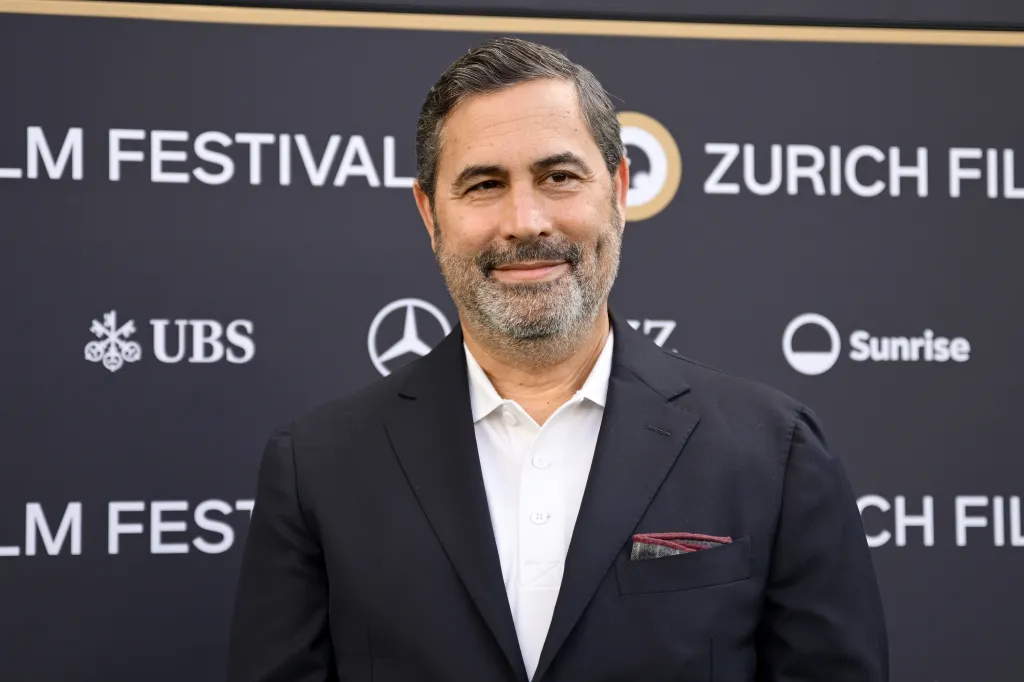
FilmNation Entertainment Founder and CEO Glen Basner will receive the Game Changer Award this evening at the Zurich Summit, the annual industry event aimed at fostering transatlantic connections taking place within the Zurich Film Festival.
As part of the honor, Basner participated in an onstage conversation on Saturday moderated by German Oscar-winning director Edward Berger.
Over the course of an hour, the pair dug into Basner’s trajectory from sales rep at his father’s garment business, to heading up one of the world’s top international indie sales, financing and production companies.
Basner and Berger go back a long way, having first met at the beginning of their film careers in the early 1990s at famed New York production company Good Machine.
Basner arrived there from a five-year stint selling ladies knitted sweaters. He had been bitten by the movie bug while helping childhood friend Edward Burns in his spare time on his first film The Brothers McMullen. Burns then invited Basner onto his second feature She’s The One, which was produced by Good Machine. The rest is history.
Berger spent a year and a half at the company from 1994, where his paths crossed with Basner. They have stayed connected ever since, with the pair joining forces professionally again on Berger’s 2024 $100M global box office and streaming hit Conclave.
“32 years later, it’s such a full circle moment,” said Berger as they kicked off the conversation.
Looking back at his time working with Ted Hope, James Schamus and David Linde at Good Machine, Basner said the lessons he learned there had carried him through his career.
“I was taught that you could sell movies around the world and not lie to people… that you can value and appreciate the relationships that you develop around the world and treat people not just as if you’re selling them a product, but that you are really delivering them a work of art, and that you’re there to help support them as they go and release the films country by country.”
Berger suggested working there had also taught them reliance, recalling how just prior to their arrival, the company had nearly gone bankrupt after it wrapped Ang Lee’s romantic comedy The Wedding Banquet.
“It taught us to go through hard times and get stronger… around the time of The Wedding Banquet, the company was basically bankrupt… they decided let’s cancel the photocopier and scrape every last bit together and go to Berlin,” said the director.
The film went on to win the Berlinale’s Golden Bear and then took off at the box office to gross some $23M, against the $1M budget, making it the most profitable U.S. film of 1993.
After subsequent stints heading up sales at Focus and then The Weinstein Company, Basner created FilmNation in 2008, initially uniquely as a sales company.
He said creating his own company had been a natural move for him given his family background.
“My father had his own business, and I wanted to be like my father, so I always had this entrepreneurial bug that I wanted to go out and sort of really test my mettle by being on my own and developing something and seeing if it could succeed,” he said. “So that was something I thought about since the first day that I started working in film.”
Eighteen years later, the company has expanded organically into finance, production and TV, with bases in New York and L.A., and string of award-winning features in its filmography including The Big Sick, Promising Young Woman, Anora, Conclave, Maria and upcoming pictures Bunker, Talent for Murder and I Play Rocky to name but a few.
“The opportunity was clear in 2008. In those days, there were only two strong and dominant, excellent American international sales companies that were unaffiliated with U.S. distribution,” said Basner.
“Pretty much at the same time, they both became U.S. distributors. Summit, which was run by Patrick Wachberger, became a U.S. distributor, and Mandate, Joe Drake’s company, was bought by Lionsgate… so there was this big hole for an American, unaffiliated-with-distribution sales company.”
Sales craft
Talking about FilmNation’s recent slate, Basner said he had wooed Florian Zeller ahead of getting involved in Bunker.
“I told him to his face he was my filmmaker crush of the moment,” he joked.
“You said that to me too,” replied Berger in mock disbelief.
“I know. It was a different moment,” fired back Basner jovially.
He recalled how Zeller had been on the cusp of approaching Javier Bardem and Penelope Cruz as FilmNation quietly putting out international sales feelers.
“He had said, ‘If they say yes, we’ll move forward. If they don’t do the movie, I don’t think I’m going to do the movie.’ Fortunately, they said yes, and then we just really started the work,” said Basner.
The film took a traditional pre-sales route thanks to Zeller’s track-record with Oscar-winner The Father, followed by The Son, it’s A-list cast and a “exquisite” script, with the bulk of the international sales tied up at Cannes in 2025. The U.S. deal to Sony Pictures Classics was sealed in collaboration with CAA Media Finance later on, on the basis of the completed film.
“There were distributors that were willing to take the risk. It’s not the easiest thing to say: ‘Here’s the script, here’s the director, here are the actors, and here’s your price’. They don’t really get to sit and have hour-long conversations with the filmmaker to fully understand the movie,” said Basner .
“They have to trust us to be able to articulate exactly what the movie is and what the intention is of that filmmaker, so that they can then decide to take the significant risk on a movie like this of pre-buying the film.”
Talking about their collaboration on Vatican-set thriller Conclave, revolving around the secretive Vatican process of electing a new Pope, Basner said part of the challenge had been conveying Berger’s vision for the film to buyers.
He suggested that on the basis of the screenplay alone – it felt like a story about “a bunch of old men talking in rooms” with a potential $12M to $15M price tag.
“But that really wasn’t the movie that you were looking to make… You talked about The Parallax View being a point of reference for you,” said Basner, referring to Alan J. Pakula’s 1974 political thriller.
“You talked not just about the architecture of the locations, but the architecture of how you wanted the camera to move and the film to feel… all of a sudden this became a political thriller,” continued Basner.
The sales veteran said estimating a value of a film, country by country, came down to a mixture of experience and expertise.
“You’re responsible to hit these estimates. And human nature takes over, and sometimes you can get a little bit conservative to make sure that you deliver,’ he said.
“What we’ve learned over the years is to trust the business acumen and the marketplace experience that we have, and not be too conservative, but actually just deliver the valuation that we think, and be prepared to stand by it in a real way because it’s our money that we’re investing.”
“Part of that is, instead of talking all the time about what the market says and what the market will bear, it’s really about just sitting and listening to the filmmaking team so that you really understand, not what I, Glen Basner, thinks the movie is going to be or should be, but the movie that the filmmaker wants to make.”
Basner revealed he was wary of going down the packaging route of attaching known talent when helping get big projects of the ground, suggesting attempts to mitigate risks on films, whether via the cast or other factors, can sometimes lead to less exciting films.
“Sometimes we have to take more risk on an unknown actor because they are the best person for that role to make the best version of the movie, and we have to trust that filmmaker to deliver on that, not in a naive way, in a thoughtful way, but really trust that that’s really what’s going to drive the value for that movie,” said Basner.
“I really am encouraging everybody to look around, look at what’s working in the marketplace. There are a lot of films that, on paper, did not make sense. The history of our company is predominantly on films that did not make sense to the marketplace at the beginning.”
Conclave clash
Berger revealed they had not always seen eye-to-eye in the final stages of bringing Conclave to fruition.
“After quite a long edit… I was basically done with the film. I’d run out of ideas… I really wanted to go to Venice or at least show them the movie and see if they’d show it,” recalled Berger.
“This was in in May. Glenn got on the phone and made me furious. I hated him. He just kind of said, ‘I’m not sure the movie’s ready, don’t rush it…Venice is going to be expensive, and we don’t have American distribution in place’,” he recalled.
Lead producer Tessa Ross also felt the movie was “missing something” and after test screenings with friends and family sparked an “ok” response, Berger went back to the edit suite and even reshot one or two scenes.
Berger credited Berger and Ross for pushing the extra mile on the film, while his energy levels were low after an arduous months-long edit process.
“We just edited and edited and edited and made the music again and revised it, and finally something cracked… little things, just shifted and gave us the confidence that the movie was ready. But it was really half a year later.”
It was another full circle moment for Berger
“This is going back to Good Machine, and what I took from Good Machine… which was you can always do better… whether its budget, contract or the cut of the movie.”
Organic expansion
Taking stock of FilmNation’s trajectory since 2008, Basner said the expansion into production and TV had been organic.
“We never really anticipated becoming the company that we have over time, but things changed. One, as we continued to do our jobs and have success, we gained confidence through experience, and we were ready to do things like fund our own films,” he said.
A second development was the convergence of film and TV and other entertainment formats, which has seen the company also embrace TV, podcasts and theater, while retaining its original mission of being a place that enables filmmakers to not just make their film, but to make the very best iteration of their film.
“When we’re at our best, that’s exactly what we’re doing. It’s no more complicated than that. And when we are doing it, nothing feels more rewarding than doing that job well,” he said.
Looking to near-term goals, Basner said the company was ramping up its productions in the arrival of former 20th Century Fox, DreamWorks and Universal Pictures exec Stacey Snider in the new role of Chief Creative Officer in January.
“We are being more ambitious by investing more and making more films. This year we will make four films and a television series, and next year we already have four films in pre-production and hope to make another three,” said Basner.
“The arrival of Snider as the Chief Creative Officer was an articulation of our desire to take more risk and to be more productive,” he continued.
“Working with her these last nine months, you see this incredible creative talent, you see a skill set and a maturity that we don’t have ourselves, or that I don’t have myself, and it is definitely building confidence to invest further. But it’s really also, as she would say, it’s about making it better. The conversation that you had before: let’s take another look at this. Let’s do it a little bit better. That’s something she reminds me pretty much every day.”
>
At this weekend’s Zurich Summit a group of film financiers were asked by Deadline for their thoughts on the prospects of a U.S. federal film incentive.
Last week, a bipartisan group of lawmakers unveiled the bill for a 20% incentive, which with bonuses could bring the total rebate to 30%. The move has long been called-for by the U.S. industry concerned by the exodus of production overseas.
Alex Walton, former Co-Lead & Partner at WME Independent, told the Summit the move was “hugely positive”: “It’s wild to think there hasn’t been an efficient tax credit in America. It has helped many other countries. Spain is booming because of it now; and all over Europe. It’s going to take some time to be realized and for financial institutions to be able to cash flow it. But you’ve got to believe it will happen within the next three-four years, and then that will see all the foreign tax credits compete harder to maintain their positions.”
A start date is not yet set. The proposed text from last week stated that the credit would apply to qualifying film and TV productions beginning in taxable years after December 31, 2026 (effectively targeting projects starting in 2027). But bills can take years to pass.
Andrea Scarso, Managing Partner at prolific financier IPR.VC, whose credits include Marty Supreme and Materialists, agreed that a U.S. incentive would be “positive” but also cautioned against rising production costs: “It remains to be seen whether the prices and budgets are also going up by the same amount, which is something that happens in some foreign territories when they increase the amount of tax credit or soft money. It’s always a balance. But overall, I think it’s good news.”
Sarah Schweitzman, Co-Head CAA Media Finance, noted: “What’s important is that when you look at some of the international markets, you realize that we’re making movies there because of a tax incentive situation and I think if we’re able to federalize a tax incentive program in the U.S. it’s going to create many more jobs and invigorate crews, which is something we absolutely need in the U.S.”
A recent Motion Picture Association study claimed that a federal film tax credit could increase U.S. production spending by $125BN and add more than 143,000 jobs by 2035.
You can read more about the bill here.
>
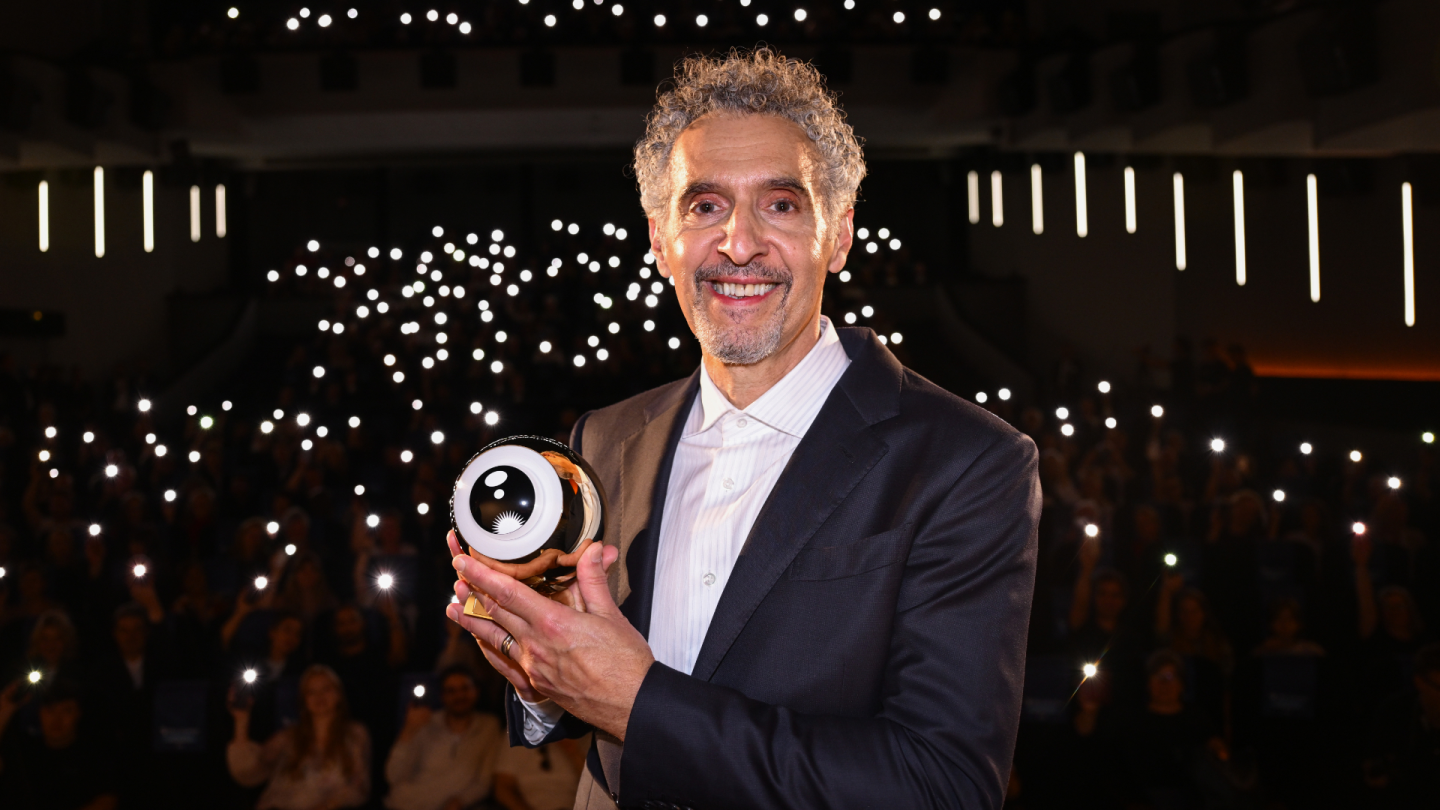
Hot on the heels of his Golden Eye award ceremony on Saturday night, John Turturro entertained another crowd at a Zurich Film Festival masterclass on Sunday.
The Emmy-winning U.S. star has been recognized for his performance in Noah Segan’s The Only Living Pickpocket in New York, a project that is already garnering awards buzz. In the film, Turturro plays Harry, a seasoned pickpocket whose carefully controlled life is thrown into turmoil when a job goes wrong, setting off a tense chain of events that unfolds over the course of 36 hours.
In a career-spanning conversation with Deadline‘s Melanie Goodfellow — the actor’s shining Golden Eye trophy neatly nestled between them — Turturro discussed growing up in an immigrant household, his decades-long friendship with Spike Lee, and the transition from acting to filmmaking.
Turturro, who has steadily become one of the industry’s most formidable actors yet to put “Oscar nominee” on his resume, was asked about joining the best actor race this year with the Sundance success The Only Living Pickpocket in New York. “I never really have gone the whole hog with it,” he responded about the upcoming awards campaign. “But now I’m the lead in the film, so I’m going to support the film because I love the film.”
He explained that being pulled into awards conversations is “helpful to help you do the next thing.” Turturro continued: “Is it nice to be acknowledged? Great, but that’s not why you do it. […] Just because a film is really popular doesn’t mean it will have staying power, but it’s nice to be in the conversation. I don’t look upon myself as being a competitive person. I’m competitive with myself,” he added. “I want to get the most out of what I can do, but it’s not sports!”
However, he admitted to feeling surprised by the positive critic reaction out of Sundance. “Finally,” he thought, “I’m in something that people will see… My job is I like to try to improve, and I feel like being an actor is one of the few things you can improve in. You may not be able to run as fast as you did when you were younger, but I have a lot of life experience, and as you get older, you accumulate that, and you can distill things in a way that you couldn’t do when you were young, because you didn’t really experience all those things. And now I’ve experienced life, death, loss, being a parent, being married — what it is to really love someone versus falling in love. That’s a huge difference,” he giggled.
Turturro regaled attendees with stories about his impressive stage career. He naturally came on to two major TV performances of his in the last decade: HBO’s The Night Of and Apple’s Severance.
He coyly confirmed a return for his character, Irving Bailiff, in season three of the Emmy-winning Severance with Adam Scott. “Yeah,” he (eventually) told the room. “As long as they give me interesting things to do, then I’m interested.” He swiftly took the opportunity to gush over friend and colleague Christopher Walken, whose character, Burt Goodman, began a romance with Turturro’s Irving in season one. “‘Who’s going to be my love interest?’” Turturro asked before joining the show. “And they were like, ‘All these younger guys.’ I said, ‘Well no, I’ve worked with Chris Walken,’ and I said, ‘I want Chris, because I love Chris.’ And I don’t have to act that I love him because I love him.”
Though Walken “didn’t understand a lot of the show,” Turturro was able to guide him through their authentic, real-life friendship. “I said, ‘Don’t worry about it. You just look at me.’ We have so much fun because I directed him like three times, and we’ve acted, and we’ve worked together a lot. And he’s a wonderful theater actor, and people obviously think he plays only strange [characters] but he can do a lot of different things. He’s also very sensitive, but he has a childlike joy in his work, and when that happens, anything is possible.”
Turturro received a round of applause when discussing the HBO crime drama The Night Of, which ran for one season in 2016 and co-starred Riz Ahmed. It would later win five Emmys, and Turturro was nominated for his role as the eczema-stricken defense lawyer John Stone. “The Night Of is something I’m very proud of,” said Turturro on Sunday. “It was originally a BBC thing, which I actually never watched because I didn’t want to be influenced.”
He even confirmed that he actually wanted to do another season of it. “But they couldn’t agree on what the story would be,” revealed the actor. “But I loved doing it. It was one of those great experiences in my life.”
Turturro’s career spans four decades, having worked with acclaimed directors such as Spike Lee, the Coen brothers, Martin Scorsese, Robert Redford, Robert De Niro, Nanni Moretti and Pedro Almodóvar.
He first gained international recognition through his collaborations with Lee, appearing in Do the Right Thing and Jungle Fever. With Joel and Ethan Coen, he acted in Miller’s Crossing, Barton Fink, O Brother, Where Art Thou? and The Big Lebowksi, in which Turturro created the iconic Jesus Quintana. For his lead performance in Barton Fink, he won best actor at the 1991 Cannes Film Festival, an experience that Turturro reflected on at his Zurich masterclass. He even confessed to feeling like he lands “more normal” roles in Europe than across the Atlantic, and said he has turned down scripts “again and again” that involve his character being violent towards women.
At his Zurich Golden Eye ceremony Saturday night, Turturro collected the award and quoted Italian novelist Cesare Pavese. “[He] once said that the only great thing in life is to begin. I still consider myself a beginner in many ways,” said the star. “I’m very fortunate. I wanted to make a living doing something that interested me and to do interesting work — to share that with an audience, [and that] wouldn’t diminish their intelligence at the same time,” he laughed. “I consider this an encouragement to continue.”
Turturro joins 2026 Zurich honorees Julianne Moore and Tom Hiddleston. The 22nd edition runs Sept. 24-Oct. 4.
>

Ireland 31-24 Japan: Ireland bounce back to defeat Japan in WXV Global Series

FilmNation CEO Glen Basner Talks Art Of Film Sales, Financing
Fantasy Football Week 3 sleepers: Daniel Jones, Kyle Monangai and 3 more surprise plays
-

 movies4 months ago
Search For Canadian TV Actor Stewart McLean Now Homicide Investigation
-

 Fashion9 years ago
These ’90s fashion trends are making a comeback in 2017
-
Fashion9 years ago
According to Dior Couture, this taboo fashion accessory is back
-
Fashion9 years ago
Model Jocelyn Chew’s Instagram is the best vacation you’ve ever had
-
Fashion9 years ago
Emily Ratajkowski channels back-to-school style
-
Fashion9 years ago
9 Celebrities who have spoken out about being photoshopped
-

 Anime4 months ago
Rurouni Kenshin: Hokkaido Arc Manga Takes 1-Issue Break – News
-

 Anime3 months ago
HIDIVE to Stream English Dubs for The World Is Dancing, The Forsaken Saintess and Her Foodie Roadtrip in Another World, The Dangers in My Heart: The Movie Anime – News