
Entertainment
Diego Luna Boards Disney’s Live-Action ‘Tangled’


Diego Luna is set to join Disney’s live-action take on “Tangled.”
The actor will be stepping into a newly created role for the feature as it prepares to begin filming in Spain this June. The project adapts the studio’s 2010 Academy Award-nominated animated film and marks another collaboration between Luna and Disney after “Andor.”
Character details are being kept under wraps. As previously announced, Teagan Croft and Milo Manheim lead the ensemble as Rapunzel and Flynn Rider, the thief who helps her escape the tower, with Kathryn Hahn set to play the villainous Mother Gothel.
Michael Gracey, who directed “The Greatest Showman” and “Better Man,” is set to direct the project, working from a screenplay from Jennifer Kaytin Robinson.
Released in 2010 and directed by Byron Howard and Nathan Greno, “Tangled” was a twist on Rapunzel and marked the beginning of a creative resurgence at Walt Disney Animation Studios. The film grossed nearly $600 million worldwide.

Kristin Burr is producing via Burr! Productions. Lucy Kitada is the executive producer.
Disney’s live-action remake strategy has been a company hallmark for over a decade, as films like “Alice in Wonderland,” “Aladdin” and “The Lion King” have each passed $1 billion at the box office.
There was talk that Disney was cooling on its live-action pipeline following the release of “Snow White” last spring, which bombed. That film, directed by Marc Webb and starring Rachel Zegler and Gal Gadot, was massively expensive (with a rumored budget of $270 million) and made only $205.7 million worldwide.
But then came “Lilo & Stitch,” which was released last May and grossed $1.037 billion worldwide, making it the highest-grossing domestic release of the year.
Along with his role as Cassian Andor in the critically acclaimed “Andor,” Luna gained global recognition with films like “Y Tu Mamá También” and in the Netflix series “Narcos: Mexico,” where he played drug lord Miguel Ángel Félix Gallardo.

>
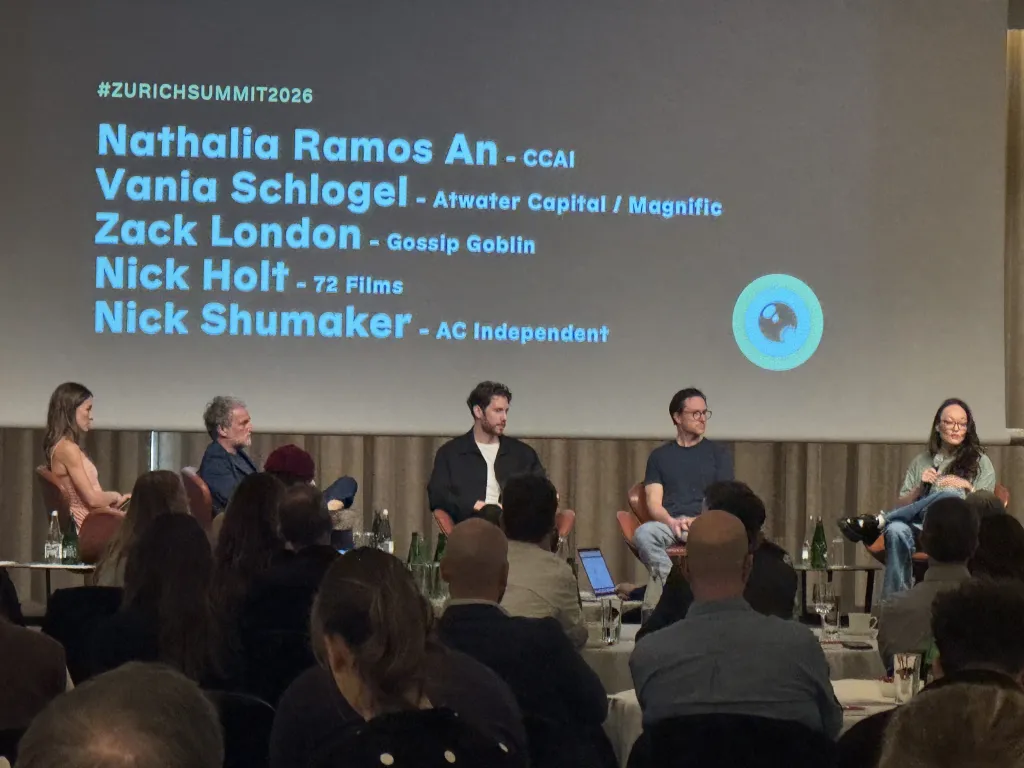
Musk producer Nick Shumaker, Hollywood film financier Vania Schlogel, directors Zack London (Gods Don’t Give Gifts) and Nick Holt (AI: Probably Nothing to Worry About) took to the stage at the Zurich Summit this weekend to dig into the implications of AI for film.
Schlogel, who is founder and managing partner of L.A.-based Atwater Capital, also took up the baton of Chief Strategy Officer at AI creative platform Magnific, formerly known as Freepik, this summer.
The exec said that while her roots were in Hollywood film finance, she had understood it was an imperative for her to get to grips with AI during a board meeting at Magnific.
“In an interview about a year ago with the Financial Times, I’d actually said very publicly, that when all this AI stuff gets really big, I’m just going to go back to Idaho and disappear into the mountains, and that’s always actually been the genuine kind of feeling I espouse, as I’m not a technologist. I’ve always been a traditional Hollywood financier,” she told the panel.
“Our founder showed us videos and images from our largest competitor and how they had become viral, and it was sexualized children’s IP, it was horrible depictions of women, some of them famous, some of them not… some very racist things,” she explained. “I had this light bulb moment that this might not be something that I have necessarily been inured to historically, but I actually do need to be involved in.”
Since embracing the technology, Schlogel said she had seen multiple cases where the use of AI made sense, commercially and ethically, even if there were aspects of the technology she has qualms about such as the way in which the confident tone of AI assistants can encourage “cognitive surrender” in human beings even when their level of expertise on a subject is higher that the LLM they are consulting.
“It really is on all of us to get in front of it so that we can shape the ethical direction it goes. Because this will shape society, is shaping society, is even shaping human empathy and how we view each other. So it’s so important to get in the driver’s seat of it, whether you love it or hate,” she said.
Shumaker, head of AC Independent at Anonymous Content, acknowledged the power of AI as a tool across the cinema chain but said he felt compelled to raise questions around the use of original content by generative AI programs.
“The whole fair use in AI thing needs to be addressed. The lawsuits from New York Times, from every major media outlet, disregarding just stealing things from my perspective and ingesting is totally inappropriate. And I just want to put that on record,” he said.
“That we can say that this is the way things are going, at the same time as there’s theft with regards to intellectual property, it’s not a good thing. The notion that we get clogged up in lawsuits for five or six years to address that is not good for humans, for creators, or frankly, for the future of writers or cinema.”
He clarified that while Alex Gibney’s Musk, on which he is a producer, touches on the way Elon Musk is using AI to shape the future, and not necessarily for the best, the documentary used very little of the technology in its production.
He noted the Elon Musk avatar had been created in CGI by humans at a company, which has collaborated with Gibney in the past, with AI only used at the post-production stage to help lip-synching.
London, who is also known under the YouTube pseudonym of Gossip Goblin, is currently gearing up for the theatrical release of his fully AI-generated sci-fi anthology Gods Don’t Give Gifts.
He echoed Schlogel comments on needing to get ahead of the technology, suggested that the polarisation of views in the creative communities around AI was not necessarily helpful or going to change anything in the outcome..
“The the tricky thing is that people see AI as this monolithic thing. Obviously you have full end-to-end automation on one end of the spectrum, and super light AI augmentation on the other, like tweaking the voice of Adrien Brody in The Brutalist. That’s a pretty vast spectrum,” he said.
“It’s become such a polarized topic, you have kind of radical zealots on both sides of the equation. You have the burn Hollywood to the ground side and you have the fuck AI side that you know basically refuses to even accept that it’s part of the equation,” he said.
“The reality is that it’s happening. It’s coming. There’s no point in human history where we’ve seen incredibly advanced technology and said, ‘No, we’re not going to do it.’ The luddites didn’t succeed, and probably the anti-AI movement won’t either.”
Talking about the use of AI on his upcoming film Gods Don’t Give Gifts, London said it would never have been made without the technology.
“This film would never get greenlit otherwise. It’s way too esoteric and niche and cerebral, and so it’s not that we’re replacing a story that would otherwise get told and hire more people. This story wouldn’t exist otherwise; it wouldn’t get made. “
The trio were joined on stage by director Nick Holt, whose documentary AI: Probably Nothing to Worry About was playing at the summit’s parent event the Zurich Film Festival this weekend
Revolving around interviews with computer scientist Geoffrey Hinton, known as “the godfather of AI,” for his work building artificial neural networks, DeepMind founder Demis Hassabis, as well as Anthropic and OpenAI engineers among others, it explores the question of whether AI will save or destroy humanity. ,
Tapping into questions around how AI will impact creativity, Holt said that, for now, he thought AI tools could make filmmaking more accessible.
“We’ve all got access to a pen and pencil, but not all of us can writer a Booker or Pulitzer award-winning novel. I think there are people with who could use AI to roll out concepts and films that otherwise might not get made. I just hope there’ll be a sense that the best work will always rise to the top,” he said.
“Hollywood studios aren’t shy of making 100 million dollar duds, and then the 14 year old in his bedroom or her bedroom using AI tools could make the next big hit. I think it’s a phenomenal tool for that, but I think the interesting thing that we have to deal with is are these systems grown rather than built, and then where does it go as far as our limitations?
>

>
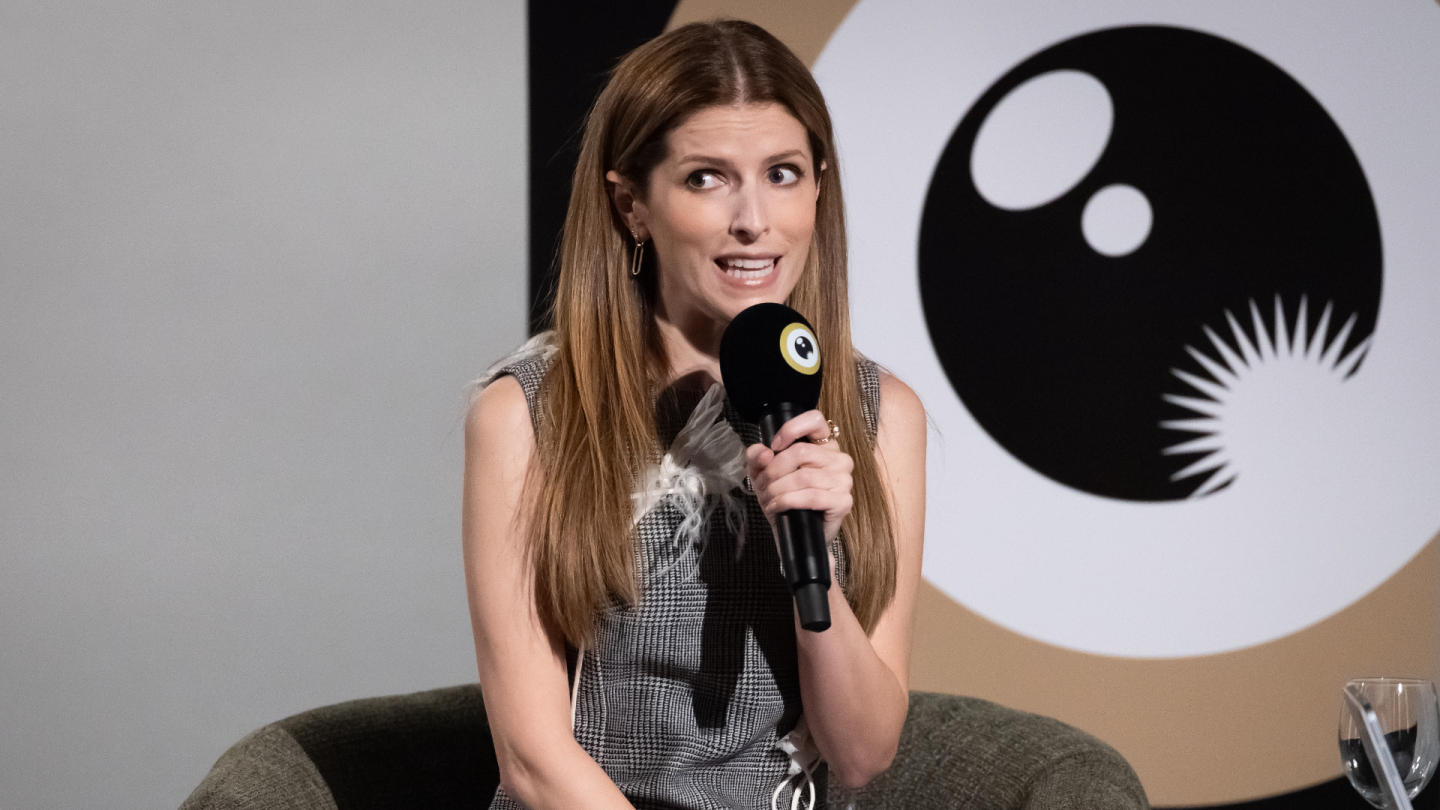
Anna Kendrick was in fine form Sunday afternoon as the U.S. star continues to traverse the festival circuit with Babies.
At a Zurich Film Festival masterclass session, Kendrick took an adoring crowd through the early years of her career all the way to an Oscar nomination for Up in the Air, as well as stories from her time on Pitch Perfect, A Simple Favor, and her directorial debut, 2023’s Woman of the Hour.
Host Max Loong kicked off by asking about Kendrick’s beginnings in Maine, where she grew up, and how her starring role in Jason Reitman’s Up in the Air — opposite George Clooney — came to be. In those early auditions, an unsuspecting superpower came from Kendrick’s radical modesty. “Any time in my career where I just thought, ‘Well there’s not a shot in hell that I’m gonna get this job,’ I do absolutely my best work — because you’re relieved of the stress of it,” explained the actress.
Kendrick found herself taking the character where she wanted to go instead of what the casting director was imagining. “If I’d known there was a real interest in me, I would have absolutely bungled the read,” she said about trying for the role of the ambitious, no-nonsense Natalie in the comedy-drama. “Because I just thought, ‘Obviously, they’re gonna hire someone incredibly classy.’ I went in and did an awkward, goofy read, and that’s what got me the job because nobody else did the audition that way,” she said.
Oddly enough, Twilight (2009) came to Kendrick in a similar manner. “I play one of the friends at school, but I think in the book and in the script [the character, Jessica] was described as this tall, blonde, athletic, kind of popular girl. So again, I was like, why the fuck am I here?” Kendrick recalled. “I remember I ran into Mae Whitman in the waiting room before the audition, and we were both like, ‘What are we doing here?’ So again, you go in and you’re like, ‘What if I just did it really weird and funny?’”
She gushed over working with a cinematic icon so early in her career, describing Clooney as “everything that you would hope George Clooney would be. He is charming, funny, mischievous, whiskey-drinking, gorgeous.” She said on their first day of filming, Clooney sweetly told her he still gets a little nervous starting out on a project. It wasn’t until later Kendrick realized he was faking it to soothe her anxiety: “It was just such a total act of generosity, [and] speaks so well of him,” she said.
As the conversation continued, Loong got Kendrick speaking about her rise to fame — including her very of-the-era popularity on Twitter — and being repeatedly offered the same kind of role. “I remember someone who had worked with Meryl Streep was like, ‘Even now, in Meryl’s career, she will just get a deluge of offers for the exact character that she just played.’” It helped Kendrick feel better to think that even the greatest actress of her generation could be cornered by creative short-sightedness. In a rejection of that very notion, she signed onto Seth Rogen’s 50/50.
Naturally, Loong asked if there were any Pitch Perfect fans in the room. Kendrick was as charming as ever as she reflected on that whirlwind period releasing the franchise-spawing a-capella comedy, which earned her a platinum record (for the notorious “Cup” song, which peaked at No. 6 on the Billboard Hot 100) that she could hang in her house: “Like I’m 50 Cent!”
Universal even asked her to record a full-length version of the song and make a music video. “I thought, ‘What a waste of money,’” Kendrick remembered. “Suddenly this movie — that did just okay at the box office. There’s been a kind of revisionist history where people think of it as this sleeper hit and this box office smash, which it simply was not. It did fine [over $114m], but it wouldn’t have gotten a sequel off the strength of the box office numbers — was so in the air and talked about, and it was really bizarre.”
Not to sound too corny, Kendrick added, but she and her nine co-stars, including Anna Camp and Brittany Snow, are still incredibly active on the Pitch Perfect group chat and provide a support network for one another to this day — kind of like the Avengers, apparently. “When someone in the group chat tells us something difficult is happening, it’s like, ‘Okay, who’s going over to her house tomorrow? What are we doing? How are we figuring this out?’ It’s beautiful,” Kendrick said.
The hour-long discussion took Kendrick to her book, Scrappy Little Nobody, which is an experience she won’t be repeating any time soon (“I’m so sorry. I hated it. I’m obviously very proud of the book, but I’m not cut out to be a writer”), and seeing Henry Golding go from nervous up-and-comer to full-fledged movie star between A Simple Favor (2018) and Another Simple Favor (2025).
She touched on making the spontaneous decision to jump into directing with Woman of the Hour, which involved a lot of reassurance from Snow, who had around the same time made her filmmaking debut. “I really started to panic right before we started prep, so I Googled, ‘How to direct a movie,’” Kendrick confessed. “[Snow] was like, ‘I did the same thing!’ And then we had the identical experience of reading a thing and watching a video, and going, ‘Not only do I know all the things you’re talking about, [but] that’s not how it works!’”
Unfortunately, Kendrick didn’t talk about her next directorial feature, the hotly anticipated adaptation of Taylor Jenkins Reid’s Seven Husbands of Evelyn Hugo, except to say she was “over the moon and so excited” for the project. The script is written by Liz Tigelaar (Little Fires Everywhere, Casual) with current revisions by Francesca Sloane (Mr. & Mrs. Smith). Jenkins Reid will executive produce the adaptation, per Netflix.
With Babies, which has brought her and director Lauren Miller Rogen to the Swiss film festival, Kendrick and Rogen’s husband (you guessed it, Seth Rogen) play a happily married couple, surrounded by friends with kids, who are forced to confront their indecision about becoming parents when their divorced friend and her daughter move in.
Kendrick told the room that the relationship with long-time friend Rogen in the film is “just based on how he is with Lauren.” She continued: “They just have one of those relationships where you’re like, ‘God.’ They just make it look so easy. It’s so simple. They genuinely just prefer to be around each other than not be around each other. It’s not complicated.” On Kendrick’s public statement that she doesn’t intend to have children, she responded: “I probably just shouldn’t have said anything.”
Finally — a big question — how does Kendrick stay true to herself in an industry where everyone has an opinion on her? “I’ll try to answer this truthfully, even though it is cringy and embarrassing,” she began. “Social media became so prominent and Twitter was [getting popular] exactly when Up in the Air started, and there was something about that website where people could smell on you if you weren’t being authentic.”
It was a little like promoting Up in the Air, explained Kendrick. “I did press for that movie for about six months, and it really started to mess with my head because I felt like I was representing this film that’s this substantial, classy film. It has George Clooney in it, for heaven’s sake, and I felt like I had to be Miss America [with a] perfect, pageant-ready answer.”
Social media, at the time, allowed her to be her “messy” self. “I know it’s become something really complicated and dark now,” she continued about the same platforms. “But it also meant that I didn’t have to rely on a TV interview to put something out into the world of my honest thoughts, which then meant that when I would meet someone in real life who knew me from movies, particularly once Pitch Perfect came out and there were young women talking to me all the time, it meant that I could be a really real version of myself without worrying that I was offending them or letting them down somehow because they’d seen my personality online. That’s a really weird thing to reconcile with the way that social media is now.”
The 22nd Zurich Film Festival runs Sept. 24-Oct. 4.
>
President Trump makes appearance at Presidents Cup, briefly addresses crowd

Film Execs & Creators Discuss AI Divide
Parity in the SEC is real, and thrilling: Conference vibes after Week 4
-

 movies4 months ago
Search For Canadian TV Actor Stewart McLean Now Homicide Investigation
-

 Fashion9 years ago
These ’90s fashion trends are making a comeback in 2017
-
Fashion9 years ago
According to Dior Couture, this taboo fashion accessory is back
-
Fashion9 years ago
Model Jocelyn Chew’s Instagram is the best vacation you’ve ever had
-
Fashion9 years ago
Emily Ratajkowski channels back-to-school style
-
Fashion9 years ago
9 Celebrities who have spoken out about being photoshopped
-

 Anime4 months ago
Rurouni Kenshin: Hokkaido Arc Manga Takes 1-Issue Break – News
-

 Anime3 months ago
HIDIVE to Stream English Dubs for The World Is Dancing, The Forsaken Saintess and Her Foodie Roadtrip in Another World, The Dangers in My Heart: The Movie Anime – News