
‘House of Hope’
First Hand Films


Hot Docs, the major nonfiction film festival in Toronto, has announced award winners for the event’s 33rd edition.
Earning Best International Feature Documentary was House of Hope, directed by Marjolein Busstra, a film set in the occupied West Bank that focuses on an elementary school run by a couple who teach their young Palestinian students non-violent resistance, “offering a refuge from the escalating uncertainty that surrounds them.”
The award comes with a $10,000 cash prize (courtesy of Donner Canadian Foundation) and automatically qualifies the film for Oscar consideration.
‘House of Hope’
First Hand Films
“A powerful and unsentimental film that bears witness to a family-run Waldorf school in the West Bank and its profound commitment to nurturing the humanity of children,” writes the jury comprised of Robyn Citizen, Daniela Michel, and Lina Rodriguez. “For its clear-eyed portrait of educators whose quiet everyday resilience stubbornly insists on hope under the shadow of occupation and genocide, the jury enthusiastically presents Marjolein Busstra with the Hot Docs Best International Feature Documentary award for House of Hope.”
‘Saigon Story: Two Shootings in the Forest Kingdom‘
Noble Television/National Film Board of Canada
Best Canadian Feature Documentary went to Saigon Story: Two Shootings in the Forest Kingdom, directed by Kim Nguyen. The film reveals “the elusive connection between two families and photojournalist Eddie Adams’s iconic photo, ‘Saigon Execution,’ confronting family secrets left in the wake of the Vietnam War, exposing the resilience of survivors and blurred legacy of wartime memory.”
The award is accompanied by a $10,000 cash prize (courtesy of Telefilm Canada). Hot Docs hosted the world premiere for Saigon Story.
The jury, comprised of Avril Benoît, Jason Gorber, and Yiqian Zhang, writes, “For this film’s illuminating look at the story behind an iconic image and the city where it was captured, its compelling analysis of the lasting effects of a conflict from more than a half century ago, and its deep dive into the complex historical, political and emotional aspects that expand well beyond the frame of one of the most haunting moments ever captured on film, the Jury presents the Hot Docs Best Canadian Feature Documentary award to Kim Nguyen’s Saigon Story: Two Shootings in the Forest Kingdom.”
Coincidentally, a short documentary about the legacy of the Eddie Adams “Saigon Execution” photo — On Healing Land, Birds Perch, directed by Naja Phạm Lockwood – made the Oscar shortlist this past year.
Courtesy of Hot Docs
The Hot Docs 2026 Awards Presentation was held Friday at El Mocambo in Toronto. The festival continues through Sunday. The Hot Docs Rogers Audience Award for Best Canadian Documentary will be announced on Sunday – with the winner receiving a $50,000 cash prize, courtesy of Rogers. Winners of the Hot Docs Audience Award for feature and short documentary will be announced on Monday (May 4).
Scroll for the winners of awards in competition announced on Friday.
The festival’s Best International Short Documentary was presented to Replikka, directed by Piratá Waurá. “The short film offers an unforgettable look at Waura culture and their efforts to protect Indigenous land, traditions, and stories,” writes the jury, comprised of Fazila Amiri, Martin Edralin, and Shonna Foster. “Its beautiful cinematography and rhythmic sound design made a strong impression on the jury, in addition to its urgent call against the erasure of Indigenous culture and memory, and its unique perspective from within the Waura community.”
Best Canadian Short Documentary went to My Body Goes to Work, directed by Fernanda Molina. “In just 12 minutes, Fernanda Molina Perez Diez crafts an intimate and humanizing portrait of a Toronto sex worker, revealing the complexity behind job titles and underscoring the nature of care work in all its forms,” write jurors Amiri, Edralin, and Foster. “Raw and observant, the film left the jury in reflection on the everyday realities of sex work, reframing a life too often reduced to a label.”
Both Replikka and My Body Goes to Work earned $3,000 cash prizes and by virtue of winning at Hot Docs they automatically qualify for Oscar consideration.
Along with the above-mentioned films, these are the Hot Docs awards winners announced on Friday:
The Lindalee Tracey Award, which honors an emerging Canadian filmmaker with a passionate point of view, a strong sense of social justice and a sense of humor, was presented to Özgün Gündüz. The Lindalee Tracey award includes a $5000 cash prize from the Lindalee Tracey Fund, $5000 in-kind voucher from the Picture Shop and a beautifully glass blown sculpture by Andrew Kuntz.
Hot Docs Docs for Schools Student Choice Award is awarded to the documentary that receives the highest rating in the student audience poll was presented to Nekai Walks (D: Rico King | P: David Mcilvride | Canada | 2026 | 90 min). At 16, Nekai Foster was shot while walking home in Toronto’s Jane and Finch neighborhood. His journey of survival and recovery—defying all medical odds as he relearns to walk—exposes how gun violence shapes bodies, families and communities.
The winner will receive a $5,000 cash prize.
Hot Docs Earl A. Glick Emerging Canadian Filmmaker Award is given to a Canadian filmmaker whose film in competition is their first or second feature-length film. The award, which includes a $3,000 cash prize courtesy of the Earl A. Glick Family, was presented to Sébastien Trahan, the director of Code of Misconduct (D: Sébastien Trahan | P: Annie Bourdeau | Canada | 2026 | 88 min). An investigative journalist’s duty to follow the facts leads to the trial of five Canadian professional hockey players charged with sexual assault, unravelling our national pastime and questioning the institutions that hold the sport accountable.
Jury Statement: “For its journalistically rich examination of accountability and power and privilege within Canadian hockey, as well as the film’s amplification of voices calling for justice, the Jury presents the Hot Docs Earl A. Glick Emerging Canadian Filmmaker Award to Sébastien Trahan for Code of Misconduct.”
Hot Docs Bill Nemtin Award for Best Social Impact Documentary, sponsored by the Bill Nemtin Legacy Fund, which recognizes the producers of a Hot Docs 2026 official selection film who find and tell compelling stories that inspire social or political change, and encourage their audiences to change their attitudes or behaviours or strive for policy change, went to directors Chul Young Cho, Shin Wan Kim, Jong Woo Kim, and producers Sona Jo and Shin Wan Kim of The Seoul Guardians (D: Chul Young Cho, Shin Wan Kim, Jong Woo Kim | P: Sona Jo, Shin Wan Kim | South Korea | 2026 | 71 min).
[Film description]: When martial law was shockingly declared in 2024, the people of Seoul took to the streets to protect their democracy. Driven by memories of past dictatorships, this urgent reportage-style film captures a night of chaos and powerful, collective citizen resistance.
A $10,000 cash prize accompanies the award, supported by the Bill Nemtin Legacy Fund.
Jury Statement: “For a film of great urgency that speaks to the vagaries of political upheaval, the power of protest, and the foundational need for any free society to have an engaged press ready to pursue the truth in all of its messiness and meaningfulness, the Jury presents the Hot Docs Bill Nemtin Award for Best Social Impact Documentary to the film team behind The Seoul Guardians, the directors Chul Young Cho, Shin Wan Kim, Jong Woo Kim, and producers Sona Jo and Shin Wan Kim.”
Hot Docs Emerging International Filmmaker Award, supported by the R&M Lang Foundation, was awarded to Dawood Hilmandi, director of Paikar (D: Dawood Hilmandi | P: Frank Hoeve, Katja Draaijer | Netherlands | 2025 | 97 min). From exile in Amsterdam, filmmaker Dawood Hilmandi reflects on his family nickname, Paikar, the Persian word for warrior. Returning to Iran to reconcile with his authoritarian father, their journey to Afghanistan during a pandemic transforms a lifetime of displacement into a story of survival.
The award is given to an international filmmaker whose film in competition is their first or second feature-length film, and includes a $3,000 cash prize, courtesy of the R&M Lang Foundation.
Jury statement: For its poetic meditation on transgenerational trauma that evocatively navigates the entanglement of memory, war and exile from a deeply personal perspective—initiating a moving dialogue across a lifetime of displacement, the Jury presents the Hot Docs Emerging International Filmmaker Award to Dawood Hilmandi for Paikar.”
Hot Docs DGC Special Jury Prize-Canadian Feature Documentary, sponsored by DGC National and DGC Ontario, is awarded to a feature-length documentary in the Canadian Spectrum Competition program that the jury feels is deserving of special recognition and was presented to Ceremony (D: Banchi Hanuse | P: Banchi Hanuse | Canada | 2026 | 84 min). At Nuxalk Radio, a ramshackled station on the edge of the world, an inquiry into the vanished ooligan fish uncovers a chilling history rooted in the attempted erasure of the Nuxalk people and their enduring resilience.
The award comes with a $5,000 cash prize, courtesy of DGC National and DGC Ontario.
Jury Statement: “For this film’s poignant look at Indigenous resistance and reclamation of past-traditions, illustrating a community grappling to resuscitate unceded lands, all while showing how the actions of a Nation foster healing by respecting what came before while working towards a better future, the Hot Docs DGC Special Jury Prize for Canadian Feature goes to Banchi Hanuse’s Ceremony.”
Hot Docs Joan VanDuzer Special Jury Prize-International Feature Documentary, in memory of long time Hot Docs supporter Joan VanDuzer, is awarded to a feature-length documentary in the International Spectrum Competition program that the jury feels is deserving of special recognition and was given to The 49th Year (D: Heidrun Holzfeind | P: Heidrun Holzfeind | Austria, Germany, Japan | 2026 | 88 min). Through thoughtful letters from prison, an anarchist incarcerated since 1980 reflects on his radical past. This meditative portrait pairs humane narration with contemporary Japanese landscapes, exploring the quiet tensions between aging, political militancy and time itself.
Hot Docs is pleased to present the winner with a $5,000 cash prize, in memory of Joan VanDuzer.
Jury statement: “For its astute view on political ideologies and its meditative exploration of the true costs of radical action beyond isolated moments of protest and conventional electoral politics—and the ways in which periods of dissent can fade into enforced consensus, the jury recognizes Heidrun Holzfeind’s elegiac yet piercing attention to one man and the echoes of his resistance with the Hot Docs Joan VanDuzer Special Jury Prize-International Feature Documentary.”
Canadian producer Jennifer Holness received the Hot Docs Don Haig Award, announced earlier in the Festival. The Award is given to an outstanding independent Canadian producer with a film in the Festival in recognition of their creative vision, entrepreneurship and track record for nurturing emerging talent, and comes with a $5,000 cash prize, courtesy of the Don Haig Foundation.
>
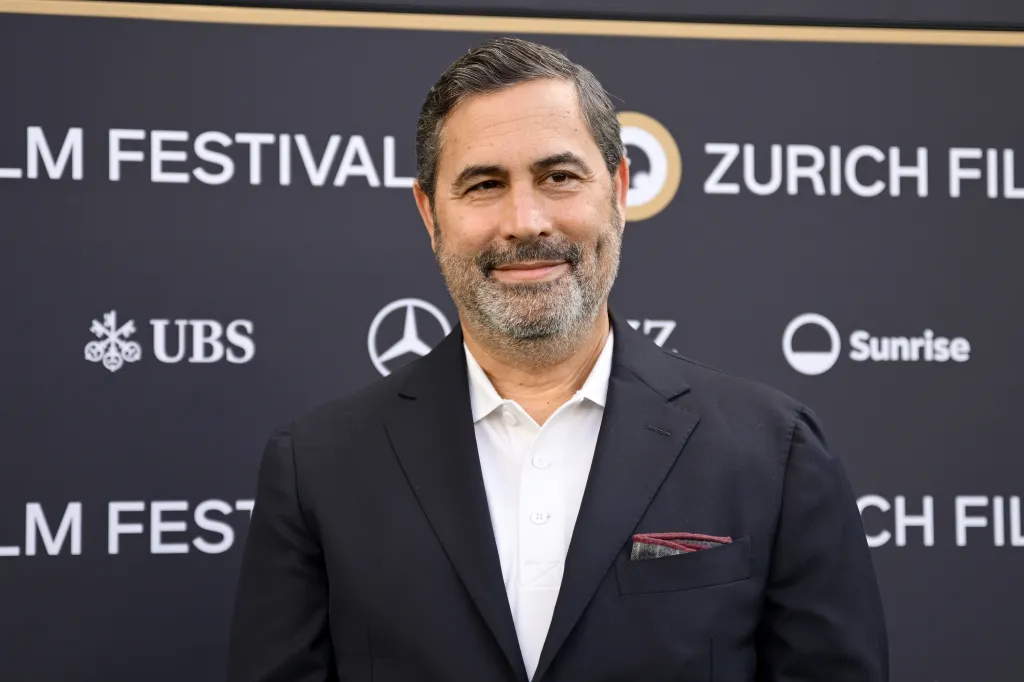
FilmNation Entertainment Founder and CEO Glen Basner will receive the Game Changer Award this evening at the Zurich Summit, the annual industry event aimed at fostering transatlantic connections taking place within the Zurich Film Festival.
As part of the honor, Basner participated in an onstage conversation on Saturday moderated by German Oscar-winning director Edward Berger.
Over the course of an hour, the pair dug into Basner’s trajectory from sales rep at his father’s garment business, to heading up one of the world’s top international indie sales, financing and production companies.
Basner and Berger go back a long way, having first met at the beginning of their film careers in the early 1990s at famed New York production company Good Machine.
Basner arrived there from a five-year stint selling ladies knitted sweaters. He had been bitten by the movie bug while helping childhood friend Edward Burns in his spare time on his first film The Brothers McMullen. Burns then invited Basner onto his second feature She’s The One, which was produced by Good Machine. The rest is history.
Berger spent a year and a half at the company from 1994, where his paths crossed with Basner. They have stayed connected ever since, with the pair joining forces professionally again on Berger’s 2024 $100M global box office and streaming hit Conclave.
“32 years later, it’s such a full circle moment,” said Berger as they kicked off the conversation.
Looking back at his time working with Ted Hope, James Schamus and David Linde at Good Machine, Basner said the lessons he learned there had carried him through his career.
“I was taught that you could sell movies around the world and not lie to people… that you can value and appreciate the relationships that you develop around the world and treat people not just as if you’re selling them a product, but that you are really delivering them a work of art, and that you’re there to help support them as they go and release the films country by country.”
Berger suggested working there had also taught them reliance, recalling how just prior to their arrival, the company had nearly gone bankrupt after it wrapped Ang Lee’s romantic comedy The Wedding Banquet.
“It taught us to go through hard times and get stronger… around the time of The Wedding Banquet, the company was basically bankrupt… they decided let’s cancel the photocopier and scrape every last bit together and go to Berlin,” said the director.
The film went on to win the Berlinale’s Golden Bear and then took off at the box office to gross some $23M, against the $1M budget, making it the most profitable U.S. film of 1993.
After subsequent stints heading up sales at Focus and then The Weinstein Company, Basner created FilmNation in 2008, initially uniquely as a sales company.
He said creating his own company had been a natural move for him given his family background.
“My father had his own business, and I wanted to be like my father, so I always had this entrepreneurial bug that I wanted to go out and sort of really test my mettle by being on my own and developing something and seeing if it could succeed,” he said. “So that was something I thought about since the first day that I started working in film.”
Eighteen years later, the company has expanded organically into finance, production and TV, with bases in New York and L.A., and string of award-winning features in its filmography including The Big Sick, Promising Young Woman, Anora, Conclave, Maria and upcoming pictures Bunker, Talent for Murder and I Play Rocky to name but a few.
“The opportunity was clear in 2008. In those days, there were only two strong and dominant, excellent American international sales companies that were unaffiliated with U.S. distribution,” said Basner.
“Pretty much at the same time, they both became U.S. distributors. Summit, which was run by Patrick Wachberger, became a U.S. distributor, and Mandate, Joe Drake’s company, was bought by Lionsgate… so there was this big hole for an American, unaffiliated-with-distribution sales company.”
Sales craft
Talking about FilmNation’s recent slate, Basner said he had wooed Florian Zeller ahead of getting involved in Bunker.
“I told him to his face he was my filmmaker crush of the moment,” he joked.
“You said that to me too,” replied Berger in mock disbelief.
“I know. It was a different moment,” fired back Basner jovially.
He recalled how Zeller had been on the cusp of approaching Javier Bardem and Penelope Cruz as FilmNation quietly putting out international sales feelers.
“He had said, ‘If they say yes, we’ll move forward. If they don’t do the movie, I don’t think I’m going to do the movie.’ Fortunately, they said yes, and then we just really started the work,” said Basner.
The film took a traditional pre-sales route thanks to Zeller’s track-record with Oscar-winner The Father, followed by The Son, it’s A-list cast and a “exquisite” script, with the bulk of the international sales tied up at Cannes in 2025. The U.S. deal to Sony Pictures Classics was sealed in collaboration with CAA Media Finance later on, on the basis of the completed film.
“There were distributors that were willing to take the risk. It’s not the easiest thing to say: ‘Here’s the script, here’s the director, here are the actors, and here’s your price’. They don’t really get to sit and have hour-long conversations with the filmmaker to fully understand the movie,” said Basner .
“They have to trust us to be able to articulate exactly what the movie is and what the intention is of that filmmaker, so that they can then decide to take the significant risk on a movie like this of pre-buying the film.”
Talking about their collaboration on Vatican-set thriller Conclave, revolving around the secretive Vatican process of electing a new Pope, Basner said part of the challenge had been conveying Berger’s vision for the film to buyers.
He suggested that on the basis of the screenplay alone – it felt like a story about “a bunch of old men talking in rooms” with a potential $12M to $15M price tag.
“But that really wasn’t the movie that you were looking to make… You talked about The Parallax View being a point of reference for you,” said Basner, referring to Alan J. Pakula’s 1974 political thriller.
“You talked not just about the architecture of the locations, but the architecture of how you wanted the camera to move and the film to feel… all of a sudden this became a political thriller,” continued Basner.
The sales veteran said estimating a value of a film, country by country, came down to a mixture of experience and expertise.
“You’re responsible to hit these estimates. And human nature takes over, and sometimes you can get a little bit conservative to make sure that you deliver,’ he said.
“What we’ve learned over the years is to trust the business acumen and the marketplace experience that we have, and not be too conservative, but actually just deliver the valuation that we think, and be prepared to stand by it in a real way because it’s our money that we’re investing.”
“Part of that is, instead of talking all the time about what the market says and what the market will bear, it’s really about just sitting and listening to the filmmaking team so that you really understand, not what I, Glen Basner, thinks the movie is going to be or should be, but the movie that the filmmaker wants to make.”
Basner revealed he was wary of going down the packaging route of attaching known talent when helping get big projects of the ground, suggesting attempts to mitigate risks on films, whether via the cast or other factors, can sometimes lead to less exciting films.
“Sometimes we have to take more risk on an unknown actor because they are the best person for that role to make the best version of the movie, and we have to trust that filmmaker to deliver on that, not in a naive way, in a thoughtful way, but really trust that that’s really what’s going to drive the value for that movie,” said Basner.
“I really am encouraging everybody to look around, look at what’s working in the marketplace. There are a lot of films that, on paper, did not make sense. The history of our company is predominantly on films that did not make sense to the marketplace at the beginning.”
Conclave clash
Berger revealed they had not always seen eye-to-eye in the final stages of bringing Conclave to fruition.
“After quite a long edit… I was basically done with the film. I’d run out of ideas… I really wanted to go to Venice or at least show them the movie and see if they’d show it,” recalled Berger.
“This was in in May. Glenn got on the phone and made me furious. I hated him. He just kind of said, ‘I’m not sure the movie’s ready, don’t rush it…Venice is going to be expensive, and we don’t have American distribution in place’,” he recalled.
Lead producer Tessa Ross also felt the movie was “missing something” and after test screenings with friends and family sparked an “ok” response, Berger went back to the edit suite and even reshot one or two scenes.
Berger credited Berger and Ross for pushing the extra mile on the film, while his energy levels were low after an arduous months-long edit process.
“We just edited and edited and edited and made the music again and revised it, and finally something cracked… little things, just shifted and gave us the confidence that the movie was ready. But it was really half a year later.”
It was another full circle moment for Berger
“This is going back to Good Machine, and what I took from Good Machine… which was you can always do better… whether its budget, contract or the cut of the movie.”
Organic expansion
Taking stock of FilmNation’s trajectory since 2008, Basner said the expansion into production and TV had been organic.
“We never really anticipated becoming the company that we have over time, but things changed. One, as we continued to do our jobs and have success, we gained confidence through experience, and we were ready to do things like fund our own films,” he said.
A second development was the convergence of film and TV and other entertainment formats, which has seen the company also embrace TV, podcasts and theater, while retaining its original mission of being a place that enables filmmakers to not just make their film, but to make the very best iteration of their film.
“When we’re at our best, that’s exactly what we’re doing. It’s no more complicated than that. And when we are doing it, nothing feels more rewarding than doing that job well,” he said.
Looking to near-term goals, Basner said the company was ramping up its productions in the arrival of former 20th Century Fox, DreamWorks and Universal Pictures exec Stacey Snider in the new role of Chief Creative Officer in January.
“We are being more ambitious by investing more and making more films. This year we will make four films and a television series, and next year we already have four films in pre-production and hope to make another three,” said Basner.
“The arrival of Snider as the Chief Creative Officer was an articulation of our desire to take more risk and to be more productive,” he continued.
“Working with her these last nine months, you see this incredible creative talent, you see a skill set and a maturity that we don’t have ourselves, or that I don’t have myself, and it is definitely building confidence to invest further. But it’s really also, as she would say, it’s about making it better. The conversation that you had before: let’s take another look at this. Let’s do it a little bit better. That’s something she reminds me pretty much every day.”
>
At this weekend’s Zurich Summit a group of film financiers were asked by Deadline for their thoughts on the prospects of a U.S. federal film incentive.
Last week, a bipartisan group of lawmakers unveiled the bill for a 20% incentive, which with bonuses could bring the total rebate to 30%. The move has long been called-for by the U.S. industry concerned by the exodus of production overseas.
Alex Walton, former Co-Lead & Partner at WME Independent, told the Summit the move was “hugely positive”: “It’s wild to think there hasn’t been an efficient tax credit in America. It has helped many other countries. Spain is booming because of it now; and all over Europe. It’s going to take some time to be realized and for financial institutions to be able to cash flow it. But you’ve got to believe it will happen within the next three-four years, and then that will see all the foreign tax credits compete harder to maintain their positions.”
A start date is not yet set. The proposed text from last week stated that the credit would apply to qualifying film and TV productions beginning in taxable years after December 31, 2026 (effectively targeting projects starting in 2027). But bills can take years to pass.
Andrea Scarso, Managing Partner at prolific financier IPR.VC, whose credits include Marty Supreme and Materialists, agreed that a U.S. incentive would be “positive” but also cautioned against rising production costs: “It remains to be seen whether the prices and budgets are also going up by the same amount, which is something that happens in some foreign territories when they increase the amount of tax credit or soft money. It’s always a balance. But overall, I think it’s good news.”
Sarah Schweitzman, Co-Head CAA Media Finance, noted: “What’s important is that when you look at some of the international markets, you realize that we’re making movies there because of a tax incentive situation and I think if we’re able to federalize a tax incentive program in the U.S. it’s going to create many more jobs and invigorate crews, which is something we absolutely need in the U.S.”
A recent Motion Picture Association study claimed that a federal film tax credit could increase U.S. production spending by $125BN and add more than 143,000 jobs by 2035.
You can read more about the bill here.
>
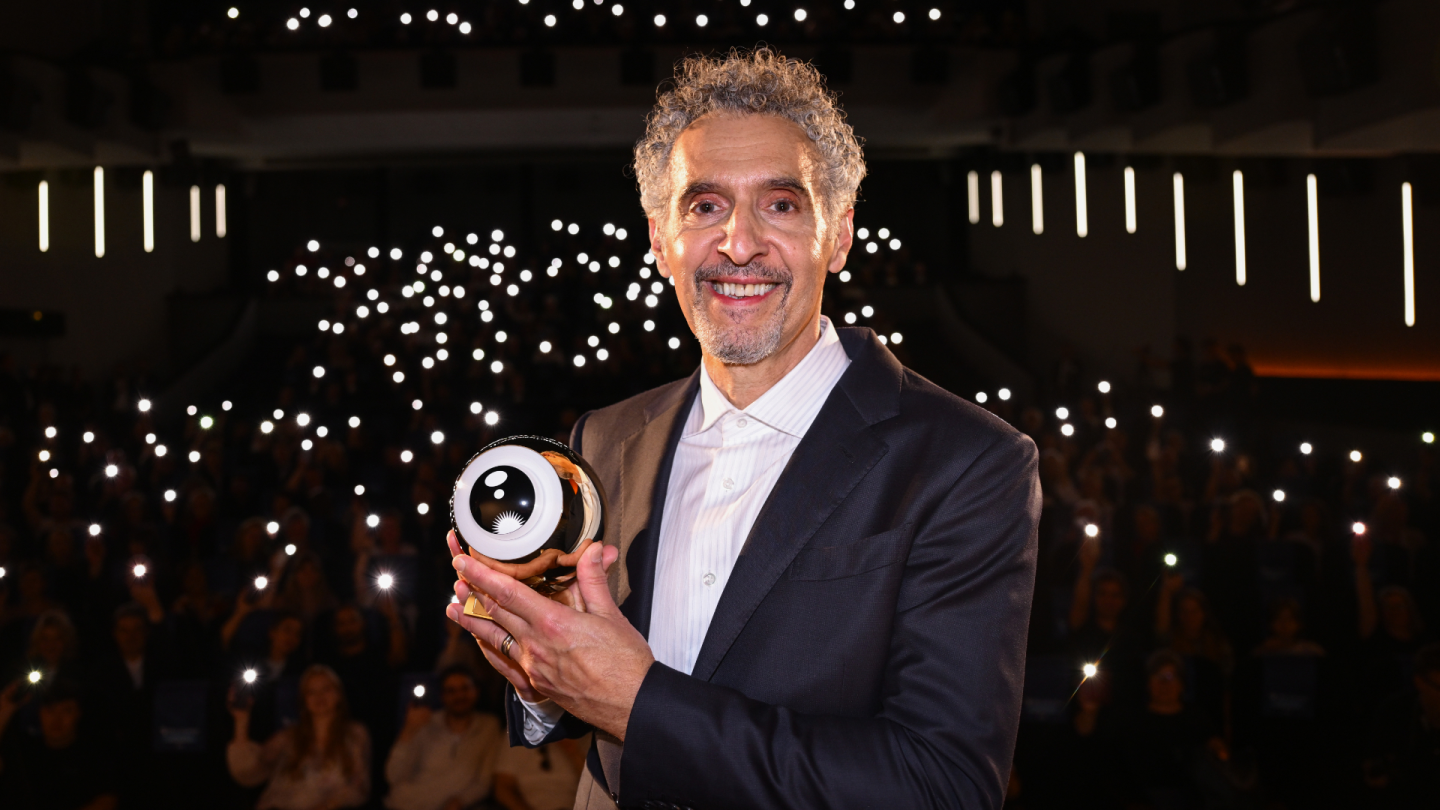
Hot on the heels of his Golden Eye award ceremony on Saturday night, John Turturro entertained another crowd at a Zurich Film Festival masterclass on Sunday.
The Emmy-winning U.S. star has been recognized for his performance in Noah Segan’s The Only Living Pickpocket in New York, a project that is already garnering awards buzz. In the film, Turturro plays Harry, a seasoned pickpocket whose carefully controlled life is thrown into turmoil when a job goes wrong, setting off a tense chain of events that unfolds over the course of 36 hours.
In a career-spanning conversation with Deadline‘s Melanie Goodfellow — the actor’s shining Golden Eye trophy neatly nestled between them — Turturro discussed growing up in an immigrant household, his decades-long friendship with Spike Lee, and the transition from acting to filmmaking.
Turturro, who has steadily become one of the industry’s most formidable actors yet to put “Oscar nominee” on his resume, was asked about joining the best actor race this year with the Sundance success The Only Living Pickpocket in New York. “I never really have gone the whole hog with it,” he responded about the upcoming awards campaign. “But now I’m the lead in the film, so I’m going to support the film because I love the film.”
He explained that being pulled into awards conversations is “helpful to help you do the next thing.” Turturro continued: “Is it nice to be acknowledged? Great, but that’s not why you do it. […] Just because a film is really popular doesn’t mean it will have staying power, but it’s nice to be in the conversation. I don’t look upon myself as being a competitive person. I’m competitive with myself,” he added. “I want to get the most out of what I can do, but it’s not sports!”
However, he admitted to feeling surprised by the positive critic reaction out of Sundance. “Finally,” he thought, “I’m in something that people will see… My job is I like to try to improve, and I feel like being an actor is one of the few things you can improve in. You may not be able to run as fast as you did when you were younger, but I have a lot of life experience, and as you get older, you accumulate that, and you can distill things in a way that you couldn’t do when you were young, because you didn’t really experience all those things. And now I’ve experienced life, death, loss, being a parent, being married — what it is to really love someone versus falling in love. That’s a huge difference,” he giggled.
Turturro regaled attendees with stories about his impressive stage career. He naturally came on to two major TV performances of his in the last decade: HBO’s The Night Of and Apple’s Severance.
He coyly confirmed a return for his character, Irving Bailiff, in season three of the Emmy-winning Severance with Adam Scott. “Yeah,” he (eventually) told the room. “As long as they give me interesting things to do, then I’m interested.” He swiftly took the opportunity to gush over friend and colleague Christopher Walken, whose character, Burt Goodman, began a romance with Turturro’s Irving in season one. “‘Who’s going to be my love interest?’” Turturro asked before joining the show. “And they were like, ‘All these younger guys.’ I said, ‘Well no, I’ve worked with Chris Walken,’ and I said, ‘I want Chris, because I love Chris.’ And I don’t have to act that I love him because I love him.”
Though Walken “didn’t understand a lot of the show,” Turturro was able to guide him through their authentic, real-life friendship. “I said, ‘Don’t worry about it. You just look at me.’ We have so much fun because I directed him like three times, and we’ve acted, and we’ve worked together a lot. And he’s a wonderful theater actor, and people obviously think he plays only strange [characters] but he can do a lot of different things. He’s also very sensitive, but he has a childlike joy in his work, and when that happens, anything is possible.”
Turturro received a round of applause when discussing the HBO crime drama The Night Of, which ran for one season in 2016 and co-starred Riz Ahmed. It would later win five Emmys, and Turturro was nominated for his role as the eczema-stricken defense lawyer John Stone. “The Night Of is something I’m very proud of,” said Turturro on Sunday. “It was originally a BBC thing, which I actually never watched because I didn’t want to be influenced.”
He even confirmed that he actually wanted to do another season of it. “But they couldn’t agree on what the story would be,” revealed the actor. “But I loved doing it. It was one of those great experiences in my life.”
Turturro’s career spans four decades, having worked with acclaimed directors such as Spike Lee, the Coen brothers, Martin Scorsese, Robert Redford, Robert De Niro, Nanni Moretti and Pedro Almodóvar.
He first gained international recognition through his collaborations with Lee, appearing in Do the Right Thing and Jungle Fever. With Joel and Ethan Coen, he acted in Miller’s Crossing, Barton Fink, O Brother, Where Art Thou? and The Big Lebowksi, in which Turturro created the iconic Jesus Quintana. For his lead performance in Barton Fink, he won best actor at the 1991 Cannes Film Festival, an experience that Turturro reflected on at his Zurich masterclass. He even confessed to feeling like he lands “more normal” roles in Europe than across the Atlantic, and said he has turned down scripts “again and again” that involve his character being violent towards women.
At his Zurich Golden Eye ceremony Saturday night, Turturro collected the award and quoted Italian novelist Cesare Pavese. “[He] once said that the only great thing in life is to begin. I still consider myself a beginner in many ways,” said the star. “I’m very fortunate. I wanted to make a living doing something that interested me and to do interesting work — to share that with an audience, [and that] wouldn’t diminish their intelligence at the same time,” he laughed. “I consider this an encouragement to continue.”
Turturro joins 2026 Zurich honorees Julianne Moore and Tom Hiddleston. The 22nd edition runs Sept. 24-Oct. 4.
>


Search For Canadian TV Actor Stewart McLean Now Homicide Investigation


These ’90s fashion trends are making a comeback in 2017
According to Dior Couture, this taboo fashion accessory is back
Model Jocelyn Chew’s Instagram is the best vacation you’ve ever had
Emily Ratajkowski channels back-to-school style
9 Celebrities who have spoken out about being photoshopped


Rurouni Kenshin: Hokkaido Arc Manga Takes 1-Issue Break – News


HIDIVE to Stream English Dubs for The World Is Dancing, The Forsaken Saintess and Her Foodie Roadtrip in Another World, The Dangers in My Heart: The Movie Anime – News