
Anime
Episodes 3-4 – Hundred Scenes of AWAJIMA


©志村貴子・太田出版/淡島百景製作委員会
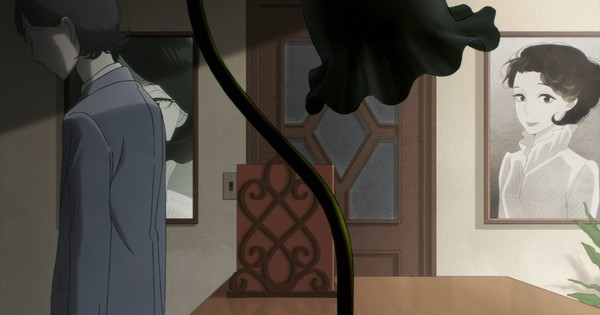
When the second episode ended on a quick sketch of Katsurako Ibuki as a teacher, I appreciated it as a pithy yet meaningful statement on the ways people do and do not change over the course of their lives. Awajima‘s third episode takes the opposite tack with its long and meandering journey through the women who raised her. It’s a monstrosity of narrative to summarize, let alone analyze. It leaps back and forth across decades, blurring spacetime into a single chaotic point on a cosmic scale. The mix of emotions is even more disorienting, with hate, love, respect, and resentment bleeding into each other. Awajima hardly factors into it. However, Awajima is more than just a building filled with theater students. It is a metaphysical space—a crystallization of the systemic factors that grind all but the strongest and hardest carapaces into ashes.
It’s instructive to think about what Shimura doesn’t show us. She largely avoids the stage and the craft involved in acting. She focuses instead on the idea of family and legacy, particularly in how these concepts manifest within each of these three women. At times, it feels like the slow-burn psychological horror of a ghost story, with Natsuko’s portraits looming frozen and flawless over all of them, including Natsuko herself. Ruriko reflects that Natsuko must have many “daughters” as a result of her reputation as an actor, and that their relationships to her mother must be more authentic than her own. Natsuko never gave her the hairpin. She hugged Ruriko only once. In another sense, though, these tiny morsels and memories are the most authentic part of Natsuko. The idea of Natsuko—the one admired by many and locked within the four sides of the picture frame—is an afterimage. It’s intoxicating because it’s ephemeral, and Natsuko finds herself similarly attracted to ephemerality, with the visages of her mother and husband imprinted on her heart.
Therefore, Shimura asks us to sympathize with Natsuko as much as we sympathize with Katsurako, who calls her grandmother a bitch on her deathbed. As a mother and as a grandmother, Natsuko certainly behaved in ways that warranted this admonition. But “mother” and “grandmother” are also roles, and the women of Natsuko’s generation had little say in them. As an actor, she could achieve a modicum of independence, even if it came at a high cost that was paid, in part, by her daughter. Ruriko is both the most well-adjusted and most pitiable member of this trio. She forged healthy bonds with her husband and daughter, and she treasured the scant happy memories with her mother. However, she also comes to realize that the open resentment Katsurako throws at Natsuko is actually her own doing. By stifling that side of her, Ruriko left herself unable to stand between her daughter and her mother. She let it foment until it frothed over into hatred. That is her sin.
I could go on for quite a bit longer. Awajima‘s third episode is a tremendous accomplishment that raises the bar for the other scenes to come. It’s a rich snapshot that denies the audience catharsis while avoiding the treacle of melodramatic tragedy. It is 20 minutes of a flower slowly wilting, animated in heartbreaking detail. Speaking of, the episode is a brilliant achievement from storyboarder and animation director Gin-san, who knows how to both meaningfully stage a scene and add a tactile sadness to the smallest of gestures. For something completely different, be sure to check out his work on the third episode of Botan Kamiina Fully Blossoms When Drunk. He’s clearly a name to look out for.
The fourth episode is not as emotionally exhausting, but it similarly benefits from strong creative leads. First and foremost is Atsuko Ishizuka directing and storyboarding. I feel like I haven’t seen her in ages (A Place Further Than the Universe is eight years old, and I haven’t watched Goodbye, Don Glees! yet), but she’s in peak form here. The colors in the first half are especially good. Meanwhile, yuri expert Yuniko Ayana takes over writing duty, and Kayo and Saori’s story feels like it would fit right at home in one of her original works. While these are broad sketches of an intimate relationship that, despite the ladies’ protests, is obviously ongoing in some form or another, the visuals and narrative structure evoke their yearning to an achingly palpable degree. I look forward to their wedding.
I love the quick aside with Wakana’s mother, Saeko. There are echoes of the previous episode, in which Ruriko fixates on her lack of traditional beauty. Internally, Saeko also resigns herself to a simple life devoid of glamour, but the Awajima DVD awakens a latent longing (as well as her bisexuality). We’ve spent so much time inside and close to Awajima that it’s prudent to remember how it looks from the outside. For all of its problems, the institution persists because it produces works of art that stir the imaginations of its audience. There’s magic in the theater and its players of larger-than-life roles. If Awajima can make even more moms realize that they’re attracted to women, then we have to question whether that offsets some of the psychological damage the school causes. Maybe. Maybe not.
Finally, the last scene of the fourth episode takes on another external perspective, this time through the eyes of Awajima’s small cadre of male admirers. It’s incredibly sweet. Both Takuto and Sayaka remind me of myself at different parts of my life—Takuto as the awkward and soft-spoken teen, and Sayaka as the nerdy yet more comfortable adult. Shimura, an author quite familiar with the concept of gender, utilizes Takuto’s story well to show how society denigrates and otherwise instills shame in enjoying “feminine” activities, particularly in the boys who enjoy them. But obviously, there’s nothing wrong, weird, or inherently gendered about carrying handkerchiefs, loving theater, or taking nice photos. Anyone can do so, and it’s nice to see two guys forge a friendship over these shared interests.
On the other hand, because Shimura wrote Wandering Son, and because I am who I am, I feel obligated to conclude with another paragraph. And holy shit, Takuto, you egg. Honey, you are absolutely right that it’s perfectly fine for a guy to have that kind of idealistic infatuation with Awajima, or with any “girly” hobby. You alone get to define what your gender means to you. But if you find yourself dreaming those dreams, saying, “it’s not like I wish I were a girl” that many times, and feeling this vague unease/guilt at being a man, you might be a woman. Speaking from my own experience, I did all of those things literally, and once I started transitioning, it was like everything clicked into place at once. In my perfect world, I’d follow this storyline to its transgender conclusion: Sayaka starts hormone therapy, Takuto sees how happy his friend is, and we close on a shot of Takuto, framed by one of his Awajima posters, swallowing an estradiol pill. The ball is in your court, Shimura.
Episode 3 Rating:
Episode 4 Rating:
Hundred Scenes of AWAJIMA is currently streaming on
Crunchyroll.
Sylvia is on Bluesky for all of your posting needs. In high school, you could catch her in the pit orchestra, but never on stage. You can also catch her chatting about trash and treasure alike on This Week in Anime.
The views and opinions expressed in this article are solely those of the author(s) and do not necessarily represent the views of Anime News Network, its employees, owners, or sponsors.
>

Series entered hiatus after 100th chapter in May

© Youichi Takanashi, Shueisha
The official X (formerly Twitter) account for Yōichi Takahashi‘s Captain Tsubasa franchise announced on Monday that the Captain Tsubasa: Rising Sun Finals manga will resume serialization on October 6, with new chapters on Tuesdays.
The series entered a hiatus after its 100th chapter in May.
The series launched on the new Captain Tsubasa World website in July 2024 in the form of storyboards.
The 20th and final compiled book volume of Captain Tsubasa: Rising Sun and the third and final volume of Captain Tsubasa Memories 4: Saikyō! Meiwa FC Densetsu both shipped simultaneously in June 2024.
Takahashi announced his retirement from serializing his long-running manga franchise in 2024. The Captain Tsubasa Magazine magazine’s issue that released in April 2024 was the last one. The 20th and final issue of the magazine featured the final chapters of the Captain Tsubasa: Rising Sun The Final and Captain Tsubasa Memories 4: Saikyō! Meiwa FC Densetsu manga.
Takahashi’s original 37-volume Captain Tsubasa manga ran in Shueisha‘s Weekly Shonen Jump magazine from 1981 to 1988, and it inspired four television anime series, four anime films, several OVAs, and a stage play. The manga is available in about 20 countries.
The original soccer manga revolves around 11-year-old Tsubasa Ōzora, a boy who loves soccer and is recognized by his coach Roberto due to his skill of the sport. Tsubasa goes with his coach to Brazil in order to train for the World Cup.
Captain Tsubasa: Rising Sun revolves around Tsubasa as he aims to participate in the Olympics as a representative from Japan. Takahashi launched the manga in Shueisha‘s Grand Jump magazine in December 2013. The manga then moved to Captain Tsubasa Magazine, Grand Jump‘s spinoff magazine that focuses on the franchise, when it launched in April 2020.
Captain Tsubasa: Rising Sun The Final, the “final saga” of the overall Captain Tsubasa series, launched in the magazine’s 16th issue in April 2023. The manga is a new arc and renaming of the Captain Tsubasa: Rising Sun manga.
Source: Captain Tsubasa World’s X/Twitter account
>
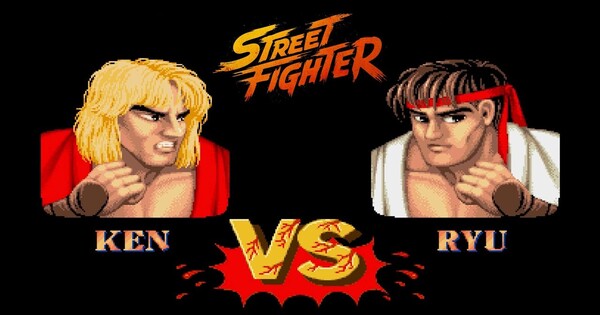
Paramount Pictures started streaming a new trailer for Legendary Entertainment‘s live-action film of CAPCOM‘s Street Fighter game series on Monday, focusing on Ken and Ryu’s relationship and rivalry.

© 2026 Paramount Pictures
The film will open on October 16.
Paramount Pictures describes the story:
Set in 1993, estranged Street Fighters Ryu (Andrew Koji) and Ken Masters (Noah Centineo) are thrown back into combat when the mysterious Chun-Li (Callina Liang) recruits them for the next World Warrior Tournament: a brutal clash of fists, fate, and fury. But behind this battle royale lies a deadly conspiracy that forces them to face off against each other and the demons of their past. And if they don’t, it’s GAME OVER!
The cast includes:
Paramount Pictures and Legendary signed a multi-year distribution deal in December, with Paramount Pictures distributing Legendary Entertainment films worldwide except China (Legendary East handles distribution in China). Street Fighter will be the first film to be distributed under the new deal. Legendary Entertainment acquired the film and television rights to Street Fighter in April 2023, and will work with CAPCOM on future projects.
Sony Pictures was previously slated to distribute the film. When the film was still slated to be distributed by Sony Pictures, the film was planned to open on March 20, 2026, but Sony removed the film from its release calendar in March 2025.
Kitao Sakurai (The Eric André Show, Bad Trip) is directing the film’s shoot in Australia, which started in August 2025. Brothers Danny and Michael Philippou were initially slated to direct the film, but left the film to focus on making their Bring Her Back film.
The game series inspired a live-action film in 1994 starring Jean-Claude Van Damme, Raúl Juliá, Ming-Na Wen, Damian Chapa, Kylie Minogue, and Wes Studi. Hyde Park Entertainment produced a separate spinoff titled Street Fighter: The Legend of Chun-Li starring Kristin Kreuk in 2009.
Machinima produced the Street Fighter: Assassin’s Fist and Street Fighter: Resurrection live-action series. Machinima released the first series on its YouTube channel in May 2014, and Funimation licensed the series for release in North America. Funimation released the series on Blu-ray Disc in October 2014. Machinima released the second series on Verizon’s go90 streaming service in March-April 2016. A Street Fighter: World Warrior television series was originally planned in 2018.
Street Fighter II: The Animated Movie adapted CAPCOM‘s video game Super Street Fighter II in 1994. Discotek Media released the film on DVD in December 2015, and on Blu-ray Disc in October 2016. The franchise has also inspired several other anime and animated series.
The Street Fighter 6 fighting game launched in June 2023 for PlayStation 4, PlayStation 5, Xbox Series X|S, and PC via Steam. CAPCOM released the game on Nintendo Switch 2 in June 2025 as a launch title. The Street Fighter 6 Years 1-2 Fighters Edition version also launched on the same day.
Sources: Email correspondence, Paramount Pictures‘ YouTube channel
>
Manga debuts with new setting/era in 2027
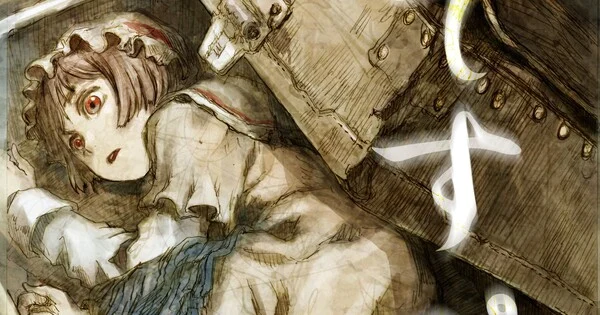
Chiaki J. Konaka (series script supervisor of Serial Experiments Lain, Texhnolyze, and Hellsing) announced at the Japan Weekend Madrid event in Spain last weekend that Yoshitoshi ABe‘s (creator and character designer for Serial Experiments Lain and Haibane Renmei) Despera anime project is getting a manga in 2027. He posted a visual on X/Twitter on Monday:

Konaka added that the manga’s setting and era will differ from those of the original project announcement. He clarified that this project is not related to Serial Experiments Lain.

Konaka last provided an update for the project in 2021. According to him, due to the COVID-19 pandemic, the project was suspended for a year and a few months. Konaka added that the production funding scheme was 80% completed at the time, and that the core staff had done a lot of work up until 2020. He confirmed that staff was still working hard on the project, and asked fans to be patient.
The Despera anime project was put on hold after director Ryūtarō Nakamura passed away in 2013. ABe mentioned in October 2014 that the project was continuing with a new director.
ABe unveiled the project at Seattle’s Sakura-Con in 2009. ABe was heading the project and designing the characters and Chiaki J. Konaka, the series script supervisor of Serial Experiments Lain, Texhnolyze, and Hellsing, was writing the script.
The title is derived from a poem from the Dadaist poet Jun Tsuji (1884-1944). It is also derived from the shortened version of the term “desperado.” The story centers around Ain, a 14-year-old girl who builds devices despite the lack of the scientific background required for them. The science-fiction story was originally set in Japan’s Taishō era in 1922 — one year before the 1923 Great Kantō earthquake in the Tokyo area.
Sources: Chiaki J. Konaka‘s Twitter account
>

Paramount, State AGs Brush Off WB Merger Settlement Concerns

Richard Linklater Gives Major ‘Merrily We Roll Along’ Update
Gianni Infantino opens door to increased money distribution from FIFA's $6bn reserves
-

 movies4 months ago
Search For Canadian TV Actor Stewart McLean Now Homicide Investigation
-

 Fashion9 years ago
These ’90s fashion trends are making a comeback in 2017
-
Fashion9 years ago
According to Dior Couture, this taboo fashion accessory is back
-
Fashion9 years ago
Model Jocelyn Chew’s Instagram is the best vacation you’ve ever had
-
Fashion9 years ago
Emily Ratajkowski channels back-to-school style
-
Fashion9 years ago
9 Celebrities who have spoken out about being photoshopped
-

 Anime4 months ago
Rurouni Kenshin: Hokkaido Arc Manga Takes 1-Issue Break – News
-

 Anime3 months ago
HIDIVE to Stream English Dubs for The World Is Dancing, The Forsaken Saintess and Her Foodie Roadtrip in Another World, The Dangers in My Heart: The Movie Anime – News