
Sandra Hüller in Rose.
The Match Factory/Courtesy Everett Collection


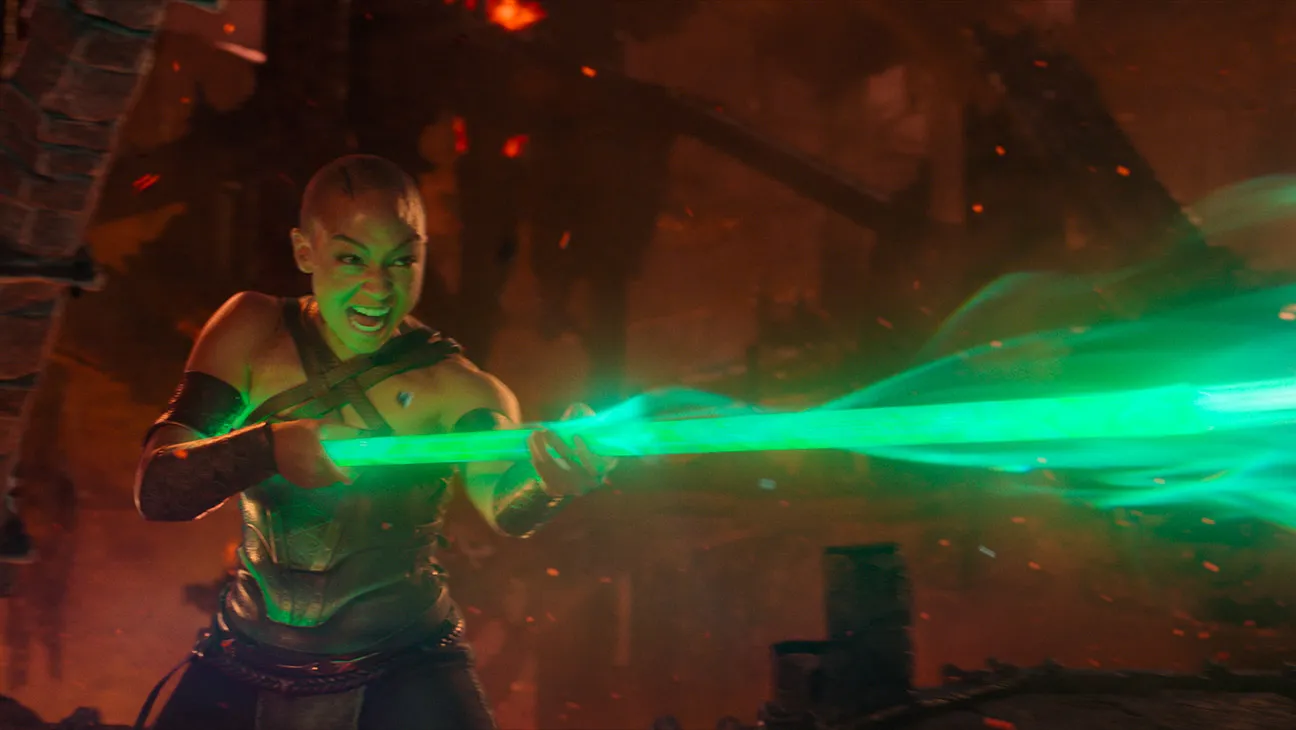
You can’t say that the creators of Mortal Kombat II didn’t take the criticism of its 2021 predecessor to heart. Fans complained that it lacked the central element of the games, namely a tournament, and that the central character, Cole Young (Lewis Tan), had never even appeared in the series.
So rest assured that the sequel revolves around a tournament, one that will determine the ultimate fate of Earthrealm, and that Cole has been relegated to a supporting role. In his place are two fan favorites: Johnny Cage (Karl Urban), the former ‘90s-era action movie star very reluctantly recruited to join the other champions, and Kitana (a charismatic Adeline Rudolph), who provides an emotional component to the ultra-violent proceedings with her desire for vengeance against arch-villain Shao Khan (Martyn Ford) for murdering her father in front of her eyes when she was a child.
Mortal Kombat II
The Bottom Line
Not a flawless victory.
Release date: Friday, May 8
Cast: Karl Urban, Adeline Rudolph, Jessica McNamee, Josh Lawson, Ludi Min, Mehcad Brooks, Tati Gabrielle, Lewis Tan, Damon Herriman, Chin Han, Tadanobu Asano, Joe Taslim, Hiroyuki Sanada
Director: Simon McQuoid
Screenwriter: Jeremy Slater
Rated R,
1 hour 56 minutes
Of course, when it comes to Mortal Kombat, character motivation isn’t really what the fans are looking for. Rather, it’s bone-crunching action, especially of the gory kind, which the sequel, helmed by returning director Simon McQuoid, delivers in spades. Non-devotees will be largely left in the dust, especially since there are so many characters, both returning and new, that you practically need a spreadsheet to keep up. And as Johnny Cage sagely observes at one point, these days moviegoers are more interested in watching Keanu Reeves’ John Wick mow down 500 opponents while armed with little more than a pencil.
Still, the film has its rewards, mostly of the unsophisticated kind, since the fight sequences come fast and furious and the cheesy dialogue has enough groan-worthy one-liners to inspire a thousand drinking games. The latter come courtesy of Cage, who’s self-aware enough to point out that the stuntmen did all the heavy lifting for him in his movies (even as they do it for Urban here), and Kano (Josh Lawson), the profane Aussie with the laser eye whose non-stop quips provide some much-needed levity amid the non-stop carnage.
Urban, who has no shortage of experience with sci-fi franchises (Lord of the Rings, Star Trek, The Boys), provides plenty of fun as Cage, first seen in a clip from one of his old action movies (distributed by New Line Cinema, of course) before we catch up to him in the present day, where he’s a washed-up former star with zero fans at his booth at a pop culture fan convention. He’s naturally skeptical when he’s informed by Sonya Blade (Jessica McNamee) that his presence is required to help save Earthrealm, but he’s convinced by a dazzling light show. Upon arriving in the new dimension, he spots such fellow warriors as Jax (Mehcad Brooks) and points out, “That dude’s got robot arms!” Urban also makes much comic hay of Cage’s trademark sunglasses and his middle-finger way of adjusting them.
Screenwriter Jeremy Slater takes pains to pay homage to the games as much as possible, featuring so many throwaway references that the aficionados at the press screening were screaming with delight. Not much of it is particularly clever, as evidenced by someone commenting to a depressed Cage, “You’re normally a little more animated,” but let’s face it, nobody comes to Mortal Kombat for the bon mots.
Rather, it’s for those combat sequences, which frequently end with one of the participants — and not only the bad guys — either impaled, bludgeoned, severed, decapitated, or some combination thereof. What’s genuinely mystifying about the film incarnations is how boring they are despite the non-stop action, which is competently staged but lacking the kinetic fun of, yes, the John Wick films and its many imitators. Taking place with the performers going through their exertions in front of green screens featuring the sort of video game backgrounds that resemble cool screensavers, they hardly seem comparable to playing the games yourself.
It doesn’t help that the whole thing comes off as low-rent, with underwhelming CGI effects and creature costuming and make-up that pales in comparison to a typical NYC Village Halloween Parade. When the chief villains look like rejects from Star Trek, and I mean the old TV series, you’ve got a problem.
But probably not enough of a problem to prevent an inevitable third installment in this cinematic video game franchise that, to its credit, determinedly caters to its devoted fans, who don’t seem to mind that the word “combat” isn’t really spelled with a k.
>
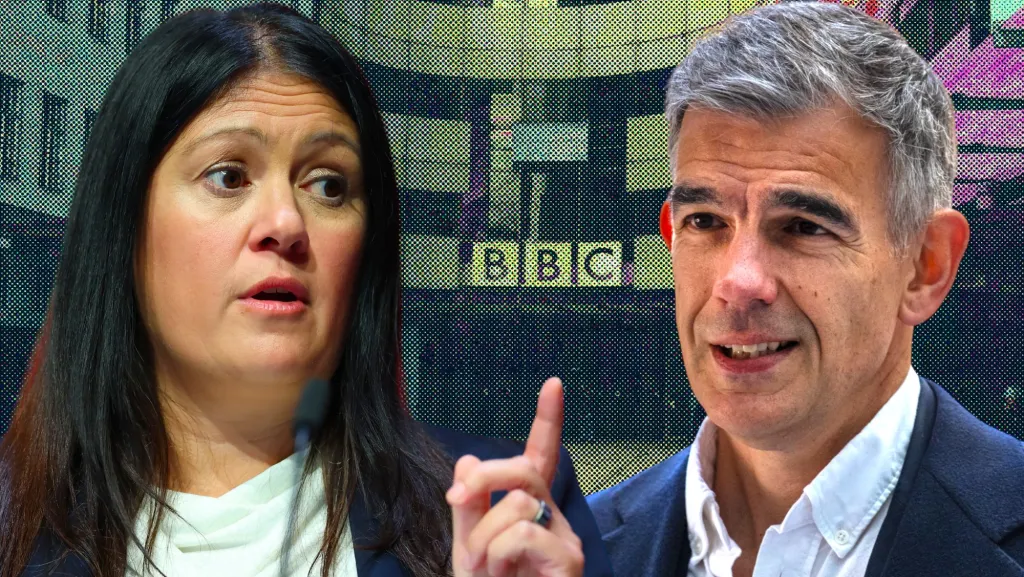
If you pay any attention to the BBC, you will know Britain’s national broadcaster is on the horns of a funding crisis.
We know this because the BBC keeps telling us. Director-general Matt Brittin has told staff that the “cupboard is bare.” He has told Parliament that the BBC’s current funding model, the licence fee, is a “busted flush.” He told BBC viewers on Sunday that the corporation is in a “tight financial situation.”
And when the BBC is not telling us, it is showing us by cutting thousands of jobs, canceling shows, and threatening to close services. The drip-drip of cuts announcements is like a marketing campaign counting down to BBC doomsday.
Luckily for the BBC, there’s a potential solution: It’s called charter renewal. Every decade, the broadcaster sits down with the government and thrashes out its future, agreeing its funding for the years ahead, and making detailed decisions about its governance and operating guardrails.
And it just so happens that the BBC and the government are in the thick of charter renewal negotiations as you read this. Behind-closed-doors meetings between the BBC’s policy team and Department for Culture, Media and Sport (DCMS) officials are happening every week. Brittin is engaging regularly with Lisa Nandy, the culture secretary. There is lots of talking going on.
In public at least, the BBC and new Prime Minister Andy Burnham’s administration are singing from the same hymn sheet. The BBC wants to ensure that the 94% of Brits consuming the BBC are actually paying for it. Nandy told BBC News this month that she wants to put the corporation on a “sustainable footing.”
But here’s the rub: Neither the government nor the BBC have wholeheartedly set out their preferred way of achieving this ambition, leading to what Deadline hears is growing unease on both sides about a lack of vision for the BBC’s future.
We can rule out some things pretty confidently, including full ad or subscription funding. Never going to happen. What about a household levy? This would basically involve adding a tax to a utility or broadband bill. The BBC quite likes this idea, but ministers have explicitly ruled it out on the grounds that a new tax would be unpalatable (not to mention politically toxic) in a cost of living crisis.
This shrinking field of options increasingly points in the direction of tinkering with the £180 ($240) licence fee. There is an old joke in UK media that reviews of BBC funding nearly always result in the same conclusion: The licence fee is the least worst option.
But quite what this tinkering looks like, and whether it will achieve the shared aim of safeguarding the BBC, remains to be seen. The main idea under discussion is extending the licence fee to include non-live content on commercial streaming services.
What does that mean in practice? Well, at the moment, you can watch The Gentlemen on Netflix without being legally obliged to pay the licence fee. Ministers and the BBC are now discussing plans that could incriminate you for watching MobLand on Paramount+ without paying your cut to the BBC. Shows not made by Guy Ritchie would also be included.
Closing the streaming loophole may seem an elegant solution in theory, but it is complicated in reality. The BBC is struggling to enforce payment of the licence fee as it is, and the tools at its disposal, including pursuing convictions, are regressive, hitting lower-income households and women hardest. Netflix carrying pop-up ‘PAY YOUR LICENCE FEE’ notices (a genuine BBC suggestion) is not going to cut it.
To get around this, Nandy has floated the idea of charging consumers extra for their subscription streaming services. A BBC levy on your monthly Disney+ bill, if you like. She acknowledges, however, that this is unlikely to be popular with U.S. streamers, who are quick to make noises about pulling back their UK investment when they see barriers to growth.
Nandy has also spoken about allowing the BBC to top up its public funding with commercial revenue, including monetizing archive content or enabling the corporation to carry ads around its podcasts on platforms like Spotify or YouTube. But again, Nandy has been reluctant to fully embrace these proposals.
Ultimately, it will likely be the Treasury, rather than the DCMS, that calls the shots on funding questions, but time is running out to push through the thorny reforms under discussion.
It means that, with 15 months until the current BBC charter expires, the broadcaster has no clarity about its finances beyond next year. During the last round of charter negotiations, the BBC struck a funding deal with David Cameron’s government 18 months before its operating agreement ended. Nandy recently described that deal as “appalling,” but has declined to commit to an alternative.
Instead, we have a vacuum. Private talks and a paucity of public information. We may hear more from BBC boss Brittin at the Royal Television Society London Convention on Tuesday, but no minister will speak at the important industry gathering because of the Labour Party conference in Liverpool. And so the limbo lingers.
As one BBC watcher in Westminster puts it, both sides have been “as bad as each other” in their approach to the charter process. “As much as this government isn’t the best when it comes to making decisions about anything, it’s not clear to me what the BBC’s vision is for itself,” the lawmaker explains. “It’s a longstanding problem, and in the past the BBC usually stood to benefit, as the result would be status quo. The danger now is that the status quo just accelerates [the BBC’s] decline.”
Nandy has promised to publish the government’s position “soon.” For the BBC, which is gearing up to announce another gruelling round of cuts over the coming days, it can’t come soon enough.
>
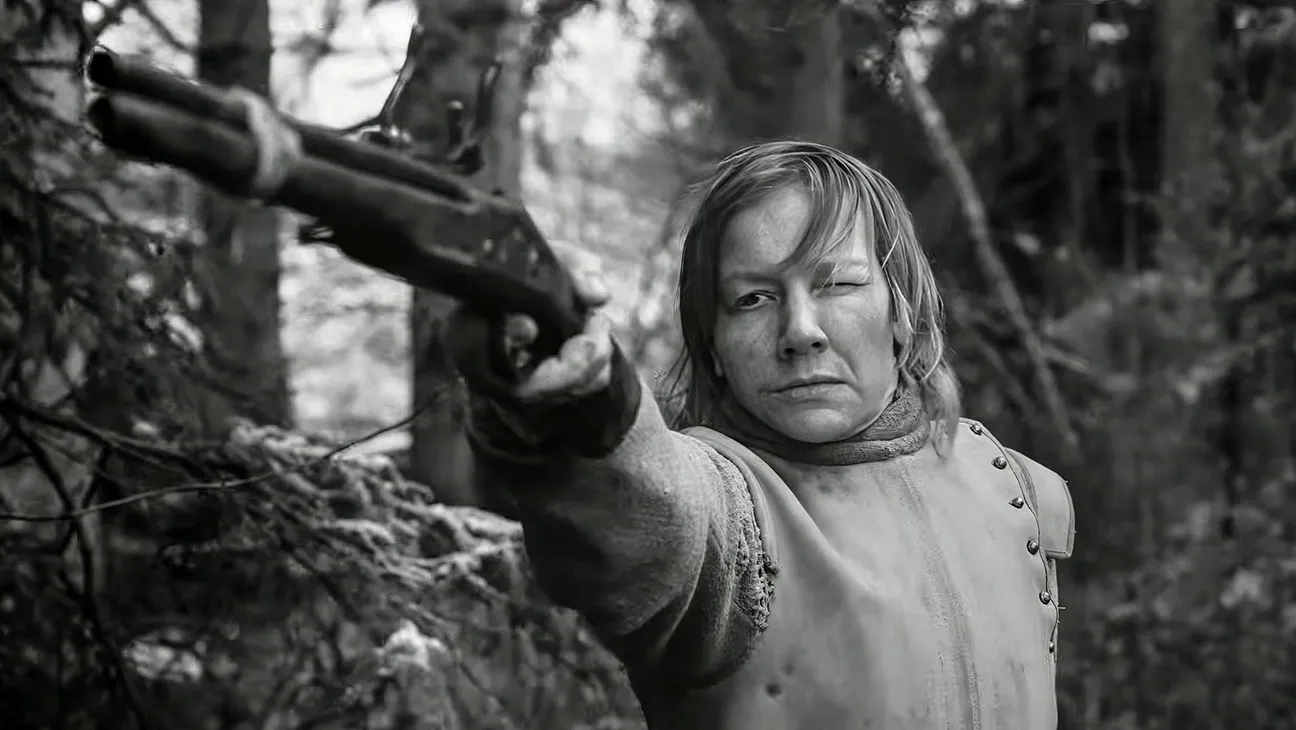
In their conversations leading up to the making of Rose, star Sandra Hüller and director Markus Schleinzer worked hard at fine-tuning their eponymous 17th-century hero. Hüller was to play a woman disguising herself as a male soldier in the aftermath of the Thirty Years’ War, ingratiating herself in a small Protestant village. She considered preparation routines like strength training, before setting them aside as anachronistic; she agonized over keeping things as believable as possible. “She was wondering, ‘What should I do with my voice — should I lower it?’” Schleinzer recalls. “Then we started to laugh because then we found out that my voice, as a man, is higher than her voice as a woman. It would be a weird thing for her, to lower her voice to pretend to be a man, for a male director who has a much higher voice than hers.”
The anecdote offers some amusing insight into the dynamic between Schleinzer and Hüller, which remained deeply playful and collaborative over the years it took to get Rose made. Yet it also speaks to the ultimate mastery of Hüller’s portrayal here, which never goes for the easy or obvious choice. In a career full of decorated performances, this ranks among Hüller’s very best, a moving, wondrously strange embodiment of a survivor in constant, subtle hiding. Below, you can watch the exclusive trailer for the film for a first look.
Rose premiered at the Berlin Film Festival in February, where Hüller won the Silver Bear for best lead performance. The star then went on to receive a Tribute Medallion in Telluride earlier this month, where the movie made its North American premiere; now, it’s making the rounds in New York. “Rose is another extraordinary showcase for her gifts and a master class in the art of acting with rigor, honesty, physicality and zero showiness,” wrote THR chief film critic David Rooney of Hüller in his review.
Schleinzer first had the idea for Rose on his birthday, when a friend told him that 250 years ago to the day, a woman had been executed for being caught living her life as a man. The Austrian filmmaker and former casting director, who came up under the legendary Michael Haneke, became obsessed with the story and researched hundreds of other examples, from decades before and after. He saw them speaking to the current climate of fear felt by various marginalized communities. “Every life, every day is a political act — so we cannot hide,” says Schleinzer, who is queer. “We have to change things if we want to have a better life as a community.”
Already at work on the script, Schleinzer then met Hüller on the set of the 2023 German black comedy Sisi & I — as her co-star. “I was really bad in this movie because I was so keen to watch Sandra firsthand — I already had started writing Rose and started stalking her, watching all the things she was ever in, even the tiny television spots she had at the beginning of her career.” He later sent her the script, which was written in prose, more akin to a novel; she jumped at the challenge.
Sandra Hüller in Rose.
The Match Factory/Courtesy Everett Collection
When asked what surprised him about Hüller’s approach to the role, Schleinzer points to a viral red-carpet clip of the star describing her process in straightforward terms — “I really have to disappoint you, it’s not so much: I learned the lines” — in noting that what results from that is anything but simple.
“I was a casting director for 17 years and I always had the feeling that my main job was to get people out of being afraid, of having fear or discomfort — there is this type of actor who loves to talk, because talking means that they do not have to act, they can just talk, talk, talk, talk,” the director says. “Sandra is the complete opposite. She is someone who gets easily bored, so no take is the same: ‘Now I’ll become a little more boyish,’ ‘Now I’m the soldier.’ I had the big problem of choosing how to build up a character for the audience, then — but this was surprising, to see such life come alive in front of your eyes on the set every day.”
Shot on location near the East German border with original sets, scouted by Schleinzer through hours of hiking, the film boasts a handmade quality in Gerald Kerkletz’s black-and-white cinematography, the exacting makeup and costume work and the dry humor that allows the absurdity of certain situations to breathe — even as Rose hurtles toward profound tragedy. “My intention was to make something more about these days we are in than just a museum piece with some nostalgic images,” Schleinzer says.
Rose premiered this past weekend to more raves at the New York Film Festival, and will be released in North American theaters by Mubi on Dec. 11. The project started shooting less than two weeks after the end of Hüller’s campaign for Anatomy of a Fall, which netted her a best-actress Oscar nomination — and shot in small increments over many months from there. This could be the project that brings her back to the Oscars, although her greatest competition may be herself: She’s also terrific as the lead of Cannes-winner Fatherland, also a Mubi release, and plays key supporting roles in Project Hail Mary and Digger.
But within the scope of Hüller’s filmography — really, any actor’s — Rose feels special. “Sandra said I should not threaten people, but I have watched her career for the last 20 years and I’ve seen so many prizes taken away from her,” Schleinzer says with a grin. “If she’s not going to be nominated for this one, I’m going berserk.”
Check out the official poster below.
Rose poster.
Mubi
>
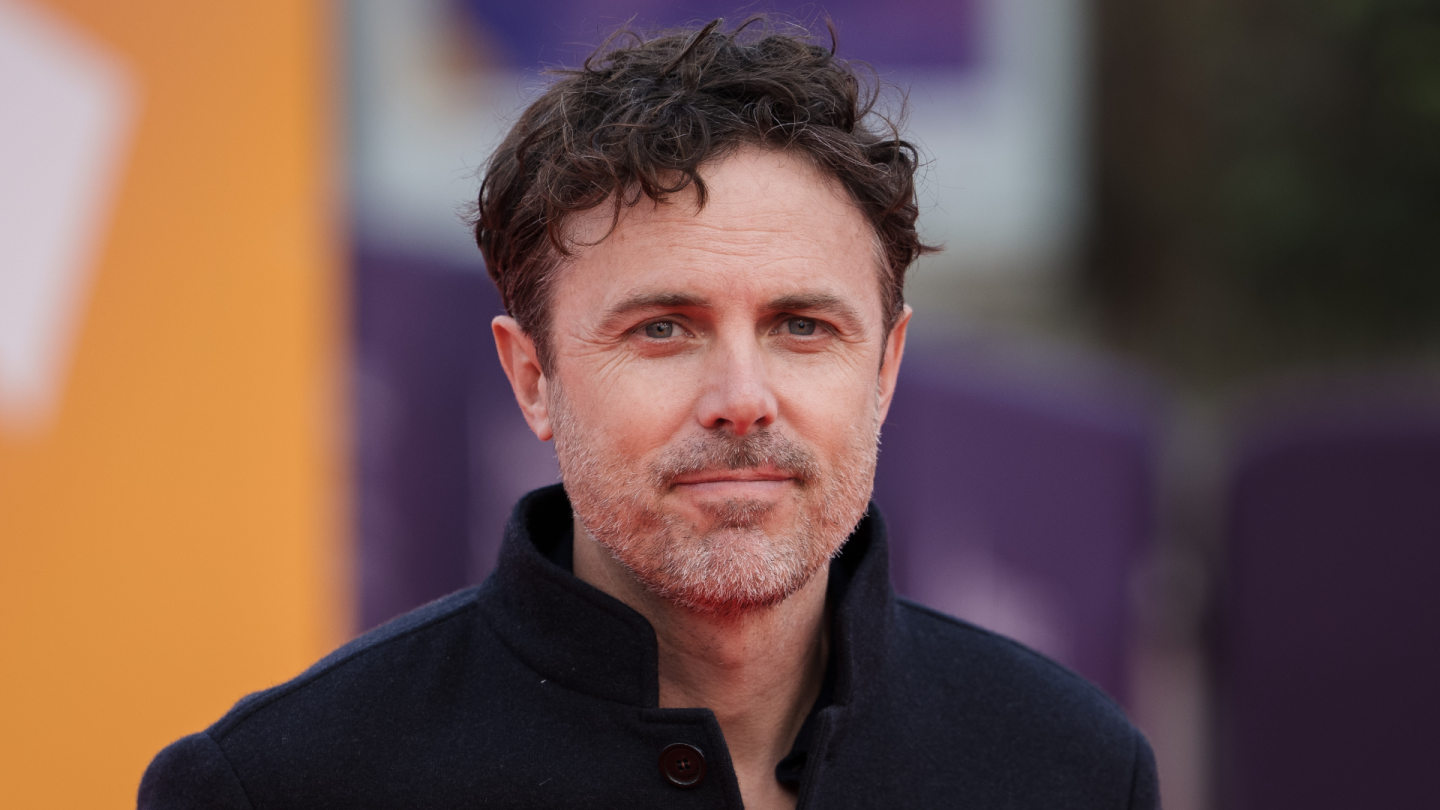
It was Casey Affleck‘s turn in the Zurich hot seat on Monday as the U.S. star spoke candidly at a masterclass before the Swiss film festival premiere of his third directorial feature, Company.
The conversation with the event’s CEO Christian Jungen was career-spanning and charted the Boston native’s rise to international fame, from his move to L.A. as an aspiring actor and early career decisions to his Oscar-winning turn in Manchester by the Sea (2016) and becoming a director.
Of course, you can’t host an Affleck and not discuss Matt Damon, the childhood best friend of Casey’s older brother, Ben. He humorously played down the rivalry between the men, but praised their shared experience in theater growing up on the East Coast. “We all had the same theater teacher, […] and lots of actors came through this one theater department. We were in a big public school, and we just had this great theater teacher, and he made kids fall in love with theater and acting,” he said, prompting laughter as he continued: “Matt was always a bit of a showoff. [He was] outgoing and would do talent shows and stuff. And there was no doubt where he was headed, but the rest of us were trying to figure it out.”
The Good Will Hunting and Ocean’s Eleven actor said he has seen Damon’s Oscar-buzzy outing in Christopher Nolan‘s box office behemoth The Odyssey, but takes solace in the fact that all three of them have pursued pretty varied paths. “We’re all very different in a weird and very obvious way,” began Affleck. “Matt is a super talented actor. He’s a funny case because he’s a very talented actor who has a kind of movie star persona, a matinee idol appeal, at the same time, which Ben and I don’t really have. Ben seems more like a movie star and has leaned into the leading man thing right from early on,” but Affleck’s favorite performances from the pair are when they’re in character-led roles. “When Matt did The Talented Mr. Ripley, I thought he was just incredible.”
Jungen referenced an old Variety profile in which Affleck was characterized as a Hollywood outsider. Initially, Affleck was “mad” about that. “I saw that and I thought, ‘Man, I’ll forever be thought of as an outsider, no matter what I do.’ You can win an Oscar, or you can do a big giant studio movie, and I think the public just thinks of people one way, and then it takes a lot to change that.” An ensuing epiphany was liberating, and allowed him to reclaim the label. “I was sitting with it for a second, and I thought, ‘Am I crazy? I love that.’ I don’t want to be an insider. I love being an outsider. I would much rather be an outsider in Hollywood than be an insider in Hollywood. I don’t think it’s a great culture. I don’t love the movies that are made by Hollywood. I don’t love the system of Hollywood, and I’m very happy being thought of as an outsider,” he said.
In response, Jungen pointed out to the star that he continues to live in L.A. and, like Damon, has featured in Nolan projects: specifically Interstellar (2014) and Oppenheimer (2023), so he’s no stranger to a commercial hit. Affleck had a particularly amusing — and maybe slightly awkward — anecdote to share when asked about seeking directorial advice from the British Oscar winner. “I did once call him,” said Affleck about Nolan. “I was driving home from school with my son, and we were talking about Tenet, and we were disagreeing about it. And I thought, ‘Let’s settle this.’ And we called Chris, which probably was a mistake. I [actually] called Emma [Thomas], his wife, and I said, ‘I just have a quick question,’ and we got him on the phone and asked him something that we probably could have just looked at [on] Reddit and figured out.”
Affleck wanted it from the source, he confessed, but once Nolan talked them through it, the actor was embarrassed that he even asked. “It sounded so obvious. Then we said, ‘Thank you.’ And that was it. And I haven’t called back, and he hasn’t called me,” he laughed.
The actor-turned-filmmaker lauded Nolan as a director, and though admitting he doesn’t look to anyone in particular as an inspiration, cited both Nolan and Gus Van Sant (who directed Affleck in 2002’s Gerry) as auteurs who “just make stuff that they’re really interested in.” He continued: “Nolan is probably a great example of that. Despite the fact that he makes these gigantic, hugely popular, successful movies, I don’t think that he’s doing things that he thinks will please other people.”
On Affleck’s Oscar win as a grieving janitor in Kenneth Lonergan’s Manchester by the Sea, he explained it’s all still rather a daze — and “mildly traumatic.” The actor said: “I had all these people in this category that were heroes of mine — Viggo Mortensen and Denzel [Washington], and then peers of mine who are great — Andrew Garfield and Ryan Gosling. It sounds like a cliche, but I was just very happy to be there. I didn’t really expect to win because I thought Denzel was going to win, and that was totally fine.” He admitted to have not planned a single word of his speech, and was mortified after leaving the stage and realizing he forgot to thank “all the people you’re supposed to thank,” including Lonergan and his kids.
Affleck recalled none other than Leo DiCaprio coming to the rescue: “I just mumbled my way through it and got off stage, so it was mildly traumatic. But I remember walking off stage and seeing, for some reason, Leonardo DiCaprio standing there in the wings, and I was stuck in the moment of terror and disorientation, and he was just laughing and gave me a big hug, and then I sort of felt better.”
Company, currently making its way through the festival circuit, is a mystery set on a winter night in 1975, with the filmmaker, Nick Nolte, Ben Mendelsohn, Emily Alyn Lind and Sydney Chandler all co-starring, alongside his two sons, Atticus and Indiana Affleck. His directorial debut, I’m Still Here (2010), “was very experimental, and people mostly just hated it.” His second, Light of My Life (2019) premiered during the pandemic so its reception was difficult for Affleck to get a read on. With the Venice-premiering Company, he was so keen for it to make the rounds at the fall festivals that he’s screened a not-quite-finished version and is using audience reaction as feedback.
“It’s scary as a director to bring a movie that I’m still working on,” he said. “We’re still tightening it and working on the music, and so to show it to an audience full of people and know myself that there are things I want to change is difficult, but once it’s finished, I’ll let it go. I promise.” The movie is dedicated to his parents, both of whom died earlier this year.
Affleck was part of a Zurich masterclass slate that also included John Turturro, Naomi Watts and Anna Kendrick. The 22nd edition runs Sept. 24-Oct. 4.
>


Search For Canadian TV Actor Stewart McLean Now Homicide Investigation


These ’90s fashion trends are making a comeback in 2017
According to Dior Couture, this taboo fashion accessory is back
Model Jocelyn Chew’s Instagram is the best vacation you’ve ever had
Emily Ratajkowski channels back-to-school style
9 Celebrities who have spoken out about being photoshopped


Rurouni Kenshin: Hokkaido Arc Manga Takes 1-Issue Break – News


HIDIVE to Stream English Dubs for The World Is Dancing, The Forsaken Saintess and Her Foodie Roadtrip in Another World, The Dangers in My Heart: The Movie Anime – News