
Anime
Episode 7 – Go For It, Nakamura-kun!!


©Nakamura-kun!! Animation Project
After such a slow-paced, dramatic episode last week, it makes sense that this week would be much faster and more comedic. If anything, I think this episode fully confirms that I think this show is at its comedic best when it actually doesn’t focus exclusively on Nakamura. The humor around Nakamura is fine, but there are two problems with it. The first is that the idea of a nervous but angry guy reacting to everything can get boring very quickly, and I think the show has already run that joke into the ground. The second issue is that, as Nakamura becomes friends with Hirose, that kind of jealous humor makes Nakamura seem even less likable. What starts as nervous delusions can turn into a creepy possessiveness that I would rather the series avoid, especially after the two just had a really sweet affirmation of their friendship.
I actually really like Nakamura’s character in this because he’s almost the straight man compared to the rest of his classmates. Everybody is their own brand of crazy, and Nakamura is comfortable enough to go off on his own. This whole episode started with him getting kidnapped after trying to go to the bookstore, after he found out that he couldn’t spend time with Hirose. I kind of like that, especially since it allowed me to see Reiko again. Once again, I love her character, and I love her vocal performance, especially in the dub. It’s a shame she’s not more prominent throughout the episode, but considering how big the extended cast is, that makes sense.
I wish the episode had gone a bit further with its humor. Most of the jokes were fairly predictable right up until the final punch line. I know the show is almost acting like a throwback to older romantic comedies, but sometimes it really feels like it was written a couple of decades ago, since I was able to call almost every major joke. I could tell him immediately that the entity that all the characters were running into was the teacher, and I knew the final punchline was gonna be that Nakamura ended up attracting a real ghost that nobody was gonna do anything about. I feel like the foundation is there to play around with everybody’s character dynamics and idiosyncrasies, but the show needs to be a bit more creative than that to stand out. Overall, this was a fun episode that I think could lay the groundwork for other comedic-focused episodes to be even better, which has me excited.
Rating:
Bolts also streams regularly on Twitch as the indie VtuberBolts The Mechanic where they talk about and play retro media!
Go For It, Nakamura-kun!! is currently streaming on
Crunchyroll.
The views and opinions expressed in this article are solely those of the author(s) and do not necessarily represent the views of Anime News Network, its employees, owners, or sponsors.
>

Horror visual novel features anomaly photography gameplay for PC
Amata Games revealed on Monday that its Shinjuku Anomaly horror visual novel game will launch for PC via Steam on September 30. The company streamed a trailer:
The store’s Steam page describes the game:
You have taken on a part-time job photographing anomalies that lurk in Shinjuku at night.
You are given four rules for your part-time job:
・If you see an anomaly, take a picture of it.
・When taking a picture, get close enough to capture a clear image of it.
・However, be careful to not get too close.
・Return to the agency once you’ve used up all of the film.
The game features English, Japanese, Traditional Chinese, and Simplified Chinese language support.
Amata Games is developing developing an officially licensed version of CAPCOM‘s Phoenix Wright: Ace Attorney – Dual Destinies game for the Meta Quest virtual realty (VR) headsets and newly announced Meta VR Glasses headwear. The game, titled Phoenix Wright: Ace Attorney – Dual Destinies VR, will debut next year with English, French, German, Japanese, Korean, Traditional Chinese, and Simplified Chinese language support.
Source: Amata Games via Gematsu
>


© SMILE-UP
The official website for Smile Up, the agency formerly known as Johnny & Associates, announced on Monday that President and Representative Director Noriyuki Higashiyama is stepping down from his position. Managing Director Akira Abe is also stepping down. The change will take place on October 1 after both of their terms expire. Masayuki Yamada, a lawyer who currently serves as an executive in charge of compliance, will become the new President and Representative Director. Takayuki Jin will be the new Managing Director. Smile Up’s Board of Directors decided that it would be appropriate to change the structure as it anticipates dealing with legal procedures and decisions in the future.
Amidst the changes, Smile Up will continue to be responsible for handling the compensation measures for sexual abuse victims of the agency’s late founder Johnny Kitagawa, a process that started in November 2023. The company will shut down after the compensation measures are completed.
Higashiyama announced in October 2023 that the Johnny & Associates agency would change its name to Smile Up starting on October 2023, as part of the company’s “vision” to earn back fans’ trust.
During that time, the Johnny & Associates agency established a separate new entity Starto Entertaintment in December 2023 to oversee talent management operations.
Kitagawa’s Allegations
Higashiyama had previously stated in September 2023 when the agency publicly admitted for the first time that Kitagawa did sexually abuse a large number of aspiring pop star teenagers from the 1970s to 2010s that the company would not change its name.
At the press conference that September, then-president Julie Keiko Fujishima stated she was retiring as president, but will remain the representative director and owner of the company. The agency stated it is taking measures to compensate for the damage caused and prevent reoccurrences.
After the September press conference, sponsors in Japan announced they would not renew contracts with Johnny’s, or indicated they would disassociate themselves from the agency. More recently, NHK stated last week that it will “not make new requests to entertainers from … [the agency] to perform in its programs for the time being.” This policy will extend to the popular New Year’s Eve music program Kohaku Uta Gassen.
Meanwhile, more alleged victims had also come forward with stories of abuse, including former Kis-My-Ft2 member Kyohei Iida. Kyodo News reported that Higashiyama said during the press conference in 2023 that the committee established to oversee the compensation measures had “so far received consultations from 478 sex abuse victims, with 325 of them seeking compensation.”
March 2023 BBC Report Leads to External Probe
In March 2023, the BBC released an hour-long documentary titled Predator: The Secret Scandal of J-Pop, which detailed “a long history of allegations of sexual abuse, made by boys in [Kitagawa’s] agency” and why “the Japanese media remained largely silent.”
In April 2023, Kauan Okamoto, a Japanese-Brazilian singer and songwriter, held a press conference and claimed Kitagawa abused him about 15 to 20 times between 2012-2016 when he was still a member of the agency, and said he knew at least three other people who had also been abused.
After OKAMOTO’S press conference, a group of fans and idols held a press conference that May stating they had sent a petition to Johnny & Associates calling on the company to apologize and launch an investigation.
An external probe set up in late May 2023 to investigate Kitagawa concluded that August that Kitagawa sexually abused members of the agency for decades, and that the agency had covered up Kitagawa’s behavior. Kitagawa’s family members had allegedly known what he was doing and did not do anything to stop him.
Kitagawa’s Death and Past Allegations
Kitagawa died at 87 in July 2019 due to a subarachnoid hemorrhage (a form of stroke). Fujishima then became president in September 2019.
Kitagawa founded Johnny & Associates in 1962 after establishing the male idol group Johnnys. Johnny & Associates went on to establish and manage many male idol groups such as SMAP, Arashi, Tokio, KinKi Kids, V6, KAT-TUN, and Hey! Say! JUMP. The members of idol groups under the management of Johnny & Associates are collectively known as “Johnny’s.”
Kitagawa previously faced allegations of sexual misconduct during his career. The Shukan Bunshun magazine published 14-week expose in 1999 detailing accusations of child abuse and sexual exploitation. However, the accusations never resulted in formal criminal charges. Kitagawa and Johnny & Associates sued the magazine, and the magazine lost the first trial in March 2002. However, the magazine effectively won its Tokyo High Court appeal in July 2003. The High Court’s decision stated the alleged victims’ testimonies were “generally consistent” and “specific, frank, and detailed.” The decision also stated Kitagawa had “no concrete counterargument or rebuttal evidence.”
Sources: Smile Up via Hachima Kikо̄, NTV News via Yahoo! News,
>

© 2026 Kodansha USA Publishing., Akane Shimizu
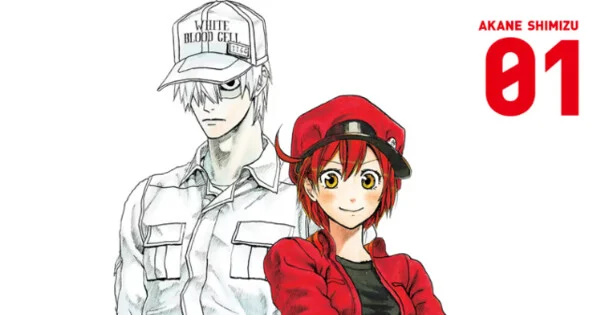
The November issue of Kodansha‘s Shonen Sirius magazine announced on Friday that Akane Shimizu‘s Cells at Work! manga will get a new spinoff manga by Koma Warita and Kawede Sakaki titled Hataraku Saibō Dental (Cells at Work! Dental) in the next issue on October 26.
The new battleground for the series is the inside of the mouth, which hides its own secrets.
Choko Aozora and Meku Kaire ended the Cells at Work! Cat manga on March 26. The manga’s fifth and final compiled book volume shipped on May 8. Aozora and Kaire launched the spinoff manga of Akane Shimizu‘s Cells at Work! manga in Monthly Shonen Sirius in May 2023. Kodansha USA Publishing has licensed the manga, and published the first volume in English on September 22.
Shimizu launched the original Cells at Work! manga in the March 2015 issue of Kodansha‘s Monthly Shonen Sirius magazine, and ended it in January 2021.
Kodansha USA Publishing is releasing the main Cells at Work! manga in English, and is also releasing the following spinoff manga and books: Cells at Work: Bacteria!, Cells at Work!: Neo Bacteria!, Cells at Work! White Brigade, Cells at Work! Baby, Cells NOT at Work!, Cells at Work! Code Black, Cells at Work and Friends!, Cells at Work: Platelets!, Cells at Work! Lady, and Cells at Work! Picture Books.
Source: Shonen Sirius November issue
>

Amata Games’ Shinjuku Anomaly Game Reveals September 30 Launch in Trailer – News
49ers don't expect WR Mike Evans to be out 'long term' with rib injury
What happened at Warriors' NBA media day: Jimmy Butler plans to come roaring back
-

 movies4 months ago
Search For Canadian TV Actor Stewart McLean Now Homicide Investigation
-

 Fashion9 years ago
These ’90s fashion trends are making a comeback in 2017
-
Fashion9 years ago
According to Dior Couture, this taboo fashion accessory is back
-
Fashion9 years ago
Model Jocelyn Chew’s Instagram is the best vacation you’ve ever had
-
Fashion9 years ago
Emily Ratajkowski channels back-to-school style
-
Fashion9 years ago
9 Celebrities who have spoken out about being photoshopped
-

 Anime4 months ago
Rurouni Kenshin: Hokkaido Arc Manga Takes 1-Issue Break – News
-

 Anime3 months ago
HIDIVE to Stream English Dubs for The World Is Dancing, The Forsaken Saintess and Her Foodie Roadtrip in Another World, The Dangers in My Heart: The Movie Anime – News