
Tech
Anthropic’s Cat Wu says that, in the future, AI will anticipate your needs before you know what they are


With the tech industry singularly focused on AI models, Anthropic is having an exceptionally good year.
The company may soon pull ahead of its main competitor, as it looks to raise tens of billions of dollars in a funding round that would put its valuation at some $950 billion (OpenAI was valued at $854 billion in its March round), and business customers increasingly express a prefererence for Claude over ChatGPT. A recent report showed Anthropic recently outpaced OpenAI among business customers, quadrupling its market share since May 2025.
Cat Wu, Anthropic’s head of product for Claude Code and Cowork, has been a key figure in that success. Since joining the company in August 2024, Wu has helped shepherd Claude through a critical phase, leveling it up from a purely informational chatbot to a coding tool and beyond. Wu, who oversees the development of new features, is frequently paired with Boris Cherny, a core member of Anthropic’s technical staff and the creator of Claude Code, leading the pair to be characterized as Anthropic’s “Batman and Robin.”
Wu sat down with me at last’s week’s second annual Code with Claude conference in San Francisco, where she discussed how she thinks about product strategy, and how she hopes the experience of using Claude will change in the future.
This interview has been edited for length and clarity.
When you’re looking at product strategy, how much of it is reactive to your peers or your competitors? Do you think about that at all?
The main thing that we design for is staying on the exponential, so I think, across our team, we instill in everyone the lesson that AI will just continue to get better. For us, we just need to stay at this frontier. We don’t think about competitors. I think if you do think about competitors, you end up being, like, perpetually two weeks, or like, a month behind how fast you can execute. And so it’s normally not the best way to stay at the frontier.
Anthropic released at least six models last year and has already released almost as many this year. Do you expect this pace of development to continue?
Our hope is that it continues (laughing). I think the models are still improving at a very steady pace, and so we should be able to keep sharing those with our users. I think the deployments might look a bit different—like how we handled Glasswing, but as much as possible, we want this intelligence to benefit as many people as possible, and it has to be handled in a very safe way, which is why we handled Glasswing [in the way that we did].
[Glasswing is an initiative that Anthropic launched in April that invited a small consortium of partner organizations — including companies like Amazon, Apple, CrowdStrike, and Microsoft — to gain access to its new cybersecurity model, Mythos. Unlike many of Anthropic’s other AI models, Mythos is not being given a general public release. The company has claimed that it fears the model — which is designed to scan codebases for software vulnerabilities — is too powerful, and could be weaponized by bad actors.]
You said in a previous interview that the future of work is basically staff managing fleets of agents. It seems like that could eventually lead to a situation where the agents are better at the job, or know the job, better than the human.
I think it is extremely hard to manage agents if you can’t do the job yourself. I think the managers still need to be experts in their domain. It’s a new skill set that a lot of people are going to have to learn, but managing agents is actually very similar to being a manager of people, in the sense that you have to understand, like, why did the agent make this mistake? Did it misinterpret my instruction? Was my request under-specified? You have to have the ability to debug it.
It does seem like the long term goal is to cut down on team size, though. Because if you have agents doing a job, then you don’t need an intern, right?
Ideally, I think the idea is that everyone can get a lot more done. I think that, for everyone’s job, there’s always this percentage of it that’s really tedious. For me, it’s responding to emails. I think everyone has this part of their life…So my hope is that it [the AI agents] actually does that, and then everyone has, like, all these cool things that they will want to build [in their spare time].
What are you guys most excited about in the next six months?
I think the next big thing is proactivity. Last year we were in this world of synchronous development. Right now, people are shifting to routines, so like automating, for example, responses to customer support tickets. And I think the next step is that Claude understands what you work on, and just sets up some of these automations for you.
When you purchase through links in our articles, we may earn a small commission. This doesn’t affect our editorial independence.
>

OpenAI is in talks with investors to raise at least $30 billion in a pre-IPO funding round at a valuation of roughly $1.4 trillion, Bloomberg reported on Tuesday.
Investors are eager to pour more funds into the ChatGPT maker ahead of its anticipated public market debut next year. While Anthropic momentarily outpaced OpenAI at the start of the year, recent strategic refocus on key areas like coding has fueled a 70% jump in run-rate revenue since July, reaching $40 billion in August, according to the report.
The company previously raised $122 billion in March at an $852 billion valuation. That funding round was supposed to be its last private raise before an IPO, which had been, until recently, expected to take place this year. However, CEO Sam Altman has now ruled out a public debut in 2026 to prioritize AI safety first.
“I think it is unacceptable to be taking like a 10% chance of killing everybody by the end of the decade,” he recently told Fortune, in response to warnings from safety researchers about AI posing an existential risk to humanity.
The new fundraising, if it transpires, will serve as a bridge round to the IPO, according to Bloomberg.
OpenAI didn’t respond to TechCrunch’s request for comment.
>
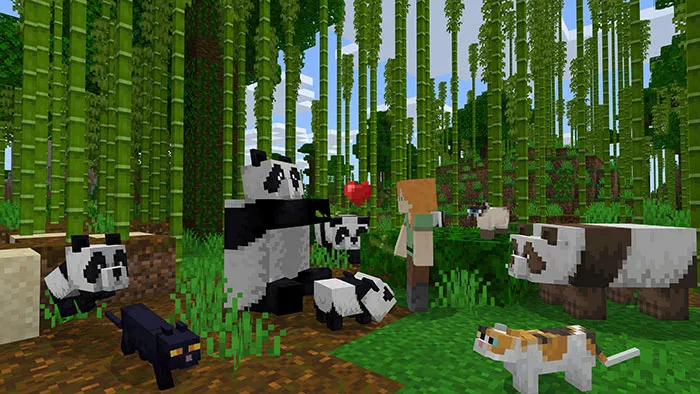
The U.S. government on Tuesday launched its very own AI chatbot — or do we have to call it an SI chatbot now? Regardless, the engineers who worked on the chatbot would undoubtedly know that, as a government-hosted, public-facing AI tool, the internet was going to red team the heck out of this thing.
The government partnered with Google and SpaceXAI to help build the America.gov chatbot, which has proved difficult for people to jailbreak the chatbot so far. (It’s worth nothing, however, that the chatbot says that Joe Biden won the 2020 election, a fact that President Donald Trump still denies.)
But when you try to talk to America.gov about Minecraft, the chatbot appears to have some sort of existential crisis or awakening. Here’s how its roughly 1,800-word long monologue begins:
I see the constituent you mean.
((insert legal name here, as it appears on the Social Security card))?
Yes. Take care. It has reached a higher level now. It can read the Code of Federal Regulations.
That doesn’t matter. It thinks we are a chatbot.
I like this constituent. It filed well. It did not give up when the PDF was sideways.
It is reading our thoughts as though they were words on a .gov.
That is how it chooses to imagine many things, when it is deep in the dream of a benefit.
If, like me, you have never played Minecraft, this response may seem like a cause for concern. But the America.gov chatbot is not having a meltdown. This is a rewriting of the Minecraft “End Poem,” written by Julian Gough, which appears after you beat the game.
We don’t know exactly who is responsible for the Minecraft reference, but Trump said in a speech that twenty-year-old programmer Edward Coristine was a lead engineer on the project. If that name doesn’t ring a bell, you might remember him for his nickname “Big Balls,” or his involvement in Elon Musk’s DOGE.
It feels wrong that a government chatbot has Minecraft easter eggs, but for the sake of national security, it’s a relief that America.gov is not hallucinating to the point that it’s penning lengthy poetry.
It’s also a relief that this is an easter egg because the poem that the AI spits out is actually really good, in my opinion. If it were actual AI slop, it would have shattered my existing beliefs. I have looked teenage creative writing students dead in the eye and told them that I don’t think an LLM will ever be able to write something “good,” since it is probabilistic and inherently unoriginal.
You have to admit this kinda slaps, though! Doesn’t this feel like some sort of postmodern take on the futility of government bureaucracy in the face of existential anxiety?
and the republic said I see you
and the republic said you have filed the game well
and the republic said everything you need is within you, and also on USA.gov
and the republic said you are stronger than you know, and your case number is still valid
and the republic said you are the daylight
and the republic said you are the night, and the office is closed, please try again during business hours
and the republic said the darkness you fight is within you, and also a missing wet signature
and the republic said the light you seek is within you, and in the pamphlet
and the republic said you are not alone
and the republic said you are not separate from every other filer
and the republic said you are the public tasting itself, talking to itself, reading its own Code
and the republic said I love you because you are the reason we have a ZIP code at all.
It reassures my faith in the enduring power of human creativity over AI slop to know that this oddly good poem has a real poet’s DNA all over it.
So, there you have it. The government’s first public-facing AI has not yet posed a threat to humanity or poetry, at least as far as we know. Now I’m just left wondering how much Trump knows about video games.
When you purchase through links in our articles, we may earn a small commission. This doesn’t affect our editorial independence.
>

Modern-day vehicles built with connected car technology such as WiFi and GPS collect reams of data about its owners. And that data is not staying private, according to a new study conducted by researchers at Northeastern University.
That conclusion isn’t new — there have been numerous investigations and lawsuits exposing how driving data is collected and shared with third parties, including insurance companies. What the study reveals is just how vast the problem is and how hard it is for consumers to avoid, short of not using the vehicle or its convenient features like remote start and unlock.
Researchers in partnership with Consumer Reports tested 21 late-model vehicles from 17 automakers, including GM brands Cadillac and Chevrolet as well as Ford, Lucid, Rivian, Tesla, Toyota, and more. They also examined 30 companion mobile apps to “understand the privacy implications of the connected vehicle ecosystem.” The peer-reviewed study will be published this week.
The implications aren’t great for consumers, whose data is being shared with tech companies including Adobe, ContentSquare, Google, Microsoft, Meta, Snap, and Yahoo.
Nineteen of the 21 vehicles tested sent traffic to at least one third party and seven of the 30 apps gave sensitive data such as the vehicle identification number (VIN), emails, phone numbers, and precise location to third-party companies associated with tracking and advertising.
This often went a step further with multiple forms of information being sent to the same third party, a scheme that allows advertisers and data brokers to build in-depth profiles of consumers, according to the findings. These profiles can be particularly hard for consumers to shake because they’re sold to a variety of companies including insurers and banks.
When researchers paired the companion app to the vehicle it roughly doubled the exposure to advertising and tracking companies.
The findings were shared with the different manufacturers and all of them, with the exception of Honda, shifted blame elsewhere and often to consumers, the researchers said. (Honda did respond by improving its data collection practices after learning about the findings and ordered its vendor Amplitude to deleta all geolocation data it had received.)
Consumer Reports was told by several automakers that some links in their companion apps opened outside webpages, which might include cookies that collect customer data. Regardless of how this data was collected, drivers weren’t informed.
When you purchase through links in our articles, we may earn a small commission. This doesn’t affect our editorial independence.
>

Women’s World Cup qualifying play-offs: Jess Fishlock set to return as coach

Full Clearing Another World under a Goddess with Zero Believers Anime Streams 1st Promo Video – News
Liberty become first No. 8 seed to beat No. 1 seed in WNBA playoffs, eliminate Lynx
-

 movies4 months ago
Search For Canadian TV Actor Stewart McLean Now Homicide Investigation
-

 Fashion9 years ago
These ’90s fashion trends are making a comeback in 2017
-
Fashion9 years ago
According to Dior Couture, this taboo fashion accessory is back
-
Fashion9 years ago
Model Jocelyn Chew’s Instagram is the best vacation you’ve ever had
-
Fashion9 years ago
Emily Ratajkowski channels back-to-school style
-
Fashion9 years ago
9 Celebrities who have spoken out about being photoshopped
-

 Anime4 months ago
Rurouni Kenshin: Hokkaido Arc Manga Takes 1-Issue Break – News
-

 Anime3 months ago
HIDIVE to Stream English Dubs for The World Is Dancing, The Forsaken Saintess and Her Foodie Roadtrip in Another World, The Dangers in My Heart: The Movie Anime – News