
Politics
The House Article | Edtech Wars: Meet The Mums Fighting Screens In Classrooms


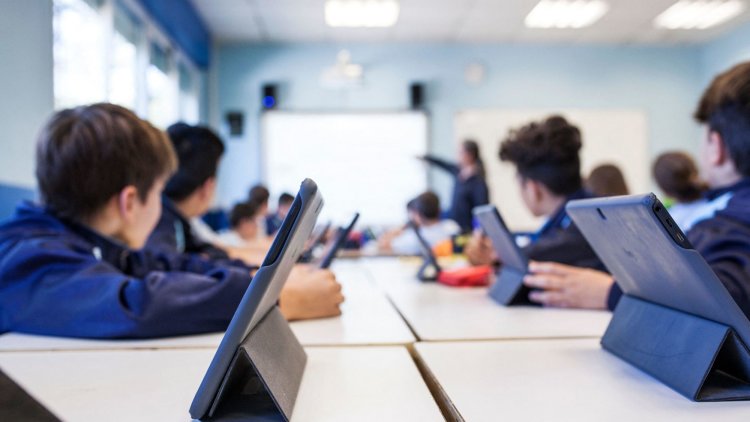
(David Fuentes/Alamy)

14 min read
As consensus grows around the need for social media and smartphone restrictions for under-16s, Sienna Rodgers reports that campaigner mums across the country are now bringing the fight to edtech
For Bridget Phillipson, Britain’s embrace of edtech – educational technology – is exciting.
“I’m so proud that the UK is an edtech powerhouse,” the Education Secretary declared in a speech in January. Announcing a £23m expansion of the government’s edtech pilot programme, she continued: “AI can deliver the biggest leap forward for learning in centuries – perhaps even since the invention of the printing press”.
As the Department for Education boasts that it is “heralding a digital revolution in education”, £187m has been put into a ‘TechFirst’ skills programme to bring AI into the classroom and a commitment has been made to roll out AI tutoring in schools for disadvantaged pupils.
For an increasingly vocal group of parents, however, edtech is an unwelcome development in their children’s education – one that is being foisted on them, both at school and at home, without their consent. They suspect that the government’s enthusiasm for edtech is based on the push for economic growth via tech investment, but believe that children’s education and attainment is being harmed in a way that will do little good for our economy in the long term.
Those parents have recently scored victories in other areas of education policy. The government has agreed, ahead of the results of its consultation on a ban, to put restrictions on the social media use of under-16s. And in March, it released new guidance urging parents to limit the screen time of under-5s – avoiding it altogether under two years, and no more than one hour a day for children aged two to five.
“Parents of young children are facing a constant battle with screens,” the press release unveiling the guidance empathetically states. Yet the guidance, while putting the onus on parents, does not apply to education settings – even though many parents complain that edtech is making that constant struggle over screen time harder.
“The next battlefield is in education,” confirms Arabella Skinner, policy director at Health Professionals for Safer Screens. She is delighted by the screen time guidance but says: “There is no point doing any of this work unless they look at it holistically across the whole day.”
Her group comprises thousands of concerned health professionals from paediatricians, psychiatrists and psychologists to speech and language, occupational and physical therapists, plus ophthalmologists, opticians, audiologists and hundreds of GPs.
“The conversation has been around the mental health of a 15-year-old – that’s where it got stuck,” she says, when in fact resulting health problems extend much further, in both age and conditions. One A&E consultant in her group recalls a child presenting with swollen legs: “You think it’s kidney failure. Turns out he’d been sitting for a week, pretty much, playing games, 17 hours a day with his legs up.”
Skinner is training health professionals to spot such signs, and wants questions around digital devices to become standard: “In the same way you ask people about how much alcohol they have, we should be thinking about asking about their screen time.”
“We came in here more worried about teens. We are now more worried about early years,” she adds. Recent research findings are stark.
The latest report by the 1001 Critical Days Foundation – an organisation founded by Andrea Leadsom to emphasise the importance of the period from pregnancy to two years old – found that more than two-thirds of under-2s use screens. According to their data, nearly 20 per cent of infants aged four to 11 months watch them for over an hour a day.
Ofcom data has identified that 98 per cent of British two-year-olds are watching TV or online videos, on average for more than two hours a day. And early years charity Kindred Squared found that 28 per cent of UK children starting primary school do not know how to use a book – with many attempting to swipe or tap on them, as they would on a tablet.
Education minister Baroness Smith has argued in the Lords that, when it comes to digital devices, “it is important not to conflate personal and educational use”. The contention of edtech advocates is that children must be taught digital literacy.
But critics question what skills young children are really building when they scroll YouTube shorts or play games on the iPad. Many of these apps look less like genuine learning and more like limbic capitalism – the term coined by historian David Courtwright to refer to products that exploit the brain’s pleasure centre to maximise profit through dopamine hits.
The House put out a call in one of the many WhatsApp groups for parents concerned about screens to hear first-hand experiences of edtech; a flood of eager responses soon came.
Ex-childminder Dimitriya, a mum of three girls who lives in the North West, recalls her eldest daughter coming back from school in reception – when the children are aged four to five – with a QR code for her maths homework. It linked to NumBots, a learning platform dedicated to addition and subtraction. The game allows users to choose a character and rewards them with stars when they answer questions correctly and quickly enough.
“We’ve experienced anger issues with our daughter that we haven’t seen before. She started throwing and hitting and screaming,” says Dimitriya. The behaviour left them confused. “Do we have a child that’s just naturally competitive and we haven’t noticed up until this moment, or is it something to do with the platform and what she’s experiencing?” they wondered. “I believe that it’s the platform – it’s the gamification of the learning process.”
She also noticed – as this House writer has found while visiting local state schools – that reception classrooms feature big interactive boards. “Massive tablets, basically,” she says. “I have tried to understand how long exactly they spend on that thing – nobody can tell me.”
At the start of every school year, Dimitriya now explains to the teachers that they have no one-to-one devices at home, and her kids won’t be using the apps for homework. Despite other parents at the school reporting similar stories, such as kids breaking iPads when they can’t do the required number of maths equations in 50 seconds, the school is pushing back.
“We’ve been told that if we don’t sign the user agreement for next year, our children will be left out from their computing lessons,” she reports. The headteacher has been firm: “She basically said to us, ‘If you don’t like the school and what we’re doing, you can leave.’” Unable to find schools nearby that take a screen-free approach, she is now seriously considering homeschooling.
Annaliese, a former primary school teacher who used to work for Westminster think tanks and now campaigns against smartphones in schools, has children of primary school and preschool ages.
“My main concern is that they are highly addictive,” she says of the homework apps. “You give the kids the device, and they’re doing this fun game, and they might be meant to do 10 minutes of it, but getting that device off them afterwards is incredibly difficult.”
Her children were told to use Times Table Rock Stars, another popular app promoted by schools but aimed at those aged six and above, for their maths homework. It similarly offers avatars and users are encouraged to collect virtual coins, allowing them to personalise their characters.
“It was with great trepidation that I would give over the laptop to do Times Table Rock Stars, because I knew that whilst the requirement was to do 10 minutes, it was going to take an hour out of that afternoon to wrangle that device off the child and then to put up with the inevitable tantrum meltdown afterwards,” says Annaliese.
It was not only behavioural consequences that worried her but also their effectiveness in terms of learning.
“I noticed that, with my daughter, she might actually be doing quite well with her times tables on an app, but if I asked her orally, she’d find it really difficult. It’s almost like she couldn’t transfer the learning into a different context. And it was at that point that I opted out of her using it.
“I created the analogue alternative, which was literally just to print out the Times Table Rock Stars worksheets and get her to do those with a timer that I bought for a fiver, and she’s doing really well.”
Kifah has encountered problems at an earlier age still. She is based in Scotland, where the use of edtech is even more intense than in England as a result of direct mandates by councils.
You think it’s kidney failure. Turns out he’d been sitting for a week, pretty much, playing games
When Kifah’s son started nursery part-time, she found he became disoriented and overstimulated. “We couldn’t work out for a really long time why he was so distressed; why he was so violent and dysregulated,” she says. Then she discovered they were handing iPads to the kids daily.
“I had asked them not to use screens with him, so I was in shock, obviously. I approached them, and their argument was that the council would withhold funding if they did not have technology as part of their curriculum. I said, ‘But he’s two?!’” Kifah recalls.
“We withdrew him, and all these behaviours stopped.” But at the next early years setting, she found they refused to stop showing them YouTube Kids. Next, she tried an outdoor nursery – but again found that council policy meant they had to use tech, so were giving her son a phone on which to select songs to play.
“It’s really been quite upsetting for us and really difficult. We’re trying to give our child the best start in life. A lot of what we do is evidence-based in our home, and we’re just getting told, ‘Well, this is how it’s done now.’ And that’s not really evidence,” she says. “We’re a one-income family now, which we never, ever expected to be.”
While Sweden, Denmark, Madrid and Los Angeles are rolling back digital learning, there has been a major push in Scotland for all primary and secondary pupils to have one-to-one devices. This has led to safeguarding problems, with pupils bypassing safety filters on school iPads to access violent and sexual content.
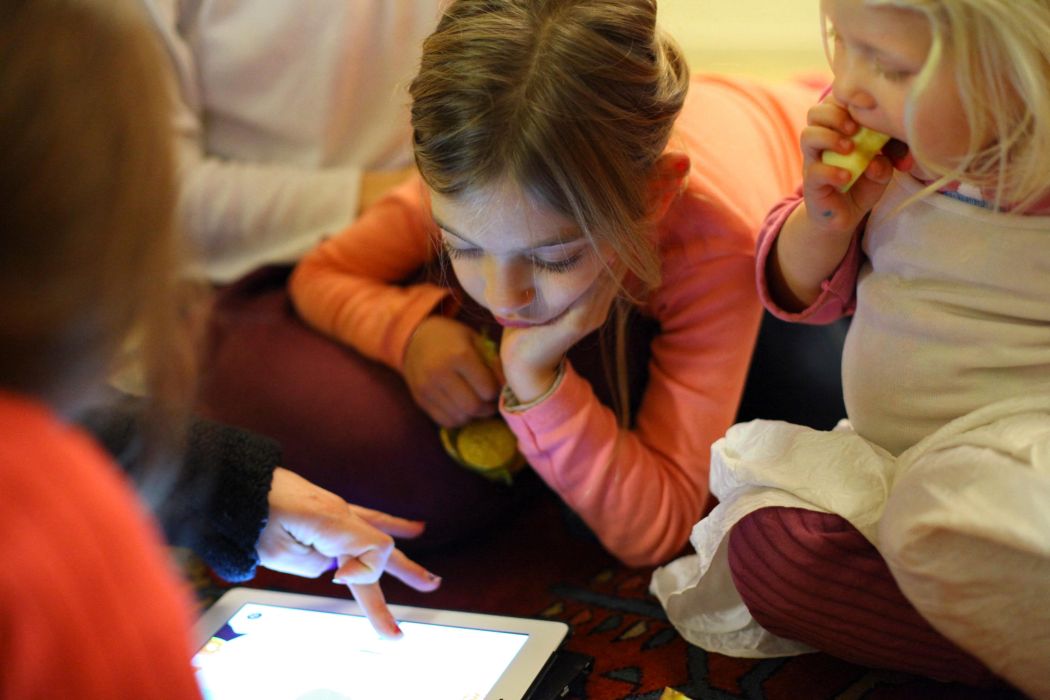
Politicians on the left often focus on equitable access to digital tools – and yet ironically, there is anecdotal evidence that parents who can afford fees are turning to private schools (such as the famous Heritage School in Cambridge) for screen-free education.
Private schools are not forced to undertake the reception baseline assessment, for example, to which the government introduced a digital element in 2025. This is the mandatory test that all reception pupils – aged four – must take in their first six weeks, designed to measure student progress between the start and end of primary school.
Dr Mandy Pierlejewski, a nursery and reception teacher turned academic, led a team that carried out a study on the assessment – first, looking at two schools in 2024; then, three schools in 2025, when a touchscreen aspect was brought in. Filming pupils from behind to preserve anonymity, they analysed their body language and found signs of stress in some of the 2024 children and every one of the 17 children studied last year when they were given a tablet for a 20-minute test.
“A lot of the children didn’t have the digital literacy they needed to complete that test,” she recalls. “Not all children, for instance, realise that you could diagonally drag and drop.” The test asked the four-year-olds to move three pictures into boxes above, in the correct order, to make a story. Many got it wrong – but not because they didn’t understand sequencing.
“Some children really didn’t have the digital skills needed at all. They were tapping on things multiple times. Some of them kept shutting the iPad down by pressing the Home button, and they had to be all started up again.”
In 2024, the maths questions involved moving concrete materials. For subtraction, they were presented with six little plastic bears, told to take two away, then asked how many were left.
The 2025 digital version was more abstract: presented with a picture on the screen of a tree with four leaves on, the teacher says “three leaves fall to the floor – how many leaves are left?” Of the 17 children the study watched, 16 incorrectly counted “1, 2, 3, 4”, not realising they had to move three leaves on the screen themselves before counting.
“The last thing they heard was, ‘how many leaves are left on the tree?’, so they just counted all the leaves. Now, for 16 out of 17 children to get that wrong, there is something wrong with that question,” Pierlejewski says. “I teach primary school teachers mathematical development.
We’ve experienced anger issues with our daughter that we haven’t seen before. She started throwing and hitting and screaming
You start with concrete materials, then you proceed to pictorial representations of the concrete thing, then you move to abstract. It has to go in that order, because that’s how children’s brains develop.”
She predicts that the latest cohort’s results will be worse than previous years. There is no mention of testing digital skills – the assessment is still supposed to be focused on numeracy and literacy only – yet Pierlejewski’s study suggests otherwise. It raises questions about the purpose of edtech and whether it is being used with intention.
Skinner, of Health Professionals for Safer Screens, concludes: “They need to separate educational technology that frees up teachers’ time to be able to teach – because nothing is better than a teacher who’s inspired and delivering it – versus technology that is in front of the student, and takes them away from proper teaching.”
SafeScreens co-founder Jane Rowland, who provides resources to help parents fighting schools to opt out, argues: “What parents are repeatedly being told by schools is ‘we’re preparing the children for a digital workplace’, which, to me, is just nonsense. A digital workplace doesn’t use gamified applications for their employees.”
She is asking government to pause edtech, conduct a review and establish certification for platforms that are shown to be educationally beneficial for children.
Her demands are echoed by the Conservatives, who put forward amendments to the Schools Bill to protect pen-and-paper exams, give parents the right to opt out of screen-based homework, and ensure children would not be required to complete the reception baseline assessment on screens. Although ministers have agreed to introduce a legal ban on smartphones in schools and deliver age restrictions on social media, they have not so far changed course on edtech.
“The government really need to get a grip on the screen creep happening in our classrooms,” shadow education secretary Laura Trott tells The House. “When it comes to screens in schools, we should be guided by the evidence. Research shows that writing by hand supports memory and deeper learning in a way that screens simply don’t.”
“We need to pause and review the evidence before driving any more technology into our schools,” she adds. “We need to end this uncontrolled experiment on our children. Until there is clear evidence that screens improve learning, the focus should be back on books, not devices.”
A Department for Education spokesperson said: “Technology plays an important role in broad, rich learning experiences in classrooms across the country, and it is essential that children learn to use technology confidently and safely, so they can gain the skills they’ll need as they move through life.
“Equally, we understand concerns about excessive screen time and that unmonitored or unlimited personal use can carry risks and recognise that we must get the balance right.
That’s why we are supporting children and young people to develop healthy relationships with technology, including through our new guidance to help families build good screen habits from a young age, banning mobile phones in schools and consulting on the next measures on online safety for children.”
>


7 min read
As a council leader, the late Labour MP Iain Coleman made his London borough the only place in England where care at home is free. Then he needed it. Ben Gartside speaks to his widow, Dame Sally Powell, about her campaign to secure reform
Even at the time the move was radical: free home care, including personal care, without means-testing for any eligible resident. “We just did it because we knew it was the right thing to do,” Dame Sally Powell says of the decision she and others, including her late husband Iain Coleman, took in Hammersmith and Fulham in 1991.
Years later, the home care service became free again after Labour retook control of the west London council in 2014 – and it remains radical and indeed unique in England. The free service covers care in the home: washing, dressing, meals, medication, getting in and out of bed, for anyone the council assesses as having eligible needs.
Today, in her husband’s memory, Dame Sally is starting a national campaign that asks for care at home, free at the point of need, to be available everywhere. Although she says the policy choice was made in 1991 because it was “the right thing to do”, there was a bitter irony – some 13 years after its introduction, Coleman became one of the borough’s residents to be eligible.
Throughout the 1990s, they were a formidable power couple – two-thirds of an effective triumvirate. “Iain was in charge of the unions, Andy Slaughter was in charge of the money, I was in charge of the land,” Dame Sally says.
Coleman was elected MP in 1997 but one evening in 2004 he collapsed while shopping in M&S.
“In those days we didn’t have the knowledge about what a stroke looked like,” Dame Sally says. By the time she got him to Charing Cross hospital he had had eight strokes in a day; he came out paralysed down his left side.
He was only 46. Shortly before the 2005 general election, Coleman was advised to stand down, as he would be eligible for his pension on medical grounds.
At that point, Coleman and Dame Sally found themselves in the position of service users rather than political leaders, and discovered the grim reality of the system around care in the UK.
Coleman initially spent some time in the extra care shelter, but it didn’t click.
“Iain hated it. He just wanted to watch the Arsenal… He was very unhappy there. He had mice, and we had to get a cat for him. It was called Dennis Bergkamp, funnily enough. And so then I bought him a shared equity flat underneath me.”
Speaking today, Dame Sally describes the system as like a “jigsaw”. “For three years, we did not get Disability Living Allowance, because I didn’t know,” she says. “No one told me. My doctor, the hospital. No one told me.”
Nor did anyone tell her about the council tax. A severe stroke can leave someone classed as severely mentally impaired for council tax purposes, which means they are disregarded altogether – a status a GP must certify, and one that carries no statutory time limit on backdating.
“I didn’t know until he died,” Dame Sally says. “Iain was entitled, because of his stroke, not to pay council tax. But he’d been paying council tax for 14 years, and I didn’t know that one, but I do now. So, I’m making a claim against the council for a refund.”
The family did not apply for continuing healthcare, which would have moved the cost from the council onto the NHS. Dame Sally acted as a carer while not knowing of the existence of either Attendance Allowance, for those who need supervision from carers, or Carer’s Allowance, for those who spend much of their time caring for someone with a disability.
What did work was a question asked in a committee room. Dame Sally was sitting on the council’s social services scrutiny committee, in a meeting about adult social care, and asked the director about her own household. Why did her husband not get any? “I said, ‘You know him. He’s had a stroke.’ And from that day onwards, he had free adult social care.”
In 2020, she was struggling. Coleman had just been discharged from hospital into the pandemic, and she had no idea what to do. Despairing, she gave an interview to LBC to vent at the nightmarish situation she found herself in.
“But what about the hundreds of people who can’t, who don’t have the access that I fortunately could access? That’s what worries me”
Luckily for her, Sir Sadiq Khan heard it. By her account the London mayor rang the council that afternoon and told them to sort out Coleman’s care.
“Sadiq Khan was brilliant,” she says. “Even though he’s a Liverpool fan.”
Today, Dame Sally reflects on the benefits she had by living in the borough and knowing how the system works – and fears for the millions who have neither advantage.
“Iain was an MP. I was a councillor. I can do that,” she says. “But what about the hundreds of people who can’t, who don’t have the access that I fortunately could access? That’s what worries me. How many people are out there?”
“There must be so many people out there who just need this,” Dame Sally says.
Last September, Coleman died of pneumonia at the age of 67. By his wife’s count, he had 20 strokes over the last two decades.
At Coleman’s memorial service in Hammersmith, veteran Labour MP John McDonnell suggested launching a campaign in Iain’s memory in support of free home care. “It just took off from there,” Dame Sally says, “because I want everyone to have the care that Iain had.”
 Sally Powell and Iain Cole.jpg)
Using Coleman’s pension, Dame Sally is launching the campaign at Labour conference, alongside Stephen Burke, who was Hammersmith and Fulham’s cabinet member for social services in the years the policy was built and went on to lead the council.
While the future of care across the country is up in the air with the Casey Review, Dame Sally is pushing for Prime Minister Andy Burnham to begin pilots immediately.
“Get some local authorities to set up pilots, because you can’t be prescriptive – every area is different,” she says. She accepts the politics of it: “I know that he has to wait until Casey. I understand that politically.”
Dame Sally has faith in both Burnham and Yvette Cooper, his Health and Social Care Secretary, to find a solution.
“I have a lot of faith in Yvette Cooper. I know there’s the big three, but I think she’s got the most important job. It’s the one with the most challenges. She was a health minister a long time ago…She steered through that bill about stem cell research years ago. She was brilliant. And obviously she knew Iain, and I think she’s exactly the right person to make huge progress on this.”
In Burnham, she sees another politician having to confront the reality of the system; the Prime Minister’s father was living in a care home with Alzheimer’s until his very recent death.
Ultimately, Dame Sally wants to make life as comfortable for others as she managed for Coleman.
Towards the end of his life, he had palliative care in his own flat, round the clock. “He was as happy as a sandboy,” Dame Sally says, “because he didn’t have to go to Parliament, and he could watch Only Fools and Horses and the Arsenal. What else do you want in life?
“It can happen to any of us. It happened to me in Marks & Spencer’s one day.”
>
Politics
Politics Home | Andy Burnham Says He Will Scrap Triple Lock To Fund Social Care After General Election
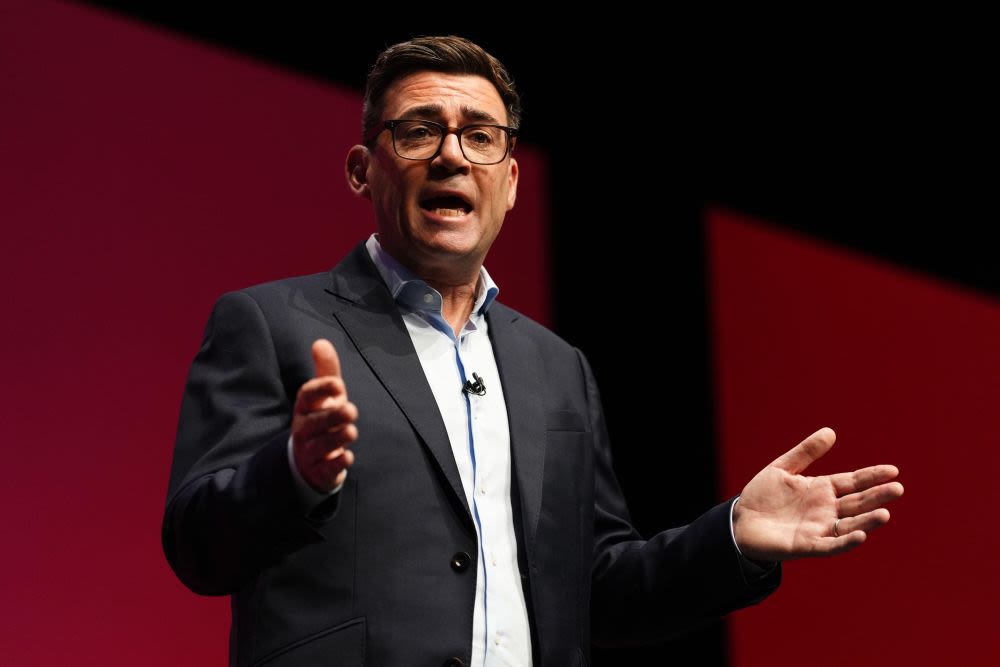

Andy Burnham spoke to conference in Liverpool on Tuesday (Alamy)
6 min read
Andy Burnham has pledged to reform the pension triple lock after the next general election to fund a new social care system.
It is one of several announcements the Prime Minister made in his Labour Party conference speech in Liverpool.
He also said he would launch a national commission on changing the voting system, and look at pursuing closer ties with the European Union.
Burnham said he would use his first conference speech as PM to “break the mould”, saying that “more of the same isn’t good enough” to get the country back on track.
He said he would “make a break with the direction of the past 40 years” and create a Britain “where people feel the country has got their back again. A Britain for everyone, no matter who we are or where we’re born, we would be unstoppable, and we will be.”
Burnham paid tribute to his predecessor Keir Starmer “for the historic victory he achieved for us” at the 2024 general election, before going on to pledge a series of changes that he claimed his generation of politicians had not been brave enough to tackle up to now.
Social care
One of Burnham’s biggest pledges was creating a new National Care Service, to be introduced in the next Parliament, which he claimed was “a landmark policy, as significant as the creation of the NHS itself, and utterly essential to securing its future.”
The PM said his generation of politicians was guilty of “cowardice” for not fixing the issues facing the social care system.
He said he was prepared to take a hit to his popularity to reform the system, saying “someone has to go through the pain barrier and rip the plaster off”.
Addressing social care workers from the stage, Burnham said: “You are not invisible to me. I see you. I thank you, and I am sorry that my profession has let down yours for so long. I promise you, I won’t leave this job without doing everything I can to change.”
Burnham set out a vision for “a person-centred, high-quality care service that starts in the home”. He said it would be “a system in the best traditions of this party, where everyone contributes, and everyone is covered, free at the point of use, and no care charges paid out of your basic state pension”.
Triple lock reform
To help fund his social care plans, Burnham said he would reform the pension triple lock after the next general election.
As things stand, pensions increase in line with whatever is largest out of inflation, wages and 2.5 per cent.
However, Burnham said he would alter the policy to remove wages from 2030.
There have been growing calls for the triple lock to be phased out from critics who argue it not sustainable in the long term.
However, it will be seen as a risky move for Burnham as he seeks re-election, given it will impact large swathes of the public.
Electoral reform
Burnham, a long-term supporter of replacing First Past The Post with a more proportional voting system, announced that he would launch a national commission to look at changing the electoral system in England.
He said that Labour’s next general election manifesto would contain a commitment “to change the electoral system so that everyone’s vote counts, and everyone’s voice is heard.”
“We can’t succeed in the eyes of the world if we continue with the levels of political turbulence we have seen in recent times,” he told conference.
Water reform
The PM said the state of the country’s water industry “is a symbol of what has gone wrong in Britain”.
Referring to the privatisation of infrastructure, Burnham said: “The British right talk about taking back control. Never let them forget. They are the ones that gave it away in the first place.”
He announced that Environment Secretary would present a “strengthened” water legislation to Parliament which would repeal former prime minister Margaret Thatcher’s ban on public ownership of water companies, a move he said “will start a 10-year journey to a very different water system.”
Eagle hinted that government action on Thames Water was coming earlier this week, telling the PoliticsHome podcast The Rundown that “the status quo is not an option”.
Under the changes, mayors will have new powers to hold water companies to account, with tougher consequences for those which repeatedly fail. The PM said that the government will also “close the loopholes used to pay excessive bonuses” to water bosses.
Housing
Burnham announced in his speech that he would pass legislation to make it easier for homes to be reclaimed from negligent landlords.
He said that negligent landlords would face losing those properties if they did not respond to warnings to improve: “If they refuse, we will make it much easier for councils to acquire those homes and we will legislate if necessary.”
“We don’t let people sell food which damages health, so why allow it with homes from now on? We won’t”, Burnham pledged.
Ahead of the conference in Liverpool, Burnham announced a new homes scheme for first-time buyers, saying: “Too many young people are struggling with housing, with many giving up hope on ever having a home to call their own.”
Energy reforms
Burnham also announced the creation of Great British Energy: Great British Grid.
The new grid, he said, will be a “publicly owned company that will challenge the private sector operators”, “increase competition, drive down costs, and speed up connections, so businesses can expand and grow more quickly.”
He also pledged to get down energy prices by “reforming a broken energy market” to better serve the public interest.
“I have asked Miatta Fahnbulleh [the Energy Secretary] to speed up the breaking of the link between what we pay for power at home and the international gas market to get bills down.”
There were also hints made about the potential for controversial North Sea drilling, with Burnham saying he would be “pragmatic” about the situation, “as we build a bridge to a clean energy future and face the climate crisis”.
Education and welfare reform
Burnham also pledged to reform the education and welfare systems to tackle youth unemployment.
On education reform, Burnham said the government would “rebuild a system of comprehensive education in this country. country. With parity between academic and technical, with [Education Secretary] Lucy Powell leading the way.”
Burnham said that the reforms would provide “good quality pathways for all from 14, and the right support for our young people when they need it-a 45-day work placement between 16 and 18, an apprenticeship at 18, and no long waits anymore for mental health support growing up.”
“We will need a fundamental rethink of the welfare system to find the money for these opportunities upfront,” Burnham said.
Future relationship with EU
In the final part of his speech, Burnham hinted at closer alignment with the European Union, a decade after the public voted to leave.
The Labour government has sought closer ties with the bloc since being elected in 2024.
However, speaking on Tuesday, Burnham said he would use a UK-EU summit later this year to produce a series of options for Britain’s long-term relationship with the bloc that he would present to the public.
“I will see if we can find consensus around one, which will give us clarity about our position and the future of the continent that we live in.”
>
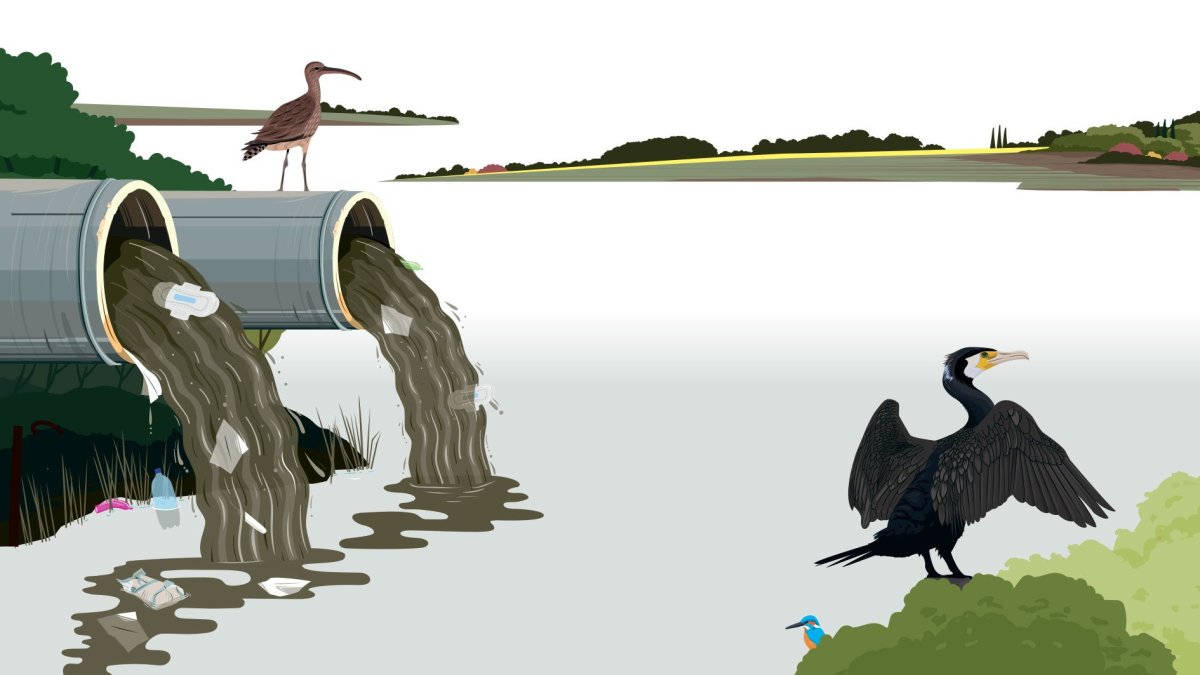

Illustration by Tracy Worrall
8 min read
Campaigning in Makerfield, Andy Burnham threatened Thames Water with public ownership – but has not so far followed through. Ben Gartside reports on a decision that will define his approach to privately owned suppliers of public goods.
What, exactly, does the word ‘control’ mean when applied to those entities that supply vital public goods?
Does it mean full nationalisation, with every decision in the hands of ministers and officials in Whitehall? Or does it rather mean that customers exercise a measure of control over their operation through ownership of a portion of equity? Or some other variant in which locally elected representatives take a golden share in the companies that serve their region?
These are not theoretical questions but are coming sharply into focus as Andy Burnham wrestles with what to do about Thames Water.
As of today, Thames Water supplies 16 million customers, owes more than £20bn and has been in breach of its licence for two years.
A large portion of the Labour Party would like to see the company – which critics say has become emblematic of the failures of utility privatisation – back in public ownership.
Its creditors, however, want to take over the company and keep it afloat by releasing tranches of cash to help the beleaguered firm.
The financiers are quietly optimistic. Industry sources suggest Burnham and the officials supporting him are pragmatic on the issue, and hope that the focus on control could reheat plans for the minister to hold a “golden share” in Thames Water, offering the government a veto while retaining private ownership of the suffering water company.
A concerted effort is being made by some in the City to understand Burnham’s policy brain. Some of Thames Water’s creditors have commissioned research into Burnham’s work on taking buses into public ownership in Greater Manchester, extrapolating out what it would mean for their financial interests.
They take heart from public comments by John Healey, the Chancellor, who insisted that ‘control’ need not mean full nationalisation.
“Some might claim that public control is public ownership,” the Chancellor told his audience, “but it’s broader than that.” What it meant instead was “local leaders and a stronger centre”, accountability for “fair bills, better services, investment that gets delivered”, and “an active state driving better regulation, quicker decisions”.
Within the Labour movement, two rival plans are circling ahead of the party’s conference.
On one side is Mainstream, the group co-founded by Compass and Open Labour. It did more than any other to get Burnham back to Westminster by criticising Keir Starmer’s economic policies from the left and encouraging bolder decision making from the government.
With an ally in No 10, the group is still singing the same tune. Mainstream supports public ownership of water generally, and believes that Thames Water should be put immediately into special administration.
Initially, Burnham struck a similar tone on water. In June, campaigning in Makerfield, Burnham told the Guardian that public ownership was “absolutely an option” and that “for Thames Water, that is what should be done”. By the end of August, the plan to put the company into special administration had gone quiet, with a Whitehall source telling the Times there was “no quick or clean solution without an enormous price tag attached”.
While Mainstream’s motion has been left open-ended for the interpretation of the new government, its motive is clear: a source close to the group says that the system now is itself an attempt at public control without public ownership, and it is not working.
Mainstream is careful to say this is not a confrontation, that it wants the government to succeed, and that the motion is deliberately open. It also does not expect to win. Under Starmer, it tried something similar on the two-child benefit cap last year, had its initial motion blocked but counted the overall shift in tone around the debate as a success.
“Copying the failed model of non-profits like Welsh Water doesn’t get around the questions of compensation, debt or legal risk”
The parliamentary case is led by Clive Lewis, whose own water bill had its first reading a week before the Cunliffe review was commissioned, and who secured an urgent question on the sector in June. He told the Commons then that this “was never a market failure” but “the market working as designed”. Allies of Lewis say that like-minded MPs are prepared to rebel if government proposals do not go far enough.
Lena Swedlow, the deputy director of Compass, tells The House that the left-wing pressure group is now campaigning with Labour MPs to push the government to more wide-ranging action.
“I think we got here because Ofwat and the Starmer-led government believed the creditors and the Thames Water leadership could get themselves out of this mess, which was short-sighted.
“It’s part of the larger theme of Starmer’s No 10 that they didn’t adequately prepare for power, and figures like Morgan McSweeney are now on record saying so. Fast-forward two years later, the hesitance to put Thames Water in special administration is as short-sighted and dangerous.”
Those supportive of implementing the special administration regime are “incensed” by the clear change in government language from public ownership to control.
However, the government is clear that the special administration threshold hasn’t been cleared, as of now. The law only allows it if a company is insolvent or in serious breach of its licence, and while creditors keep lending, Thames is not insolvent. “You either are, or you aren’t,” Environment Secretary Angela Eagle said this month. “And whatever people think of Thames at the moment, it isn’t technically insolvent.”
Another plan is that of the Co-operative Party, which Burnham recently became the first Prime Minister to represent.
A recent report by the Good Growth Foundation think tank, with a foreword by Labour MP Helena Dollimore, proposes a bill that would create a path to mutualisation by encouraging water companies to sell up to customers via a share exchange scheme. If they refused to comply, the bar for an enhanced special administration regime would be lowered.
As with nationalisation, the government is thought to have cooled on the co-operative idea, with industry sources expecting the plans to go nowhere.
Officials recognise that any attempt to mutualise would likely lead to the largest rise in customer bills, as investors would be unwilling to stomach any short-term losses without an equity stake. Investors agree, highlighting the mutualised Welsh Water as having the highest bills in Britain.

The left of the party is sceptical too, for the opposite reason.
Mainstream says mutuals work well in many settings but that water needs something stronger, and that it is not clear mutualisation changes who owns anything.
Swedlow says: “Of course devolved and regional leaders should have a say in the future of water. But copying the failed model of non-profits like Welsh Water doesn’t get around the questions of compensation, debt or legal risk.”
One policy wonk highlights that, currently, the Co-operative Party, the Liberal Democrats and Reform all have policies to mutualise water, all with little clarity about what would actually happen next.
What seems sure either way is a significant downgrade in the powers of Ofwat, with responsibility set to be transferred to ministers. The regulator has not had a permanent chief executive since August 2025, and cannot have a successor until the government’s clean water bill is introduced.
The research of the financiers into Burnham’s bus plan seems to be beneficial – earlier this month, The Telegraph reported that regional bodies would be set up to oversee water companies, with a responsibility to hold company bosses accountable for bills and sewage.
As Burnham battles for control, water waits. For the moment, the sector once in the eye of the storm waits to find out the government’s decision and MPs wait to hear the direction of travel.
Within a month of Labour’s conference in Liverpool, Andy Burnham’s government will have delivered its first Budget and Thames Water’s lenders will have decided whether to extend its emergency funding without a signed rescue deal. Labour’s new 10-year plan promising “stronger public control” of water is set to be delivered by the end of the year too. Here are the three leading plans circulating around Westminster.
Public ownership.
Mainstream, the Andy Burnham-affiliated campaign group co-founded by Compass and Open Labour, has drafted a conference motion calling on the Prime Minister to “urgently return water in England into public ownership”. Its paper, The Productive State, sets out the details: put Thames Water into special administration, restructure its debts and have it function as a national public water corporation, run at arm’s length from ministers and paying for investment by borrowing against customers’ bills.
A private solution.
London & Valley Water, a consortium of 100 investors holding £17bn of Thames’ £21bn debt, wants to take over the beleaguered firm. Its £10bn plan would write off billions of debt, add new capital and pay no dividends until 2035. In return, it wants leniency on penalties worth up to £1bn. In June, the then environment secretary Emma Reynolds said the deal did not go far enough – a month later, the creditors offered the government a “golden share”, offering a veto over important decisions and hostile takeovers.
Mutualisation.
A proposal by the Good Growth Foundation, backed by the Co-operative Party and three Labour metro mayors, suggests a law giving water companies a choice: sell up to customers through a share exchange, or face a lower bar for special administration and leave it as a customer-owned co-operative. While it would keep the debt off the government’s books, investors say that borrowing costs and bills would rise without shareholders to absorb any losses.
>
'The Inner Game of Tennis', a sports psychology bible, finds its modern mindset

BBC Studios’ Jamie Hall On ‘Doctor Who’, Talent Deals & Ambitions

Tyson Fury-Anthony Joshua press conference: ‘Fury will try every trick in the book to get to AJ’ | Boxing News
-

 movies4 months ago
Search For Canadian TV Actor Stewart McLean Now Homicide Investigation
-

 Fashion9 years ago
These ’90s fashion trends are making a comeback in 2017
-
Fashion9 years ago
According to Dior Couture, this taboo fashion accessory is back
-
Fashion9 years ago
Model Jocelyn Chew’s Instagram is the best vacation you’ve ever had
-
Fashion9 years ago
Emily Ratajkowski channels back-to-school style
-
Fashion9 years ago
9 Celebrities who have spoken out about being photoshopped
-

 Anime4 months ago
Rurouni Kenshin: Hokkaido Arc Manga Takes 1-Issue Break – News
-

 Anime3 months ago
HIDIVE to Stream English Dubs for The World Is Dancing, The Forsaken Saintess and Her Foodie Roadtrip in Another World, The Dangers in My Heart: The Movie Anime – News