
L-R: Jason Sudeikis and Annette Badland in Season 4 of ‘Ted Lasso’
Apple TV


EXCLUSIVE: Here’s a trailer for Spanish-language pic Hasta el Fin del Mundo, which has set a July 23 release in Mexico.
The film comes from AF Films and associate producer BTF Media. It has been in the works for a while now, with Buena Vista International releasing it in theaters across Mexico in two months.
The pic stars Aislinn Derbez and Mauricio Ochmann in their latest movie collab. Per the synopsis, “Manuel’s life is turned upside down when Esmeralda, the love he lost 15 years ago, calls unexpectedly. Despite being on the verge of marrying someone else, he reconnects with Esmeralda and they realize that their love transcends time.”
The trailer sees the couple, Manuel and Esmerelda, meeting on a train that derails, cementing their love lying next to each other in hospital beds. The woman’s free-spirited nature ultimately appears to split them apart, as she is arrested and Manuel says he has not seen her since. Ten days before his marriage to another woman, a phone call brings Esmerelda, who is ill in hospital, back into his.
Emiliano Castro is the director, with the pic shooting in Spain. Derbez is an executive producer, marking her first time in that role. Derbez and Ochmann are two of Mexican film and TV’s biggest stars, and were previously married.
“We are betting on an intimate narrative with international scope and the potential to connect with broad audiences,” said a BTF rep.
For AF Films, the pic marks its latest move in the Mexican market, following titles such as Mientras Cupido no está, Canta y no llores, V de Víctor and Sin ti no puedo.
>
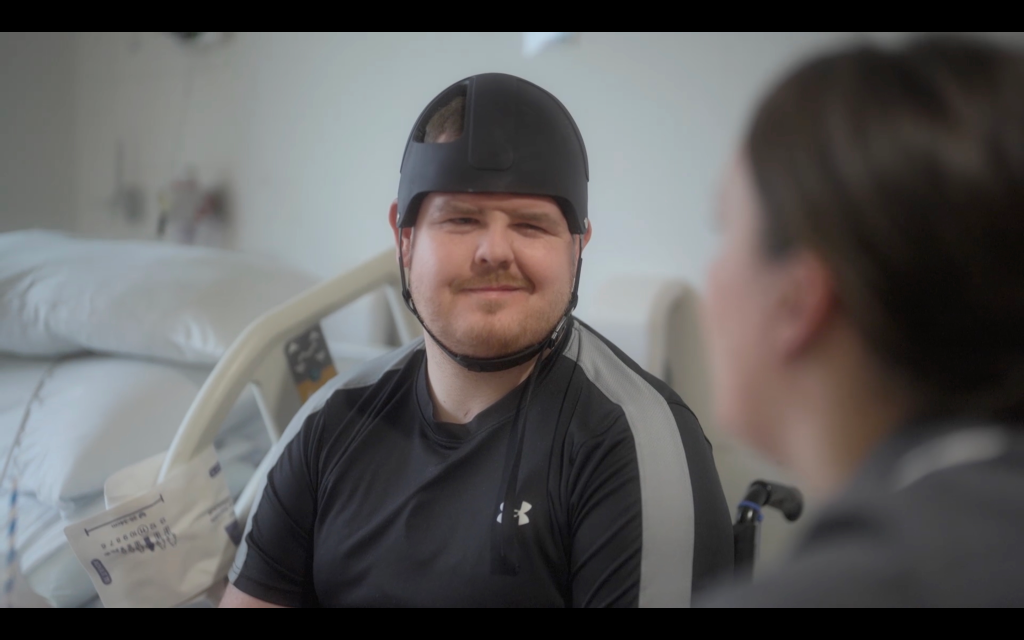
EXCLUSIVE: Channel 4 is teaming with the Stroke Association on a documentary sereis looking at young people living with the aftermath of a stroke.
Trauma: My Broken Brain follows three young survivors through the most frightening days of their lives and the grueling journey back to independence.
Every five minutes someone in the UK suffers a stroke – there are 1.4 million stroke survivors living in the UK today – but the aim of the doc is to show that this is only the beginning of recovery. Filmed over seven months with access to these young adults at the most terrifying and testing moments of their lives, the series meets Dan (28), a dancer left confined to a wheelchair, barely able to speak following emergency brain surgery; Saskia (22), a self-described social butterfly left bedbound after a brain bleed so severe her family feared she would not survive; and Dec (20), who collapsed just four months into a new relationship and spent weeks in a coma, his family and girlfriend unsure if he would survive.
Channel 4 has taken the rare step of teaming with a charity on the doc. It is being produced by Stream Media Group, which was also behind the same network’s Anna Richardson: Love, Loss and Dementia, made with the Alzheimer’s Society.
Channel 4 commissoning exec Simon Lee said: “This is an ambitious and important series that challenges perceptions and gives a voice to young people whose lives have been transformed by stroke, as they embark on the long road that begins after survival.”
Stream’s Victoria Noble added: “What struck us throughout filming was how little people understand about stroke. Survival is often seen as the end of the story, when in reality, it is only the beginning. By sharing their journeys with such honesty and courage, Dec, Dan and Saskia revealed the reality of rebuilding a life after stroke, and the truth behind the long and unforgiving journey to reclaim the right to live an independent life. Alongside the extraordinary support of their families, their stories offer a powerful insight into resilience, determination and hope. It’s been a privilege to tell their stories.”
Noble is EP with Ben Padfield and producer is Laura Hooper. Series director is Storm Theunissen and production executive is Fiona Ridgers. The show was filmed with access to The Walton Centre NHS Foundation Trust and Clatterbridge Rehabilitation Centre, and Wirral University Teaching Hospital NHS Foundation Trust.
>
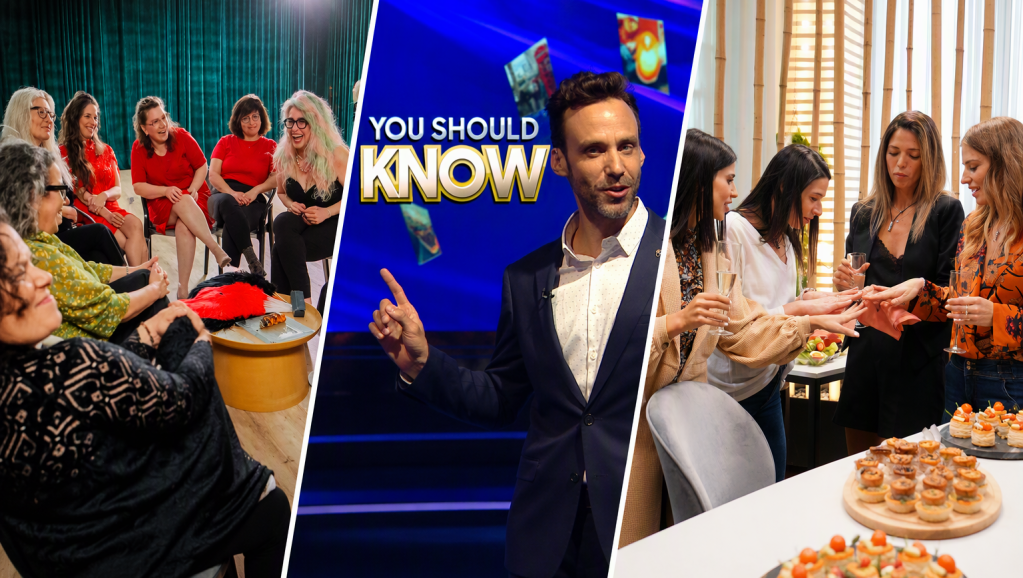
EXCLUSIVE: Power Couple seller Dori Media is heading to Cannes with the largest unscripted slate in its history.
At MIPCOM, the Israeli company will debut the likes of games shows The Hive and You Should Know, docu-series My Hottest Years and primetime reality format New Love, which is from Power Couple maker Abot Hameiri.
Also on the slate is Paraiso Tropical, a doc exploring a mysterious Panamanian plane crash, and Seekers, which looks at humans’ search for meaning.
“We have been listening to our clients across the globe, many who are looking for affordable content that can help them break through with their local audiences and we are headed to MIPCOM with our largest slate of unscripted programming, a slate that features many new offerings that we believe can do just that,” said Dori Media Group CEO Nadav Palti.
Studio quiz show The Hive comes from and is from United Studios Productions and channels Kan 11 and Makan. The show’s USP is that knowing the right answer isn’t enough: Contestants need to know when to take a risk, when to block an opponent, and how to build a strategic play.
You Show Know is another quiz, this time from Shenhar Productions. Questions are tailored specifically to each contestant, drawing from their social media feeds, meaning they should, in theory, know the answers.
Doc series My Hottest Years comes from Drucker-Goren Communications and is for Kan 11, looking at what happens when women’s hormones change, while New Love is a dating reality show for Reshet 13. The format sees women live with a carefully-selected stranger for 72 hours, before they decide whether to stay for another three days or replace them with someone new.
Paraiso Tropical is a co-production from Apertura Films and Ajimolido Films in which filmmaker Abner Benaim reopens the case of a passenger plane that exploded over Panama, killing all 21 on board, including his under. Seekers, meanwhile, runs to six parts and follows the human experience through the eyes of an Amazonian chief, an Advaita monk, an African healer, a Hindu sage, a Native grandmother and a Buddhist psychologist. Édgar Ramírez, Riley Keough and Jamie-Lynn Sigler all feature.
>
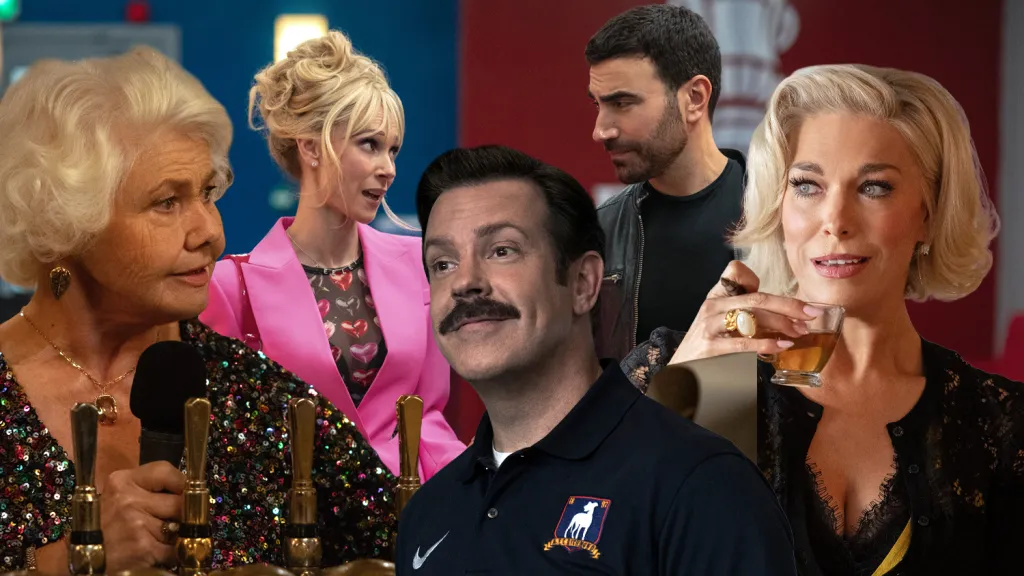
SPOILER ALERT: This post contains spoilers for Ted Lasso Season 4, Episode 9, titled “Mae Rides The Bus,” now streaming on Apple TV.
The title of the second-to-last episode of Ted Lasso Season 4 hints at a goodbye to a beloved character who has been around since the first season.
Episode 9 bids farewell to Richmond’s own Mae Green (Annette Badland) who dies doing what she loves: supporting the Lady Greyhounds at their away match against Bristol City in the stands.
“That’s what happens. You’re involved with folks, and they disappear. They go, and she loved her life,” Annette Badland told Deadline. “She made the very best of her life and really relished it. So she went, I suppose, for her, in the very best way.”
The Crown & Anchor pub owner was invited to take the team bus to the away game after she had hinted that it would be difficult for someone with her “level of seasoning” to make the two and a half hour drive. Thus, Ted (Jason Sudeikis) and Coach Beard (Brendan Hunt) invite her on the shuttle with all of the players, and they embrace Mae as one of their own on the drive.
RELATED: ‘Ted Lasso’ Episode 6 Recap: Phil Dunster Returns & New Believe Sign Debuts On New Year’s Eve
“I love the Lionesses, so I was thrilled when [Season 4] happened, and the girls are tremendous and effervescent and glorious to be around. The pub quiz scene took a couple of days to shoot, but that was like a tidal wave coming,” Badland said. “They are just so full of energy and life. So that was just something wonderful to be involved in, and just enhanced all the feelings and the camaraderie. And Mae couldn’t play football, wasn’t allowed to play football, I’m sure she’s had a lot of bad stuff in her life, but she just carries on and defies the odds and just keeps on pitching. That’s an excellent story to tell.”
In the below interview, Badland unpacks Mae’s legacy left on the series, transitioning from the men’s team dynamic of the first three seasons to the Lady Greyhounds and how Mae might come up in the finale episode.
DEADLINE: Did you know about this episode for Mae when you signed on for Season 4? How did you react when you found out what would happen for her in Episode 9?
ANNETTE BADLAND: No, I didn’t know, and I didn’t know till about, I suppose, maybe November. We were only an episode away filming that. I was shocked, but I’m very proud being in the show, and I admire Jason [Sudeikis]. I think the series is so successful because people smell it’s very genuine. The audience know it’s not made cynically. It’s not a product. It’s something Jason wants to say about the world and how we are, so you have to trust that.
I don’t know when I’ll die. You just don’t know. So, being told that it was going to happen quite close to it being filmed, you just have to go. ‘Well, that’s [that]. He told me in the storyline, so he started at the beginning [with] “I invite her to come, and blah blah, and she won’t drive, and then she comes to the grounds and she goes in the bus,” and I’m going, “Oh wow, this is…” and then “She passes.” [Gulps.] But hopefully that’s what will happen for the audience too.
DEADLINE: How did you want to approach the speech you gave in the locker room before the game? There’s the moment in the bus before where they’re like, “We’re gonna grill you about your whole life and everything you know. How did you approach those scenes with the end of the episode in mind? What you wanted to leave on the field, for lack of a better way to put that?
BADLAND: I think not giving in. She’s very outspoken. She’s a lioness who will defend you till the nth degree once you’ve got her heart and respect. Being an older woman, where you do become invisible, Mae’s never going to be invisible. She will not allow that to happen. I get ignored. You’ll stand at a counter, and people won’t bother, or they’ll walk into you. “You’ve had your time, move aside.” And Mae would not allow that, and was still in there pitching and relishing.
L-R: Jason Sudeikis and Annette Badland in Season 4 of ‘Ted Lasso’
Apple TV
DEADLINE: What does it say about her that she wants to sit in the audience stands or the supporters side versus the box with Rebecca and everyone?
BADLAND: Yeah, not her people, and she might have felt constrained. “Well, I’m not going to sit and behave myself or feel the fool because I’m sitting with you.” I’ll go where the folk that really scraped together to get the money, who are dedicated, [are sitting]. Even although it was her pub, she’s not part of a hierarchy. Everybody’s judged on how they are. Just not her style. Go and be with the real fun.
DEADLINE: There’s the hint of the shares and the battle that’s going on there. And Mae has shares, and she was like protecting her patrons at the pub. Can you tease anything about how could she could leave an impact that way too on the team?
BADLAND: Well, she had a very large pile of shares. I mean, they were about “yay high” (gestures to table height she sits at.) She uses them to good effect. Her instructions are for them to be used in a particular way that is quite good.
DEADLINE: I love her relationship with Ted’s son this season too. I was hoping you could talk about working with Grant and any wisdom she maybe has left with him?
BADLAND: He is a delight. He’s a beautiful young man, and bright. We got on terribly well, and I shall miss him. Really, it was great having that element in the pub too. Another side of her. I can’t tease you with anything, I don’t think, but he knows what he’s doing now with a tea towel.
DEADLINE: Keeley’s pregnancy is revealed in 409, and I’ve heard some people talk about the cycle of life and how someone passes and then a new life comes into the world. So I was curious if you had any thoughts on those themes for episode nine?
BADLAND: Oh yes, well it’s absolutely true, isn’t it? We move along. We’re here for a very short time, and the next wave, the next group of people comes in. I’m delighted for Keeley, just delighted, and poor old Roy.
DEADLINE: This episode felt like such a great send off for Mae, but could we still see a funeral or something in the finale?
BADLAND: You could, maybe. I guess, or it’s like, “Oh well, that’s it.” [They could forget about her.]
DEADLINE: What do you think she would want as a celebration of her life? Have you thought about that at all?
BADLAND: Oh, she’d have asked for a tremendous party at The Crown and Anchor. Everyone invited. Jason did modify some of 410. We talked after he told me about her passing, and he did, because that’s how he is. He’s responsive and collaborative. So he did change some of the stuff in 10, or incorporated what we talked about. She doesn’t just [go away]. She has, not an appearance, but she is still within the context.
DEADLINE: I’m also worried-not worried, but the pub was her thing. So I hope it’s in good hands in the future.
BADLAND: So does she. Oh yes.
DEADLINE: Anthony Head gets an acknowledgement in 409, and Rupert gets his mention too. How did that all weave together with Mae also leaving? What are your thoughts on that? You had scenes with Anthony in the past.
BADLAND: He came in the pub. The darts, and we were around. He came in more than that, but that was the main one. He was a beautiful man, and he will be much missed. He was charming and funny and generous, and we’d have naughty little sort of asides. And I had wondered why we weren’t — I assumed he would be in this last [season] and didn’t know, as I think very few people knew, he was ill and just couldn’t do it.
So we will miss him, and I respect him, and I think it’s a great honor to be in the episode that is dedicated to him.
DEADLINE: How did it feel embarking on this new chapter of the show after the previous three seasons with the men’s team, and how much do you think it meant to Mae? Could you talk about that transition and leaving the show behind?
BADLAND: Well, when we finished [Season 3], we didn’t think there would be another. Jason had said, “I’ve got a three series arc, that’ll be it.” And then to go back and to take, it’s very exciting because it’s a risk, isn’t it?
A female team [is] quite quite different, and the men have come with it. The male audience have gone with it, like they do with the genuine footballers. And there’s good stories, different stories in there, different tales to tell. So, I’m absolutely thrilled that it seems, in England, certainly, to have taken off this year. People don’t know what to do. They don’t know whether to watch it episode by episode or to binge watch it. They can’t wait to binge it. So that’s thrilling, absolutely thrilling. I’ve had a great time. I’m privileged to have been part of it, and I’ll just have to be in the stands, won’t I? And see how they progress.
Or there is a film called Wonderful Life, where an angel [comes down.]
Annette Badland in ‘Ted Lasso’ Season 4
Apple TV
DEADLINE: I could see them incorporating it. I love that movie. We watch it every Christmas. She would be such a great Clarence-esque character.
BADLAND: Yeah, popping up in someone’s conscience and tearing them off a strip or whatever. Or giving them information.
DEADLINE: I feel like Beard may need some of that for some reason. Because we don’t see his reaction, at the end of the episode. We see it’s Rebecca’s telling Ted, you don’t see the words pass, but just from his actions, you know that she’s died. But yeah, I guess curious to see what will happen with him. I love that idea. I hope you’ve pitched that and that it comes to light in the future.
BADLAND: As soon as he said she passed, I said, “Oh, can I come back as an angel?” So we did talk about it.
But he doesn’t do the predictable, does he? That’s what’s so delightful.
DEADLINE: That’s all I had, unless you wanted to add anything else about what fans come up to you and say when they recognize you from the show, or any last words before we go.
BADLAND: Ah, encountering them is terrific, and I’m very proud to have been in this because I still get messages from people saying, you know, things like “My mom’s very ill with cancer. She comes home from her treatment. We all pile on the bed. We put Ted on. We believe. We laugh.” So that’s a just tremendous thing to have in the world, and to be connected to it, and feel you’ve done that for folk. No bad thing, eh?
>


Search For Canadian TV Actor Stewart McLean Now Homicide Investigation


These ’90s fashion trends are making a comeback in 2017
According to Dior Couture, this taboo fashion accessory is back
Model Jocelyn Chew’s Instagram is the best vacation you’ve ever had
Emily Ratajkowski channels back-to-school style
9 Celebrities who have spoken out about being photoshopped


Rurouni Kenshin: Hokkaido Arc Manga Takes 1-Issue Break – News


HIDIVE to Stream English Dubs for The World Is Dancing, The Forsaken Saintess and Her Foodie Roadtrip in Another World, The Dangers in My Heart: The Movie Anime – News