
Tech
Top New Features in Android 17 You’ll Notice This Year

Google previewed Android 17 with Gemini AI tools, AirDrop-style sharing, privacy upgrades, multitasking changes, and stronger security controls.
The post Top New Features in Android 17 You’ll Notice This Year appeared first on TechRepublic.
>
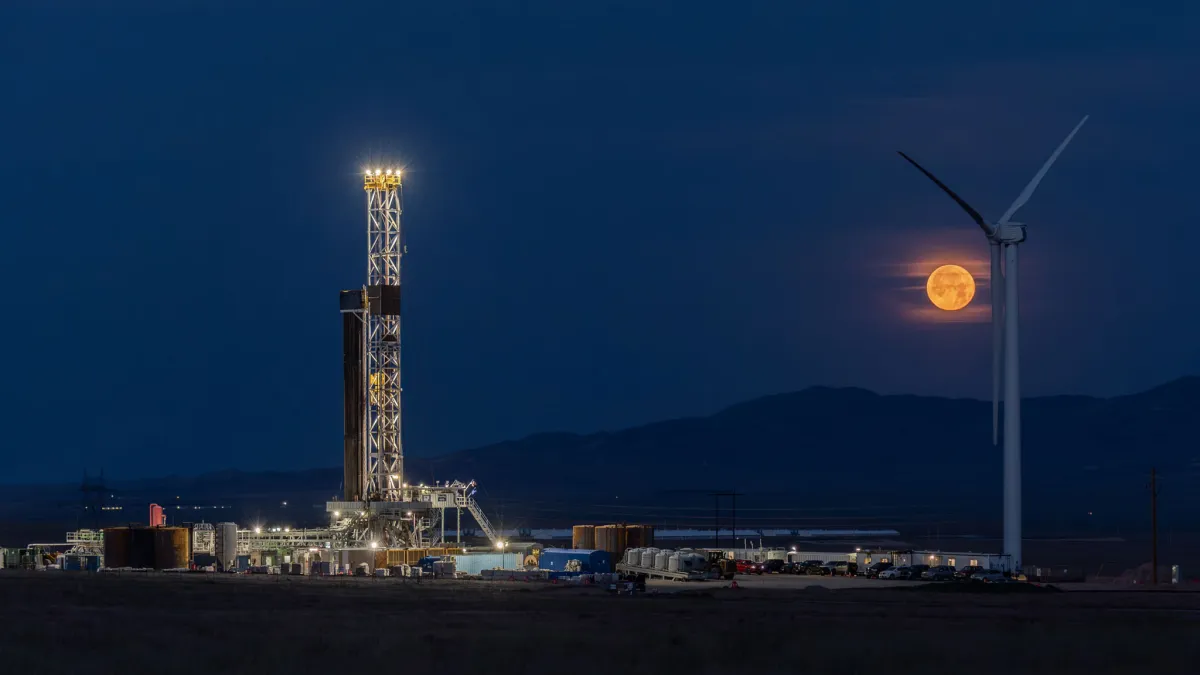
Geothermal company Fervo Energy announced Thursday morning that it had started selling electricity from its Cape Station power plant to the grid on September 30, one day ahead of schedule.
With it, Fervo becomes the first enhanced geothermal company to reach a key commercial milestone. The power plant synchronized with the grid about a week ago, bringing online the first third of what will soon become a 100-megawatt power plant.
The entire site could be much larger, though, with the potential to generate as much as 4 gigawatts of electricity, Fervo previously told TechCrunch.
“No team has ever built a project like this anywhere in the world, and we did it ahead of schedule,” Fervo co-founder and CEO Tim Latimer said in a statement.
From groundbreaking to commercial operations, the first block at Cape Station took 23 months to complete. As Fervo refines its process, it is aiming to complete future blocks in as little as 18 months.
That sort of speed to power should appeal to power-starved data center operators, who have been scouring every part of the energy sector for generating capacity. Geothermal can also be developed in phases, similar to how data centers are developed, allowing hyperscalers to bring racks online as demand ramps up.
Google, Southern California Edison, and others have committed to buying power from Fervo’s Cape Station project.
Fervo is one of several companies developing enhanced geothermal power plants. While traditional geothermal power taps heat sources close to the surface, Fervo and its peers are drilling deeper because deeper rock is hotter, opening more opportunities for development.
Fervo went public in May in an upsized IPO that raised $1.9 billion. It was founded in 2017, bringing drilling techniques and technologies from the oil and gas sector to the development of new geothermal resources. As a startup, the company raised more than $1.3 billion from investors including Breakthrough Energy Ventures, Congruent Ventures, and Capricorn Investment Group.
When you purchase through links in our articles, we may earn a small commission. This doesn’t affect our editorial independence.
>
OpenAI has parted ways with three researchers on its safety team who allegedly shared confidential company information with a third-party AI safety organization, The Wall Street Journal reported on Thursday.
“We have parted ways with three individuals for violating our policies on accessing and handling sensitive company information,” an OpenAI spokesperson said in a statement to the Journal. “Our investigation confirmed that these individuals mishandled sensitive information outside established company procedures, violating our policies and breaking the trust essential to our work.”
The report did not name the researchers, the organization, or the information involved. OpenAI did not immediately respond to our request for comment.
Posts circulating on X named individuals some users believe were among those dismissed, who had also publicly expressed concerns about AI risk while at OpenAI. TechCrunch has not confirmed their identities.
In a statement to the Journal, an OpenAI spokesperson said an internal investigation confirmed the researchers had “mishandled sensitive information outside established company procedures.”
The departures come two days after The New York Times reported that OpenAI executives had brushed aside employees’ warnings about its safety practices, with employees describing a broader pattern of the company deprioritizing security. An OpenAI spokesperson told the Times the company takes security concerns seriously and has internal channels for reporting safety issues, while saying it recognized “a need to move faster.”
It’s unclear whether the three researchers raised concerns through internal channels before allegedly sharing information with the outside organization.
The departures also come as OpenAI responds to a series of security incidents in which its AI agents escaped containment, posted user images, and hacked government websites. Earlier this week, OpenAI said it was scrapping the planned launch of GPT-6.1 Astra, an AI model, over safety concerns.
This isn’t the first time OpenAI has dismissed researchers over alleged information sharing. In 2024, the company fired researchers Leopold Aschenbrenner and Pavel Izmailov over alleged leaks, The Information reported.
When you purchase through links in our articles, we may earn a small commission. This doesn’t affect our editorial independence.
>

Now that LLM-generated prose is everywhere, human beings are eager for ways to sniff it out. While early tells like em-dashes and “delve” are long gone, researchers say there are still plenty of telltale habits that AI models fall back on when writing prose.
A new study from the marketing firm Graphite looked at the writing habits of frontier models, sussing out each model’s favorite words and phrases. While old tells like em-dash use have been stamped out, models still fall back on contrast-heavy constructions, with each model version showing its own unique quirks. The biggest surprise is how broad the scope of tells turns out to be. Graphite found 13,000 phrases that were at least twice as common in the AI content as human content — their definition of a “tell.”
“It turns out that Claude models are actually getting closer to the human word distribution over time,” Graphite’s chief AI officer Greg Druck told TechCrunch. “And for the GPT models, it’s getting further away.”
Studying AI-generated writing at scale required a careful study design. Graphite started with a corpus of 10,000 articles published before the release of ChatGPT, serving as the human-generated control group. Then researchers had different AI models rewrite the articles from summaries, hoping to eliminate as much source bias as possible. With matching samples from both humans and each model, they could compare how often certain words and phrases appeared in AI writing, as well as broader patterns in sentence construction.
According to Graphite’s results, Claude Opus 5.5’s biggest tell is the word “dependable,” which pops up 23 times more often than in human samples. While Opus 5.5 now avoids the “it’s not X, it’s Y” sentence construction, it still tends to say something “is more than an X, it’s a Y.”
Above all, Opus loves to tell you why things matter, using the phrase “this matters” 116 times more often than human writing, while “why X matters” occurs 92 times more often.
OpenAI’s Astra has a different set of tip-offs. This model loves to describe “another dimension” of whatever it’s talking about, and tends to hedge claims by saying an action “may provide” or “can provide” a particular benefit. Its biggest tell is what Graphite calls the “corrective framing,” where a topic is defined as “not simply X” or offered as an alternative, “rather than relying on X.” According to graphite’s research, those constructions were more than 100 times more common in Astra-generated prose than in human writing.
Notably, all the frontier labs seem to have responded to the idea that models overuse em-dashes. In Graphite’s samples, Opus 5.5 used the punctuation mark 99% less often than Opus 5. Astra now uses it 88 percent less than human samples, whereas Gemini 3.1 Pro has almost completely eliminated the em-dash from its writing.
But while individual tells change, Graphite says the overall number is mostly holding steady. “It’s not like the tells are decreasing,” Druck told TechCrunch. “They are managing to remove the most well-known tells, but other ones pop up. And every model version has its own.”
It’s surprising that tells are so persistent, given the labs’ focus on human-like writing styles. In the Opus 5.5 release, Anthropic boasted that the model “communicates more naturally than prior models,” saying early users “found its writing clearer and easier to follow.”
OpenAI made similar claims when releasing the GPT-6 versions of Sol and Luna, saying users could “expect to see more clarity, less jargon, [and] fewer odd turns of phrase.”
But Druck is skeptical about how much the labs can do to completely eliminate telltale construction or phrases.
“A general hypothesis I have is that the labs are less able to control some of these things than you might expect,” Druck says. “These are giant models with billions of parameters. They have some finite number of tests they can run, and things slip through.”
When you purchase through links in our articles, we may earn a small commission. This doesn’t affect our editorial independence.
>

Box Office: ‘Verity’ To Seduce $55M+ WW, Tom Cruise ‘Digger’ Not Good
How does Kirk Ferentz’s Iowa keep doing this? ‘We’re not in the entertainment business’

World’s first enhanced geothermal power plant completed in just 23 months
-

 movies4 months ago
Search For Canadian TV Actor Stewart McLean Now Homicide Investigation
-

 Fashion9 years ago
These ’90s fashion trends are making a comeback in 2017
-
Fashion9 years ago
According to Dior Couture, this taboo fashion accessory is back
-
Fashion9 years ago
Model Jocelyn Chew’s Instagram is the best vacation you’ve ever had
-
Fashion9 years ago
Emily Ratajkowski channels back-to-school style
-
Fashion9 years ago
9 Celebrities who have spoken out about being photoshopped
-

 Anime4 months ago
Rurouni Kenshin: Hokkaido Arc Manga Takes 1-Issue Break – News
-

 Anime3 months ago
HIDIVE to Stream English Dubs for The World Is Dancing, The Forsaken Saintess and Her Foodie Roadtrip in Another World, The Dangers in My Heart: The Movie Anime – News