
Tech
What happens when AI starts building itself?


Richard Socher has been a major figure in AI for some time, best known for founding the early chatbot startup You.com and, before that, his work on Imagenet. Now, he’s joining the current generation of research-focused AI startups with Recursive Superintelligence, a San Francisco-based startup that came out of stealth on Wednesday with $650 million in funding.
Socher is joined in the new venture by a cohort of prominent AI researchers, including Peter Norvig and Cresta co-founder Tim Shi. Together, they’re working to create a recursively self-improving AI model, one that can autonomously identify its own weaknesses and redesign itself to fix them, without human involvement — a long-held holy grail of contemporary AI research.
I spoke with him on Zoom after the launch, digging into Recursive’s unique technical approach and why he doesn’t think of this new project as a neolab, he informal term for a new generation of AI startups that prioritize research over building products.
This interview has been edited for length and clarity.
We hear a lot about recursion these days! It feels like a very common goal across different labs. What do you see as your unique approach?
Our unique approach is to use open-endedness to get to recursive self-improvement, which no one has yet achieved. It’s an elusive goal for a lot of people. A lot of people already assume it happens when you just do auto-research. You know, you can take AI and ask it to make some other thing better, which could be a machine learning system, or just a letter that you write, or, you know, whatever it might be, right? But that’s not recursive self-improvement. That’s just improvement.
Our main focus, is to build truly recursive, self-improving superintelligence at scale, which means that the entire process of ideation, implementation and validation of research ideas would be automatic.
First [it would automate] AI research ideas, eventually any kind of research ideas, even eventually in the physical domains. But it’s particularly powerful when it’s AI working on itself, and it’s developing a new kind of sense of self awareness of its own shortcomings.
You used the term open-ended — does that have a specific technical meaning?
It does. In fact, Tim Rocktäschel, one of our cofounders, led the open-endedness and self-improvement teams at Google DeepMind and particularly worked on the world model Genie 3, which is a great example of open-endedness. You can tell it any concept, any world, any agent, and it just creates it, and it’s interactive.
In biological evolution, animals adapt to the environment, and then others counter-adapt to those adaptations. It’s just a process that can evolve for billions of years, and interesting stuff keeps happening, right? That’s how we developed eyes in our [heads].
Another example is rainbow teaming, from another paper from Tim. Have you heard of red teaming?
In cybersecurity, it means—
So, red teaming also has to be done in an LLM context. Basically you try to get the LLM to tell you how to build a bomb, and you want to make sure that it doesn’t do it.
Now, humans can sit there for a long time and come up with interesting examples of what the AI shouldn’t say. But what if you tested this first AI with a second AI, and that second AI now has the task of making the first AI [try to] say all the possible bad things. And then they can go back and forth for millions of iterations.
You can actually allow two AIs to co-evolve. One keeps attacking the other, and then comes up with not just one angle but many different angles, and hence the rainbow analogy. And then you can inoculate the first AI, and you become safer and safer. This was an idea from Tim Rocktaeschel, and it’s now used in all the major labs.
How do you know when it’s done? I suppose it’s never done.
Some of these things will never be done. You can always get more intelligent. You can always get better at programming and math and so on. There are some bounds on intelligence; I’m actually trying to formalize those right now, but they’re astronomical. We’re very far away from those limits.
As a neolab, it feels like you’re supposed to be doing something that the major labs aren’t doing. So part of the implication here is that you don’t think the major labs are going to reach RSI [recursive self-improvement] by doing what they’re doing. Is that fair to say?
I can’t really comment on what they’re doing, but I do think we’re approaching it differently. We really embrace the concept of open-endedness, and our team is entirely focused on that vision. And the team has been researching this and doing papers in this space for the last decade. And the team has a track record of really pushing the field forward significantly and shipping real products. You know, Tim Shi built Cresta into a unicorn. Josh Tobin was one of the first people at OpenAI and eventually led their Codex teams and the deep research teams.
I actually sometimes struggle a little bit with this neolab category. I feel like we’re not just a lab. I want us to be become a really viable company, to really have amazing products that people love to use, that have positive impact on humanity.
So when do you plan to ship your first product?
I’ve thought about that a lot. The team has made so much progress, we may actually pull up the timelines from what we had initially assumed. But yes, there will be products, and you’ll have to wait quarters, not years.
One of the ideas around recursive self-improvement is that, once we have this sort of system, compute becomes the only important resource. The faster you run the system, the faster it will improve, and there’s no outside human activity that will really make a difference. So the race just becomes, how much processing power can we throw at this? Do you think that’s the world we’re headed toward?
Compute is not to be underestimated. I think in the future, a really important question will be: how much compute does humanity want to spend to solve which problems? Here’s this cancer and here’s that virus — which one do you want to solve first? How much compute do you want to give it? It becomes a matter of resource allocation eventually. It’s going to be one of the biggest questions in the world.
When you purchase through links in our articles, we may earn a small commission. This doesn’t affect our editorial independence.
>

When Igor Dobrianskyi looks at a car dealership lot, he sees a wasted opportunity.
“Millions and millions of used cars are sitting on parking lots, depreciating and losing value,” Dobrianskyi said in a recent interview, adding that there are 76,000 dealerships in the United States. “At the same time, there are people who need a car for a few months, but the options are actually very limited and expensive.”
Dobrianskyi’s new startup, MyMonthlyCar, aims to connect both sides of that equation through an online platform that offers flexible month-to-month rentals from local dealerships. MyMonthlyCar was selected for the 2026 Startup Battlefield 200, a cohort of promising early-stage startups that have earned a spot to exhibit at this year’s TechCrunch Disrupt, taking place October 13 to 15 in San Francisco.
MyMonthlyCar, which is registered in Delaware and based in Florida, was co-founded by Dobrianskyi; CPO Kostiantyn Gitko; and CTO Vadym Zotov. All three are from Ukraine, said Dobrianskyi, who moved to the U.S. with his wife and young daughter after the Russia-Ukraine war began.
MyMonthlyCar does what its name suggests, with one twist: The startup only rents used cars on a month-to-month basis; no short-term options here. But it does give dealerships the chance to offer customers a rent-to-own option.
“So we don’t bring them only customers to rent on a monthly basis; we basically bring them the clients who potentially can buy this car as well,” he said.
MyMonthlyCar doesn’t charge dealerships to list cars on its website. Instead, MyMonthlyCar charges dealers 10% of each transaction. It also charges the customer a separate 10% fee.
The idea for MyMonthlyCar stems from Dobrianskyi’s previous experience in the industry. The founder owned a car rental company in Ukraine, but the lack of financing options there limited his ability to scale. In 2016, he launched a peer-to-peer car marketplace called SizeCar, where owners rent their cars to other drivers, much like Turo does today. SizeCar eventually spread to 40 European cities.
The startup has signed on seven dealerships to test the service and is working with an insurance broker to finalize its own insurance program, which will let customers choose among different types of coverage.
“Insurance is the key for this business, and you need to have your own insurance as a platform,” he said, noting that the No. 1 question from dealers was about insurance and liability coverage.
Despite its early-stage status, the founders have bullish projections for the startup. They plan to sign on 100 dealerships with 2,000 monthly rentals and $300,000 in revenue in the company’s first year of operation, which will kick off later this year once the insurance program launches. Over the next five years, the goal is to generate $42 million in revenue, Dobrianskyi said.
The startup has yet to raise venture capital and is currently bootstrapped. But Dobrianskyi said the plan is to raise a seed round, with the funds helping the company hire more developers to build out the platform, including an AI tool to help dealers identify which cars are best to rent out at any given time.
To check out MyMonthlyCar and the other startups that are part of TechCrunch’s Startup Battlefield competition (as well as to network with the folks funding them), join us next month at Disrupt.
When you purchase through links in our articles, we may earn a small commission. This doesn’t affect our editorial independence.
>
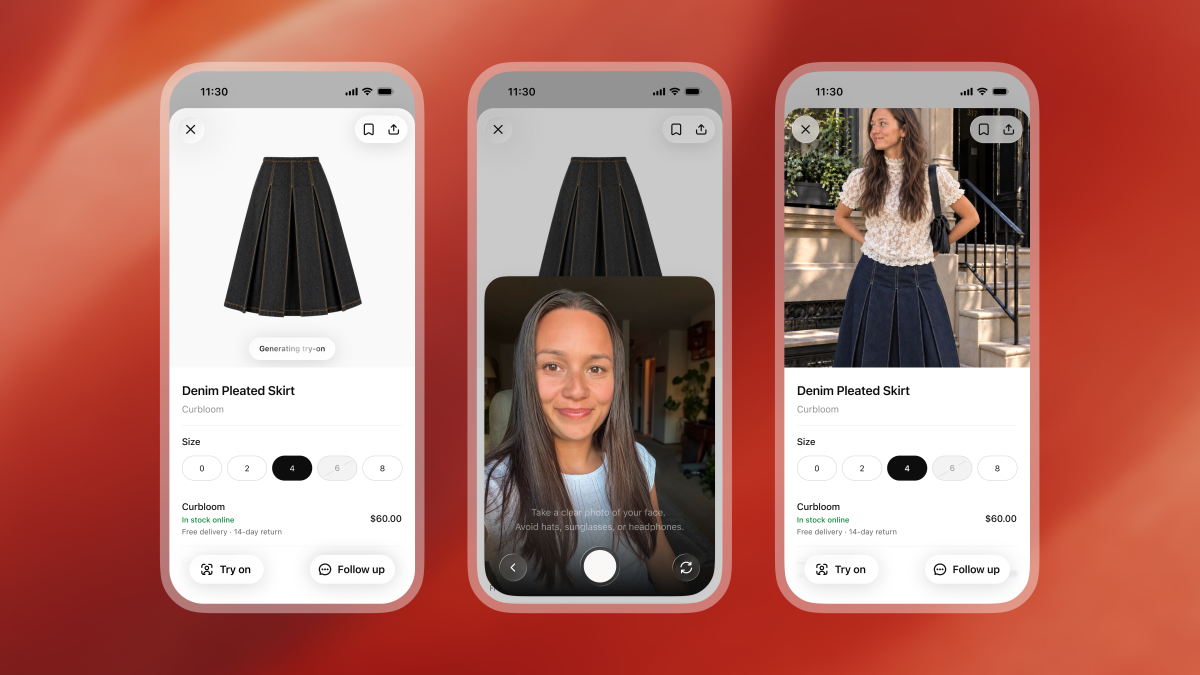
OpenAI is again experimenting with how its conversational AI assistant, ChatGPT, can help users as they shop online. On Thursday, the company announced the global launch of two new shopping features, including a way to virtually try on clothing and accessories and a new favoriting function that can help users save products they like for later reference.
The updates arrive at a time when AI assistants are exploring consumer use cases around shopping. OpenAI already had to pivot from one of its earlier ideas in this space, an instant checkout feature that ended up not performing well. More recently, agentic AI startup Instinct began pushing product recommendations to users, but some felt that the proactive recommendations were an overreach, more akin to ads than helpful suggestions.
OpenAI said its new shopping features leverage the newly launched ChatGPT Images 2.5 model, which the company claims produces more natural lighting and richer textures, follows editing instructions more reliably, and reduces image generation latency.
To start, virtual try-on allows ChatGPT users to upload a selfie or a full-body photo in order to visualize how an article of clothing or an accessory might look on them. This option will appear as a new “try on” button in ChatGPT’s shopping results. You can also upload an image of an item, like a web screenshot, and ask ChatGPT to try it on for you.
The other new option, Favorites, lets you save products you discover to a Library in the app so you can come back to them later. (These items will be saved alongside your try-on images, the company notes.)

OpenAI said that ChatGPT can help users shop in other ways, too.
For instance, you could describe a style that you’d like to try, then ask it to shop for the pieces needed to complete the look. Or, you could upload photos of celebrities’ outfits and ask it to find the items they’re wearing that are available for purchase.
The latter sees the assistant moving into areas that Pinterest and Google have dominated in recent years as sources for fashion inspiration and discovery that can convert to sales for online retailers.
Whether ChatGPT will become people’s first choice for this type of activity, however, remains to be seen — especially given that Google launched virtual try-on last year.
When you purchase through links in our articles, we may earn a small commission. This doesn’t affect our editorial independence.
>
Tech
Google thinks SpaceX’s Starship has to launch 1,600 times before space data centers get off the ground
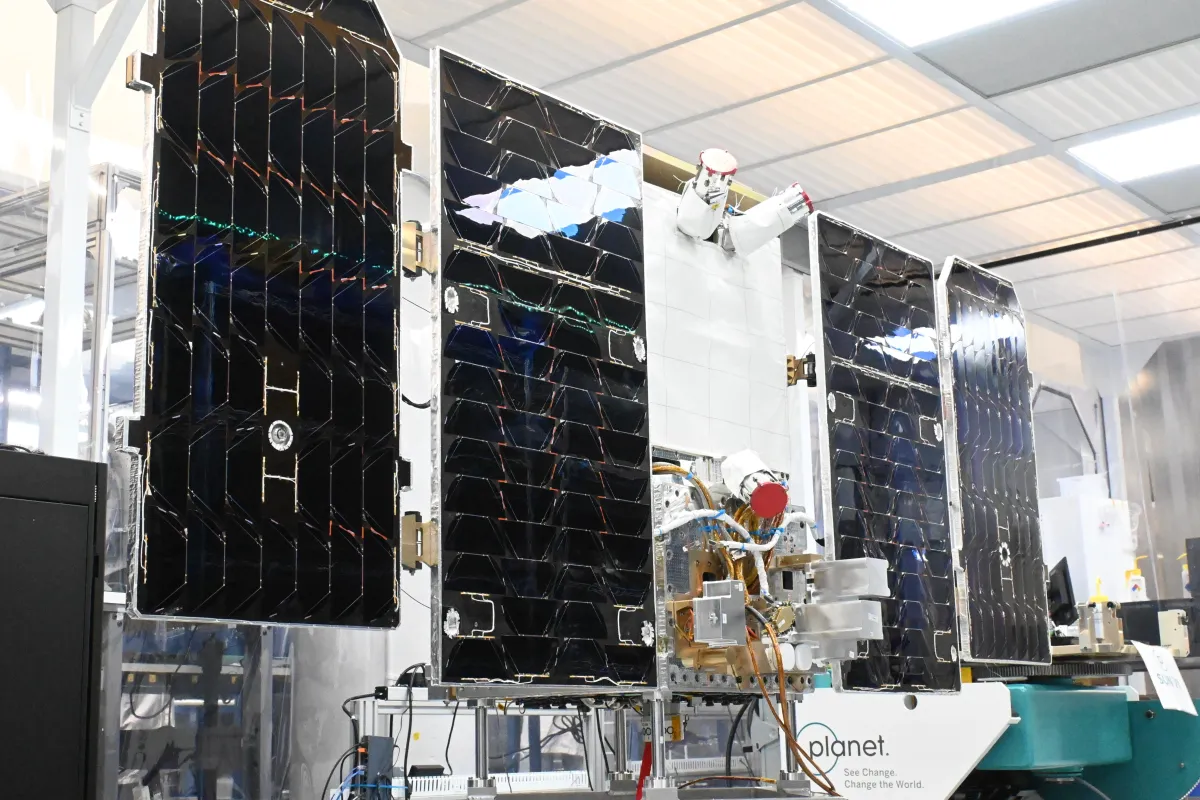
Google’s prototype of its orbital compute satellite took off today onboard a SpaceX rocket launched from California — the first time the tech giant has sent one of its advanced chips into space.
Built by Planet Labs, the satellite will prove that a Google Tensor Processing Unit, its competitor to Nvidia’s GPUs, can function in space. That means supplying a kilowatt of continuous power, cooling the chip, and running a series of models through their paces to see if anything goes wrong.
“We’ve done testing on the ground, but you know, there’s no test that’s completely as good as the real thing,” said Travis Beals, the Google executive managing Project Suncatcher, the tech giant’s plan to develop large-scale compute clusters in orbit around the Earth.
Once commissioned, the satellite will fire up its TPU in 15-minute bursts to avoid straining the satellite’s power and thermal management systems. This satellite is based on a standard platform built by Planet Labs, but the two companies are working on a demo expected to take flight next year that will see two satellites more purpose-built for advanced compute. Those future versions will attempt to collaborate via a laser communications link.
Suncatcher isn’t the only space AI payload on this SpaceX rocket, which is launching more than one hundred different payloads, including missions from Satlyt and Cowboy Space Company.
What sets the Google initiative apart from those startups (and indeed from SpaceX itself) is that it’s a long-term project.
The focus of this “long-term moonshot,” as Beals puts it, is on building for the space infrastructure and AI workloads that will exist in the future. The company envisions a network of 81 satellites flying in close formation, processing in parallel.
“The bandwidth and the latency between TPUs really, really matters when you’re trying to run a multi-rack workload…we’re trying to look ahead to not just what workloads exist today, but where they will be in five years,” Beals said. That’s largely because the rockets required to scale up orbital data centers in a cost-effective way don’t yet exist.
On Thursday, Google also released a peer-reviewed version of its white paper on orbital data centers, one of the most rigorous analyses available of how compute gets to orbit. The paper will be published in Joule.
One of the paper’s most notable aspects is how Google thinks about access to space. Although the researchers stress their analysis isn’t an economic feasibility study, it offers an interesting picture of how the company sees rockets becoming cheaper over time.
Like all data center companies, Google is looking to SpaceX to get its spacecraft off the ground. (Google is also a major investor in SpaceX.)
Arguing that Elon Musk’s rocket builders have achieved a price-reducing “learning curve” of about 20% a year since they launched the Falcon 1 rocket, the authors believe it’s reasonable to expect the company to deliver launch prices close to $200 per kilogram by 2035.
What will it take to do that? Based on the amount of payload launched by the Falcon 9, they think a similar cost-reduction trajectory will require Starship to fly 370,000 tons of payload into orbit. That’s something that would take it about 1,800 launches over the next ten years, or 180 a year—and that’s if it can fly 200 metric tons on each mission.
That’s a big ask for a vehicle that has never flown more than five times in a year. SpaceX predicts the company will be flying far more than that—Elon Musk has suggested Starship could achieve an hourly flight rate in 2029, for example, but Musk says a lot of things.
The good news, at least, in Google’s updated research is that it seems likely that its chips will survive the radiation of space. The company had to redo tests blasting the chips in a particle accelerator after they realized the configuration of the chips provided more shielding than they would actually experience. This produced slightly more errors in the chip’s logic circuitry, but the company is still confident its chips can handle large inference workloads in orbit for the five-year lifespan of a satellite.
“The error rate is very low if you’re thinking about typical inference operations, right? Like one in a million,” Beals said. “On the other hand, it was already problematic for doing, say, some mega-scale training run where you’re going to have many thousands of chips running for months.”
When you purchase through links in our articles, we may earn a small commission. This doesn’t affect our editorial independence.
>

The Traitors: New Blood Promises a Bold Episode 5 Murder Twist

‘Miami Vice ’85’ Taps Walton Goggins In Villain Role
76ers' Jaylen Brown focused on 'good vibes' as he gets acclimated to new team, city
-

 movies4 months ago
Search For Canadian TV Actor Stewart McLean Now Homicide Investigation
-

 Fashion9 years ago
These ’90s fashion trends are making a comeback in 2017
-
Fashion9 years ago
According to Dior Couture, this taboo fashion accessory is back
-
Fashion9 years ago
Model Jocelyn Chew’s Instagram is the best vacation you’ve ever had
-
Fashion9 years ago
Emily Ratajkowski channels back-to-school style
-
Fashion9 years ago
9 Celebrities who have spoken out about being photoshopped
-

 Anime4 months ago
Rurouni Kenshin: Hokkaido Arc Manga Takes 1-Issue Break – News
-

 Anime3 months ago
HIDIVE to Stream English Dubs for The World Is Dancing, The Forsaken Saintess and Her Foodie Roadtrip in Another World, The Dangers in My Heart: The Movie Anime – News