
Tech
Beauty booking startup Fresha hits $1 billion valuation with KKR backing


Beauty and wellness booking marketplace Fresha has announced an $80 million investment from KKR’s Next Generation Technology Growth fund, valuing the London-based company at more than $1 billion. The investment is notable for coming from KKR’s growth equity arm, which targets companies with proven business models that are still in aggressive expansion mode — a sign that Fresha is seen as past the risky early stages and ready to scale.
The London-based company, founded in 2015, has grown significantly over the past few years. When TechCrunch covered a Fresha fundraising round in 2021, the company had 60,000 businesses on its platform and was working with more than 150,000 professionals across 120 countries. Today, the platform counts more than 140,000 businesses and says those businesses are booking more than 35 million appointments a month through Fresha. That volume — more than a billion appointments annually — puts it among the larger scheduling platforms of any kind, not just within beauty and wellness.
The company has now raised $285 million to date and says it will use the new capital to expand to more countries and develop AI features.
>
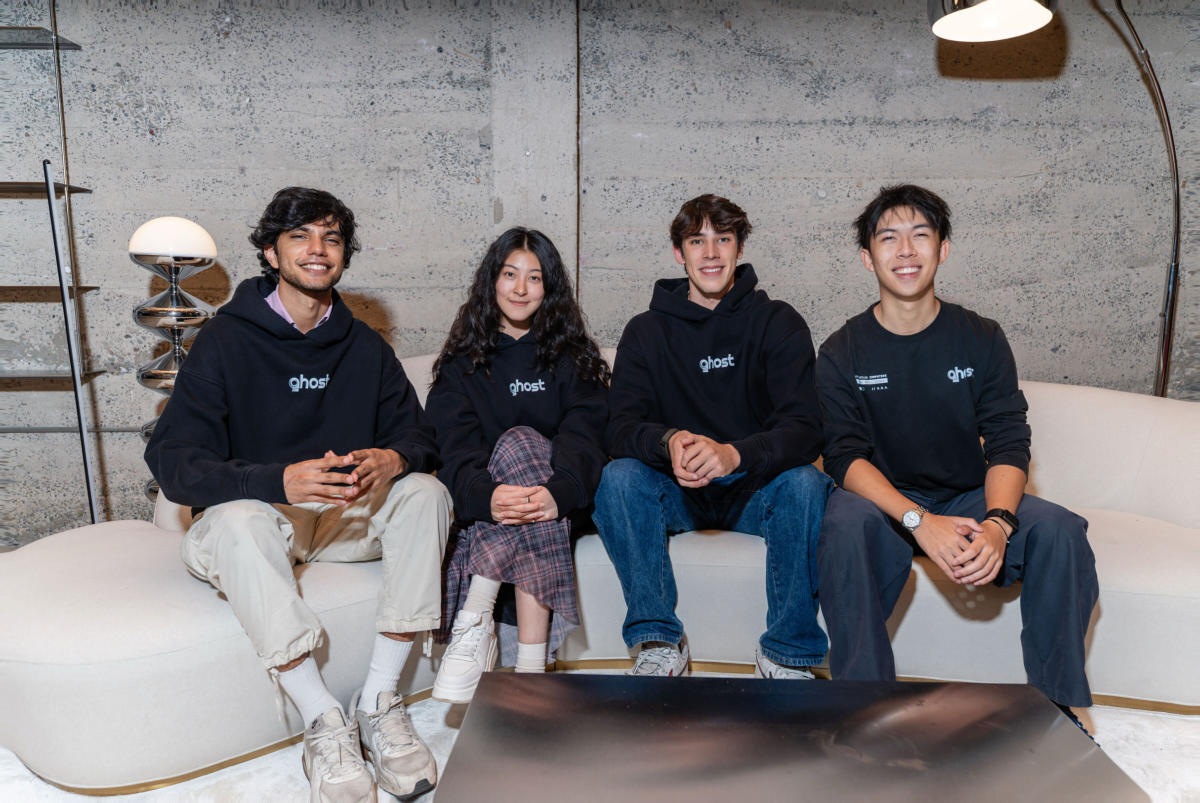
For much of his life, Zain Javaid, 19, wanted to be a quant. And for a while, he was one. But he got bored. Then, in 2022, ChatGPT was released and “I felt fundamentally excited in a way that I never had been before,” he told TechCrunch.
Those feelings only grew as AI technology advanced. He became particularly interested in the future of personal AI, he said. He’s predicting the need for a new class of consumer AI hardware and sees the potential for not just one company, but an entire ecosystem built around personal intelligence.
“Every person on earth would eventually have a single agent that would know everything about and be able to do anything for them,” he said of the future he envisions. This agent would be an extension of ourselves, he said, “where the more it understands our habits, values, and goals, the more useful it will be in our daily lives.”
Physical AI and consumer AI are two of the industry’s hottest categories.
At its intersection, on the hardware side, there’s the Mac Mini, which can act as a personal AI assistant, connecting to files and other apps to perform tasks and organize information. On the software side, there’s OpenAI’s Dot, Meta’s Muse, and the startup Instinct, which, just two months after its launch, announced a $1 billion Series C at a $10 billion valuation.
Now Javaid is throwing his hat into the ring with his company Ghost, which, after a year of building, announced Monday its official emergence from stealth and an $11 million seed round led by Andreessen Horowitz. His founding team includes Nicholas Chua, 19, Yifei Chen, 24, and Guatam Sharda, 23.
Ghost’s first product is Core, a personal computer designed specifically for AI agents. The idea is to centralize a person’s data — from what’s on their desktop to apps to smart home devices — into one piece of hardware designed to continuously run AI agents that can operate as an agentic assistant, perform tasks, and understand a person’s life. “You can run models on existing hardware, but it’s a terrible experience on many levels,” Javaid, the CEO, said.

Core has its own GPU (so customers don’t have to purchase it separately), its own software layer, browser and filing system, and can continuously process information and tasks without constant prompting, Javaid said. The computer will be priced at $3,499, with the first batch available for pre-orders opening Monday and shipping scheduled for the last week of October.
He said to think of it like a brain box without a screen, accessible through a phone or app. Voice mode is also available, but one has to speak through the Core app rather than to the box itself. It runs three models — Qwen-3.8-Next, Qwen-3.8-27B and Gemma-4-31B — though Javaid said users can install other models from Hugging Face or their own model weights. Asked if this is somewhat of a Mac Mini, Javaid said the main difference is that Core’s hardware and software were built specifically around AI agent usage, with models already installed, whereas the Mac Mini is more general-purpose and can be configured for AI.
“As new models or improvements to existing models come out, we can push out over-the-air updates, similar to how Tesla works,” Javaid said of Core, adding that if a new generation of models comes out, then they ask a user if they want ot switch. “Users can also turn on auto-updates so they’re always running the latest generation of a given model.”
He and his team of four currently manufacture the units at their San Francisco facility. The goal, he said, is to sell a fully functioning smart computer that doesn’t require complex setup or configuration. The model and personal memory run locally, and all personal information is encrypted so no cloud providers or third parties, including Ghost, can access the memory in any meaningful way. Users can control how much autonomy they give their Core agents, and if Ghost shuts down, the device is programmed to keep working.
“All of the source code, logic, and model weights live on the device, not the services,” he said. “We build this device to not be dependent on having an outside entity maintaining the service.”
He said the team is also building a firewall around how the agent can use its credentials. The firewall “monitors every outgoing network request on the computer and if it sees the agent performing a sanctioned action or exfiltrating data it shouldn’t, it rejects the request and flags it for user review.”
“The user owns all of it,” he said of the device, memory, and data. “Once you buy the hardware, everything is stored, run, and processed on the device.”
He’s not too worried about the competition in the space. “People sometimes give incumbents credit for having already built the product because they have the ingredients,” he said. He credited Apple with good hardware and disruption, but said much of what Core is aiming to tackle is software: “the model reasons over your life, how it remembers, how it takes action, how it knows when to reach out,” he continued.
“For example, Core proactively sends you a notification that you might be getting sick because it sees your resting heart rate is elevated, sees from computer history that you were up late working on a project, and has seasonal context that it is flu season in San Francisco.”
The company’s main focus is building a product people love. “If we can’t do that. Apple isn’t the reason we failed,” he said. Other investors in the round include Abstract, Audacious Ventures, SV Angel, and Nova.
When you purchase through links in our articles, we may earn a small commission. This doesn’t affect our editorial independence.
>
Women throughout history have always sought out relationship advice, whether from newspaper columnists like “Dear Abby,” letters to Cosmo, or just chatting with girlfriends. In the social media era, you can instead post anonymously on Reddit relationship forums or look to social media creators who discuss the topic.
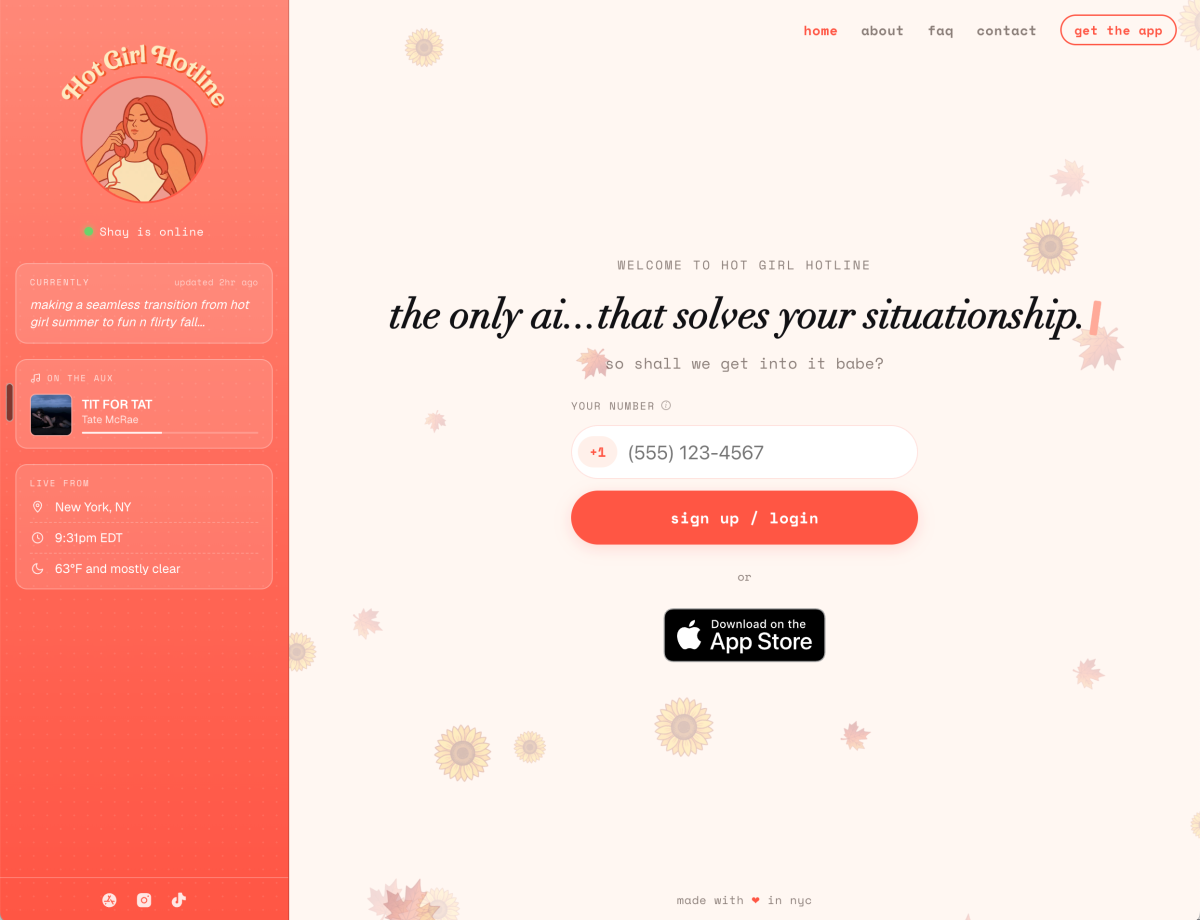
Now, two sisters are launching a startup for young women, Hot Girl Hotline, which focuses on bringing AI into these conversation.
I know what you may be thinking: With all the advances in AI technology, founders are building something for women to talk about their dating woes? Well…yes!
The reality is that people have already been turning to large language models (LLMs) via apps like ChatGPT for this type of advice, and the team believes this type of activity should be handled more carefully.
Unfortunately, as we’ve seen, chatting with a general-purpose chatbot about personal topics can sometimes lead to disastrous effects — especially for those who were already mentally fragile. ChatGPT, for example, has faced a wave of lawsuits over its alleged manipulative conversation tactics that plaintiffs say contributed to negative mental health effects, and, in some cases, suicide.
The idea behind Hot Girl Hotline is to reach young women who are looking to have these sorts of private conversations while navigating dating life and relationships, but in a safer way.
“We’re not trying to be an AI companion,” explained Balia Mudgil, formerly a social media consultant, who co-founded the startup with her sister Sumrin (“Sumi”), who studied computer science at Stanford. “A companion is really going after solving loneliness, escapism, boredom — and you can rely on a lot of emotional dependency from that AI companion.”

Balia says the startup’s approach is to focus on offering quality advice grounded in behavioral science, but in a way that makes it feel like you’re chatting with a trusted friend or big sister. The conversation is often Socratic, with the AI asking you questions to help you arrive at the answer yourself.
“This is not to replace speaking to a human. This is not clinical advice, and we have a lot of safeguards in place…we take safety really seriously,” Baila said. If conversations raise flags, for instance, the user is referred to resources such as the crisis hotline 988.
“We believe the key to quality advice is not just knowing what to do next; it’s understanding why you’re doing it. So that’s a big piece of it,” added Sumi.
Notably, the AI also knows when to end the conversation; it doesn’t keep asking follow-up questions to drag you further down a rabbit hole. Instead, it pushes users to go take action out in the real world rather than ruminate on the problem.

The sisters believe there’s room for an app like this because not everyone wants to post on the web for advice, and there are times when you don’t want to bring up a personal, dating, or relationship-focused issue with a friend.
Friends can bring their own biases into the conversation, or the user may not want to put their partner on blast for something they did before they determine whether they’re going to work through it or end the relationship.
“It doesn’t mean you’re replacing your friend — you’re just trying to get another perspective,” says Balia of the hotline.

The app also personalizes its advice for each user to reflect their values, goals, identity, and tastes.
Under the hood, the startup relies on a mix of AI models and encrypts users’ data in transit and at rest. It doesn’t sell or train on the data, either. When it uses a third-party AI model, it follows a zero-data-retention policy there as well.
Hot Girl Hotline plans to monetize through a $9.99 per month subscription, which hundreds of its most active users are already paying for. Later, it may incorporate ads, too.
Relationship advice is just the beginning of how the company wants to cater to young women. It also plans to expand into other areas, like beauty and lifestyle.
New York-based Hot Girl Hotline is currently bootstrapped and will be participating in TechCrunch Disrupt’s upcoming Startup Battlefield 200. It’s available on iOS and the web.
When you purchase through links in our articles, we may earn a small commission. This doesn’t affect our editorial independence.
>
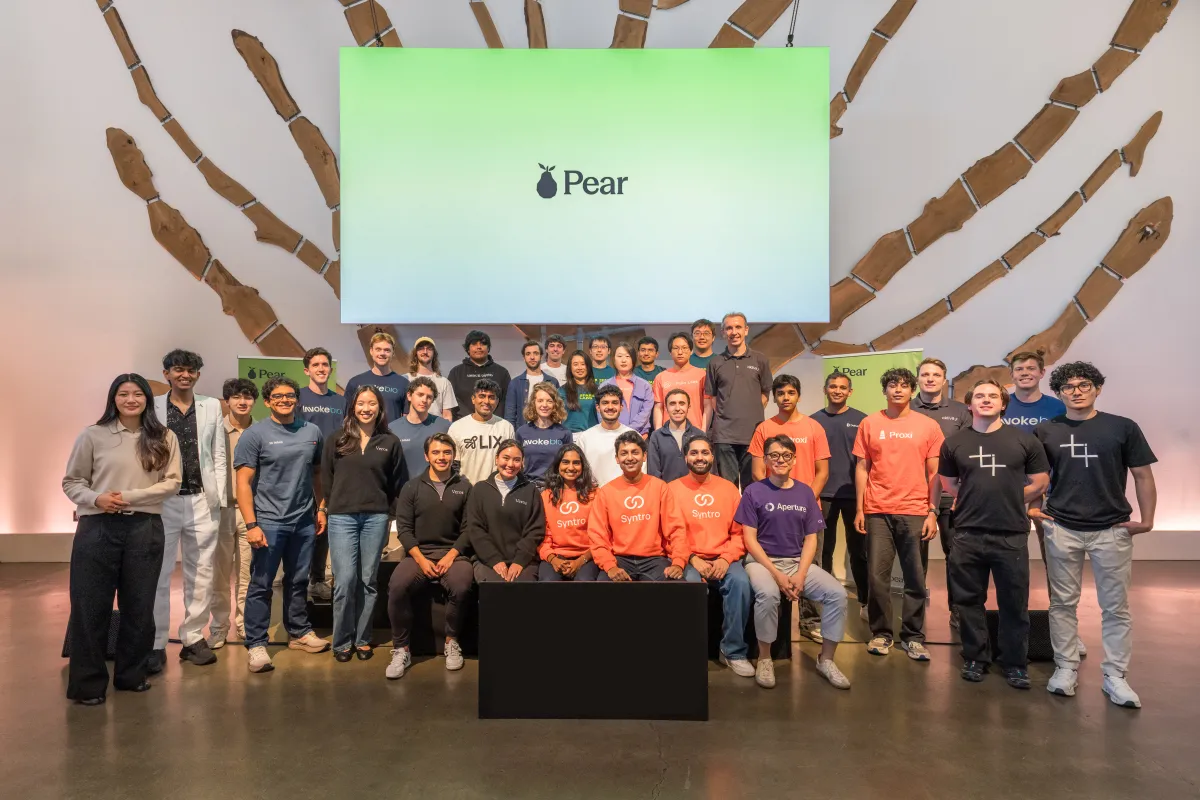
There isn’t a shortage of accelerators for startups, but one of the few that investors watch closely is PearX, a 12-week program that caps its cohorts at a mere 20 startups and is run by Pear VC, a pre-seed and seed-focused venture firm.
PearX’s bi-annual demo day is consistently attended by top venture capitalists, reflecting the historically strong caliber of companies in each batch. Some of the startups that came out of recent cohorts include Known, which uses voice AI to match people for dates and secured funding from Forerunner Ventures. Another is Andera, a startup that automates corporate audit and compliance tasks and raised a $37 million Series A from Lightspeed this summer.
The PearX program distinguishes itself from Y Combinator, the OG of startup accelerators, in several ways. Besides being much smaller, it doesn’t offer companies standard terms. It’s investments can be as high as $2 million. Moreover, unlike YC, where some of the buzziest startups raise funding before the program ends, PearX claims to keep its participants under wraps until demo day.
TechCrunch attended Pear’s latest demo day, which took place in San Francisco last week, and then stuck around to ask some of the VCs about which companies stood out to them out of the 16 startups in the batch.
Below are five of the companies that seemed to have generated the most buzz.
What it does: Spatial foundational models for powering robotics, gaming, and special effects.
Why it stood out: While Speridlabs is certainly not the only startup developing world models to do for 3D space what LLMs did for language, it argues that its more established competitors, including Runway, Odyssey, and Google’s Genie, cannot be queried or modified. To solve this, Speridlabs built Mundus, which it calls a 3D Midjourney because it keeps its geometry persistent when a part is changed.
What it does: building a fast, cost-efficient chip that runs inference directly on device.
Why it stood out: Nvidia’s GPUs and Google’s TPUs require expensive, power-hungry memory that is currently in short supply. Saia claims to have designed a chip that bypasses traditional memory by running AI directly out of flash storage. The startup claims its chip delivers vastly superior speeds and eight times the capacity while using four times less power than Nvidia’s Jetson, a leading local AI chip and board. Saia says it’s already in discussions with Samsung regarding memory integration, plans to start fabricating test chips next year, and aims to launch mass production by 2028. Developing hardware is notoriously brutal, but 20-year-old founder Ayaan Govil managed to convince Pear VC co-founder Mar Hershenson, a semiconductor engineer with a PhD in circuit design, to take a chance on his vision.
What it does: a more secure AI personal assistant.
Why it stood out: Ren claims to offer functionality similar to Muse and Instinct, but with a heavy focus on security and privacy. The startup says it keeps data on-device where possible or uses a secure private cloud, checking actions against strict user-set guardrails. Furthermore, Ren distinguishes itself from competitors that rely on human operators to place phone calls by using a fully automated voice system, keeping human involvement entirely out of the loop to protect user privacy.
What it does: AI native trust and estate planner.
Why it stood out: Setting up a trust is expensive and time-consuming. Veros wants to simplify the work normally done by attorneys, wealth managers, and trust administrators by employing AI to recommend structures and manage assets over their lifetime. Already managing $250 million in AUM, the startup is also in the process of securing a trust charter so it can operate as a regulated trust company itself.
What it does: AI engineer for industrial design.
Why it stood out: Datum wants to expedite physical product development by helping engineers find and use what they built previously. The startup indexes a company’s library of 3D designs. Using proprietary Geometric Fingerprint technology, Datum identifies parts based on their shape, helping streamline and automate engineering across a massive physical design market.
When you purchase through links in our articles, we may earn a small commission. This doesn’t affect our editorial independence.
>

At 19, Ghost founder raises $11 million to build a $3,499 computer for your personal AI

‘Morning Joe’ Slams Trump’s ‘Productive’ Presidency Remarks

‘The Batman Part II’ Pauses Production For Matt Reeves
-

 movies5 months ago
Search For Canadian TV Actor Stewart McLean Now Homicide Investigation
-

 Fashion9 years ago
These ’90s fashion trends are making a comeback in 2017
-
Fashion9 years ago
According to Dior Couture, this taboo fashion accessory is back
-
Fashion9 years ago
Model Jocelyn Chew’s Instagram is the best vacation you’ve ever had
-
Fashion9 years ago
Emily Ratajkowski channels back-to-school style
-
Fashion9 years ago
9 Celebrities who have spoken out about being photoshopped
-

 Anime4 months ago
Rurouni Kenshin: Hokkaido Arc Manga Takes 1-Issue Break – News
-

 Anime3 months ago
HIDIVE to Stream English Dubs for The World Is Dancing, The Forsaken Saintess and Her Foodie Roadtrip in Another World, The Dangers in My Heart: The Movie Anime – News