
‘September Afternoon,’ courtesy of Locarno Film Festival
Courtesy of Locarno Film Festival


Out of all the film genres, the one the French probably do the best is the coming-of-age movie. It’s not hard to find lots of great examples: Truffaut’s The 400 Blows, Eustache’s Mes Petites Amoureuses, Pialat’s L’enfance nue and A nos amours (To Our Loves), Téchiné’s Wild Reeds and Kechiche’s Games of Love and Chance, to name only a few. Film historians may have a good academic explanation for this phenomenon, but if I were to venture a guess, it would be that French auteurs, especially those from the New Wave onwards, tend to reject the cut-and-dry, over-scripted narratives of Hollywood movies in favor of something more honest, messy and personal — which is very much the definition of adolescence.
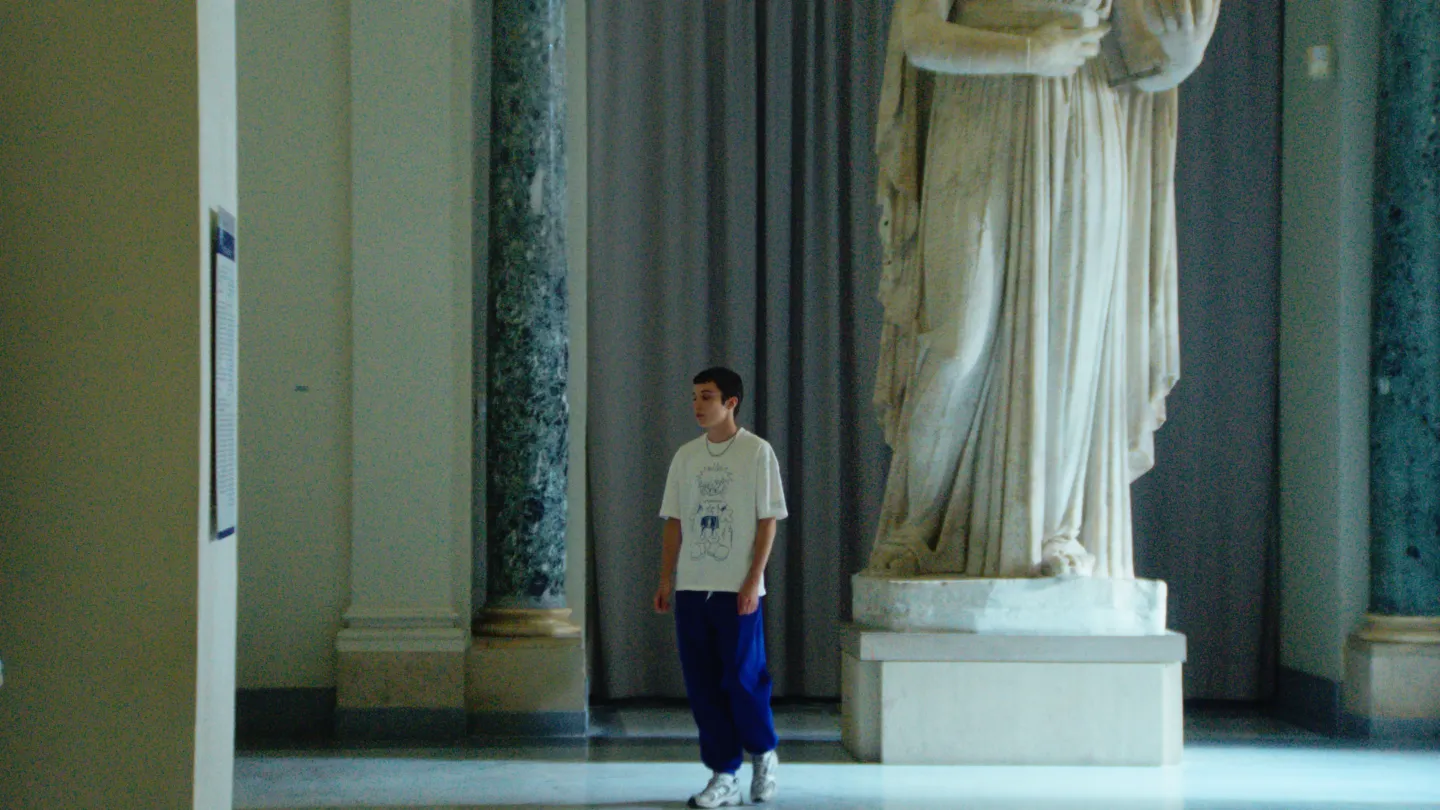
For her stunning feature debut, La Gradiva, cinematographer turned director Marine Atlan tackles the genre in the most French way possible, delivering a sprawling chronicle of teenage angst that starts off as a laid-back class trip to Italy and gradually turns into a devastating tale of loss. Featuring an impressive cast of unknowns and a style that captures them with both beauty and verisimilitude, this deserved winner of the Cannes Critics’ Week Grand Prize announces the arrival of a formidable new talent.
La Gradiva
The Bottom Line
Announces the arrival of a formidable new talent.
Venue: Cannes Film Festival (Critics’ Week)
Cast: Colas Quignard, Suzanne Gerin, Mitia Capellier-Audat, Antonia Buresi
Director: Marine Atlan
Screenwriters: Marine Atlan, Anne Brouillet
2 hours 25 minutes
What makes Atlan’s film feel at once fresh and part of a long tradition of great French teen movies is how she fills it with new faces, outfits, attitudes and sexual preferences, yet portrays the kind of dramas that have been happening since drama was invented. Indeed, the iconic setting of La Gradiva, which follows a class of high school seniors to Naples and Pompeii, is used to frame this story of unrequited love and adolescent turmoil against precious artifacts from ancient times — frescoes, statues and calcified bodies in agony — depicting the very same things thousands of years ago. Times may have changed, and everyone’s glued to their phones now, but feelings are still feelings.
This is immediately apparent in the movie’s opening scene, which shows charismatic class fuck-up Toni (Colas Quignard) spying on his handsome best friend James (Mitia Capellier-Audat) while the latter sleeps with a fellow student on the train down from Paris. Toni, who is gay, looks on with curiosity and a fair amount of jealousy as James — the class ladies’ man and a nonchalantly good student — canoodles, and then some, with a girl, setting the stage for a conflict that takes over much of the film’s second half.
The other conflict Toni faces is with his own origins: His maternal grandmother was a Neapolitan chambermaid who claims she had an illicit love affair with a local aristocrat, until the latter was killed in a 1980 earthquake that destroyed Naples and the surrounding region. Now Toni is back to possibly reconnect with his roots, even if he doesn’t speak much Italian and no longer has contact with that side of the family.
Toni’s dual quests fuel a story that appears to be casually constructed but grows considerably darker and more dramatic as time passes. The first hour or so of La Gradiva actually seems, at times, like a loose-limbed French hangout movie, with the kind of authentic attitudes and performances that directors like Kechiche have done so well beforehand. Atlan brilliantly channels the ebb and flow of shifting moods — the way a joke can suddenly transform into a bitter fight, or the way a glance at another classmate during a museum visit can speak volumes about loneliness and longing. But she gradually homes in on the three-or-four-way love affair at the center of her plot.
If Toni is the film’s protagonist, and James his object of desire, a narrator appears in Suzanne (Suzanne Gerin), the top student in their Latin class but also the one with the least social ties. In a disarming scene between Suzanne and other girls as they chill out in the dorm one night, they ask her why she hasn’t had sex yet and she says to them: “Have you seen my face?” It’s this kind of crushing honesty that characterizes the film itself, as if Atlan were a fly on the wall with a camera (the director, who shot last year’s Cannes entry The Girl in the Snow, served as DP along with Pierre Mazoyer).
There is so much more going on both above and beneath the surface of La Gradiva, whether it’s the class disparities between Toni and James, or the sexual fluidity of the latter, that it’s impossible to jam it all into one review. Atlan’s movie even seems to digress at times, especially during a few long lecture scenes by the group’s dedicated if disillusioned teacher, Madame Mercier (Antonia Buresi), who emerges as the other main character: a woman whose cultural passions betray lots of deep longing as well.
But everything we see is happening for a reason, leading to Toni’s increased isolation and erratic behavior, until a chain of events sets off an absolutely heartbreaking finale. Before that occurs, Atlan captures the students celebrating one last night abroad together, dancing and rapping along to singer Theodora’s club anthem “Kongolese sous BBL” as they each find out what college they’re going to next year.
As in many scenes of her splendid debut, the director warmly trains her camera on the collective cast’s elated faces and bodies, catching them between ecstasy and anxiety, between fear and elation — young adults looking toward the future but forever caught in the dramas of our past.
>

Flipping the home invasion thriller on its head, Netflix’s The Last House puts a family in peril when a mysterious threat seals them inside their home with no escape while torrential rains pour down — for days that turn into weeks, months and years. Louis Leterrier’s capable direction and reliably solid performances from Greta Lee and Wagner Moura as parents desperate to shield their kids from their worst fears make for a film that, despite its sci-fi and horror elements, is as much a psychological chamber drama and survival thriller about four people using their wits and dwindling resources to stay alive, even as their close-knit ties start fraying.
Inevitably recalling the isolation of COVID lockdown, the screenplay by Matthew Robinson (Good Luck, Have Fun, Don’t Die) oscillates between finding comfort and terrified vulnerability in self-reliance, keeping the exact nature of the force imprisoning the family — and seemingly everyone else in the world — vague until roughly an hour in, when the suspense is turned up even as the storytelling gets wobbly.
The Last House
The Bottom Line
Lockdown redux.
Release date: Friday, Aug. 7
Cast: Greta Lee, Wagner Moura, Riley Chung, Noah Alexander Sosnowski, Emma Ho, Gabriel Barbosa, Arden Cho
Director: Louis Leterrier
Screenplay: Matthew Robinson
Rated PG-13,
1 hour 52 minutes
That wait might frustrate genre fans requiring a more instantaneous stream of high-intensity thrills and scares, or anyone expecting the kind of hard-charging action Leterrier is best known for (the first two Transporter films, Clash of the Titans, Fast X and the forthcoming Fast Forever), but the actors keep it watchable.
The quote from Arthur C. Clarke that opens the film is significant: “How inappropriate to call this planet Earth when it is clearly Ocean.” With global sea levels rising due to climate change, those words could ultimately turn out to be prophetic. The pervasive anxiety attached to such environmental issues contributes to the tensions eating away at the family as they struggle to figure out who or what is holding them captive and what that entity wants from them.
For much of its running time, The Last House feels almost like a more grounded version of the taut 2023 Kaitlyn Dever sci-fi horror No One Will Save You, this time rooted in human response to an ambiguous, possibly alien threat. Right from Day One, when they are grasping for answers, Jason Delgado (Moura) tells his family that whatever force has left them housebound is not man-made. But like the audience, he is making conclusions based on minimal concrete knowledge.
An unemployed engineer, Jason packs up his fishing gear and heads home from the pier as a major storm front moves in, with no catch to show for his early morning efforts. A voiceover identified only at the end tells us: “The day the rains came, we learned we were not alone.”
When Jason hustles his loving wife Ann (Lee), their 12-year-old son Graham (Noah Alexander Sosnowski) and 8-year-old daughter Ruth (Riley Chung) out to the car to go buy a Christmas tree, they find the doors and windows of the house sealed shut. Any attempt to force them open or even smash through them proves futile. Looking out their windows, the Delgados discover that their neighbors are in the same position, including a retired couple across the street who have limited food supplies.
At first, Jason and Ann encourage the kids to stick to a routine — household chores, study, piano practice, PE time — convinced the rain will soon stop and their lives will return to normal. With the Wi-Fi out along with TV and radio reception, entertainment options are limited to board games, Jason’s old vinyl collection (a sweet moment has the family cutting a rug to The Cure) and a choice of two films, Annie or Air Force One, to throw into an old DVD player.
They start rationing food, and Ann begins collecting tomato seeds and vegetable roots to start an indoor garden. One of the advantages of a house in disrepair and sinking into its foundations is easy access to soil by lifting a few floorboards. A crack in the chimney spurs Jason to rig a trap with which he goes “fishing,” catching squirrels and other wild animals that wander into the yard and end up in the frying pan. But this food source also brings a new danger into the house.
Somehow, the need to hide from whatever is outside becomes imperative, even more so when they catch their first partial glimpse of a towering creature, unrecognizable as any species known to man.
Their confinement stretches on, jumping ahead five years, by which time the orderly suburban street has surrendered to overgrown nature. The children grow into teenagers, Graham (Gabriel Barbosa) becoming moodier and more impatient while Ruth (Emma Ho) retreats into her vivid imagination, reading about mermaids and mythological monsters like Krakens and Leviathans. She starts theorizing about undiscovered sea creatures living on the ocean floor.
Things get hairier once the tentacled entities outside reveal themselves and the family is forced to fight them off. But the creature designs are clunky, dipping for inspiration into H.P. Lovecraft, kaiju, the rampaging river mutation in The Host and a whole mishmash of unmemorable sci-fi freaks.
The more we see of them and the more their presence is explained, the more the film slips out of Leterrier’s grasp, cheapened by tired jump-scare tropes like corpses bobbing up in water or bodies infested with creepy-crawlies.
We’ve seen too many more terrifying depictions of families pitted against outsize nonhumanoid aggressors — in the world of A Quiet Place, for one — to be especially transfixed by the faceoffs here, which are less effective than the elemental menace of rising floodwaters threatening to drown the Delgados in their own home. After such a protracted emotional build-up, the conclusion feels rushed, its interspecies-empathy message a bit trite.
The movie’s main strength is its emphasis on familial love as a sustaining force, nodding back to thrillers from the ‘80s. Ann and Jason might both appear to be cracking up under the strain, frightening their children — she becomes more fatalistic, while he is so consumed by his responsibility to keep them safe that he neglects his roles as husband and father — but the unbreakable bond holding them all together makes the stakes more real than Robinson’s script would indicate.
Lee and Moura are gifted actors, especially compelling as the increasingly haggard Ann and Jason give up trying to mask their despair. And Graham and Ruth are superbly cast at both ages, creating an affecting portrait of family as a lifeline that keeps the audience in their corner even when the storytelling falters.
>
When the Locarno Film Festival unveiled the program for its 79th edition, it promised an “adventurous” lineup.
German filmmaker Nicolaas Schmidt’s debut feature film, September Afternoon, which will world premiere on Aug. 10 in the Filmmakers of the Present Competition of the Swiss festival, is perhaps the perfect case in point.
“If you don’t know anything about what’s to come, you are probably at risk of leaving the room,” Locarno’s artistic director Giona A. Nazzaro tells THR. “I’m aware of that, but if you stick with it, you will be completely surprised” and enjoy a cinematic journey you won’t forget any time soon.
What he means is that, just like in Schmidt’s short- and medium-length films, there isn’t much traditional “action” or even dialogue in September Afternoon. “The film uses ‘dead time’ as raw material,” the filmmaker highlights in a director’s note. “I stretch mundane moments until they collapse in their emptiness — an invitation to the viewer. In an age of arbitrary extraordinariness, plain banality is stimulating as fuck.”
Schmidt, who was born in Leipzig and lives and works in Hamburg as a filmmaker, video and conceptual artist, tells THR that he is most interested in images, sounds, music and moods, putting a spotlight on the passage of time in everyday situations, repetition and silences.
‘September Afternoon,’ courtesy of Locarno Film Festival
Courtesy of Locarno Film Festival
Or, as Nazzaro offers: “Maybe the trivialities we see are exactly the things that we might be sorely missing in the future,” says Nazzaro, “because we will not have the time to get bored and tend to trivial matters. So for me, [Schmidt’s work] also brings with it a very political element – how to regain agency over the use of your time.”
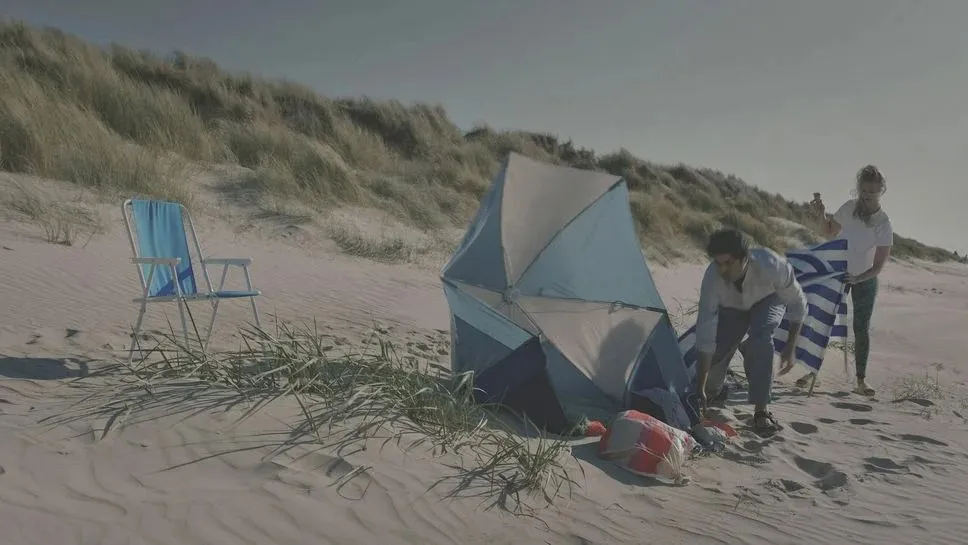
But wait, what can we share about September Afternoon without spoiling too much? Well, the film shows a couple that refuses to accept that summer is over; instead , the small family is heading to the coast for a last experience with sand and seawater. But they find themselves struggling with strong wind and the encroaching elements. With romantic expectations of the summer flipped on their head, Locarno teases that things unravel from there “into a disaster of a different magnitude,” underlining the filmmaker’s invitation to observe and be surprised.
Produced by Maxi Haslberger and Balthasar Busmann, September Afternoon features cinematography by Thomas Oswald. Schmidt directed and edited the movie based on his screenplay. The cast features Amin Motallebzadeh, Katharina Grossmann, Hedi Grossmann and Ada Kurzhöfer. Kino Rebelde is handling international sales.
September Afternoon is the second Schmidt film traveling to Locarno. His First Time [The Time for All but Sunset — Violet] premiered at the Swiss festival in 2021 and received a Pardi di Domani special mention.
Nicolaas Schmidt
Courtesy of Nicolaas Schmidt
On his website, the filmmaker describes himself as a “gréyalisateur,” emphasizing grey as a midpoint, average – or rather, relativity and ambivalence – and the French word for director, “réalisateur,” or someone who brings a film to life. He also calls himself a “dozing artist (concept, photo, video).” And his bio on the website highlights: “He started dreaming at the age of four after visiting the movie theater in his socialist small town south of Leipzig for the very first time” before the GDR and West Germany reunited.
Asked about the inspiration for his films, Schmidt tells THR: “It’s all based on experiences, observations or interpretations of observations.” In the case of September Afternoon, he recalls: “I experienced a similar situation that was as unrelaxed as can be. And I was sadly disappointed that I didn’t film or didn’t have a friend with a hand camera there to film.”
Does he have a detailed plan or script? “I think in detail about what exactly happens and what is said despite starting the process with wanting to leave things as open as possible,” including for the actors,” he says. “But sometimes things get too concrete and go beyond what really interests me, and then I pare back.”
‘September Afternoon,’ courtesy of Locarno Film Festival
Courtesy of Locarno Film Festival
The process of filming September Afternoon came with some surprises. “When we shot the film, it was late September and really stormy, which made things much harder than expected,” Schmidt explains. “I had originally planned to make the wind seem stronger than it was. But my experience so far has shown that it’s good for the films when some things turn out differently than anticipated. While that stresses me out immensely, getting through it together with others does me a world of good and provides me with longer-lasting stability.”
Music plays a key role in Schmidt’s films, even though he says he couldn’t compose any himself, and so do commercials. “In the ’90s, there were commercials that were extremely elaborate and visually captivating, almost poetic, yet emotionally manipulative – that fascinated me, he shares. “I had an interest in them. And I think these are spots people recognize. In the case of September Afternoon, the commercial came late in the process. It is an element that adds ambiguity.”
Schmidt has also referenced other movies in his films, with his latest including a scene from Philippe Garrel’s Le Révélateur. How do these cinematic “quotes” find their way into his works? “I find these in the very long development processes,” he tells THR. “I bring together a bigger collection of ideas, thoughts and associations, saved in a wide chaotic note, and bring them into question and a rating and priority structure at some later point, at the latest when I name that work. When a feeling for the film arises then, it’s also less sober and dry than it sounds now.”
‘September Afternoon,’ courtesy of Locarno Film Festival
Courtesy of Locarno Film Festival
Late in September Afternoon, there is a scene using light in a specific way, and Schmidt made sure not to simply copy the very specific solutions of other directors “for no reason.” He highlights: “I don’t want to repeat everything.” The effect used in the end was “common enough and, in all its simplicity, also effective enough,” the filmmaker explains.
Some may say not much happens over long passages of Schmidt’s films, but the creative doesn’t believe that movies need “action.” “That’s not my thing at all. That provokes me to the max,” he tells THR. “But it is a core problem that you must convince people that less, or nothing, happening can be okay or even fascinating and also that you don’t need dialogue.”
The same goes for uniform tastes and approaches. “I find it hard to handle uniformity,” Schmidt says. “It unsettles and frightens me if people subject themselves to trends, fashions and the whims of the masses, or individuals. I understand that this view also excludes things, but I just don’t like any adaptation without questioning and a valid reason.”
That said, he doesn’t make films simply to provoke audiences, but out of curiosity and also to potentially discover a community of people outside the mainstream. “For me, it’s a pretty reliable opportunity to find like-minded people,” Schmidt says. “And I appreciate it when people come up to me and give me the feeling that I am a bit normal.”
>

In the second phase of New Mexico’s already big bucks social media lawsuit against META, a judge today slapped the Mark Zuckerberg created tech-giant with a penalty in the hundreds of millions of dollars and also put some potentially big restrictions about the company can and cannot do when it comes to kids being on their platforms.
“Although Meta …social media platforms are a significant contributing factor to the current mental health crisis among New Mexico’s youth established by the substantial evidence in this case,” wrote Judge Bryan Biedscheid today ordering the company to payout $567 million to safeguard minors hand over money to the state’s mental health treatment programs and put a hard limit of 90 hours a month on individual use of social media platforms.
Still, in typical Zuckeberg fashion, almost immediately after Judge Biedscheid ordered META to pay to combat the consequences of Instagram and Facebook (WhatsApp got a pass) the company stridently denied there is a problem and vowed to take the whole thing back to court.
“We disagree with the ruling and will appeal,” a META spokesperson told Deadline of the nearly $600 million that is now added to the $375 million the tech-giant was ordered in March to fork over in the Land of Enchantment in the menta health “We work hard to keep people safe on our platforms and have been transparent about the challenges of identifying and removing bad actors and harmful content. We remain confident in our record of protecting teens online and will continue to defend ourselves against claims that misrepresent the facts.”
BTW – The $375 million sum from the spring is based off the maximum penalty of $5,000 per violation for such mental health cases under New Mexico law. In total META is on paper paying out $942 million.
While that sum won’t prevent Zuckerberg from being able to pay his VISA bill, it could have devastating growth potential for META when one considers the recent L.A. action and thousands of similar suits across the country META is named in.
Put in context, META has a market capitalization of around $1.50 trillion. That’s a lot of dough, but not limitless — and state Attorney Generals know it. Which is exactly the message New Mexico’s Raul Torrez was sending today.
“This case has always been about protecting children, standing up for families, and making sure that one of the world’s largest technology companies cannot profit from practices that endanger young people without consequence,” Torrez said after the latest ruling was filed. “Today’s decision is a victory for every parent who has worried about what social media is doing to their child and every child who deserves to grow up safer online.”
>


Search For Canadian TV Actor Stewart McLean Now Homicide Investigation


These ’90s fashion trends are making a comeback in 2017
According to Dior Couture, this taboo fashion accessory is back
Model Jocelyn Chew’s Instagram is the best vacation you’ve ever had
Your comprehensive guide to this fall’s biggest trends
9 Celebrities who have spoken out about being photoshopped
Emily Ratajkowski channels back-to-school style
A photo diary of the nightlife scene from LA To Ibiza