
Entertainment
Lawrence Kasdan on Martin Short, ‘Raiders of the Lost Ark,’ and more

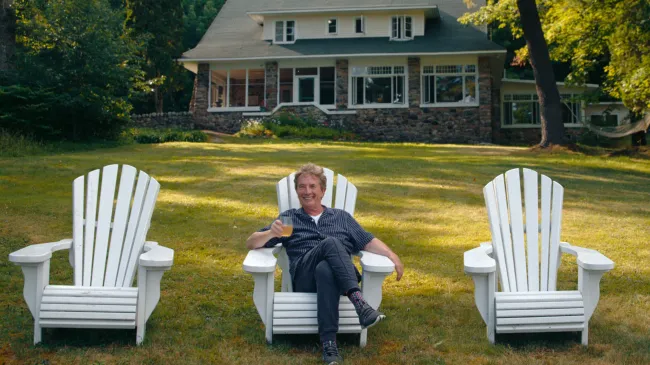
When director Lawrence Kasdan made “Light & Magic,” his six-episode streaming series on the history of visual effects house Industrial Light & Magic, he struggled to convey the tone he wanted to his collaborators at Imagine Documentaries. “The spirit I wanted the series to have wasn’t one that was naturally there,” Kasdan told IndieWire. “It was much more ebullient and fun and unpredictable. In order to try to explain that, I said, ‘I want it to feel like what it’s like when you hang around with Marty Short.’”
At that point Kasdan had been friends with actor Martin Short for over 30 years, ever since they had collaborated on the 1987 comedy “Cross My Heart,” which Kasdan produced. “We immediately hit it off, became friends, and it never stopped after that,” Kasdan said. Now, Short is the subject of one of the best films of Kasdan’s career, “Marty, Life Is Short,” a Netflix documentary that, like most of Kasdan’s work, is clear and straightforward but abundant in profound insights and rich observations.


First and foremost a lively and informative overview of Short’s life and career, “Marty, Life Is Short” is also a moving study of friendship through both triumphs and tragedy, a philosophical inquiry into the question of how to live a meaningful life, and a snapshot of a golden age in Hollywood filmmaking told from the point of view of people who lived through it. One of the most entertaining aspects of the movie for cinephiles is the use of home movie footage that presents Short’s star-studded gatherings at his vacation home — getaways where the guest list included filmmaking luminaries like Steven Spielberg, Tom Hanks, and Kasdan himself, not to mention old SCTV colleagues like Catherine O’Hara and Eugene Levy.
“It seems like a fairy tale,” Kasdan said when looking back at those get-togethers at Short’s Sag Harbor house. “Everybody came to visit him, because it’s just fun being around Marty.” Kasdan had met Spielberg years before when they worked together on “Raiders of the Lost Ark.” After years of struggle, Kasdan had sold his screenplays for “The Bodyguard” and “Continental Divide,” the latter of which impressed Spielberg and inspired him to hire Kasdan for “Raiders” — which in turn inspired “Raiders” producer George Lucas to hire Kasdan to finish the script for “The Empire Strikes Back” after original writer Leigh Brackett passed away.
“Marty was not related to those people when I met him,” Kasdan said. “It turns out they all became close friends, but my relationship with Marty was separate from that.” In spite of his closeness with Short and interest in him as a subject, Kasdan went back and forth on whether or not he wanted to make a documentary about his friend. “Eventually I became convinced that I was the right person to do it, but I had to know that Marty really wanted it. He had been approached many times, and he was wary. He’s a private person.”
Ultimately Short not only gave the project his blessing, but provided hundreds of hours of home movie and video footage going back to when he was seven years old. “Whether it was him, or his father, or his brothers, he had historical material you could never dream of having,” Kasdan said. “When Marty said, ‘I’ll let you use everything,’ that seemed like the greatest invitation in the world, and I couldn’t say no.”

While the home movie footage and other archival material in the documentary are fascinating and illuminating, the real value of “Marty, Life Is Short” comes from Kasdan’s skill as an interviewer, as he puts Short and many of his friends and collaborators at ease to reveal memories and stories that will provide new pleasures to even the most learned Short fan. “My technique is a slow unpeeling of people’s layers,” Kasdan said. “I’ve always believed that if you are really interested in people, they will open up. And not only will they open up, it will release the great pressure they’ve had their whole life to have someone listen to them.”
This interest in behavior and the breadth of the human condition links “Marty, Life Is Short” to Kasdan’s best fiction films, from his directorial debut “Body Heat” and its follow-up “The Big Chill” to “The Accidental Tourist” and the underrated “Mumford,” all of which are concerned with the ways we both hide and reveal our true selves. “What we look for in life is someone who sees us and hears us, and it’s relatively rare,” Kasdan said. “Some of it is that people are shy, another thing is that people protect their privacy, and another thing is that no one asks. That’s bothered me my whole life.”
From the time Kasdan was young, he had a reputation as an inquisitive person. “People would constantly say, ‘What are you, a reporter?’” Kasdan said. “They just didn’t understand why I always had follow-up questions to their life. But to me, that was really irresistible.” It’s what has made Kasdan’s recent forays into documentary filmmaking so pleasurable for the director after decades in fiction filmmaking. “Making ‘Light and Magic’ was so stimulating to me after years of following a script and having preconceived ideas. The stories people would tell were so exciting and unexpected, better than anything I had been writing for 40 years.”
This year marks the 45th anniversary of “Body Heat,” which is newly available on 4K UHD and Blu-ray from Criterion with terrific supplementary features, including a new interview with Kasdan. In the fall of 1981, Kasdan had three big movies in theaters at the same time: “Body Heat,” “Raiders of the Lost Ark,” and “Continental Divide,” which Michael Apted directed from Kasdan’s script. All three movies were part of the cultural conversation in a way that seems almost unthinkable today given the more fragmented media landscape, and Kasdan knows how good he had it looking back.

“It was insane,” Kasdan said of the moment when he had three major releases playing simultaneously. “My friends and I really feel we were born at the right time. Hollywood felt like a very small town. Now it doesn’t feel like a town at all — they’re making things all over the world. Some of them are fantastic, but there are a thousand new movies a week, it seems. During that period, if you could get a movie going, it was a big deal, and people were paying attention. It was a very rich, wonderful time, and we didn’t know how quickly it was going to go away.”
When Kasdan first worked with Short in 1987, he was at the top of his game, having come off of “Body Heat,” “The Big Chill,” and “Silverado” en route to “The Accidental Tourist.” “Cross My Heart” was a critical and commercial disappointment, but it bonded Kasdan and Short, who reunited with the more artistically (if not commercially) successful “Mumford” over 10 years later. “‘Cross My Heart’ was a difficult experience,” Kasdan said. “I had promoted it to Marty because because the script was really funny, and I believed in the director — maybe too much. I convinced Marty to do it and then when it started shooting it didn’t go very well, and I felt terrible.”
Kasdan knew, however, that Short was someone he wanted to keep in his life, and his affection for Short as an artist and a human permeates every frame of “Marty, Life Is Short.” “What’s kept us friends for so long is that I admire his spirit,” Kasdan said. “Despite many tragedies, when you get around him you feel good.” While the documentary delves into one of the central tragedies of Short’s life, the death of his beloved wife Nancy Dolman, two others — the unexpected death of Short’s friend Catherine O’Hara and the suicide of his daughter Katherine — are referenced only in the final dedication.
“We were cutting, and first there was the Reiner tragedy,” Kasdan said, referring to the murders of director Rob Reiner and his wife Michele. “Then Catherine O’Hara, who had been in my kids’ movies and my movies, who was a genius. No one in my group knew she was sick, and all of a sudden she was gone and everyone working on the movie was devastated. She was so central to the movie, and she’s such a lovely presence.” Then Short’s daughter died at the age of 42, and Kasdan had to talk with his friend about whether it was even the right time to release the movie.
“Katherine had been a huge resource for us because she had possession of an enormous amount of the archive,” Kasdan said. “She had been a better archivist of the photos than Marty had been, and she was lovely and couldn’t have been more cooperative. When this tragedy happened, I couldn’t believe it, and I said to Marty, ‘We don’t have to release this movie now. Do you want to think about this and just take some time?’” Short’s response was, for anyone who has seen Kasdan’s film, unsurprising.
“In the movie there are horrible things have happened to him, and they can knock him down but his instinct is toward life,” Kasdan said. “When I asked him, he said, ‘I think this movie’s about not retreating from it.’ And he was absolutely right.”
“Marty, Life Is Short” is now streaming on Netflix. “Body Heat” is newly available on 4K UHD and Blu-ray from Criterion.
>

Léa Mysius’ latest feature The Birthday Party (Histoires de la Nuit) earned a 12-minute ovation Friday evening at the Cannes Film Festival following its debut screening in the Grand Théâtre Lumière. It marked the last world-premiere screening in this year’s 22-strong competition lineup.
The audience broke into cheers twice during the screening of the home-invasion thriller before giving the French pic wildly enthusiastic applause as the lights went up.
Adapted from Laurent Mauvignier’s bestselling novel of the same name, The Birthday Party follows Thomas and Nora and their teenage daughter Ida, who live on a remote French marshland where social contact is limited. Monica Bellucci plays their only neighbor, Cristina, an Italian painter.
The official synopsis continues: As the two households plan a surprise birthday party for Nora, strange disturbances begin to occur, and unease rolls over the marsh.
Director and actress Hafsia Herzi, who was in Cannes last year with her own film The Little Sister, and actor Bastien Bouillon (The Count of Monte Cristo) play the couple. Benoît Magimel, Bastien, Tawba El Gharchi and Paul Hamy also star.
The ovation included a moment when Cannes boss Thierry Frémaux insisted that El Gharchi, who plays Ida, be allowed to address the audience, which was raving about her performance.
RELATED: ‘The Birthday Party’ Clip: First Look At Monica Bellucci In Cannes Palme D’Or Contender
The Birthday Party is the third feature from Mysius, who was previously in Cannes with Ava and The Five Devils, and who shared an Oscar nomination with Jacques Audiard and Thomas Bidegain for the screenplay for Emilia Pérez. The film is produced by Paris-based F Comme Film and sold internationally by mk2 films.
The festival ends Saturday with the presentation of the Palme d’Or and the rest of the awards.
>

“Speed Racer” is finally getting its due.
The 2008 film, written and directed by “The Matrix” visionaries Lana and Lilly Wachowski and based on the beloved late-‘60s Japanese animated series, is one of the boldest and most uncompromised films ever released by a major studio (in this case Warner Bros.) – compelling and audacious, on both a visual and narrative level, that also continues the Wachowskis’ thematic concerns about the dangers of Capitalism and their interest in the essential power of a found family. It was unlike anything that had ever been released and is still unlike anything released since.
“We wanted to experience action that was more of a feeling, we wanted to create paintings in the abstract but imbue them with the emotional narrative that was driving the whole thing,” said Lilly in a new documentary included on the new, must-own 4K Blu-ray (out this week).
“We wanted to detach narrative from time and space,” Lana added.
But at the time that “Speed Racer” was released, it widely dismissed. It wasn’t just underappreciated; it was downright despised. Critics found it a cacophonous eyesore (it currently holds an abysmal 37 on Metacritic). A.O. Scott’s review for the New York Times called it “busy and incoherent.” J. Hoberman in the Village Voice called it “a cathedral of glitz.” David Edelstein, for New York Magazine, sneered that the film was “a shambles, with incoherent action and ear-buckling dialogue.” The New Yorker’s Anthony Lane referred to “Speed Racer” as “Pop fascism.”
“Yes, the colors are hot, the set design is cool, and the sidekick chimpanzee is cute, but the action sequences – the hyperreal video-game kineticism on which the Wachowskis’ reputation for virtuosity has rested – are chaotic and nonsensical,” Scott wrote. It was a sentiment shared by many.
“Speed Racer” was just as disappointing commercially, collecting just $93.9 million worldwide on a budget of $120 million. Plans for a franchise, including two sequels, were abruptly canceled. (The Wachowskis wouldn’t make another movie for four years, finally returning with the independently produced “Cloud Atlas,” which they directed with German filmmaker Tom Tykwer.)
Over time, though, the response to the movie shifted from mild bemusement (and outright distain) to appreciation, particularly on social media and with a new group of more savvy film fanatics, who praised the film in newsletters and blog posts. If not heralded as an ahead-of-its-time masterpiece, there seemed to at least settle in a consensus that it should be heralded as a risk-taking rulebreaker that still seems as outrageous today as it was in 2008. (Crucially, on Letterboxd, it has a 3.6. The kids are indeed all right.)
“Films, especially in corporate monetized structures, they become these things that roll through these factories and they all start to look alike. ‘Speed Racer’ sticks out like this flower in a gray-scape,” said Lilly in the documentary.
After the 4K remaster premiered at Beyond Fest in Chicago earlier this year (to a rapt, highly attentive audience), “Speed Racer” even made a brief, unlikely return to IMAX theaters last month. Pretty good for a movie Lane in The New Yorker dismissed as “of no conceivable interest to anyone over the age of ten.”
As the collective attitude towards “Speed Racer” changed, so too did the attitude of its star Emile Hirsch. At the time of “Speed Racer’s” release, he was on the cusp of major superstardom. After the movie failed to meet expectations, there were reports that he got rid of his representation (he now says that this change was unrelated to “Speed Racer’s” box office performance). Over the years, though, he painted a series of illustrations inspired by “Speed Racer” and spoke openly about the film on social media. When the movie played the TCL Chinese Theatre in Hollywood, he attended in costume and stopped to take photos with fans. Emile Hirsch is Speed Racer. And Speed Racer is Emile Hirsch.

“Emile is so great in the movie. He’s in this tender space. He’s kind of a boy but kind of cool,” said Lana in the new documentary.
Hirsch had grown up watching “Speed Racer” reruns on Cartoon Network and first got the call about the film while he was shooting Sean Penn’s “Into the Wild,” where he played Chris McCandless, a young man who died tragically in the wilderness.
“I was like, Oh my gosh, this sounds amazing. And I’ve got a beard and I’m skinny, and I’m like hearing this and it couldn’t be more different than ‘Into the Wild,’ which I was shooting right then and there,” Hirsch told TheWrap.
After Hirsch had wrapped “Into the Wild,” he had to prepare for “Speed Racer” auditions. Hirsch had auditioned unsuccessfully for the two “Matrix” sequels (we’re assuming for the role of The Kid, eventually played by Clayton Watson). Hirsch was only 15 or 16 at the time.
“I wasn’t really experienced enough to handle them as filmmakers in a certain sense. I don’t think I quite got the direction in the right way and I was just new to the game,” Hirsch said. But he had just been through the wringer on “Into the Wild,” directed by a filmmaker who also happened to be one of the greatest performers of his generation. This time, he was ready for the Wachowskis.
“I remember really working a lot on the auditions and putting in the time to really figure out exactly what the right tone for the scenes was and whose Speed was. From the beginning, it felt like it went well,” Hirsh said. “It was a series of auditions that culminated in getting the part.”
Hirsch said that at the time he remembered news articles about the worldwide casting call that the producers of “Speed Racer” had put out.
“It wasn’t like they just saw a few people, they saw everyone. And part of me was like, what are the odds I get it, just like numerically, I mean, there’s like 10,000 people submitting? But it worked out and I was beyond excited and thrilled and a little intimidated, even just because of the size of the of the production.”
Did the Wachowskis ever tell Hirsch why they chose him? After all, they had seen thousands of actors, watched hundreds of auditions and yet they picked him. Hirsch said no but that “I’m almost glad they never told me.” Now, he can only guess. “I think that there was just something there, that Speed had a certain set of qualities that I think maybe they felt lined up with me. I don’t know though,” Hirsch said.

Hirsch wasn’t sure how “Speed Racer” was going to look, but he had an idea. “I think due to my own lack of imagination, I just assumed it would be the same dark visual aesthetic as ‘The Matrix.’ I remember thinking, But ‘The Matrix’ is an R-rated movie and this has a kid with a chimpanzee, you can’t make that dark. Weirdly enough, that would be more ridiculous,” said Hirsch.
After the Wachowskis showed him storyboards for the movie, Hirsch remembers thinking, Oh this is completely different. It made him more excited to do the movie, particularly because they were borrowing elements from the “Speed Racer” television series and translating them for the big screen.
To achieve this look, the Wachowskis employed a number of different methods, including extensive use of computer-generated imagery from companies like Industrial Light & Magic, Digital Doman and Sony Pictures Imageworks and shooting the actors individually and then composing them together later in an effort to maintain an image with very little depth; one that could mimic the look of a traditional, “flat” hand-drawn animated series.
“There was a lot of acting in rooms with stuff that wasn’t there and I got used to it pretty quick because they had a lot of storyboards, so I could imagine the world that we were in,” said Hirsch. “Then to see all those scenes that you shot, now with this completely believable wild colorful world, it really made me appreciate just how much the Wachowskis had planned and envisioned it prior.”
When we wondered how Hirsch felt about the movie now – and about how his response to it has maybe changed over the years, Hirsch said that he “always loved the film because I love the Wachowskis.”
“We were obviously all super bummed out when it came out and when it didn’t get the reviews that we thought it should have gotten, or the public wasn’t going to see it, e everyone was sad in a way, because everyone had worked so hard on it,” Hirsch said.
He’s not sure when the reappraisal started to happen, although he cites Film Crit Hulk’s essay as a turning point (it was published in 2015). Slowly, Hirsch realized, the tide was turning.

“It was such an organic thing that was not manufactured. This is just people thinking and deciding for themselves how they felt about a work of art and reassessing it and that, that to me, was cool. Ever since the film came out, every year it gets more and more popular,” Hirsch said.
Six years ago, Hirsch saw the film at the New Beverly, a rep theater that Quentin Tarantino owns in Los Angeles. It was a midnight screening. He remembers that the film was playing well but in the Grand Prix scene, Hirsch said, something else happened.
“I could hear everybody in the theater crying. And this was adults, these are cinephiles. And I could hear the crying, I remember going, Wow, there’s very few movies where I could hear the audience crying at a point in the movie,” Hirsh said. “In that moment it really clicked why it was this timeless classic, because it reconnected people to their that childhood sense of wonder and sense of being able to do anything you put your mind to. I think that it’s that heart that has really created the enduring legacy of Speed Racer. I’m very, very, very grateful to have been in a film that people feel so strongly about.”
Hirsch was originally signed on for three films, but the only thing he knows about the sequel is that Lana told him that he “had to get rock hard abs and put more muscle on.” “I could see him getting a little more muscle, a little more bulk,” said Hirsch.
In some ways, the curvature of acceptance for “Speed Racer” is keeping within the legacy of the animated series, which lived far beyond its brief television run.
“I think it’s a film that followed the fate of the cartoon, where the cartoon came out and it only ran for two seasons, and then it got more and more popular, and became cooler and cooler, to the point where Kurt Cobain had ‘Speed Racer’ stickers on his guitar. It attained a level of cool,” said Hirsch. “And I feel like the movie, even though didn’t do well when it came out, it has continued this journey of picking up where the cartoon left off and became one of these one of these things that’s just cool. There is something to it there that isn’t necessarily marketed, it’s just come naturally. And the audience has naturally got there.”
“Speed Racer” is now available on 4K UHD.

>

The 11th edition of the Moebius Film Festival, Creative Artists Agency’s annual screening series showcasing graduate student filmmakers and their work, has unveiled the lineup for this year’s May 27-28 run.
CAA Moebius will screen short films directed by student filmmakers from top film schools, including the American Film Institute Conservatory, New York University, Columbia University, Chapman University, the University of Southern California, Florida State University and the University of Texas at Austin.
The first night showcase will feature Columbia graduate Greta Diaz Moreau with Loquita Por Ti; Becoming, from Chapman graduate Aidan Forte; NYU graduate Harold Kahane’s The Alternative Resolution; UT-Austin graduate India Opzoomer’s Poster Boy; and Dongmei, from NYU graduate Rubing Zhang.
The second night screenings have booked Club Rats, by AFI graduate Grace Godvin; Aayat, from USC graduating director Sonia Bhatia; AFI graduate Alex Bush’s Beware The Wolves; Norheimsund, from NYU graduate Ana Alpizar; and Kumquat, from FSU graduate director Lex Lee Morales.
CAA Moebius will this year introduce Moebius Labs, a series of workshops and informal conversations allowing participating filmmakers direct access to key film and TV creatives, producers and executives. This year’s participants include screenwriter Julia Cox in conversation with Liz Suggs; producer Jessie Henderson; filmmaker David F. Sandberg and CAA Motion Picture literary agents.
The showcase will also see appearances by Palm Springs filmmaker and Moebius alum Max Barbakow and a yet-to-be-announced Oscar-winning writer and director. Each will host an evening and deliver opening remarks to celebrate the next generation of storytellers, according to CAA.
CAA Moebius was launched by CAA motion picture agents Christina Chou, Zach Kaplan, Pete Stein and Lingie Park, who said in a joint statement on Friday: “Over the past 11 years, Moebius has continued to grow alongside the filmmakers who have come through the program. With the introduction of Moebius Labs, we wanted to create a more direct exchange between emerging filmmakers and established creatives working at the highest levels of the industry. This year’s lineup reflects an incredible range of voices, ambition and cinematic perspective, and we’re proud to continue building a platform that champions the next generation of storytellers.”
>

‘The Birthday Party’ Lands 12-Minute Ovation At Cannes Premiere

Mary Earps, former England goalkeeper, talks to BBC Sport

Emile Hirsch on the Legacy of Speed Racer
-

 Fashion9 years ago
These ’90s fashion trends are making a comeback in 2017
-
Fashion9 years ago
According to Dior Couture, this taboo fashion accessory is back
-
Fashion9 years ago
Model Jocelyn Chew’s Instagram is the best vacation you’ve ever had
-
Fashion9 years ago
Your comprehensive guide to this fall’s biggest trends
-
Fashion9 years ago
A photo diary of the nightlife scene from LA To Ibiza
-
Fashion9 years ago
Emily Ratajkowski channels back-to-school style
-
Fashion9 years ago
9 Celebrities who have spoken out about being photoshopped
-
Fashion9 years ago
The tremendous importance of owning a perfect piece of clothing
