
Politics
Politics Home Article | Women Labour MPs “Disappointed” By The Prospect Of Another Male Leader


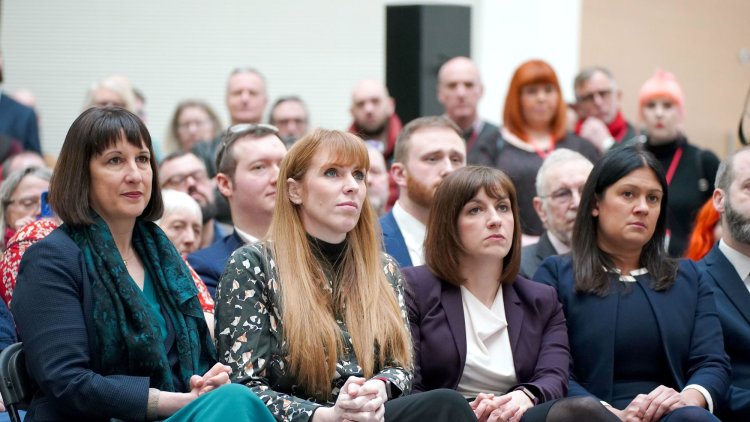
Rachel Reeves, Angela Rayner, Bridget Phillipson, and Lisa Nandy have all served as Cabinet ministers in Keir Starmer’s Labour government (Alamy)
5 min read
Female Labour MPs are “disappointed” by the prospect of a man replacing Keir Starmer as prime minister, with the Labour Party not having had a permanent female leader in its 120-year history.
Members of the Women’s Parliamentary Labour Party (PLP), including some who would back Andy Burnham or Wes Streeting in a future race, told PoliticsHome that the party is overdue a female leader.
A formal leadership challenge has not yet been launched to topple Starmer. However, either a contest or a coronation is widely seen as likely soon, after Streeting stepped down as health secretary last week and announced his intention to stand when a contest is underway, and Greater Manchester mayor Burnham announced that he will stand in a parliamentary by-election to re-enter Parliament.
If Burnham wins the Makerfield by-election in June, he is the top choice among Labour members to replace Starmer as leader – with 47 per cent ranking him as their first preference in a YouGov poll this week.
In the same poll, 31 per cent of members said they would support Starmer staying in post, with former deputy prime minister Angela Rayner trailing behind in third on just eight per cent, followed by Streeting on four per cent.
Rayner has long been seen as a potential successor to Starmer, and last week announced that she has resolved her tax affairs with HMRC following an investigation into whether she underpaid stamp duty on her £800,000 flat in Hove.
Now that the investigation has been resolved, it potentially frees her up to make a bid for the leadership herself. However, if Burnham is able to stand, 69 per cent of party members would vote for him over Rayner, according to YouGov.
Education Secretary Bridget Phillipson, Home Secretary Shabana Mahmood, Foreign Secretary Yvette Cooper, and Deputy Leader Lucy Powell are all also senior female Labour figures who could throw their hats in the ring – but none have nearly as much support across the party as Burnham.
“It’s depressing,” one female Labour MP who has called for the PM to resign told PoliticsHome.
She said it was “frustrating” that the current leadership “haven’t fostered a culture” where a female leader emerging is “likely”, and described “wider societal misogyny that comes gunning for strong Labour women with a viciousness that you don’t see elsewhere”.
Labour MP Cat Eccles, who has also suggested that Starmer make way for a new leader, said: “We’re definitely overdue for a female leader and if or when we end up in a leadership contest, I hope we see some strong women contenders.
“So, ideologically yes, but ultimately I think we need the person who can connect and communicate best with people.”
Multiple members of the Women’s PLP told PoliticsHome that female MPs were afraid to put themselves forward for leadership contests due to a combination of misogynistic bullying in the party and the level of online abuse directed towards female politicians on social media.
Culture Secretary Lisa Nandy has previously told The House how she found the experience of running for leader so bruising it put her off ever doing it again.
Senior Labour MP Emily Thornberry recently ruled herself out. Asked by The House whether should try again for the top job, she replied: “No, no, no. I’ve done it before, and it was really difficult and a horrible experience.”
Others spoke about feeling frustrated that there has been a tendency for senior Labour male politicians to “talk about themselves” and that “journalists are just repeating this” – while many women in the PLP feel that the top women in the Cabinet, such as Bridget Phillipson and Shabana Mahmood, have been prioritising just getting on with their jobs.
“People (men) who name themselves get named as future leaders and bigged up,” one senior female Labour MP said.
While many women Labour MPs are disheartened by the prospect of having another male leader, they are also willing to overlook this in favour of a candidate who they believe might be able to turn the party and country around.
A female Labour MP who is likely to back Streeting in a contest said: “I’d be disappointed, but you can’t ‘make’ a woman stand for the sake of it.
“I think the question should be: why do none of the brilliant women in the PLP feel like they can’t stand?”
The MP added that they believe Streeting has gained more support from the women’s PLP in recent months, and has particularly proven that he genuinely cares about tackling violence against women and girls.
Labour MP Rachael Maskell, who would support Burnham in a contest, said: “There are so many talented women in the Labour Party, but I think we all recognise that we are in extraordinary times where we need to ensure that we are able to stabilise the party and country, and therefore unite behind someone with the breadth of experience needed to do this.
“However, we must work beyond the current situation to ensure that the next leader is a woman.”
She argued that the “culture of politics” must change and that Starmer had moved it into a “far more authoritarian model”: “Whereas the roots of our party are built on the voices of people from our communities, where all are valid, and debate is encouraged.”
Some Labour MPs who are supportive of the prime minister staying in post suggested that the prospect of replacing a man with another man, when the Tories are on their fourth female leader, would be “embarrassing”.
One female Labour MP who is backing the PM said: “It reflects really badly on us as a party… We all need to think about how we change that.”
Male Labour MPs also told PoliticsHome they found it “disappointing” and “depressing” that the party was yet to select a permanent female leader, describing the party as having “many excellent female MPs”.
A male MP on the left of the Labour Party said they “blame the Labour right”.
“By trying to exclude the left from future contests, they’ve, by default, also blocked women and Black candidates,” he continued.
“However, I’m firmly of the opinion that sex and race are minor factors. Kemi Badenoch is both. As is Shabana Mahmood. Race and sex are not a guarantor of being a good candidate. Your actual class politics and political culture you embrace matter far more.”
>
Politics
Politics Home | Big Tech Firms Are “Winning In A Big Way” On Online Safety, Warns Jess Phillips

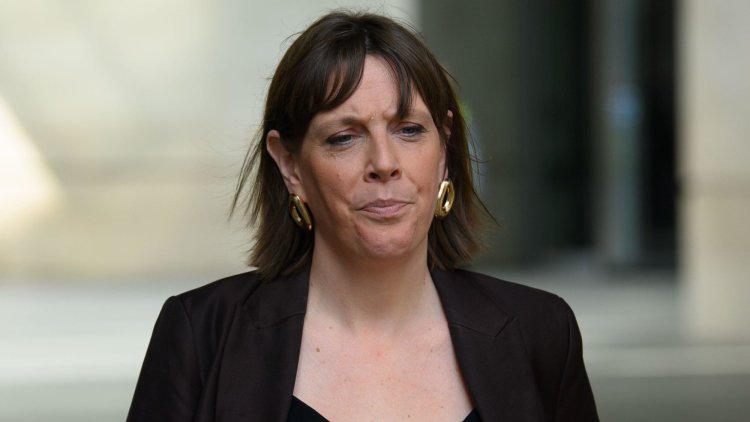
The former safeguarding minister Jess Phillips has warned the big tech firms are winning in the battle over regulation (Alamy)

3 min read
Major tech companies are “winning in a big way” against efforts to make the internet safer for women and children, according to former safeguarding minister Jess Phillips.
Phillips, the Labour MP for Birmingham Yardley, said that during her time in government, parts of Whitehall, including No 10, were reluctant to take action for fear of retaliation by tech giants and the Donald Trump administration.
Speaking on the latest episode of PoliticsHome podcast The Rundown, which will be published on Friday (7 August), Phillips said: “We are too beholden currently in the world to basically five unelected people.”
The Labour MP resigned as a Home Office minister in May, accusing the Keir Starmer administration of not working hard enough to protect women and girls online. Phillips said Starmer was a “decent man” but his reluctance to “have an argument” meant that steps to tackle violence against women and girls (VAWG) were “stalled and delayed”.
In her resignation letter to the then-prime minister, Phillips said that “91 per cent of online child sex abuse is self-generated by children groomed, tricked and exploited into abuse”, and that Google and Apple, the two companies that control the operating systems on almost all smartphones, could quickly and easily install software that would stop them being used by children to take and receive naked pictures.
In June, Starmer gave tech firms a September deadline to make this change, warning that the government would give itself the powers to fine or take criminal action against those that did not comply.
Phillips wants new Prime Minister Andy Burnham to hold them to this, telling the podcast that, as things stand, “tech companies are winning in a big, big way”.
The former minister said there was a divide within Whitehall about how to tackle online safety when she was in government. She described the Home Office as being “hawkish as hell about tech companies”, while No 10 and the now-abolished Department of Science, Innovation and Technology (DSIT) were nervous about being too aggressive.
Phillips recalled “the sense that tech companies and the US would hold us to ransom on all sorts of different things”, adding: “I’ve had it directly said to my face, ‘well, look, they’ll just put trade levies on us if you try and do anything with tech companies’.”
She said Starmer “was always on my side in conversations”, but that she “just started to feel like I was going slowly mad” waiting for the machinery of government to make it happen.
“If you could hear some of the conversations I had to have with people. There are some people who genuinely just think that people taking dick pics is a human right,” Phillips said.
“I had to say to somebody once: ‘You know, you won’t die. It’s not water or shelter’.”
Phillips expressed concern that the government’s Online Safety Act is “woeful for women” in its current form and “20 years behind” where it needs to be to tackle evolving online harms.
“As somebody who was seeking to put down lots of amendments to the Online Safety Act while it was passing through, I’ve never known aggressive lobbying like it,” said the Labour MP. “Every single law firm in the whole of London was basically on retainer to one of the big tech companies so that they couldn’t work for anyone else. That is just anti-democratic.”
The Rundown is presented by Alain Tolhurst, and is produced and edited by Ewan Cameron for Podot
- Click here to listen to the latest episode of The Rundown, or search for ‘PoliticsHome’ wherever you get your podcasts.
>


Prime Minister Andy Burnham has outlined a range of areas he would like to see greater spending in. (Alamy)

4 min read
Andy Burnham has set out some major ambitions for government since entering office. Experts look at how he could pay for them.
The new Prime Minister was keen to hit the ground running when he succeeded Keir Starmer in No 10 last month, promising quick action to help people cope with cost-of-living pressures. He announced that he would take VAT off electricity bills, cap bus fares at £2, and reduce business rates for pubs and restaurants.
When it comes to longer-term policy, Burnham has promised to end rough sleeping and reform adult social care. His vision for the latter, bringing it more in line with NHS provision, is estimated to cost billions of pounds of additional spending every year. The new PM is also under pressure to increase defence spending in response to global security threats.
At the same time, the PM has pledged to stick to the government’s fiscal rules and 2024 manifesto pledges not to raise income tax, national insurance and VAT.
This has raised questions about how Burnham will fund his plans for government.
Many details will not be confirmed until Wednesday, 28 October, when Chancellor John Healey delivers the first Budget of the Burnham Labour government. Healey, who resigned as defence secretary during the final weeks of the Starmer government over defence spending, has said that the Autumn Budget will be “built on fiscal discipline”.
What are Burnham’s options?
Carsten Jung, leader of the economy team at the Institute for Public Policy Research think tank (IPPR), argued that Burnham and Healey have inherited a better economic picture than Starmer and former chancellor Rachel Reeves faced.
“Rachel Reeves, for all of her strategic mistakes, really fixed the public finances,” said Jung.
“What she inherited from Jeremy Hunt [her Tory chancellor predecessor] was unsustainable. It was based on cuts to departmental spending which weren’t sustainable. So she went to the painful exercise of increasing taxes to fix that.
“What Andy Burnham inherits is a much better funded state, and he also has headroom against the fiscal rules he inherited, which makes it less dire.”
However, he said that borrowing money to fund government spending could be riskier for Burnham than it was for Starmer due to “jittery” markets and a more precarious global picture. The Bank of England recently warned that it may be forced to raise interest rates later this year if the US war with Iran escalates, which in turn would make borrowing more expensive.
Jung said that one option available to the government is to increase tax on wealth to bring it closer to tax on earnings, highlighting capital gains tax.
As things stand, people are charged either 18 per cent or 24 per cent on profit they make when selling, gifting or disposing of an asset that has increased in value, such as a second home. Burnham could increase Treasury revenues by aligning capital gains tax rates with income tax bands of 20, 40 and 45 per cent.
Elsewhere, examples of pro-growth policies according to Jung include the Treasury investing more in “leading industries” in the UK as well as “boosting entrepreneurship” while closing tax loopholes.
Isabel Stockton, researcher at the Institute for Fiscal Studies (IFS), said Burnham’s ambitions can be split into two categories: those that are less fiscally challenging, such as the cost-of-living measures he announced in his first few days in office, and policies with greater economic implications, like defence spending and adult social care.
Stockton agreed with Jung that borrowing more money would be “difficult” and “risky” for Burnham as it could push the new government close to breaching its fiscal rules, leaving him with two broad options: raising tax and cutting spending elsewhere.
Burnham has already said that the country must get “really serious” about reducing welfare spending to fund priorities like greater defence spending.
Stockton also suggested that the Labour government explore using the National Wealth Fund as a way of boosting spending power – it was launched under Starmer in 2024 to “mobilise billions of pounds of investment” in UK “clean energy and growth industries”.
By the end of the current parliament, the NWF should be on track to have capitalised with almost £30bn – with government funds directed to “resources to finance economic activity that supports additional private investment”, opening up investment options for the government.
However, NWF is still funded by taxation and borrowing, and is run by the Treasury – meaning the challenges around scrutiny on tax and spend remain.
Stockton told PoliticsHome the limitations Starmer’s government faced on taxation, spending, and spending cuts continue to exist, and remain challenging for Burnham’s government.
“With any new government, it can make different choices, but it is going to be facing essentially the same constraints, especially given that he [Burnham] says he’s committed to the existing fiscal rules,” said Stockton.
“He says he’s committed to the Labour manifesto on tax, so that rules out quite a few things already. That means that the decisions are going to be difficult.”
>


2 min read
Labour candidate Bev Craig has been elected as the next Mayor of Greater Manchester, securing a comfortable victory to succeed the new Prime Minister, Andy Burnham.
She won 309,525 votes (around 66 per cent), with Reform UK candidate Sian Astley receiving 157,178 (around 34 per cent), once first and second preferences were taken into account.
Craig, a close Burnham ally who has led Manchester Council since 2021, said: “I am honoured, I am humbled, and I stand ready to serve the three million people that live across this fantastic city region.”
The turnout was relatively low at just over 25 per cent.
Labour will now need to choose a new leader of the council to succeed Craig.
The by-election in Manchester was triggered after Burnham won a parliamentary by-election in Makerfield, returning to Westminster as an MP and becoming PM just weeks later.
The Greens were initially confident of success in Greater Manchester, following their victory in the Gorton and Denton parliamentary by-election in February.
Former leader of the Green Party Caroline Lucas told The House in June that the party would be “throwing everything” at the contest.
However, after the first round of voting in Greater Manchester, the Greens were in third place on 12 per cent. Rupert Lowe’s Restore Britain got 9 per cent, the Conservatives 8 per cent, and the Liberal Democrats 3 per cent.
The election used a more proportional voting system than first-past-the-post, in which voters express a first and second choice. Under the system, if no candidate secures 50 per cent of the votes after the first round, then the top two candidates will be given the second preference votes from the defeated candidates.
>

‘Wonka 2’ Is Not ‘Delayed Indefinitely,’ WB & Writer Clarify

How to watch Rays vs. Mariners: TV channel and streaming options for August 7

All the Songs in Sterling Point
-

 movies3 months ago
Search For Canadian TV Actor Stewart McLean Now Homicide Investigation
-

 Fashion9 years ago
These ’90s fashion trends are making a comeback in 2017
-
Fashion9 years ago
According to Dior Couture, this taboo fashion accessory is back
-
Fashion9 years ago
Model Jocelyn Chew’s Instagram is the best vacation you’ve ever had
-
Fashion9 years ago
Your comprehensive guide to this fall’s biggest trends
-
Fashion9 years ago
9 Celebrities who have spoken out about being photoshopped
-
Fashion9 years ago
Emily Ratajkowski channels back-to-school style
-
Fashion9 years ago
A photo diary of the nightlife scene from LA To Ibiza