
Entertainment
Victorian Psycho Trailer: Maika Monroe Stars in Gothic Horror Movie


Maika Monroe has been a scream queen for about a decade, from her early starring role in “It Follows” to her turn as an FBI agent in Neon’s “Longlegs.” Now she’s trading serial killer horror for something a bit more “Crimson Peak” with “Victorian Psycho,” a new gothic horror movie. Bleecker Street released the first teaser trailer for the film on May 21, the same day the film premiered in the Un Certain Regard category of the 2026 Cannes Film Festival.
The trailer, set to the anachronistic needle drop of “Throw Yourself to the Sword” by punk band Die Spitz, introduces the audience to Monroe’s character, Winifred Notty, a young governess who arrives at the remote gothic manor of Ensor House sometime in 1858 to teach the children of the estate’s owners, Mr. and Mrs. Pounds. Soon after she arrives, staff begins to disappear from the manor under mysterious circumstances, and suspicion soon starts to turn towards the eccentric new governess. Not helping her case is the rather unhinged monologue she gives that narrates the trailer, in which she instructs her young charges on the meaning of evil.


“What is the most important thing in life? Knowing good from evil,” Monroe says at the top of the trailer. “But what is evil? Can you touch it? Can you smell it? Can you taste it on your tongue? Can you feel it rolling around inside you? Squeezing hard?”
“Victorian Psycho” comes from director Zachary Wigon, who is best known for his 2022 sophomore feature film “Sanctuary,” starring Christopher Abbot and Margaret Qualley; Qualley was initially tapped to lead the film, before exiting the project in 2025. The film is based on the 2025 novel of the same name by author Virginia Feito, who adapts her own work and penned the screenplay to the feature. As the trailer proudly advertises, the film comes from several producers involved with “Longlegs,” with Dan Kagan, Liz Siegal, and Sebastien Raybaud producing alongside Wigon.
Aside from Monroe, “Victorian Psycho” also stars Thomasin McKenzie, Ruth Wilson, and Jason Isaacs. Following its Cannes premiere, the movie will release in American theaters sometime this fall. Watch the full teaser trailer below.
>
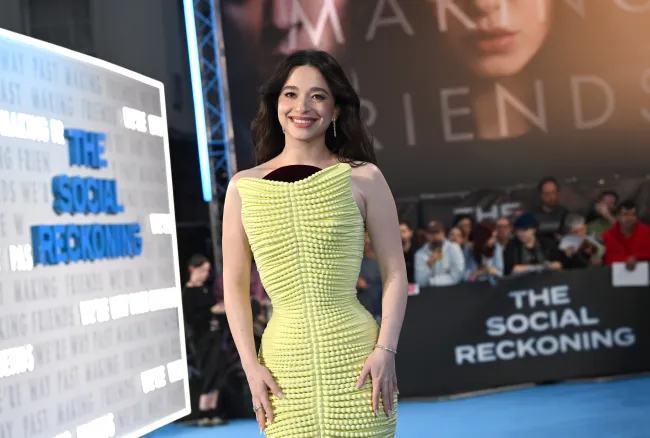
What do you do after you’ve won the top honor in your craft? For “Anora” star — and eventual Best Actress winner — Mikey Madison, the answer was both obvious and tricky. She wanted to do something different. For an actress whose biggest role to date hinged on big emotions, that meant finding a role that was more restrained, more internal, more pragmatic.
In Aaron Sorkin’s “The Social Reckoning” — a follow-up feature to David Fincher’s “The Social Network,” which Sorkin himself wrote — that role wasn’t just on offer, it was at the very center of the film. Oh, and she’s based on a real person, yet another challenge for Madison. In the film, Madison plays Frances Haugen, a former Facebook engineer-turned-whistleblower who facilitated the 2021 leak of Meta internal documents containing the social platform’s secrets, many of them about the nefarious nature of its almighty algorithm. (She works alongside WSJ reporter Jeff Horwitz, played by Jeremy Allen White.)


As Madison explains, picking her first post-Oscar gig definitely stressed her out, but her desire to grow her career and range (a la Cate Blanchett and Isabelle Huppert) helped push her to take on the project. “Star Wars” it is not, but working with Sorkin seems to have sparked something in Madison (even if she did go off-script a bit and read Haugen’s own memoir to prep for the role).
The following interview has been edited and condensed for clarity and length.
IndieWire: In the film, Frances is guided by her sense of morals in the face of really impossible circumstances. Why was that aspect of the character appealing to you?
Mikey Madison: I think it’s just incredibly rare in this day and age — and also very comforting — to know that there is someone who is willing to go on the line for the greater good of people that she doesn’t even know. She sacrificed so much fora beautiful cause. I’ve gotten into this pocket of playing these very morally gray characters, which I also really love and those are some of my favorite characters to play, but I had never played someone quite like this.
There was something very pure and compelling about her deep moral integrity. There wasn’t anything self-serving about it. My character is based off of the real Frances Haugen, and these are all real things that the real Frances did. And I was like, wow, that’s interesting, I’ve never done anything like that before.

As an audience member, I would get frustrated when Frances was having conversations with Jeff about how much she believes in Facebook and its mission and how she thinks it can be such a force for good, but then she’s showing him proof of all the horrible things the company was doing. But, as you said, that’s real life, it’s not always going to be black and white: “They’re bad and I think that they’re doing bad things.” Did you feel any of those frustrations?
There’s a line in the film where she says something like, “Some people are awkward, some people feel like their best self veiled behind a computer screen,” and she’s talking about herself. I think ultimately what she craves most in life is intimacy and connection, and I think that’s why she really believed in what she thought Facebook was supposed to be originally, which was just connecting people and in its true, purest, earliest form. That’s what she wanted and that’s what she wanted to give people too.
I think she did actually believe in the company, but she was seeing things that were happening and she wasn’t being listened to. She was, in the beginning, trying to help the company she was working with, not hurt it, and she says that multiple times. But I think that there’s a turning point at which she realizes there’s no going back from this, she needs to make a serious change if she wants things to get better and she does. I don’t know if I would say it was frustrating, it was definitely an internal conflict that my character was having within herself, like a battle.
What research was most useful for you to really get into Frances’ head?
When I read the script for the first time, I had heard about the Facebook Files and I heard about there being a whistleblower, but I didn’t know who Frances was. I looked her up and I very quickly saw there are a lot of very big, glaring differences between us. She’s blonde, she has blue eyes, and she’s a bit older. I was like, “OK, I’m prepared for this to be a big transformation. I’ve never done that before, but let’s do it.” When I met Aaron, he very adamantly did not want me to do that, and it took me a while to wrap my head around that and the idea of it. I wanted to support Aaron’s vision in the best way that I could, and that’s really one of my biggest jobs as an actress.
Obviously, I fell in love with the character on the page and it was very much a character that I built from the ground up, purely from Aaron’s script. In terms of any research I did, there was so much about the world of tech and social media that I didn’t have any relationship to, and I was like, let me try and go piece by piece and understand this the best that I can.
I did read her memoir because … I wanted to try to understand what that might have been like for her in that internal struggle. So I did read her memoir and Aaron was like, “Ugh.” [Laughs] What was most important for me is that I try and tell her story with as much integrity and love as possible. Aaron and I really wanted to do that. I hope that she also feels that we did that, and I think she does.

Has she seen the film?
She has seen the film, yes. I think that she’s overall quite happy with it. I think what really is most important to her is, she really doesn’t have any vanity. You know what I mean? So she really just wanted the story to be told. I think she wanted people to know what was happening more behind the scenes and in depth and open up the conversation hopefully for more change to possibly happen, and she really has swung open those doors.
What was exciting for you about taking on the precision of an Aaron Sorkin-penned screenplay? What was maybe a little nerve-wracking?
He has an incredibly singular voice and a specific vision, which I really respect the originality of something like that. People refer to his Sorkin-isms, which is pretty incredible and iconic in a lot of ways. As an actor to try and meld my interpretation of the character with his, at times I felt like I was fighting against my instinct a lot. But I also feel like because Frances is a character who is not comfortable existing in herself in present face-to-face like this, it only helped. It added a quality of uncomfortability that I think was a blessing for the character.
But yes, every period, every comma, every space in between each sentence is intentional and was not something that I’m used to in any way. But it was also a good exercise for me as an actor to try and interpret his dialogue. I joke that Aaron has this internal stopwatch in his head and after a handful of takes, he’d be like, “We’re picking up steam,” or like, “Oh, we’re cooking with gas.” There’s so much information and it’s so dense. To work at the speed at which Aaron’s brain works is not normal for most people.
And you also have all this tech jargon. In the film, Frances gets frustrated with Jeff because he doesn’t speak tech, and she’s constantly having to explain things to him in a way she’s not used to.
Jeremy’s character also represents the audience in a lot of ways. The audience doesn’t really know what we’re talking about, and so I think some questions get to be answered, but we’re not serving it on a silver platter. Aaron, one of the things I really respect about him and his work is, he knows the audience is intelligent and he’s not reminding them of the story and what’s happening.
What is your relationship with the first film?
I think I was 11 when it came out, so I did not see it then. It probably would’ve gone right over my head! I was watching animated movies and “iCarly.” [Laughs] Since becoming interested in film, I’ve seen it a handful of times and it’s just so damn good. I’m such a huge fan of David Fincher. That screenplay specifically was just very masterful. I found it really interesting that Aaron had the guts to tell another story, but tell it from his lens. And I was really happy to be a part of that, and yeah.

This is your big first film since winning the Oscar for “Anora,” what was it about this film that made you want to do it? For awhile, there was rumors that you were going to do a “Star Wars” movie instead.
I was thinking about that a lot: “What do I want to do next?” It was stressing me out a bit. Mostly, I just want to do work that has a lot of heart. I want to work with interesting people. I want to tell a story with a lot of integrity. I want to do something very different from anything I’ve done before. That could only be healthy for me as an actress.
Ultimately, my biggest goal in life and my biggest dream is to just continue working forever. I look at Cate Blanchett and Isabelle Huppert, and I’m deeply moved by the careers and the filmography that they’ve created over multiple decades. That’s my dream. So I wasn’t focused on, what’s the next thing going to be and what’s it going to say? It was more just, what do I feel compelled to do? And this just happened to be the next one.
It was a character that I found to be quite unorthodox. When I read it, I was like, this almost seems like a role that a man would play. It’s a character with a lot of emotional restraint, a lot. This is not an outwardly emotional character. She’s very nuanced, very specific. She’s very pragmatic. She is not emotional. I’ve played a lot of characters, which I love, who are very bombastic and emotionally volatile. This was something so refined and restrained in a way where I was like, I think it would be a challenge for me as an actress to play with restraint in that way. I wonder if people will understand it, but I also feel like it’s something I need to just try and do.

There’s a scene at the end, where Frances celebrates something by pumping her fist. We see the backstory of that in the film, involving an NBA game, but it made me think of “The Breakfast Club.” Did you think of “The Breakfast Club” when you were doing this?
No, I didn’t! Like I said, Frances is so refined and restrained, the way that she walks and moves through the world, she’s quite uncomfortable. That scene you’re referring to when she witnesses someone have such outward emotion, she’s like, “Wait, people live like this?” And so she has this, “Fuck yeah, I did it,” heroic moment where she recognizes it and does her version of it.
There’s a part that’s heartwarming. So emotional and cringey, and she is cringey, the character is, and just nerdy and weird. Also, I love a callback like that too, and I think Aaron does it in a very satisfying way. I love that moment. But no, I wasn’t thinking about “The Breakfast Club,” but I love that movie. And I loved Molly Ringwald when I was becoming interested in acting and she was a huge inspiration to me.
Sony will release “The Social Reckoning” in theaters on Friday, October 9.
>
EXCLUSIVE: Tony Lipp and Dara Gordon, talent managers and partners at Anonymous Content, will be leaving at the end of the year when their contracts are up after the company opted not to renew them. Darren Walker, who took the reins of Anonymous Content in January as President and CEO, announced Lipp and Gordon’s pending departures in an internal memo, a copy of which was obtained by Deadline.
“Saying goodbye to colleagues who have been such a longstanding part of the company is never easy, and on behalf of myself and the Board, I would like to thank them both for their many contributions,” Walker wrote.
Lipp and Gordon are both Anonymous Content veterans. Los Angeles-based Lipp joined the company as partner in 2011 from CAA. New York-based Gordon came to Anonymous Content in 2015 from Authentic Talent and Literary Management and was promoted to partner in November 2021.
Most recently, Lipp produced the Emmy-nominated Netflix film Remarkably Bright Creatures starring clients Sally Field, who won an Emmy for her performance, and Lewis Pullman, the latter also managed by Gordon.
Two other newly minted Emmy winners also are managed by Lipp, Widow’s Bay‘s Kate O’Flynn, and Lipp and Gordon, Widow’s Bay‘s Betty Gilpin.
Lipp’s roster of clients (some of them shared) also includes Patrick Wilson, Michelle Monaghan, Jonathan Bailey, Jack Quaid, Matt Bomer, Joshua Jackson and John Lithgow.
Tony has played an important role over the course of his tenure, stepping up during challenging periods and leading his team through both internal changes and industry headwinds,” Walker said. “A terrific manager and mentor, he is beloved by his clients – many of whom have been with him for decades.”
Gordon also manages/co-manages Lili Reinhart, Aaron Pierre, Leo Woodall, Adria Arjona, Winona Ryder, Billy Magnussen, Taissa Farmiga, and Melissa Benoist.
“Dara has been an integral part of our New York office and has built strong relationships with colleagues and clients alike,” Walker said. “As a partner, she brings impeccable taste, steering her clients with grace and sophistication.”
Management and production company Anonymous Content signaled shifting growth priorities with the recent minority stake investment by Laurene Powell Jobs’ Emerson Collective, committing to making at least eight films a year. The company’s recent/upcoming releases include Musk, Possible Love, In Waves, A Statement and TV series East of Eden, 12 12 12 and Neuromancer.
Here is Walker’s memo:
Dear Colleagues,
I wanted to share some news about Tony and Dara.
With great appreciation for their service and huge admiration for all of their accomplishments, they will be leaving Anonymous at the end of the year.
Saying goodbye to colleagues who have been such a longstanding part of the company is never easy, and on behalf of myself and the Board, I would like to thank them both for their many contributions.
Tony has played an important role over the course of his tenure, stepping up during challenging periods and leading his team through both internal changes and industry headwinds. A terrific manager and mentor, he is beloved by his clients – many of whom have been with him for decades.
Dara has been an integral part of our New York office and has built strong relationships with colleagues and clients alike. As a partner, she brings impeccable taste, steering her clients with grace and sophistication.
Please join me in wishing Tony and Dara the very best in their next chapter.
Sincerely,
Darren
>
movies
YouTuber Gossip Goblin Releases Trailer For R-Rated AI Theatrical Film ‘Only Gods Give Gifts’
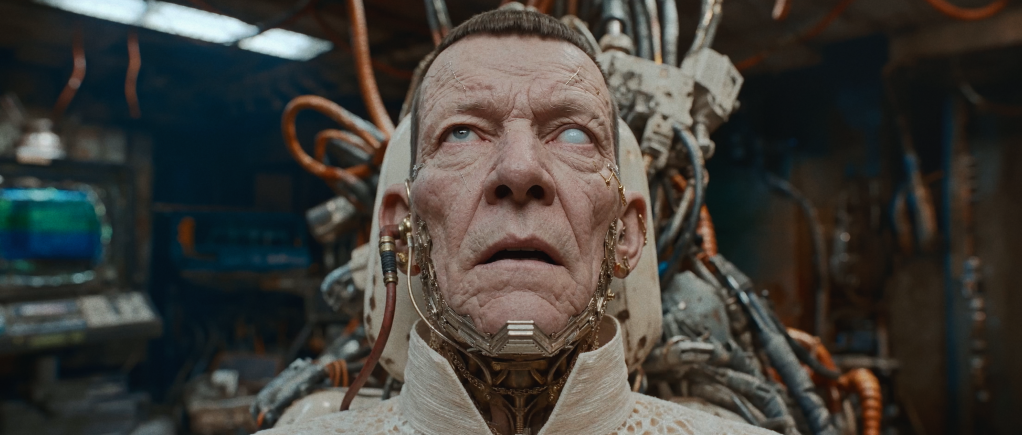
Popular YouTuber Gossip Goblin, aka Zack London, has released the trailer for his forthcoming film Gods Don’t Give Gifts, a feature film made entirely with artificial intelligence.
The sci-fi film will open in limited theatrical release in the U.S. and UK on December 4. The filmmakers say the theatrical engagement will be a milestone for a fully AI feature, adding that it is the first AI film to receive an MPA rating (R) and also to be campaigned in the Best Animated Feature category at the Academy Awards.
The trailer will go to theaters on Friday, along with lobby posters, and billboard ads are due to begin in November.
Full of trippy visuals matching London’s other work, Gods Don’t Give Gifts is billed as taking place in the “science-fiction, horror-tinged world of the ‘Second Cycle of Humanity’ where transhumanism has accelerated to the point that humanity looks very different.”
The film, which was previewed last month at the Venice Film Festival market, is produced by Edward Saatchi. Fable, Saatchi’s AI company, counts Amazon among its backers.
The filmmakers hope to draw interest in a market that has taken notice of YouTube creators in a big way over the past year, with significant grosses pulled in by the likes of Obsession, Backrooms and Iron Lung.
Over the past five years, Saatchi said in a statement, “the question has been when will an AI film win an Oscar? Gods Don’t Give Gifts is the first that has a shot at a nomination and then it’s all to play for. We will be screening for voters and running a traditional campaign. It’s objectively a seminal, historic moment in animation – and we feel it could be this generation’s Toy Story – the fact that this generation’s Toy Story is a dark, satirical, brutal and bold statement on all 2026’s fears about AI and our species’ future is an appropriate commentary on the questions we are all confronting as a society.”
>

Mikey Madison: Why She Was Drawn to Challenge of The Social Reckoning

Anonymous Content Partners Tony Lipp & Dara Gordon Leaving Company

Ryder Cup 2027: Captain Jim Furyk says USA will be ‘underdogs’ at Adare Manor
-

 movies5 months ago
Search For Canadian TV Actor Stewart McLean Now Homicide Investigation
-

 Fashion9 years ago
These ’90s fashion trends are making a comeback in 2017
-
Fashion9 years ago
According to Dior Couture, this taboo fashion accessory is back
-
Fashion9 years ago
Model Jocelyn Chew’s Instagram is the best vacation you’ve ever had
-
Fashion9 years ago
Emily Ratajkowski channels back-to-school style
-
Fashion9 years ago
9 Celebrities who have spoken out about being photoshopped
-

 Anime4 months ago
Rurouni Kenshin: Hokkaido Arc Manga Takes 1-Issue Break – News
-

 Anime3 months ago
HIDIVE to Stream English Dubs for The World Is Dancing, The Forsaken Saintess and Her Foodie Roadtrip in Another World, The Dangers in My Heart: The Movie Anime – News