
Entertainment
The Criterion ‘John Singleton’s Hood Trilogy’ set essential viewing


When writer/director John Singleton made his feature debut with “Boyz N the Hood” in 1991, he was fresh out of USC film school and barely into his twenties — at 24, he became the youngest director ever to be nominated for an Oscar, breaking the record Orson Welles set with “Citizen Kane.”
“Boyz N the Hood” was the kind of movie a director of any age dreams of: a commercial, critical, and artistic success that was both personal and popular, finding its way into the zeitgeist from the moment it premiered.
It was probably inevitable that everything Singleton would make after “Boyz” would exist in its shadow, much as Welles remained most celebrated for “Kane” in spite of making another half-dozen masterpieces over the course of his career. Yet while Singleton never again found himself at the center of the culture the way he was with “Boyz,” his perspective both broadened and deepened considerably after his electrifying debut, yielding several films that were every bit its equal — and some that were even better.


The Criterion Collection‘s new 4K UHD and Blu-ray release “John Singleton‘s Hood Trilogy” provides an indispensable starting point for thinking about Singleton’s career both including and beyond “Boyz,” with pristine new transfers of three essential Singleton classics and enough supplements to keep an ambitious cinephile busy for a week. The set consists of “Boyz,” Singleton’s 1993 follow-up “Poetic Justice,” and the 2001 release “Baby Boy,” in which Singleton returned to his South Central Los Angeles roots after a foray into mainstream studio fare with “Rosewood” and “Shaft.”
The South Central setting is the common thread between the three films, though tonally and structurally they’re quite different from each other. “Boyz” remains one of Singleton’s most provocative and passionate films, an autobiographical cry from the heart about three friends (played by Cuba Gooding Jr., Ice Cube, and Morris Chestnut) trying to survive in a neighborhood where an influx of crack and gangs has created a pervasive threat of violence.
Although the marketing for “Boyz N the Hood” played up the gang violence aspect, it’s actually not something that takes up a huge percentage of the movie’s screen time. The film is as much an “American Graffiti”-esque coming of age story and a teen comedy as it is a piece of social commentary or a political document (though it is these things as well). In fact, the most remarkable thing about Singleton’s writing and directing is the confidence with which he moves between emotional registers and styles; “Boyz N the Hood” is as fun as it is harrowing, as stylized as it is grittily authentic.

Its closest cinematic ancestor in terms of merging anthropological detail with heightened visual storytelling and feverish personal expression is probably Martin Scorsese’s “Mean Streets,” an influence Singleton name-checks in one of the archival audio commentaries featured on the disc. That audio commentary and some great making-of documentaries also delve into Singleton’s unbelievable Cinderella story as a USC film student who turned his thesis script into a studio green light after slipping “Boyz” to his boss, Stephanie Allain, when she was a development executive at Sony and Singleton was a script reader.
The supplements also provide insights into Singleton’s many bold and effective creative choices, from giving his modestly budgeted movie scale through sound design (the constant sirens, helicopters, and babies crying give a constant sense of the world beyond the frame) to casting rapper Ice Cube in his first screen role. “Boyz N the Hood” has a memoirist’s knack for detailed observation and a cinephile’s catalog of references with which to give those observations context — it plays like an Italian neorealist drama made by someone with a Spielbergian flair for entertainment.
Back when “Boyz” was released to great fanfare — receiving a rapturous reception when it premiered at Cannes followed by rave reviews and big box office back in the States on its way to Singleton’s Oscar nominations for his script and direction — expectations were inevitably raised beyond what was reasonable. As a result, the quieter and more relaxed “Poetic Justice” couldn’t help but feel like a minor disappointment. Viewed today, however, the story of a hairdresser (Janet Jackson) who finds emotional release through poetry and romance with an unlikely neighbor (Tupac Shakur) seems every bit the equal of Singleton’s debut — contemplative where “Boyz” was anxious, lyrical rather than aggressive, and concerned with its lead character’s interior life as much as her external circumstances.
In between “Poetic Justice” and “Baby Boy,” Singleton directed three movies, including his best, “Higher Learning.” That 1995 release expanded Singleton’s vision to encompass an Altman-esque ensemble of characters situated at a university not unlike the director’s alma mater, USC, and combined the empathy and insight of “Poetic Justice” with the intellectual rigor and righteous rage of “Boyz.” Singleton’s strengths as both a humanist and a humorist are at their most evident in the poignant, funny, “Higher Learning,” which makes room for dozens of characters and issues without shortchanging any of them — it’s also got one of the most varied and effective soundtracks (both in terms of its needle drops and Stanley Clarke’s audacious score) of the 1990s.
Between “Higher Learning” and “Baby Boy” Singleton exercised different muscles by directing a historical drama he did not write (“Rosewood”) and reviving some 1970s IP with his remake/reboot of the blaxploitation classic “Shaft.” Taking a detour from autobiography meant that when Singleton returned home for “Baby Boy,” he had even more cinematic tools at his disposal than he did when he made his fully assured debut. “Baby Boy” isn’t as tight as “Boyz” or “Justice,” but it takes more chances and blends even more wildly disparate styles, from its surreal opening showing the grown Tyrese in his mother’s womb and its slice-of-life documenting of early 21st-century South Central to the heightened screwball comedy between Tyrese and love interest Taraji P. Henson.
It also covers so much ground that it enabled Singleton to leave South Central behind for good, at least on movie screens (he would return to the area for the TV series “Snowfall”). After “Baby Boy” Singleton took another studio assignment, “2 Fast 2 Furious,” resulting in the biggest hit of his career and the movie that introduced Tyrese and Ludacris to the enduring franchise; he followed that with “Four Brothers,” an urban riff on the John Wayne Western “The Sons of Katie Elder” that confirmed Singleton’s gifts for lean, visceral action filmmaking.
Singleton pivoted into television after the critical and commercial failure of his 2011 thriller “Abduction,” and never went back to movies; a stroke ended his life far too early, in 2019 at the age of 51. Singleton ultimately left the world with less than 10 feature films, yet the range and depth of those movies place him among the greats — and make his passing all the more tragic, as one wonders how much more he had to offer. Even if he had never made anything beyond the three films in Criterion’s “Hood” collection, he would belong in the pantheon.
“John Singleton’s Hood Trilogy” is currently available on 4K UHD and Blu-ray from Criterion.
>
>
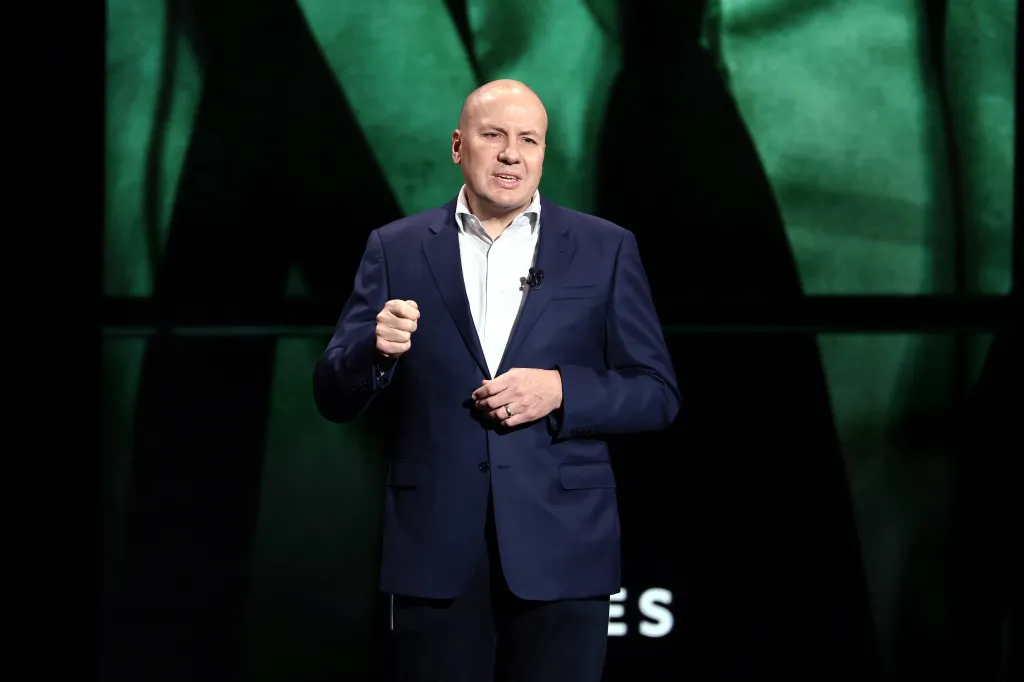
When Skydance confirmed the company’s executive leadership team Monday, most industry reaction centered on elevated roles for content execs like Casey Bloys, Channing Dungey and George Cheeks.
But another exec in a key new post is JB Perrette, a veteran of streaming since its earliest days and a close associate of Warner Bros. Discovery CEO David Zaslav. He is not only making the leap to the new company from a top position at WBD (something of a surprise given that execs at the company being acquired generally head for the exits), but his turf is also expanding in some intriguing ways.
Skydance is due to close the deal Tuesday morning, and Perrette will join Co-CEOs David Ellison, Ynon Kreiz and others at a press conference later that afternoon on the Paramount lot.
Upon the close of the $110 billion deal, Perrette will be Co-Chair & Chief Business Officer, Skydance DTC and Co-Chair & Chief Business Officer, Skydance TV. He will have direct global oversight of global distribution, advertising sales, content sales, DTC strategy, marketing and business operations.
Perrette is poised to benefit handsomely from the merger. An SEC filing last March said he would receive $142 million in various deal-related proceeds, though some portion of that could be deferred given his post in the new company. One source cited the massive payday as a potential motivating factor. “He certainly didn’t need the money,” the person said. “He obviously felt compelled by the opportunity.”
At WBD, Perrette was head of global streaming and gaming, leading the global rollout of HBO Max across more than 130 global markets, including the UK, Germany and Italy after the end of a longtime output deal with Sky. The WBD streaming business (which includes some niche services along with mother ship HBO Max) also turned profitable on Perrette’s watch. One less-desirable line on the resume is presiding with Zaslav over the inauspicious rebrand of HBO Max to Max in 2023. (After confusion and a degree of backlash among viewers, suppliers and advertisers, it reverted to its original name in 2025.)
While any exec who is in a high position long enough will have missteps, many industry and company sources Deadline spoke with described Perrette as a solid operational executive. Bloys may be the rainmaker with HBO and HBO Max content, but Perrette oversaw product design, global distribution deals and a host of other aspects of the streamer’s growth. Plus, he comes with a pedigree.
At Discovery, Perrette was head of digital and helped launch Eurosport’s streaming service as well as Discovery+, but his 11-year run at NBCUniversal yielded an industry milestone. Overlapping with Zaslav during their time at NBCU, Perrette rose to president of digital and affiliate distribution. He helped usher in the streaming era as one of the key execs behind Hulu’s launch in 2007 as a joint venture with Fox, later serving for several years on the streamer’s board.
Company insiders describe a series of conversations between Perrette and Ellison over the past several weeks, a period when he gradually gained the confidence of the new Skydance boss and his co-CEO, Ynon Kreiz. “He is often the one asking the best questions in the room and has the most comprehensive view,” one former colleague said. Another person from the Paramount orbit said the execs had a “mind-meld” encompassing the future capabilities of streaming services in the AI age.
Perrette also has experience with the blocking and tackling of things like password sharing and other lucrative but detail-oriented operational tasks. Paramount board member and major Skydance investor Gerry Cardinale last week noted that efforts to merge the back ends and tech stacks of Paramount+, Pluto and BET+ have borne fruit. “We’ve already done a hell of a job,” he said. “Then we are going to do the same thing when we bring the HBO universe into this.”
A high-level streaming executive at another company noted that the move could save hundreds of millions of dollars in expenses at a time when Skydance will be eager to deliver on its promise of saving at least $6 billion in costs. “JB is good casting for that kind of thing because he’s willing to get into the weeds on it,” the person said.
While the fundamentals of streaming technology are familiar to Perrette, advertising and distribution may be a bit less so. “There was a lot of confusion when that popped up in the release because it doesn’t seem like he has a very extensive background in that,” one insider noted of the official announcement. As the former Paramount and WBD come together, there are some unanswered questions about the hierarchy of ad sales in particular, with both companies having recently gone through leadership changes. More details about the second level of top execs will be revealed in the coming days.
On second thought, noted one source, “what we took for granted all those years at the upfronts is up for grabs. Ellison is trying to turn it into a tech company. What will advertising even look like in that kind of environment?”
>

A group of Paramount subscribers and viewers have petitioned the Supreme Court to put at least a temporary halt to the merger with Warner Bros. Discovery, a transaction that is scheduled to close on Tuesday.
In a filing on Monday, the petitioners — Pamela Faust, Len Marazzo, Lisa McCarthy, Deborah Rubinsohn and Gary Talewsky — argue that the merger is still anticompetitive, even with the conditions put in place by the settlement of the state attorneys general lawsuit last month.
“The States’ settlement itself requires that the combined company not sell or close the Paramount or Warner Bros. lots during the commitment period, provides reapplication rights to employees displaced by the transaction, and creates an editorial-independence board. Those safeguards show the magnitude of the integration that closing will unleash, but they do not preserve competition between Paramount and Warner Bros.”
The petition is a longshot, given that the plaintiffs’ efforts to stop the merger has been rejected by the district court and the Ninth Circuit Court of Appeals.
The plaintiffs, represented by Joseph M. Alioto, sought a temporary restraining order to block the merger. But U.S. District Judge Araceli Martinez-Olguin, in a ruling last week, cited the plaintiffs’ “repeated failures to advance any evidence in support of their motions for preliminary relief in this case to date.” She also cited an earlier decision in which she granted Paramount’s motion to dismiss the lawsuit, in which she wrote that she had “serious concerns” over the plaintiffs’ standing.
A federal appellate court denied their petition on Friday.
In their petition to the Supreme Court, the plaintiffs pointed to the record of transaction materials, CEO statements and consumer verifications.
Their brief states, “The requested order is narrow: preserve separate ownership and prohibit integration pending disposition of the petition or further order. It does not decide final antitrust liability. It preserves the Court’s ability to decide the legal questions before the October 6 closing changes the competitive structure the Clayton Act is designed to protect.”
The plaintiffs describe themselves as Paramount subscribers, viewers and cable customers. Their lawsuit was originally filed last spring, before the group of state attorneys general sued to block the deal. The settlement includes a consent decree that spells out a 30+ theatrical releases per year schedule, as well as separate negotiations for the Paramount and Warner Bros. Discovery cable channels.
>

England to play warm-up in Australia before November series after criticism for lack of preparation ahead of Ashes | Cricket News

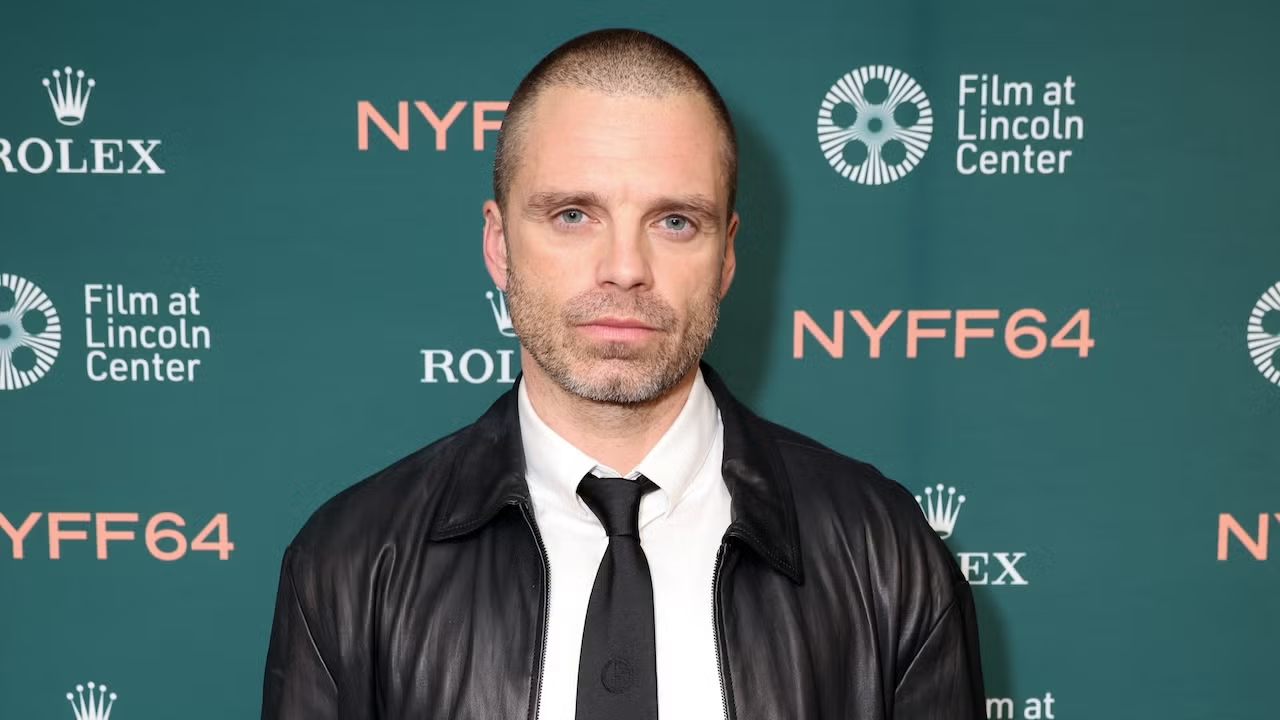
Sebastian Stan Turned Down Lead Role on The Vampire Diaries

Ryan Moore inducted into British Racing Hall of Fame | Racing News
-

 movies5 months ago
Search For Canadian TV Actor Stewart McLean Now Homicide Investigation
-

 Fashion9 years ago
These ’90s fashion trends are making a comeback in 2017
-
Fashion9 years ago
According to Dior Couture, this taboo fashion accessory is back
-
Fashion9 years ago
Model Jocelyn Chew’s Instagram is the best vacation you’ve ever had
-
Fashion9 years ago
Emily Ratajkowski channels back-to-school style
-
Fashion9 years ago
9 Celebrities who have spoken out about being photoshopped
-

 Anime4 months ago
Rurouni Kenshin: Hokkaido Arc Manga Takes 1-Issue Break – News
-

 Anime3 months ago
HIDIVE to Stream English Dubs for The World Is Dancing, The Forsaken Saintess and Her Foodie Roadtrip in Another World, The Dangers in My Heart: The Movie Anime – News