
Sean Cohan, Bell Media President
Bell Media


Note: This story contains spoilers from “Tracker” Season 3, Episode 22.
“Tracker” ended its third season on Sunday, once again finding itself as the No. 1 primetime scripted show in broadcast. But according to star and executive producer Justin Hartley, Season 4 this fall will be the CBS series’ most ambitious one yet.
“We have spent the first three years unpacking this story about what happened to Colter’s father — who was involved, who wasn’t involved — and that’s changed throughout the course of the show,” he told TheWrap. “First being that Colter thought his brother was involved, because his mother told him as much. Come to find out, that’s not necessarily the case. So all of that kind of comes to a head and we get some answers to all that stuff at the end of Season 3.”
“These stories take as long as they take, but when it’s time for a story to come to a head and answer some questions, it’s time. And it became obvious that this was sort of the right time to do this,” Hartley added. “We’ll come back with something — we already have it, it’s pretty incredible. Honestly, I think it’s our most ambitious season to date, but I think it’s also our richest one, in terms of character and backstory and where we’re taking Colter.”

Indeed, Season 3 dove deeper into the family lore around Colter Shaw and his estranged older brother Russell, played by Jensen Ackles. But when the series returns for Season 4, production will have moved from Vancouver to Los Angeles thanks to a $48 million California tax credit.
“In terms of tone and character, I don’t think it’ll impact the show at all. Our show is a road show. Our character goes from town to town across the United States of America and meets people from all different walks of life and helps them out. These strangers become kind of his family in a way,” Hartley explained. “To be able to shoot in a different place that gives us different landscapes, we’re able to go to places — New York, D.C., the desert, Texas, the beach. It just opens up our world in terms of landscape, which is such a big character of our show.”
“We built a really great, wonderful show and we did it in Vancouver for the first three years. Just, inevitably, as things go, the show has to evolve,” he added. “We’re not really interested in doing something just for the sake of doing it. I want to push the envelope and I want it to be something different, so we’re excited about it. It’s going to be very good for the show and for the audience.”
Plus, after starring in other hit shows like “This Is Us,” “Smallville” and even your favorite soap operas, Hartley is happy to have more creative input than before as an EP on “Tracker.”
“I’ve been with producers, executive producers and writers before in my career that let me kind of chime in and be a major part of my character, but in terms of the overall show, obviously I’ve never had that before. I really enjoy it,” he said. “I’ve learned a hell of a lot from these guys who are pros and been doing it for a long time, so it was a crash-course. They were very gracious with me and I feel like I’ve caught up now. I like having the ball in my hands, I like being the quarterback. I like knowing that if something worked, I had a part in that. And I don’t mind knowing that if something didn’t work, I can take the blame for that and learn from it; we move on and that will never happen again. So far, we’ve been really lucky. I have a lot of help, we work really well together and I couldn’t be more grateful.”
Based on “The Never Game” by Jeffery Deaver, Ben H. Winters’ “Tracker” premiered after Super Bowl LVIII in February 2024, earning its Season 2 renewal just a month later. Since then, it has maintained its spot as the No. 1 entertainment show on network TV, even as fellow CBS drama “Marshals” entered the fray this winter.
“It certainly feels good when so many people are watching and enjoying it, and the stories that I hear about people watching it with their kids and with their parents and their grandparents,” Hartley shared. “Young people enjoy it, older people enjoy it, men, women —we’re very lucky, and we take that into consideration when coming up with these stories and backstory and history and all that.”
“Tracker” Seasons 1-3 are now streaming on Paramount+.

>

Korean star Han Ji-min accepted The Hollywood Reporter’s Trailblazer Award at a glitzy gala high above Busan on Wednesday night, promising that her creative journey was only just beginning.
The award was presented during American Film Night, a collaboration between THR and the Motion Picture Association (MPA), staged on the 33rd floor of the Park Hyatt Busan with sweeping views of the waterfront and Gwangan Bridge.
The star, who will soon appear alongside Lee Byung-hun in The Koreans, Disney+’s much-anticipated reimagining of The Americans, said she was thrilled to receive the award and to work “beyond the borders of languages.”
“I really enjoyed watching the original drama, so I was looking forward to seeing how it would change in a new Korean style, and it was a very meaningful time for me to be able to take part in that process. This is also a new challenge for me, so please look forward to it.”
With the 31st Busan International Film Festival entering its second night, an array of international industry figures took time away from the films and fanfare to honor Han and her two-decade career across television and film.
THR’s Asia bureau chief Patrick Brzeski presented the award following welcoming remarks from Urmila Venugopalan, the MPA’s Asia-Pacific president and managing director. Han was recognized as an artist “whose work expands the reach of storytelling, bringing craft, courage, and a distinctive point of view to every new chapter.”
The ceremony marked the first time THR has presented its Trailblazer Award in Korea. The honor recognizes artists whose careers and creative choices illuminate complex, boundary-crossing stories and expand representation in global entertainment. Past recipients include Jean Smart, David Oyelowo, Eva Longoria, Matt Bomer and America Ferrera, as well as Shogun stars Tadanobu Asano and Takehiro Hira.
Among those gathered were Beford Park star and Busan competition jury member Moon Choi, KPop Demon Hunters producer Agnes Lee and Korean Film Council (KOFIC) chairperson Sang-jun Han. Disney’s contingent included Jon Wax, executive vp of international original television; executive vp Carol Choi, who oversees the studio’s Asian originals; and Kim Soyoun, managing director of the Walt Disney Company Korea.
Also attending were Alexander Allen, representing the U.S. Embassy, and Ellen Kim, director of BIFF’s Asian Contents & Film Market. Executives from Korean entertainment companies including CJ ENM, Barunson C&C and KT StudioGenie, as well as Korea-based executives from Sony Pictures and Universal Pictures, were also in attendance.
Han first became a fan favorite in Korea with the popular revenge drama Resurrection (2005), going on to star in hit series including Yi San (2007-08), Rooftop Prince (2012), Our Blues (2022) and Love Scout (2025). On the big screen, her performance as an ex-convict protecting an abused girl in Miss Baek (2018) earned her best actress honors at the 2018 Blue Dragon Film Awards and the 2019 Baeksang Arts Awards, two of South Korea’s most prestigious awards ceremonies.
Ahead comes The Koreans, in which she and Lee will play North Korean spies living in South Korea during the 1990s. The original series won the Golden Globe for best drama in 2019 and routinely lands near the top of lists hailing the best TV series of the past quarter century.
Han also expressed hope for more collaboration across borders.
“I hope that Koreans and creators from all over the world will communicate and create more meaningful and diverse works,” she said. “I will do my best so that I can do the roles that are entrusted to me well. I would like to thank the people who supported my work and my happiness.”
The night also celebrated the continued creative collaboration between Hollywood and Korea. The hope, said KOFIC’s Han, was that the mingling over champagne and canapés might lead to future co-productions and partnerships.
“This event goes beyond cultural exchange to forge practical collaboration in investment, screenwriting, and production,” he said. “Also, it will offer us a real opportunity to create more impactful content for the global stage. To realize this potential, we must continue building an environment where creators and professionals from both nations can collaborate freely, honor each other’s cultures, and grow together.”
For the MPA’s Venugopalan, the night reflected both those bonds and the possibilities ahead.
“It really does show how much all of our studios are doing and investing and prioritizing Korea — and this is a perfect venue to showcase that and to demonstrate our collective commitment to this important market,” she said.
>
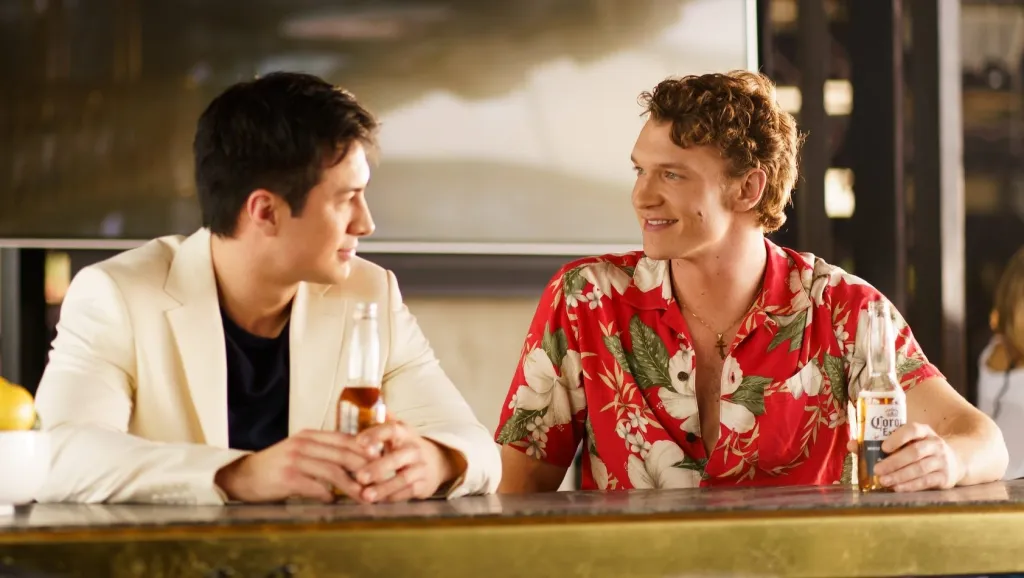
The mega-success of Heated Rivalry has buyers asking what is coming next from Crave, the Canadian streamer that greenlit the ice hockey romance hit.
The streamer is part of Bell Media, and company President Sean Cohan is backing Canadian producers to produce the next Heated Rivalry as Canadian content becomes hot international property.
The next season of the sports show drops in 2027. Cast members have hinted at a third run for the steamy series, which Cohan says is “the biggest global hit that Canada’s ever produced,” and there is more source material from which to work. He is not ready to definitively confirm or deny a third outing, but there does appear to be a direction of travel. “In success, this show continues,” he says.
Cohan is more definitive on the future of Crave, which he says, historically, was an under-marketed and under-utilized gem. Offering a slate of Canadian originals differentiates Crave from the U.S.-owned streamers, and HBO programming adds premium U.S. firepower. Bell’s pact for HBO fare has been extended, and Cohan says it runs into the 2030s.
Heated Rivalry delivered on Bell’s promise to generate shows that resonate locally and go global, with the associated financial and reputational benefits. That was one of former A+E exec Cohan’s goals when he joined the Canadian content giant in late 2023.
Sean Cohan, Bell Media President
Bell Media
“We talked about making great global and profitable shows and about elevating the Canadian creative brand, which has been misunderstood or underestimated,” he says. “Bell Media spends a ton domestically on Canada-made content and the question was: Why can’t we make that in a way that exports around the world? And then we went and did it.”
Boosted by Heated Rivalry, Crave recorded just over 5 million subs in Bell’s most recent results, and is eyeing 6 million by end of 2028, but Cohan is thinking beyond that. He wants the streamer to be in half of Canadian TV homes by the end of 2029. “The new target that we have in our mind is closer to one in two,” he says. In a market with an estimated 15.8 million TV homes, that means Crave will need to continue its growth trajectory to hit its numbers.
Hudson Williams’ next turn
The next big thing in-the-making is Yaga, which features Heated Rivalry star Hudson Williams alongside Carrie-Anne Moss in a witchy folklore drama set in a coastal town called Whittock. The series will be heavily promoted at MIPCOM. Other Crave shows coming to the international market include queer softball drama Slo Pitch and Meatballs, inspired by the eponymous Bill Murray movie and starring Robbie G.K., another Heated alum. There is also Bulges, set in a Hooters-like bar, but where the staff are all male, and with Saved by the Bell star Mark-Paul Gosselaar starring. Sphere Abacus, the distributor that Bell acquired last year, is selling them all.
Hudson Williams and Carrie-Anne Moss in ‘Yaga’
Hudson Williams and Carrie-Anne Moss in YAGA photo credit Crave and Christopher Lawrence
“Canadian content was already on the rise — you had shows like [Fremantle-distributed] Sullivan’s Crossing, which had gone to The CW in the U.S. and Netflix around the world,” says Sphere Abacus Managing Director Jonathan Ford. “Heated Rivalry really increased that, and that led to channels and platforms around the world always wanting to know what the next big thing is coming out of Canada and, particularly, Crave.”
Ford, an international distribution veteran, adds: “Canadian programming can fit with different audiences. Some storylines feel relevant to the U.S. market, perhaps more so than some British storylines and accents, but it’s also relevant to the U.K., Australia and New Zealand, and the quality of the shows appeals to the European markets too.”
Heated Rivalry made Williams, along with Connor Storrie, a global star and Sphere Abacus has pre-sold Yaga to AMC in the U.S., Sky in the U.K. and HBO Max in continental Europe, among others.
“The sales were done off the script and casting, partly because the storyline and casting of Yaga are so strong, but also there’s an element of having wind in the sails from Heated Rivalry,” says Ford.
While Heated Rivalry set a high benchmark, now the heat is on for Crave and Sphere Abacus to deliver more made-in-Canada hits.
>
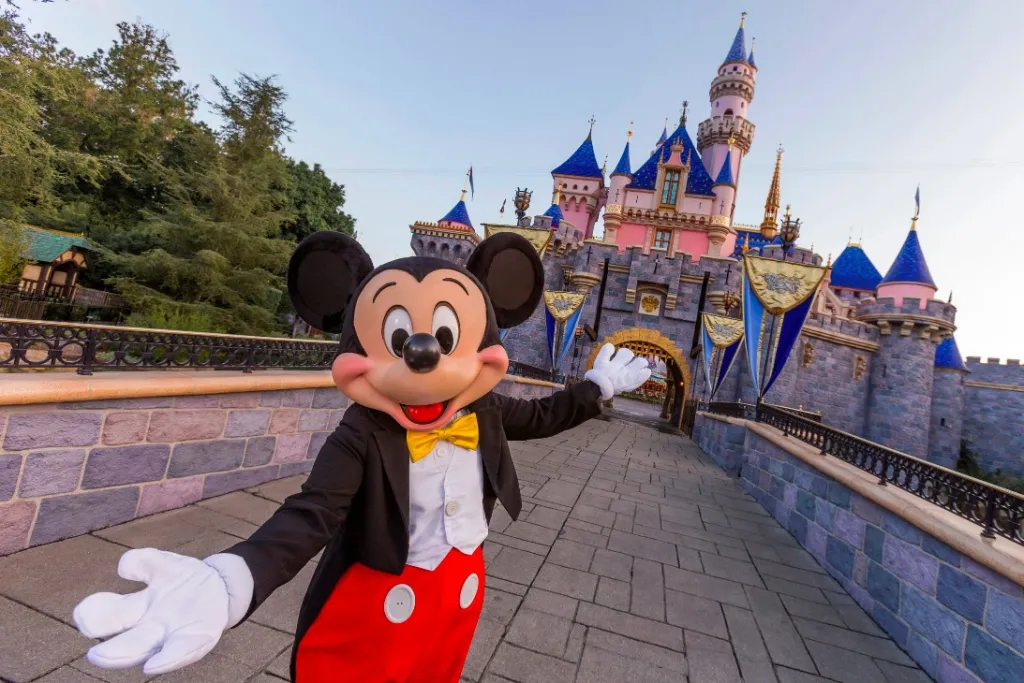
Each year October brings Halloween, the turning of the leaves, the World Series and changing ticket prices at Disney‘s U.S. parks.
For 2026-2027, however, many ticket tiers remain unchanged, while those that are rising are seeing some of the smallest bumps in recent memory. There are good reasons for this.
When Comcast reported earnings in July, it noted softer attendance at its domestic parks, despite the opening of Epic Universe in Orlando.
At Disney, global guests grew 4% and attendance at domestic parks rose 3%. Disney noted continued, but moderating, headwinds from international attendance at domestic parks. The segment’s average per capita ticket revenue still rose 5%. Forward bookings remained robust. WDW specifically saw healthy core attendance increases from domestic tourists and annual passholders.
Still, the recently announced price points indicate Disney is aware that consumers are hurting, with gas prices making it a struggle to even get to the parks.
Disneyland‘s least expensive single-day (Tier 0) ticket is still $104. That rate has remained unchanged since 2019. In line with last year, there are eight dates to get tickets at that price — all in November. See calendars below.
Another indication Disney is aware of a price pinch: Lowest-cost dates for each month are, this year, highlighted in green.
The peak 1-day (Tier 6) ticket for holiday dates in Nov.-Dec. 2026 remains $224. That price currently applies to Thanksgiving week, the days around Christmas and those leading up to New Year’s Eve. See below.
The second-highest price point, Tier 5, also remains unchanged at $199. Ditto multiday tickets, parking and annual passes. Each of the intervening tiers has only been raised $5.
The tiers and attendant cost increases (if any) break down as follows:
Tier 0 – Was $104, still $104
Tier 1 – Was $129, now $134
Tier 2 – Was $149, now $154
Tier 3 – Was $169, now $174
Tier 4 – Was $184, now $189
Tier 5 – Was $199, still $199
Tier 6 – Was $224, still $224
“Our goal is to put guests at the center of our decision making, and that starts by listening to them,” Thomas Mazloum, chairman of Disney Experiences, said of this year’s rates. “That matters more now when families are watching every dollar, and we see it in the choices they make every day — in how they plan, in how far ahead.”
Mazloum added, “We think about pricing market by market, rather than with one broad brush,” as Disneyland guests tend to be more local and those to Walt Disney World regularly travel longer distances.
Apropos of that, the company is still considering targeted offers in market, like last summer’s “Evening Ticket” at Disneyland for local residents. Those were only $59.
Over in Orlando, ticket prices are generally higher, reflecting the bigger trip Walt Disney World Resort often is for guests coming from farther away. The lowest priced offering to the Magic Kingdom remains unchanged at $119 for a single day, single park ticket, though there are none on the calendar before the end of the year. The highest-priced, Tier 6, entry is also unchanged at $209. Multiday ticket prices are not increasing.
Annual Passes at Walt Disney World are increasing by $10-$120, depending on the level. Parking prices and Lightning Lane Multi Pass pricing are not changing.
>


Search For Canadian TV Actor Stewart McLean Now Homicide Investigation


These ’90s fashion trends are making a comeback in 2017
According to Dior Couture, this taboo fashion accessory is back
Model Jocelyn Chew’s Instagram is the best vacation you’ve ever had
Emily Ratajkowski channels back-to-school style
9 Celebrities who have spoken out about being photoshopped


Rurouni Kenshin: Hokkaido Arc Manga Takes 1-Issue Break – News


HIDIVE to Stream English Dubs for The World Is Dancing, The Forsaken Saintess and Her Foodie Roadtrip in Another World, The Dangers in My Heart: The Movie Anime – News