
Politics
The House Article | The Much-Vaunted Soft Power Council Is Drifting Towards Oblivion


Foreign Secretary David Lammy and Culture Secretary Lisa Nandy ahead of the Labour Party Conference in 2023 (PA Images / Alamy)
6 min read
Launched with fanfare but sinking without trace, the Soft Power Council appears to be an object lesson in how the UK fails to leverage its cultural, sporting and educational assets, reports Ben Gartside
At a launch in central London at the start of last year, Lisa Nandy outlined her mission to create jobs and spread influence globally. Rather than cite the work of the Foreign Office or the use of international aid, she instead championed Peaky Blinders and Adele.
Joining her at the launch was the then-foreign secretary David Lammy – a true believer in the power of soft power, brought in to reinvigorate and reinvent the work of the Foreign Office – and 26 leaders in the arts, culture and sports sector.
It wasn’t quite ‘Cool Britannia’ but it seemed to those involved that this was a moment – like the early years of the Blair government – where the country’s leadership in those fields might be fully leveraged to national advantage.
But less than 18 months later, the so-called Soft Power Council is drifting towards oblivion, having not met in full for at least seven months and with many members believing it is doomed.
Why did it fail? Reshuffles both at ministerial and official level and spending cuts are part of the answer.
At its launch, Lammy outlined a manifesto to take advantage of the UK’s huge cultural pull, and the potential power of using it for Britain’s national interest.
“Soft power is fundamental to the UK’s impact and reputation around the world,” he said. “I am often struck by the enormous love and respect which our music, sport… and institutions generate on every continent. But we have not taken a sufficiently strategic approach to these huge assets as a country. Harnessing soft power effectively can help to build relationships, deepen trust, enhance our security and drive economic growth.”
To many, Lammy’s remarks were a signal for welcome change in the department. Allies of Lammy had continually voiced frustration in years previously about the quality of government work on soft power. Under the previous government, too often it was cobbled together at the last minute, or treated as an afterthought.
One founding member says: “I thought the council was a great idea. There was an urgency about it and a sense that the government gets that it is a new era. While the UK needs to build up its hard power, we also still need to make best use of everything we have.”
However, early cuts to international aid and funding trouble at the British Council meant that some believed that the goals were being undermined.
Baroness Chapman, a Foreign Office minister and supporter of soft power work, was simultaneously having to champion its promotion while also being the face of controversial international aid cuts.
Despite the rocky start, council members were still optimistic about the work. Lord Mendoza – the Conservative peer and former Boris Johnson appointee behind the controversial ‘retain and explain’ guidance for contentious statues, monuments and artefacts following the toppling of the Colston statue in 2020 – was very supportive upon the council’s creation.
A council member tells The House that the creation of the body was genuinely groundbreaking: “It is the first time we see a government properly co-ordinating expertise across a broad range of key sectors, like culture, creative, sports, education and science and technology to steer and advise on policy and action.”
Insiders point to the reshuffle of September 2025, and the move of Lammy to justice as the inflection point, which saw the council tip into inactivity.
Another council member says: “It was clearly an initiative that Lisa Nandy and David Lammy worked on, thought of and launched. Their personalities were very prominent at the start of the Soft Power Council; we haven’t had the same rhythm of meeting and engagement since the reshuffle.”
Foreign Secretary Yvette Cooper was scheduled to attend the latest meeting in Belfast in October but dropped out just before and was replaced by DCMS minister Ian Murray. Another meeting was organised but abruptly cancelled, meaning the full Soft Power Council has not met in seven months.
“We’re still waiting for a signal that they think this is worthwhile. We’ve had some great ministerial meetings but we haven’t had the same one twice – we’re showing up and we’d like the government to.”
It’s clearly a low priority
Another member says the council has been “neglected” since Cooper took over, and was “clearly a low priority for her”.
“There’s been a hell of a lot to deal with and it’s not at the top of [Cooper’s] priority list, but it would be good to retain the soft power we have.”
Shortly after the reshuffle, the senior civil servant responsible for soft power left the Civil Service, further robbing momentum from the initiative.
An outside contractor was also brought in to assess the success of a soft power strategy altogether. In the meantime, almost all work has ceased.
One member tells The House: “Where we are at is that it currently feels on hold.”
Much of the ire among council members is directed at Cooper. One council member says: “We would like the current Foreign Secretary to take more of an interest. If you’re involved in this field of work you can see a future where we are marginal.”
Another agrees: “I think [Cooper] hasn’t made a decision, but it’s clearly a low priority”.
While Cooper’s arrival has triggered criticism, Nandy’s inaction since its launch has caused some previously supportive members of the council to turn on her.
“She’s been a complete disappointment. She seems to have no interest in culture whatsoever.”
A government spokesman did not deny the senior departures from the FCDO, or the lack of meetings for over half a year, but claimed the group did contribute to recent cultural visits to China and India.
They said: “The soft power they deliver is creating growth and strengthening our reputation at home and abroad. We are committed to doing all we can to further their reach, as well as promoting the English language overseas.”
With the government on the rocks and political capital quickly waning, the likelihood of a reinvigoration for the council seems low – especially when discussions around hard power and the Defence Investment Plan have become so terse.
“It’s one of the few effective things created by this government,” one of the council members mused. “Which means they’ll probably kill it.”
An irony of the pause is that while the government has gone cold on the Soft Power Council, foreign nations are taking an increased interest. Members have met and worked with representatives of Saudi Arabia, Ukraine and Oman in recent months, all of whom have taken an interest in the work of the council and replicating it in their own nations.
Meanwhile, some members thought the work of the council could aid the government in one of the problems which led to its freeze: domestic politics.
Council member Vivienne Stern believes that its work should expand into the UK, rather than retract internationally: “This country is in a national funk – you look at the polls… people feel pessimistic. What the Soft Power Council does is bring together a list of reasons to be optimistic. We should lean on it domestically more.”
>


Rupert Lowe MP launched new national political party Restore Britain in February (Alamy)

4 min read
Restore Britain MP Rupert Lowe received more than £10,000 from X in a single month, having earned more than £70,000 from the platform since being elected.
Having been suspended from Nigel Farage’s Reform UK in March last year over bullying complaints – which he denied – Lowe has since set up his own political party, Restore Britain.
Lowe has engaged in a public feud with his former party since being suspended, while at the same time, his profile on X, the social media platform formerly known as Twitter, has continued to grow.
Last September, PoliticsHome reported that Lowe had earned nearly £40,000 from posting on X since his election in 2024, far surpassing Reform UK MPs Farage, Richard Tice and Lee Anderson.
By the end of May 2026, Lowe had earned £72,441, including registering more than £10,000 in payments in April alone. PoliticsHome analysis of Parliament’s register of MPs’ interests shows that Lowe remains the highest-earning UK politician on the platform by a wide margin.
Farage has earned £19,866 in total from X, while Tice and Anderson have earned more than £6,953 and £6415 respectively.
Since November 2024, when US billionaire Elon Musk bought the platform, X has shifted to a different monetisation model, paying users based on engagement from Premium subscribers rather than advertising revenue. Creators can earn up to 25 per cent of subscription income based on likes, reposts and replies, with Premium+ engagements worth more.
Lowe’s posts frequently include provocative language and have consistently driven high levels of engagement, with his reach also often amplified by Musk himself, who has more than 240m followers. In June last year, Musk appeared to signal support for Lowe’s breakaway movement, Restore Britain, by replying to Lowe’s launch post with a series of Union Jack emojis. He appeared to declare support for the party again on Sunday, quoting an X post by Lowe with the caption “Restore Britain”.
However, there is no evidence that Musk directly controls how much individual users are paid.
Lowe previously told PoliticsHome: “If I were in politics to make money, I wouldn’t donate my entire net MP salary to charity in my constituency. Would I?
“This is the most expensive job I’ve ever had. Trust me – if I wanted financial gain, I wouldn’t be doing this.”
Restore Britain, which campaigns for hard-right policies on issues such as immigration, could threaten Reform UK’s chances of victory at next month’s Makerfield by-election by splitting the right-wing vote. A Survation poll this week put Labour candidate Andy Burnham in the lead on 43 per cent, with Reform’s Robert Kenyon close behind on 40 per cent. Restore Britain candidate Rebecca Shepherd was on 7 per cent.
Luke Charters, MP for York Outer, has also become the first Labour MP to register payment from X, having registered £556 from the platform in May.
Charters has been deliberately using more provocative language in his posts on X to compete with right-wing voices on the platform, having taken advice from figures in the US Democratic Party.
He told PoliticsHome: “If progressives aren’t on X, we hand it to the right and in the age of new world populism, that matters. That’s why I changed my approach last September, getting stuck in and making the case for progressive values in a space that needs them.”
Charters is donating his X income to local causes, including a hospice in York Outer.
“So to every person replying to my tweets calling out right-wing populism, you’re funding hospice care in York,” he said.
“Please keep it coming.”
A Sky News investigation in November found a “clear imbalance of content promoted on the platform, with right-wing voices dominating and the algorithm pushing posts to new users that don’t align with their interests”.
This month, X has been accused of failing to honour commitments made to the UK communications regulator, after dozens of racist posts targeting ethnic minority public figures remained online for more than 48 hours after being reported.
This came after X made a voluntary agreement to review and assess suspected illegal terrorist and hate content flagged through its dedicated UK illegal content reporting tool within an average of 24 hours of being reported, calculated over a three-month period. The platform also said it would review and assess at least 85 per cent of UK suspected illegal terrorist and hate content reported through the tool within a maximum of 48 hours.
Ofcom said it will monitor X’s performance “closely”, with the platform expected to submit performance data to Ofcom every quarter over a year.
>


Illustration by Tracy Worrall

9 min read
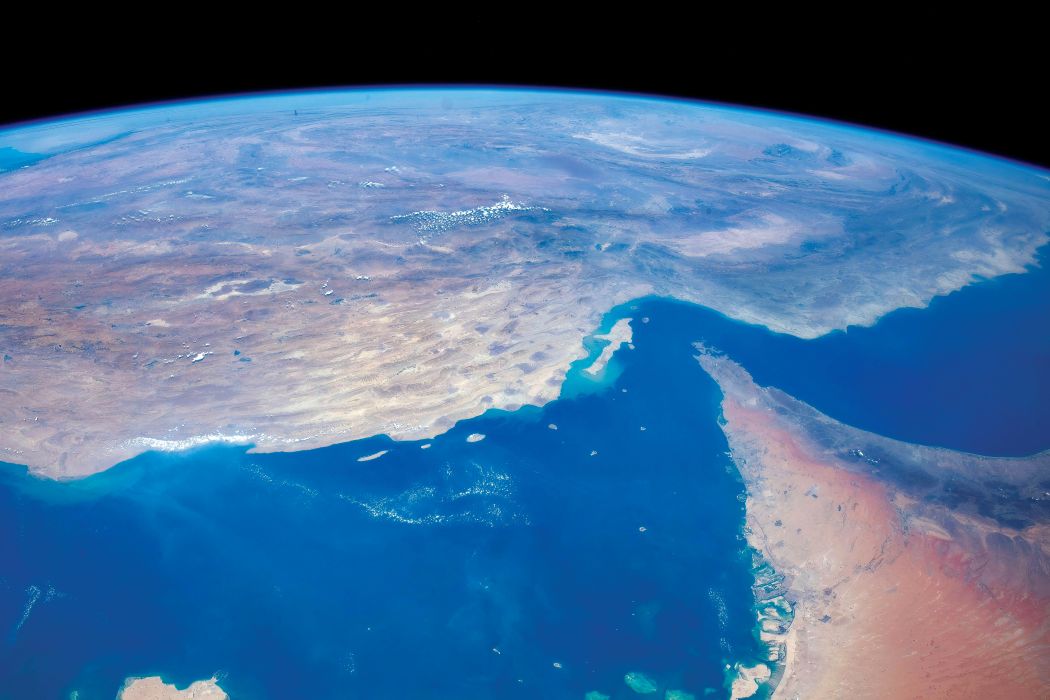
Supply chains have been badly hit by the closure of the Strait of Hormuz, but – as Noah Vickers reports – the worst could still be to come.
The war in Iran and the closure of the Strait of Hormuz has wrought significant harm on the global economy, but for the shipping industry, it is only the latest disruption in a series of damaging episodes.
The Covid pandemic triggered a collapse in maritime trade. Then, in 2021, the Ever Given ship blocked up the Suez Canal for five catastrophic days and, in 2023, Houthi rebels in the Red Sea began attacking ships in the Bab al-Mandab strait. From 2023 into 2024, Panama experienced one of its worst droughts in recorded history, limiting the number and weight of ships which could pass through its vital canal – a situation likely to become more frequent with climate change.
The closure of Hormuz, which normally accommodates roughly a quarter of the world’s seaborne oil trade, has therefore added pain to a system already dealing with multiple headaches. But experts warn the impacts on supply chains could become far worse if the conflict drags on over several months, while concerns grow that it could set a precedent for other maritime chokepoints to be weaponised.
In a recent analysis, maritime research consultancy Drewry found that while a short war would be “manageable” for the container shipping industry, a longer conflict of up to a year would “impose a severe shock that will reverberate for years to come”.
A crucial issue is the supply of bunker fuel used by vessels. Since the start of the war, bunker prices have risen by between 60 and 80 per cent.
Drewry’s senior manager for container research, Simon Heaney, tells The House: “The risk from a fuel perspective goes from being a cost risk, which it currently is, to becoming more of a supply risk.
“At the moment, significant inventories have created a buffer, but as those stocks deplete, there could be an issue in terms of just physically getting these ships to do their job.
“I think we’re a long way off from that, but if it carries on for that duration [of up to a year], you’ll see some panic. It will have an impact in terms of how fast ships go – they will slow down to preserve consumption…
“It will start to move from what is currently a fairly limited network issue – a regional problem, and a slight hike in costs – to something much bigger, and it will have wider effects.”
An analysis by S&P Global Market Intelligence meanwhile warns that fuel shortages will have “implications for agriculture, mining and industry as well as transport”, with parts of Africa and south Asia thought to be most exposed.
Sourcing alternative fuels to gasoline and diesel “may be limited”, it adds, as countries start restricting “exports of their own production to protect domestic markets, as has already been the case with mainland China and South Korea”. The Malaysian government has similarly said it will prioritise its domestic supply.
The analysis also highlights the Middle East’s importance in supplying raw materials, gases, plastics and fertilisers to industries around the world, with the potential to “bring down entire supply networks”.
For instance, it points out that while Taiwan’s imports from the region are equivalent to only 2.39 per cent of its GDP, a loss of helium supplies could cripple its electronics output equivalent to 25.2 per cent of its national output.
Nor would the UK be immune to some of these impacts.
“We’ve got exposure to diesel, sulphur, unwrought aluminium,” says Chris Rogers, S&P’s head of supply chain research. “About a third of our imports of unwrought aluminium come from the region, so there is that economic effect even for the UK, directly.”
He points out that the peak shipping season, which typically starts in July, is still to come, meaning that capacity will soon become more stretched. In addition, due to the length of voyages undertaken on different trade routes, there is a substantial time-lag for the impact of disruptions like Hormuz to be felt.
“If we look, for example, at shipping from the Middle East to the United States, in April, the volumes only fell by 25 per cent year-on-year because the last boats hadn’t yet arrived,” says Rogers.
“The UK is still seeing some of that as well, because it’s a similar kind of journey time. It’s only really over the next few weeks that the boats that should have arrived, won’t have arrived… To a certain extent, we could have peace today and there would still be an impact.”
To substitute some of the lost trade to and from the Gulf, the shipping industry has been forced to rapidly utilise several overland alternatives across and around the Arabian peninsula.
MSC, the world’s largest container shipping line, is using the Red Sea ports at King Abdullah and Jeddah, while CMA CGM, the third-largest carrier, has utilised the Turkish port of Mersin.
“They’re using a variety of avenues – it’s not all being concentrated into a couple of substitute ports,” says Heaney. “There are different ways in, but even with these multi-modal solutions, the amount of goods in and out of the Gulf is going to be drastically lower.”
Bolstering these links and building new ones, he warns, will be “urgent”, as countries on the Gulf were “very ill-prepared” for such disruption to their trade flows.
Could other nations follow Iran’s example by using chokepoints as leverage? At an April symposium in Jakarta, Indonesian finance minister Purbaya Yudhi Sadewa floated the possibility of imposing a toll on ships through the Strait of Malacca – before quickly playing the idea down.
There could be an issue in terms of just physically getting these ships to do their job
“Whether that was a serious suggestion, I doubt,” says Heaney, “but it’s sort of a warning sign: don’t mess with us, because we could do something similar. In the absence of a nuclear deterrent, it’s an economic deterrent they could at least flag, without necessarily needing to deploy.”
Rogers points out that closing either Malacca or Panama would severely hit the economies of the countries in control of those chokepoints. A more realistic threat could come from China.
“The bigger question isn’t ‘Would Singapore or Malaysia feel emboldened to close the Strait of Malacca?,’” says Rogers. The question, he suggests, is: “Does China feel more emboldened to say ‘American sea power ain’t all that, so actually we could blockade Taiwan, and the American navy’s not going to be able to unblockade [it], they’re not going to be able to guarantee shipping’.”
For the shipping industry, the closure of Hormuz has further underscored the need for global trade networks to become more flexible and resilient.
“A lot of talk has gone into resilience and how you make supply chains more robust and able to withstand these shocks that are coming at a far greater speed than ever before,” says Heaney. “You can never eliminate it, but I think we are going to see a recognition that we need to diversify and not put all our eggs in one corridor.
“Even if the Red Sea opens and Suez transits are safe all of a sudden and Hormuz is safe, there needs to be investment and diversification in terms of the routing, just so there is a bit more redundancy in te whole system.”
If cargo distributors can devise “chokepoint-immune supply networks”, says Rogers, with Europe sourcing goods from Turkey and North Africa, and countries in the Americas sourcing more from one another, that could also reduce the scope for severe disruption.
But Jim Hall, an Oxford professor who recently co-authored a research paper on maritime chokepoints, is sceptical about whether this response, known as ‘near-shoring’, would provide much of a solution.
“We know that globalisation is only partially going into reverse, and much as Trump or whoever it may be would wish it away, actually, it brings us a great deal of benefit,” he says.
“I don’t think near-shoring, on-shoring, is going to much reduce our exposure to chokepoint-related disruptions to global trade. Decarbonisation of our economies would do more in that sense.”
The changing climate will also prompt interest from shipping firms in whether more use can be made of the Arctic Sea. The route from north-west Europe to east Asia via Russia’s northern coast is roughly 40 per cent shorter than taking the Suez Canal, but the route is only free of ice during the warmer months of the year and specific vessel types are needed even then.
“They’re smaller [vessels], so you don’t get the economies of scale,” says Heaney. “Even though the climate is making the season that you could use the Arctic a bit longer, it’s debatable how long that is and it’s not necessarily reliable.”
While some Chinese firms have been carrying out test runs along the route, the economics still don’t stack up for large western carriers, he argues – and nor does travelling through Russian waters do any favours for their brand image: “The PR, the optics, from a major carrier perspective are terrible, so none of them really want to touch it with a bargepole.”
Maritime chokepoints show no sign of becoming less critical to the world’s economy, as ships continue to carry about 80 per cent of traded volumes and 50 per cent of traded value worldwide.
Hall’s research, published late last year, found that disruptions at chokepoints affect around $192bn worth of maritime trade each year, which in turn result in estimated economic losses of about $14bn annually, through delays, rerouting, insurance premiums and higher freight costs.
Environmental threats, like tropical cyclones in the Taiwan Strait and droughts in the Panama Canal, account for some of the risk. But Hormuz has demonstrated just how much disruption can be caused when states decide to flout the internationally agreed principle of freedom of navigation.
“It is dawning on smaller nations, who geographically happen to have this leverage,” warns Heaney, “that all of a sudden, here is something you’ve got, that you could potentially use to your advantage.”
>


Robert Kenyon

6 min read
The outcome of the Makerfield by-election will determine the direction of Britain. Harriet Symonds explores how Nigel Farage’s Reform are taking the fight to the King of the North
Reform has been burned once and knows it needs a different tack. In a marked change from the Gorton and Denton by-election strategy earlier in the year, in which the party was seen to underperform, the party will lean heavily into local issues to win in Makerfield.
It is set to be a test not just of the party’s growing reach in Labour heartlands, but of whether Andy Burnham’s personal popularity in Greater Manchester will be enough for Labour to beat Nigel Farage’s party.
Those familiar with the strategy claim keeping the campaign as local as possible will play well against Burnham in such a consequential by-election, which could see him become the next Prime Minister.
Their thinking is that any increased interest in Burnham’s national policy platform will draw attention away from local issues in Makerfield, allowing Reform to frame this as a by-election for Makerfield over a by-election for Prime Minister.
Reform’s candidate Robert Kenyon was deliberately chosen because he is hyper-local. A plumber, NHS worker and army reservist, he is well positioned as the antithesis of Westminster ambition.
The party will play heavily on the fact that their candidate is a local man born and bred in the constituency which the party will seek to pit against career opportunist Andy Burnham. Reform figures believe this type of candidate gives them the the best chance of winning against a well known figure like Burnham.
However, his campaign has already hit a hitch: there were allegations this week that an X social media account of his contained a number of sexist, violent and homophobic posts. A Labour party spokesperson said the posts were “disgusting” and added they show “he’s not fit to represent Makerfield”.
Reform, however, has said he will not be investigated, with a spokesperson saying the “comments were made before he was in politics”.
A Reform UK source told The House: “Rob is genuinely a local candidate. In the face of Burnham’s careerism, Rob is resonating on the doorstep.”
Kenyon has also been labelled as the party’s Hannah Spencer, a reference to the new Green MP who was a plumber before going on to win the Gorton and Denton by-election.
A Reform source described him as a “normal person who never planned to get into politics” a framing the party believes allows him to sidestep the polish and scrutiny typically expected of parliamentary candidates.
Unlike in Gorton and Denton, the Greens themselves are unlikely to be a threat, with University of Manchester professor of political science Rob Ford dismissing them as “a rounding error,” telling The House: “They have never been a thing in Makerfield, the people there hate the clean air zone, as a large majority commute to work by car and have little other option due to poor public transport.”
Reform’s hyperlocal message is intended to sit alongside the party’s national policy platform. Reform campaign literature seen by The House promises action on the cost of living, cutting immigration and tackling crime.
The party is also seeking to exploit tensions within Labour over Brexit, fuelled in part by Burnham’s leadership rival Wes Streeting. Reform will seek to portray Burnham as inconsistent on rejoining the EU and willing to adjust his policy positions for his own gain.
On immigration, Reform will argue Burnham has shifted to align with Shabana Mahmood’s policy changes, casting him as career opportunist.
“Captain flip-flop, no one can believe a word he’s said. It’s a message that will do well,” said Richard Tice, Reform MP and the party’s deputy leader.
“Forget King of the North, he’s King of the u-turn. It almost makes Keir Starmer look straight and principled.”
In Gorton and Denton, Reform ran heavily on a “Vote Reform to get Starmer out” platform. However, this didn’t seem to constitute a strong local ground campaign, likely exacerbated by tactical anti-Reform voting, meaning the party lagged behind expectations.
In Makerfield, this line has been changed to “Vote Reform to get Labour out”, taking the attention away from Starmer and positioning Reform as the main opposition.
Alongside that, attack adverts depict Burnham as a careerist who will “stand anywhere” and “say anything”, doubling down on their message that the seat would be used as a stepping stone to No 10. Reform sources say this theme will be central throughout the campaign.
However, there is also caution. Reform insiders acknowledge Burnham’s popularity across Greater Manchester and fear that overplaying personal attacks could backfire.
On the ground, the party is quietly confident. Nigel Farage’s Reform UK won more than half the vote in the area at the local elections, giving it a strong base.
A Reform source said: “We’ve learned and evolved from past elections. This will be our best campaign to date.”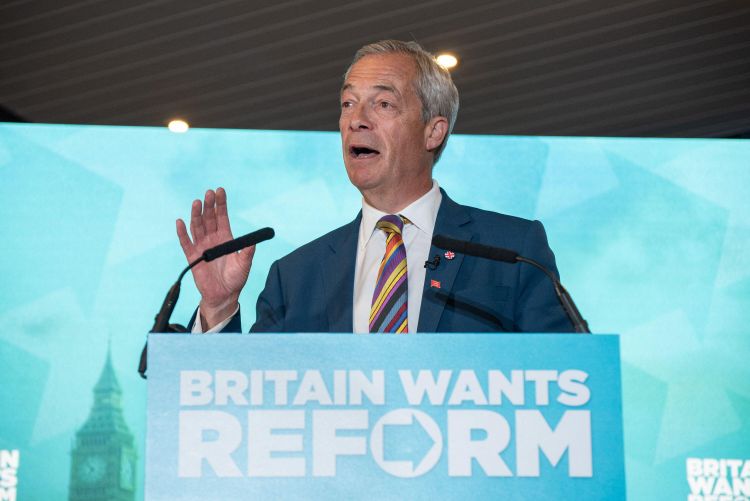
However a Reform source who has campaigned in the seat noted there was “a lot more people going with Labour than I’ve seen for a long while”, pointing to Burnham’s personal pull.
“He is a game changer, without a shadow of doubt. We’re gonna have to work our socks off”, said Gawain Towler, former Reform spinner.
Still, senior figures dismiss talk of a “Burnham bounce” as overstated.
Even so, all the sitting Reform MPs are expected to be deployed in the constituency to deliver the win.
Reform also face an electoral threat from both sides in the form of the Conservatives and Rupert Lowe’s Restore Party, raising the risk of vote-splitting on the right.
Former Conservative MP Jacob Rees-Mogg and Edward Leigh had urged a non-aggression pact with Reform, but Conservative leader Kemi Badenoch ruled out any arrangement.
“Voters should always have the opportunity to vote Conservative”, the party chairman Kevin Hollinrake told The House.
Reform is equally dismissive.
“We’ve always said no deal with the Tories. We’ve always said no deals. There’s no chance they’ll get their deposit back, the brand is so toxic,” says Tice.
The Conservative candidate, Michael Winstanley, is described as a “very well-connected Tory figure”, though MPs privately concede there may be limited on-the-ground campaigning. Attention is instead being focused on the Scottish by-election in Aberdeen South, where the party believes it has a chance of defeating the SNP and Reform.
One Tory source said there would likely be minimal MP involvement in Makerfield at all. Badenoch’s approach at the last PMQs — focusing on North Sea oil rather than issues prevalent to Makerfield — has reinforced that sense of distance.
Although the party lost its £500 deposit in Gorton and Denton, Conservative figures expect a “slightly better” performance here, citing more affluent pockets in the seat.
Meanwhile, Restore’s candidate Rebecca Shephard adds another variable. The party’s campaign is being organised locally by the disgraced former Conservative MP Scott Benton, who resigned in 2024 following a lobbying scandal. The House understands Reform previously blocked Benton from standing for the party in Blackpool South.
Those close to the Reform campaign argue that both the Conservatives and Restore are peripheral distractions, insisting the election is effectively a two-horse race between Reform and Labour — and increasingly between Reform and Burnham himself.
A Reform source said: “It’s vital that voters in Makerfield understand that only Reform UK can stop Labour here”.
>

Happy Dragon Quest 40th Anniversary From Around the Anime World – Interest

How to watch the 2026 Charles Schwab Challenge: TV channel and streaming options for Round 1

Canadiens vs. Hurricanes Game 4: Key takeaways from Carolina’s emphatic win

-

 Fashion9 years ago
These ’90s fashion trends are making a comeback in 2017
-
Fashion9 years ago
According to Dior Couture, this taboo fashion accessory is back
-
Fashion9 years ago
Model Jocelyn Chew’s Instagram is the best vacation you’ve ever had
-
Fashion9 years ago
Your comprehensive guide to this fall’s biggest trends
-
Fashion9 years ago
A photo diary of the nightlife scene from LA To Ibiza
-
Fashion9 years ago
Emily Ratajkowski channels back-to-school style
-
Fashion9 years ago
9 Celebrities who have spoken out about being photoshopped
-
Fashion9 years ago
The tremendous importance of owning a perfect piece of clothing
