
Politics
Politics Home Article | Vetting System “Needs Improvement”, Senior Green Admits


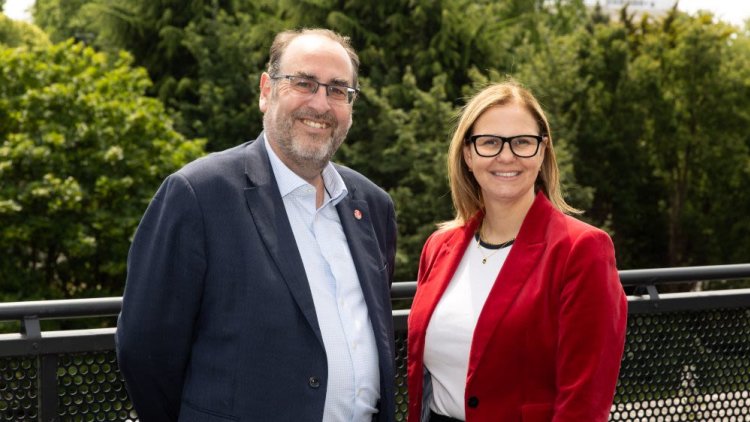
Mayor Helen Godwin has appointed Green councillor Tony Dyer as her deputy (West of England Mayoral Combined Authority/Freia Turland)
6 min read
The Green Party’s vetting system “needs improvement”, a party leader has told PoliticsHome, amid reports of anti-semitism within Zack Polanski’s ranks.
As speculation over Keir Starmer’s future raged in Westminster last week, PoliticsHome travelled to Bristol to speak with West of England Labour mayor Helen Godwin, and her newly-appointed second Tony Dyer: the first appointment of a Green Party politician as deputy mayor of any combined authority.
On Friday, the Green Party said its former Makerfield by-election candidate, who withdrew from the race hours after he had been announced, had apologised for sharing social media posts which described an attack on ambulances run by a Jewish charity as a “false flag”. Before the news broke, Dyer conceded that the party’s vetting system needed work, citing its large membership and the fact that it had fielded 4,500 candidates.
With the recent local elections reinforcing an increasingly fragmented landscape, partnerships between potential rivals such as the one between Dyer and Godwin are likely to increase. Ahead of the local elections, Labour pushed an anti-Green campaign highlighting allegations of antisemitism against councillor candidates. How do the duo still maintain a good working relationship?
Dyer explained, “both parties are as good as each other at dishing out different things” and “unfortunately, it’s just the way electoral politics works sometimes”. However, he believes that their collaboration in the West of England demonstrates “that regardless of the outcome of elections, we are able to work together for the benefit of the region, the city and our residents.”
Godwin added that on a personal level, “WhatsApp is our saviour”, explaining that if something is likely to cause friction between their parties, “we’ll try and get ahead of it by talking to each other first”. Dyer’s appointment followed Godwin appointing a Liberal Democrat deputy mayor in the previous year.
On 7 May, the Greens took control of Hackney, Hastings, Lewisham, Norwich and Waltham Forest. With the party having less experience than others in local authority administration, some have questioned whether there will be a repeat of the Bristol bin scandal, in which Green-run Bristol city council, of which Dyer is leader, proposed a once-a-month bin collection. The idea, proposed as part of a consultation, was later scrapped after intense backlash from residents and opposition parties.
Dyer reflects on this: “The main thing I’ve learned taking over as a Green leader is we were perhaps a little bit naive about some of the things we put into the public domain.”
“We maybe put things into the public domain, possibly too early in the process, before we had eliminated numerous options.”
Dyer told PoliticsHome that the same bin-scandal hit Bristol council would soon be offering training and support to new Green councils nationwide “to give them the benefit of what we’ve learned and done here in Bristol, how to work with other political parties”.
Speaking to PoliticsHome ahead of the local elections, Green leader Zack Polanski acknowledged that the Greens may face issues when it comes to vetting candidates due to the speed of the party’s growth.
Following the admittance, several cases came to light of candidates making antisemitic comments or posts on social media, with former Green leader Caroline Lucas writing on X that some of the statements were “totally unacceptable and require immediate attention”. Then came the news from Makerfield.
Speaking to PoliticsHome, Dyer said, “the vetting system needs improvement”.
“It’s worth pointing out we had 4,500 candidates, so the number of candidates [that have] actually been identified as potentially posting or being involved in antisemitism is a tiny fraction, but that’s still a fraction too much. Where that has happened, that’s then going through an investigation process by the party.”

Does the Green Party have an antisemitism problem?
Dyer said that all parties, particularly those with large memberships, are “almost certain” to have those joining with a “particular agenda”.
“What we have to be clear about is making sure that we make it clear that that is not acceptable, whether it’s antisemitism or whether it’s Islamophobia or whether it’s racism or anything along those lines, not just the Greens, but all political parties, we have to step on that and and stamp it out and make sort of people aware that’s not what we stand for as a party. We cannot accept it within those we choose to be our representatives or candidates, and we shouldn’t accept from any of our members, either.”
While the Greens had a great night on 7 May, the Labour Party suffered catastrophic losses across the country, including in the party’s heartland of London.
On almost 1,500 Labour councillors losing their seats, Godwin said it was “really really sad”, adding “there’s a message there, and that message is for government”.
In the aftermath of the results, close to 100 Labour MPs publicly said they had lost confidence in Starmer’s leadership of the party, with several ministers later resigning, followed by Health Secretary Wes Streeting.
Godwin does not blame Starmer himself for the loss of councils, but feels “this government has taken too long to get up and running”, adding, “we spent too much time diagnosing and explaining how bad things are and not actually saying here’s what we’re going to do.”
The local elections have also left a fragmented reality across most of the country, especially in cities like Birmingham. Godwin told PoliticsHome that working cross-party is something that has been the reality in her part of the world for several years, with Labour, the Liberal Democrats and the Greens all working together.
“What’s interesting for me now as a mayor is seeing for the first time, some of my colleagues up in the North are going to have different party makeup within their combined authorities.”
In the West of England combined authority, Godwin explained, there are no Labour-run councils: “So we have to do things quite differently. So we’re quite keen to demonstrate how that can be done, and share our experience with others, and it does involve putting sometimes party politics aside and just genuine placemaking.”
Dyer also believes that a multi-party political system and working cross-party will give more reassurance about long-term change and policies are less likely to just follow political cycles.
>


Robert Kenyon

6 min read
The outcome of the Makerfield by-election will determine the direction of Britain. Harriet Symonds explores how Nigel Farage’s Reform are taking the fight to the King of the North
Reform has been burned once and knows it needs a different tack. In a marked change from the Gorton and Denton by-election strategy earlier in the year, in which the party was seen to underperform, the party will lean heavily into local issues to win in Makerfield.
It is set to be a test not just of the party’s growing reach in Labour heartlands, but of whether Andy Burnham’s personal popularity in Greater Manchester will be enough for Labour to beat Nigel Farage’s party.
Those familiar with the strategy claim keeping the campaign as local as possible will play well against Burnham in such a consequential by-election, which could see him become the next Prime Minister.
Their thinking is that any increased interest in Burnham’s national policy platform will draw attention away from local issues in Makerfield, allowing Reform to frame this as a by-election for Makerfield over a by-election for Prime Minister.
Reform’s candidate Robert Kenyon was deliberately chosen because he is hyper-local. A plumber, NHS worker and army reservist, he is well positioned as the antithesis of Westminster ambition.
The party will play heavily on the fact that their candidate is a local man born and bred in the constituency which the party will seek to pit against career opportunist Andy Burnham. Reform figures believe this type of candidate gives them the the best chance of winning against a well known figure like Burnham.
However, his campaign has already hit a hitch: there were allegations this week that an X social media account of his contained a number of sexist, violent and homophobic posts. A Labour party spokesperson said the posts were “disgusting” and added they show “he’s not fit to represent Makerfield”.
Reform, however, has said he will not be investigated, with a spokesperson saying the “comments were made before he was in politics”.
A Reform UK source told The House: “Rob is genuinely a local candidate. In the face of Burnham’s careerism, Rob is resonating on the doorstep.”
Kenyon has also been labelled as the party’s Hannah Spencer, a reference to the new Green MP who was a plumber before going on to win the Gorton and Denton by-election.
A Reform source described him as a “normal person who never planned to get into politics” a framing the party believes allows him to sidestep the polish and scrutiny typically expected of parliamentary candidates.
Unlike in Gorton and Denton, the Greens themselves are unlikely to be a threat, with University of Manchester professor of political science Rob Ford dismissing them as “a rounding error,” telling The House: “They have never been a thing in Makerfield, the people there hate the clean air zone, as a large majority commute to work by car and have little other option due to poor public transport.”
Reform’s hyperlocal message is intended to sit alongside the party’s national policy platform. Reform campaign literature seen by The House promises action on the cost of living, cutting immigration and tackling crime.
The party is also seeking to exploit tensions within Labour over Brexit, fuelled in part by Burnham’s leadership rival Wes Streeting. Reform will seek to portray Burnham as inconsistent on rejoining the EU and willing to adjust his policy positions for his own gain.
On immigration, Reform will argue Burnham has shifted to align with Shabana Mahmood’s policy changes, casting him as career opportunist.
“Captain flip-flop, no one can believe a word he’s said. It’s a message that will do well,” said Richard Tice, Reform MP and the party’s deputy leader.
“Forget King of the North, he’s King of the u-turn. It almost makes Keir Starmer look straight and principled.”
In Gorton and Denton, Reform ran heavily on a “Vote Reform to get Starmer out” platform. However, this didn’t seem to constitute a strong local ground campaign, likely exacerbated by tactical anti-Reform voting, meaning the party lagged behind expectations.
In Makerfield, this line has been changed to “Vote Reform to get Labour out”, taking the attention away from Starmer and positioning Reform as the main opposition.
Alongside that, attack adverts depict Burnham as a careerist who will “stand anywhere” and “say anything”, doubling down on their message that the seat would be used as a stepping stone to No 10. Reform sources say this theme will be central throughout the campaign.
However, there is also caution. Reform insiders acknowledge Burnham’s popularity across Greater Manchester and fear that overplaying personal attacks could backfire.
On the ground, the party is quietly confident. Nigel Farage’s Reform UK won more than half the vote in the area at the local elections, giving it a strong base.
A Reform source said: “We’ve learned and evolved from past elections. This will be our best campaign to date.”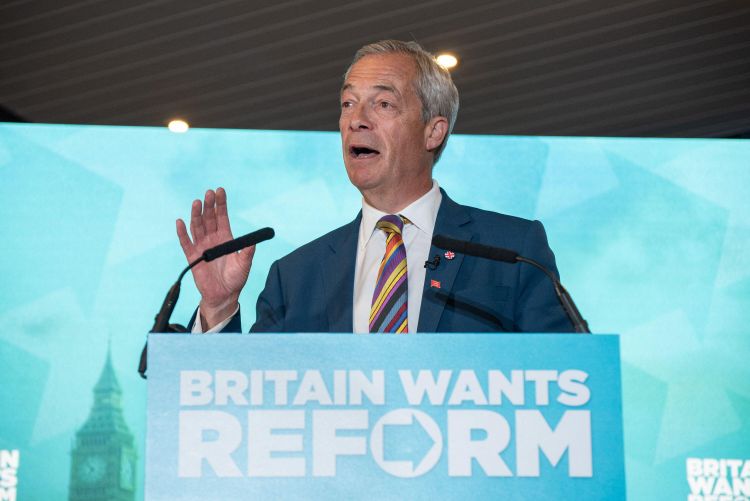
However a Reform source who has campaigned in the seat noted there was “a lot more people going with Labour than I’ve seen for a long while”, pointing to Burnham’s personal pull.
“He is a game changer, without a shadow of doubt. We’re gonna have to work our socks off”, said Gawain Towler, former Reform spinner.
Still, senior figures dismiss talk of a “Burnham bounce” as overstated.
Even so, all the sitting Reform MPs are expected to be deployed in the constituency to deliver the win.
Reform also face an electoral threat from both sides in the form of the Conservatives and Rupert Lowe’s Restore Party, raising the risk of vote-splitting on the right.
Former Conservative MP Jacob Rees-Mogg and Edward Leigh had urged a non-aggression pact with Reform, but Conservative leader Kemi Badenoch ruled out any arrangement.
“Voters should always have the opportunity to vote Conservative”, the party chairman Kevin Hollinrake told The House.
Reform is equally dismissive.
“We’ve always said no deal with the Tories. We’ve always said no deals. There’s no chance they’ll get their deposit back, the brand is so toxic,” says Tice.
The Conservative candidate, Michael Winstanley, is described as a “very well-connected Tory figure”, though MPs privately concede there may be limited on-the-ground campaigning. Attention is instead being focused on the Scottish by-election in Aberdeen South, where the party believes it has a chance of defeating the SNP and Reform.
One Tory source said there would likely be minimal MP involvement in Makerfield at all. Badenoch’s approach at the last PMQs — focusing on North Sea oil rather than issues prevalent to Makerfield — has reinforced that sense of distance.
Although the party lost its £500 deposit in Gorton and Denton, Conservative figures expect a “slightly better” performance here, citing more affluent pockets in the seat.
Meanwhile, Restore’s candidate Rebecca Shephard adds another variable. The party’s campaign is being organised locally by the disgraced former Conservative MP Scott Benton, who resigned in 2024 following a lobbying scandal. The House understands Reform previously blocked Benton from standing for the party in Blackpool South.
Those close to the Reform campaign argue that both the Conservatives and Restore are peripheral distractions, insisting the election is effectively a two-horse race between Reform and Labour — and increasingly between Reform and Burnham himself.
A Reform source said: “It’s vital that voters in Makerfield understand that only Reform UK can stop Labour here”.
>
Mayor Helen Godwin has appointed Green councillor Tony Dyer as her deputy (West of England Mayoral Combined Authority/Freia Turland)
6 min read
The Green Party’s vetting system “needs improvement”, a party leader has told PoliticsHome, amid reports of anti-semitism within Zack Polanski’s ranks.
As speculation over Keir Starmer’s future raged in Westminster last week, PoliticsHome travelled to Bristol to speak with West of England Labour mayor Helen Godwin, and her newly-appointed second Tony Dyer: the first appointment of a Green Party politician as deputy mayor of any combined authority.
On Friday, the Green Party said its former Makerfield by-election candidate, who withdrew from the race hours after he had been announced, had apologised for sharing social media posts which described an attack on ambulances run by a Jewish charity as a “false flag”. Before the news broke, Dyer conceded that the party’s vetting system needed work, citing its large membership and the fact that it had fielded 4,500 candidates.
With the recent local elections reinforcing an increasingly fragmented landscape, partnerships between potential rivals such as the one between Dyer and Godwin are likely to increase. Ahead of the local elections, Labour pushed an anti-Green campaign highlighting allegations of antisemitism against councillor candidates. How do the duo still maintain a good working relationship?
Dyer explained, “both parties are as good as each other at dishing out different things” and “unfortunately, it’s just the way electoral politics works sometimes”. However, he believes that their collaboration in the West of England demonstrates “that regardless of the outcome of elections, we are able to work together for the benefit of the region, the city and our residents.”
Godwin added that on a personal level, “WhatsApp is our saviour”, explaining that if something is likely to cause friction between their parties, “we’ll try and get ahead of it by talking to each other first”. Dyer’s appointment followed Godwin appointing a Liberal Democrat deputy mayor in the previous year.
On 7 May, the Greens took control of Hackney, Hastings, Lewisham, Norwich and Waltham Forest. With the party having less experience than others in local authority administration, some have questioned whether there will be a repeat of the Bristol bin scandal, in which Green-run Bristol city council, of which Dyer is leader, proposed a once-a-month bin collection. The idea, proposed as part of a consultation, was later scrapped after intense backlash from residents and opposition parties.
Dyer reflects on this: “The main thing I’ve learned taking over as a Green leader is we were perhaps a little bit naive about some of the things we put into the public domain.”
“We maybe put things into the public domain, possibly too early in the process, before we had eliminated numerous options.”
Dyer told PoliticsHome that the same bin-scandal hit Bristol council would soon be offering training and support to new Green councils nationwide “to give them the benefit of what we’ve learned and done here in Bristol, how to work with other political parties”.
Speaking to PoliticsHome ahead of the local elections, Green leader Zack Polanski acknowledged that the Greens may face issues when it comes to vetting candidates due to the speed of the party’s growth.
Following the admittance, several cases came to light of candidates making antisemitic comments or posts on social media, with former Green leader Caroline Lucas writing on X that some of the statements were “totally unacceptable and require immediate attention”. Then came the news from Makerfield.
Speaking to PoliticsHome, Dyer said, “the vetting system needs improvement”.
“It’s worth pointing out we had 4,500 candidates, so the number of candidates [that have] actually been identified as potentially posting or being involved in antisemitism is a tiny fraction, but that’s still a fraction too much. Where that has happened, that’s then going through an investigation process by the party.”
Does the Green Party have an antisemitism problem?
Dyer said that all parties, particularly those with large memberships, are “almost certain” to have those joining with a “particular agenda”.
“What we have to be clear about is making sure that we make it clear that that is not acceptable, whether it’s antisemitism or whether it’s Islamophobia or whether it’s racism or anything along those lines, not just the Greens, but all political parties, we have to step on that and and stamp it out and make sort of people aware that’s not what we stand for as a party. We cannot accept it within those we choose to be our representatives or candidates, and we shouldn’t accept from any of our members, either.”
While the Greens had a great night on 7 May, the Labour Party suffered catastrophic losses across the country, including in the party’s heartland of London.
On almost 1,500 Labour councillors losing their seats, Godwin said it was “really really sad”, adding “there’s a message there, and that message is for government”.
In the aftermath of the results, close to 100 Labour MPs publicly said they had lost confidence in Starmer’s leadership of the party, with several ministers later resigning, followed by Health Secretary Wes Streeting.
Godwin does not blame Starmer himself for the loss of councils, but feels “this government has taken too long to get up and running”, adding, “we spent too much time diagnosing and explaining how bad things are and not actually saying here’s what we’re going to do.”
The local elections have also left a fragmented reality across most of the country, especially in cities like Birmingham. Godwin told PoliticsHome that working cross-party is something that has been the reality in her part of the world for several years, with Labour, the Liberal Democrats and the Greens all working together.
“What’s interesting for me now as a mayor is seeing for the first time, some of my colleagues up in the North are going to have different party makeup within their combined authorities.”
In the West of England combined authority, Godwin explained, there are no Labour-run councils: “So we have to do things quite differently. So we’re quite keen to demonstrate how that can be done, and share our experience with others, and it does involve putting sometimes party politics aside and just genuine placemaking.”
Dyer also believes that a multi-party political system and working cross-party will give more reassurance about long-term change and policies are less likely to just follow political cycles.
>


(Timon Schneider/Alamy)

7 min read
News of an AI system too powerful for public release has raised fears it could be weaponised for cyber-attacks. How much of a threat could it pose? Noah Vickers reports
It was neither just a savvy marketing move nor simply a selfless act of corporate responsibility. Instead, most informed observers agree, it was a bit of both.
On 7 April, AI firm Anthropic announced that its latest model, Claude Mythos Preview, was “strikingly capable at computer security tasks”. So capable, in fact, that they were not releasing it to the public.
Through an initiative they dubbed Project Glasswing, Mythos has been made available to America’s biggest tech giants and financial institutions. By giving them privileged access to it, Glasswing’s participants are using Mythos to find ‘zero-day’ – that is, undiscovered – vulnerabilities in their systems and patch them up.
Anthropic still intend to publicly release “Mythos-class” AI models at some stage. They just aren’t saying when. And in the meantime, experts warn that the UK’s critical national infrastructure could be vulnerable, built as much of it is on legacy systems in urgent need of modernisation.
While Mythos is said by Anthropic to have “already found thousands of high-severity vulnerabilities, including some in every major operating system and web browser”, it is only a matter of time before other AI developers devise models with similar or superior capabilities – including in China.
“I think the Chinese are not too far behind,” says Joyce Hakmeh, an associate fellow at Chatham House. While China has made public pronouncements emphasising the need for AI safety, the actions of hackers tell a different story.
“Publicly, they’re saying they want responsible AI, but we also know that the capabilities the Chinese have are quite sophisticated. We know they’ve infiltrated critical infrastructure in the US.”
Groups like Volt Typhoon, sponsored by the Chinese state, have targeted power grids and pipelines across the US, she points out. The prospect of these hackers gaining the ability to search out zero-day vulnerabilities with Mythos-class technology is therefore “really worrying”.
But a more fundamental issue, Hakmeh suggests, may be the fact that the US, UK and others are for the moment relying on the goodwill of AI firms to act responsibly.
“We’re basically expecting the AI developer to police its own products – and this can only go so far,” she says. (Although the White House last week signed a deal with Google’s DeepMind, Microsoft and xAI to conduct “pre-deployment evaluations” of their upcoming AI models, with the aim of ensuring they do not pose national security threats.)
Nevertheless, as rival AI models are developed over the coming months, not all of Anthropic’s competitors may be so cautious.
“I think there’s a concern about competitive pressures and how that drives frontier AI model producers to not always implement the same care that Anthropic has taken in this instance,” says Connor Attridge, a visiting researcher at the Alan Turing Institute.
There is already a substantial time lag between vulnerabilities being exposed and then patched, he says. A 2025 report found that even in large global businesses with more than 1,000 employees, on average, 45 per cent of vulnerabilities discovered in a 12-month period remain open.
“I think that gap between the two is going to increase and become exacerbated,” says Attridge. “The risk, there, is in UK Civil Service legacy infrastructure. There’s a tail of legacy infrastructure in places that deal with really critical data of citizens. NHS trusts, for example, have quite [a lot of] legacy software and from my understanding, pretty small IT teams. That’s a concern.”
A government review found that, on average, 28 per cent of systems in central government departments in 2024 were composed of “legacy technologies”, an increase from 26 per cent in 2023. The figure ranged from 10 to 50 per cent in NHS trusts and 10 to 70 per cent in police forces.
As far as access to Mythos for British high street banks and businesses is concerned, the UK is still in talks with Anthropic. In the meantime, large companies are exploring alternative options to secure their systems.
Katharina Sommer, director of government affairs at cybersecurity firm NCC Group, says clients at “the more mature end” of their market have been asking NCC if they can “replicate a similar level capability” to Mythos, on which they can test their IT estates against.
Behind these requests, she says, is a desire to check whether the patches they’ve put in place are sufficient and to reduce the risk of “something completely unknown being unearthed” by a Mythos-class model in future.
Experts also warn that, even before Mythos arrived, the rush from businesses to incorporate AI systems into their workflows over the last few years could itself be creating new vulnerabilities for conventional hackers to exploit.
“Everyone’s worried about the attacks from the outside, but not how they’re making themselves more vulnerable, perhaps, by rapidly deploying AI technologies in the business,” says Rafe Pilling, director of threat intelligence at cybersecurity firm Sophos.
We’re basically expecting the AI developer to police its own products – and this can only go so far
Pilling says there is “plenty of scope” for large language models to be used both for social engineering and for exfiltrating data from organisations.
“It really depends what that [AI model] is connected to and what access it has,” he says. “So, in a rush to provide a great experience for the customer and plug it into your order management system, financial databases and customer information systems, you may inadvertently provide a route in to access all that stuff.”
So far, Whitehall’s response to Mythos has been well-received by the cybersecurity sector. The government has written an open letter to businesses across the country, urging them to plan and rehearse their responses to critical incidents. Security minister Dan Jarvis has meanwhile invited technology firms to “partner with” the government “to co-develop AI” for a “national cyber defence” project – though the details of this remain unclear.
Following some delay last year, the government has also been progressing its Cyber Security and Resilience Bill through Parliament. The legislation will bring ‘managed service providers’ – the technology firms who provide core IT services to businesses – within the scope of existing regulations.
This will place a legal duty on them to have “appropriate and proportionate measures” to guard against cyber-attacks, while also tightening the requirements to ensure that breaches are swiftly reported to regulators.
The bill is yet to reach the Lords, but many in the cybersecurity sector argue it is an important statement of intent from ministers.
“The proof will be in the pudding,” says Sommer. “On the whole, there is very clear signposting from government to say ‘This is what you have to do’.
“The way in which regulators will be empowered and resourced to do the enforcement properly, I think, will be a really important part of the success of the legislation.

“If it’s a piece of paper that’s ultimately toothless, it might not have the desired effect, but I think the way in which it has changed the conversation has already made a really positive impact… The level of maturity and informedness by parliamentarians scrutinising the legislation is miles ahead of where we were five or six years ago.”
The fact that the UK is the only known government, other than the US, to have been granted direct access to Mythos – and for the UK’s AI Security Institute to then publish the world’s only independent assessment of Mythos’ capabilities – has also been positively remarked on.
“It speaks to the relationship that the UK has developed with these [AI] companies,” says Hakmeh, who adds that news of Anthropic expanding their London office is another boon for Britain.
If the right steps are taken over the coming months, tools like Mythos could be used to ensure software is “secure by design” at the development stage, she points out.
“If you are producing systems which are much more secure, because AI is letting you do that cheaply, then that starts changing the equation quite considerably.
“It’s not all gloomy. This is a dual-use technology: use it for good, you do brilliant stuff. Use it for bad, you have a big problem. It’s basically a question of who gets there first.”
>

Who are the ‘Spurs nuns’? The Salesian Sisters who blessed Luke Kornet before a big Game 4 win

Avalanche vs. Golden Knights Game 3: Key takeaways as Vegas erases 3-goal deficit, takes 3-0 series lead

Spurs cruise to comfortable Game 2 win, even the series vs. Thunder

-

 Fashion9 years ago
These ’90s fashion trends are making a comeback in 2017
-
Fashion9 years ago
According to Dior Couture, this taboo fashion accessory is back
-
Fashion9 years ago
Model Jocelyn Chew’s Instagram is the best vacation you’ve ever had
-
Fashion9 years ago
Your comprehensive guide to this fall’s biggest trends
-
Fashion9 years ago
A photo diary of the nightlife scene from LA To Ibiza
-
Fashion9 years ago
Emily Ratajkowski channels back-to-school style
-
Fashion9 years ago
9 Celebrities who have spoken out about being photoshopped
-
Fashion9 years ago
The tremendous importance of owning a perfect piece of clothing
