
Politics
Politics Home Article | Vetting System “Needs Improvement”, Senior Green Admits


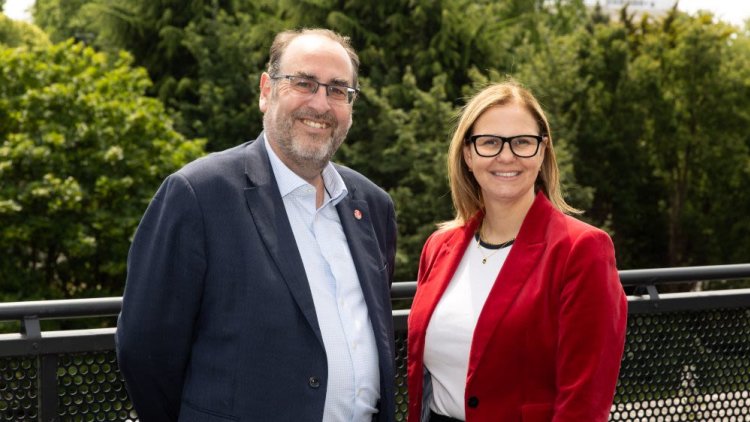
Mayor Helen Godwin has appointed Green councillor Tony Dyer as her deputy (West of England Mayoral Combined Authority/Freia Turland)
6 min read
The Green Party’s vetting system “needs improvement”, a party leader has told PoliticsHome, amid reports of anti-semitism within Zack Polanski’s ranks.
As speculation over Keir Starmer’s future raged in Westminster last week, PoliticsHome travelled to Bristol to speak with West of England Labour mayor Helen Godwin, and her newly-appointed second Tony Dyer: the first appointment of a Green Party politician as deputy mayor of any combined authority.
On Friday, the Green Party said its former Makerfield by-election candidate, who withdrew from the race hours after he had been announced, had apologised for sharing social media posts which described an attack on ambulances run by a Jewish charity as a “false flag”. Before the news broke, Dyer conceded that the party’s vetting system needed work, citing its large membership and the fact that it had fielded 4,500 candidates.
With the recent local elections reinforcing an increasingly fragmented landscape, partnerships between potential rivals such as the one between Dyer and Godwin are likely to increase. Ahead of the local elections, Labour pushed an anti-Green campaign highlighting allegations of antisemitism against councillor candidates. How do the duo still maintain a good working relationship?
Dyer explained, “both parties are as good as each other at dishing out different things” and “unfortunately, it’s just the way electoral politics works sometimes”. However, he believes that their collaboration in the West of England demonstrates “that regardless of the outcome of elections, we are able to work together for the benefit of the region, the city and our residents.”
Godwin added that on a personal level, “WhatsApp is our saviour”, explaining that if something is likely to cause friction between their parties, “we’ll try and get ahead of it by talking to each other first”. Dyer’s appointment followed Godwin appointing a Liberal Democrat deputy mayor in the previous year.
On 7 May, the Greens took control of Hackney, Hastings, Lewisham, Norwich and Waltham Forest. With the party having less experience than others in local authority administration, some have questioned whether there will be a repeat of the Bristol bin scandal, in which Green-run Bristol city council, of which Dyer is leader, proposed a once-a-month bin collection. The idea, proposed as part of a consultation, was later scrapped after intense backlash from residents and opposition parties.
Dyer reflects on this: “The main thing I’ve learned taking over as a Green leader is we were perhaps a little bit naive about some of the things we put into the public domain.”
“We maybe put things into the public domain, possibly too early in the process, before we had eliminated numerous options.”
Dyer told PoliticsHome that the same bin-scandal hit Bristol council would soon be offering training and support to new Green councils nationwide “to give them the benefit of what we’ve learned and done here in Bristol, how to work with other political parties”.
Speaking to PoliticsHome ahead of the local elections, Green leader Zack Polanski acknowledged that the Greens may face issues when it comes to vetting candidates due to the speed of the party’s growth.
Following the admittance, several cases came to light of candidates making antisemitic comments or posts on social media, with former Green leader Caroline Lucas writing on X that some of the statements were “totally unacceptable and require immediate attention”. Then came the news from Makerfield.
Speaking to PoliticsHome, Dyer said, “the vetting system needs improvement”.
“It’s worth pointing out we had 4,500 candidates, so the number of candidates [that have] actually been identified as potentially posting or being involved in antisemitism is a tiny fraction, but that’s still a fraction too much. Where that has happened, that’s then going through an investigation process by the party.”
Does the Green Party have an antisemitism problem?
Dyer said that all parties, particularly those with large memberships, are “almost certain” to have those joining with a “particular agenda”.
“What we have to be clear about is making sure that we make it clear that that is not acceptable, whether it’s antisemitism or whether it’s Islamophobia or whether it’s racism or anything along those lines, not just the Greens, but all political parties, we have to step on that and and stamp it out and make sort of people aware that’s not what we stand for as a party. We cannot accept it within those we choose to be our representatives or candidates, and we shouldn’t accept from any of our members, either.”
While the Greens had a great night on 7 May, the Labour Party suffered catastrophic losses across the country, including in the party’s heartland of London.
On almost 1,500 Labour councillors losing their seats, Godwin said it was “really really sad”, adding “there’s a message there, and that message is for government”.
In the aftermath of the results, close to 100 Labour MPs publicly said they had lost confidence in Starmer’s leadership of the party, with several ministers later resigning, followed by Health Secretary Wes Streeting.
Godwin does not blame Starmer himself for the loss of councils, but feels “this government has taken too long to get up and running”, adding, “we spent too much time diagnosing and explaining how bad things are and not actually saying here’s what we’re going to do.”
The local elections have also left a fragmented reality across most of the country, especially in cities like Birmingham. Godwin told PoliticsHome that working cross-party is something that has been the reality in her part of the world for several years, with Labour, the Liberal Democrats and the Greens all working together.
“What’s interesting for me now as a mayor is seeing for the first time, some of my colleagues up in the North are going to have different party makeup within their combined authorities.”
In the West of England combined authority, Godwin explained, there are no Labour-run councils: “So we have to do things quite differently. So we’re quite keen to demonstrate how that can be done, and share our experience with others, and it does involve putting sometimes party politics aside and just genuine placemaking.”
Dyer also believes that a multi-party political system and working cross-party will give more reassurance about long-term change and policies are less likely to just follow political cycles.
>


Illustration by Tracy Worrall

9 min read
Supply chains have been badly hit by the closure of the Strait of Hormuz, but – as Noah Vickers reports – the worst could still be to come.
The war in Iran and the closure of the Strait of Hormuz has wrought significant harm on the global economy, but for the shipping industry, it is only the latest disruption in a series of damaging episodes.
The Covid pandemic triggered a collapse in maritime trade. Then, in 2021, the Ever Given ship blocked up the Suez Canal for five catastrophic days and, in 2023, Houthi rebels in the Red Sea began attacking ships in the Bab al-Mandab strait. From 2023 into 2024, Panama experienced one of its worst droughts in recorded history, limiting the number and weight of ships which could pass through its vital canal – a situation likely to become more frequent with climate change.
The closure of Hormuz, which normally accommodates roughly a quarter of the world’s seaborne oil trade, has therefore added pain to a system already dealing with multiple headaches. But experts warn the impacts on supply chains could become far worse if the conflict drags on over several months, while concerns grow that it could set a precedent for other maritime chokepoints to be weaponised.
In a recent analysis, maritime research consultancy Drewry found that while a short war would be “manageable” for the container shipping industry, a longer conflict of up to a year would “impose a severe shock that will reverberate for years to come”.
A crucial issue is the supply of bunker fuel used by vessels. Since the start of the war, bunker prices have risen by between 60 and 80 per cent.
Drewry’s senior manager for container research, Simon Heaney, tells The House: “The risk from a fuel perspective goes from being a cost risk, which it currently is, to becoming more of a supply risk.
“At the moment, significant inventories have created a buffer, but as those stocks deplete, there could be an issue in terms of just physically getting these ships to do their job.
“I think we’re a long way off from that, but if it carries on for that duration [of up to a year], you’ll see some panic. It will have an impact in terms of how fast ships go – they will slow down to preserve consumption…
“It will start to move from what is currently a fairly limited network issue – a regional problem, and a slight hike in costs – to something much bigger, and it will have wider effects.”
An analysis by S&P Global Market Intelligence meanwhile warns that fuel shortages will have “implications for agriculture, mining and industry as well as transport”, with parts of Africa and south Asia thought to be most exposed.
Sourcing alternative fuels to gasoline and diesel “may be limited”, it adds, as countries start restricting “exports of their own production to protect domestic markets, as has already been the case with mainland China and South Korea”. The Malaysian government has similarly said it will prioritise its domestic supply.
The analysis also highlights the Middle East’s importance in supplying raw materials, gases, plastics and fertilisers to industries around the world, with the potential to “bring down entire supply networks”.
For instance, it points out that while Taiwan’s imports from the region are equivalent to only 2.39 per cent of its GDP, a loss of helium supplies could cripple its electronics output equivalent to 25.2 per cent of its national output.
Nor would the UK be immune to some of these impacts.
“We’ve got exposure to diesel, sulphur, unwrought aluminium,” says Chris Rogers, S&P’s head of supply chain research. “About a third of our imports of unwrought aluminium come from the region, so there is that economic effect even for the UK, directly.”
He points out that the peak shipping season, which typically starts in July, is still to come, meaning that capacity will soon become more stretched. In addition, due to the length of voyages undertaken on different trade routes, there is a substantial time-lag for the impact of disruptions like Hormuz to be felt.
“If we look, for example, at shipping from the Middle East to the United States, in April, the volumes only fell by 25 per cent year-on-year because the last boats hadn’t yet arrived,” says Rogers.
“The UK is still seeing some of that as well, because it’s a similar kind of journey time. It’s only really over the next few weeks that the boats that should have arrived, won’t have arrived… To a certain extent, we could have peace today and there would still be an impact.”
To substitute some of the lost trade to and from the Gulf, the shipping industry has been forced to rapidly utilise several overland alternatives across and around the Arabian peninsula.
MSC, the world’s largest container shipping line, is using the Red Sea ports at King Abdullah and Jeddah, while CMA CGM, the third-largest carrier, has utilised the Turkish port of Mersin.
“They’re using a variety of avenues – it’s not all being concentrated into a couple of substitute ports,” says Heaney. “There are different ways in, but even with these multi-modal solutions, the amount of goods in and out of the Gulf is going to be drastically lower.”
Bolstering these links and building new ones, he warns, will be “urgent”, as countries on the Gulf were “very ill-prepared” for such disruption to their trade flows.
Could other nations follow Iran’s example by using chokepoints as leverage? At an April symposium in Jakarta, Indonesian finance minister Purbaya Yudhi Sadewa floated the possibility of imposing a toll on ships through the Strait of Malacca – before quickly playing the idea down.
There could be an issue in terms of just physically getting these ships to do their job
“Whether that was a serious suggestion, I doubt,” says Heaney, “but it’s sort of a warning sign: don’t mess with us, because we could do something similar. In the absence of a nuclear deterrent, it’s an economic deterrent they could at least flag, without necessarily needing to deploy.”
Rogers points out that closing either Malacca or Panama would severely hit the economies of the countries in control of those chokepoints. A more realistic threat could come from China.
“The bigger question isn’t ‘Would Singapore or Malaysia feel emboldened to close the Strait of Malacca?,’” says Rogers. The question, he suggests, is: “Does China feel more emboldened to say ‘American sea power ain’t all that, so actually we could blockade Taiwan, and the American navy’s not going to be able to unblockade [it], they’re not going to be able to guarantee shipping’.”
For the shipping industry, the closure of Hormuz has further underscored the need for global trade networks to become more flexible and resilient.
“A lot of talk has gone into resilience and how you make supply chains more robust and able to withstand these shocks that are coming at a far greater speed than ever before,” says Heaney. “You can never eliminate it, but I think we are going to see a recognition that we need to diversify and not put all our eggs in one corridor.
“Even if the Red Sea opens and Suez transits are safe all of a sudden and Hormuz is safe, there needs to be investment and diversification in terms of the routing, just so there is a bit more redundancy in te whole system.”

If cargo distributors can devise “chokepoint-immune supply networks”, says Rogers, with Europe sourcing goods from Turkey and North Africa, and countries in the Americas sourcing more from one another, that could also reduce the scope for severe disruption.
But Jim Hall, an Oxford professor who recently co-authored a research paper on maritime chokepoints, is sceptical about whether this response, known as ‘near-shoring’, would provide much of a solution.
“We know that globalisation is only partially going into reverse, and much as Trump or whoever it may be would wish it away, actually, it brings us a great deal of benefit,” he says.
“I don’t think near-shoring, on-shoring, is going to much reduce our exposure to chokepoint-related disruptions to global trade. Decarbonisation of our economies would do more in that sense.”
The changing climate will also prompt interest from shipping firms in whether more use can be made of the Arctic Sea. The route from north-west Europe to east Asia via Russia’s northern coast is roughly 40 per cent shorter than taking the Suez Canal, but the route is only free of ice during the warmer months of the year and specific vessel types are needed even then.
“They’re smaller [vessels], so you don’t get the economies of scale,” says Heaney. “Even though the climate is making the season that you could use the Arctic a bit longer, it’s debatable how long that is and it’s not necessarily reliable.”
While some Chinese firms have been carrying out test runs along the route, the economics still don’t stack up for large western carriers, he argues – and nor does travelling through Russian waters do any favours for their brand image: “The PR, the optics, from a major carrier perspective are terrible, so none of them really want to touch it with a bargepole.”
Maritime chokepoints show no sign of becoming less critical to the world’s economy, as ships continue to carry about 80 per cent of traded volumes and 50 per cent of traded value worldwide.
Hall’s research, published late last year, found that disruptions at chokepoints affect around $192bn worth of maritime trade each year, which in turn result in estimated economic losses of about $14bn annually, through delays, rerouting, insurance premiums and higher freight costs.
Environmental threats, like tropical cyclones in the Taiwan Strait and droughts in the Panama Canal, account for some of the risk. But Hormuz has demonstrated just how much disruption can be caused when states decide to flout the internationally agreed principle of freedom of navigation.
“It is dawning on smaller nations, who geographically happen to have this leverage,” warns Heaney, “that all of a sudden, here is something you’ve got, that you could potentially use to your advantage.”
>


Robert Kenyon

6 min read
The outcome of the Makerfield by-election will determine the direction of Britain. Harriet Symonds explores how Nigel Farage’s Reform are taking the fight to the King of the North
Reform has been burned once and knows it needs a different tack. In a marked change from the Gorton and Denton by-election strategy earlier in the year, in which the party was seen to underperform, the party will lean heavily into local issues to win in Makerfield.
It is set to be a test not just of the party’s growing reach in Labour heartlands, but of whether Andy Burnham’s personal popularity in Greater Manchester will be enough for Labour to beat Nigel Farage’s party.
Those familiar with the strategy claim keeping the campaign as local as possible will play well against Burnham in such a consequential by-election, which could see him become the next Prime Minister.
Their thinking is that any increased interest in Burnham’s national policy platform will draw attention away from local issues in Makerfield, allowing Reform to frame this as a by-election for Makerfield over a by-election for Prime Minister.
Reform’s candidate Robert Kenyon was deliberately chosen because he is hyper-local. A plumber, NHS worker and army reservist, he is well positioned as the antithesis of Westminster ambition.
The party will play heavily on the fact that their candidate is a local man born and bred in the constituency which the party will seek to pit against career opportunist Andy Burnham. Reform figures believe this type of candidate gives them the the best chance of winning against a well known figure like Burnham.
However, his campaign has already hit a hitch: there were allegations this week that an X social media account of his contained a number of sexist, violent and homophobic posts. A Labour party spokesperson said the posts were “disgusting” and added they show “he’s not fit to represent Makerfield”.
Reform, however, has said he will not be investigated, with a spokesperson saying the “comments were made before he was in politics”.
A Reform UK source told The House: “Rob is genuinely a local candidate. In the face of Burnham’s careerism, Rob is resonating on the doorstep.”
Kenyon has also been labelled as the party’s Hannah Spencer, a reference to the new Green MP who was a plumber before going on to win the Gorton and Denton by-election.
A Reform source described him as a “normal person who never planned to get into politics” a framing the party believes allows him to sidestep the polish and scrutiny typically expected of parliamentary candidates.
Unlike in Gorton and Denton, the Greens themselves are unlikely to be a threat, with University of Manchester professor of political science Rob Ford dismissing them as “a rounding error,” telling The House: “They have never been a thing in Makerfield, the people there hate the clean air zone, as a large majority commute to work by car and have little other option due to poor public transport.”
Reform’s hyperlocal message is intended to sit alongside the party’s national policy platform. Reform campaign literature seen by The House promises action on the cost of living, cutting immigration and tackling crime.
The party is also seeking to exploit tensions within Labour over Brexit, fuelled in part by Burnham’s leadership rival Wes Streeting. Reform will seek to portray Burnham as inconsistent on rejoining the EU and willing to adjust his policy positions for his own gain.
On immigration, Reform will argue Burnham has shifted to align with Shabana Mahmood’s policy changes, casting him as career opportunist.
“Captain flip-flop, no one can believe a word he’s said. It’s a message that will do well,” said Richard Tice, Reform MP and the party’s deputy leader.
“Forget King of the North, he’s King of the u-turn. It almost makes Keir Starmer look straight and principled.”
In Gorton and Denton, Reform ran heavily on a “Vote Reform to get Starmer out” platform. However, this didn’t seem to constitute a strong local ground campaign, likely exacerbated by tactical anti-Reform voting, meaning the party lagged behind expectations.
In Makerfield, this line has been changed to “Vote Reform to get Labour out”, taking the attention away from Starmer and positioning Reform as the main opposition.
Alongside that, attack adverts depict Burnham as a careerist who will “stand anywhere” and “say anything”, doubling down on their message that the seat would be used as a stepping stone to No 10. Reform sources say this theme will be central throughout the campaign.
However, there is also caution. Reform insiders acknowledge Burnham’s popularity across Greater Manchester and fear that overplaying personal attacks could backfire.
On the ground, the party is quietly confident. Nigel Farage’s Reform UK won more than half the vote in the area at the local elections, giving it a strong base.
A Reform source said: “We’ve learned and evolved from past elections. This will be our best campaign to date.”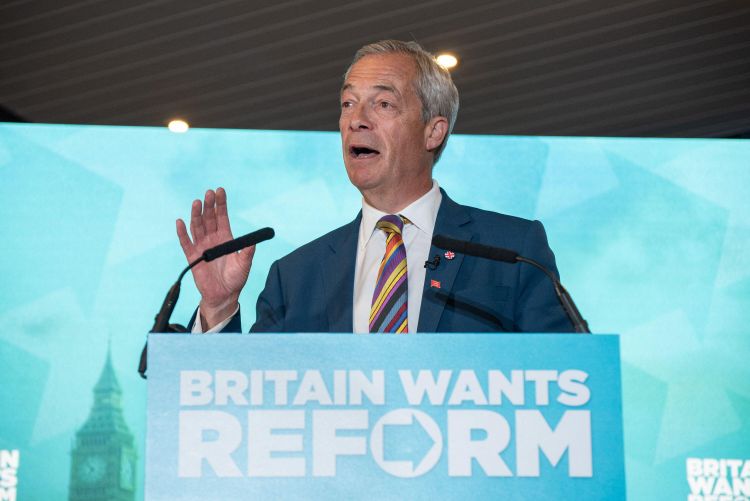
However a Reform source who has campaigned in the seat noted there was “a lot more people going with Labour than I’ve seen for a long while”, pointing to Burnham’s personal pull.
“He is a game changer, without a shadow of doubt. We’re gonna have to work our socks off”, said Gawain Towler, former Reform spinner.
Still, senior figures dismiss talk of a “Burnham bounce” as overstated.
Even so, all the sitting Reform MPs are expected to be deployed in the constituency to deliver the win.
Reform also face an electoral threat from both sides in the form of the Conservatives and Rupert Lowe’s Restore Party, raising the risk of vote-splitting on the right.
Former Conservative MP Jacob Rees-Mogg and Edward Leigh had urged a non-aggression pact with Reform, but Conservative leader Kemi Badenoch ruled out any arrangement.
“Voters should always have the opportunity to vote Conservative”, the party chairman Kevin Hollinrake told The House.
Reform is equally dismissive.
“We’ve always said no deal with the Tories. We’ve always said no deals. There’s no chance they’ll get their deposit back, the brand is so toxic,” says Tice.
The Conservative candidate, Michael Winstanley, is described as a “very well-connected Tory figure”, though MPs privately concede there may be limited on-the-ground campaigning. Attention is instead being focused on the Scottish by-election in Aberdeen South, where the party believes it has a chance of defeating the SNP and Reform.
One Tory source said there would likely be minimal MP involvement in Makerfield at all. Badenoch’s approach at the last PMQs — focusing on North Sea oil rather than issues prevalent to Makerfield — has reinforced that sense of distance.
Although the party lost its £500 deposit in Gorton and Denton, Conservative figures expect a “slightly better” performance here, citing more affluent pockets in the seat.
Meanwhile, Restore’s candidate Rebecca Shephard adds another variable. The party’s campaign is being organised locally by the disgraced former Conservative MP Scott Benton, who resigned in 2024 following a lobbying scandal. The House understands Reform previously blocked Benton from standing for the party in Blackpool South.
Those close to the Reform campaign argue that both the Conservatives and Restore are peripheral distractions, insisting the election is effectively a two-horse race between Reform and Labour — and increasingly between Reform and Burnham himself.
A Reform source said: “It’s vital that voters in Makerfield understand that only Reform UK can stop Labour here”.
>
Mayor Helen Godwin has appointed Green councillor Tony Dyer as her deputy (West of England Mayoral Combined Authority/Freia Turland)
6 min read
The Green Party’s vetting system “needs improvement”, a party leader has told PoliticsHome, amid reports of anti-semitism within Zack Polanski’s ranks.
As speculation over Keir Starmer’s future raged in Westminster last week, PoliticsHome travelled to Bristol to speak with West of England Labour mayor Helen Godwin, and her newly-appointed second Tony Dyer: the first appointment of a Green Party politician as deputy mayor of any combined authority.
On Friday, the Green Party said its former Makerfield by-election candidate, who withdrew from the race hours after he had been announced, had apologised for sharing social media posts which described an attack on ambulances run by a Jewish charity as a “false flag”. Before the news broke, Dyer conceded that the party’s vetting system needed work, citing its large membership and the fact that it had fielded 4,500 candidates.
With the recent local elections reinforcing an increasingly fragmented landscape, partnerships between potential rivals such as the one between Dyer and Godwin are likely to increase. Ahead of the local elections, Labour pushed an anti-Green campaign highlighting allegations of antisemitism against councillor candidates. How do the duo still maintain a good working relationship?
Dyer explained, “both parties are as good as each other at dishing out different things” and “unfortunately, it’s just the way electoral politics works sometimes”. However, he believes that their collaboration in the West of England demonstrates “that regardless of the outcome of elections, we are able to work together for the benefit of the region, the city and our residents.”
Godwin added that on a personal level, “WhatsApp is our saviour”, explaining that if something is likely to cause friction between their parties, “we’ll try and get ahead of it by talking to each other first”. Dyer’s appointment followed Godwin appointing a Liberal Democrat deputy mayor in the previous year.
On 7 May, the Greens took control of Hackney, Hastings, Lewisham, Norwich and Waltham Forest. With the party having less experience than others in local authority administration, some have questioned whether there will be a repeat of the Bristol bin scandal, in which Green-run Bristol city council, of which Dyer is leader, proposed a once-a-month bin collection. The idea, proposed as part of a consultation, was later scrapped after intense backlash from residents and opposition parties.
Dyer reflects on this: “The main thing I’ve learned taking over as a Green leader is we were perhaps a little bit naive about some of the things we put into the public domain.”
“We maybe put things into the public domain, possibly too early in the process, before we had eliminated numerous options.”
Dyer told PoliticsHome that the same bin-scandal hit Bristol council would soon be offering training and support to new Green councils nationwide “to give them the benefit of what we’ve learned and done here in Bristol, how to work with other political parties”.
Speaking to PoliticsHome ahead of the local elections, Green leader Zack Polanski acknowledged that the Greens may face issues when it comes to vetting candidates due to the speed of the party’s growth.
Following the admittance, several cases came to light of candidates making antisemitic comments or posts on social media, with former Green leader Caroline Lucas writing on X that some of the statements were “totally unacceptable and require immediate attention”. Then came the news from Makerfield.
Speaking to PoliticsHome, Dyer said, “the vetting system needs improvement”.
“It’s worth pointing out we had 4,500 candidates, so the number of candidates [that have] actually been identified as potentially posting or being involved in antisemitism is a tiny fraction, but that’s still a fraction too much. Where that has happened, that’s then going through an investigation process by the party.”
Does the Green Party have an antisemitism problem?
Dyer said that all parties, particularly those with large memberships, are “almost certain” to have those joining with a “particular agenda”.
“What we have to be clear about is making sure that we make it clear that that is not acceptable, whether it’s antisemitism or whether it’s Islamophobia or whether it’s racism or anything along those lines, not just the Greens, but all political parties, we have to step on that and and stamp it out and make sort of people aware that’s not what we stand for as a party. We cannot accept it within those we choose to be our representatives or candidates, and we shouldn’t accept from any of our members, either.”
While the Greens had a great night on 7 May, the Labour Party suffered catastrophic losses across the country, including in the party’s heartland of London.
On almost 1,500 Labour councillors losing their seats, Godwin said it was “really really sad”, adding “there’s a message there, and that message is for government”.
In the aftermath of the results, close to 100 Labour MPs publicly said they had lost confidence in Starmer’s leadership of the party, with several ministers later resigning, followed by Health Secretary Wes Streeting.
Godwin does not blame Starmer himself for the loss of councils, but feels “this government has taken too long to get up and running”, adding, “we spent too much time diagnosing and explaining how bad things are and not actually saying here’s what we’re going to do.”
The local elections have also left a fragmented reality across most of the country, especially in cities like Birmingham. Godwin told PoliticsHome that working cross-party is something that has been the reality in her part of the world for several years, with Labour, the Liberal Democrats and the Greens all working together.
“What’s interesting for me now as a mayor is seeing for the first time, some of my colleagues up in the North are going to have different party makeup within their combined authorities.”
In the West of England combined authority, Godwin explained, there are no Labour-run councils: “So we have to do things quite differently. So we’re quite keen to demonstrate how that can be done, and share our experience with others, and it does involve putting sometimes party politics aside and just genuine placemaking.”
Dyer also believes that a multi-party political system and working cross-party will give more reassurance about long-term change and policies are less likely to just follow political cycles.
>
World Cup 2026 news live updates: Latest on squad lists, ticket prices, injuries and more

Olympic champion Zheng Qinwen bageled during French Open defeat, will leave top 100

AI with Model-Based Design: Virtual Sensor Modeling

-

 Fashion9 years ago
These ’90s fashion trends are making a comeback in 2017
-
Fashion9 years ago
According to Dior Couture, this taboo fashion accessory is back
-
Fashion9 years ago
Model Jocelyn Chew’s Instagram is the best vacation you’ve ever had
-
Fashion9 years ago
Your comprehensive guide to this fall’s biggest trends
-
Fashion9 years ago
A photo diary of the nightlife scene from LA To Ibiza
-
Fashion9 years ago
Emily Ratajkowski channels back-to-school style
-
Fashion9 years ago
9 Celebrities who have spoken out about being photoshopped
-
Fashion9 years ago
The tremendous importance of owning a perfect piece of clothing
