
Politics
The House Article | Violence Against Women And Girls Rises Despite Labour Manifesto Pledge


(Alamy)
7 min read
A data investigation by The House has revealed a rise in violence against women and girls despite Labour’s 2024 pledge to halve it. Cristina Trujillo reports
The Labour government is on a mission to halve violence against women and girls (Vawg) in the next 10 years – one of its most ambitious manifesto policies at the last general election. Yet a data investigation by The House has revealed that since 2024 Vawg has actually increased in the UK – despite a downward trend before that.
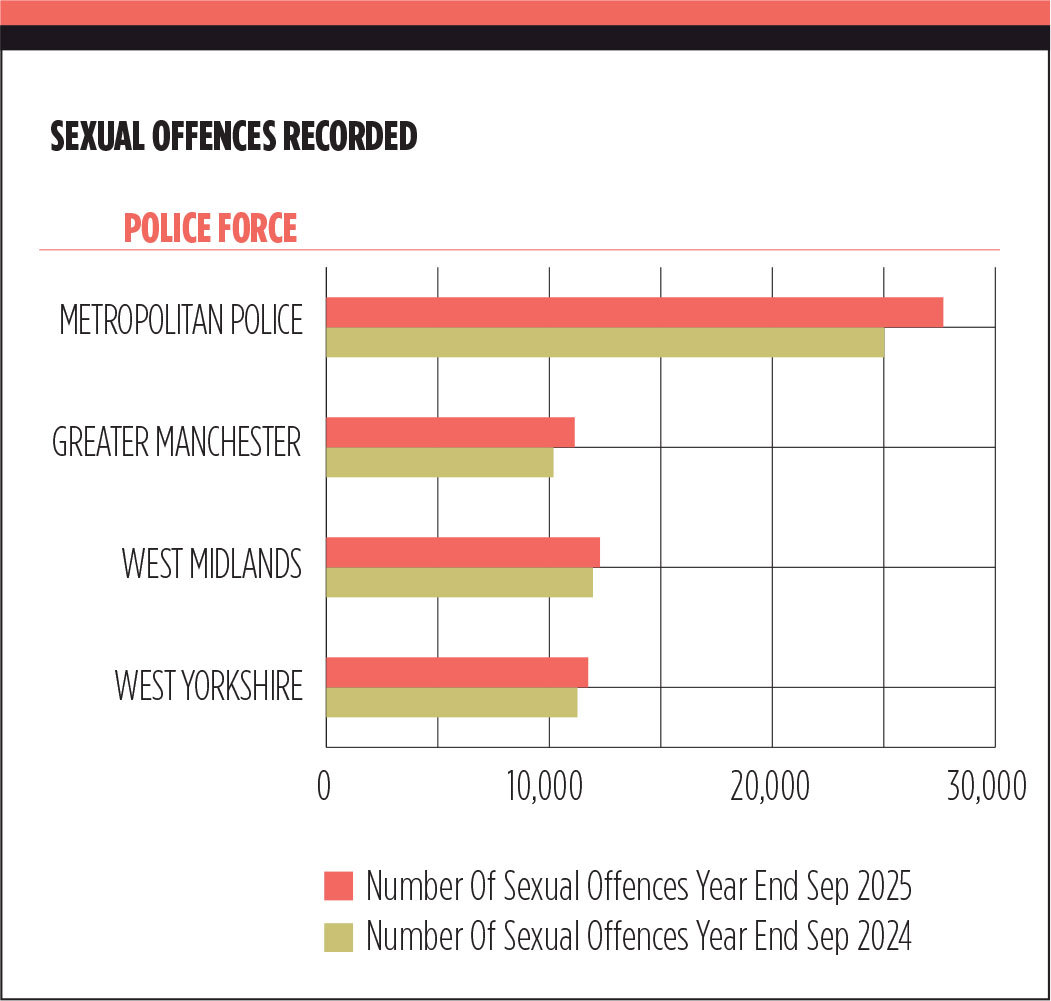
There were eight per cent more sexual offences in the UK in 2025 than in 2024, according to Office for National Statistics (ONS) data, with stalking and harassment and domestic abuse also increasing. Although the Home Office tells The House that an increase in reporting to the police does not necessarily mean that Vawg has also risen, the self-completion Crime Survey for England and Wales (CSEW) also shows some metrics increasing.
The news comes after Jess Phillips resigned as safeguarding minister last month, publishing a scathing letter that laid the blame for inaction over online child sex abuse squarely on Keir Starmer. It is “deeds, not words” that matter, she warned, using the suffragette refrain.
Birmingham City University criminologist Dr Max Hart says the increase in police-recorded offences and growing use of specialist services likely show different systems capturing different parts of an underlying rise.
“Schools, workplaces and online spaces are key sites whereby gendered harms are both produced, recorded and consumed. While we may have seen some formal progress in gender equality, the everyday production of misogynistic harms within these institutions remains,” he says.
“Thus, apparent changes in reporting behaviour, institutional responses and help-seeking can all impact data simultaneously as these underlying harms persist or intensify.”
Kevin Hoffin, a senior criminologist at the same university, adds: “I do believe there to be an increase in Vawg incidents over the last year, and I believe that a contributing factor [to] this is the experiences of immigrant women.”
A recent study by Women’s Aid showed that immigrant women were at an increased risk of domestic violence due to a range of structural factors, from barriers to advice to a national shortage of refuge spaces.
Hoffin points out that 31 per cent of Gen Z men agree that a wife should always obey her husband, according to a King’s College London study of 23,000 people released in March. Among Gen X men, the figure is 21 per cent – a difference of 10 percentage points. Sex offences went up in all of the UK’s Vawg hotspots – London, Greater Manchester, the West Midlands and West Yorkshire – which have seen more sexual offences than anywhere else in the UK consistently since 2022, according to the ONS data.
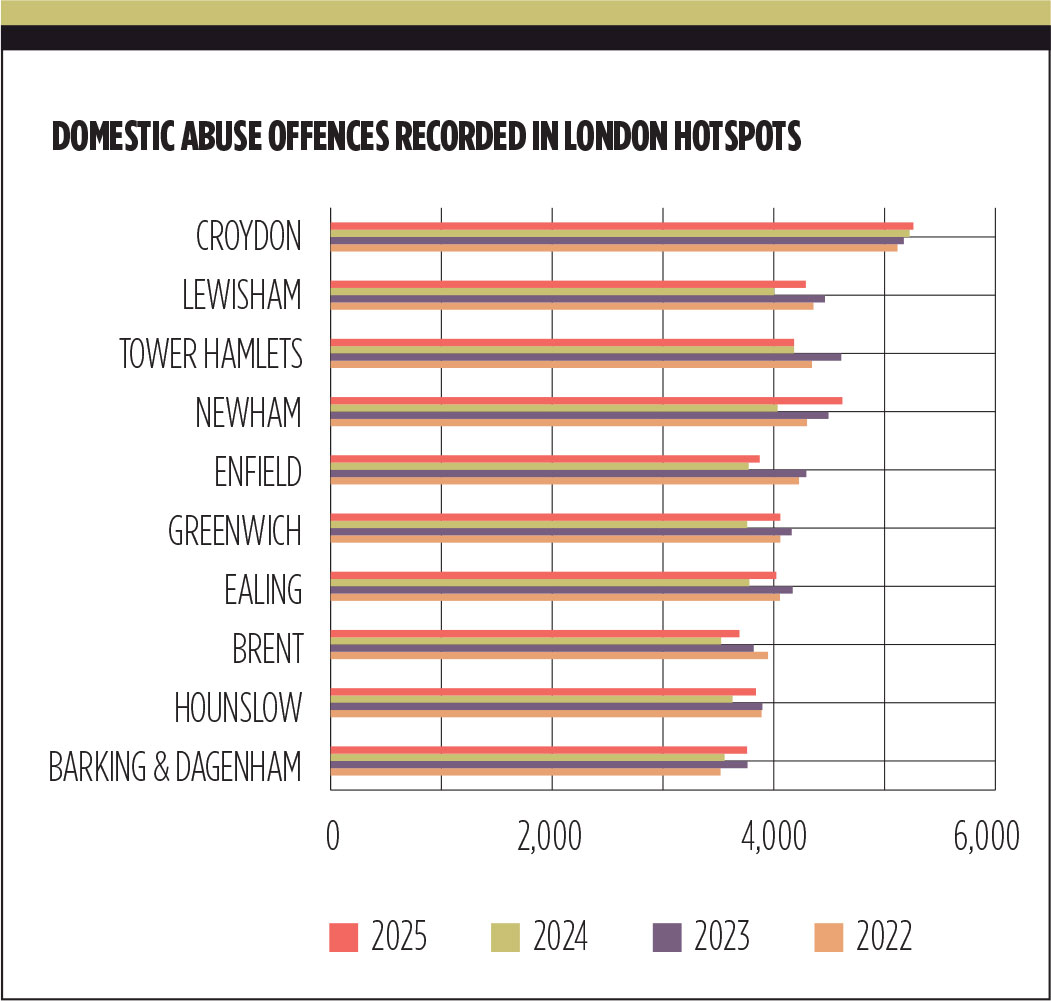
Reports of Vawg crime are highest in London, where domestic abuse rose in problem areas from 2024 to 2025 – 14 per cent in Newham, eight per cent in Greenwich, seven per cent in Lewisham and six per cent in Ealing, Hounslow and Barking and Dagenham.
Figures obtained by The House via the Freedom of Information (FOI) Act show that in Greater Manchester in 2025, there was a reduction in rape and sexual offence crimes with female victims recorded since 2018. However, both have increased in the area since 2024, along with violent crimes against female victims. Another FOI request revealed that femicide, domestic abuse, sexual offences and rape have gone up since 2024 in the West Midlands overall, and Birmingham in particular.
Meanwhile, the CSEW estimates increases of six per cent and 45 per cent in some types of Vawg, while trialling a new survey process and split sample to combine the different types of Vawg, which estimates a decrease in certain areas.
Jo Lovett, senior research fellow at the Child and Woman Abuse Studies Unit of London Metropolitan University, says: “The combined measure for Vawg is very new and still being developed and trialled, and it has a number of limitations, such as excluding certain forms of Vawg.”
While the new process is intended to foster a better understanding of Vawg in the long run, the ONS says the statistics produced are “subject to change as we evaluate future data and finalise methods”. While many ONS stats rose after 2024, domestic abuse, violent attacks against women and stalking and harassment fell between 2023 and 2024 in Vawg hotspots.
If there is a link between Labour’s work on tackling Vawg and an increase in reporting, it could be seen as a testament to the success of initiatives like Raneem’s Law, named after a woman who was murdered by her ex-husband in 2018, which was spearheaded in 2025 by then-home secretary Yvette Cooper. It placed domestic abuse specialists in nearly 1,000 control rooms across five police forces, aiming to increase specialist support for victims and improve emergency responses.
In 2023, Starmer made his promise to halve Vawg in 10 years following the publication of Baroness Casey’s review of policing, commissioned after the murder of Sarah Everard by a Metropolitan Police officer in 2021. Lovett called this “a laudable but ambitious target”.
Confirming its pledge after its landslide 2024 electoral victory, Labour proposed the Crime and Policing Bill in February 2025, which will be the main legislative vehicle in its Vawg strategy and is now undergoing the final stages of approval.
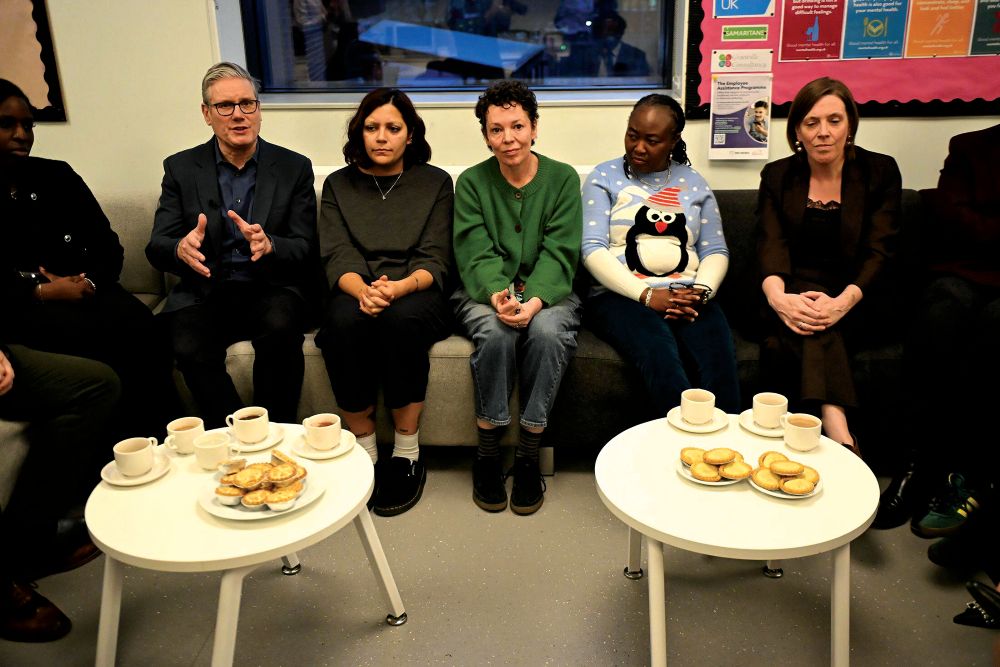
The Online Safety Act 2023 criminalised cyberflashing and intimate image abuse, accounting for about 10,000 new crimes recorded in the year ending March 2025, while March 2026 saw Raneem’s Law finish its one-year pilot.
Labour then launched its Vawg strategy in December 2025, including new legislative proposals and funding and raising awareness around abuse, against the background of the MeToo-style discussion triggered by the Epstein files.
While this focus on Vawg may well be improving reporting rates, by empowering victims to inform authorities or police to respond, experts still cite funding and policy roadblocks.
The Vawg strategy asserts, for example, that “well-lit streets, accessible transport, and thoughtful urban design can deter violence”. But there is no mention of Vawg in the December 2025 amendments proposed to the National Planning Policy Framework, overhauling urban planning, transport and housing.
Solace Women’s Aid CEO Nahar Choudhury says: “While we welcome the fact that the government has committed more funding than ever before, there is still a long way to go to provide the sustainable support this sector needs.
“Unfortunately, the number of survivors isn’t decreasing; last year alone, Solace supported more than 17,000 women and children.” The year before, the organisation supported 14,435.
Women’s Aid CEO Farah Nazeer says: “We welcome the publication of the government’s strategy. It contains many welcome interventions… particularly in health and education, which will be critical for meeting the government’s own goals on prevention. However, the reality [is] that the sector remains in a funding crisis.”
She adds: “Services supporting Black, minoritised and migrant women have faced unacceptable rhetoric by certain politicians, which is further entrenching a hostile environment for migrants, including victims or survivors of abuse.”
Laura Riley, vulnerable victims co-lead for the British Society of Criminology’s Vulnerability Research Network, says: “Countless cases of police misogyny have also been exposed, and this has clearly impacted women’s ability to feel safe and protected.” She also raised cultural threats from “toxic narratives from the likes of Andrew Tate… to a desire to return to a more overtly patriarchal family structure”.
“There is evidence that those who weaponise the idea of ‘protect our girls’ may also be furthering ideas that contribute to keeping women and girls from feeling safe to express their needs and views,” Riley adds.
The Home Office welcomes the increase in reporting of violence against women and girls, saying: “It is vital that victims feel empowered to come forward, knowing that they will be supported and their cases taken seriously.”
It highlights tougher restrictions on registered sex offenders and strengthened protections for victims implemented by Labour, but continues: “Violence against women and girls is a national emergency… We know there is more to do.”
>
Politics
The House | Reform Councillor George Finch: Nobody Deserves To Be In No 10 More Than Farage



9 min read
He’s in charge of an institution with £1.5bn assets and of services vital to the lives of hundreds of thousands of people – and he’s not yet 20 years old. Nadine Batchelor-Hunt meets Reform UK council leader George Finch
If ever there was a child of his time, it is George Finch.
“My mum was a hairdresser, my dad worked as a carpenter for the council at the time,” says Finch, Reform UK’s leader of both Warwickshire county council and Nuneaton and Bedworth borough council. “Finances were fine, but then they had me in 2006, and then obviously the financial crash happened… It destroyed what we did, and the income wasn’t sustaining a family.”
Growing up in the shadow of the crash and austerity shaped Finch – and arguably makes him perfectly attuned to the politics it has produced.
“Every system was just failing,” he says. “Everything was cut, nothing was working… and this was a kind of carbon-copy of families across Bedworth at the time… The system was completely broken. Families like mine were left and thrown to the curb.”
There were additional strains: both of Finch’s sisters have significant health issues that continue to confront them with the harsh reality of the state of some NHS services. Speaking of one sister with a neurological disorder, he says: “Even when I’ve been in this job, I’ve spent hours and hours and hours in A&E waiting by her side on a ward where there’s kids self-harming, and it’s not right.”
If the council leader is daunted by the weight of the responsibility of his office, he does not show it. Indeed, in his telling, this is light work when compared to his previous gig as a carpenter and plasterer.
“I was working when I was 16, 17 – not on building sites but in doing up homes, carpentry, plastering, all that type of stuff,” says Finch. “I’ve done that type of stuff before, and I know what it’s like to sit in a damp house when it’s dripping, while just eating a sandwich. You don’t get a nice little tea break like you do in offices.”
He [Lee Anderson] was really my type of people… just say how it is.
Despite his tender age, Reform isn’t even Finch’s first party. “I was a young conservative who joined the Conservative Party at 16,” says Finch. “It was more the conservative values, not necessarily the party.” He speaks of his disillusionment with the party and is especially critical of Boris Johnson – describing the former prime minister as a “wet liberal in proper Conservative clothing”.
The catalyst for joining Reform UK, he says, was an encounter with Reform MP Lee Anderson at school. “I was in the politics class, and me and my mate, we love Lee Anderson,” says Finch. “He was really my type of people… just say how it is. You know, like, ‘Oh, have a lovely day, lovely ladies’… Say something like that in Warwick? ‘How dare you call me a lovely lady?!’”
Finch says he asked Anderson a question about education, namely, ‘How will Reform UK resist the wave of wokeism that’s washing across our education establishments?’. “I practiced that, because it’s so important to me,” says Finch. He recalls Anderson “spoke to so many” in the room and behaved like such “a normal chap” that when he approached Finch and asked whether he’d join Reform, he did. “He said: ‘George, you going to join?’ I went: ‘Go on, then – I’ll join tomorrow.’ So, I did. And then helped the general election candidate – we got third place, 9,000-odd votes, great from a standing start. We’re going to win at the next election.”
Asked why he was attracted to politics, he replies: “It goes to my old background: my family, my town.” Finch is sitting next to a stuffed bear clawing a tree, the symbol of the county he presides over. The bear’s name is Wendy, according to The Times, loaned to Finch’s office from a local museum – something Finch reportedly made an early priority upon taking office.
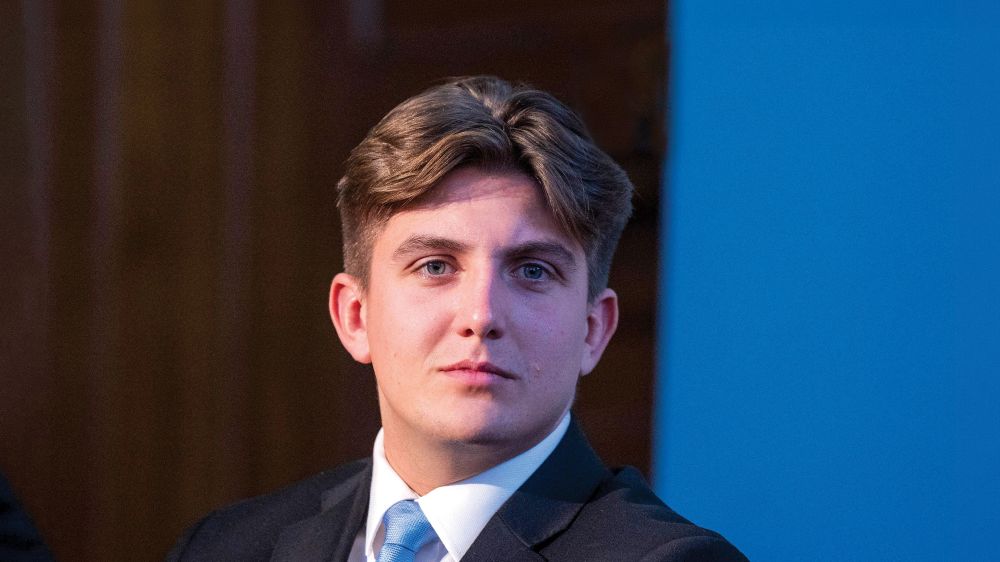
Bedworth, the town he is from, is in the borough of Nuneaton and Bedworth in North Warwickshire. The last coal mine in the town closed in 1982, ending a long history of coal mining dating back centuries; in many ways, it is typical of the area Reform must win to make it to No 10. “It’s been totally forgotten about, even though it is a town that’s got a huge pride in what it does,” says Finch.
In the several years since then, Finch has enjoyed a meteoric rise. He says his priorities locally have been to “change the entire foundation of which the council is built on” – describing running two councils as “phenomenal”. He says highways, crime awareness and prevention and finances are all areas where he’s seeking improvements, as well as home school transport, which he says costs the council £50m a year. The way he speaks about local issues makes it clear he sees Reform’s record in local government as an opportunity to gain the electorate’s confidence, saying it’s “the only chance” the party has to prove itself to the people. “We have to work as hard as we can to get the best value for money for taxpayers, voters,” says Finch. “If we get local champions, we’re winners.”
But it has not been plain sailing; Finch narrowly won a no-confidence motion earlier this year by one vote – something he dismisses as a “farce” that “backfired”. The Green Party tabled the motion concerning Finch’s remarks relating to the rape of a 12-year-old girl in Warwickshire, and a dispute with county council chief executive Monica Fogarty over Pride flags. On the former, Finch had risked contempt of court after sharing details about the suspects and accusing the police of attempting to cover up their immigration status – claims which Warwickshire police rejected.
I haven’t got a problem with young kids and women coming over on boats – if they have got a genuine refugee status and they need genuine help
Finch defends himself, telling The House he “had to fight tooth and nail for transparency”. “They’ll refute that,” says Finch, saying that they argued for the need to preserve community cohesion. He recalls being told, “’You don’t want riots like in Epping’.” He replied: “‘We won’t have riots in Epping if we tell them the truth’… And I put a statement out: no riot.”
There is growing speculation that Rupert Lowe’s breakaway party, Restore Britain, could put pressure on Reform at the next general election, given its standing in the polls for the Makerfield by-election. The race is expected to be tight between Labour’s Manchester mayor Andy Burnham and Reform UK’s Robert Kenyon, meaning any votes lost to Restore may cost Reform the election – something to which Finch is very much alive.
Finch says he is waiting to see the results in Makerfield before passing judgement but likens Restore to the British National Party (BNP) and questions whether its social media presence is “matching up” to votes. “What are their policies?” asks Finch. “What are their people? Look at other political parties in the past, when they stand a load of candidates – parties like BNP and Ukip… you can see their candidates and what they stand for.”
Finch tells The House he believes a Restore government would deport people based on their colour, and believes a lot of Restore voters do not realise this – nor do the two previously Reform Warwickshire councillors who have defected to the party. “[Gurkhas would] be gone… no excuse, no reason; gone, just because of their colour,” claims Finch.
While it’s obvious Finch sees Reform as different to Restore, he describes immigration as “terrible, terrible, terrible” and “a complete failure”, defending Reform’s Zia Yusuf’s remarks on deporting legal immigrants living in social housing.
“Zia is absolutely right, and we’re looking at it on the borough council,” says Finch. “Social housing, council housing, should be there for British nationals – British citizens.”
Finch also says veterans and care leavers should be at the top of housing lists, “not asylum seekers, not illegal immigrants” – though he does express some sympathy for women and children arriving on small boats. “I haven’t got a problem with young kids and women coming over on boats – if they have got a genuine refugee status and they need genuine help,” says Finch. “I haven’t got a problem with that, but I’m not seeing that materialise on the boats.”
The council leader is also dismissive of allegations that Reform’s agenda is racist, saying people “need to understand our policies a bit more”. “Those people that are just ignorant, they go: ‘Oh, you’re all racist’,” says Finch. “Well, if you sit down with me for an hour, I can tell you that I’m not racist.”
Sitting beneath a framed Reform football shirt reading ‘FARAGE’, Finch insists the party is not a “one-man band”, but one of policies, local champions, councillors, council leaders and MPs, as well as its high-profile leader. “I know what it’s like in a head office, I’ve seen it – I’ve seen the way it works,” he says. He adds that no politician alive deserves the keys to No 10 more than Nigel Farage. “He’s changed his country for the better – and he’s not even been elected to British Parliament until recently,” says the 19-year-old. “So, he deserves it.”
Finch also praises the recent policy announcement on tax-free overtime by the party. “The no tax on overtime – great policy… In the town centre, they love that policy,” says Finch. “I think it’s great. We have our own policies, we are our own party, we’ve got fresh-thinking people.”
As the interview winds down, we circle back to whether Finch has ambitions beyond leafy Warwickshire, a question side-stepped earlier on.
“To become a Member of Parliament for North Warwickshire and Bedworth, or the East, or wherever: it’d be a great honour to serve locally, in my home town – but I’m not focused on that at the moment,” he says. “When a general election comes, we’ll see, but I am 100 per cent committed to these two councils. That’s a new line – these two councils – because that’s why people get elected.”
>


Armed Forces Minister Al Carns has resigned over the government’s plans on defence spending. (Alamy)
3 min read
Armed Forces Minister Al Carns has resigned over the government’s plans on defence spending and its Northern Ireland Legacy Bill, claiming “the deal this country makes with the people who serve it” is “broken”.
In a letter to the Prime Minister, the former marine said the proposed Defence Investment Plan (DIP) was not good enough, stating it “is neither transformative enough nor sufficiently funded”, adding that “a serious country funds its defence to meet the threat it actually faces, not the threat it wishes it faced”.
“I have sat in the rooms, seen the assessments, and spoken to the commanders who will be asked to do more with less, and I cannot in good conscience stand at the dispatch box and defend a level of investment I know to be inadequate to the task,” wrote Carns.
Carns was also critical of the Northern Ireland Legacy Bill, describing it as “unfit for purpose” and that it currently “risks failing the very veterans it claims to protect”.
“I set out the changes I believed were necessary, and the lines which I could not in good conscience go beyond,” he wrote.
“Those lines have not been accepted. I have run out of room to argue this case honourably from inside government. A serving minister cannot ask fellow veterans to trust a process he no longer trusts himself.”
He also said “the machinery of government itself has been left to decay” and that “decisions that should take days, take months”.
In his resignation letter Carns, who is reportedly prepared to run in a Labour leadership contest should one be triggered, gave a broader critique of the government, too.
“Too many working people in this country feel insecure even when they are doing everything right,” he wrote
“They work hard, contribute, pay their taxes, and still feel one setback away from trouble. Public confidence in our institutions is weakening, and politics increasingly look performative while everyday life gets harder.”
His resignation comes hours after Defence Secretary John Healey resigned over the government’s defence spending plans, saying he had been “left with no other option” after being presented with details of how much additional money the government was planning to spend on the Defence Investment Plan (DIP).
“Without a DIP that meets the moment in this way, I am being forced to make decisions that would reduce the readiness of our Forces and increase the risk to personnel on operations, and could make the country less safe,” wrote Healey in his resignation letter.
“After explaining to you that I would not be able to accept a DIP settlement that does not give our Forces the resources they need, I am now left with no other option than to submit my resignation as your Defence Secretary.”
In an interview with PoliticsHome, Lord Hutton, defence secretary between 2008 and 2009 under former Labour prime minister Gordon Brown, said Healey’s resignation was a “colossal failure of government”.
The former defence secretary said the government would need to combine borrowing with spending cuts, including welfare, to fund the necessary increase to defence spending – stating he was “utterly frustrated” the government seemed “completely unable to address” the issue.
The departure of Carns from government so soon after Healey’s will pile further pressure on Prime Minister Keir Starmer, as the embattled Prime Minister attempts to keep his government together ahead of next week’s by-election which could see Labour Manchester mayor Andy Burnham elected to parliament in Makerfield.
Burnham, who has made no secret of his leadership ambitions, admitted on the BBC’s Question Time last week that he would run in any Labour leadership contest – accusing Wes Streeting, who resigned as Health Secretary last month over Starmer’s leadership and heavy by-election losses, of starting the contest already.
>
Politics
The House | Andy Burnham: The Makerfield Campaign, The Aftermath And His Prep For Government


13 min read
Andy Burnham supporters are increasingly optimistic about Makerfield. Sienna Rodgers explores what comes after the by-election
Visitors to the Makerfield constituency are met with “a sea of turquoise”, in Nigel Farage’s own words, as Reform UK voters proudly bear their allegiance in the form of posters, garden stakes and even custom-made flags.
And yet, with the caveat that things can change quickly and they are taking nothing for granted, Labour activists and those around Andy Burnham are increasingly confident of winning the tricky by-election. They cite the poor performance of Reform’s candidate Robert Kenyon on the BBC’s Question Time as a key factor; some also report that Farage’s reaction to police failure in the Henry Nowak murder, in which he called for “pure cold rage”, has motivated the Burnham vote.
Burnham backers have concluded that there is now a “shy Andy vote”, just as there was a shy Reform one in the local elections, with supportive voters saying they are too nervous to put up Labour posters in their windows. The lack of visibility does not reflect the strength of the anti-Reform vote, according to Labour sources, and Burnham’s personal appeal is helping to coalesce that group behind him.
Labour door-knockers are nervous too, however. They are being warned by organisers that Restore Britain activists – who are easily identifiable on the ground, as they wear dark blue polo shirts and baseball hats featuring their party’s name – are equipped with smart glasses that record interactions.
Canvassers for Burnham have been told not to engage properly with ‘antis’ on the doorstep either, as too often they have doorbells that record videos, which could be used against the activists online. ‘Persuasion’ conversations are thus limited to those who are truly undecided, making tech’s impact on party activism an interesting subplot. Burnham himself spends much of his time door-knocking ‘don’t knows’.
In the Labour canvassing script seen by The House, door-knockers are instructed to say they are “out campaigning for Andy Burnham” (rather than the party). Non-voters are asked why they don’t vote, told about Burnham’s local record and asked, “Could Andy earn your vote?”. Voters classified as ‘against’ are asked only which party they plan to support, then thanked for their time – “Do not engage in arguments,” the sheet orders.
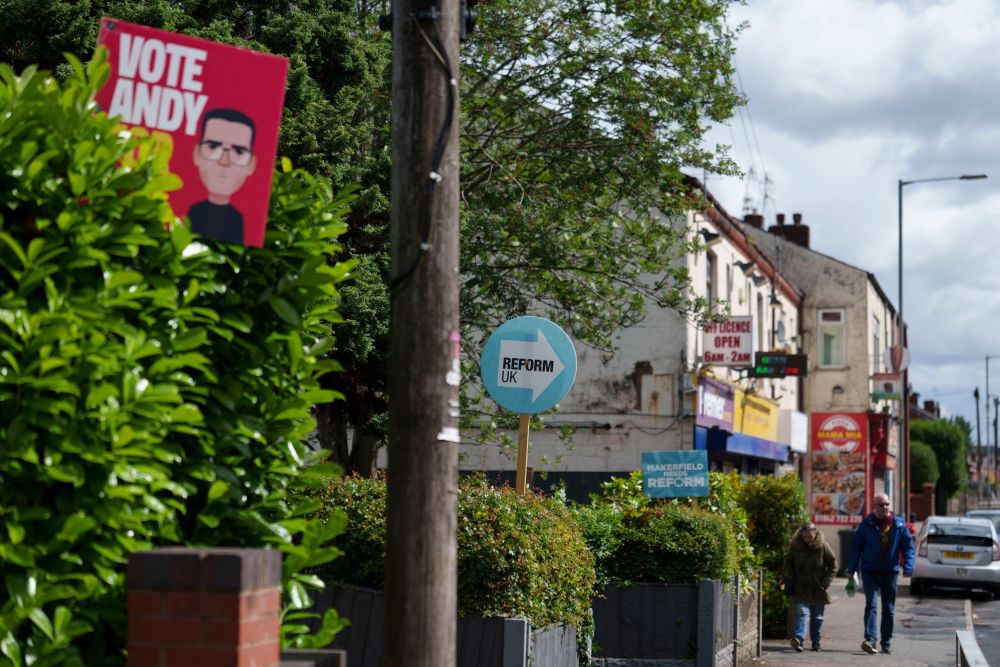
For ‘don’t knows’, the canvasser asks on a scale of one to 10 how likely the voter is to back Labour and whether they are considering a different party. The “rebuttal lines” for those who could back Reform lead with the statement that Farage’s party would “make the NHS into an insurance-based system if they get into power, and that really scares me”. Verbally, organisers have also told activists to highlight that Kenyon “is a sexist” and to point them towards Question Time. Those leaning towards the Greens, Lib Dems or Tories are all told that the by-election is “a two-horse race between Labour and Reform” and that “a vote for them risks letting Reform win through the middle”.
Activists are also given rebuttal lines on arguments that may arise on the doorstep: grooming gangs (“He called for a national inquiry before it was politically convenient to do so”); the Clean Air Zone (“The Boris Johnson government forced 10 councils to consider clean air zones”, and it is no longer needed thanks to the Bee Network of buses); Makerfield as a “stepping stone to No 10” (“Andy is not getting ahead of himself”), Brexit (“Andy respects the Brexit vote”).
Most notably, on immigration, canvassers are told to say that “Andy supports reducing net migration” and he believes “it is right to pursue root and branch reform”. Allies of Shabana Mahmood are confident that she would be kept as Home Secretary by a Burnham premiership and her reforms would hardly be watered down, if at all.
What comes next
If Burnham does win Makerfield on 18 June, what follows? He has been clear about his intention to enter any Labour leadership contest, but the details – process and timeline – remain murky.
The hindrance to a swift challenge is the Greater Manchester mayoral by-election that his election to Parliament would trigger. Nobody can be both a mayor with police and crime commissioner powers – as Burnham is – and an MP at the same time, according to the law. Legislation also requires that the by-election be held within 35 working days of a vacancy, which means Thursday, 30 July is being eyed as the likely date.
While views in Parliament differ, the Manchester side of Burnham’s circle have argued that it would not be viable for him to kick off a contest before the mayoral by-election is complete. “He’ll be heavily invested in it, and it’s his responsibility to help with that,” says one such source.
All roads lead to conference – whether coronation or contest, it ends there
There is no guarantee that Labour will be able to hold onto the mayoralty. It is “going to be awful”, says another insider, particularly as it would be the third major by-election in the same region within a few months. The widely held assumption is that Manchester city council leader Bev Craig would be the candidate; without Burnham’s remarkable personal appeal to overcome the unpopularity of Labour’s brand, it is expected to be a very tough fight against Reform.
Government plans to quickly change the voting system for mayoralties back to a preferential one, after the Conservatives swapped it to first-past-the-post in 2022. The necessary primary legislation has already been passed; ministers now hope to have the statutory instrument to implement the reform approved imminently. Labour sources say they hope Labour would then get the second preferences of Lib Dems, Greens and even Tories who want to block Reform.
Even so, there are no comfortable options for Burnham. Either he risks entering the fray with a mayoral loss under his belt, or he is blamed during a leadership election for diverting party resources and attention when the biggest-ever by-election is taking place.
If July is indeed ruled out, August is next: the summer month over which Parliament does not sit, and Constituency Labour Parties typically do not meet, making both the MP and CLP nomination stages of any leadership contest difficult. Processes could be digitised, so nothing is impossible, but why would Keir Starmer’s operation and the current Labour general secretary facilitate a quick challenge?
That would leave September. Burnham supporters like the idea of him being crowned at conference, but that takes place less than four weeks after Parliament’s return from recess. The last deputy leadership election suggests that seven weeks – possibly six at a push – is the speediest timeline for the internal election according to Labour rules.
“All roads lead to conference – whether coronation or contest, it ends there,” an insider predicts, yet one pro-Burnham MP says Christmas may be a more realistic timeline for a new resident at No 10.
However, the instability under the present leadership – particularly acute after John Healey’s resignation as defence secretary – has cast further doubt on whether a longer timeline is viable. Senior figures think Burnham must move almost immediately after a Makerfield win and suggest Downing Street’s bunker operation is increasingly delusional. And there is, of course, the possibility that declared leadership contender Wes Streeting – or another hopeful – could force the situation quickly.
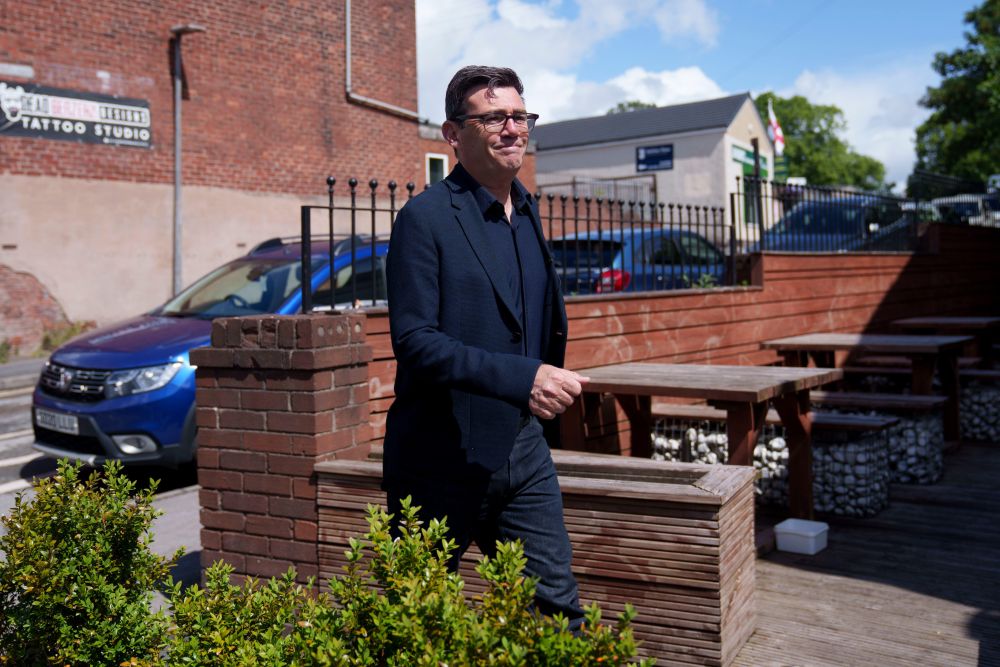
While neither the Burnhamites nor Starmerites believe the former health secretary has the numbers unless Starmer stands aside, sources close to Streeting insist he does. He chose not to challenge in May, they explain, because doing so before Burnham had a chance to run for Parliament would have been a poor start to the battle in the eyes of too many MPs and members. Streeting’s nominations would reach three figures once a contest actually began, claims one MP backer.
The Prime Minister has insisted that he will fight, fight, fight – even willing to stand in a contest against Burnham, who would win decisively in a head-to-head according to polls of Labour members. The leadership, as one minister puts it, is “gearing up for a fight” and looking for “signs of disloyalty”. It has been reported that ministers would have to step down if they wanted to publicly back Burnham. A Starmerite MP tells The House that the Starmer operation is expecting further resignations on 19 June and has already drawn up lists of replacement options for those thought likely to quit.
If Starmer is still intent on running even after Healey quitting, and Burnham succeeds in Makerfield, the PM has two options, a frontbencher says: declare that rivals must “put up or shut up”, John Major-style, or hope to slow it all down and buy himself more time. “Well done on winning the by-election – now we must all get to work on the next by-election” with the implicit “…which your actions have triggered” is considered the more likely of the two.
One argument that has been advanced by Starmerites is that the May 2027 elections are set to be a dreadful set for Labour, given that the areas were last contested in 2023 – a particularly good year for the party – and Reform has not had a go at them yet. “You’re basically guaranteed four-figure losses for us and four-figure gains for Reform,” a Starmer backer said, suggesting therefore: “Let Keir lead us through those and allow him to bow out, having done three years in No 10.” Yet, put to them later that the crisis around defence spending makes this option far less tenable, they reply: “Indeed.”
While nobody in the Burnham camp who spoke to The House is willing to wait a year, some do believe that a degree of delay would be good – allowing for more prep, which could only be helpful to Burnham.
Preparing for government
Burnham’s focus has had to be on Makerfield, but those around him have been putting in the hours to prepare for No 10.
Ministers who have despaired over Starmer’s leadership but not, so far, made a move to assist in his downfall are anxious about what a Burnham premiership will mean – both for their own careers and the functioning of government. “My God, am I worried… The unseriousness of it. I think he really is a flip-flopper,” says one. Fearful that Burnham cannot make difficult decisions, they speculate he could be “Keir on steroids” but with better comms. Burnham’s recent comments on Waspi compensation have only deepened that anxiety.
The Labour left are worried too. “They need to be a lot bolder,” says a supportive Labour MP. “What he tried to do in Manchester on the Clean Air Zone, but then had to row back on because it was so disliked, is exactly the sort of stuff that he will need to do at a national level.”
The job of Burnham’s team is to address such concerns. They have already requested notes from serving ministers on their work, which has been taken as a sign of competence. And Burnham allies are a fairly broad church – the MPs closest to him, led by Louise Haigh and Anneliese Midgley, are even said to be taking a warm and constructive approach to Streeting’s camp. This breadth comes with internal tensions, however.
He can do things on welfare that others can’t
Alongside the Westminster/Manchester divide, there is the ‘Tribune/Mainstream’ split, with most core supporters being either members of the centre-left Tribune group of MPs or the new Labour left member organisation Mainstream.
There is a worry among members of the latter that they have been sidelined. When Neal Lawson, of Mainstream and older organisation Compass, spoke at a recent conference about beating Reform with a “progressive majority”, he was slapped down by a senior source in Burnham’s campaign team. “This is nothing to do with Andy’s campaign, it is a Compass project that does not represent Andy,” they told HuffPost UK. A Mainstream source says the discussion was not centred on electoral pacts but merely the sharing of ideas between progressive parties.
Meanwhile, Josh Simons, the MP who gave up his seat for Burnham, has been described as first racking his brain to define Starmerism over at Labour Together and now doing the same for Burnhamism. Those involved in Mainstream say it has done the “heavy lifting” on policy. But it is Miatta Fahnbulleh, the former energy minister and close ally of Ed Miliband, who now holds the pen. Another soft left rising star from the 2024 intake, Yuan Yang, is understood to be feeding in.
There is much speculation over potential appointments by Burnham, should he gain power. The left side of Burnham’s camp would like to see a “clear out” on the frontbenches and figures such as Clive Lewis given jobs to ensure a radical approach to, say, the water industry. Others value some continuity.
Miliband is seen as a likely candidate for chancellor – while still serving as Energy Secretary, sources say he is involved in the minutiae of the Makerfield campaign – but this is not regarded as certain by all. More centrist voices, who prefer Streeting or even Pat McFadden, warn that lobby hacks would hate the move and it could become a distraction.
Haigh is tipped for a major post linked to the economy or industry, such as chief secretary to the Treasury, business or energy secretary. While one source tells The House Midgley has her eye on the Whips’ Office, The New Statesman has suggested that the trade union whisperer could be political secretary in No 10. It is said Angela Rayner could return to her previous roles of deputy prime minister and local government secretary.
Downing Street hires are thought likely to include chief of staff Kevin Lee and Simons, plus a range of ‘soft left’ staffers such as former Lisa Nandy aides Luke Francis (a potential director of political strategy) and Jade Azim, Co-operative Party assistant general secretary Caitlin Prowle and ex-Unite worker Jenny Killin. Also part of the younger crowd are Abby Tomlinson of ‘Milifandom’ fame and left-wing podcaster Ali Milani, both managing digital output in Makerfield.
From the Mainstream/Compass camp, ex-MP Jon Cruddas and young organiser Luke Hurst are key players as well as Lawson. An experienced figure further towards the centre-left could be former Labour chief operating officer John Lehal, who helped run Burnham’s 2015 leadership bid and has been spotted on the campaign trail.
There is no obvious pick for director of comms, though more junior posts are expected to be filled by people such as Miliband aide Grace Pritchard and former Sue Gray staffer Donjeta Miftari. On policy, Mat Lawrence of the Common Wealth think tank, Labour Growth Group director Mark McVitie and IPPR’s Zoe Billingham are all expected to wield influence.
Burnham’s popularity is such that some insiders believe he should frontload painful decisions while he still has the support, rather than hand out goodies at the start. The Starmer government did try the former approach, however, and it didn’t land well. “He can do things on welfare that others can’t,” a Blue Labour-aligned figure says hopefully. Whether Burnham would have the political will to do so remains to be seen.
>

World Cup predictions: Brazil vs Morocco, Haiti vs Scotland and rest of matchday 3

Chicago Fire pursuing Leon Goretzka deal

New stat shines light on how Giants pitchers are (or aren’t) making batters feel uncomfortable

-

 Fashion9 years ago
These ’90s fashion trends are making a comeback in 2017
-
Fashion9 years ago
According to Dior Couture, this taboo fashion accessory is back
-
Fashion9 years ago
Model Jocelyn Chew’s Instagram is the best vacation you’ve ever had
-
Fashion9 years ago
Your comprehensive guide to this fall’s biggest trends
-
Fashion9 years ago
A photo diary of the nightlife scene from LA To Ibiza
-
Fashion9 years ago
Emily Ratajkowski channels back-to-school style
-
Fashion9 years ago
9 Celebrities who have spoken out about being photoshopped
-
Fashion9 years ago
The tremendous importance of owning a perfect piece of clothing
