
Politics
The House | National Maternity Adviser Michelle Welsh: “We Are Not Waiting For More Babies To Die”


Photo by Nikki Powell

11 min read
Labour MP Michelle Welsh has just been appointed the government’s first national maternity adviser. She tells Sienna Rodgers about her personal experience of birth trauma and why she’s fighting for all mums and babies to be better treated by our maternity services
Michelle Welsh has a heart-shaped womb. It sounds beautiful. This ‘concave’ uterus did, however, contribute to her having a complicated pregnancy. “Not complicated in the sense that the baby was going to die,” she clarifies. “It should have been very straightforward: C-section.”
Particularly as her baby was breech, a C-section was what the doctors ordered. But when she went into labour before her planned caesarean, Welsh called Nottingham City Hospital, expecting they would follow their own advice to admit her straight away. Instead, the midwife told her she didn’t have time to check her file, and she would not be let onto the ward.
When Welsh was eventually admitted to the maternity unit, her waters had broken. They went to check her baby’s heartbeat; the first two machines didn’t work and the third couldn’t find one.
“No one comforted me. No one held my hand. No one explained to me what was going on,” she recalls. “I sat next to a machine when my baby had stopped moving, and the machine was flatlining. They were telling me, ‘You don’t need to have a C-section till nine o’clock.’ This was two o’clock in the morning. ‘So, you’re telling me I’ve got to wait seven hours for my baby to be born? Seven hours?’”
In telling her birth story, Welsh reveals to The House that staff performed an internal examination without consent, which amounts to assault. “I had an internal examination with no painkillers and no warning. The pain – I cannot describe the amount of pain that I was in. I was already contracting, and they hadn’t given me any painkillers,” she says.
“I can understand that there aren’t enough people on a ward. I can understand that people have done more work than what they should, so they’re rushed off their feet. I can understand somebody making a mistake because of that. What I’ll never be able to get my head around is why did they treat me, personally, so bad? With such contempt and disdain? So awful to me and my unborn baby.
“I would never, ever talk to anybody like that. I certainly wouldn’t talk to somebody like that who is vulnerable, in pain and at risk of losing their child.”
Welsh nonetheless describes herself as “lucky”. When a new midwife came on, she read her notes and saw what was happening. Next, Welsh heard an argument outside her room with a consultant, who “begrudgingly” returned and – still without having said a word to the birthing mum – admitted to the midwife, “Yeah, you’re right, we need to get her down now.”
“There was mad, mad panic, and the bit that always gets to me, that I get flashbacks about, is… sorry,” Welsh pauses. Her emotions come to the surface most when remembering the experience of her partner, Richard.
“I didn’t realise until I was in that room how significant that first nappy is: you pull it out and it’s so tiny. Richard always says when he pulled out the nappy, there was a realisation then that at any moment now there was going to be a baby, and it was going to be out, and it was going to be ours.
“I don’t know where his head was at the moment, but I think he still had complete faith that everything was going to be okay. I didn’t. I didn’t say anything to him, because I was trying to protect him in all of this.
“I felt so ill, as well. I just felt so ill. There he was, holding his baby’s first nappy, pushing a heart machine, because there was nobody to push the heart machine beside my bed, with his son’s heartbeat flatlining. That was his start to fatherhood.”
She ended up having an emergency C-section and her son, William, lived. The trauma didn’t end there, though: although she was told they would be checked on every 10 minutes, when she woke up from a nap – of, she thinks, about 90 minutes – he was covered in his own sick.
Thankfully, Welsh walked out of hospital with her baby. “Billy’s a bit of a miracle,” she says of her only child, now six years old. He came as a surprise after a decade of trying to conceive, made difficult by her polyendocrine metabolic ovarian syndrome and endometriosis.
Too many other parents have not left the same hospital with their babies. The Nottingham maternity scandal, now the largest in NHS history, has triggered a review by midwife Donna Ockenden who is investigating around 2,500 cases of baby loss and harm to mothers and babies at Nottingham University Hospitals (NUH) NHS Trust. It is running alongside an investigation by Nottingham police, ‘Operation Perth’.
Ockenden is expected to deliver her report later this month, around the same time as the final conclusions of the national maternity inquiry being conducted by Baroness Amos.
Welsh, who says she has spoken to almost 1,000 affected families, refuses to attribute these failures to NHS resourcing constraints alone. “In some cases, it’s quite clear there was a staffing issue. But in other cases,” she concludes, “it was a cultural issue.”
“I’m not saying there aren’t great people working in Nottingham – there are. But there was a systematic cultural issue within Nottingham that went on for years that was never challenged,” she adds.
“Honestly, I cannot believe – after everything I know now, and everything I’ve read – that they didn’t know they were putting my son’s life and my life in danger. I just don’t believe it. I think they were prepared to take the risk.”
The MP for Sherwood Forest was further convinced of this when, a few months ago, a critic of the Ockenden inquiry asked for an appointment at her surgery to argue against the need for it. She turned out to be on obstetrician still working at NUH. “So, not only is she sat there in front of me, she’d been involved in my care – but there she was, telling me, ‘There’s nothing to see, it’s not that bad’. That’s a problem.”
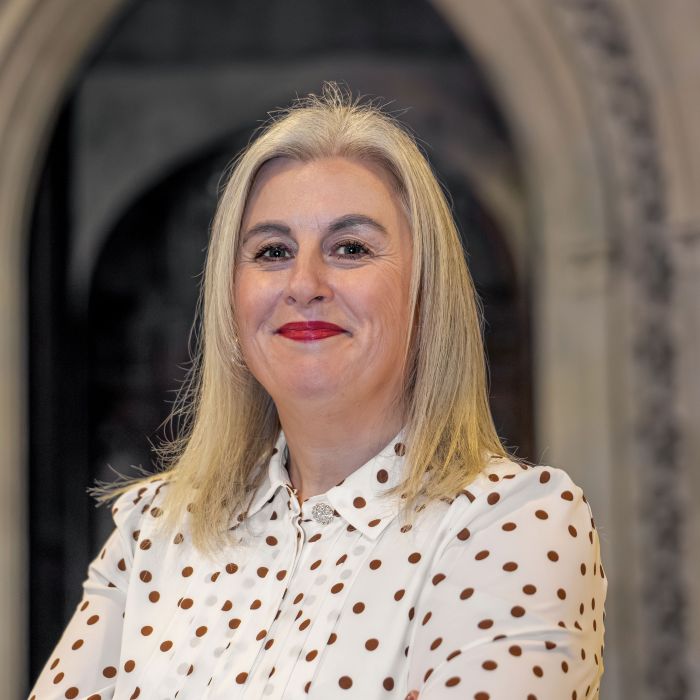
Welsh was raised on a council estate in Nottinghamshire by a postman father and a mother who worked in cafés before becoming a childminder. Growing up around “absolute poverty” shaped her politics early.
“We would get a knock on the door from someone down the road that my mom knew, who would say, ‘Have you got anything I can feed the kids for tea?’” Welsh struggled to explain the injustice of their circumstances: “These are people who would give you their last 50p, but they’re poor. How is it that these good people are poor?”
With both parents involved in Labour, Welsh joined the party at 16. She worked through sixth-form and university in elderly care, as well as doing stints in Next, Co-op, chicken and soft drinks factories. As an Oasis fan, she had a gig habit to fund. It took her years to be able to eat chicken again.
She had hoped to pursue sport, but that dream ended when she broke her leg badly while playing football at 17. Instead, she read history and politics at Leeds. From there, a US summer camp led to several years setting up projects for vulnerable children across the east coast. The stark inequalities she saw alarmed her.
Back in Britain, Welsh managed a “huge project” across Nottinghamshire for the New Labour government, supporting disadvantaged children and setting up Sure Start centres. In 2010, Coalition cuts came in: “Literally overnight, all these projects that I was running, and all this funding, was just ripped apart… It massively woke me up to the reality of what politics was all about.” She got a job for the local council leader, then MP Vernon Coaker, and was six months pregnant when he lost his seat.
Elected as the Labour MP for Sherwood Forest in 2024, Welsh became chair of the Maternity All-Party Parliamentary Group. A ‘harmed mother’ herself, she has now been appointed by government as the first-ever national maternity adviser.
Her new role, she says, does not supplant that of the maternity commissioner, which so many campaigners have called for.
“The national maternity adviser is something needed now, here in the present, but it should not be instead of a maternity commissioner. A maternity commissioner would sit up here, have a team around them, have regular data sent to them, so we don’t have another situation like Nottingham, Shrewsbury or Telford,” she explains, listing the areas recently subject to maternity inquiries.
“When data starts looking skew-whiff, not as it should be, the maternity commissioner goes to that hospital with their team. A bit like an Ofsted inspection, but in a supportive way: ‘What is going on?’ If there is something going on, they send people in straight away, no messing around. We’re not going to wait for more babies to die.”
What must go, she says, is “soft criteria” allowing NHS trusts to implement their own interpretations of recommended policies.
“You’ve only got to look at the bereavement care pathway: one will have a cupboard somewhere with some posters; others will have a really nice room; others will have a dedicated midwife. But all of them will report back to NHS England, ‘We deliver the bereavement care pathway’. Not good enough.”
Sometimes staff prioritise avoiding litigation risks, which stops them seeing patients as real people. After all, 2025 figures showed the NHS has reached the point where it spends more on maternity litigation than on running maternity services. At the same time, there is the need for more accountability. How would Welsh resolve those tensions?
“It’s hard,” she admits. But she is clear that the regulators – the Care Quality Commission, Nursing and Midwifery Council and General Medical Council – are not working.
“The CQC, the NMC, and the GMC are unfit for purpose,” the MP says. “Those three organisations need to go, and we need to establish an umbrella organisation that allows for when things go wrong, midwives, doctors, obstetricians to have a safe place to be able to say, ‘This is what went wrong, and why that happened’. Families have to have a place where they can say, ‘This went wrong. I want you to tell me what went wrong and why.’
“Does that lead to a ‘no-fault’ place? No, I don’t think it does, at this stage. To rush into that, when you have the attitudes of what I have described working in our maternity services, would be wrong.”
Families in Nottinghamshire, she points out, never received birth debriefs, which are offered as standard in London hospitals, for example. And yet many traumatised parents say they simply want to know what happened and hear the word ‘sorry’.
“Because you accept that sometimes things do go awfully wrong, but the minute people try to keep that away from you, or don’t give you your notes, or redact your notes…” she trails off.
“I passed out. I lost consciousness. There are no notes that exist that talk about the fact that I nearly dropped my baby on the floor and was unconscious for a period of time, and Richard thought I was dead. He actually thought I’d died on the table. There’s no notes anywhere. No one can tell me what happened. I have to frequently say to Richard, ‘It did happen, didn’t it?’”
She wants the right to a debrief introduced everywhere, as well as continuity of care, which would extend throughout the whole of pregnancy until at least two months after birth. “It’s not good enough that when you get home, they say, ‘You have to go to the health visitor now. We’re done with you. Sorry.’” The change sounds simple but would make a radical difference to maternal experiences.
Many campaigners say an inquiry without statutory powers is insufficient. What does the national maternity adviser think?
“I think there are questions that will still be left unanswered,” she replies. While she is confident that Amos and Ockenden will be thorough, “I also don’t think they’re going to solve everything.” Services will not improve without “big, bold policies”, the MP adds, so “we have to keep the door open” to a public inquiry.
“I get to celebrate Billy’s birthdays. I got to see Billy’s first day at school. I get to go and see his sports days, work permitting. I get to see him play guitar in a rock concert. I have spoken to hundreds and hundreds of families that have been denied that opportunity.
“Nobody makes me happier than my son. He is everything – absolutely everything – to me. And so, who am I to deny that mother or that father the answers that they need? I’m not ever going to be that person.”
>
Politics
Politics Home Article | Labour MP Wants Tech-Facilitated Violence Against Women Defined In Law


Labour Jess Asato has commenced legal proceedings against Elon Musk’s artificial intelligence company, xAI (Alamy)

5 min read
Labour MP Jess Asato has called on the government to create a legal definition of technology-facilitated violence against women and girls, arguing that stronger protections are needed to tackle the growing threat of AI-generated abuse.
Earlier this year, GrokAI – Elon Musk’s xAI company’s tool – generated non-consensual sexualised images of Asato, including bikini photos and a video showing her being chloroformed and prepared for a sexual assault.
The MP for Lowestoft, elected in 2024, has filed a civil claim in the High Court against xAI, alleging breaches of UK data protection law and misuse of private information.
Asato told PoliticsHome that the Online Safety Act, which started to come into force last year, must be strengthened to protect women, girls and other vulnerable people online.
As part of this, the Labour government should consider creating a statutory definition of technology-facilitated violence against women and girls, she said.
“At the moment, the violence against women and girls guidance from Ofcom is very comprehensive, but nobody’s following it,” she said.
“That’s partly because it doesn’t have statutory teeth, and so from my perspective, there is a very good case, which has been made for a while by the women’s sector, that the VAWG [violence against women and girls] guidance should be made mandatory and given proper regulatory status.”
Asato hopes that her case against X can set a legal precedent by testing whether an AI developer can be held liable for the design and deployment of its system, rather than the person who prompted the generation of the content.
She said she also hopes that ministers reconsider the introduction of a third-party advocacy body that could assess individual cases, collate evidence of breaches across multiple platforms, and monitor the implementation of the Online Safety Act, explaining that when she discovered the GrokAI-generated images of her, there was “nowhere else for me to go” after X said the content reported did not go against the platform’s standards.
During the passage of the Online Safety Bill, peers tabled several amendments designed to give individuals stronger representation. Baroness Kidron and others tabled an amendment to establish an Advocacy Body for Children, but it was not accepted. As it stands, Ofcom cannot investigate individual cases.
“That was a real missed opportunity,” Asato said.
“One of the problems Ofcom has is that if it’s not able to collate individual cases, it isn’t able to see the sum total of the harm that is occurring, and therefore be able to prove back to the companies that they are not following the Online Safety Act.
“Calls are definitely growing for there to be much stronger accountability, either given to Ofcom or another body entirely.”
Dex Hunter-Torricke, who spent more than a decade leading communications for some of the world’s biggest technology companies, including senior roles advising Musk, Mark Zuckerberg and Eric Schmidt, told PoliticsHome he found it “extraordinary” that the burden is placed on individuals like Asato to have to take legal action against platforms to prevent the generation of non-consensual images.
“Surely this is the entire point of passing legislation to protect people online,” he said.
“We need to have a better systemic fix for that. Most people don’t have the resources all the time to go and defend themselves, especially if that might involve a legal case. It’s very, very troubling that after so many years arguing about how to protect people online, we still don’t actually have our right mechanisms in place as a country.”
Asato has welcomed the government’s announcement that it will go ahead with a ban on certain social media platforms for under-16-year-olds, describing it as a “big, brave step”, alongside other announcements such as new plans by the government to force Big Tech companies to activate built-in features or implement technical solutions on smartphones to detect and block nude images for children.
Despite her experience on the site, Asato has decided to continue using X as a social media platform, and not say when asked whether the government should stay on it.
“Many politicians have left X for very understandable reasons of safety and well-being, but I stay on it because I don’t want to be bullied off a platform,” she said.
Another Labour MP, Alistair Strathern, has proposed a new law to make Relationships and Sex Education mandatory up to 18 to help combat violence against women and girls.
Strathern, who is co-chair of the Labour Group for Men and Boys and a former teacher, said: “For too long, children in further education have missed out because of gaps in the provision of Relationships and Sex Education.
“At a time when the worst corners of the internet are preying on teenagers, with their own harmful takes on what makes a healthy relationship, we surely owe young people far better than this.
‘My bill will put this right and make it mandatory for all settings to give children the space, support and advice they need as they navigate this formative stage. With 16-19-year-olds facing the highest rates of domestic abuse of any age group, the real-world consequences of failing to act couldn’t be clearer.”
PoliticsHome has contacted the Department for Science, Innovation and Technology for comment.
>


Starmer was speaking ahead of the by-election on Thursday (Alamy)
2 min read
Keir Starmer has suggested that he would offer Andy Burnham a cabinet job if the Greater Manchester Mayor wins the Makerfield by-election on Thursday.
The Prime Minister also reiterated that he would not walk away from Downing Street, saying that the Labour Party should focus on winning the Manchester mayoral election that would be triggered by Burnham becoming an MP, not a leadership contest.
On Thursday, voters in Makerfield will head to the polls in what is widely seen as the most significant by-election of recent times, with Burnham widely expected to launch a bid to replace Starmer in No 10 if he is victorious.
Speaking to Sky News at the G7 in France, the Prime Minister described Burnham as a “huge asset”.
“I’m sure I’ll talk to Andy after the weekend, of course I will. I’ve spoken to him many times in recent weeks,” he said.
“He’s a huge asset. He’s been a fantastic mayor in Manchester. If he comes back into Parliament…He’ll be a fantastic asset for our party and for the country.”
Asked if he would bring Burnham into his cabinet if the mayor wins in Makerfield tomorrow, Starmer said: “Oh, Andy is a great asset. And, yes, I want him to have a big role in government.”
Starmer could face a formal leadership challenge within days of a Burnham victory in Makerfield, with not just Burnham but also former health secretary Wes Streeting expected to launch bids. The resignation of John Healey as defence secretary over defence spending last week put added pressure on the PM’s precarious position.
The PM has said he would fight any bid to replace him, but accepted that he has “got to turn things round” following bruising local election results in May.
“That’s what I want to do. And I’ve been very clear about that. Okay. Do I recognise that? That means we’ve got to turn things around. Yes, I do, but that’s what I want to do. But, yes, I recognise ahead of local election results. So we’ve got to turn that around.”
Burnham’s biggest obstacle to victory in Makerfield on Thursday is Nigel Farage’s Reform UK. A More In Common opinion poll published last week put candidate Robert Kenyon five percentage points behind Burnham (45 vs 40).
>
Politics
The House | Lord Heseltine: “We Must Not Have Reform Or Restore Anywhere Near The Corridors Of Power”


Photography by Tom Pilston

10 min read
Lord Heseltine speaks to Noah Vickers about regenerating Britain’s cities, the devolution agenda and why Margaret Thatcher ‘would have hated’ Nigel Farage
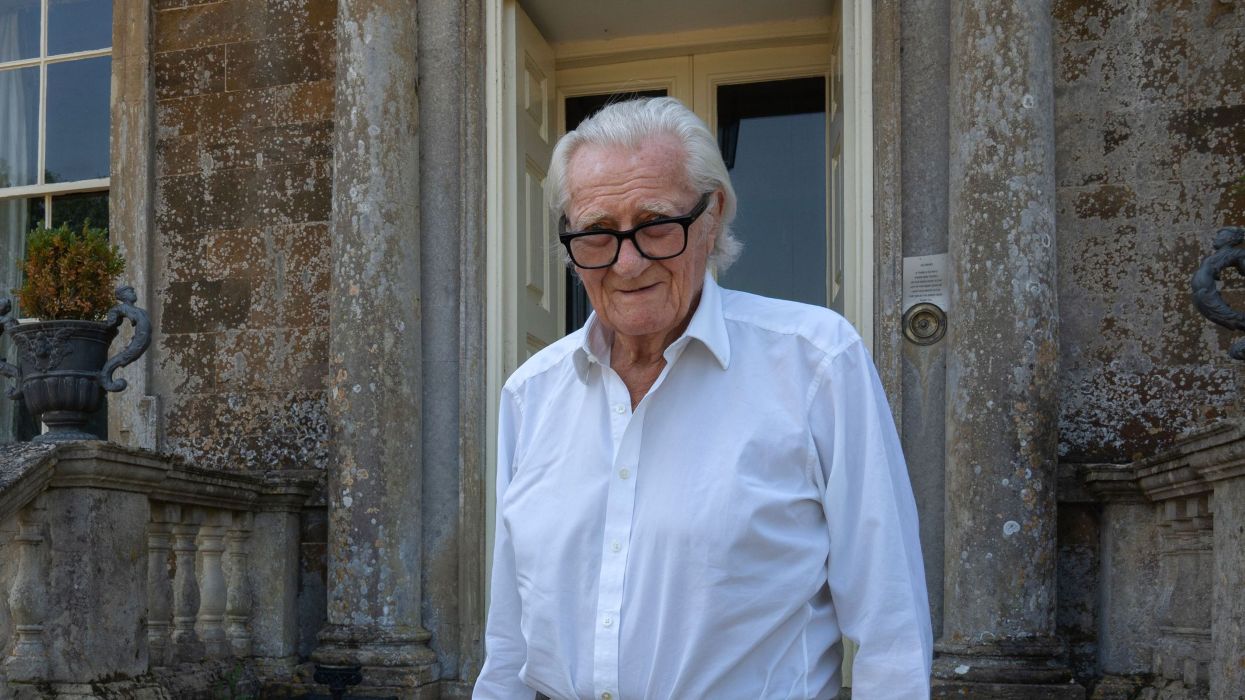
In Lord Heseltine’s sitting room, which offers a view of his estate’s sloping lawns and serpentine lake, a bookcase is lined with Nikolaus Pevsner’s 46-volume series The Buildings of England. The Northamptonshire edition has been bookmarked, possibly on the page describing Heseltine’s 261-year-old Palladian manor, Thenford House, as “decidedly conservative for its date”.
The former deputy prime minister, now aged 93, is perhaps known less for what he conserved, and more for what he tore down and built anew. His most enduring legacy can be found in two of 20th-century Britain’s most significant regeneration projects: the redevelopment of Liverpool and the creation of Canary Wharf. Both were instigated during his time as environment secretary under Margaret Thatcher.
As the Labour government plans to build seven new towns across England, along with potential development corporations to deliver thousands more homes in Oxford and Cambridge, ministers could do worse than look to Heseltine, who overcame significant opposition within Whitehall to get his projects off the ground.
“Turkeys don’t vote for Christmas,” the peer points out. “Every aspect of the British administrative system was opposed to what I was trying to do.
“The Treasury were against because it cost money. Keith Joseph, who was the great intellectual guru of the Thatcher years, was against because it was interventionist. My department was against because it was interfering with local government. The spending departments were against because it was a challenge to their monopolist, functional power structure.
“But I knew enough about government across the world to know that we were a top-heavy, centralised, functionally divided, administrative country – and that is the least effective way to run a country.”
In Liverpool particularly, Heseltine took what now seems a remarkably hands-on approach. Every Thursday for about 18 months, he would meet with a team of secondees from the public and private sectors in the city. They would update him on any political or logistical blockages hindering the scheme – and each Friday, he would ensure they were unblocked.
“For 18 months under Mrs Thatcher, I was [part of] the most interventionist government in British history,” he declares.
Heseltine later set his sights on getting new homes and infrastructure built in the “east Thames corridor” of south Essex and north Kent – a vision never fully realised in the years since. But the peer has not let go of the idea, and in a call for action from ministers, he urges them to resurrect his plan for ‘Hezzaville’, as it was dubbed by the media.
“The biggest potential growth area in Britain is the Thames Estuary,” he says. The problem that governments face there and elsewhere, he believes, is one of political and economic geography. He argues that England’s local government is still far too fractured and should be simplified along the lines recommended in the 1969 Redcliffe-Maud report.
“You need about 60 authorities, with directly elected mayors. Instead of doing a development corporation for a new town in a particular area, you should let the mayor of the county create the necessary structures. The important thing is to have the local person in charge and with resources,” he says.
To get ‘Hezzaville’ off the ground, the peer has a roadmap at the ready: “Essex and Kent should have unitary mayors – full stop. They should then set up a development corporation with roving powers over the estuary. They don’t need to take away the whole power structure – they should simply determine where growth is relevant in the estuary and then work with any development corporation to accelerate that potential.”
Some of the infrastructure need is already being met. The government is pressing ahead with the Lower Thames Crossing, and it is thanks to Heseltine that the High Speed 1 rail route already includes a stop at Ebbsfleet.
The peer was a big supporter of its successor, High Speed 2, and accused Rishi Sunak of committing a “gross act of vandalism” by scrapping the route’s ‘northern’ leg to Manchester in 2023.With an estimated cost now stretching potentially above £100bn, Heseltine laughs when asked what can be done to rescue HS2.
“I have a simple slogan in life: show me a problem, show me the person in charge. It’s not a bad slogan. You need somebody with the skill, tenacity and frankly the determination to make the thing work.”
Comparisons with road and rail projects on the continent, he caveats, are not entirely fair.
“We are a very small, tightly-developed island, so the problems here are quite different to building great motorways on the continent – but it is a national disgrace.”
The scheme will be one of several to watch if Greater Manchester mayor Andy Burnham becomes prime minister. In his campaign to become Makerfield’s MP, Burnham lays the blame for Britain’s ills squarely at Thatcher’s door, as he condemns her government for the “privatisation of life’s essentials”.
Heseltine refuses to get into a sparring match over this. He knows the Labour leadership hopeful “very well” and praises him for having “made a success of the Manchester mayoralty”.
In his 2025 book From Acorns to Oaks, however, Heseltine argued that privatising each public utility “required careful examination to ensure the proposed structure would deliver a wider spread of wealth in a more competitive environment”.
He wrote: “Judged against the above criteria, it can be argued that water privatisation failed both of these tests, for example.”
It is a point he reiterates to The House: “It’s very difficult to see how you have competition with the water industry, so I think there is a legitimate case to ask questions there.”
What he wants, he says, is “the maximum amount of competition and accountability in the management of resources”, while emphasising that the private sector “is an absolutely fundamental bastion of freedom”.
Does he see any case for renationalising the water industry, then? “I would be very reluctant to do that,” he says. “Look, I have not studied the water industry in the last week, month or year or so, so I don’t know what I would do.
“All I know is, whenever I looked at any of these things – and I certainly did privatise more of the state than anybody else ever has, or ever will – I’ve never regretted [it].”
Even if the formal mechanisms for one haven’t yet been triggered, a Labour leadership contest is effectively underway. Would Burnham or Wes Streeting make a better PM than Keir Starmer?
“I actually like Keir Starmer,” the peer replies. “I think he’s a nice guy and a good guy – and he’s got a terrible job.”
Starmer is struggling, he points out, amid problems caused by Donald Trump’s US administration, the war in Ukraine, conflict in the Middle East and the impacts of Brexit.
“Every aspect of the British administrative system was opposed to what I was trying to do”
While the PM is “undoubtedly culpable” for the effects of his government’s tax policies, Heseltine argues there is “very little he can do” about those other four issues, calling it an “absolutely non-win” situation.
“In many ways, any prime minister would be in this present situation, because the underlying malaise affecting this government is the one that always affects governments: living standards are falling and people want change. It’s as simple as that.”
He will not be drawn further on the question of Labour’s leadership, but adds: “My preoccupation with the Makerfield by-election is very simple. We must not have Reform or Restore or anything like it anywhere near the corridors of power in this country. I’ve seen it all before. [Oswald] Mosley in the 30s, Enoch Powell in the 60s.”
He claims that “the Reform and the Restore generation” are making “the most sinister, antisemitic, extremist appeal to a very nasty side of the human character”.
Reform UK leader Nigel Farage has always admired Thatcher, saying after her death that she was a “great inspiration” to him. What might the Iron Lady have made of Farage, had she been alive to see the rise of his political project?
“She’d have hated him,” Heseltine replies without hesitation. “Nigel Farage will assimilate himself with anyone he thinks has got a resonance in public opinion. He is Donald Trump’s vicar in Britain…
“But the origins of ‘Nigel Trump’ are a guy with a beer tankard and a fag. Then the farmers get into trouble, and he turns up looking like a farmer – and this is all a communications process.
Successful, but based on opportunism, based on a degree of prejudices which I find abhorrent. She would have had nothing to do with him.”
If Farage’s party is as dangerous as he claims, should the Tories have stood down in Makerfield and endorsed Burnham?
“I don’t think you can stand aside. I think you attack Reform. You throw everything into the battle.”
So far, the Tories have distanced themselves from Reform on fiscal policy, but have made little attempt to do so on areas like immigration.
“There will come someone,” is all Heseltine says in response to this point, with a slight smirk. Is he saying someone in the Conservative Party will have to start making that case?
“There will come someone, yes,” he repeats. “David Cameron came from not a totally different background.”
What then of the party’s current leader, Kemi Badenoch? Has he been impressed by her performance over the last 18 months?
“Well, I think she is beginning to climb the ladder,” he offers, cryptically.
Has his opinion of her changed at all?
“I had no opinion. I’ve never met her.”
Does he think she’ll win the next general election?
“I think she’s got a very challenging journey, and I’m not going to make any simplistic statements.” Not exactly a ringing endorsement.
At an age when most people would be looking to retire from public life, Heseltine clearly enjoys his status as an elder statesman – and he stands ready with a prescription to deliver Starmer’s elusive “decade of national renewal”.
“I know what this country needs to do,” he says. “First to get rid of its punitive tax policies, secondly to rejoin the European Union and thirdly to go for a devolution agenda.”
Devolution, he argues, has stalled outside England: “What Scotland and Wales did was to replicate Whitehall in Cardiff and Edinburgh.
“I come from South Wales, Swansea. We didn’t think that Cardiff was all that special. Why can’t Swansea be its own self-governing unit? Pembrokeshire, mid-Wales, north Wales [too]. If I was a Conservative in those principalities, that’s what I’d be saying.”
Rejoining the EU, meanwhile, has returned as a serious long-term prospect. If rejoining would be so beneficial for everyone concerned, should Brussels be making a compelling offer to Britain that even Farage would find hard to argue against? For example, one that would give the UK all of the opt-outs it had before?
“If I was the EU, I wouldn’t do that, because I wouldn’t want to look silly. You’ve got to wait until this country has people who are prepared to say, ‘This is what we want to do,’ and carry the public support with them. If I was the EU, I would be waiting for that to happen; I would do everything I could to encourage that to happen. That’s what diplomacy’s about; that’s what private conversations are about.
“If I was a European today, I would know that Britain is an invaluable part of the European power structure. When I see what Donald Trump is saying, it’s a vital part of the defence of Europe.
“But it’s for the young people. It’s for the opportunity to be part of the only credible power structure which can offer us the avenue to research and development on a relevant scale in the modern world.”
>

Kering Women in Motion Shanghai Event Recap

Alphonso Davies available for Canada’s second World Cup game against Qatar – Jesse Marsch

Ben Stiller Confirms NY Knicks Docuseries Charting Finals Victory in the Works With A24, HBO

-

 Fashion9 years ago
These ’90s fashion trends are making a comeback in 2017
-
Fashion9 years ago
According to Dior Couture, this taboo fashion accessory is back
-
Fashion9 years ago
Model Jocelyn Chew’s Instagram is the best vacation you’ve ever had
-
Fashion9 years ago
Your comprehensive guide to this fall’s biggest trends
-
Fashion9 years ago
A photo diary of the nightlife scene from LA To Ibiza
-
Fashion9 years ago
Emily Ratajkowski channels back-to-school style
-
Fashion9 years ago
9 Celebrities who have spoken out about being photoshopped
-
Fashion9 years ago
The tremendous importance of owning a perfect piece of clothing
