
Politics
Politics Home Article | Keir Starmer Announces He Will Resign As PM This Summer



3 min read
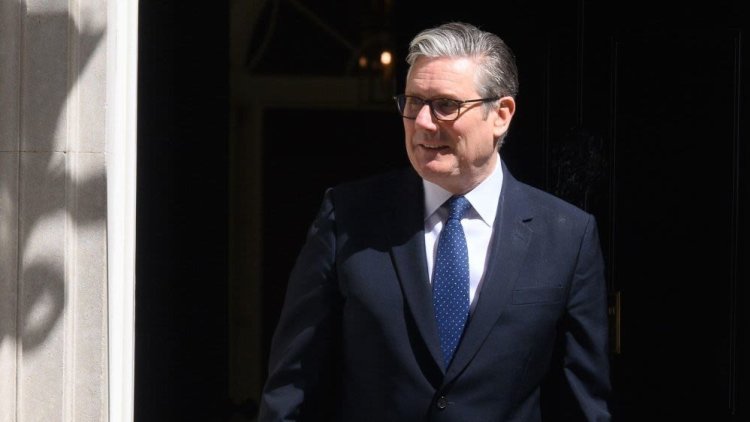
Keir Starmer has announced that he will resign as Prime Minister this summer.
Speaking outside 10 Downing Street on Monday morning, Starmer said he had accepted the wishes of Labour MPs with “good grace” and that he will help facilitate an “orderly transition” for his successor.
Starmer said he had informed the King this morning that he had resigned as Labour Party leader, triggering a contest to replace him that will take place in the coming weeks.
Andy Burnham, who won a landslide victory at last week’s Makerfield by-election, is expected to take over.
In an address to the nation, Starmer said “the question” that his party was now asking was who is best placed to lead it into the next general election, and that the answer is no longer him.
“I have heard the answer of my parliamentary party to that question, and I accept that answer with good grace.”
Starmer said entering No 10 two years after winning the 2024 general election was the “proudest moment of my life”.
“A new Labour government. The first in 14 years. A page in our country’s history turned after years of disappointment and despair. The chance to change the lives of millions of people for the better.
“That’s what I came into politics for.”
He added: “I will also give my successor my full and unequivocal support, knowing that they will inherit a Britain that is far stronger and fairer than the one I inherited two years ago, better prepared for the challenges ahead and better able to ensure the Labour Party secures a second term in office.”
Starmer’s position has been under pressure for months, with painful local election results and his handling of the Lord Mandelson affair prompting Labour MPs to question his leadership.
The pressure reached new heights last week when leadership rival Burnham pulled off a landslide victory in the Makerfield by-election.
Starmer had insisted until recently that he would “fight” any challenge to his leadership and not “walk away” from his job.
However, that position shifted over the weekend, with cabinet minister Peter Kyle saying on Sunday that the PM was reflecting on the “political realities” facing him.
Burnham is supported by a large number of Labour MPs and is expected to eventually take over as PM.
The incoming MP for Makerfield is due to arrive in Westminster today after securing his return to the House of Commons last week.
While many Labour MPs would like Burnham to take over unchallenged, others would prefer a leadership contest, particularly those who are sceptical about the former Manchester mayor running the country.
Former health secretary Wes Streeting has previously said he would stand in a leadership contest.
Starmer became Labour Party leader in 2020 and led the party to its first general election victory in nearly two decades in 2024.
His resignation means the UK will soon have its seventh prime minister in a decade.
>


(Thamesfleet/Alamy)

5 min read
It’s 10 years since Britain’s momentous decision to, according to your taste, throw off the shackles of European oppression or make it harder to sell things to France.
Perhaps the morning of 24 June 2016 found you looking, as David Cameron did, like a man whose political dreams were shattered. Or perhaps, like Boris Johnson, you were triumphantly wondering what the hell you were supposed to do now.
But how much can you remember of the intervening decade? Do you know your alternative arrangements from your Windsor framework? It’s time to find out with our epic quiz (answers below). Will the winner get prosecco, a BMW or £350m a week? That’ll come out in the ensuing negotiations. Just remember that the moment you finish the quiz, you hold all the cards.
- In 2006, what did David Cameron tell his party off for doing while parents “worried about getting the kids to school”?
- Which party’s 2010 manifesto promised “an in/out referendum the next time a British government signs up for fundamental change in the relationship between the UK and the EU”?
- Cameron’s 2013 address promising a referendum (poignantly, it was delivered in the early morning, while parents were worrying about getting their kids to school) became known as the Bloomberg Speech, but the company’s London headquarters were a second-choice venue. In which city was the speech originally scheduled to be given?
- Which party’s 2015 manifesto proclaimed: “We say: yes to the Single Market”?
- The referendum campaign saw Nigel Farage leading an armada of fishing boats up the Thames. Which pop star raised his own fleet to intercept him?
- The timing of the exit process was controversial from the start:
A Who said the morning after the vote: “Article 50 has to be invoked now”?
B Which party said during the 2017 election that it had been a mistake to trigger Article 50 at all? - In 2017, which party…
A …pledged to “unite the country around a Brexit deal that works for every community in Britain”?
B …promised “a new deep and special partnership with the EU”?
C …said it would negotiate a Brexit agreement and “we will put that deal to a vote of the British people in a referendum, with the alternative option of staying in the EU”? - By 2019, which party promised…
A …to “ensure that Northern Ireland’s businesses and producers enjoy unfettered access to the rest of the UK”?
B …to put a deal “to a public vote alongside the option to remain”?
C …to “stop this mess, revoke Article 50 and stay in the EU”? - The UK Independence Party was crucial to Britain’s decision to leave:
A How many leaders did it have over the course of 2016?
B How many of them were Nigel Farage?
C How many of them are still party members? - What was the name of the book published by Nick Clegg in October 2017, after he lost his seat in Parliament?
A How to Get Rich.
B How to Stop Brexit.
C How to Make Facebook Ethical. - The first two Brexit secretaries were David Davis and Dominic Raab. Who was the third?
- Raab had been a passionate supporter of Brexit, but in 2018 he revealed he’d underestimated the importance to British trade of what?
- In 2019, a group of 11 Labour and Conservative MPs announced they were forming a new anti-Brexit party. It became known as Change UK: The Independent Group. Nine months later, how many of them were still in the party?
- In March 2019, MPs were given “indicative votes”, the chance to show which of eight options they would be willing to support. How many passed?
- Dominic Raab said Theresa May’s deal was “worse than staying in”. Johnson called it “the worst of both worlds”. Jacob Rees-Mogg said Britain would be “not so much a vassal state any more as a slave state”. How did they all ultimately vote on the deal?
- In September 2019, Rees-Mogg described something as a “constitutional coup”? Was it:
A Asking the Queen to prorogue Parliament in order to stop MPs from debating Brexit.
B The Supreme Court ruling that the prorogation had been unlawful. - Who said, in 2017, “If Brexit is a disaster I will go and live abroad” and then, in 2023, “Brexit has failed”? And are they now living abroad?
- What, in 2018, did May insist that no British prime minister could agree to?
- What, in 2019, did Johnson assure business owners he had not agreed to?
- Were either of them right?
Answers
1 “Banging on about Europe”
2 The Liberal Democrats
3 Amsterdam
4 The Conservatives
5 Bob Geldof
6 A Jeremy Corbyn; B UKIP
7 A Labour; B Conservatives; C Liberal Democrats
8 A Conservatives; B Labour; C Liberal Democrats
9 A four; B two; C none
10 B
11 Steve Barclay, though we only have his word for it
12 Dover
13 Five
14 None
15 For it
16 B
17 Nigel Farage. No.
18 A border in the Irish Sea
19 A border in the Irish Sea
20 No
Score
0-5: no deal; 6-10: vassal state; 11-15: Norway; 16-20: Canada; 21-25: customs union; 25-28: bespoke free-trade agreement.
>

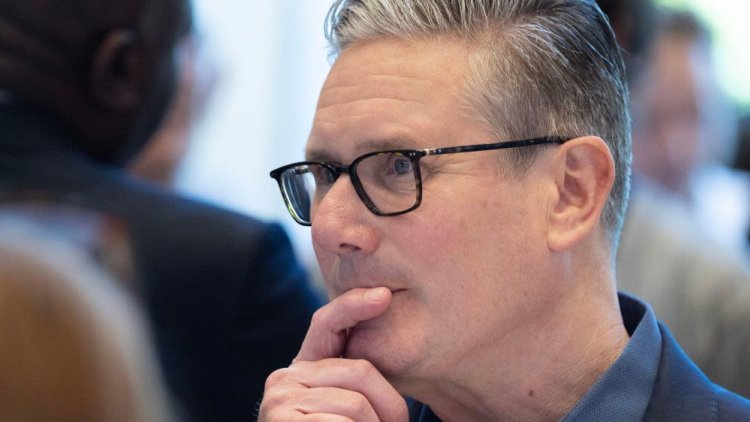
Starmer is reportedly considering resigning on Monday (Alamy)
3 min read
A cabinet minister has admitted that Keir Starmer is taking time to think through “the political realities” facing him amid a growing expectation that he will agree to resign.
Business Secretary Peter Kyle said he had a “thoughtful conversation” with the Prime Minister on Friday in which Starmer asked for his view on what his next steps should be.
Speaking on Sunday with Laura Kuenssberg this morning, Kyle also said that he was not going to be “delusional” about the situation Starmer is in, admitting that he did not know “full fact” what the next few days would bring.
Kyle said that the conversation he had had with the PM on Friday was “very thoughtful” and “professional”: “[Starmer] led through a conversation about the challenges our country faces, about the political issues which are unfolding at the moment, and asked my views.”
The cabinet minister did not deny that Starmer could agree to stand down.
Asked by Kuenssberg if it was still the case that Starmer would fight any leadership challenge, as he insisted on Friday, Kyle said the PM was “fighting for our country”.
“He’s also making time this weekend to try and reflect on the political challenges that he faces, our country faces, our party faces.
Asked again if the PM would fight a leadership challenge, Kyle said: “These are decisions for Keir to make, and that’s why I said that he is taking the time, as well as dealing with all the issues that a Prime Minister deals with over a weekend, a very busy weekend, he’s also taking the time to think through what the political realities are today compared to last week, the week before.”
The Observer has reported that Starmer will announce a resignation plan on Monday amid growing pressure from Labour MPs.
The PM has repeatedly insisted he would fight any challenge against his leadership.
However, Andy Burnham’s landslide victory in the Makerfield by-election on Thursday has put greater pressure on Starmer’s position, with large numbers of Labour MPs pushing for Burnham to take over.
Sky News reported this morning that Foreign Secretary Yvette Cooper had told Starmer to stand down. Several cabinet ministers, including former Labour leader Ed Miliband, are also reported to have encouraged Starmer to set out a resignation timetable.
Former minister Jess Phillips told Kuenssberg that it felt like “we have come to the end of the road”.
However, while some in Labour would like to see Burnham become leader unchallenged, PoliticsHome reported on Friday that there are some who remain loyal to Starmer who would put forward their own candidate and trigger a leadership contest if that PM did not stand.
Burnham, who must resign as Manchester mayor now that he is an MP, will arrive in Westminster on Monday and is expected to meet with Labour MPs as part of his push for No 10.
Former defence secretary and Labour peer Lord Hutton told Kuenssberg that it would be important for Starmer’s successor to have a proper plan in place, warning that “personality politics will get you to the end of the day but not to the end of a five-year government.”
Hutton said that Burnham needed to “map out” clearly how he would tackle the issues facing the country, as “the challenges would be the same”.
He also admitted that it would be “a challenge” for Burnham to replace Starmer without going to the polls for a general election.
>


6 min read
Andy Burnham’s comfortable victory in the Makerfield by-election has raised further questions about whether Nigel Farage can become prime minister in the face of anti-Reform UK tactical voting.
Makerfield was not only a Reform target seat, but a constituency where the party enjoyed its sixth-highest vote share in the 2024 general election.
In the run-up to polling day, some opinion polls pointed to a close contest between Labour candidate Burnham and his Reform rival Robert Kenyon.
In the end, however, the former health secretary cruised to victory in the Makerfield by-election, winning over 50 per cent of the vote, 20 per cent ahead of second-place Kenyon.
Farage himself admitted that he did not see Burnham’s “emphatic, dramatic” win coming.
Burnham, who is now expected to replace Keir Starmer in No 10, not only finished way ahead of Reform, but won more votes than all other candidates combined.
The aggregate vote for the parties of the right and the aggregate votes for the left stayed roughly the same in Makerfield compared to the 2024 general election, and yet Labour was able to increase its majority by nearly 10 per cent.
Reform’s vote share increased by nearly three per cent. Meanwhile, the Green vote in the seat fell by around four per cent compared to two years ago, the Lib Dems fell by six per cent, and the Conservative support collapsed by nearly nine per cent.
These changes suggest that significant numbers of people who previously voted for the Green Party and the Lib Dems this time voted Labour – either to keep Reform out, or to secure a victory for Burnham in order to potentially oust Starmer as prime minister.
Commentator and former president of YouGov Peter Kellner has argued that if Reform is to win a majority at the next general election, it needs to win seats like Makerfield by a mile – but the results show that seat-by-seat tactical voting could “cost Reform dear”.
Reform already fell short of winning the Caerphilly Senedd by-election to Plaid Cymru and the Gorton and Denton parliamentary by-election to the Green Party, largely because anti-Reform voters coalesced around Plaid and the Greens respectively in each contest to prevent Reform winning.
Kellner told PoliticsHome that these three by-elections show that tactical voting will be absolutely crucial for the next general election.
He explained that up to now, Reform has been unable to unite voters on the right in the way that parties of the left have managed in recent contests.
In Makerfield, Rupert Lowe’s Restore Britain won 7 per cent of the vote – a level of support that could cost Farage in more closely fought seats.
“The Tory vote didn’t collapse quite as much as the Liberal-Green vote, but the Tories went down, and Restore intervened, so you’ve got a sort of complicated thing on the right,” Kellner said.
“But the net effect was that whereas tactical voting enabled Labour to come very, very close to monopolising the ‘progressive’ votes, Reform was completely unable to monopolise anything like the same extent those on the right.”
He said at a general election level, when you expand the concept of tactical voting to 650 constituencies, the winning party will be the one which is most successful in monopolising their left or right bloc.
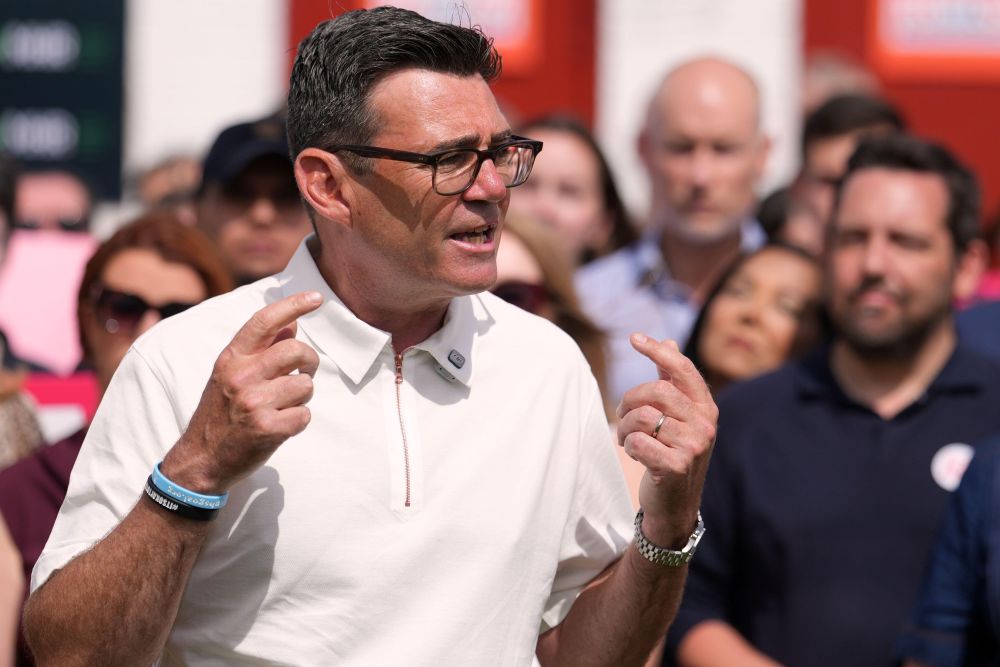
Sophie Stowers, research manager at pollster More in Common, said that while tactical voting played a part in Makerfield, it was only “part of the story”.
She explained that even if 2024 Green and Lib Dem voters hadn’t switched to Burnham as the results suggest, he still would have won more votes than Reform and Restore Britain put together. “It is maybe more to do with Andy Burnham being able to unite that left flank, more so than [voters] consciously mobilising against Reform,” she said.
“Clearly, there was a failure to coordinate on the right, but Restore mobilised different kinds of voters as well – they probably got some people to turn out who wouldn’t have even turned out to vote for Reform.”
She described Makerfield as a “really small-scale test” of tactical voting, but said that the upcoming Greater Manchester mayoral election to replace Burnham would potentially be a better example and a bigger test of the extent to which tactical voting could threaten Reform’s chances at forming a government at the next general election.
Former Green leader Caroline Lucas told The House magazine that Zack Polanski’s party would “throw everything” at the contest to elect Burnham’s successor.
Stowers added: “It’s quite hard to disaggregate from one by-election; it’s a very specific context.
“It’s hard to know at this point, but if Burnham continues to be effective at uniting progressives behind him in an anti-right-wing vote, then that is a problem for [Reform] on a larger scale.”
Reform figures believe left-leaning voters are increasingly willing to vote tactically to keep the party out of office, and increasingly, they acknowledge that this could pose a growing electoral challenge.
A senior Reform source told PoliticsHome the tactical voting against the party “certainly presents its challenges”, but insisted that Makerfield was a unique contest due to it also potentially being a contest to choose Starmer’s successor as prime minister.
“The one thing that probably unites the whole country is the will to get rid of Keir Starmer.”
Reform is hoping that the ‘Burnham effect’ will not carry over to other seats around the country that Farage’s party hopes to win at the next general election.
In ‘Red Wall’ areas like Nottinghamshire, the Lib Dems and Greens are barely present, making it more difficult for parties on the left to unite the vote against Reform.
The same could be said of areas like Essex, or many Reform-facing seaside towns with economies and demographics that are very different to that of Greater Manchester.
“Fine margins will be the difference between 250 seats or 350 seats,” the Reform source said.
“Every party is trying to navigate a whole new set of balancing acts.”
They acknowledged Reform could have done better on expectation management ahead of the Makerfield by-election, with leading figures in the party having talked up its chances.
“You obviously don’t want supporters to be grafting away and end up disappointed too regularly,” they said.
“We’re all trying to navigate this world of five-party politics; inevitably, it will be ever-changing and also require a lot of local nuance in these campaigns. It’s a constant learning curve, but particularly for a party that’s only really maybe two years old in terms of operating at this level.”
>

Kageki Shojo!! Manga Continues Hiatus, Returns on August 28 – News

World Cup predictions: Argentina vs Austria, France vs Iraq and the rest of matchday 12

How Lamine Yamal won his race for World Cup fitness to score ‘most important’ goal

-

 Fashion9 years ago
These ’90s fashion trends are making a comeback in 2017
-
Fashion9 years ago
According to Dior Couture, this taboo fashion accessory is back
-
Fashion9 years ago
Model Jocelyn Chew’s Instagram is the best vacation you’ve ever had
-
Fashion9 years ago
Your comprehensive guide to this fall’s biggest trends
-
Fashion9 years ago
A photo diary of the nightlife scene from LA To Ibiza
-
Fashion9 years ago
Emily Ratajkowski channels back-to-school style
-
Fashion9 years ago
9 Celebrities who have spoken out about being photoshopped
-
Fashion9 years ago
The tremendous importance of owning a perfect piece of clothing
