
Jake Johnson as Karl in Maximum Pleasure Guaranteed (Apple TV)


Paramount is seeking to have the judge assigned to the state attorneys general challenge to its merger with Warner Bros. Discovery recused from the case, arguing that he has an “appearance of bias” because of his prior legal work for the Writers Guild of America.
In a motion filed in federal court on Wednesday, Paramount’s legal team wrote that U.S. District Judge P. Casey Pitts previously was in private practice for Altshuler Berzon LLP and served as “long standing labor counsel” for the WGA. They noted that the WGA has filed a related case, and that the guilds had expressed support for the state AGs lawsuit.
Paramount’s legal team asked that the case be reassigned to Judge Araceli Martínez-Olguín, who is overseeing a lawsuit that was brought by a group of consumers in April.
Pitts, appointed to the bench by President Joe Biden in 2023, was randomly assigned the case on Tuesday.
Paramount’s legal team, led by Jeffrey Kessler, wrote, “WGA is not merely an interested observer in this action; it is an active litigant whose interests are directly aligned with those of the Plaintiffs in this litigation and directly adverse to Paramount’s interests. Judge Pitts’ prior long-standing representation of WGA—a vocal opponent of the proposed merger that has publicly committed to working with regulators to block it—creates precisely the type of appearance of impropriety that Section 455(a) seeks to prevent.”
More to come.
>

The time has come: reviews are in for Christopher Nolan‘s highly anticipated epic The Odyssey.
Following the success of 2023’s Oppenheimer — which earned Nolan his first Academy Awards for best director and best picture — the filmmaker turned his attention to adapting Homer’s ancient Greek epic. The Odyssey also made history as the first feature film shot entirely with Imax 70mm film cameras.
As of midday Wednesday, the film holds a 98 percent critics score on Rotten Tomatoes, currently the highest of Nolan’s career, and is tracking for a massive opening weekend.
Starring Matt Damon as Odysseus, the film follows the legendary Greek king’s long journey home to Ithaca after the Trojan War as he attempts to reunite with his wife, Penelope (Anne Hathaway), and son, Telemachus (Tom Holland). The ensemble cast also includes Zendaya, Robert Pattinson, Lupita Nyong’o, Jon Bernthal, Elliot Page, Travis Scott, Charlize Theron and more.
While anticipation has remained high, the film has also faced online criticism in recent months. Nolan recently brushed off that backlash as “irrelevant,” saying many of those criticizing the movie had yet to see it.
Ahead of the film’s Friday release, here’s what critics are saying about The Odyssey.
The Hollywood Reporter’s David Rooney is among those praising the cast and impressive production: “While The Odyssey is uneven, and no match for the sure-footedness and intellectual complexity of Oppenheimer, it’s elevated by the blindingly charismatic ensemble,” he wrote. “Damon is superb, going to dark places seldom if ever explored in his previous roles; Hathaway is a model of steely self-possession masking vulnerability … Work on the craft side unsurprisingly is top-notch. Van Hoytema fills the giant frame with imposing images shot in evocative international locations, grand and powerful in scale.”
But he adds: “One of the issues is that the writer-director never finds much balance between the parallel journeys of Odysseus and Telemachus, making the movie feel structurally clumsy. It doesn’t help that Holland, while always an appealing screen presence, is wrong for the role. Like Pattinson, the Brit actor plays his character with an American accent. But he comes across as, well, Peter Parker in a tunic, sapping the gravitas from Telemachus’ path to maturity.”
The Guardian’s Peter Bradshaw, wrote, “This is a film with thrilling ambition, boldness, seriousness, generosity and flair. There are some broad-brush moments in the dialogue, yes, but even these are applied with a muscular flourish. It has gasp-inducing, Imax-sized landscapes of loneliness shot by cinematographer Hoyte van Hoytema — who, incidentally, avoids the sea’s traditional cliched color — and full-tilt battle sequences and fight scenes accompanied by the throbbing and thrumming of drums.”
IGN’s Scott Collura wrote, “A must-watch cinematic experience, an epic film version of an epic poem that adapts many of the out-there concepts of Homer through a new eye that frequently brings a sense of horror and existential angst to the story — and even a bit of humor too! Matt Damon is fine as the title character if not revelatory, but the extensive supporting cast frequently prop up individual moments, as do some of Nolan’s unique additions to the story. While Odysseus’ emotional journey here can be as choppy as a rough day at sea, and the ‘civilization is eroding’ theme is undercooked, the film’s bigger observations on the effects of war on those who are forced to participate in it are well met. The Odyssey isn’t perfect, but it’s a pretty great moviegoing experience all the same.”
Empire’s John Nugent wrote, “The scale and scope here is, frankly, jaw-detaching. It is filmmaking at a magnitude few modern directors could ever realistically imagine, demand or execute. Yet what is most striking about this film is its quieter moments … Samantha Morton’s Circe, meanwhile, provides the closest Nolan has come to full-on horror, an astonishing sequence full of shocking fury and sadness at the baseness of men.” He added: “It may be set in a mythical universe, but Nolan is again raging at the folly of a humanity we might recognize — on an enormous, IMAX-sized canvas. Nobody does it better.”
The Telegraph’s Robbie Collin wrote, “Nolan and his collaborators have constructed a strange, fearsome and trailblazing machine of a movie — by some distance, the best of the year so far. Its creator is known for playing tricks with time, and this may be his grandest yet: turning one of the oldest stories in literature into a vote of confidence in blockbuster cinema’s future.”
>

David W. Zucker has been comparing the pilot season system to the modern era’s commissioning free-for-all.
In an interview with Deadline, the executive producer of The Terror: Devil in Silver and Alien: Earth, compared the certainty of pilot season versus the current system, where “plugs get pulled on productions at any juncture.”
“We used to be a seasonal business and, as much as a lot of us back in the pilot season era used to gripe against the mad reality of that chaos and hysteria, you knew by May a decision was going to be made,” he said. “You may like it, you may not, but they had to make a choice.”
During the pilots era, Zucker was EP on the likes of CBS’s crime series Numbers and legal drama The Good Wife, and also worked on cable shows including Gettysburg, Killing Lincoln and Klondike.
With less certainty in the market in the modern era, where shows are developed and greenlit across the year, writers and actors can be left in limbo, he added. “I would say crisis probably isn’t a wrong-headed term,” said the veteran producer.
Zucker, the Chief Creative Officer of Scott Free Productions, was talking to Deadline during an appearance at the Italian Global Series Festival.
He is currently exec producer on Season 2 of FX’s Alien: Earth and has seen Devil in Silver, the third season of the revived horror series The Terror, launch on AMC Networks’ streamer Shudder. Starring Dan Stephens, it follows a man who is wrongly committed to a psychiatric hospital, where supernatural forces reside. The show debuted in May.
Zucker noted the move to play it first on Shudder and AMC+ concurrently was new for AMC.
“This gives us a longer ramp up to when they put it out on linear – a different way of trying to keep it into the conversation and hopefully expanding viewership,” he explained.
Elsewhere in the interview, Zucker updated on Alien: Earth‘s production at Pinewood Studios in London, the upcoming Prime Video series Blade Runner 2099 and the status of Vatican City, Scott Free’s latest collaboration with The Good Wife creators Robert and Michelle King.
Read the full interview here.
DEADLINE: What does the fact that The Terror: Devil In Silver played first on AMC+ and Shudder, a premium but niche genre service, say about the way networks and commissioners in general are thinking about the shows they buy?
David W. Zucker: It’s a great question that honestly I have very little visibility into. AMC shared with us this release strategy, which is one they’ve never done before. They were very clear in terms of the thinking of the strategy, which one can only defer, because we have so little visibility into how any of these streamers sort of assess their audiences and their data.
Those kinds of historic conversations that we would always have – debating about the publicity, the marketing and such [are over]. We’re living with a fairly myopic view of the why and whether that’s the best way of going, but this certainly made a lot of sense in the sense of providing it to that viewer already strongly predisposed. As they shared, this gives us a longer ramp up to when they put it out on linear – a different way of trying to keep it into the conversation and hopefully expanding viewership.
When they put Terror 1 onto Netflix, there was another boom there, and even when it premiered in the UK, which was long delayed and we had no advance that that was going to happen, suddenly it enjoyed a whole new life.
It’s a long-winded answer to your question. We’re along for the ride, and trying to ask the right questions and make, hopefully, thoughtful suggestions.
DEADLINE: You’ve talked about there being a global industry crisis. I wonder if you can give me a bit more color on what you mean by that and what producers need to operate in this current climate?
DWZ: One thing that’s absolutely undeniable – and there is not a producer or director, writer or representative I talked to who feels differently – we are in an era where things are taking twice as long to accomplish half as much. That is a crisis in the sense when you combine it with the unrelenting unpredictability of how and when or why decisions are made.
You cannot have any reliable sense of employment – what’s changed in the last five or six years is the plugs get pulled on productions at any juncture, including in some instances, those programs not even being released. A fundamental contributing factor to that is there is nothing in most instances now that instigates decision making.
We used to be a seasonal business and, as much as a lot of us back in the pilot season era used to gripe against sort of the mad reality of that sort of chaos and hysteria, you knew by May a decision was going to be made. You may like it, you may not, but they had to make a choice. We have really turned into the film business where you don’t necessarily have any clarity or understanding of how or why your material may be assessed, or when they may come to some conclusion about it.
I really wish there was a way to put a timetable on decision making. We have a number of projects that have been on the precipice for quite a long time, and I don’t know how people can make a living that way: Writers standing by, actors wondering whether that’s what they should commit to or not. I would say crisis probably isn’t a wrong-headed term.
DEADLINE: And is there a flip side to all of that happening? Is there a positive to the way things have changed?
DWZ: Absolutely. If we’re going back to the rise of the streaming era, it’s become now, particularly for those of us who’ve worked in the U.S., a truly global medium. I remember around the 2000s, when you couldn’t even have subtitles or foreign characters on American television, until Heroes and Lost did it. I mean, that was only 25 years ago.
From a content standpoint, the breadth of shows and films that now are accessible and and thriving, I think there’s no question that’s an enormous benefit. And if you were going to try to hire people from Europe or from Asia who didn’t have experience in the U.S., that was a non-starter. That’s not the case anymore.
DEADLINE: Why do you feel the types of shows you and Scott Free have produced over the years such as The Good Wife, which seem to mix premium scripted TV tropes with more traditional network fare, have been so popular?
DWZ: We’re just talent-facing first and foremost. It’s always been a perilous venture to be guided by a marketplace – and particularly in a time like this where what we may try to present to buyers today or what we might develop that’s informed by buyers may be entirely off the table in two months. The only way of existing in this creative space is to rely upon those artists, writers, directors and actors who have something that they’re passionate to bring forward.
We align and work in support of that, and then hope the timing’s fortuitous. That’s how it’s always been, to be honest, even in the pilot era. In some ways, the battles are not any different. It absolutely begins and ends with the writer and and the vision that he or she is bringing to story, and then you hope to find that one buyer or entity that connects and has the same enthusiasm and eagerness to bring it forward.
DEADLINE: I spoke to Noah Hawley earlier this year when the production for Alien: Earth Season 2 was just about to start, and he was crewing up and casting up in London at Pinewood. Have you been to the set?
DWZ: We started two weeks ago. I was just there for the first week of shooting, and I stayed in London for the following week as well. Thailand [where Season 1 lensed] was a brilliant experience and we really benefited immensely from the crews, from that culture and that community, but there’s also no denying that in London you have the true blue chip artisans. I never thought we would be making movies on television, but that is at that scale of what FX and Disney have provided in support of that project. It’s a whole other level and it’s pretty awesome to see.
DEADLINE: A number of Game of Thrones actors have been cast in recent weeks and months. Can you say anything more about more casting at this stage?
DWZ: I think those announcements are coming out periodically, but the field continues to expand and evolve in really thrilling ways.
DEADLINE: What about Blade Runner 2099? It’s been ‘upcoming’ for quite some time now… when is it ‘coming’?
DWZ: It’s fair to say, as we get to Comic-Con in the next couple of weeks, that will begin to inform what’s ahead of us. All of that is beginning to settle in place now, but we’re in the process of finishing. We’re coming down the home stretch.
DEADLINE: What is the status of Vatican City, the CBS Studios series that announced sort of towards the end of last year? That’s a continuation with your relationship with the Kings. How’s that one developing?
DWZ: Sadly, that one is seeking a home. It is a great, great project and the reception to it was everything that we could have possibly wanted. It’s honestly hard to understand how that show is not greenlit somewhere, but that’s not gonna prevent us from continuing to make the effort.
DEADLINE: We’re about to see a new era begin in Hollywood with two of the big studios getting together, both of which you’ve had dealings with through shows such as The Good Wife and Raised By Wolves. What’s your read on how that might change things for both for producers and for the industry more generally?
DWZ: That is the magic question, isn’t it? It’s in many ways the impossible question because other than other than recognizing and acknowledging that tomorrow will be nothing like today or yesterday, you have the confluence of what’s going on both institutionally with the mergers and what’s being perpetrated in Wall Street. We have this extraordinary surge of creator content through YouTube and other platforms and the very aggressive rise of AI and how that will both facilitate and disrupt the process of making content, and then we are also in a geopolitical time that is unquestionably affecting both what content is appealing to viewers and at the same time content that the powers that be are comfortable providing without taking risk to their own businesses, to put it diplomatically.
DEADLINE: A final one for you, in terms of your development slate, is there anything else upcoming that we should sort of be aware of that you’re excited about?
DWZ: I wish we could have this conversation in about two months or even in a month. We’re on the precipice of a number of projects where we’re anticipating green lights. I don’t want to shorthand anything for you at this point without being able to represent it properly, but I would say by the end of summer. You can appreciate my hesitation, because some of these projects we thought were going last year. With Vatican City, we were building toward a production in Rome. We thought we were on that trajectory and, um, and then it took a turn. We’re eager to share more as soon as it’s real. I think we live in a binary time now. It’s like, ‘Are you ordering it or are you not?’ Everything else is just chatter.
This interview has beed edited and condensed for clarity.
>

After being attacked and kidnapped, falsely imprisoned and accused of double homicide, Tatiana Maslany‘s beleaguered Paula finally seems to catch a break in the Season 1 finale of Apple TV‘s twisty, pulpy crime thriller-comedy. The single mom wins custody of her daughter Hazel and, in a deliciously satisfying full-circle moment, parrots back the venomous words her ex-husband Karl (Jake Johnson) first lobbed at her in the pilot: “You need to tighten your shit up.”
Episode 10, titled “Queens,” picks up from a cliffhanger; in the penultimate episode, a shot rings out, unclear if it caught Paula, the sniper pursuing her or the cop pursuing them both. Still alive, Paula negotiates with Cecelia Vanderwalle, SVP of the Sutter Group, the organization for which Dennis (Murray Bartlett) carries out mass corporate extortion. She bargains for exoneration, leveraging the knowledge that Cecelia enlisted Dennis’ help to force a Yale admissions officer to accept her son Blake into college. “You fucked with the wrong mom,” she bites.
Elsewhere, Dennis is alive (shocker!) and recovering in the hospital — until he’s murdered, his death framed as a suicide, complete with a confession to both Trevor and Sky’s killings. With her name cleared, Paula sets her sights on the custody hearing, facing an uphill battle against Mallory (Jessy Hodges) and Karl and triumphing anyway. With Hazel remaining in New York City with her, Paula also allows herself to explore a romantic beginning with Steve (Raymond Lee), sharing a kiss.
When Detective Sofia Gonzalez (Dolly de Leon) comes knocking during her victory party and maintains that the resolution is all too convenient, it’s the first crack in the revelry, foreshadowing a final bombshell: Portland comes back to haunt her, as footage of her running over her erstwhile neighbor reveals his death was anything but an accident. “We own you,” an unknown entity texts her, before demanding a favor.
“We do have it in our mind, where it will go. We wrote past the finale to make sure what we were doing would add up. But specifics, not really. And hopefully we have a second season, we can talk all about it, but we’re really excited for what’s next for Paula,” says creator, executive producer and writer David J. Rosen.
Below, the showrunner breaks down that finale cliffhanger and hopes for a Season 2:
DEADLINE: I had spoken to Tatiana, and she was talking about this underlying rage that Paula has throughout the show, and I really loved the circular moment where she tells Carl ‘tighten your shit up’ at the very end. Jake was saying that that had been improvised. How did that come about, and did you always know you wanted this tension-release moment?
Yeah, totally. Actually, there’s a lot improvised in that scene, but that line was written full[y]. I was gonna say, I’m so glad you noticed the full-circle moment. At first I had remembered the line wrong, and I had written it down because Jake improvised that line in the pilot, and then it was so good that we wrote it for the finale.
Jake Johnson as Karl in Maximum Pleasure Guaranteed (Apple TV)
Throughout the show, there’s so much dramatic irony, it almost feels like if certain people talk to certain people, they might come to a resolution quicker. But how do you feel that Paula’s background as a fact-checker and her research-oriented brain help dig her out of this hole? And what about her innate personality helps her versus Hazel being at stake?
I think that Paula is fierce when it comes to Hazel, and she’ll look dumb, she’ll scream, she’ll make a scene — it doesn’t matter what it is, Hazel comes first. It’s real raccoon energy, you know? And I think that the opposite of that is, as her job, as a fact checker, it’s to be sort of cool and contained and look for just the facts and the truth. And in a time in the world where not only is the job of fact-checker going obsolete, but some would say the truth is becoming obsolete. So what was interesting to try is to put Paula on a path where she had to use this skill of trying to tell truth from lies, which, it’s not really a very active skill, right? It’s like, you’re looking into things, but you’re not out there swashbuckling, but some of that would be what she had that she could use to try to unravel the mess that she was in.
At first, Portland is mentioned in such ambiguous terms, and then we see it a little bit, but then we finally find out in the finale what it actually is. Did you always have that seed planted? And if you could speak to what that reveals in Paula.
It was always planned the way it is, from the mentions of it to the first reveal to the last reveal, that you saw one thing that seemed bad, and that’s what it must have been about, but actually, then you see it again, and you see that she kept a secret from Karl way back when. And I think what it reveals about Paula is that she has this inner fire, this inner rage. You kind of see it in the pilot when she finally has had too much of the phone calls and the honking and the kettle finally shrieks, and she hits the gas and drives down the wrong side of the road, and she grabs a hockey stick and goes into a house of someone she doesn’t know. That’s kind of a hint to the audience that maybe she’s done something like this before. And then we see that she has.
I was so enthralled watching this, each episode propels itself into the next. At the risk of jumping ahead: With some creators, when it’s a mystery-box series, there’s an end in mind or concluding moment — is that something that you’ve thought about?
I think I have a rough idea. I will put markers on a map, but we may take a different route or go a different way. I think emotionally the marker won’t change. But what the final moment is may well.
You had mentioned that part of the inspiration was seeing your wife during the pandemic and all of these things that moms need to juggle, or women in general need to juggle. I’m curious if, for the conspiracy that’s unpacked a little bit as the show goes on, there was inspiration from either real-world events or things you had watched that you had also drawn from.
There was a lot of different inspirations that were just coming at me from being someone who’s on the internet more than they should be. One of the inspirations was just being on Zooms a lot and looking into people’s houses and kind of getting bored after a while, especially if you’re on a big grid. You’re kind of like, ‘Oh, wow, they have some cool stuff.’ And then you’re sort of putting together a whole life for someone you’ve never met before, in a way that hopefully isn’t creepy.
But then, beyond that, I’m always really into the sleuthers on a Reddit who are trying to figure something out and are just looking at a photograph, and are suddenly, like, targeting into a country and then a city and then a neighborhood, and you’re like, ‘Wait, how did you guys do that?’ That gave me a lot of inspiration for Paula trying to figure out where Trevor was from the hints that she sees. And that was really difficult to really pull off tangibly, given a small window and not [have] it be in your face. I mean, there’s so many real-life scam stories. I wanted to take one and turn it on its head a little bit, so you, as the audience, are like, ‘It’s going to be this.’ But then it’s not that, it’s that.
Charlie Hall as Rudy and Kiarra Hamagami Goldberg as Geri in Maximum Pleasure Guaranteed (Apple TV)
Geri and Rudy, I feel like they’re almost in this side-kick, Scooby-Doo world, but there’s also a romance, or really close friendship, brewing there. I’m curious how they came about in your imagination.
Geri and Rudy are super fun to write for, and also, Kiarra [Hamagami Goldberg] and Charlie [Hall] are amazing and just so good in the show. They came about because, really, I didn’t want Paula to have a group of mom friends. I wanted her to be out on an island where, when she needed to turn to someone after the police, the next thing that made sense were her colleagues at work, who happened to be markedly younger than her; they’re just out of school, and she’s got a kid in third grade. That sort of already has a weird power dynamic. And I don’t think the power necessarily is with the older person in that situation where you all sort of have the same job. So I thought that that would be a really fun and interesting pairing. And having worked with a lot of people that were younger than me in my past, I was like, ‘I feel like there’s something I have to say there about it.’
Naturally, people at work do know about their social lives and who they’re dating and who they’re not dating, and they’re both attractive and they’re spending a lot of time together, and it makes sense that there is an attraction between them. And timing is everything, and not everyone’s on the same timing path. I can imagine things might have been different six months before the show started, in terms of the dynamics between them, and [as well as] where we get by the end of the season.
Totally. I’m rooting for them.
I get that.
I really appreciated Jessy’s character, Mallory. She is so, on one hand, very shady, but there is a reasoning for that, and how fiercely she wants to win and what she feels is at stake. How do you view her?
I think that all the characters on this show, an argument could be made that they’re right. Karl is definitely right. And I think Mallory is definitely right. She is shady, but she’s shady for the stepchild she loves, and the husband she loves. I don’t think she’s just trying to win. I think she’s trying to do what she thinks is right, and as the try-hard, cutthroat kid I bet she was when she was applying to colleges, she’s applying that same sort of dangerous intelligence to where she is now. She’s cutting some corners, but she thinks the end will justify the means.
I’m curious also of the police angle of all of this: It seems like as good at the instinctual element Dolly de Leon’s character is she and her colleague are constantly playing catch up and several steps behind. How did you go about characterizing that dynamic?
It’s funny. It was really tricky with those guys, because they’re not, like, boneheads. They’re good police, they’re smart at what they do, but at this point in the story, or again, the first season, they are behind, and Paula is ahead, and early on, by them suspecting Paula, which she — by the way, she should have been suspected, the audience is aware, but if you take our awareness out of it, she looks very suspicious. So in writing them, we really had to find a way to keep them a danger to her still, while knowing that they’re wrong. And so that was the trick of writing them and then kind of getting them, by the end of the season, onto the same page. But by then it’s too late.
Jessy Hodges as Mallory in Maximum Pleasure Guaranteed (Apple TV)
You said you wanted Paula to be this island. It seems like the only person reaching out is Steve. I really appreciated how humorous their interactions were, and how delicate and really treated with care it was in the midst of all this darkness. Was that something you always knew you wanted, some sort of lightness in her interactions with other adults, especially when she’s being assailed by the moms and dealing with Karl and Mallory?
We don’t want the show to be bleak, and the world that she’s in isn’t bleak. She’s in a bit of trouble, but there is hope for her. She’s an intelligent, cool woman and so Steve is blissfully outside of a lot of the dynamics, and I think sees all the good things in Paula. The show has an anxiety to it, but as [director/EP] David Gordon Green said earlier, and now I’m stealing from him, it’s an enjoyable anxiety. There has to be these moments of hope for Paula and I think Steve, whether he ultimately is or isn’t, he represents the better choice. If only it had come earlier — if she had only started coaching soccer a week before the events of this and had met Steve, maybe she never goes online with Trevor. That’s a relationship that maybe she would have leaned into. But Steve comes along after the fact, and so, at the end of the season, finally, she’s free, and there’s a possibility, but before that, there couldn’t be.
>


These ’90s fashion trends are making a comeback in 2017
According to Dior Couture, this taboo fashion accessory is back
Model Jocelyn Chew’s Instagram is the best vacation you’ve ever had
Your comprehensive guide to this fall’s biggest trends
A photo diary of the nightlife scene from LA To Ibiza
9 Celebrities who have spoken out about being photoshopped
Emily Ratajkowski channels back-to-school style
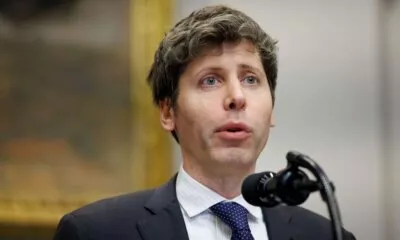

OpenAI CEO apologizes to Tumbler Ridge community