
Tech
Tesla driver in fatal Texas crash pressed accelerator 100%, NTSB confirms


The National Transportation Safety Board (NTSB) said Wednesday that the driver of a Tesla who crashed into a house in June had pressed the accelerator pedal to 100%, overriding the company’s Full Self-Driving (Supervised) software.
Data recovered from the Tesla showed that the vehicle was traveling more than 70 miles per hour when it struck a house in Katy, Texas, killing 76-year-old resident Martha Avila, according to the NTSB. The family of the victim has since sued the alleged driver, 44-year-old Michael Butler, and Tesla, claiming negligence. Butler has also been charged with manslaughter.
The safety board shared the information as part of a preliminary report on the progress of its investigation into the crash. The National Highway Traffic Safety Administration is also probing the incident.
The data confirms Tesla’s account of the crash, which the company shared in the days after it happened in order to show that its advanced driver assistance system wasn’t to blame. “This [allegation] makes no sense. FSD drives slowly through neighborhood streets and this was a high speed crash!” Tesla CEO Elon Musk wrote on X shortly after the crash.
The NTSB said Wednesday that the 44-year-old driver was using Full Self-Driving (Supervised) on Rose Hollow Lane, a residential two-lane road with a speed limit of 30 miles per hour, prior to the crash. Security camera footage obtained by the safety board showed the car accelerating through an intersection, leaving the road, and hitting the house. The “weather was clear, the roadway was dry, and daylight conditions were present,” according to the NTSB.
Tesla requires that drivers using Full Self-Driving (Supervised) pay attention to the road and be ready to take control at any moment. Butler allegedly told authorities that he had “passed out” and that he was using Tesla’s driver assistance system. Police reportedly discovered that his Google searches included the terms “Tesla FSD not aggressive enough 2026,” “Tesla not aggressive enough,” and “Tesla FSD too timid,” according to local ABC news affiliate station KTRK TV.
When you purchase through links in our articles, we may earn a small commission. This doesn’t affect our editorial independence.
>
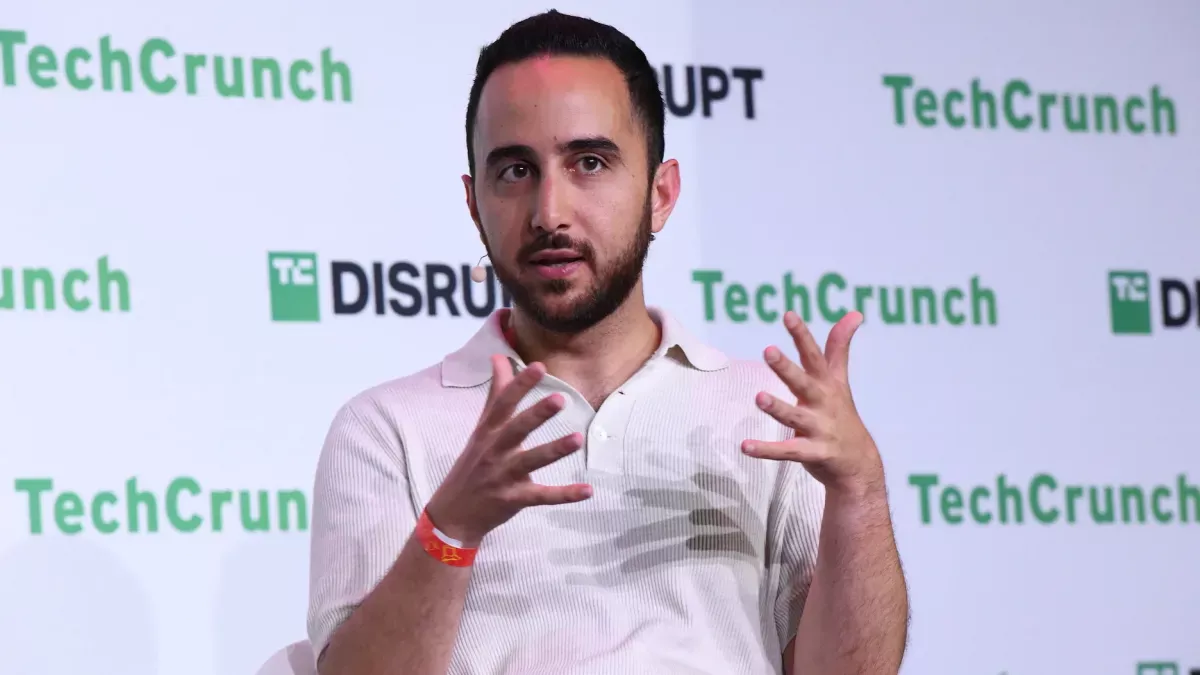
While many top-tier venture firms keep raising massively larger funds, Greylock Ventures, one of the oldest and most prestigious venture firms in Silicon Valley, is intentionally resisting the trend of ballooning fund sizes.
On Tuesday, the 61-year-old firm announced that it had raised a $1.5 billion 18th fund. The number is 50% higher than its previous $1 billion vehicle from 2023 and roughly matches the capital the firm raised across seed and flagship funds during the pandemic. Still, Greylock partner Saam Motamedi told TechCrunch that Greylock could have easily raised a “multiple” of that figure, suggesting the partnership decided restraint was the better path at a time when fund sizes across the industry keep climbing.
“Our mission is to be the most important partner to the most important entrepreneurs,” Motamedi said. The firm prides itself on introducing its portfolio companies to top engineers and potential customers, as it did for Baseten, an AI infrastructure startup that is now valued at $13 billion, after first investing in its Series A in 2022. But Motamedi said Greylock can offer that level of support only by keeping the number of companies it backs small.
The firm’s 10 partners make only one or two new investments each annually, a pace Motamedi said will result in roughly 25 portfolio companies from this fund.
Like its predecessors, the new fund will focus primarily on incubating companies from the earliest stages and leading seed and Series A rounds. This is where Greylock has built its reputation; the firm has a strong track record of starting companies from scratch, most notably security giant Palo Alto Networks, which launched inside Greylock’s offices 21 years ago, and the email security startup Abnormal, which Greylock incubated in 2018 and that was last valued at $5.1 billion.
Even so, Greylock doesn’t stick strictly to early-stage deals. It will also back high-potential, later-stage companies even if it “missed them early on,” Motamedi said. The firm’s 17th fund included three such growth-stage bets: Anthropic, Revolut, and Wiz.
The firm made its first investment into Anthropic when the AI company raised its Series F at a $183 billion valuation. “It’s the largest investment in the firm’s history,” Motamedi said.
Motamedi estimates that roughly 15% of the new fund will be deployed into later-stage startups, but he maintains that Greylock remains fundamentally an early-stage investor.
As proof, Motamedi said that when the partners meet every Monday to review their investment pipeline, the agenda consists primarily of people’s names rather than company names.
“We’re getting to know people even before they start a company. It’s really a bet on the person,” he said. “Often the company doesn’t even exist.’”
When you purchase through links in our articles, we may earn a small commission. This doesn’t affect our editorial independence.
>

Microsoft appears to be prepping its sales team to get more competitive with the other major players in the AI industry.
At an internal meeting on Tuesday, the company’s executives outlined a plan for salespeople to negatively compare AI products from companies like OpenAI, Google, and Anthropic to its own, according to a new report from Bloomberg. The meeting, billed as a strategy session for the new fiscal year, reportedly leaned heavily on pitching the efficiency and cost-effectiveness of Microsoft’s in-house models against those of its rivals.
“Everyone else is selling parts — we’re selling the full end-to-end system. That’s the story that we all need to get out there and tell in FY27,” Executive Vice President Jay Parikh reportedly told the room.
Executive Vice President Jacob Andreou reportedly went further, delivering a presentation comparing Copilot directly to Anthropic’s chatbot Claude. According to Bloomberg, Andreou noted that, when it came to performance within Microsoft’s office apps, Anthropic’s model was “slower and less accurate, and lacked the proper security integrations,” Bloomberg writes.
TechCrunch has reached out to Microsoft and Anthropic for comment and will update this story if we hear from either outfit.
A company coaching its sales team on how to trash-talk competitors isn’t particularly surprising. What’s more notable is who Microsoft is now targeting — the same companies it has long depended on for the AI models powering its own products.
It’s just the latest move in that direction. A report earlier this month found that Microsoft has been swapping OpenAI and Anthropic’s models out of flagship apps like Word and Excel in favor of its own — a cost-cutting move, according to that report.
There was a time when Microsoft and OpenAI were attached at the hip. The two companies entered into a very unique agreement years ago that saw Microsoft provide capital and compute to OpenAI while allowing Microsoft to enjoy exclusive access to OpenAI’s API and models. The companies amended the partnership in April, dropping the exclusivity clause and clearing OpenAI to sell to Microsoft’s competitors.
That revised relationship may help explain the sales team’s new pitch. Microsoft has been battling a less-than-optimal stock outlook over the past year, as investors question the company’s massive spending on the buildout of its AI business. Talking up how competitive those products actually are is likely an attempt to calm those waters and build confidence in Microsoft’s long-term AI plan.
When you purchase through links in our articles, we may earn a small commission. This doesn’t affect our editorial independence.
>

SpaceX’s shares fell to just above $135 on Wednesday, the price that CEO Elon Musk and his company chose ahead of its blockbuster June 12 IPO that raked in nearly $86 billion.
The company’s stock spent much of the day below that IPO price, at one point dipping beneath $133 per share, before it traded back up to finish at $135.27.
The dip on Wednesday followed a steady decline in the month since the company went public. SpaceX initially saw its stock price rise to more than $200 in the days after it went public, briefly giving it a valuation that rivaled tech giants like Amazon and Microsoft. Its shares have lost value basically every week since reaching that high point.
Some of the volatility is attributable to the fact that just 4% of the company’s total shares are trading on the Nasdaq. That small “float,” as it’s known, combined with an immense amount of constant attention on the company, has created wild swings during the first month of trading.
The markets also appear to be sobering up on CEO Elon Musk’s grand vision for the company, part of a broader deflation in tech stocks over the last month. Not only has SpaceX’s stock traded down, but also bonds the company sold in the wake of the IPO are suffering.
A prolonged downturn for SpaceX could have wider effects because the company’s stock price is a sign of how investors view the (literal) otherworldly promises Musk has made about what his company can accomplish. SpaceX’s IPO has also set the table for other Big Tech companies like Anthropic and OpenAI to go public. Both of those companies have filed confidentially for an IPO. While neither has set a date to go public, SpaceX’s stock is being closely watched to gauge how successful those IPOs could be.
SpaceX is about to face another early test of the durability of its stock price. On Thursday the company will test launch its Starship rocket for the first time since the IPO. Starship is still very much in development, which means it is prone to failures — the result of SpaceX’s “fly, fail, fix” approach.
This will be the first Starship flight since it experienced a booster failure in May. And once again, the company does not plan to try to recover the Starship booster or upper stage on this flight, instead opting to have them simulate a landing in the Gulf of Mexico. That means both parts of the overall Starship rocket system will end in an explosion no matter what, even if they don’t run into any problems during the flight plan.
This story has been updated to include the closing price.
When you purchase through links in our articles, we may earn a small commission. This doesn’t affect our editorial independence.
>

Thomas Tuchel is guilty of orchestrating England’s craven World Cup demise

NY Times Files Motion to Quash Trump Subpoenas Requiring 3 Journalists to Reveal Confidential Sources

World Cup 2026: Thomas Tuchel retains FA backing despite England defeat
-

 Fashion9 years ago
These ’90s fashion trends are making a comeback in 2017
-
Fashion9 years ago
According to Dior Couture, this taboo fashion accessory is back
-
Fashion9 years ago
Model Jocelyn Chew’s Instagram is the best vacation you’ve ever had
-
Fashion9 years ago
Your comprehensive guide to this fall’s biggest trends
-
Fashion9 years ago
A photo diary of the nightlife scene from LA To Ibiza
-
Fashion9 years ago
9 Celebrities who have spoken out about being photoshopped
-
Fashion9 years ago
Emily Ratajkowski channels back-to-school style
-

 Tech3 months ago
OpenAI CEO apologizes to Tumbler Ridge community