
Anime
Episodes 1-4 – Jaadugar: A Witch in Mongolia


© Tomato Soup(AKITASHOTEN)/Jaadugar Committee
Science SARU is on double-duty this season with retro sci-fi stylings in The Ghost in the Shell and the picture-book-esque Jaadugar: A Witch’s Life in Mongolia. The latter was quickly added to the top of my “most anticipated” series for the season after reading the first two manga volumes by Tomato Soup. Her uniquely proportioned characters and cultural attention to detail are expanded in the anime to create an overarching story of betrayal against the backdrop of 1200s Persia and Mongolia.
One of the most enticing aspects of the series so far is how different it is from its peers this season. There’s no magic, reincarnation, or giant robots trapezing about in modern Japan. Instead, we see the cold steppes of Mongolia, the arched doorways of Persian nobility, and the cultural differences between both societies. I have to admit, watching this series after Christopher Nolan‘s The Odyssey also guided my feelings on war, enslaved people, and knowledge as a cultural currency.
The audience is first introduced to Sitara (later Fatima) after she is sold into a scholarly household to work as an enslaved servant in the city of Tus. Though she initially plays ignorant in her pursuit of freedom, Sitara eventually settles into domesticity with her owners. I am generally uncomfortable with classifying Fatima and her family as “good ones,” as they very much owned human beings, but narratively, Sitara comes to love Fatima as a mother figure, and Fatima reciprocates this. The girl and woman develop a familial bond as Fatima teaches Sitara how to read, write, and understand mathematical concepts.
Persia, and Iran in particular, has a long history in academia and mathematics specifically, dating back to the Elamite period (3200-539 BC), with evidence showing they were familiar with and implemented geometric concepts like the Pythagorean theorem. In Sitara’s time during the 1200s, she lived in what is known as the “Islamic Golden Age,” where many texts from other areas of the world were translated into Persian to expand the culture’s already vast knowledge. You can see evidence of this when Sitara’s home is ransacked and Tus is razed by Tolui; Fatima has a vast library, and one of the prized books that becomes central to the story is Euclid’s Elements, a book that is, at this point in the story, about 1500 years old.
Sitara’s more comfortable existence is burned down when her mentor is murdered, and she’s taken into custody by Tolui. There, she watches her fellow servants from Fatima’s household die under poor living conditions and, in at least one case, a broken heart. The moment she’s chosen to meet a similar fate, she’s persuaded to instead put all of her effort into retrieving Elements from Tolui’s wife, Sorghaghtani. She’s furious at this point; the Mongolian Empire has murdered her mentor and her potential future husband in pursuit of a book they show little regard for. She has to live in sometimes direct opposition to her faith. Her revenge is slow, and before she knows it, eight years have passed as she teaches Sorghaghtani and cares for her children. Genghis dies, Tolui holds court for approximately two years, then Ögedei becomes Kha’an. Episode four closes with Sorghaghtani asking Sitara (now known as Fatima) to no longer serve her; at least not in the duties she’s accustomed to. Instead, Sorghaghtani asks her to become a spy.
Admittedly, there is a lot of fast-forwarding in time over these four episodes. As an enslaved woman, Sitara spends most of the time on the sidelines, even with her increased access to the Khan family. Ögedei and Genghis’ attack and defeat of the Khwarazmian Empire happens off-screen. I don’t know if I fully agree with this decision; while Tolui’s viciousness is obvious, the Mongolian Empire was ruthless by design.
However, I do applaud the series for not sticking people into boxes. Sitara believes the Mongols to be uneducated, murderous, and wholly foreign. Sorghaghtani quickly shows this not to be the case. Her interest in Elements was not to possess knowledge to hoard it; she also felt the importance of educating her people in academic matters. There is more to her than Sitara initially suspects, and it will be interesting to see how she continues to manipulate others now that her husband is no longer in power.
We know little about Ögedei’s primary wife Töregene at this point, other than that she seems to hate him. However, if you’ve read spoilers (aka history), you can figure out that she’s going to be increasingly important as the story continues.
While the story itself feels like table-setting through episode four, Science SARU has made it a feast for the eyes. He and Naoko Yamada spent time in Mongolia in part for preparation for creating the series and drew influences from Persian art to capture the colors and textiles seen throughout the opening episode. Jaadugar easily sets itself apart in story, setting, and art. Once Sitara finds her footing in the narrative, it’s anyone’s guess what will happen next.
Rating:
Jaadugar: A Witch in Mongolia is currently streaming on
Crunchyroll.
The views and opinions expressed in this article are solely those of the author(s) and do not necessarily represent the views of Anime News Network, its employees, owners, or sponsors.
>

 Production company Kadokawa opened an official website for a television anime adaptation of Aguri Uma‘s Studio Cabana on Wednesday, revealing the main cast, staff, and a teaser visual (pictured). The anime series will air in 2027.
Voice actress Sayumi Suzushiro (Bocchi the Rock!) is starring as the lead female character Yukari Maki.
Staff
Director: Shinichirou Ushijima (Kimi no Suizou wo Tabetai)
Series Composition: Sawako Hirabayashi (Ookami Shoujo to Kuro Ouji)
Character Design: Haruka Sagawa (Yofukashi no Uta)
Studio: Juvenage
Uma began drawing the music romance manga on the pixiv Sylph web magazine in June 2021. Kadokawa published the eighth volume in November 2025, with the ninth scheduled to be released on August 21. Studio Cabana has a cumulative 500,000 copies of its volumes in circulation.
Yen Press licensed the manga in English on May 25 and plans to release the first volume on December 15.
Studio Cabana was nominated in the Web Manga category for the 2023 Tsugi ni Kuru Manga Awards (Next Manga Awards).
Synopsis
Yukari Maki is a high school girl who prides herself on honesty—and she’s starting to get the feeling that she and her delinquent classmate, Yuusuke Kusaka, don’t have a single thing in common! But her straitlaced unwillingness to let him skate by in school earns her an almost chaperone-like reputation, and his apparent disdain. Yet, despite Yuusuke’s disapproval of her hovering, Yukari refuses to let a new rumor about him spread. After following Yuusuke home to discuss it, she watches him stop at a music studio. And there, Yukari sees—and hears—a side of Yuusuke she had never imagined… (Source: Yen Press)
Official site: https://studio-cabana.com/
Official X: studiocabana_pr
Source: Press Release
>
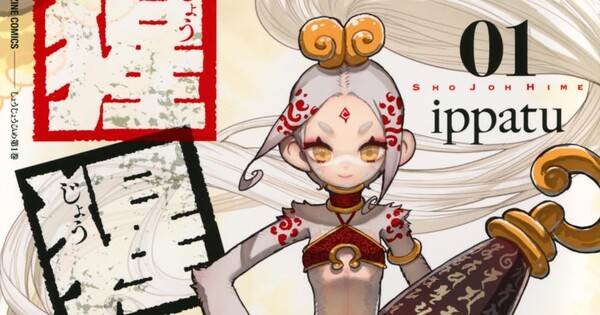
Manga with new interpretation of Journey to the West story launched in December 2025

©ippatu, Kodansha
This year’s 34th issue of Kodansha‘s Young Magazine announced on Tuesday that ippatu‘s Shōjōhime (Monkey Princess) manga will move to Kodansha‘s YanMaga Web website, where it is simultaneously serialized, on August 2. The manga will also start its new arc in its next chapter.
The manga simultaneously launched in Young Magazine and on the YanMaga website in December 2025. The manga is a new interpretation of the Chinese classic Journey to the West. Kodansha published the manga’s first compiled book volume on April 6 and the second volume on July 6.
ippatu began drawing the Tsugumi Project (Tora Tsugumi) manga, and French publishser Ki-oon began releasing it as an original manga in France in 2019. Kodansha‘s Weekly Young Magazine began serializing the manga in Japan in January 2021. The manga ended in September 2023, and got an epilogue chapter. Kodansha published the manga’s seventh and final volume in November 2023. Kodansha USA Publishing licensed the manga and released the final volume in September 2025, and it shipped in France in February 2024.
Tsugumi Project is inspiring a television anime adaptation.
Source: Young Magazine issue 34 and X/Twitter account
>
Anime
‘Mahou no Princess Minky Momo: Akogare no Yume e – Magokoro no Duo’ Reveals Additional Cast, Teaser Trailer

 The official website for the new Mahou no Princess Minky Momo: Akogare no Yume e – Magokoro no Duet (Fairy Princess Minky Momo) original video anime revealed additional cast members, main visual (pictured), and a teaser trailer on Wednesday. The OVA is scheduled to open in theaters on November 13 ahead of its home video release.
Cast
Databook: Fukuchi Ochiai (Karakai Jouzu no Takagi-san)
Chamocha: Natsumi Fujiwara (Saikyou no Ousama, Nidome no Jinsei wa Nani wo Suru?)
Pipirupi: Rie Kugimiya (Gintama)
Ayumu Watanabe (Summertime Render) is directing at Ashi Productions and Deko Akao (Witch Watch) is penning the script. Hiroshi Watanabe (Minky Momo in Tabidachi no Eki) and Mari Tominaga (Cardfight!! Vanguard) aare designing the characters. Tomoki Hasegawa (Jiisan Baasan Wakagaeru) is composing the music.
Produced by Ashi Productions, the original television anime aired in 63 episodes from March 1982 to May 1983. A second anime series aired in 62 episodes from Fall 1991 to Fall 1992.
The Minky Momo in Yume ni Kakeru Hashi (Minky Momo in the Bridge Over Dreams) original video anime was released in May 1993, followed by Yume no Naka no Rondo (La Ronde in my Dream) in July 1985, and Minky Momo in Tabidachi no Eki (Minky Momo: The Station of Your Memories) in June 1994.
Teaser Trailer
Source: Comic Natalie
>

How to watch Twins vs. Guardians: TV channel and streaming options for July 21

How to watch the men’s Zug Open: Streaming options for the Round of 16

How to watch the men’s Generali Open: Streaming options for the Round of 16
-

 Fashion9 years ago
These ’90s fashion trends are making a comeback in 2017
-
Fashion9 years ago
According to Dior Couture, this taboo fashion accessory is back
-
Fashion9 years ago
Model Jocelyn Chew’s Instagram is the best vacation you’ve ever had
-
Fashion9 years ago
Your comprehensive guide to this fall’s biggest trends
-
Fashion9 years ago
9 Celebrities who have spoken out about being photoshopped
-
Fashion9 years ago
Emily Ratajkowski channels back-to-school style
-
Fashion9 years ago
A photo diary of the nightlife scene from LA To Ibiza
-

 Tech3 months ago
OpenAI CEO apologizes to Tumbler Ridge community