
Sports
Chelsea exploring Danny Welbeck move


Chelsea are exploring a move to sign Danny Welbeck from Brighton & Hove Albion.
The 35-year-old striker has 12 months left on his contract and Brighton are aware of the interest.
As a player and a leader, Welbeck appeals to Chelsea manager Xabi Alonso and — although the situation remains at an early stage — there is optimism on all sides that a deal could be done.
Welbeck played in all but one of Brighton’s 38 Premier League games last season, scoring 13 goals — the best league return of his career. He has scored 51 goals in 201 matches for Brighton since joining from Watford in 2020.
After recruiting mainly players under the age of 25 in the last few seasons, Chelsea have been seeking players they deem to be more Premier League ready. They attempted a move for Sunderland captain Granit Xhaka, 33, earlier in the window and have shown interest in free agent John Stones, 32.
The Athletic reported at the end of the 2025 summer transfer window that Manchester United explored a move to bring Welbeck back to Old Trafford, having previously been interested in their former player a year earlier when Erik ten Hag was in charge.
Welbeck began his career at United, scoring 29 times in 142 appearances before leaving for Arsenal in 2014. In north London, he registered 32 goals in 126 games across six seasons, then spending one year at Watford before his move to Brighton.
Why Chelsea are looking at Welbeck
Analysis by Chelsea correspondent Simon Johnson
This is a deal that will cause the biggest stir among Chelsea fans and certainly raise further question marks about the futures of other strikers in the squad.
Chelsea were already deciding on which strikers to keep, sell or loan between Nicolas Jackson, Liam Delap and even Emmanuel Emegha, who has just joined up from Strasbourg after an agreement was put in place last September. Welbeck’s arrival would surely mean it would be even more likely that more than one will be going elsewhere. Marc Guiu, meanwhile, is expected to depart either on loan or permanently.
How Chelsea won the race for Morgan Rogers
David Ornstein
By pursuing midfielder Xhaka and defender Stones, Chelsea have already shown they want a Premier League veteran with leadership qualities in the ranks. But looking to acquire a 35-year-old striker is quite a move.
It further emphasises how, under new manager Alonso, Chelsea are prepared to change their way of doing things in recent years, which has been predominantly purchasing top young talent with potential.
Welbeck has arguably been in the best form of his career in recent years at Brighton. He knows what it takes to play at a ‘big six’ club, having also been at Manchester United and Arsenal in his career.
Chelsea will also no longer have to worry about the threat he provides when he is up against them. He has an impressive record of seven goals and two assists in 19 Premier League games. Perhaps it is a case of if you can’t stop them, sign them.
The club’s supporters will inevitably talk about how this is another deal with Brighton under the current ownership, though. Since 2022, Chelsea have bought Marc Cucurella, Robert Sanchez, Moises Caicedo and Joao Pedro, plus Facundo Buonanotte on loan, from Brighton. Academy youngsters Shumaira Mheuka and Zak Sturge came from the Amex Stadium, too.
What does Welbeck offer?
Analysis by data and tactics writer Anantaajith Raghuraman
At this point in his career, Welbeck is a penalty box expert. Among players to have attempted 30 or more shots in the Premier League last season, only four had a better shot-to-goal conversion rate than his 23 per cent, while only six got a higher share of their shots on target than his 50 per cent.
Welbeck is capable of keeping defenders on their toes in different ways with his off-the-ball runs, while also serving as a shooting threat from outside the box.
His link-up play is effective and he has thrived when involved in quick pass-and-move sequences at Brighton. This was especially true when he played ahead of Joao Pedro, who he would reunite with should he move to Chelsea. Welbeck would also be able to create space for Morgan Rogers and Cole Palmer to wreak havoc.

While he is in great shape and is energetic out of possession, whether he can lead a press for 90 minutes is a question mark.
Fabian Hurzeler praised Welbeck’s leadership last season, saying after Brighton’s 2-1 win over Liverpool in March: “He’s not only so valuable for us as a goal scorer but also as a leader on and off the pitch.” Both of those would be welcome for a young Chelsea squad that could do with a goalscoring threat off the bench.
>
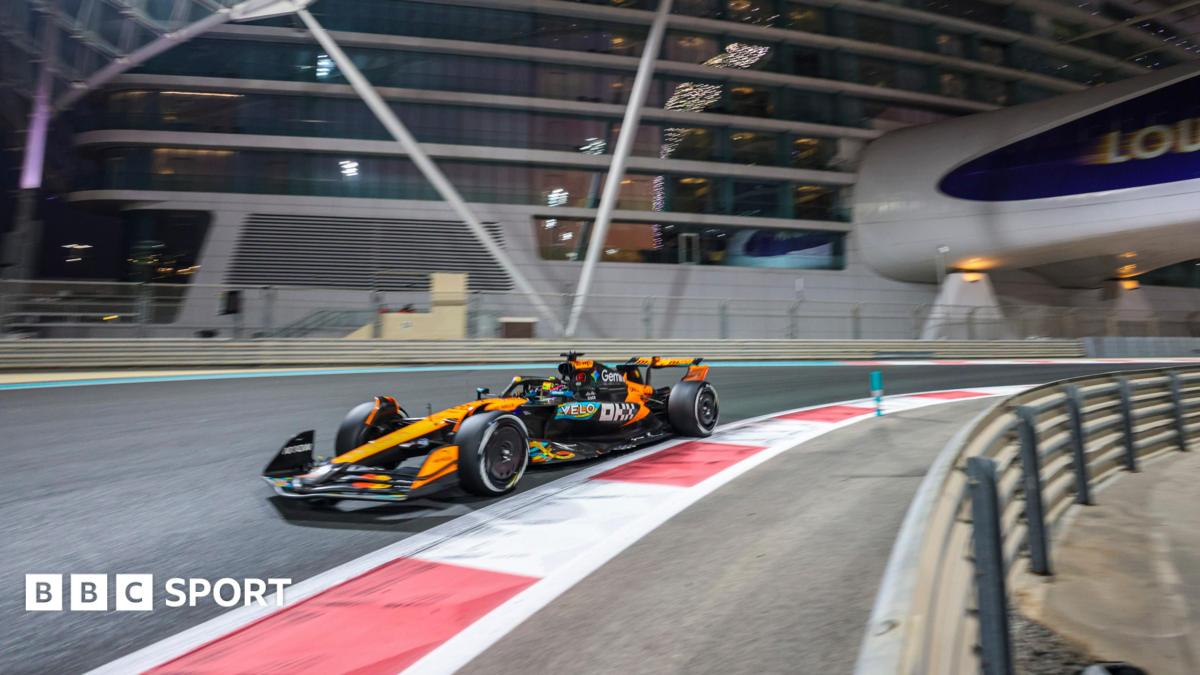
This year’s new engines, with a nominal 50-50 split between internal combustion and electrical power, have been criticised by drivers for reducing their ability to drive on the limit.
This is caused by the need to constantly recharge the batteries, which is reducing the challenge of fast corners by turning them into what two-time champion Fernando Alonso has called “charging stations”.
But Domenicali said: “There is a lot of action on the track. People are loving it. They are focused on what is happening on the track.
“They don’t understand our technology, division of ‘clipping’, or whatever it is, because it’s too technical for the wider base that we have. Therefore, the effect on the track has been widely super positive about the fans.”
He acknowledged steps taken to reduce the effect of energy recovery on driving over the next two seasons as “the right thing for the sport”.
And he admitted he had asked drivers to be “constructive” in their comments after outspoken remarks from Max Verstappen, Lando Norris and others.
“We are not here to put tape on the mouth of anyone,” Domenicali said. “The beauty of motorsport is that everyone can have an opinion, but the opinion is an opinion. I prefer to discuss things in that respect in four walls to find solutions.”
The new engines have presented an opportunity for Mohammed Ben Sulayem, the president of F1’s governing body the FIA, to push his plan for a return to naturally aspirated V8 engines for the next set of engine rules in 2030 or 2031.
Ben Sulayem has threatened to impose his wishes unilaterally for 2031, because at that point the FIA is free to do what it likes as the teams’ contracts all expire in 2030.
But Domenicali said the sport was on track to have an outline plan for the next engine rules by the end of this year.
“The main target of the future regulation is to keep things as simple as possible, to bring F1 to a lighter class [of car weight], with a sustainable fuel, with, of course, electrification, and around this give the chance to the drivers, above all, in a certain mode, to push as hard as they can,” he said.
“I do believe that within the end of this year, we’re going to be in a position to have a package ready to be discussed.
“Because there are two options.
“If we wait for the end of the cycle to be finished, in 2031, there’s nothing that prevents the FIA to present a totally different regulation. And, of course, if the teams want to be part of it, they can, otherwise, no. I’m exaggerating, but you understand the principle.
“If there is a consensus on what we are doing, to anticipate it, there is the need to find the governance in place with the teams, with the manufacturers.
“There are a lot of good talks going ahead now. There is a lot of, as you can imagine, different angles that everyone is pushing for different reasons, but within the end of the year, we’re going to be in a position to have the right package for the future.”
Most of the engine manufacturers are open to the idea of a V8 architecture, but both Mercedes and Audi want turbochargers to remain and talks are said to be moving in that direction.
It is also expected that the engines will retain a relatively significant proportion of electrical power to ensure they are road-relevant.
>

Peter Baugh got us started with Part 1 of our offseason mailbag earlier this week. Now it’s my turn to dive in with Part 2.
(Some questions have been lightly edited for clarity and length.)
How would you grade GM Chris Drury’s offseason? — Steven K.
My initial thought is that a B feels right because the roster is more competitive now than when the offseason began. Since we won’t be able to properly judge many of Drury’s moves for a few more years, though, the real answer is probably TBD.
There are so many variables that will dictate how we look back on this summer. It starts with Pavel Dorofeyev and No. 5 pick Alberts Šmits, two players who were acquired to be franchise cornerstones and must now prove they can shoulder those responsibilities. Cole Beaudoin is another key figure, with the future development of the 20-year-old center a critical part of evaluating the Vincent Trocheck trade. Above all, what becomes of the 2028 and 2030 first-round picks the Rangers traded for Dorofeyev and Marcus Pettersson, respectively, will eventually tell us if Drury took the right course or set the franchise back even further.
Until we have those answers, the grade remains incomplete.
I definitely get the upgrades to our second-pair D, and I think those were good moves, particularly Pettersson. But where does drafting Šmits and all those other LHD, plus the extra D pickups, leave Drew Fortescue and Matthew Robertson? — Erik K.
You never want to put a ceiling on young players, particularly a prospect like Fortescue, who’s still only 21 and just turned pro. Maybe one (or both) forces their way into the lineup permanently, but the likeliest outcome is that Pettersson, Šmits and Vladislav Gavrikov hold down spots on the left side of the defense for years to come, thereby crowding out Fortescue and Robertson or pushing them to their off-hand side.
There may come a time when New York looks to move on from one of the veterans in favor of a younger option, especially if 2026 draft picks Ben MacBeath and Charlie Morrison come charging in a few years. But there’s also a chance that the Rangers use some of their defensive depth to target forwards, trading from a position of newfound strength to address an area they know needs more pop.
The reality is that some of these prospects won’t pan out, but if several do and a logjam is created, that would fall into the good-problem category.
The best offensive teams in the NHL scored about 3.5 goals per game last season. The Rangers sat at 2.87, and that was with Panarin for much of the year. To be even middle of the pack offensively and score three goals per game, where in the world are 252 goals coming from? — Jake E.
It starts with Dorofeyev, who scored a combined 72 goals the past two seasons (plus another 12 in this year’s playoffs) and gives New York a young shooter it desperately needed. But the 25-year-old is going to need help in terms of playmakers who can get him the puck and other scorers who can ease his offensive burden. For that to happen, the Rangers will need these three things to fall into place.
- Alexis Lafrenière and Gabe Perreault, who combined for 43 points in New York’s final 23 games last season, build on that momentum and cement themselves as legitimate top-six wingers.
- Mika Zibanejad and J.T. Miller, who are entering their age-33 seasons, prove they can still be productive as a one-two center punch.
- An upgraded D corps makes more offensive contributions following a season in which only two defensemen eclipsed 18 points.
That’s a lot of ifs, but most of it will have to come to fruition for the Rangers to improve their attack. (It’s also worth noting that they’re still trying to add reinforcements.)
With a legitimate PP2 QB on the team for the first time in ages in Sean Durzi, should we expect any shakeups in units or the mix of ice time? — Dan T.
Five-on-five offense remains a primary concern, but the power play can relieve some of that pressure. Last season’s debacle makes it easy to forget that the Rangers finished with the NHL’s fifth-best PP, converting at 24.7 percent. There were glaring hot and cold streaks, and they’re moving forward without their biggest weapon in Artemi Panarin. But they still have the makings of a high-quality unit.
Dorofeyev will replace Panarin on the right half wall, where he’s a natural fit as a left-handed shooter who finished second in the league with 20 power-play goals. That should open up more shooting opportunities for Zibanejad on the opposite side, where he finished tied for fifth with 16 PP goals. Add in one of the NHL’s best PP quarterbacks in Adam Fox, and there’s a lot to be excited about. I’d expect Lafrenière and Miller to occupy the net-front and bumper positions, respectively.
The second unit should operate more smoothly with Durzi at the point and Perreault, Oliver Bjorkstrand, Will Cuylle and possibly Noah Laba rounding out the five-man group. Still, I’d be surprised if the ice time doesn’t remain close to a 75-25 split in favor of clearly superior PP1.
What is your prediction for Lafrenière’s scoring totals (goals/assists/pts)? — Jeff C.
Given his expected top-line and PP1 usage, which he hasn’t had consistently in his previous six seasons, I’d imagine Lafrenière will eclipse his previous career high of 57 points, health permitting. I’m thinking somewhere in the 70-point range, with a chance to shatter last season’s high of 33 assists if he plays on a line with Dorofeyev and Zibanejad.
Braden Schneider to SEA for Shane Wright? — Felipe M.
I don’t think it’s a crazy concept, Felipe, but there are pretty clear hurdles. The Seattle Kraken are believed to be seeking scoring forwards, not defensemen, so I’m not sure this deal would meet their needs. I haven’t heard anything that suggests there’s traction there.
As I wrote a couple weeks ago, I still believe the Rangers would like to leverage Schneider into forward help of their own, especially given the improved defensive depth we discussed in response to Erik K.’s question. The market hasn’t yielded any sure-fire options to this point, so it may have to be a Wright-like reclamation project, if it happens at all. I’ve wondered about defense-needy teams like the Anaheim Ducks, Chicago Blackhawks and San Jose Sharks, as well as change-of-scenery candidates such as Columbus’ Kent Johnson and Calgary’s Connor Zary.
The search continues, but I also sense Drury is content to roll with Schneider to begin the new season if the right deal doesn’t come along. The situation can be reassessed at the trade deadline or next summer, when Schneider’s one-year, $5.5 million deal will expire, but New York will retain his restricted free agency rights.
The Rangers’ most glaring long-term issue is the lack of definitive top-six, play-driving forward prospects (at least guys who haven’t played NHL games yet). What prospects DO we have who, in your opinion, have an outside chance of becoming that type of player? — Brendan M.
The names who come to mind are Dorofeyev, Lafrenière and Perreault, who the Rangers are banking on to become point-producing staples in their top six for several seasons to come. That has to happen if this retool is going to work, but they don’t exactly fall into the prospect category. Dorofeyev and Lafrenière left that status behind years ago, and while Perreault is still only 21, he’s no longer a rookie. All three are also wingers, leaving a gaping hole in terms of young, high-end centers. (More on that shortly.)
The next wave of forward prospects is led by Beaudoin, Malcolm Spence and Liam Greentree, another former first-round pick acquired as part of the Panarin trade in February. Scouts I’ve talked to see their upside as contributing middle-sixers, not top-of-the-line play drivers. Nathan Aspinall was a big riser last season, when he finished second in the OHL with 94 points in 65 games, and Tomáš Chrenko was an intriguing swing-on-skill pick in the third round last month. But I agree with your premise, Brendan, that the lack of top-six upside in the pipeline is the most troublesome potential stumbling block.
Looking down the road, do you see targets for a new 1C? — Mark S.
The best way to find one who can impact your roster for an extended period is through the draft, with the odds much better the higher you pick. The 2027 class should have exciting options near the top — Alexis Joseph, Jonah Neuenschwander and Milan Sundström, to name a few — but the Rangers’ offseason actions indicate they have no intention of picking in the top five again next year. They’ll likely have to go outside of the organization to acquire a true top-line center.
The obvious target is Connor McDavid, who left the door open by signing only a two-year extension with the Edmonton Oilers last fall. Even if he decides to leave, New York would have to distinguish itself among a lengthy list of suitors for the best player in the world.
Other pie-in-the-sky scenarios could include the Toronto Maple Leafs’ Auston Matthews and the Edmonton Oilers’ Leon Draisaitl, with the former scheduled to join McDavid as a free agent in 2028 while the latter may decide he wants out if the Oilers’ situation doesn’t improve. Maybe the St. Louis Blues go back to entertaining offers for Robert Thomas, or another young-ish center follows the recent trend of leveraging contractual control to relocate. Any of those things are possible, but we’ve seen that finger-crossing is a risky strategy.
Other than McDavid and Matthews, there aren’t any marquee centers heading toward unrestricted free agency in the next couple years. There are some interesting RFAs, including the Boston Bruins’ Fraser Minten and San Jose’s Macklin Celebrini and Will Smith in 2027, then highly regarded prospects such as San Jose’s Michael Misa, Boston’s James Hagens and Chicago’s Anton Frondell in 2028. But the chances of any of them shaking free from their current clubs at those stages are slim, as we just saw when the Ducks matched a massive offer sheet from the Philadelphia Flyers for Leo Carlsson.
If none of that happens, Drury will have to hope he finds his version of the Zibanejad trade, which just passed its 10th anniversary. In that deal, the Rangers sent Derick Brassard — who recently returned to the team in a player development role — and a seventh-round pick to the Ottawa Senators in exchange for a 23-year-old Zibanejad and a second-rounder. It’ll go down as one of the greatest trades in franchise history, but convincing a team to part with a potential 1C at a similar age will be a herculean task.
>
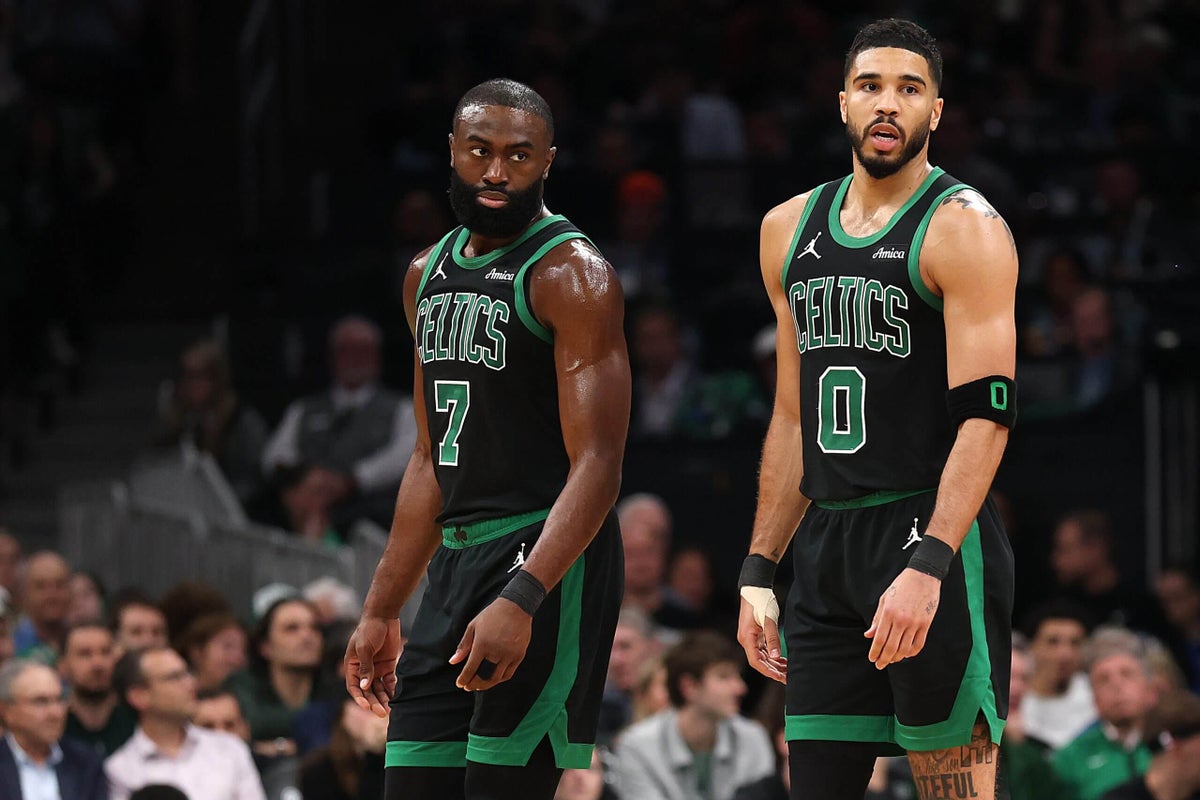
If Jayson Tatum and Jaylen Brown do harbor some level of animosity toward each other now, that is truly a shame.
For so long, they were a shining example of how much an NBA superstar duo could survive together. They were proof that not every team should make wholesale changes at the first sign of trouble. Their partnership stood as a symbol of resilience and determination.
Maybe their relationship is still in a good place after the Celtics traded Brown to the Philadelphia 76ers, but the two have made it easy to speculate otherwise. The latest possible hint of dissension came from Tatum, who took what many perceived as a dig at Brown while speaking recently at a camp in St. Louis.
Where does the Jaylen Brown trade rank in NBA history?
The Athletic NBA Staff and Jeshua Kidd
“Being a leader doesn’t mean you know it all, right?” Tatum said in a speech shared on social media. “I don’t know it all. I’ll be the first person to say that. Being a leader is being comfortable with raising your hand, like, ‘I don’t know, can you explain that to me?’ ‘I don’t know XYZ. I want to learn.’ Being around somebody that feels like they know it all, I don’t want to be around that person. I don’t want to be the smartest person in the room. I want to learn from somebody else.”
Tatum could have simply been trying to give helpful advice to a gym full of young players. Despite being one of the NBA’s most decorated stars, he has remained an extremely coachable player. He constantly seeks out additional knowledge about the game, his body and anything else that could give him an edge on the court. The topic he addressed in the video, which was initially shared on his foundation’s Instagram page, is a message he clearly believes in.
“Asking questions, being vulnerable — it is OK not to know something,” Tatum continued. “It’s not OK not to ask questions and not to want to learn. Because it’s not how we’re going to get better at anything in life. Not just basketball. Whatever you want to do in life, you have to ask questions. You have to listen. You have to learn.”
On the surface, that message is a productive one. Still, Tatum worded part of it in a way that sparked some belief he was not-so-sneakily aiming the comment at Brown. Before the 2016 draft, an anonymous NBA executive told sports writer Marc Spears that Brown might be “too smart for the league.” Early this offseason, Fox Sports analyst Colin Cowherd echoed that sentiment, saying two NBA sources told him that Brown has “a disease” where “he suddenly thinks he’s the smartest guy in every room he’s in.”
We might never know whether Tatum actually intended to take a shot at Brown, but, after the Celtics split up the duo this summer, people will continue to wonder whether the two former teammates are on good terms. Though Tatum has expressed gratitude for his time alongside Brown, certain hints popped up during their final season as teammates that, at least basketball-wise, they might no longer have been on the same page.
Whatever they feel about each other now, it won’t change how much they were able to accomplish together. They shouldn’t just be remembered for their 2024 championship, but for everything they were able to push past while on the same side.
Their partnership survived dysfunction and heartbreak. Tatum and Brown made it past the disastrous Kyrie Irving season, an Ime Udoka scandal and several brutal playoff losses. They needed to hear endless chatter about whether they could co-exist but made it work between themselves anyway for nine extremely successful seasons. For a long list of reasons, longevity with one franchise is as hard now as it ever has been in the NBA. It’s an achievement to last nearly a decade alongside one teammate. To do it while dealing with as many setbacks as they did, and still bouncing back from every issue, speaks to their competitive character.
Why did the Celtics trade Jaylen Brown?
Jay King and Jeshua Kidd
They’re on opposite sides now, of course. That reality should help set up epic matchups between the Celtics and 76ers next season. In just one layer of the drama those games promise to pack, Brown should compete with raw emotion against the franchise that decided he wasn’t worth splitting 70 percent of the salary cap between two players. Will he call for isolation after isolation against Tatum? Will he unleash a throat-slashing gesture in Joe Mazzulla’s direction? Will he glare at Brad Stevens from across the court hours before tip-off? Almost anything is on the table.
Brown’s attempted vengeance will be only one of many reasons for some spicy matchups between the two teams. LeBron James will have another chance to stick it to his longtime rival. Since the Celtics indirectly led James to Philadelphia, he could really make Stevens look bad by contributing to a big season for the 76ers. Plus, Paul George will be running into his former team, and the Celtics will be hoping to redeem themselves after blowing a 3-1 lead against Philadelphia in the first round of the playoffs.
Basketball fans will be eager to see how Tatum and Brown treat each other during those games. As much as they accomplished as teammates, the Celtics are onto a new era.
>

‘Blankety Blank’ & ‘Live At The Apollo’ Canceled By BBC Under Cuts

F1 season to finish in Europe if war continues, says Stefano Domenicali

Rangers offseason mailbag, Part 2: Grading Drury’s moves, glaring long-term issues and more
-

 Fashion9 years ago
These ’90s fashion trends are making a comeback in 2017
-

 movies2 months ago
Search For Canadian TV Actor Stewart McLean Now Homicide Investigation
-
Fashion9 years ago
According to Dior Couture, this taboo fashion accessory is back
-
Fashion9 years ago
Model Jocelyn Chew’s Instagram is the best vacation you’ve ever had
-
Fashion9 years ago
Your comprehensive guide to this fall’s biggest trends
-
Fashion9 years ago
9 Celebrities who have spoken out about being photoshopped
-
Fashion9 years ago
Emily Ratajkowski channels back-to-school style
-
Fashion9 years ago
A photo diary of the nightlife scene from LA To Ibiza