
Entertainment
1981’s ‘Butcher, Baker, Nightmare Maker’ Is Essential Cult Fil Canon

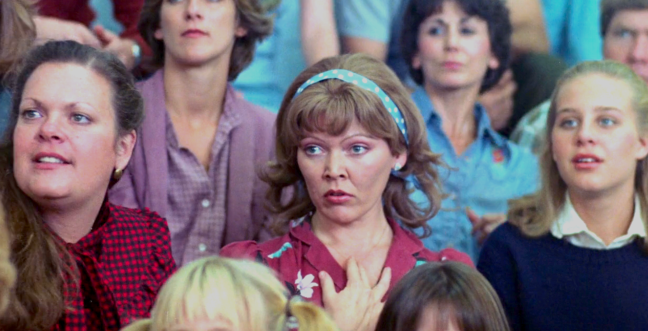

On Friday nights, IndieWire After Dark honors fringe cinema in the streaming age with midnight movies from any moment in film history.
First, the BAIT: a weird genre pick, and why we’re exploring its specific niche right now. Then, the BITE: a spoiler-filled answer to the all-important question, “Is this old cult film actually worth recommending?”
The Bait: A Full-Bodied Slasher for a Special Occasion
There’s nothing wrong with saving a movie for the right moment. Maybe you’re avoiding “The Drama” until after your alimony payment clears. Perhaps you’d simply enjoy the new “Minions” sequel better from the privacy of your own home. Whatever the occasion, some films are better left unwatched until the universe make it clear you’re finally ready to enjoy them.


For me this week, that was 1981’s “Butcher, Baker, Nightmare Maker”: a slasher recommendation that came up almost in passing while I was wrapping an interview with James A. Janisse and Chelsea Rebecca, founders of the popular YouTube channel Dead Meat, earlier this month. I’d originally planned to watch it as soon as I finished their interview. Then a trip to Montreal — and one particularly surreal afternoon that somehow involved me interviewing a Dead Meat staffer on the phone while also talking to a lovely French-Canadian man about the history of a local porn theater (more on all that next week) — kept me kicking this singular little cult oddity further and further down the road.
Reissued under the theatrical title “Night Warning” in 1983, I thought about throwing on director William Asher’s bizarre psychosexual thriller between screening in my hotel room during Fantasia. I even downloaded the film for potential programming on my flight home. But the setup wasn’t right (read: I was seated next to several small children), and it ultimately wasn’t until today that I got the chance to let this very special selection breathe.

Of course, it was worth the wait. Like so many of the best deep-cut horror recommendations, “Butcher, Baker, Nightmare Maker” initially tastes like pure exploitation. An aunt’s increasingly inappropriate obsession with the nephew she’s raised since childhood blossoms into a feverish (read: visibly sweaty) melodrama that’s punctuated with enough psychosexual dysfunction and hysterical screaming to make a pregnant nun blush. But let that terror develop for just a second and something more unsettling will emerge.
Delivering the type of wonderfully contradictory performance that gets richer the longer it goes (shout out Gretchen Corbett in “Let’s Scare Jessica to Death”), star Susan Tyrrell offers the sort of full-throated, unhinged villain role that could easily overwhelm a more straightforward thriller. Instead, the Oscar-nominated actress (“Fat City”) turns the tables to become her director’s unlikely emotional center — transforming the rapidly unraveling Aunt Cheryl into a danger that’s monstrous, yes, but also heartbreaking.
That peculiar balancing act creates a unique tone that every seasoned slasher fan should experience at least once in their life, if only because Asher produced a prime example of a movie becoming imbued with the chaotic energy of how it was made. “Butcher, Baker, Nightmare Maker” started out under director Michael Miller before financiers replaced him with Asher, who was a major television creative then known for shows like “I Love Lucy” and “Bewitched.”

And yet, establishing himself as remarkably fearless in unfamiliar creative territory, Asher didn’t sand down the film’s script — instead pressing on to helm the project with an almost Old Hollywood sensibility that allowed Tyrrell’s channelling of domestic malcontent to curdle into the kind of nasty homegrown horror that’s made Joan Crawford-types unnervingly sexy for decades.
That specific blend of overheated desperation and empathetic nut-jobbery is precisely what drew me into Aunt Cheryl as a character, and watching a seemingly well-meaning woman erupt into a furious vehicle for both lust and rage (not to mention one of the angriest haircuts ever put on film!), I texted my friend Bret Berg at the American Genre Film Archive to ask him what he thought of “Butcher, Baker, Nightmare Maker” and its resurgence in recent years.
A longtime friend of IndieWire After Dark, Bret has one of my favorite artistic palates and his response summed it up well: “Ha. Deranged and hot. Unpredictable and entertaining.” Reader, he wasn’t wrong.
Somewhere between “Donkey Skin, “Bunny Lake Is Missing,” “The Dressmaker,” “Parents,” “In a Glass Cage,” and even “Pieces” (still an all-timer for me after I watched it five times during the very first weekend I saw it), I’ve slowly realized that I have a weakness for films that live in some pretty twisted neighborhood. Many of the movies we’ve chosen for After Dark are shaggy, excessive, and unapologetically provocative. And they’re unafraid to use blood and spectacle as a way of expressing powerful ideas many more “traditional” projects would happily waste their entire runtimes circling.
“Butcher, Baker, Nightmare Maker” has actually attracted a growing audience since its pandemic-era rediscovery, and there’s no doubt in my mind it’ll get an even bigger fanbase when it’s featured in a Dead Meat video eventually. Some bottles just need extra time to reach their most potent peak, and the batshit ballad of Aunt Cheryl? That’s officially aged to perfection. Thanks, Dead Meat! —Alison Foreman
The Bite: Butcher, Baker, Homophobe Slayer
The gays love horror, but horror doesn’t always love them back. The strong queer fandom for the genre that thrives today in online spaces and conventions was formed on the back of the canon’s exploration into themes of otherness and social isolation, on its frequent intersections with camp, and on the parade of ‘80s slashers that featured attractive guys getting knifed through their (shirtless) chests. But homophobia and transphobia also run rampant through horror, and for every explicitly LGBT work in the space like “Leviticus” and “Teenage Sex and Death at Camp Miasma,” there are a hundred achingly hetero films it exists in conversation with.
To be a queer fan of the genre is often to reclaim something that wasn’t for you: was “Sleepaway Camp” and its notorious twist ending ever meant to be empowering or a positive statement? Probably not, but if that’s the best we can get, well, sometimes you’ve got to make the most of it. And then there’s something like “Butcher, Baker, Nightmare Maker,” a wildly campy and lurid slice of exploitation trash that’s also a (somewhat) sincere story about the dangers of institutional homophobia. Nowadays, the film feels a bit quaint. But remember it came out in 1982, and suddenly, an ending where the homophobic douchebag police officer gets shot to death while the gay guy survives the carnage feels downright GLAAD-award worthy.
A “Mommie Dearest” tale that’s as wildly disturbing as it is nastily enthralling, “Butcher, Baker, Nightmare Maker” doesn’t exactly center queer lives as much as it portrays a society where gay people are scapegoats and boogeymen that actual abusers can hide their crimes behind. The story starts with Tyrell’s Aunt Cheryl stabbing a man to death after he denies her sex, and only after the fact do we learn he was gay and in a relationship with Billy’s coach Tom (Steve Eastin).
From there, police detective Carlson (Bo Svenson, in a diabolically hateable performance) jumps to conclusions — clearly, Billy is also gay, and murdered Tom’s boyfriend in a lover’s quarrel, right? Forget all the evidence his partner is digging up about Aunt Cheryl having a history of unhinged behavior, or her connection to numerous missing persons cases and mysterious deaths, or the fact that Billy and Tom vigorously deny his theories. If a gay person is tangentially involved with this case, well, then they must be responsible.

Homophobia in “Butcher Baker Nightmare Maker” isn’t so much casual as it is an ingrained, violent fact of life. Aunt Cheryl refers to gay men as “very sick,” the douchebag bully Billy deals with (played by a young Bill Paxton) taunts him when rumors he and Tom had an affair circulate, and even Carlson’s more observant partner (Britt Leach) still casually refers to the murder victim as a “fag.” For all the film focuses on Carlson’s irrational attempts to peg the murder on gay people, the actual gay man Tom disappears from the narrative for long periods of time. But when he pops up, we’re reminded that he’s an upstanding guy wrongly harassed by the law for his sexuality, and one of the few adults actually looking out for Billy.
In fact, Homophobia is so rampant that it blinds the straight people of “Butcher Baker Nightmare Maker” to the real, very heterosexual perversion going on under their noses. A modern Oedipal story that merges the Greek Tragedy with trashy ‘80s mom-stepson porn, William Asher’s slasher opens its main plot — after the second-best log truck death scene in horror history — with Cheryl scratching her naked nephew’s back and purring into his ear. The subtext behind her actions only becomes more and more explicit as the film goes on, and it’s revealed nephew and aunt are actually son and deeply emotionally disturbed mother.
Does the film handle this subject matter tastefully? Not tastefully enough to refrain from gratuitous shots of McNichol’s bare ass in a scene where Billy argues in the bathroom with Cheryl. But as deliciously over-the-top as Tyrell’s delirious performance can get, there’s real terror in Cheryl’s toxic enmeshment with her own son, and her use of him as a substitution for the one man she ever loved. Modern viral TikTokkers complaining about overbearing boy moms will have a field day with “Butcher Baker,” which takes emotional incest to its grossest, most uncomfortable conclusion.
Part of what makes the film, as hilarious as it can (seemingly intentionally) sometimes be, genuinely terrifying is McNichol’s relative youth during production. At 21, he can still pass in the film as a teenager, and the film doesn’t shy away from showing Billy as an innocent kid who’s harmed and broken and his parent’s abuse. The ending rests on the emotional breakdown he experiences as a result of Cheryl’s betrayal of his trust — and how, even after going through a horrific tragedy, his experience is denied as reality due to homophobia. That Billy is ultimately heterosexual, with a loving girlfriend nonetheless, doesn’t defeat the point being made. In the world of “Butcher, Baker, Nightmare Maker,” gay people might be made out to be the villains, but it’s really the straights that are not okay. —Wilson Chapman
“Butcher, Baker, Nightmare Maker” (1981) is now streaming on Tubi.
Read more installments of After Dark, IndieWire’s midnight movie club:
>

Although any hopes of an onscreen reunion might be pointless, the cast of Home Improvement appears to be keeping close in real life.
Patricia Richardson, who starred as matriarch Jill Taylor in the ABC sitcom for its eight-season run from 1991 to 1999, reunited with her onscreen sons Jonathan Taylor Thomas and Taran Noah Smith this week.
“My other boys,” Richardson captioned a selfie with Thomas and Smith, who played sons Randy and Mark, alongside Zachery Ty Bryan as oldest boy Brad.
The reunion comes after their former TV dad Tim Allen said a potential reboot is stuck due to “personality problems” with the actors who starred as the sons.
“They keep talking about how it could move forward, but they get stuck [because] there are some personality problems right now with the boys,” Allen told Us Weekly in June. “They’ve got their own issues. I always thought it would be cool if it was a story about them. That’s a little challenging right now, to put it mildly.”
While Richardson has noted that Thomas and Smith no longer act, Bryan is currently serving 16 months in a California prison, due to several probation violations, following multiple DUIs and a domestic violence charge.
Richardson said “it was so weird” hearing Allen say in the press that the cast was all onboard for the reboot, despite him never coming to her, noting she “would not want to” return regardless.
>

The Barbie sequel has hit a roadblock on its way back to Barbieland.
Warner Bros. has until December to reach a deal with the stars of the 2023 film, Margot Robbie and Ryan Gosling, as well as director and co-writer Greta Gerwig, before the rights revert to Mattel, according to a report from the New York Times.
The studio has been negotiating with the principal talent for months, offering them a share of the profits if the film reaches certain box office milestones. The outlet also claims that Warner Bros. Discovery CEO David Zaslav declined to approve the proposed deal because he believed it was “too generous.”
The Times went on to report that a Warner Bros. spokesperson disputed that characterization, saying talent representatives declined an offer made in May and have not yet submitted a counteroffer.
“We have a rights deal with Mattel in place and have made a series of big offers to try and finalize deals to make the next Barbie film,” studio co-chairs Pam Abdy and Michael De Luca said in a statement. “Unfortunately, we have been unable to reach an agreement thus far.”
The Hollywood Reporter reached out to Warner Bros. for comment, and they had nothing further to add.
Gerwig and her Barbie co-writer Noah Baumbach have had an idea for Barbie 2 for a couple of years. THR first reported in 2024 that the couple was in the “early stages” of developing a story for the sequel.
Barbie was a massive hit with audiences and critics, grossing $1.5 billion worldwide and earning eight Oscar nominations, winning one for best original song (“What Was I Made For?” by Billie Eilish and Finneas O’Connell). Upon its release in July 2023, the film also became a cultural phenomenon thanks to its marketing campaign, signature pink aesthetic and simultaneous release with Christopher Nolan’s Oppenheimer, dubbing the name, “Barbenheimer.”
>

It might seem a bit jarring to hear that an actor “took a sweetness” from a character called Little Death, but Teenage Sex and Death at Camp Miasma’s Jack Haven found an innocence to the slasher in Jane Schoenbrun’s latest feature.
“It’s someone who isn’t killing because of a wicked and cruel instinct, but sort of just because of inevitability and curiosity,” the 31-year-old tells The Hollywood Reporter. In Teenage Sex and Death at Camp Misasma, a young filmmaker, played by Hannah Einbinder, is preparing to reboot a slasher franchise, Camp Miasma, which found Haven’s Little Death terrorizing and killing teen campers. Add the ultimate final girl, played by Gillian Anderson, and it’s an unbeatable formula.
“I like a character that just doesn’t quite know how human things work, but is interested in playing with them,” Haven explains. “[There’s] an innocence and a total inability to control the people around them in a manipulative way. This character has a deep power that’s a deep centered power, but has no interest in the social dynamics.”
The actor gained recognition for their role in Netflix’s Atypical, along with roles in films like Bill and Ted Face the Music. They’ve also waded into the filmmaking waters in recent years. In Camp Miasma, Haven reunites with Schoenbrun after the pair worked together on the director’s acclaimed feature I Saw the TV Glow.
“Jane is one of those rare and sacred collaborations that I just feel it’s intergalactic when I get to work with them,” Haven says.
“I feel a great freedom when I’m with Jane,” they continue. “When I’m talking to Jane about creating something because they have a really unlimited imagination and they can travel through dimensions.”
The actor says they’ll always work with Schoenbrun when the opportunity’s presented. Adds Haven, “I pack myself and I’m ready at the door.”
Below, Haven digs into the film premiering at Cannes, working as a filmmaker and the Camp Miasma sequence that the actor found to be their most physically challenging scene ever.
What drew you into the movie?
I would’ve said yes to anything that Jane asked me to do, but they described the character as the slasher killer in a helmet with a slobbering tongue, and I was totally in.
What was the Cannes experience like?
I wish I was mentally stable enough to enjoy something like Cannes, but unfortunately I’m not. The best part was that I knew it was a good thing in my mind. Probably in my body, I knew it was a good thing. My mind turned invasive species mode and was running through the rainforest, trying not to get caught. It’s like, you know that scene in The Beach when Leonardo DiCaprio goes into video game mode and he’s being chased? It’s like that level of paranoia for some reason is elicited by environments in which capitalism and film are making out. I just, something about it, I run. But seeing everyone’s hard work, this beautiful group of people with the purest souls on earth being celebrated in this way was just magnificent. Also, my mom came, and it was really special to be there with her because she’s a longtime artist. It was just amazing to see it through her eyes.
How do you work through getting over that in your own head?
I’ve just been working on transcending it. It’s totally an ego thing because it’s like, first of all, no one really gives a shit about anyone else. At the core of every interaction is pure love, and we know that celebrity culture is done. I think it’s hilarious that we’re still dealing with these dynamics because we know they’re not real.
Seeing a movie like Camp Miasma at Cannes, people just enter this state of bliss because they are in the imaginary dimension, even if just for a moment. For some reason, that’s what we like to pay for. We like to pay for things that glitter like the imaginary, like magic. This is the way our world is built right now, it won’t always be built like this and it hasn’t always been built like this, but that’s the mental gymnastics I have to do, which honestly should be quite easy because as I said, it’s all love.
You recently did your first feature as a director, right? Can you tell me a bit about what that process of transitioning to filmmaking has been like?
Yes, I have two features actually, but only one is available to see. The first one I made on my iPhone, and it was really because one of my close friends, Peter, he’s 73 and he had liver cancer, so he was dying. He’s the star of the film, so I wanted to make it as quickly as possible. He got the liver transplant halfway through and he survived, and so we finished the film with him. The second film, my good friend Clyde gave me money to buy a better camera. I wrote a script for that one. The first one was improvised, and that one was more produced. Then editing it is obviously hell. My best friend Mina Walker scored the movie. We’ve just finished that one. Now, I’m writing the third one. We’re going to shoot in August and September, [and it’s] is a comedy.
I believe Jane said in the director’s notes that the one shot killing spree scene was the most proud they’ve been about anything they’d made. I’d really love to hear about that scene in particular.
Jane had a shot by shot with them as Little Death. It [was] made at the camp before we started shooting. It was just an iPhone edit, which I hope gets released someday. But I can’t take really any credit for it. I know what my body is doing, and it’s like 3 a.m., and I do what I must do. The hardest part was probably the camera that was strapped to me.
What was that like? I read it was very heavy.
I don’t even know how heavy it was, but it felt like it was as heavy at least as me. It felt like the shadow self, honestly. It was balancing that. But the camera assistant, Emma, was holding the camera, and then there were sandbags on the back so it was counterbalanced, but it’s still… The fight choreographer, stunt choreographer, Maja Aro, had this really particular movement that we practiced so much, so I knew what I was doing.
The pieces were all there, but it’s still probably the hardest thing I’ve had to do as an actor, just in terms of physical intensity. The stunt people in the background, they were doing such hard work because they were throwing themselves against the wall and then falling to the rhythm of the stabs. We did it maybe eight times, and still on the last take, I screamed afterwards because I forgot something. But I guess we got it.
What did you feel like seeing the scene?
Totally blown away. As with the whole film, as with all of Jane’s work. Even when Jane describes something or describes an idea for a film, that’s unlike anything. It really feels like a feeling of your grandmother telling you a story as a child, it’s that wonder.
>

Chelsea vs Tottenham in pre-season LIVE!

Daniel Dubois’ advisor Sam Jones and Fabio Wardley’s manager Mike Ofo clash again ahead of heavyweight rematch | Boxing News

AIG Women’s Open 2026 tee times: Full R3 pairings and start times for third round at Royal Lytham & St Annes | Golf News
-

 movies2 months ago
Search For Canadian TV Actor Stewart McLean Now Homicide Investigation
-

 Fashion9 years ago
These ’90s fashion trends are making a comeback in 2017
-
Fashion9 years ago
According to Dior Couture, this taboo fashion accessory is back
-
Fashion9 years ago
Model Jocelyn Chew’s Instagram is the best vacation you’ve ever had
-
Fashion9 years ago
Your comprehensive guide to this fall’s biggest trends
-
Fashion9 years ago
9 Celebrities who have spoken out about being photoshopped
-
Fashion9 years ago
Emily Ratajkowski channels back-to-school style
-
Fashion9 years ago
A photo diary of the nightlife scene from LA To Ibiza