
Eli Roth on the set of Ice Cream Man.
The Horror Section


Those rumors that “The Batman” might shoot Part 2 and Part 3 back-to-back are false, according to the man in charge.
In a Threads post on Thursday, James Gunn shot down speculation surrounding the upcoming sequels. Despite all the delays, the growing wait and the extreme demand, it turns out the next two movies won’t be shot one after the other.
“Can you confirm or deny ‘The Batman PT 3’ is being filmed simultaneously with PT 2? Many are running the story as fact,” one user asked.
“I can deny,” Gunn responded.

“The Batman: Part II” has been mired by delays for some time. The original film starring Robert Pattinson dropped back in 2022, with director Matt Reeves revealing last month that his follow-up’s premiere had once again moved from October 2027 to February 2028.
When that push was announced, the filmmaker placated his audience with a first look at Pattinson in his new Batsuit. He also shared a camera test for “The Batman: Part II” in early May. The images depicted an updated Batmobile, refitted with snow tires, driving through a winter flurry.
He’s also been active on social media, announcing returning faces and new actors joining the franchise. Pattinson, Jeffrey Wright and Andy Serkis are all returning, along with Colin Farrell as The Penguin following his lauded gig in the HBO limited series spinoff in 2024. They’ll be joined by Sebastian Stan, Scarlett Johansson, Charles Dance, Brian Tyree Henry and Sebastian Koch.
Though Reeves has continued to tease more and more of his massively anticipated follow-up to “The Batman,” details regarding the plot of “The Batman: Part II” (which he wrote alongside Mattson Tomlin) remain scarce.
“The Batman: Part II” drops in theaters on Feb. 18, 2028.

>

Juno Temple revealed she used to call a famed horror movie location home as a kid, sharing the residence was a frequent stop for tour buses.
Specifically, during a Tuesday appearance on “Hot Ones Versus” alongside her “Ted Lasso” co-star Jason Sudeikis, she challenged the “Saturday Night Live” alum to figure out which “classic movie horror” house she lived in as a kid.
“My parents did [move there], but with me [too] because I then existed,” she quipped. “Yeah, they bought it without knowing that this was part of this kind of iconic franchise.”
After Sudeikis guessed the “Rosemary’s Baby” residence, Temple revealed that it was actually the South Pasadena house that was used as the home for serial killer Michael Myers at the start of John Carpenter’s 1978 slasher “Halloween.”

“I moved into the house where Michael Myers stabbed his older sister,” she shared. “And there were tour buses that showed up on Halloween being like, ‘And this is the Michael Myers house.’ And then I was out front with a head of blonde curls being like … I mean I probably thought they were there for me, if I’m honest.”
She quipped: “I was a pretty iconic little girl that was like, ‘Everyone’s here for me. It’s great.’”
As Temple went on, she explained that she describes herself as “a horror nut,” adding, “I literally fall asleep to the soothing sounds of a chainsaw and girls screaming.”
“Do you think there’s a chicken and egg kind of thing like that [here]?” Sudeikis countered.
“Maybe? That I was born into it? I had no choice?” she responded. “Yep. I believe in that.”
Temple also shared this fun fact with Hannah Waddingham during a “Ted Lasso” press interview with Hits Radio U.K.
“No you didn’t,” a stunned Waddingham responded upon hearing the news. “The original house from ‘Halloween?!’”
“The Michael Myers house is up the road from here,” Temple explained. “It’s a made up story for Hollywood, but it’s the house that they filmed in where Michael Myers was a little boy and he stabbed his sister and got taken away.”
Still in disbelief, Waddingham quipped that she would’ve “never of slept” in that house.
@hitsradiouk Juno is 10x braver than us 😭 #hannahwaddingham #junotemple #tedlasso #halloween #michaelmyers ♬ original sound – Hits Radio UK
Watch Temple’s recounting of her unique childhood home above.

>

Nielsen is paying $2.15 billion to acquire DoubleVerify, a provider of software that measures advertising performance.
The all-cash acquisition will deliver shareholders of DoubleVerify $13.60 per share. Shares in the publicly traded company jumped nearly 14% in after-hours trading Thursday on the acquisition news. Nielsen has been privately held since 2022.
Nielsen was attracted to the deal as it looks to improve its ability to track streaming and work with programmers and advertisers reckoning with the ongoing shift from linear TV to streaming. While networks since the rabbit-ears days have complained about Nielsen’s methods, the company has been in the crosshairs numerous times during the streaming boom as its capabilities have faced scrutiny.
The deal is expected to close by the first quarter of 2027, subject to approval by DoubleVerify shareholders and regulatory approval. Private equity firm Providence Equity Partners, which owns 12% of DoubleVerify, has agreed to vote in favor of the deal and plans to exit the investment after it closes.
Nielsen CEO said in a statement that the transaction is in line with the “fundamental transformation” Nielsen has undergone in recent years. The company now aims to track “the full media lifecycle, from discovery and planning through measurement and outcomes; and strengthening our financial foundation. The result is a stronger, more agile Nielsen that has earned its place as a leading media intelligence platform for the modern advertising ecosystem.”
DoubleVerify CEO Mark Zagorski called the acquisition “an exciting milestone.” The company will become “a private entity with the support of Nielsen,” gaining resources and opportunities to keep growing. Its goal will be to develop “a single currency that scores media on both audience delivery and media environment quality.”
>
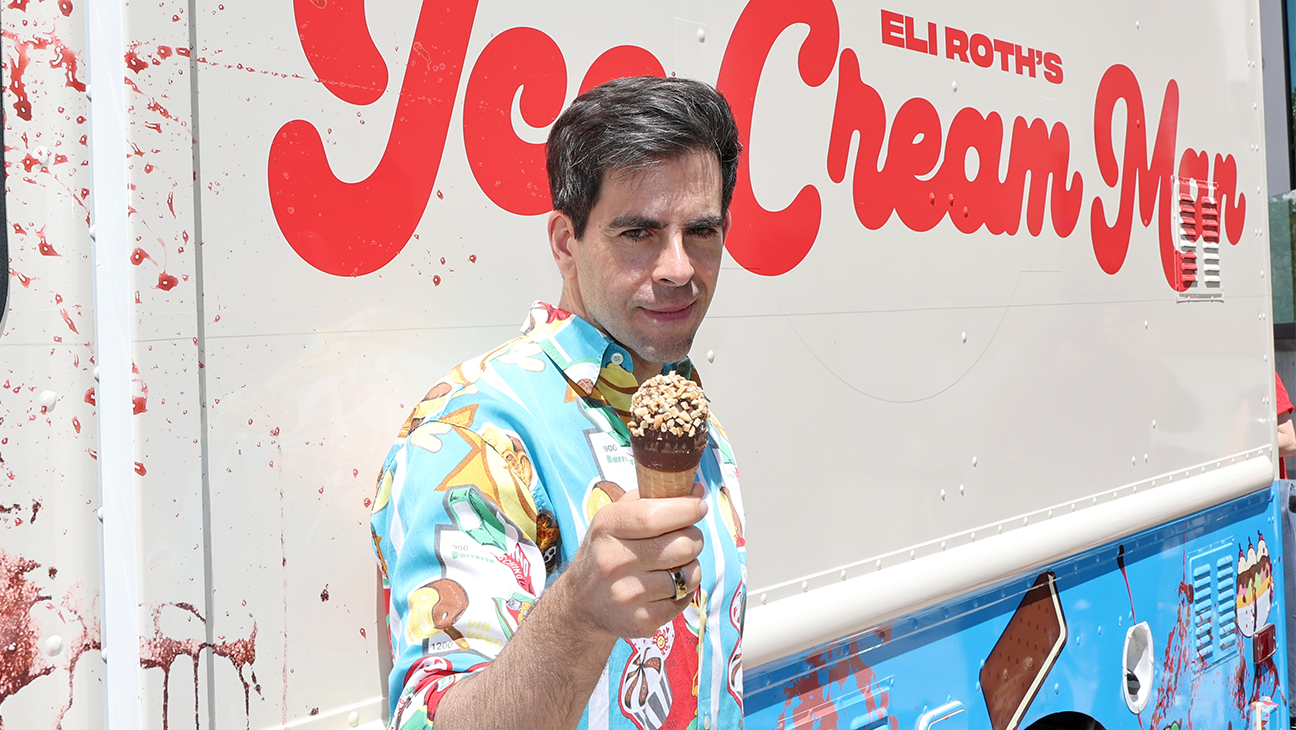
Last year, Eli Roth decided to take matters into his own hands.
After his experience on Lionsgate’s $120 million video game adaptation, Borderlands (2024), went awry, the filmmaker launched his own soup-to-nuts company, The Horror Section, to bypass the studio system entirely. Together with his partners, Roth aims to shepherd genre films from development through release without forcing filmmakers to navigate layers of studio oversight and executive mandates that so often shape creative decisions.
The Horror Section’s inaugural release is Roth’s unrated splatterfest known as Ice Cream Man, which opens wide through Iconic Events Releasing on Aug. 7. Throughout his career, Roth has had to pull some of his punches in response to MPA-driven studio notes and exhibitors’ longstanding preference never to exceed an R-rating. But one recent horror franchise shattered that convention, opening the floodgates for more unrated theatrical releases like Ice Cream Man.
“There is a [theatrical] audience for the fully unhinged unrated movie with full-on gore,” Roth tells The Hollywood Reporter. “Once Terrifier 3 opened to around $20 million, all of a sudden, AMC, Regal, Cinemark and all the chains said, ‘Yeah, we will play an unrated movie.’”
Following the success of his feature directorial debut, Cabin Fever (2002), Eli Roth enlisted his childhood friend Noah Belson to write a screenplay about a creepy ice cream man whose frozen treats transform children into bloodthirsty, maniacal killers. But its risqué premise in which kids brutally murder their parents and teachers made financing nearly impossible to secure, leaving the project to languish on a shelf for more than two decades. Roth ultimately dusted it off to kick-start The Horror Section, viewing it as the perfect calling card for the company’s slate of unapologetically offbeat genre films.
Drawing inspiration from Steven Spielberg’s 24-minute Omaha Beach battle in Saving Private Ryan, Roth’s Ice Cream Man stages a 30-minute school-set sequence that unleashes nonstop mayhem involving roughly 100 child actors. Despite the set piece’s over-the-top bloodshed, the young cast and their parents joyously embraced the gory chaos.
“The parents had to have visual eye contact with their children at all times, and they were coming up to me at the monitor. Mothers were like, ‘My daughter would love a fake head. Can you give my son a leg?’” Roth recalls mid-laugh. “Once we laid out the blood and guts, the kids just started playing tetherball with a head or jump-roping with guts. The parents came up to me after to say, ‘This is the most fun day my kid has ever had.’”
After Curry Barker’s Obsession and Kane Parsons’ Backrooms combined to gross nearly $900 million at the global box office this past summer, Roth is weighing in on the two horror phenomenons. Obsession followed a path reminiscent of Roth’s own Cabin Fever, premiering at TIFF before igniting a bidding war and later becoming a highly profitable theatrical release. Roth believes the film should earn Barker and star Inde Navarrette the industry’s highest honors. He also reveals that he attempted to recruit Parsons and Backrooms after catching wind of the filmmaker’s viral YouTube series in 2022.
“Obsession should win best screenplay, and Inde Navarrette should win best actress. Everyone else should be nominated because it’s that good,” Roth says. “Four years ago, I reached out to Kane Parsons about how much I loved Backrooms, but I think Peter Chernin [North Road] already had it then.”
Roth cautions the town against hastily rushing to recruit more YouTubers in hopes of catching lightning in a bottle again. In his view, the success of both Barker and Parsons wasn’t simply the product of existing online followings. Each filmmaker was also surrounded by experienced producers and collaborators who served as mentors. Thus, Roth hopes the next YouTube creator to make the leap to features is afforded the same level of guidance and support.
“We’ve had an incredible run [of YouTubers succeeding on the big screen], but I don’t necessarily think that YouTube is the answer. It’s a component. If you’re going to get someone off of YouTube, don’t just throw them into the system,” Roth says. “Pair these younger filmmakers with an experienced filmmaker like Jason Blum, Osgood Perkins, James Wan or the Duplass brothers so they can help bring out the best in their work. That will set them up for success like all the smart producers who surrounded Curry Barker and Kane Parsons.”
Below, during a conversation with THR, Roth also discusses his personal note network on Ice Cream Man considering he no longer had to entertain studio notes.
***
In the past, you’ve been beholden to studio notes because they were beholden to the MPA in order to get the movie into theaters with an R rating. But now you’re beholden to no one thanks to the Terrifier franchise’s introduction of unrated screenings?
Well, beholden is probably the wrong word. The MPA adjusts with the tastes of the times, so I’ve had an amazing experience, and a really good open dialogue, with them. It was never a fight with the studios, but there were always disagreements that were impossible to prove. Someone would say, “Take this out. It’s going to offend audiences.” And I’d say, “No, when you go to see this movie, you want to be shocked and offended.” Sometimes, it’d be gore, and sometimes it’d be language.
For Ice Cream Man, I didn’t want to have to deal with that. I wanted to make something that’s pure and raw and from my head. I wrote this movie with Noah Belson in 2003, and for years, people would read it and go, “You can’t do this. You can’t ask children to even perform these scenes. This is too insane.” And I’d say, “No, kids love gore. They love Halloween. I want to make this the craziest movie I’ve ever done.”
Then I saw what Terrifier 3 did. There is an audience for the fully unhinged unrated movie with full-on gore, and the theater chains learned that people will come to see it in a theater. So once Terrifier 3 opened to around $20 million, all of a sudden, AMC, Regal, Cinemark and all the chains said, “Yeah, we will play an unrated movie.”
Iconic Releasing and I went to CinemaCon, and I sat down with every theater chain. I said, “I’m starting this company called The Horror Section. If I make unrated movies, will you put them in your theaters?” And they said, “Absolutely. Anything you want to do, we can help tell the horror fans.”
I also said, “You can get comedy on your phone. You can get drama on TV. But you can only get the true adrenaline rush of seeing a horror movie in the theaters. It’s like Coachella. You can watch a Coachella performance on your phone, but it’s not the same as being there. You can pirate a movie, but you cannot pirate the experience and adrenaline rush. All respect to streamers, but I’m not making horror movies for streamers. I am making horror movies that are theatrical events with the longest window possible.” And the theater chains said, “We will fully support you.”
Then I put together the company, and I raised the money [a production budget of $5.5 million, plus a few million for P&A]. After 20 years, I know how to [make a movie]. I know how to write it, produce it, release it and publicize it. Now, between The Horror Section and Iconic, we have an incredible team, and we’ll see what happens when we put Ice Cream Man out on Aug. 7.
Eli Roth on the set of Ice Cream Man.
The Horror Section
Now that you don’t have studio execs looking over your shoulder, who do you ask for notes on a draft or a cut?
I’ve always gone to my writer-director friends. I’ve always been very thankful that I can go to Quentin Tarantino or Edgar Wright or Sam Levinson or Sean Baker or Ti West. If I had a cut of a movie that was ready before I showed it to the studio or released it, I’d go to different people that I really trust and know that they aren’t going to lie to me. They’re going to go, “Okay, this works, this doesn’t work.” Sometimes you want to save them till later in the process, but sometimes it’s earlier in the process. So there’s a group of filmmakers friends that I really trust to not lie to me and not let me fall on my face.
This time, I went to Bob Murawski, one of the best editors; Michel Aller, who cut Thanksgiving; and [Tarantino’s editor] Fred Raskin. They didn’t cut the movie; Matt Lyons did. But I trust Fred, Bob and Michel. They’re all friends. So I showed them the movie, and all three of them had such strong notes for me and my editor.
I knew Bob would get it. He said, “This is Devil Times Five times 50.” Devil Times Five [aka People Toys] is such an obscure pull. And then Quentin was like, “Yeah, Bob Murawski said it’s Devil Times 50.” It’s a very specific language.
Fred Raskin, who I’ve known since film school, is a friend. He watched it on a weekend and gave me really great notes. So I’ve always had a team of really, really smart filmmakers that I trust that will give me honest feedback.
Charlie Storer as Piper in Ice Cream Man
The Horror Section
How did you shoot Ice Cream Man with 100 kids? And how did you get 100 kids’ parents to sign off on all the bloody mayhem?
You cannot believe how many horror fans are out there. I was a camp counselor for three summers, so I love kids and love working with kids. When we were shooting the playground attack, I was super upfront because I knew people were going to Google my name. I was like, “We’re making a horror movie. I want this to be The Birds, but with kids going crazy and full-on gore.” So we were pretty clear about it, and anyone who didn’t want to be involved is generally not going to sign up.
Once you put the kids in monster makeup, they get it. They love it. These kids have seen every episode of The Walking Dead. They may not have seen the Terrifier movies, but they have Art Crispies backpacks. Their parents were also younger than me, so they’ve watched my movies. The parents had to have visual eye contact with their children at all times, and they were coming up to me at the monitor. Mothers were like, “My daughter would love a fake head. Can you give my son a leg? My son wants an arm. My daughter needs more blood.” So they’re all huge horror fans.
I made it a team exercise. I said, “I brought you here for a reason because I want everyone to have their moment. We’re all scene partners. We’re all going to make this great, but only if we all listen and work together. The more you listen to me, the more I’ll be able to put the camera on all of you.” It’s the same way I approached the riot scene in Thanksgiving.
We had to break the kids every 45 minutes. By the time you bring them out and set them up and have the 20 stunt people get them in fake blood, you have one or two minutes to get the shot. It was the craziest day of shooting in my life. But once we laid out the blood and guts, the kids just started playing tetherball with a head or jump-roping with guts. They were all laughing, and the parents came up to me after to say, “This is the most fun day my kid has ever had. You were so sweet.” I’m very even tempered. I have good energy. I don’t yell.
But they’re kids, and sometimes, you have to just roll with it. We were about to shoot a scene, and I was like, “Action.” Stunt people were hanging and ready to be pulled down, but no one was moving. There was a kid in the middle with his hand up, and I went, “Yes?” And he said, “My shoe’s untied.” And I said, “Okay, we’ll wait.” Then he put his hand up again, and I said, “Yes?” And he said, “But where’s my mommy?” And I realized he does not know how to tie his shoes because he’s too young. And I was like, “Can someone help him tie his shoes?”
They generally also had no fear whatsoever, but when we lined up 100 kids to get the ice cream, we had one minute to get the shot. I started rolling the camera, and a bee came along. And one kid was like, “A bee!” Then they all ran, and that was it. So the bee was now directing my movie. But at the same time, they gave us moments that we could have never predicted. The energy they brought to the set was so wonderful.
There were kids that were crying at the end of the shoot because they didn’t want to get out of the makeup. They were sad that it was over. It was this beautifully wild experience. They did arts and crafts with the brains. Overall, they know the difference [between reality and make-believe]. They know what pretend is. So it was a mix of Halloween and Christmas.
You know what it’s like to have a low-budget indie horror movie premiere at TIFF to great fanfare before having a highly profitable theatrical run. So what lessons do you hope the town learns from the Obsession craze?
Obsession should win best screenplay, and Inde Navarrette should win best actress. Everyone else should be nominated because it’s that good. It’s just an incredible film. Everyone is realizing that there are YouTube creators who can bring their audience to the theater, which is amazing. If I was a teenager, I would’ve started on YouTube. But it’s not like Curry Barker was the biggest YouTuber. He brought in an audience, but the movie itself is what carried the word of mouth. Everyone was saying, “Have you seen Obsession?”
Four years ago, I reached out to Kane Parsons about how much I loved Backrooms, but I think Peter Chernin [North Road] already had it then. I remember going to a barbecue years ago, and all these nine-year-olds were talking about was Backrooms. So I went down a rabbit hole watching it all, and it was really scary. I thought, This kid [Parsons] is a genius. So Kane Parsons and Curry Barker have been at it for years, and they’re so talented.
We’ve had an incredible run [of YouTubers succeeding on the big screen], but I don’t necessarily think that YouTube is the answer. It’s a component. If you’re going to get someone off of YouTube, don’t just throw them into the system. Pair these younger filmmakers with an experienced filmmaker like Jason Blum, Osgood Perkins, James Wan or the Duplass brothers so they can help bring out the best in their work. That will set them up for success like all the smart producers who surrounded Curry Barker and Kane Parsons.
We want to raise that next generation for success. You don’t want a bunch of YouTubers to be given a shot and fall on their face to where people go, “No, that doesn’t work.” It’s about pairing them with veteran filmmakers so they can help grow their careers by making the best movies possible.
***
Ice Cream Man opens in movie theaters nationwide on Aug 7.
>


Search For Canadian TV Actor Stewart McLean Now Homicide Investigation


These ’90s fashion trends are making a comeback in 2017
According to Dior Couture, this taboo fashion accessory is back
Model Jocelyn Chew’s Instagram is the best vacation you’ve ever had
Your comprehensive guide to this fall’s biggest trends
9 Celebrities who have spoken out about being photoshopped
Emily Ratajkowski channels back-to-school style
A photo diary of the nightlife scene from LA To Ibiza