
Tech
SK hynix Approves $38 Billion Memory Expansion as AI Demand Strains Supply

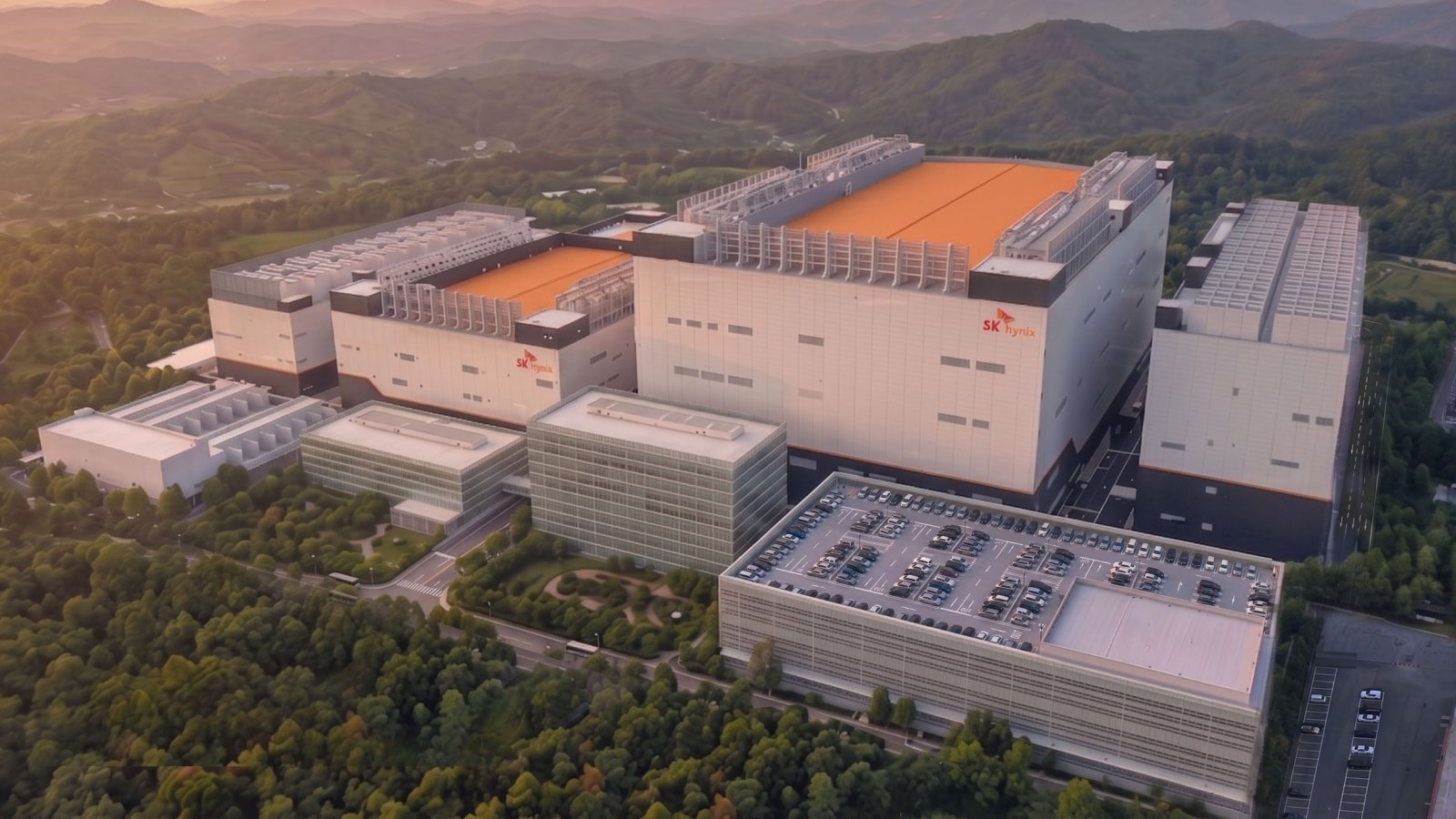
AI’s memory hunger is pushing SK hynix into a massive expansion, with the chipmaker committing about $38.1 billion to two new factories in South Korea.
SK hynix said its board approved 54.3 trillion won (approx. $38.1 billion) for two new semiconductor fabrication plants, as demand for memory chips used in AI infrastructure continues to climb.
The company will spend 35.2 trillion won (approx. $24.8 billion) on the Y2 fab in Yongin and 19.1 trillion won (approx. $13.5 billion) on the M17 facility in Cheongju. The investment is part of SK hynix’s longer-term plan to expand production capacity as AI data centers consume increasing amounts of advanced memory.
Market research firm Omdia expects global demand for both DRAM and NAND memory to grow at a compound annual rate of 19% from last year through 2030, according to SK hynix. The company said the investment followed a detailed review of market demand.
HBM and NAND take center stage
The Yongin Y2 facility will focus on DRAM, including high-bandwidth memory (HBM), which is critical to AI accelerators and data center systems. Construction is scheduled to begin in July 2027, with the first cleanroom expected to open in June 2029.
On the other hand, the Cheongju M17 fab will manufacture NAND memory, which is increasingly being used in enterprise solid-state drives and AI infrastructure. Construction is expected to begin in February 2027, with the first cleanroom targeted for December 2028.
SK hynix selected Cheongju partly because its existing M11, M12 and M15 fabs provide established power and water infrastructure, allowing the company to build out production more quickly. The company is also accelerating development of its Yongin Semiconductor Cluster. It plans to complete four fabs there by 2033, 12 years earlier than the original 2045 target.
A bet on a longer AI boom
The scale and timing of the investment suggest that SK hynix expects the AI-driven memory surge to be a long-term shift rather than a short-lived cycle.
That is a significant bet. The new fabs will not add substantial capacity immediately, meaning they are unlikely to ease the current supply pressure. Counterpoint Research’s Neil Shah told CNBC that the expansion is intended to serve demand from 2029 onward, while memory prices could remain elevated through 2028 if demand continues to outpace planned capacity.
At the same time, SK hynix faces growing competition. Samsung reclaimed the top position in the DRAM market during the second quarter, according to Counterpoint Research, while Samsung, Micron and China’s CXMT are also expanding capacity.
SK hynix said it plans to build the facilities according to its master schedule but add cleanroom space and production equipment progressively as customer demand develops.
What it means for AI and consumers
For AI companies, the expansion should eventually provide more capacity for HBM and other advanced memory products. That could help chipmakers and data center operators secure the components needed to expand AI computing infrastructure.
For consumers, however, the near-term picture is less encouraging. Strong AI data center demand is directing investment and manufacturing resources toward higher-value memory products, while new capacity will take years to arrive. That could keep pressure on memory prices for PCs, smartphones, and other electronics.
Read more: SK hynix Fuels Trillion-Dollar AI Memory Chip Rally in Asia-Pacific examines how surging AI memory demand has boosted SK hynix and other semiconductor companies across the region.
>

Social media companies like Meta, TikTok, Snapchat, and Google are facing a long road of litigation over claims that they intentionally designed their products to be addictive to minors.
According to a report from Reuters, San Francisco’s 9th U.S. Circuit Court of Appeals denied these platforms’ attempt to defend themselves from thousands of lawsuits through an argument based on Section 230, which protects publishers and platforms from being held liable for users’ posts. The companies argued that Section 230 could also protect them from the claim that they did not warn the public about addictive design choices, but the court said the appeal may have come too soon, since this type of appeal usually arrives after a trial.
These thousands of lawsuits, which come from private individuals, state and local governments, and school districts, were consolidated into one federal suit and will proceed as such.
It’s too early to say how these addictive design lawsuits will pan out, but so far, Meta lost two lawsuits over similar issues, marking the first time that the platform was held liable over child safety concerns in jury trials.
>

Competing Android app stores are now back on Google Play in the U.S., and Aptoide is the first to take advantage of the new option. On Monday, the Portugal-based app distributor brought its games store back to Google Play after more than a decade, crediting the loosening of restrictions that had been criticized as anticompetitive.
For the first time in many years, U.S. users will be able to install a competitor to Google’s Android app store directly from Google Play itself, a milestone in terms of opening the app market to more competition.
Aptoide’s independent app store is one of the larger Android app marketplaces outside of Google Play, offering more than 40,000 Android applications to its roughly 25 million monthly active users. The U.S. has been Aptoide’s largest market to date, but until now, the store had to be sideloaded on Android devices, limiting its reach.

That changed following U.S. District Judge James Donato’s ruling in the Epic Games lawsuit, which, among other things, now requires Google to allow the installation of third-party apps from outside the Play Store. As of June 22, 2026, Google began allowing third-party app stores to access Google Play’s app catalog through the Play Catalog Access Program. This allows competitors to access Google Play infrastructure, including its catalog of apps that can be offered to users, while remaining an independent store.
Epic Games first sued Google in 2020, alleging anticompetitive abuses in the Android app ecosystem. A jury trial ruled in Epic’s favor in 2023. Google appealed the ruling, but lost. Earlier this year, the comapny said it would drop Play Store commissions and make it easier for Android users to install alternative app stores.
>

YouTube announced on Monday that new creators will have to meet higher thresholds to begin earning money from ads and subscriptions.
Creators who want to start earning on the platform will need at least 8,000 qualified watch hours over the past year or 20 million qualified Shorts views in the last 90 days. Currently, creators need 1,000 subscribers and 4,000 watch hours over the past year or 1,000 subscribers and 10 million Shorts views over the past 90 days.
The change is going into effect starting February 1. The Google-owned company says the update won’t impact creators already in the YouTube Partner Program.
Additionally, YouTube announced that creators will need to maintain 10 million Shorts views over a 90-day period to earn money through the Shorts Creators Pool. Channels below this threshold will remain in the partner program and continue earning on long-form content, with Shorts revenue resuming once they cross 10 million views again.
YouTube says the changes are being introduced to “keep pace with the growth of YouTube, which now sees over 200 billion daily Shorts views and over a billion hours of watch time on TV” every day.
The changes make it harder for creators to enter and remain in YouTube’s monetization program, especially for Shorts creators. By increasing thresholds, YouTube is putting more pressure on creators’ ability to consistently bring in large audiences before being able to earn money on the platform, which could in turn lead to fewer new entrants being able to monetize their content.
As part of Monday’s announcement, YouTube announced that it’s expanding its more affordable Premium Lite subscription to all countries where YouTube Premium is available. Creators receive a share of subscription revenue based on member watch time and views, with 55% going to long-form video creators and 45% to Shorts creators.
“With these additional subscribers, creators can expect higher earnings: when a user signs up for Premium, partners, on average, earn more than when the user was watching ads,” the company wrote in a blog post.
Premium Lite offers an ad-free experience on most videos, along with the ability to download videos for offline viewing and play videos in the background.
YouTube isn’t the only social media company revising its creator rewards programs. Over the weekend, Elon Musk’s X also revamped creator payouts by changing its guidelines to only reward original content. Earlier this spring, Facebook also launched a new monetization program to attract creators from TikTok and YouTube.
When you purchase through links in our articles, we may earn a small commission. This doesn’t affect our editorial independence.
>

Why Andrew Haigh Calls His New Film “My Version of ‘The Revenant’”

Episode 5 – Though I Am an Inept Villainess

'Unbelievable!' – Great Britain win double gold in European relays
-

 movies3 months ago
Search For Canadian TV Actor Stewart McLean Now Homicide Investigation
-

 Fashion9 years ago
These ’90s fashion trends are making a comeback in 2017
-
Fashion9 years ago
According to Dior Couture, this taboo fashion accessory is back
-
Fashion9 years ago
Model Jocelyn Chew’s Instagram is the best vacation you’ve ever had
-
Fashion9 years ago
Your comprehensive guide to this fall’s biggest trends
-
Fashion9 years ago
9 Celebrities who have spoken out about being photoshopped
-
Fashion9 years ago
Emily Ratajkowski channels back-to-school style
-
Fashion9 years ago
A photo diary of the nightlife scene from LA To Ibiza