
Fred Hechinger in ‘A Long Winter.’


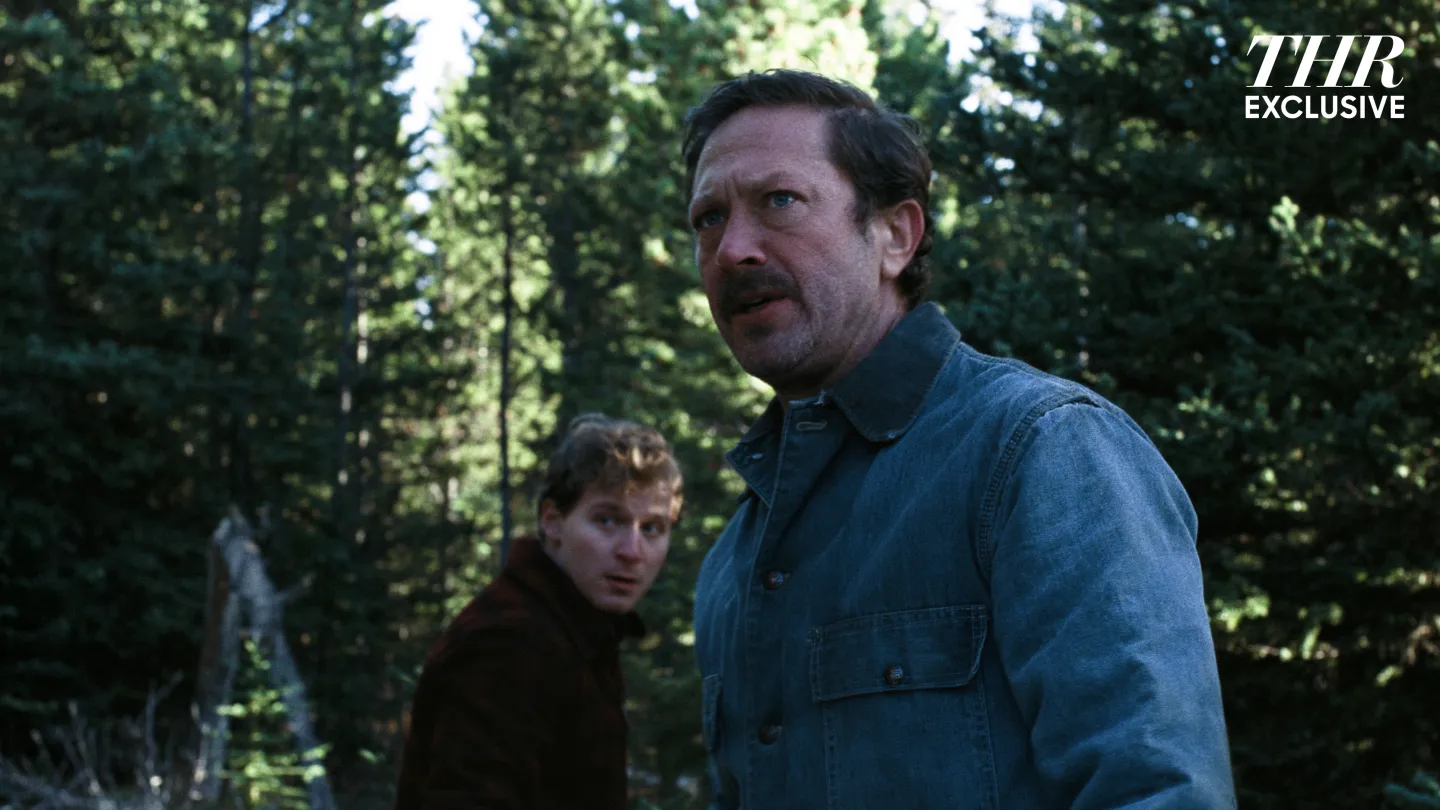
Following the release of his latest film, All of Us Strangers, Andrew Haigh found himself presented with options like never before. The British director, previously best known for gay cult faves like his breakout feature Weekend and HBO’s Looking, met widespread critical acclaim for the wrenching queer drama starring Andrew Scott, leading to his first BAFTA nominations for best screenplay and directing. It became his highest-grossing movie ever at the box office, pushing past $20 million globally. The opportunity to scale up, beyond the intimate character studies with which he’d made his name, couldn’t be ignored.
“When you have a thing that breaks through a little bit, you have to take advantage of it. It does make you take a lot more meetings afterwards, with lots of people sending you things — which is both good and then slightly exhausting,” Haigh says. “Part of me was like, ‘Should I go bigger? I could now go and do this thing over here that’s big and shiny and might get me more visibility.’ But I don’t necessarily need lots of visibility. The slightly more success you get, the harder it becomes to make those choices.”
And so Haigh looked inward. He did not go bigger. Instead, he turned toward the project he’d been trying to make for nearly 20 years — as tender, nuanced and subtle as anything in his oeuvre. A Long Winter feels, first and foremost, like an Andrew Haigh film.
Now 53, Haigh first read Colm Tóibín’s short story “A Long Winter” right around its 2006 publication, before he’d helmed a single movie. The tale follows 20-something Miquel, who lives with his father in a remote snowy village. His brother has just left on military service and his mother has suddenly walked out on the family. Miquel desperately searches for her in the freezing conditions, plumbing new depths of self-discovery in the process.
“Within that story was everything I wanted to make films about — I remember reading it and thinking, ‘This is the perfect manifestation of what I care about,’” Haigh says. This was roughly two decades ago. Then an aspiring filmmaker, Haigh convinced the prize-winning Irish author to grant him the rights to “A Long Winter.” As he built his career, he tried to make the movie, over and over — initially working off of a script set in Spain, as the original text was. “No one wanted to make it,” Haigh says. “I made it harder because I can’t speak Spanish and yet I was saying, ‘I want to shoot it in Spain.’”
Fred Hechinger in ‘A Long Winter.’
And so the moment finally arrived, in the wake of Strangers’ lauded run and with a revamped adaptation. Haigh’s ultimate film of A Long Winter is slated to screen at the Toronto and New York film festivals before hitting theaters via MUBI later this year. It’s set deep in the Rockies of ‘50s Colorado, with young Mike (Fred Hechinger) navigating a complex relationship with his lonely father, Lester (Ebon Moss-Bachrach), after his brother (Kit Connor) leaves for Korea and his mother (Caitríona Balfe) disappears, running away from a life she’d found unbearably isolating.
“If you look at all of the movies I’ve made, there are these themes bubbling under: longing and trying to deal with loss and trying to understand who you are in the world and how to fit into the world that doesn’t make sense to you,” Haigh says. “Those themes are very inherent in the story, but told in a [similar] way to what I’ve always tried to do with my filmmaking: Excavate the complicated emotions beneath the surface and find a way to get them onto the screen.”
It’s a visually ambitious film for Haigh, the haunting elements of Strangers extending to this rich family portrait. “It’s not a big movie, but we had big ambitions,” the director says. “It’s definitely moving away from the more naturalistic, realistic base that some of my earlier work lived in and finding this more metaphorical place.” As he’s committed to doing lately, Haigh shot on film — “There was no debate about that,” he says — and worked with D.P. André Turpin to execute a more subjective cinematic style.
“The camera follows the awakening of Mike. If you look at the film, it’s a lot more static at the beginning and it starts to breathe,” Haigh says. “The camera starts to open up. It starts to move independently. It starts to move without a character leading it across the frame. To me, the film was about breathing differently. It was about opening your eyes differently.”
A Long Winter shot up in Canada, a little over an hour outside of Calgary — Colorado was “too expensive,” Haigh concedes — and you can feel the intensity of the elements. The family home was an original construction in the woods, overseen by production designer Emmanuel Fréchette, following an extensive location scout. “I can stand in the kitchen window and I can look out and see the mountains — they’re above me, they’re below me,” Haigh says. “It’s still there now six months later, somewhere on the mountainside, surviving the extremes.
“We built that house up on the mountain, inside and out, no studio work, all up in 100-mile-hour winds and the snow,” Haigh continues. “It’s where they shot The Revenant, actually. So this is my version of The Revenant — a slightly more delicate version.”
Caitríona Balfe and Ebon Moss-Bachrach in ‘A Long Winter.’
**
Haigh has been working with his casting director Carmen Cuba for well over a decade, going back to Looking. For the past several years, Cuba has been telling him to cast Hechinger in something. “Since seeing him in The White Lotus’s first season — from that day onward it’s been, ‘You’ve got to work with Fred,’” Haigh says. “She adores him, and I understand why. She sees him as a young, Dustin Hoffman-type of actor.”
Several actors put themselves on tape for the part of Mike, and Hechinger won the lead role. His moving, intricate performance serves as a showcase of what he can do as a lead, following auspicious supporting turns in films like Thelma and Nickel Boys. “If you watch him at the beginning of the film and see him at the end, he even looks like a different person,” Haigh says. “It’s not an easy performance.”
It’s the consistent hallmark of Haigh’s work — the landscape for his characters to grow and change feels immense, even as the script hews to the tighter conventions of real life. Mike begins the film feeling relatively comfortable in the family’s isolated cabin bubble, if only because what lies beyond it feels so alien. His contentment is rocked by his mother’s absence — her yearning for something better. He must now look his devastated father in the eye each morning, seeing all of his pain and resentments and fears. He must consider what led his mother to risk her death to find something different for herself. And he must confront what he himself wants — particularly when a mysterious young man (Reservation Dogs’ D’Pharaoh Woon-A-Tai) begins living with the family to help out around the house.
As in Tóibín’s story, Mike is queer — but Haigh, known for his vividly realistic sex scenes from Weekend through to Strangers, communicates this onscreen with a surprising, impressionistic approach.
“What I love about Mike, and especially how Fred plays him, is he’s this sensitive soul within this world that isn’t sensitive — his sexuality for me is wrapped up in a different way of feeling about the world and seeing the world,” Haigh says. “He needs someone to understand how he sees the world. I’ve put sex in a lot of the films that I’ve done, and I wanted this to be different. Sometimes queerness is framed only within sexual desire and not within something else. But obviously when you are queer, you know that it’s not just about sexual desire itself. It’s more than that.”
Hechinger in ‘A Long Winter.’
In these subtle but intent pushes, Haigh arrived at what felt like the ending of a chapter in his life and career. “I think of this film as a bookend to a lot of things I’ve been exploring over the last 15 years of making films,” he says. “As I’ve grown up and my life has changed — all of these stories that have been me trying to understand my own background, my life, my childhood, absences in my own life and certain losses — I’ve come to terms with a lot. So I feel like this is an endpoint.”
As for what his next chapter might look like? Haigh politely demurs with a laugh: “Well, let’s see what happens.”
Just don’t expect his next era to go the way of tentpoles and blockbusters. Haigh can claim the rare feat of making modestly budgeted, emotionally driven, critically hailed dramas at a steady clip for the entirety of his career — during which time the very future of independent film has been put under existential threat. It has never been easy for Haigh to get his movies made. But this moment, he concedes, feels different — scarier than ever.
“It is a very, very challenging time, and everything is much more expensive. Making a film is so much more expensive than it used to be,” he says. “My first movie, I made it for $65,000. 45 Years was only $1.5 million. You couldn’t make that film now for $1.5 million — it would cost so much more. When I speak to younger filmmakers, it’s a terrible situation for them. It’s even harder for them.”
And yet: “I’m quite happy existing within this budget range. I like to tell these stories. I like to have control of how I tell my stories,” Haigh says. “I can’t be someone else. I can’t make films like other people. I can only make films like I can make them. And so when I tell myself I never want to do this again because it’s too difficult, I remind myself of that. It’s a pretty incredible thing that I’ve been able to do.”
Stay tuned for more exclusive features on this fall’s biggest festival-bound films.
>
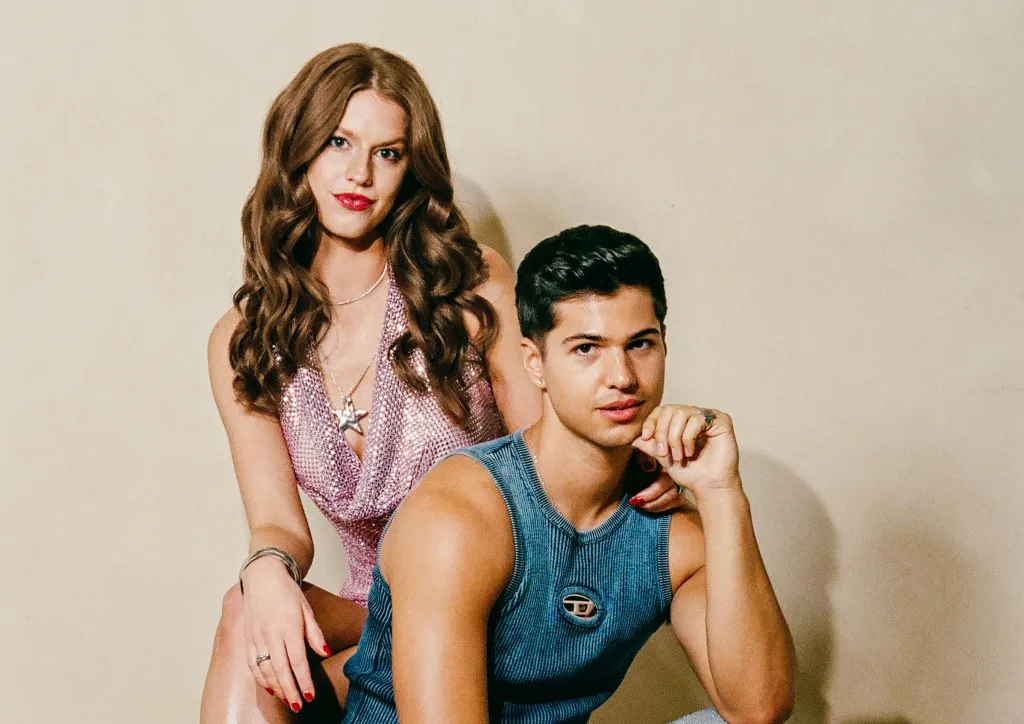
EXCLUSIVE: CAA has signed Grant Gibbs and Ashley Gill, the comedy duo known as A Twink and a Redhead, for representation.
A pair of comedians, musicians and digital creators, Gibbs and Gill’s content reaches millions of viewers across social platforms. Currently, they’re on a musical comedy tour that has packed major venues across North America, including a headlining sold-out show at The Gramercy Theatre in New York City.
In music, the duo is known for its debut self-titled EP, featuring tracks like “A Twink and a Redhead,” “Panera,” “Barnes & Noble,” and “Heterosexuality.” They’ve since released a collaboration with Trisha Paytas, with more music to come next year.
They continue to be represented by managers Logan Potter and Allen McRae from Authentic Talent and Literary Management, as well as align PR.
>
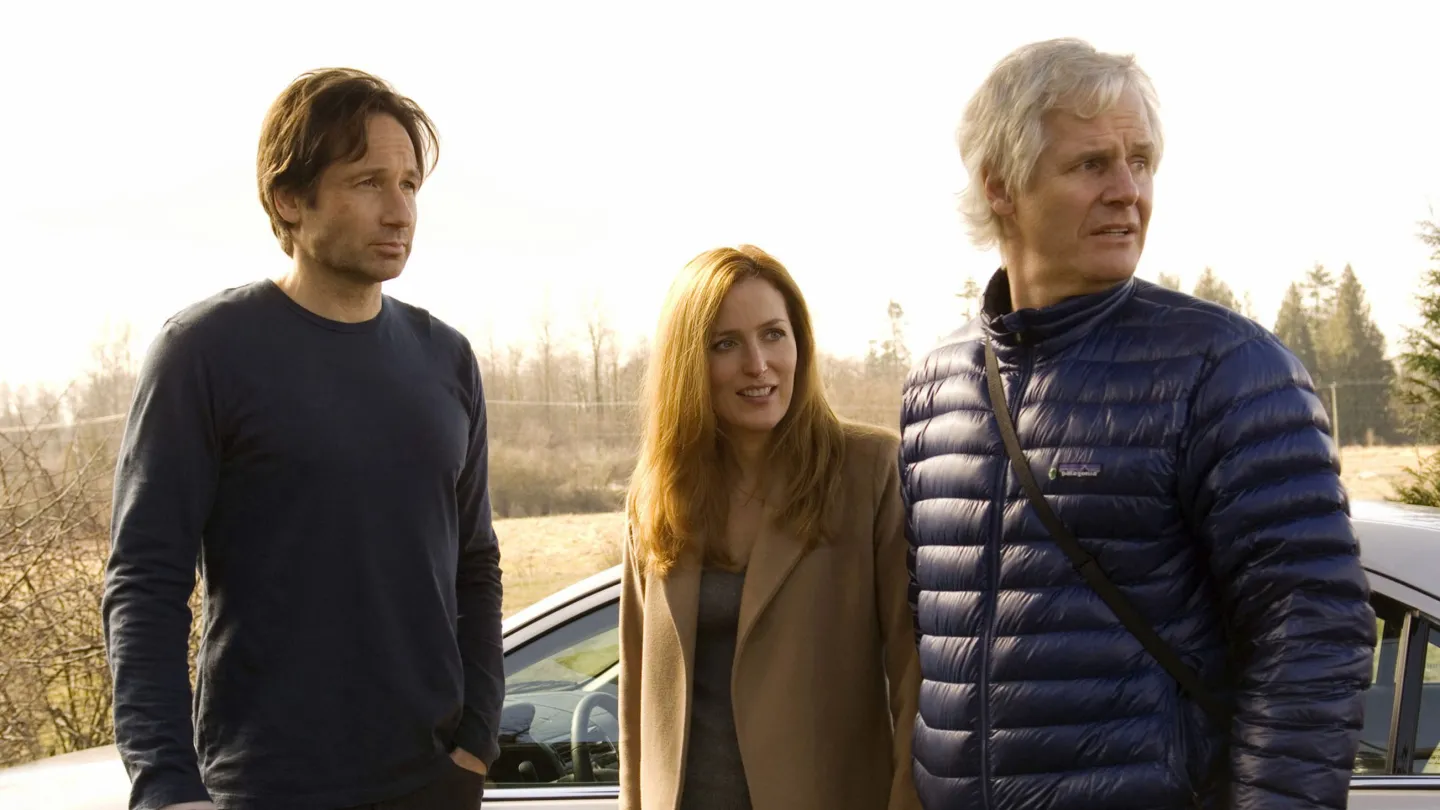
An updated version of the truth is out there — and streaming on Disney+ come Aug. 14.
Almost 20 years after releasing the second film in his TV and movie franchise, The X-Files creator Chris Carter has recut The X-Files: I Want to Believe (now titled The X-Files: I Want to Believe – Vrach Frankenshteyn) to give his devoted fanbase the version he set out to make. Leaning harder into the standalone mystery, a contemporary retelling of Dr. Frankenstein, the new version amps up the horror elements that 20th Century Fox and the MPA wanted removed from the film in 2008 to give it a PG-13 rating.
“Unlike most director’s cuts, I didn’t throw in everything but the kitchen sink,” says Carter. “It’s actually shorter than the original. I hope it finds a wider audience, and I hope I give fans what they wanted.”
Since the release of the original I Want to Believe, Carter has twice revisited The X-Files. Revivals in 2016 and 2018 are canonically regarded as the 10th and 11th seasons of the original series starring David Duchovny and Gillian Anderson as special agents Fox Mulder and Dana Scully that ended in 2002. Speaking earlier in August, Carter says the trio still isn’t finished telling their story — though when and how they return depends a lot on what Ryan Coogler does with his take on the material. (The Sinners filmmaker shot a pilot for an update of The X-Files for Hulu earlier this summer.) Carter also spoke about sparring with executives back in the day, his skepticism over those Congressional hearings about UFOs and his unique relationship with his very vocal audience.
Take me back to 2007-2008, when I’m assuming you were in post-production on this film. At what point did it become apparent that the film that you wanted to make and the film the studio wanted to release were different films?
It was the first screening for the studio in a little theater at 20th Century Fox. There was, let me call it, mild outrage that we had not delivered a PG-13 movie. It was a tense discussion, and we agreed to cut it down to the version that we’d apparently promised them. When we handed the new version over to the MPA, they said, “This isn’t a PG-13 movie.” We cut it back a second time. For me, trying to do a scary X-Files, this wasn’t what we had set out. What’s ironic is that the PG-13 standards for a movie were less permissive than the standards and practices for a television show at the time. So my feeling is that the movie became a relationship heavy movie. The scares were second to that. I wanted to go back and put in the scares.
You have worked in the entertainment industry for some time. Looking at the tense back and forths and creative concessions you’ve made in your career, where does the original version of this film rank?
It’s a movie in itself. (Laughs.) I’ll tell you a funny story. Glen Morgan and James Wong had done an episode called “Home” [in 1996]. It’s probably it’s one of the favorite, if not the most favorite, episodes of the show. It’s a very scary episode, but this was in season four. By that time, the studio had left us alone. I don’t know how we snuck it past the censors, but it aired and I got a screaming call from an executive the next day that the episode would never air again … that we had gone too far. All of a sudden, all eyes were on us. It affected the show going forward. We were held to a much stricter standard.
So tell me how this happened. It isn’t often that a studio pays someone to release a directors cut these days.
I was talking to Steve Asbell at 20th Century Studios about something else. I asked if they’d ever considered doing a director’s cut of I Want to Believe. He said, “No, but let’s talk about it.” It was as easy as that. I did not have to put my own money behind this. This was a labor of love when Frank Spotnitz and I set out to do this way back when. So I knew we had a movie that no one ever got to experience. And I think the production values are so rich. We filmed it almost entirely in a very forbidding environment, all snow and ice. I went through nine pair of boots and my feet were never warm. And there’s a message in the movie, beyond “I want to believe,” and it’s “Don’t give up.” It sounds like something that could go on a Nike T-shirt. It’s simple. But that’s what it’s all about. Mulder doesn’t give up on the case. Scully doesn’t give up on Mulder or the young child she’s trying to heal in the picture.
I believe you remain in touch with Gillian Anderson and David Duchovny. Have you spoken with them about the new cut of the movie?
When the original was released, I went out and promoted it. The studio didn’t promote it, so it I felt it was never really seen by a wider audience. X-Files fans went to it because they are the greatest. The movie made money. We made it for less than $25 million. And I haven’t had an opportunity to show the director’s cut to Gillian. But I showed it to David, who was very pleased. High praise.
You mention fans of the franchise. I spent a little time on X-Files Reddit before speaking with you, and you seem to be uniquely engaged with that community. Is that fair to say? And have you found that to be a healthy habit?
David Duchovny and Gillian Anderson The X-Files: I Want to Believe.
Diyah Pera
Definitely. And, yes, it is. We had we had a 30th anniversary reunion in Minnesota, and I had kids come up to me, kids whose parents didn’t even know each other when the X-Files premiered and tell me they’re fans of the show. It’s amazing that the show has lasted and is as popular as it is, these 30-odd years later.
Fan feedback was so different three decades ago than when you released the new seasons on Fox in 2016 and 2018. It’s certainly different from now. Do you engage in with the dialogue even when it’s more critical?
Sure, serve it up. I’m open to criticism. I’m open to applause, boos. Give it to me. We’ve always relished the feedback. There’s someone who used to be the head of the X-Files online group. She was very critical of some of my work in the last reboot. I just took it on the chin. And I got criticism from someone important to the show who said that I didn’t give the audience what they wanted. I think I didn’t give the audience what they expected. And that is left to come. There are four episodes and the last two reboots that were all part of a bigger plan that I hope to reveal to X-Files fans if and when we should do another reboot.
I always bristle at this idea that audiences deserve to get their way even if it’s not the creators’ intent.
There’s a point at which you need to deliver on a promise. And I wanted to deliver more than the promise. I wanted to give them what they least expected. I know that sounds somewhat confusing, but I had a bigger plan and it all made sense. It will make sense, and so hang with me.
What can you tell me about the bigger plan?
There was a big revelation at the end of the season finale in season 11 that Scully is pregnant. Some people were horrified, outraged. They hated me. It was big. And once again, as I say, this is taken on the chin because I have a bigger idea in mind. I think that time will tell.
If you had your druthers, what would be next — another season of the series? A movie?
I don’t know. The thing that was unexpected, but now highly anticipated, is the Ryan Coogler reboot. I don’t want to do anything to compete with that. I don’t want to do anything to get in the way of that. I don’t want to play off of that. I want to continue to tell and finish the story arc that I have in mind. That said, I’m anxiously awaiting his version. My name is on it as executive producer, but I have done exactly nothing. I am, like everyone else out there, excited about what it may be.
It’s not really a reboot, per se. Danielle Deadwyler and Hamish Patel are not playing Scully and Mulder. So, in success, do you see a world in which this new show and a future iteration of your original story can exist contemporaneously?
My choice was not to read the script, because I wanted to watch it like everyone else. So, it really depends on his vision.
Since the last season of the X-Files aired, we’ve had some declassified files. We’ve had some hearings. We’ve had some whistleblowers. There’s been a lot of dialogue about the possibility that extraterrestrials have visited the earth or at least our atmosphere. You’ve said in the past that, like Mulder, you identify with that idea of “I want to believe.” Has this info dump changed the way you think about aliens?
No. There’s been a lot of talk, a lot of testimony. There isn’t a whole lot of evidence. Next to none. Is this another smoke screen? Is there a category that is above top secret that even those in the highest echelons don’t know about it? Are we keeping that secret to prevent a kind of anarchy and pandemonium in the world if they find out that we are not alone? I don’t know. But once again, this is interesting storytelling material.
Courtesy of FOX
Has all of that gotten your wheels turning on your own story?
Yeah, obviously. And people like Steven Spielberg, it got his wheels turning too. I saw Disclosure Day. He’s my favorite director in my lifetime. He can do no wrong.
Ok, this is a mild spoiler, but it’s a 20-year-old movie so I think it’s fine. There’s a sequence in the closing credits of I Want to Believe that that’s an aerial shot Mulder in Scully in a boat in some tropical locale. Right before it fades to black, they both look up and they wave to the camera. What was the intention there originally? And what was the intention to keep it in this time, given how much darker the film was?
Apart from Mulder’s red swimsuit, which only the hard core fans picked up on, the choice was simply environmental. We had just shot through a long, cold winter. I thought the viewers, the filmmakers and, in particular, Mulder and Scully needed a trip to a tropical locale and the warmth that that provided.
At the time, sitting in the theater, I interpreted this as the last I was ever going to see of the characters and they were waving goodbye.
No, they were waving, “Thank you for watching our movie.” Yes, it was breaking the fourth wall, but of course you could do that on a credit sequence.
I guess I’m a soft-core fan. What’s the red swimsuit?
There’s a scene in season two, where Mulder’s in a red speedo. It lit the nascent internet on fire. For hardcore fans, it’s one of those iconic scenes from the show.
>
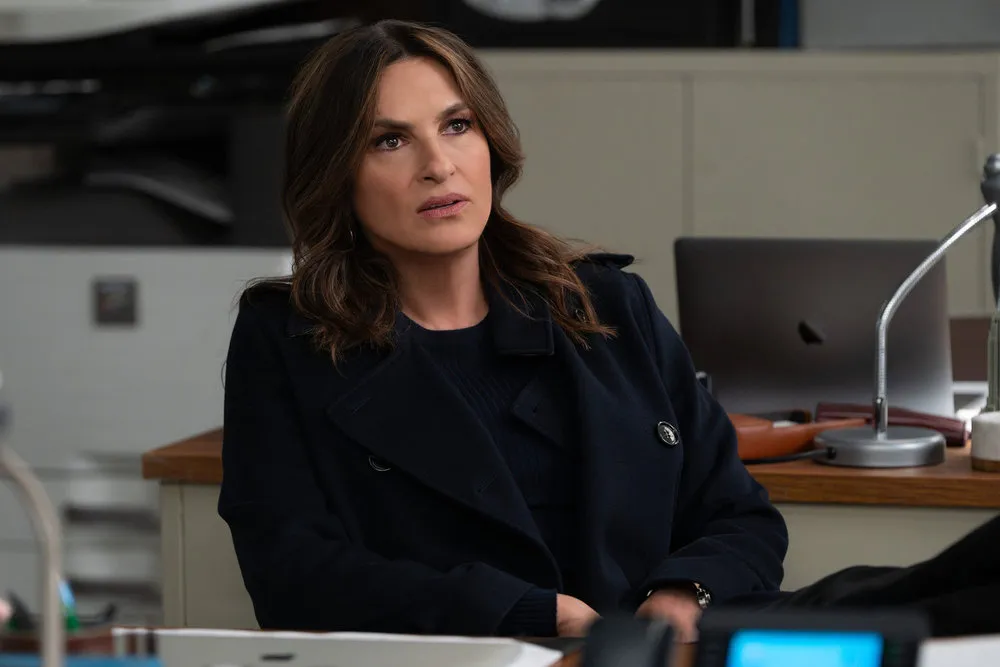
NBC will host a special Law & Order: Special Victims Unit marathon featuring the best of Mariska Hargitay‘s episodes Thursday, Sept. 10, as a tribute to the upcoming Emmy Awards host. Two days prior, fans will enjoy the Season 28 premiere of the popular procedural on Thursday, Oct. 8 at 9 p.m. ET/PT.
Hargitay won an Emmy Award for Outstanding Lead Actress in a Drama Series for her portrayal of Detective Olivia Benson on Law & Order: SVU in 2006, and has been nominated a total of 8 times for her work on the series. This year, Hargitay is also up for two additional Emmy’s for her contributions as producer and director to the documentary My Mom Jayne, about her mother Jayne Mansfield: Outstanding Documentary or Non-Fiction Special and Outstanding Director for a Documentary/Non-Fiction Program.
The first-time Emmy host will hit the stage at the Peacock Theater in downtown Los Angeles on Monday, Sept. 14 at 8 p.m. ET/5 p.m. PT.
Starring Hargitay and her second-in-command, Ice-T as Sgt. Odafin “Fin” Tutuola, the series chronicles the lives of the Special Victims Unit of the New York City Police Department, an elite squad of detectives who investigate crimes of sexual assault, child abuse, and domestic violence. Kelli Giddish, Peter Scanavino, Kevin Kane, and Aimé Donna Kelly also star. Later this year, the long-running series will surpass 600 episodes.
The three-episode block will feature the following episodes:
8 p.m. – “Charisma”(Emmy-nominated episode; originally aired Nov. 16, 2004)
9 p.m. – “911” (Emmy-winning episode; originally aired Oct. 4, 2005)
10 p.m. – “Undercover”(Emmy-nominated episode; originally aired April 15, 2008)
The series is executive produced by Dick Wolf, Michele Fazekas, Hargitay, Ken Brown, Rebecca McGill, Anastasia Puglisi and Peter Jankowski. Universal Television, a division of Universal Studio Group, produces in association with Wolf Entertainment.
>


Search For Canadian TV Actor Stewart McLean Now Homicide Investigation


These ’90s fashion trends are making a comeback in 2017
According to Dior Couture, this taboo fashion accessory is back
Model Jocelyn Chew’s Instagram is the best vacation you’ve ever had
Your comprehensive guide to this fall’s biggest trends
9 Celebrities who have spoken out about being photoshopped
Emily Ratajkowski channels back-to-school style
A photo diary of the nightlife scene from LA To Ibiza